
Natural History Studies Vital to Finding Treatments for Rare Diseases

The lack of information on rare diseases can create difficulty in developing drugs to treat them. To help, it is important to study the natural history of rare diseases.

Compared with common diseases, researchers know little about rare disease signs and symptoms, how the disease changes over time, and ways in which the disease affects the lives of patients and their families.

Natural History studies track the course of a patient’s disease over time. They identify demographic, genetic, environmental, and other variables that shape the drug development process
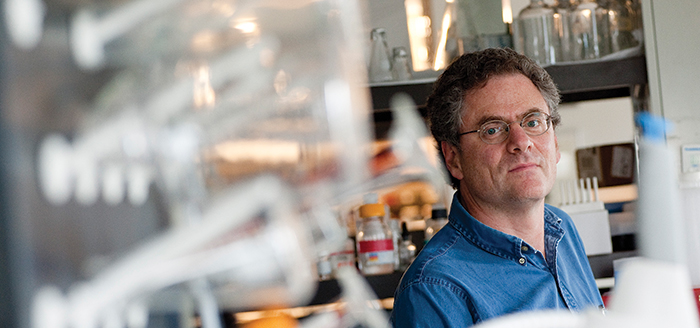
Dr. Eric Pierce headshot in a lab
Dr. Eric Pierce, Massachusetts Eye and Ear

“In general, Natural History studies can be helpful precursors to clinical trials of potential treatments for inherited retinal degenerations for multiple reasons,” said Eric A. Pierce, MD, Ph.D., with Massachusetts Eye and Ear. “For example, they can help identify the tests or measurements which would be most appropriate to use as endpoints in therapeutic studies.”

Another way to view such studies is to “Begin with the end in mind,” as suggested by Anne R. Pariser, MD, in her work on Natural History studies for the U.S. Food and Drug Administration

Natural History data provide knowledge and an independent understanding of a disease, while establishing an essential foundation for building drug development programs. These studies have been characterized as the “pillar of epidemiologic research on rare conditions,” and, along with assisting in developing drugs, they help with patient care, best practices, research priorities, and clinical trial readiness, according to Dr. Pariser, director of the Office of Rare Diseases Research at the National Center for Advancing Translational Sciences.

The studies give scientists and researchers a better estimate of the prevalence of the disease, help identify potential biomarkers, affect clinical outcome assessments, and determine the feasibility of established assessments for clinical trials.

A rare disease is a disease or a condition that affects fewer than 200,000 Americans. With a relatively small number of people affected by the 7,000 diseases considered rare, scientists sometimes face daunting odds in finding enough people meeting study requirements.

In the Leber congenital amaurosis (LCA) community, scientists are looking for people to take part in different stages of drug development.

Editas Medicine, a genome-editing company based in Cambridge, Mass., is sponsoring a Natural History study of LCA10, known by its gene name CEP290, to inform the design of potential future treatment studies involving genome editing in LCA10. The purpose of the study is to understand and better describe the clinical course of LCA10-related retinal degeneration that is associated with a particular genetic change in the CEP290 gene called c.2991+1655A<G.

The study will be used to characterize the range of visual function in patients, evaluate which visual tests may be most useful, and determine the rate of change in visual function over a one-year period.

Dr. Pierce, director of the Ocular Genomics Institute and the William F. Chatlos Professor of Ophthalmology at Massachusetts Eye and Ear (MEE) and Harvard Medical School, is the principal investigator at one of the seven sites in the United States and Europe actively recruiting patients for this Natural History study. For more information, call MEE at 617-573-6060 or visit www.enlightenLCA10study.com/. Study details also can be found at ClinicalTrials.gov Identifier: NCT03396042.

The two groups of conditions below describe the parameters for taking part in the study. Taken together, they illustrate the potential difficulty in finding the 40 participants needed for the study of this rare disease.

Patients must meet six conditions, known as inclusion criteria:

  • 3 years of age or older;
  • Abnormally decreased vision, with examination and test results consistent with inherited retinal degeneration due to mutations in the CEP290 gene;
  • Able to cooperate with assessments relative to the patient’s age;
  • Clear ocular media and adequate pupil dilation in at least one eye to permit good-quality examination of the interior surface of the eye opposite the lens and optical coherence tomography (OCT) imaging;
  • Able to successfully navigate a mobility maze at a level of difficulty below the maximum performance level.

Patients cannot participant if one or more of the five following conditions, called exclusion criteria, exist:

  • Visual acuity of no light perception in both eyes;
  • History or current evidence of a range of medical conditions that may preclude attending scheduled study visits, safe participation in the study, or affect the study results;
  • History or current evidence of ocular disease in either eye that may confound assessment of this inherited retinal disease;
  • Currently receiving gene therapy and/or has received gene therapy;
  • Currently enrolled in an investigational or interventional drug or device study and /or has participated in such a study within 30 days of screening.

If you or your loved one is interested in taking part in a Natural History study, please register with the www.MyRetinaTracker.org, a free, secure, online registry managed by the Foundation Fighting Blindness for patients who have been diagnosed with an inherited retinal disease (IRD).

Participants currently are being recruited for a Foundation-funded Natural History study of disease progression in patients with USH2A-related retinal degeneration associated with congenital hearing loss (Usher syndrome type2a) or non-syndromic retinitis pigmentosa (RP39).
Living with LCA: ‘It does no good to have pity’

Mikayla Larson, a 30-year-old mother living with a rare inherited retinal disease (IRD) called Leber congenital amaurosis (LCA) wants to reassure children living with the same disease that they’re going to be OK.

“I feel that there are a lot of parents out there that are terrified for their kids to live this life,” she says from her southeastern Texas home. “And while it’s not ideal, it doesn’t mean that they aren’t capable of living a fulfilled life and love it like they should.”

Larson’s form of LCA, known as LCA6 caused by a mutation of the RPGRIP1 gene, is considered rare even within the realm of rare disease, accounting for only about 5 percent of the total LCA patient population. LCA in its more than two dozen genetic mutations affects fewer than 4,000 people in the United States; it accounts for 5 percent of all retinal dystrophies and 20 percent of blindness in school-age children.

Photoreceptors lacking RPGRIP1 are unable to maintain the retina’s light-sensing outer segments, resulting in patients losing retinal functions at an early age but retaining photoreceptors in the central retina well into adulthood, according to the National Institutes of Health.

Having grown up with vision loss, Larson says children born with LCA need the support of knowing that others have gone through life with the same inherited retinal disease and survived the bullying, mistreatment or embarrassment.

“I think I’d tell any parent that getting their child into therapy is a necessity,” she says. “Most of us need help navigating these very important emotional things in life. Like when you get made fun of, or when your sibling or friends get their driver’s license and you can’t. Just coping with what this will mean for their life and how to navigate it.”

Larson speaks from experience. More than anything, she wants to take the element of pity out of dealing with the disease.

“It does no good to have pity, or on the other side, to put people on a pedestal for doing things everyone can do,” she says. “It’s demeaning and degrading as a human to get praise for doing something everyone else can do, just because we can’t see well.”

She has some light perception and equates her field of vision to about the length of a drinking straw. With lenses, her visual acuity is 20/200 and 20/400.

Larson had vision loss early and began learning Braille at age 4. She was diagnosed at age 12, although incorrectly, with Retinitis Pigmentosa (RP). She worked with specialists to improve her independence but being around other kids never was easy. She was teased.

“You need extra help. You don’t want to stick out,” she recalls. “I made myself want to fly under the radar.”

By middle school, she didn’t want to deal with Braille or learn more about skills and concepts to help her get around and to be more independent.

“It was something that I just despised. I don’t want to be identified that way. I don’t want to be that kind of person.”

Larson did, however, go to Arizona State School for the Deaf and Blind in Tucson for her last two years of high school, graduating in 2007. She pursuing job training through the state’s Vocational Rehabilitation (VR) services, but the program lacked funding and was not accepting new clients.

While on the VR program waiting list in 2008, she met Andrew, who is now her husband, and in 2009 became pregnant with their first child.

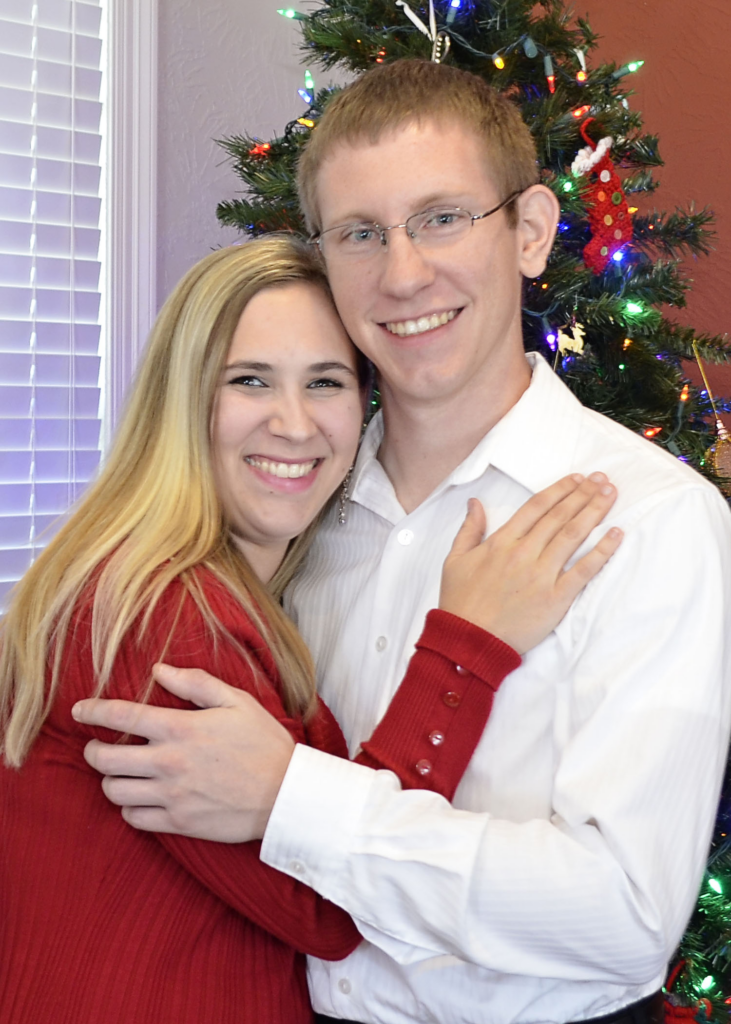
Mikayla in a red shirt and Andrew next to her in a white shirt. There is a Christmas tree in the background
Mikayla and Andrew Larson

They married in 2011, when their first-born, Conner, was 1. The day after the wedding, she was pregnant with her little girl, Aubrie. They lived outside of Phoenix and then moved even farther from family, southeast to a small Arizona town for Andrew’s first job as a chemical engineer.

The family moved in 2013 to another small town in southeastern Texas.

She is the mother of four children, “three here and one in heaven.” Their son Liam died from Sudden Infant Death Syndrome on April 3, 2015. He was 4 months old.

“My kids are very independent,” she says of 8-year-old Conner, 6-year-old Aubrie and Carter, 5. “They get up on their own with an alarm and get themselves dressed, and then Andrew and I make breakfast and make sure they have brushed teeth and are ready for school.” 

Not being able to drive is a big deal, especially in rural Texas with no public transportation. Her children are picked up for school and driven home. Cooking has gotten easier and more comfortable with the advent of Air Fryers and Instant Pots.

Tripping over toys and three cats – Max, Teddy and Chester – is part of life. She shops with family and reads with the help of reading glasses and her phone’s camera, zooming in for small print.

“I would say I’m pretty self-reliant and just do what I need without any real thought.” She does suffer from anxiety.

“Once we lost Liam, the anxiety kind of crossed over into other parts of my life.” She is seeking help and open to resources.

Her biggest advocate, Andrew, contacted Spark Therapeutics, the developer of a new gene therapy called LUXTURNA™ for LCA2 (RPE65) because he thought she might have that form of LCA. The company suggested she receive genetic testing.

When Larson visited an ophthalmologist for a genetic testing referral, she was met with disbelief. The doctor said she couldn’t have LCA. “It’s too rare. That’s not possible,” he told her.

She finally got the doctor’s signature for testing, and, in January 2017 at age 28, her test revealed a mutation in her RPGRIP1 gene, also known as LCA6.

Larson says she was then in touch with Eric Pierce, MD and PhD, who is conducting lab-based research on RPGRIP1 at Massachusetts Eye and Ear. Dr. Pierce’s gene research involves evaluating the latest treatment version in a mouse model, with the plan to generate a gene-therapy vector for toxicology studies, ultimately leading to clinical trials.

While hopeful for a treatment, Larson prides herself on helping others and moving forward.

“We are still smart and capable. We have different challenges but that doesn’t mean we aren’t able.”