I first heard about coronavirus on my way back from a weekend of skiing in mid-January. It seemed to be the only thing the radio station we were listening to was talking about. At the time, COVID-19 was only reported in China and I didn’t think it would ever impact my life. I’ve never been so wrong.
On March 13 I was scheduled to fly to Australia for a dream vacation with my childhood friend. I was subscribed to travel advisories issued by both the Canadian and Australian governments. I woke to an email from the Australian government advising against all travel. I phoned my friend. We needed to cancel the trip. I don’t think he appreciated the 5 AM call. We made the right decision. By noon Canada had issued its own travel advisory. I have never spent so much time on hold and hope to never again. Eventually I received refunds for the flight and hotels. This was only the beginning.
I work in the human resources department of a hospital. I spent the time I had planned to be on vacation working non-stop. We had to keep our patients and staff safe. Government guidelines seemed to change every day. We didn’t have enough staff. Everyone in our department was working three jobs.
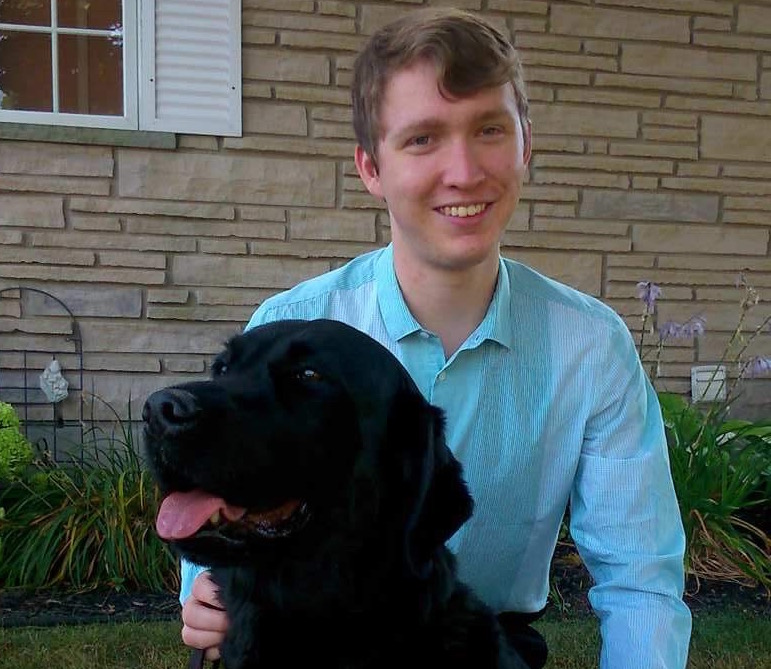
Jack and his guide dog Jake
I had no food. I had eaten everything – not wanting to return from Australia to rotten food. As someone with a visual impairment I get assistance from a store employee when I do my groceries. Getting this assistance meant being physically close to someone who wasn’t part of my regular interactions – something I didn’t feel comfortable doing given the pandemic. The alternative was delivery and it was near impossible to book a time. When I finally did, the shopper couldn’t find most of the things I had requested because people were buying up everything. I soon ran out of food again. Someone from work offered to help me do my groceries. The shelves were empty. It felt like something out of a movie.
We fell into a new rhythm at work. I lost count of the number of people I hired. To limit the number of people in the hospital, those who could work from home did. This included me most days. I hardly left my apartment.
Even now, there isn’t much to do outside work. We are all struggling. We don’t know when it will be over.
Throughout this experience my vision loss has created a host of challenges. It has also helped me live in the pandemic. With decreasing vision, I have learned to adapt to change – something we have all had to do in 2020. My vision loss has made me stronger. Living through the pandemic will do the same for you.
For me, I’ve learned more about pain, struggles and the power of connection. I’ve learned to acknowledge the challenges I experience and connect with the people who are important to me (even if it is virtually) to support each other because we are better together even when we are far away.
Jack McCormick was diagnosed in high school with LCA2. He graduated in 2018 from Canada’s Wilfrid Laurier Universty in Waterloo, Ontario. He is a Hope in Focus (formally Sofia Sees Hope) ambassador, helping people living with LCAs and IRDs. You can read his blog at jackdamccormick.wordpress.com
Since its launch in March 2018, breakthrough gene therapy LUXTURNA®™ continues to be successful in helping improve vision in people with inherited retinal disease due to mutations in both copies of the RPE65 gene and viable retinal cells as determined by a healthcare professional. The therapy treats LCA2, known as LCA/RPE65, one of more than 25 forms of Leber congenital amaurosis.
The drug – developed by Spark Therapeutics and a team of retinal research superstars that included Dr. Katherine A. High and Dr. Jean Bennett – came to fruition after 12 years of research and millions of dollars in investment.
Spark Therapeutics could not comment on the number of people who have received the gene therapy, but spokesman Kevin Giordano recently said the company has shipped well over 200 vials of the therapy since the U.S. Food & Drug Administration approval in December 2017. One vial of the drug treats one eye.
Trained retinal surgeons at one of the 10 eligible treatment centers in the United States deliver the gene therapy to the back of the eye by subretinal injection using a needle the size of an eyelash; about a week or so later, the patient undergoes the procedure in the other eye.
“Spark Therapeutics is thrilled patients continue to benefit from LUXTURNA (voretigene neparvovec-ryzl),” Giordano, Spark’s External and Product Communications Lead, said. “A gene therapy is a major milestone, not only for those of us at Spark, but also for the patient community and broader gene therapy field.”
The cost of the drug – $425,000 for each eye – initially caused anxiety among patient families, but Giordano had good news about insurance coverage.
“Payer coverage has exceeded expectations, and to our knowledge no treatment-eligible patient has been denied treatment due to their insurance coverage,” he said.
LUXTURNA also is being used beyond this country through license and supply agreements with Novartis, which has the rights to commercialize the drug in Europe and all other markets outside the United States. Spark manufactures and supplies the gene therapy to Novartis, according to Giordano.
Also, results from ongoing studies continue to support the drug’s safety profile and efficacy.
“In 2019, Spark presented four-year durability data from the LUXTURNA Phase 3 clinical trial,” Giordano said.
“We closely watched the clinical trials and the FDA approval process for seven years, starting when Hannah was diagnosed with LCA/RPE65 at just a few months of age,” Amy said. “Seven years of hope.
“Two years out from Hannah’s surgery, I can say we feel grateful and fortunate that she was treated with LUXTURNA. No regrets. LUXTURNA was hope realized. It delivered what it promised.”
She said what that has meant for Hannah has been nothing short of life changing.
“It has given her more independence, which has been wonderful for her self-confidence. It has given her the ability to see what she couldn’t before.”
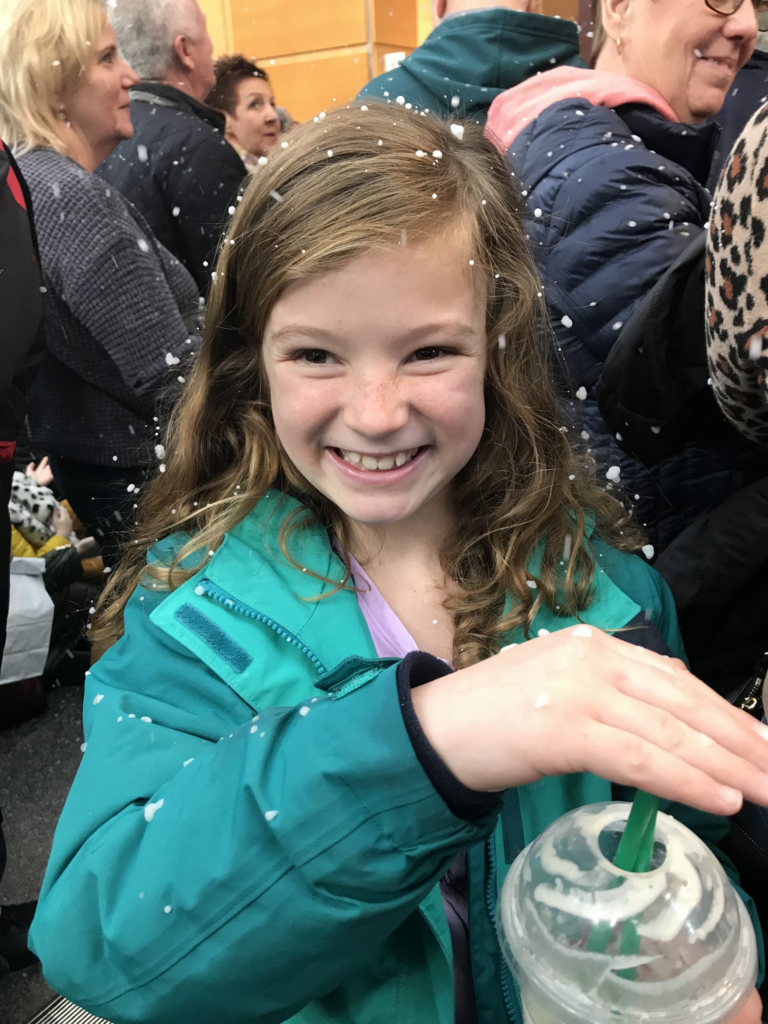
Since the surgery, Hannah’s vision in dim lighting and her visual acuity improved. She is now 9 and just finished third grade.
Sometimes, her mom said, it’s the little things that are the most amazing.
“A year after the surgery, she was about to eat hot oatmeal and said, ‘Hey, I see steam. Hey, I can see that,’ ” Amy said.
“There are still things that pop up that she’s seen for the first time, like when she said, ‘Mom, did you know there’s a pattern on this toy?’ It’s fun to see her discovering.”
Amy said she and her family will be forever grateful to Dr. Bennett.
“There has been a lot of talk about heroes recently and Dr. Bennett is our hero. We are grateful for this groundbreaking treatment that she developed, that has been life-changing, not only for our daughter, but also for the sons and daughters and loved ones of so many others as well.”
His mom, Sarah St. Pierre Schroeder, told us that her now-11-year-old is doing amazing and only occasionally has issues with dim lights, “but nothing like before.”
Their days in Mount Dora, Fla., have changed in a major way.
“He still starts his day with his trusty smoothie and waffle, but after that, Creed wants to create new pranks (today was putting ice in the tub). He said it was nice and warm so I could soak my feet.”
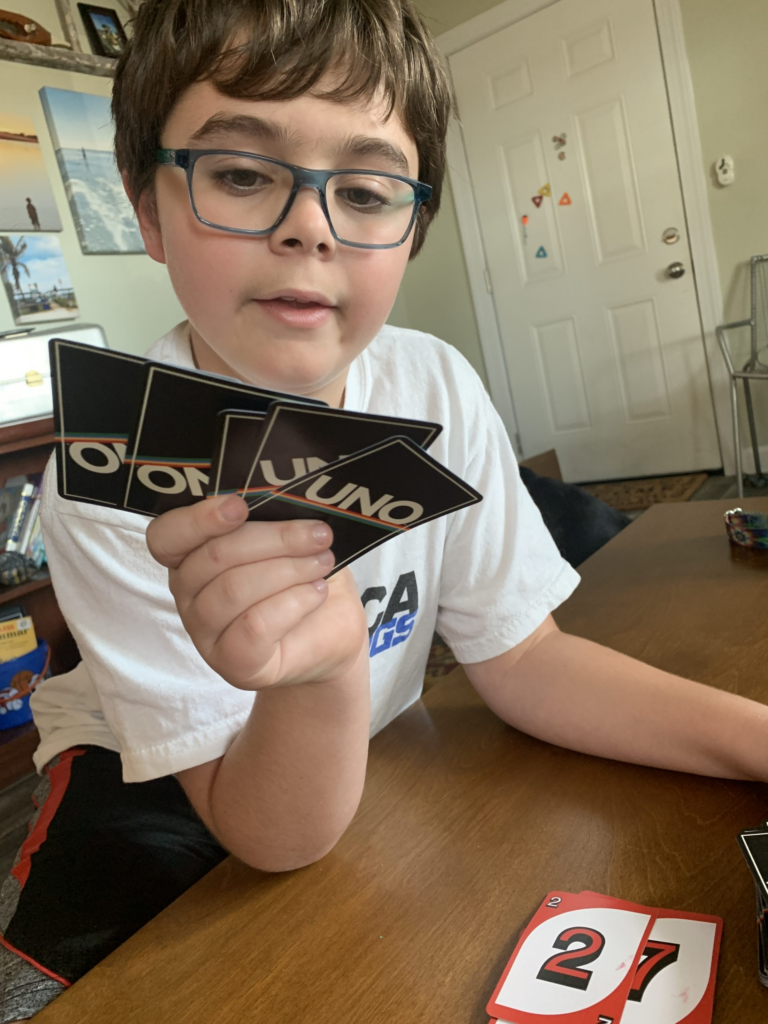
Creed Pettit
Creed now loves to play board games – Trouble, Sorry, Battleship and Uno.
“His vision has changed everything. He can manipulate small objects, he is using pointer fingers, and loves trying to roll his eyes in the mirror.”
Creed still likes to draw, and he loves riding and popping wheelies on his bike named Carlitos. He also likes to talk.
“Talking more is an understatement! Sunup to sundown, he is talking. He has also learned how fun it is to use his imagination, something he never did before. He creates awesome stories during this time. He is so much more independent; I have to remind myself of that often.”
At first, she and her husband, Chad, could see that Creed’s vision improved some, but once he became confident about his gene replacement, they noticed him finding toys and games.
“He was suddenly enjoying things he didn’t before. He now expresses when he can’t see. Yesterday it rained all day, I kept waiting for him to tell me it was too dark inside, but he was fine. He just started doing staring contests. I love looking at his eyes during the contest.”
Sarah said she is incredibly grateful.
“Creed’s surgery is something we still thank God, St. Raphael, St. Lucy and Sister Miriam Teresa, for every night.”
Like many kids across the country, Creed finished school at home because of the coronavirus pandemic. He graduated from fifth grade and thought because he finished school at home, he wouldn’t have to wear the graduation cap.
“But I was not going to let that slide,” his mom said. “I made one and took pictures.”
Anxiety, and a Friend to Call On
Throughout his journey, though, Creed felt anxious, something Sarah had learned that might happen when, before Creed’s surgery, she talked with Tami Morehouse, a LUXTURNA clinical trial participant at age 44.
Tami, a Sofia Sees Hope Ambassador, tries to calm fears and advises potential gene therapy patients and their parents that even though undergoing the surgery has the potential to do such good by improving vision, they should think about their expectations, especially with children.
“We are comfortable in our own zone; give us a little bit of change and it can throw us off,” Tami said.
Sarah understands.
“He started to have a lot of anxiety. He had a hard time sleeping. I feel everything changed so fast that he was overwhelmed, but we have worked hard on getting past that.”
Sarah and her family are in a great place now. But after they were home from the hospital in Miami and settled into their routine, she said she became very emotional.
“All the tears I had held in for nine years started to come out. I felt I no longer had a purpose; I was so used to staying busy. I did not know who I was supposed to be.”
She got some help and realized she still was needed because people need her help learning about and understanding this groundbreaking gene therapy.
“I still find myself shocked over how this has changed Creed’s life and so many other lives.”
Forty clinical trials and a lot of pre-clinical research into LCA treatments show promising pathways to discovering the next LUXTURNA®, according to Shannon Boye, PhD, the opening speaker for the Virtual VISIONS 2020 conference, presented earlier this summer by the Foundation Fighting Blindness.
The breakthrough drug developed by Spark Therapeutics marked a milestone in the history of genetic research as the first gene therapy in the United States for any inherited disease and as the first to treat one of the more than 25 forms of Leber congenital amaurosis (LCA).
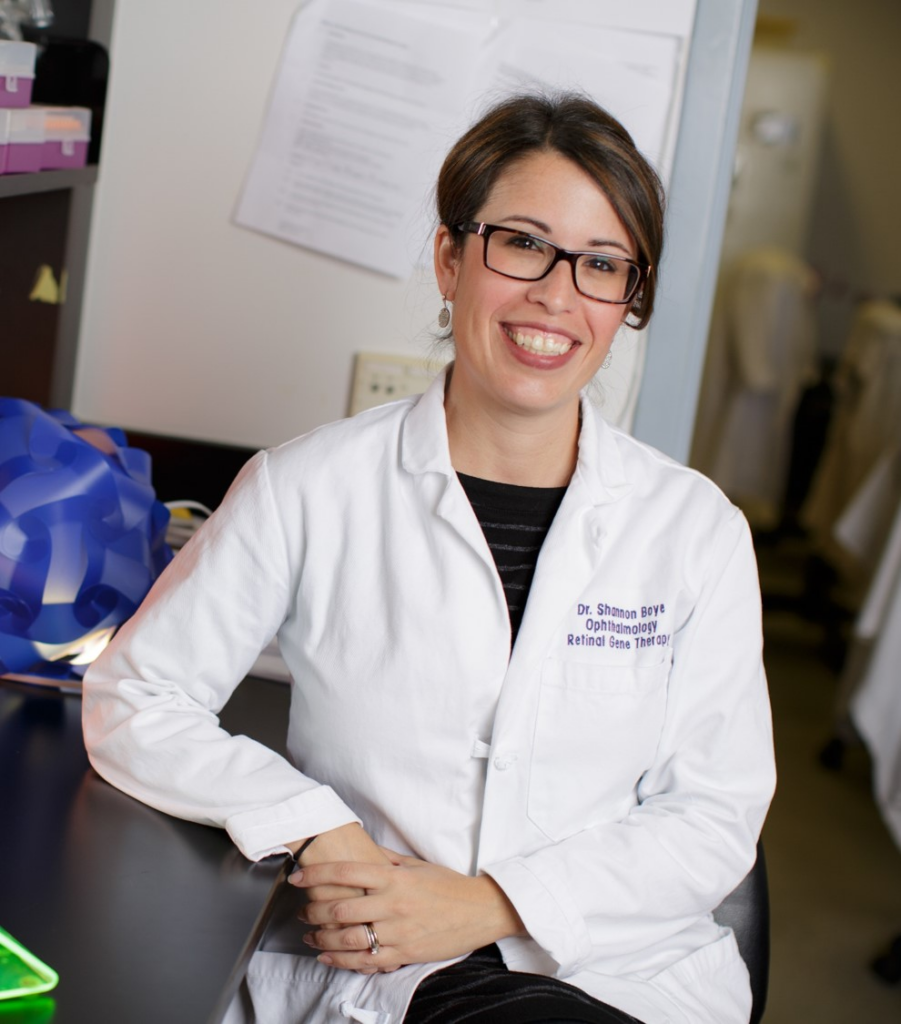
Shannon Boye, PhD
Boye, along with Foundation Chairman of the Board David Brint and Foundation Chief Executive Officer Benjamin Yerxa PhD, kicked off the three-day, first-time virtual conference, the Foundation’s major annual gathering. Rather than convening in person, the event’s speakers, exhibitors and more than 1,600 attendees participated through an online app, due to concerns surrounding the coronavirus pandemic.
Brint said that the 40 clinical trials and more emerging treatments for various IRDs span the disease profile.
“No matter what your disease is, these hopefully will be able to restore vision,” Brint said. “In the next 10 years, we have an opportunity to bring many more vision-saving treatments into and through the pipeline and across the finish line.”
Yerxa said the topic of genetic therapies would be good to lead off with because of the sheer variety of innovative programs and approaches to each therapeutic challenge.
“There’s essentially a revolution happening right now in personalized medicine and genetic therapies in general,” Yerxa said.
Boye, an assistant professor in the Department of Ophthalmology at the University of Florida, addressed the audience in the beginning session called: “Mission Possible! What’s Next?”
Boye set up an analogy to better understand the complexities of these strategies, saying we all have little letters in our bodies called DNA. Subunits of those letters – that DNA – are genes. RNA carry the instructions from DNA for making proteins, the building blocks of life.
“They act alone or in concert with a bunch of other proteins to perform essential functions.”
Continuing her letters analogy, Boye said, imagine a friend texts you: ‘Please take out the dog.’ You get that message and perform that function because letters combined correctly to tell you to take the dog out.
If only the word ‘Please’ appears on your phone screen, you don’t take the dog out.
Or, if the ‘d’ is pushed and an ‘l’ comes out, sending the message, ‘Please take the log out,’ “you then have a mess to clean up,” she quipped.
In the first strategy of gene supplementation or gene replacement, the right protein needs to be expressed in the patient’s retina.
The letters need to be correctly sequenced to generate a coherent message, in this case, telling a protein to perform an important function. Any break in that cascade of events can cause visual impairment.
The gene replacement therapy LUXTURNA is a human-engineered virus containing copies of the corrective gene that doctors deliver through a subretinal injection so the cells can make the originally missing protein.
“You deliver the right letters that make the right message and the right protein,” she said. “That’s a pretty simple concept. That’s LUXTURNA.”
Developed to improve vision in people with LCA2* caused by a mutation in the RPE65 gene, LUXTURNA received Food and Drug Administration approval for use in humans in December 2017.
One area of Boye’s research as Associate Division Chief of Cellular and Molecular Therapeutics is entering into a Phase 1/2 clinical trial, applying the same premise for mutations in the GUCY2D gene that causes LCA1.
“It’s early,” she said. “But this is an example of another perhaps next LUXTURNA being right around the corner.”
The second strategy is a form of RNA therapeutics that uses antisense oligonucleotides (AONs) – short, single-stranded DNA molecules that interact with messenger RNA to correct translation of a targeted gene. Think of an AON as an autocorrect feature that binds to the ‘l’ in log and changes to a ‘d’ for dog.
Promising pre-clinical work now in Phase 2/3 for CEP290 or LCA10 also is coming out of Rob Collin’s research group in The Netherlands, Boye said.
Another AON program underway addresses a form of Usher Syndrome.
The third strategy – the newest and most exciting – is gene editing. A guide RNA is used to drag a special enzyme to a region in the DNA that contains the mutation, and the enzyme cuts the DNA, like molecular scissors.
Researchers are exploring a host of gene editing variations, including cutting out a specific area of DNA and replacing it with the right letters to make a coherent message. The lab work has created paths to address a range of IRDs, including CEP290, Usher Syndrome, RP, Stargardt Disease and Choroidermia.
“There’s an absolute exponential increase in the therapies that are being developed,” she said.
These strategies are not limited to the disease conditions under discussion and can be more widely applied to a number of genes and conditions.
Addressing those who do not have RPE65 or LCA2 for which a treatment exists, Boye said, with all of this research in progress, “that one day, there’s going to be a LUXTURNA for your inherited retinal disease, too.”
Drew’s Beacon for Blindness was founded by the parents of Drew Picinich, a now 4-year-old preschooler who was diagnosed in 2016 with LCA-CRX, also called LCA7.
To attend the informational webinar, please send your email contact information to Drew’s mom, Monica Picinich, at mpicinich@drewsbeacon.org. A follow-up email with the Zoom access link will be sent to you.
Interested parties also can contact Monica by email with any questions or concerns.