
Born with cerebral palsy (CP), Michael J. Kalberer grew up with a philosophy that has served him well throughout his 43 years.
“My parents raised me as an individual with a disability, not a disabled individual,” the native Long Islander recently said. “So, I never felt there was anything wrong with me or wrong with exploring something that could make things better. I didn’t feel like I had to be fixed and there’s a huge difference between those things.”
When Michael was about 10, he had difficulty with depth perception and felt sensitive to light.
“Sometimes a curb looked like a driveway, or vice versa,” when walking with his crutches.
Legally blind, Michael attributed his increasing lack of peripheral vision to CP and moved on.
After enduring an arduous transition from high school, he earned two degrees with honors: a bachelor’s in psychology and speech communications from Hofstra University and a master’s in social work from Adelphi University.
His vision dramatically worsened in his 30s. While at a New York Islanders hockey game, he looked at the scoreboard and suddenly it seemed like it was underwater.
His low-vision specialist referred him to a retinal doctor.
“He takes one look at my eyes and says, ‘Has anybody ever diagnosed you with a retinal disease?’ ”
The retinal specialist diagnosed him 10 years ago with Retinitis Pigmentosa (RP) , a group of related eye disorders that causes progressive vision loss as the retina’s light-sensing cells gradually deteriorate.
Michael said he was in shock when the doctor told him that he’ll permanently lose his sight, barring advancements, but advancements are coming.
Cataract surgery and then …
He underwent his first cataract surgery in 2012. He did more research and got involved with Foundation Fighting Blindness, where he served on a Foundation panel of doctors and described his experiences as a patient with visual impairment.
Listening to the doctor speaking before him, Michael could hardly sit still when he heard him delineate differences between Leber congenital amaurosis (LCA) and RP and realized his visual indicators aligned more strongly with LCA.
“Oh my God, oh my God, I gotta stop this guy,” he recalled saying after finishing his patient portion of the presentation. “Do not let him leave. We need to talk.”
Talk they did and two days later, he was genetically tested at New York’s Columbia Eye Clinic and received a confirmed diagnosis of LCA10, a mutation of the CEP290 gene, one of the more than 25 forms of gene mutations that cause LCA.
Since then, Michael has tracked LCA research advancements and his own experiences with his vision. He has 3 percent vision in one eye and 7 percent to 8 percent in the other. He can discern some shapes, colors and hand motions.
“I really took a hands-on, very proactive approach to navigating what my vision was like; I took control of logging, charting and tracking. It was kind of my way of taking control of the disease, so I had it and it didn’t have me.”
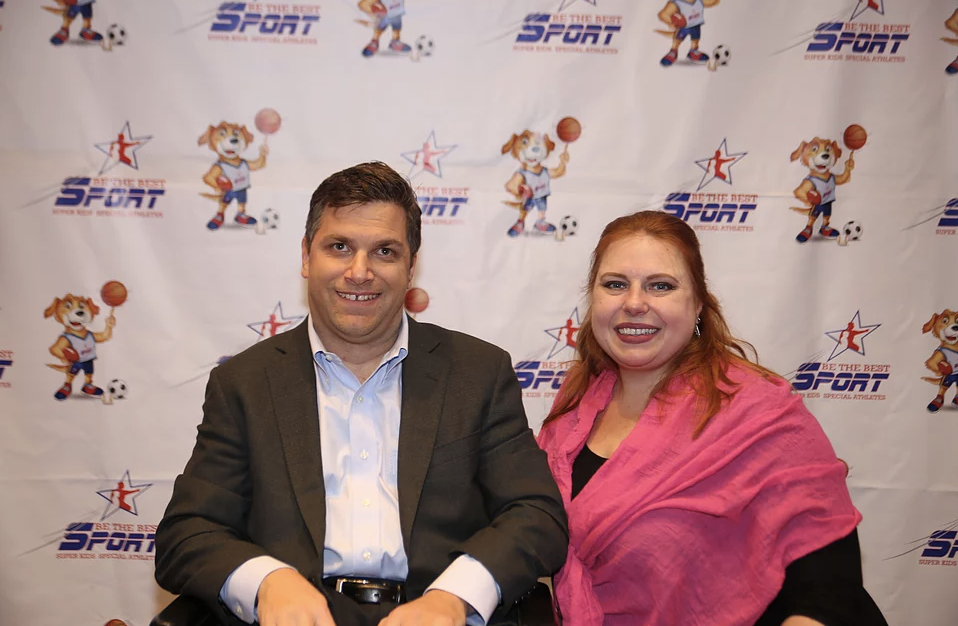
He has also done fundraising for the Foundation, taking on leadership roles as a team captain for the organization’s VisionWalks and speaking at conferences.
“I can’t say enough about Foundation Fighting Blindness’s outreach and their confidence in my ability.”
Addressing the Foundation’s audience at its 2019 Dining in the Dark Spring Forward Fundraiser, he thanked the organization for helping him get a confirmed genetic diagnosis.
“The root of the Foundation for Fighting Blindness’s success is in cultivating relationships and helping change the way literally thousands of people with LCA and other (inherited rare diseases) IRDs view the world.
“How we process the world shapes who we are,” he told his audience.
Told he was ‘unemployable’
Michael also wrote an inspiring piece for the National Organization on Disability’s campaign to increase awareness of the professional ability possessed by individuals with disabilities.
Even though a career counselor once told him he was unemployable, he shared in his essay that he formed his own business called Michael J. Kalberer Presents. His company’s logo features a rising sun under the phrase “All Humanity Matters,” and he lists his roles as cultural competence presenter, communication etiquette specialist, transition planner, tutor and motivational speaker.
Michael’s life work now is educating people to maximize their personal strengths and to see others as more than their condition. He also has written an interdisciplinary curriculum to help professionals working with people with disabilities in diverse environments.
In the essay, he also described his work as a New York state licensed social worker at Family and Children’s Association, where he managed cases and helped people living with mental illness obtain and sustain employment in work environments conducive to success.
Michael attributes his feeling of empowerment to the unconditional support he continues to receive from his entire family and all his friends.
“My diagnosis of LCA could have altered the way they interact with me, but it’s made our relationships stronger. They are as emotionally invested in this journey as I am for myself, and there’s a beauty and a strength in the relationships that’s difficult to put into words.”
He did, however, capture the result of this supportive network of relationships in his closing sentence of that essay:
“I’m Michael J. Kalberer. I transcend cerebral palsy and Leber congenital amaurosis.”