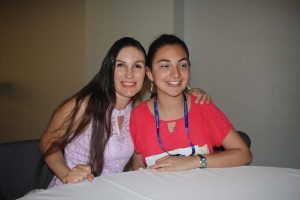
“If someone told me that having access to perfect vision tomorrow meant not having impaired vision for my entire life, I would not change the past. While my visual impairment has created many challenges, it has shaped who I am and influenced me in many positive ways. I’ve become more resourceful, compassionate, creative, and resilient.” —Jack McCormick
Jack McCormick lives a story of hope, tenacity, and measured success while embracing an unknown visual future. When Jack was two, a diagnosis of cone-rod dystrophy confirmed that he had impaired vision. As a teenager, genetic testing revealed that he had Leber congenital amaurosis type 2 (LCA2), due to a mutation in the RPE65 gene and that he was losing his vision. This form of LCA interferes with the production of the RPE65 protein affecting the eyes’ ability to process Vitamin A, leading to progressive vision loss. “It was tough to accept. I was only 15 and thought my life would be a certain way. Now, it was going to be different,” Jack recalled.
Fast-forward to 2022, when Jack, now 25, was treated with LUXTURNA®, a gene therapy for RPE65, becoming the first Canadian to receive a gene therapy. But his journey to treatment involved overcoming substantial hurdles with the Canadian healthcare system, even as his sight declined.
To have a chance for treatment, Jack realized he had to advocate for LUXTURNA to be available in Canada. “I wrote letters to Parliament and was interviewed on national television to create awareness and to help expedite the process,” he explained. “My vision was getting worse every time I visited the eye doctor, and my window as a viable patient for this treatment was quickly narrowing.”
Even after clearing the bureaucratic obstacles and identifying a hospital and qualified surgeons, there was still no clear path for funding the expensive treatment. “There was a year lag between Health Canada approving LUXTURNA and my lining up private funding,” he said.
While Jack wanted the treatment, the immediate or long-term outcomes were not guaranteed. His doctors set his expectations sufficiently low, saying he might see a little better in dim lighting. “My goal was to have stable vision for longer,” he said.
Jack finally received the treatment in March 2022. But the surgery was not easy. It took a long time to recover, and the effects were not immediate. His eye with the poorest vision was treated first, and the second eye was treated two weeks later.
“It is important to be realistic about the surgery. They’re injecting an air bubble and a drug into your eye. There are incisions with microscopic stitches that rub against the eye, causing an intense headache,” Jack said. “I was on my back for the first 24 hours. Later, I had to prevent putting pressure on the eye and couldn’t bend over.”
Another huge challenge was having to quickly decide after the first surgery whether to pursue the treatment for the right eye. “With my left eye, it took a week to see what I saw before the surgery,” he explained. “A few days later, my doctors began talking about the next surgery, and I still wasn’t seeing better. It was very stressful and resulted in multiple conversations with my ophthalmologists about whether to proceed.”
After weighing the risks, Jack chose to have his right eye treated. “At that point, my goal was to see as well as I did before the surgery and, ideally, a little better,” he said. “I’m very happy I did it because the treatment made a much bigger difference for my right eye.” His doctors were also pleased when testing showed vision improvement in dim lighting and an increase in color detection.
“Before the surgery, I didn’t see much walking around the city at night. Now, I might notice someone passing me. I can also see the lines of a crosswalk,” he said. “For me, these improvements are huge!” It’s unknown how long these changes will last, but it’s a future Jack is willing to live with.
His advice for people seeking treatment is to be persistent. “My obstacles were fighting the government and finding a way to pay for the treatment privately,” Jack said. “It’s also vital to find a community. It’s one thing to be a visually impaired person saying that I need this treatment. But it is much more impactful when a group says the same thing and gets others to care about it. Allying with organizations like Hope in Focus helps unite our voices while providing much-needed support and education.”
Jack McCormick graduated in 2018 from Canada’s Wilfrid Laurier University in Waterloo, Ontario. He was diagnosed in high school with LCA2 RPE65. Jack is a Hope in Focus ambassador, helping people living with LCA and IRDs. You can read his blog at jackdamccormick.wordpress.com
The 2-mile walk kicks off at 10:00 a.m. The registration fee to join the walk is $30. Participants can register the day of the event, or in advance online. Participants may also join to walk virtually and JB Sports will mail a shirt and bib to them.
As a participant in this event, Hope in Focus will receive 50 percent of the registration fees and 85 percent of all additional fundraising from donors to help support its mission of outreach to the Leber congenital amaurosis (LCA) and rare inherited retinal disease community.
“We’re excited to join the Denise D’Ascenzo Foundation in raising awareness and funds for rare diseases. As a small organization supporting a rare community, it is challenging to reach our community, supporters, and to host events of this magnitude. This walk makes it possible for all of us representing rare diseases in Connecticut to band together, making it easier and fun to raise awareness of rare disease issues in general, while raising funds for our individual causes,” said Hope in Focus Director of Outreach and Development Courtney Coates.
“Today 95 percent of all rare diseases still lack an FDA-approved treatment and only one in two have a research or rare disease group to support them. It’s a tough journey for organizations like Hope in Focus and we are grateful to the Denise D’Ascenzo Foundation and JB Sports for creating this opportunity for us to come together. We welcome anyone who can join us, virtually or in-person, or with a contribution of any amount,” said Coates.
The event was established by the Denise D’Ascenzo Foundation, dedicated to supporting advances in medicine and health, promoting responsibility in the media, and assisting those facing physical and mental challenges, while encouraging openness, courage and kindness in all endeavors.
Hope in Focus founder Laura Manfre and her son Luca will participate in the event. Because the zebra symbolizes rare diseases, Luca will wear a zebra suit as he walks. Manfre’s daughter Sofia was diagnosed with LCA as a child and was the motivation for founding Hope in Focus. Today, the organization serves a global community of families and individuals living with this rare blinding disease through community outreach, education, and funding to advance treatments. Website to register or donate: https://runsignup.com/hopeinfocus
In 2013, after our daughter, Sofia, was diagnosed with Leber congenital amaurosis (LCA) IQCB1/NPHP5, the Foundation for Retinal Research (FRR) asked if my husband and I would be willing to raise funds for treatments for her genetic mutation. The FRR was started in 1998 by David and Betsy Brint, whose son had LCA. Little was known then about the disease, and there wasn’t an LCA community when they began. The Brints faithfully stewarded the research and a handful of LCA families to grow that organization into a real community. So, we said yes to the FRR’s request and quickly raised about fifty thousand dollars, largely from our local community in southeastern Connecticut. This success blew us away, but there wasn’t an active research project for Sofia’s gene.
Realizing that so many people were willing to help us, we thought, why not raise funds for all LCA conditions so we can put the funds we raise into use sooner? A broader funding goal would allow us to designate monies for the most promising research and advance projects already in the pipeline. All boats float in a high tide, right? It was the right thing to do. Honestly, I also thought pushing the projects that are further along faster might be the most effective way to help advance the research related to Sofia’s gene. In 2014, we incorporated our 501(c)(3). Setting up the nonprofit made it easier to steward and thank donors. In Connecticut, three people are needed to create a nonprofit. So, my husband, Chuck, myself, and our good friend, Elisse Rosen, founded Sofia Sees Hope, later called Hope in Focus when we changed our name in 2021.
I think it was in early 2017 when David Brint became chair of the board of directors for the Foundation Fighting Blindness (FFB) that the FRR was rolled into the FFB. This change was significant for LCA research because of the FFB’s incredible influence and expertise in research. At the same time, because the FFB serves all forms of blindness, this change opened a gap for focused support for our LCA community. As a single, rare disease-focused organization, Hope in Focus was able to fit right in and fill that gap.
How did your mission/vision evolve?
LCA is a rare disease, which means we are a small community, but we have shared experiences that create a strong sense of unity. As I interacted increasingly with industry and researchers, I learned just how vital it was to have an empowered community equipped to engage with research and biotech to support the advancement of treatments. At the time, it was also apparent that we needed to focus on genetic testing. Genetic diagnosis is still an issue for our community, although we’ve come a long way, and I’m pleased that our work at Hope in Focus has made a real impact in this arena with our fundraising, outreach, and awareness campaigns. When individuals in our community have a confirmed genetic diagnosis and understand how treatments are developed and brought to market, they will also know why we must speak up, be involved in fundraising, and consider participating in patient registries, natural studies, and, hopefully, clinical trials.
When I think about how we’ve evolved, although our mission has stayed the same and is still very relevant, the biggest “a-ha” for me has been realizing that it’s not enough to raise money for research. Understanding the importance of advocacy and our voice in developing our treatments is critical. As a community, we can’t wait for these treatments to fall like manna from heaven. That might be how it works for a lucky few in the future, but that is not how this process works. We must actively participate in registries, natural history studies, patient advisory boards, and legislation. And the community with a voice and a level of representation will garner interest in its rare disease. The more aware and connected we are with the entire ecosystem involved in developing treatments, the greater the opportunity to influence these things.
What have you learned about the research community?
I was surprised by how meaningful it was to meet the people behind the science. As I spoke at events and met the community working on treatments, I stopped thinking about them as a monolith. These are dedicated, caring individuals working daily to benefit people they don’t know. When they have a chance to hear from folks living with LCA, these interactions help inform their work and motivate them to keep at it. We need them to keep working hard to find those treatments, and I think hearing our stories helps. As I experienced these interactions, I realized that to achieve our mission, we needed to facilitate engagement across the entire LCA ecosystem, including everyone impacted by the disease, biotech, regulatory agencies, investors, other nonprofits, and advocacy groups. It takes a lot of people to bring a treatment to market, and we all have a part to play.
Another thing I learned was that an informed LCA community needs to make sure that positive policy decisions are made regarding research and access to treatments. Unfortunately, many legislators don’t understand rare conditions, patient protections, and the actual cost of living with a life-long disease. We must educate our legislators and ensure they make sound, sensible policies.
What helps you see the progress made by Hope in Focus?
I was very fortunate to testify at the FDA AdComm (Advisory Committee) meeting in 2017 for the approval of LUXTURNA®. That opportunity was very emotional and a significant milestone not just for those living with LCA but for all rare diseases and gene therapy. For me, it also underscored the importance of our organization. Two years later, at the LCA Family Conference, we hosted in 2019 in Philadelphia, a woman from Washington State shared the story of her son. Before he turned three years old, he was genetically diagnosed with RPE65 and treated with LUXTURNA, still the only genetic treatment for LCA available on the market. Wow! The room went silent. We were talking about getting to this point, but I was surprised it was already happening to someone in the room.
Meanwhile, there were families in that room who were still unable to get a genetic diagnosis. Hearing about her son’s early diagnosis and treatment was incredible and gave us all hope. I want to hear more of these stories for all genetic variants of LCA. Another exciting development is the growth of our international community. At our LCA Family Conference in 2023, we had folks attend from all over the world, including a family living in China who told us about their database of 130 families with the CRB1 genetic mutation. Everyone was shocked that such a large group was identified for a single gene. LCA is a rare disease, making it hard to find and connect people, and here were 130 families with the same gene. Again, wow!
What do you hope for the future?
When we started Hope in Focus, it didn’t seem like anything was happening with research for LCA from my perspective as a parent. But under the surface, research was moving forward, and many dedicated folks in the LCA ecosystem were hard at work. Ten years later, we have a treatment on the market, LUXTURNA®, with four potential treatments currently in the clinic, several preparing for trials, and multiple gene-agnostic therapies in development. There is so much hope as the science is advancing. On the other hand, it has been SEVEN YEARS since I testified before the FDA, and LUXTURNA was approved for just one of our LCA genes, and there are still no new treatments on the market for other LCA variants. We need to keep the pressure on.
What do I hope for the future? This year, Hope in Focus is engaging in strategic planning to ensure that, as an organization, we are prepared and able to meet the changing needs of our LCA families and individuals as science, regulation, and industry evolve over the next 10+ years. When I started ten years ago, LCA research was a ripple, and now it feels more like a big wave. Hope in Focus needs more help to row the boat as that wave grows, including program funding, volunteer support, and dedicated staff. As we plan for the next ten years, we must define what this looks like and what it will take to get there. I also hope that Hope in Focus will participate in more Advisory Committee meetings for drug approvals. I’m disappointed I only got to testify at one of these events! How cool would it be if we could shift from a focus on supporting the advancement of treatments to market to helping members of our community as they evaluate whether or not they want to choose a treatment and then supporting them through that process? (Make sure to read Jack’s story.)
After creating Hope in Focus, have you asked yourself, what have I done?
Yes, I ask myself that question all of the time. At the very beginning, I was one person doing almost everything. Managing a startup nonprofit is exhausting. Today, we have a small but mighty team that includes one full-time employee, but I’m still volunteering at almost the same level as in those early years. Why? Because Hope in Focus is like tapioca; it just keeps growing. I’m very grateful for all of the volunteers and our incredible staff. We’ve connected with and helped so many people from whom I’ve learned so much. While growing Hope in Focus has been very demanding, it also fills my cup, and I feel so lucky to be a part of it.
What other thoughts would you like to share?
Hope in Focus has given me a sense of control over something I had no control over and felt utterly overwhelming. I think our work does the same for other parents and individuals living with this rare disease. I see how we are helping folks today, and I know that we’re helping to advance treatments that will help someone in the future. Hope drives action, and as we keep pushing forward, I’m excited to see what the next ten years bring for our community and Hope in Focus.