
My Friend Luca: Balancing Hope and Reality

Three-year-old Luca Corso’s preschool teacher announced that everyone should quickly sit on their floor shapes for carpet time. As the other children eagerly scattered to their assigned spots, Luca wandered. He wasn’t being disruptive—he just wasn’t sure what to do. Even with glasses and a cane, he couldn’t locate a flat shape on the floor. Luca’s vigilant parents, Blair and John Corso, along with his early intervention team, got involved, and the preschool quickly provided him with a small chair for carpet time.
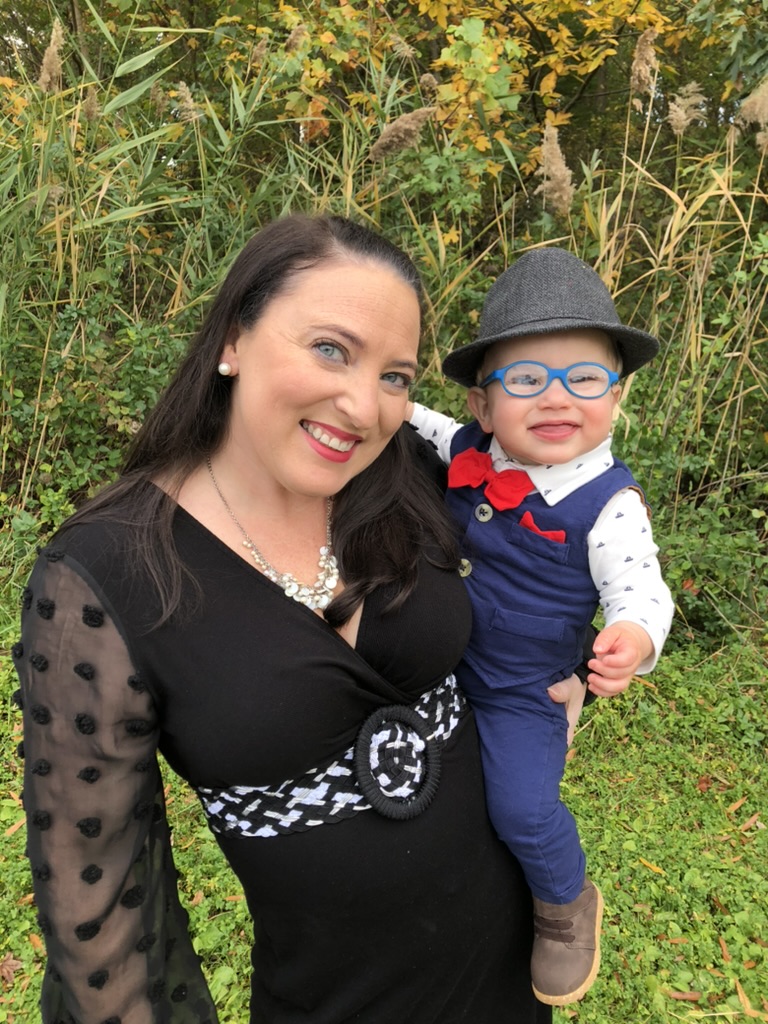
Blair and Luca
Blair and Luca

Diagnosis Shock

Luca was diagnosed with the recessive AIPL1 gene mutation that causes Leber congenital amaurosis 4 (LCA4) when he was about 14 months old. According to the Foundation Fighting Blindness, this rare but severe form of LCA affects “only a few hundred people in the US and less than 10,000 people globally.” The news was devastating to first-time parents, Blair and John, and almost unbearable when they were told that their little boy would likely lose all of his vision by age four.

A Ray of Hope

The family was given a ray of hope after hearing about a new LCA4 treatment developed by MeiraGTx that showed efficacy in a trial involving 11 children in the United Kingdom (UK). The therapy, which uses a human-engineered adeno-associated virus (AAV) to deliver copies of the therapeutic gene into remaining photoreceptors, has not yet been approved for use in the UK or the United States. If successful, the treatment could restore some of Luca’s vision.

Hoping beyond hope that the treatment becomes available before Luca turns four, the Corsos know that his window of opportunity is rapidly closing. Another potential hurdle is the cost. “Not only does the treatment require approval, but we don’t know the cost, since the trial would no longer fund it,” Blair said.

Balancing Emotions

For Blair, the news of the UK trial’s success was at once wonderful and disheartening. “I saw one of the boys who had the treatment and spoke with his mother,” she said, choking back tears. “After the treatment, he could see facial expressions. It would mean everything if Luca could experience that too. When I read stories about the children treated, it struck me that being able to see things like that could really help Luca interact with us and his peers.”
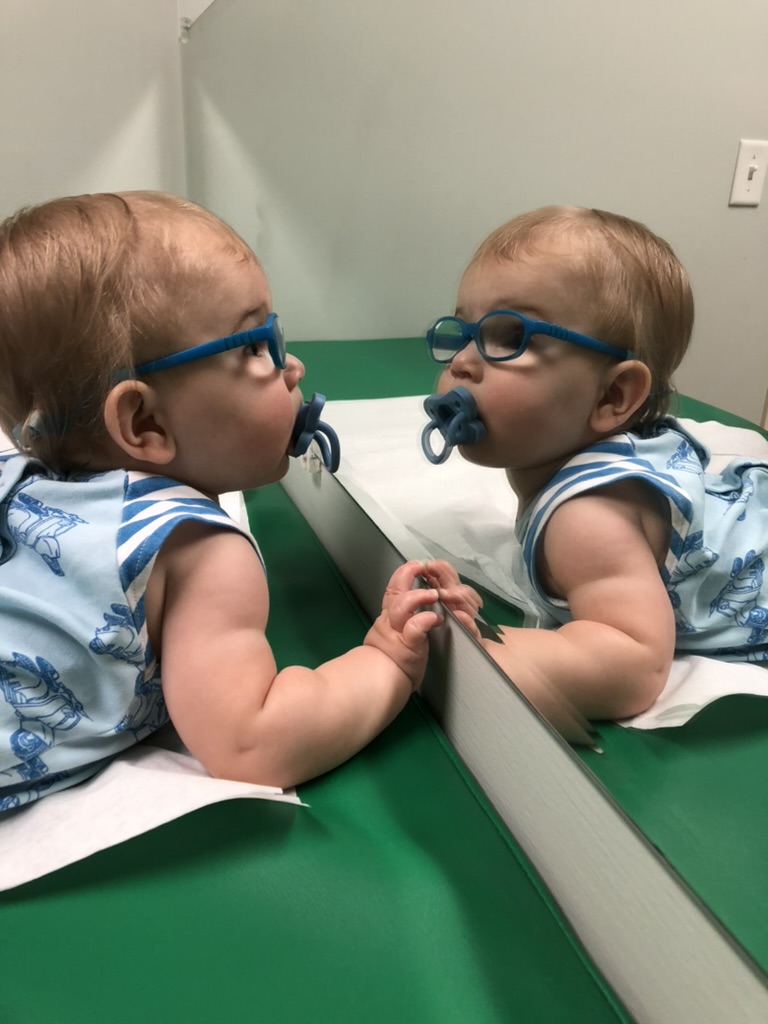
Baby Luca wearing his new glasses

The Diagnostic Journey

When Luca was born, the Corsos were living with Blair’s parents while they searched for a house. It was then that they first suspected something was wrong with Luca’s vision. “My Dad kept wondering why Luca’s eyes were going back and forth so much,” Blair said. “Was it normal?”

The pediatrician was also concerned about their four-month-old son’s eye movements (nystagmus) and quickly referred Luca to a local eye doctor. After confirming Luca’s vision loss but seeming less worried about the nystagmus, the eye doctor referred the family to Mays Al El-Dairi, MD, a pediatric ophthalmologist and neuro-ophthalmologist at Duke University Eye Center.

“Dr. El-Dairi examined Luca and mentioned the possibility of LCA and recommended genetic testing with Ramiro Maldonado, MD, a retinal specialist at Duke,” Blair said. Dr. Maldonado arranged the genetic testing and wanted to do an electroretinography (ERG), a diagnostic test that measures the electrical activity of the retina. But Luca needed to be at least a year old to have the ERG.

Test Results

“Luca was about 14 months old when the ERG was done, and it showed that he had about 50 percent of his vision. The genetic test indicated LCA4, and Dr. Maldonado said that our toddler would likely be blind by age four,” said Blair. “It was a very rough day. John was at home sick, our dog had just died, and my mother and I were in the surgery waiting area, bawling our eyes out.” Luca was Dr. Maldonado’s first case of LCA4.

Help!

Like all parents hearing an LCA diagnosis, the Corso family was desperate for more information and support. They immediately began looking on Facebook, where they discovered Hope in Focus (HIF). Through HIF, they started connecting with the LCA community, and Blair was paired with an HIF Ambassador, Ashlyn, whose young son has LCA10. 

“I can pick up the phone or shoot a Facebook message to her, and I don’t have to explain things,” Blair said. “It’s wonderful to have the support, especially when you don’t know what you are doing. If I have a question, Ashlyn offers input or helps me reach out to someone else. It’s like a big family of support, and it’s so encouraging to know that other children with LCA are thriving.”

Early Intervention

Early in Luca’s diagnostic journey, the local eye doctor suggested pursuing ‘early intervention’ due to his vision loss. Unsure what ‘early intervention’ meant, the Corsos learned more about it and reached out for help, a decision that would prove crucial in Luca’s journey.

The Corso’s live in North Carolina, where early intervention is available through the state’s Children’s Developmental Services Agencies (CDSAs). “They sent some people out to talk with us about LCA, and there was an actual team involved. We had a caseworker, a vision teacher, and an orientation and mobility coach,” Blair said. “They were fantastic in guiding us about how to teach Luca and helping him keep on track with his learning.”

Blair stressed the importance of accessing early intervention and said, “Our CDSA team visited us before Luca was in preschool and worked with him at least once a week. When he began preschool, the team went there as well, helping the teacher to understand his needs, such as where to position him so he could see in the classroom.”

The team also conducted many in-home learning sessions. “They suggested different things to support Luca in school and at home. His occupational therapist recommended that we help him learn how to move to songs so he wouldn’t stand motionless while his classmates danced,” Blair said. “You know, it’s not always obvious or intuitive for parents to know what to do!”
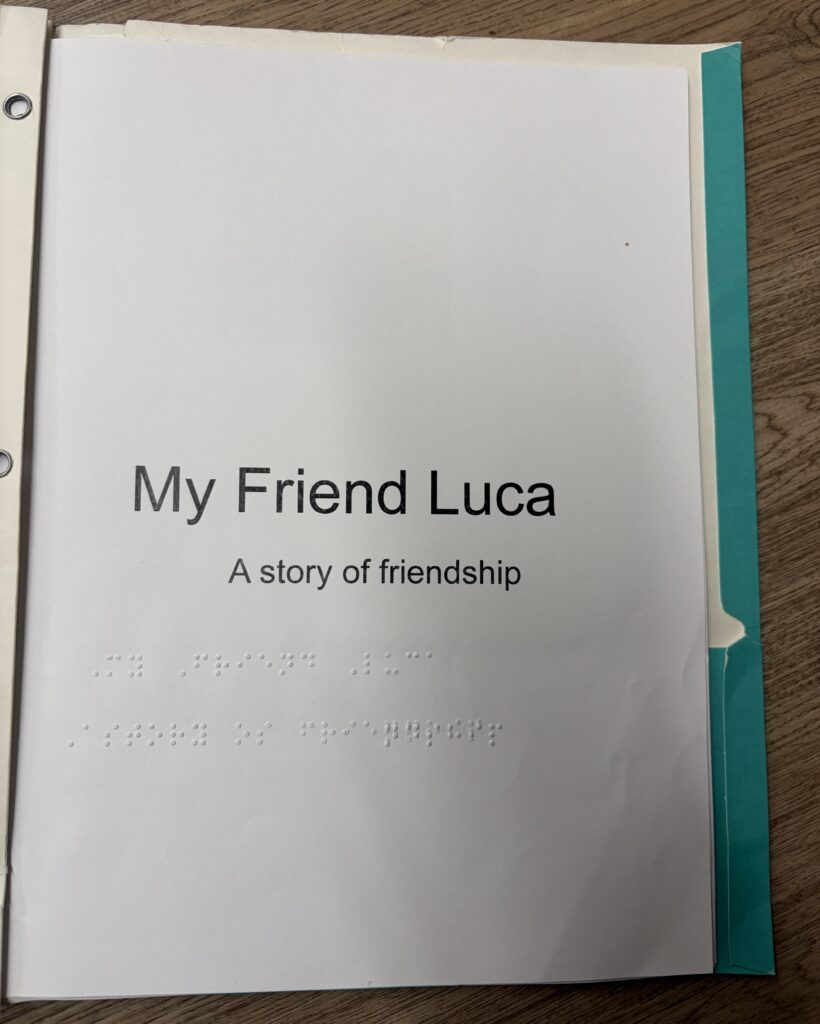
One of his vision teachers, Ms. Charli, created a book for his preschool called “My Friend Luca,” which explains that Luca’s eyes don’t work well and that he uses his hands to see the world. “It helps other children understand why Luca might want to hold their hand or reach out and touch their face,” Blair said.

There were also monthly trips into the community with his orientation and mobility coach, Ms. Annette. “We went to the strawberry patch, the grocery store, and Lowe’s,” Blair said. “We did normal things so she could observe him in public—such as how he navigated with his cane.”

Luca’s current mobility and orientation coach, Mr. Mike, is the past president of the Maryland School for the Blind and a member of the local school system that now serves Luca’s needs. “Mr. Mike is just amazing!” said Blair. “He focuses on learning through play and wants Luca to think of him as a fun grandpa. He even got Luca to sit on the swing, which he was terrified to do.”
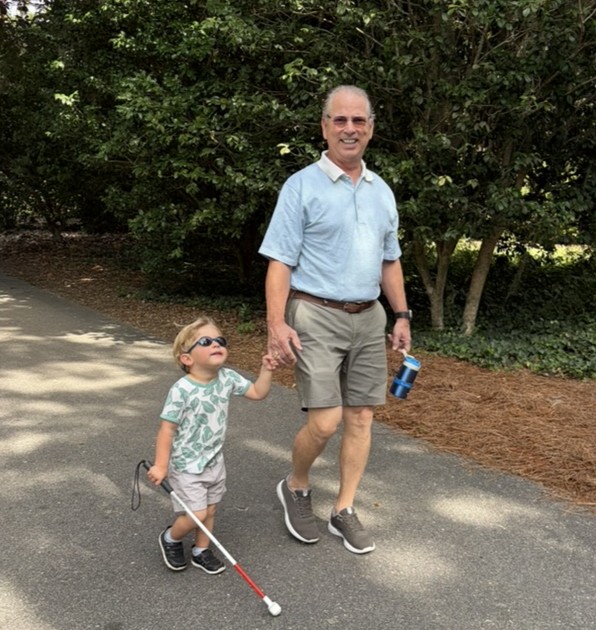
Luca holding his cane and walking next to his grandfather

Going Forward

The Corso’s attended this year’s Hope in Focus Family Conference for the first time and found the information and variety of speakers very helpful. Meeting other families with children who have LCA was supportive, especially those dealing with the same gene mutation and its consequences.

Blair and John recommend that parents seek early intervention resources for their child with LCA and be open to help. They hold out hope that the treatment in the UK might become available for Luca while continuing to prepare him for a future where he is blind.

For now, the couple finds great joy in their little boy and his “can-do” spirit, delightful personality, and bright, engaging mind. They have and will continue to ardently advocate for Luca as he walks into the future surrounded by their unending love and support.

Information on the treatment for LCA4: https://www.fightingblindness.org/news/lca4-gene-therapy-restores-meaningful-vision-for-blind-children-1861

Reports on Gene Therapy Advances: A Highlight from the 2025 Hope in Focus Conference in Minneapolis

Gene therapy is unequivocally the most advanced approach for treating retinal diseases like Leber congenital amaurosis (LCA). Of course, there’s LUXTURNA® which is FDA-approved and has restored significant vision for people with LCA caused by RPE65 mutations. But several other emerging gene therapies are, or will soon be, in clinical trials. Excitingly, some are restoring vision early in human studies.

I had the honor and privilege of moderating an expert research panel at the 2025 Hope in Focus Conference last June in Minneapolis to discuss some of the exciting developments in LCA gene therapies. The three panelists were Kenji Fujita, MD, chief medical officer, at Atsena Therapeutics; Sarah Tuller, JD, chief regulatory officer at Opus Genetics; and Bikash Pattnaik, PhD, a professor at University of Wisconsin-Madison.

Atsena’s LCA1 Gene Therapy Moving into Phase 3

Dr. Fujita delivered the exciting news that Atsena’s LCA1 (GUCY2D) performed very impressively in a Phase 1/2 clinical trial. “We were super-thrilled with the results,” he said. “The gene therapy worked better than we expected.” Thanks to the excellent results, the gene therapy is moving into Phase 3 in a co-development partnership with Nippon Shinyaku which brought a few of their representatives to Minneapolis.

The Phase 1/2 trial enrolled nine adults in Part A (the dose escalation group) to evaluate initial safety and determine the optimal dose. An additional three adults and three pediatric patients were subsequently dosed. Patients receiving the highest dose (all were treated in one eye) had 100-fold improvement in retinal sensitivity, as measured by full-field sensitivity (FST). Some had10,000-fold improvement. Patients were also able to navigate a multi-luminance mobility test (MLMT) in dimmer light (two lux levels lower) after treatment. “This was a transformative difference, on par what we have seen with LUXTURNA,” said Dr. Fujita.

The Phase 3 clinical trial will enroll a larger group of patients and treat both eyes. Some patients will be in a deferred treatment group, serving initially as controls.

The Foundation Fighting Blindness, through its RD Fund, is an original investor in Atsena.

Opus Reports Vision Improvements in LCA5 Gene Therapy Clinical Trial

Opus Genetics, a company established by the Foundation Fighting Blindness in 2021, launched its first clinical trial in 2023 for an LCA5 gene therapy. LCA5 is a severe retinal degeneration diagnosed in a child’s first year. It is also very rare, affecting only about 200 patients in the US. 

Opus reported excellent results for the first three patients (adults) in the trial with improvements in FST and virtual maze navigation. The company is now dosing pediatric patients and expects to report on them in the third quarter of 2025. “We are trying to move forward as aggressively as the FDA will allow,” said Ms. Tuller.

She acknowledged the great work of Dr. Tomas Aleman, the principal investigator on the trial, who was also at the meeting and had an engaging discussion with Sarah McCabe, one of the first patients to receive an RPE65 gene therapy.

A CRISPR Therapy is Emerging for LCA 16 

Dr. Pattnaik reviewed his team’s emerging CRISPR gene editing approach for correcting the W53X mutation in the gene KCNJ13 which causes LCA16. He explained that the treatment works like molecular scissors to cut out the mutation. 

Dr. Pattnaik is using lipid nanoparticles ⎯ which are like microbubbles ⎯ to deliver the treatment into retinal pigment epithelial (RPE) cells. Unlike most other genetic therapies which use engineered viruses to get genetic cargo into cells, nanoparticles have the advantage of being able to deliver therapeutic cargo of any size. Also, they are less likely to cause an immune reaction than viral systems.

Dr. Pattnaik tested the approach in cells and small animal models, and is now evaluating it in a large animal. He said the FDA is very positive about their current development plan. 

The CRISPR therapy is currently funded through a grant from the National Institutes of Health (NIH) and was previously supported by the Foundation Fighting Blindness.

Dr. Pattnaik is also a co-founder of Hubble Therapeutics which is advancing a KCNJ13 gene augmentation therapy developed in his lab.

Diverse Emerging Therapies Featured at the 2025 Hope in Focus Conference in Minneapolis

The development of diverse treatment approaches for Leber congenital amaurosis (LCA) is necessary because no single modality will work for everyone affected. While development of gene augmentation therapies (i.e., replacing mutated genes with healthy genes) has much momentum, other approaches also show promise as they move into and through clinical trials. Three of those emerging alternatives were discussed by a panel of experts at the Minneapolis meeting in June. The panel was moderated by Amy Laster, PhD, chief scientific officer, Foundation Fighting Blindness.

Ray Therapeutics’ Optogenetic Approaches

Raj Agrawal, MD, the vice president of clinical development at Ray Therapeutics, presented his company’s emerging optogenetic therapies which are moving into clinical trials for retinitis pigmentosa (RP)choroideremiaStargardt disease, and age-related macular degeneration. While Ray isn’t currently targeting LCA, optogenetics is an approach which may be applicable to some LCA patients.

Optogenetics is a gene-independent approach for restoring some vision for people with advanced inherited retinal diseases (IRDs) who have lost most or all their photoreceptors (rods and cones), the retinal cells that make vision possible. Ray’s therapies deliver genes that express a light-sensing protein called channelrhodopsin to either bipolar or ganglion cells ⎯ cells that are normally not light sensitive but survive after photoreceptors are lost. In essence, the therapies enable bipolar or ganglion cells to work like a back-up system for photoreceptors. The therapies are delivered by a one-time injection into the vitreous, the soft gel in the middle of the eye. These non-invasive injections are performed thousands of times every day in retinal doctors’ offices for treatment of AMD and diabetic retinopathy.

While Ray’s clinical trials are at an early stage, Dr. Agrawal said early reports for safety and efficacy have been encouraging. Stay tuned.

Sepul Bio’s RNA Therapies for LCA10 and USH2A

In early 2022, the biotech company ProQR reported that sepofarsen, its RNA therapy for LCA10 (IVS26 mutation in CEP290), did not meet its primary endpoint in a Phase 2/3 clinical. That news came despite vision improvements, some significant, for many patients in the trial. The endpoint miss led ProQR to stop development of its ophthalmology assets ⎯ sepofarsen and ultevusen (exon 13 mutations in USH2A) ⎯ and find a company to acquire them. 

Mike Schwartz, who was then vice president, global project leader, at ProQR, said, “That was devastating for me, the doctors, and the patients.” He noted that one patient with LCA10 in the trial with only light perception gained enough vision after receiving sepoafarsen to see letters on an eye chart. Another LCA10 patient in the study was able to return to his work as a carpenter after treatment.

Fortunately, a year and a half later, the large European eye care company Théa acquired sepofarsen and ultevursen and formed the Sepul Bio business unit to move the therapies back into clinical trials. Many former ProQR staff went to Sepul Bio including Dr. Schwartz who is now their chief operating officer.

A Phase 2 clinical trial for ultevursen is underway and a global Phase 3 trial for sepofarsen is imminent. Using what was learned from the ProQR trials, the Sepul Bio team made significant changes to designs for the forthcoming trials ⎯ changes they believe will greatly improve chances for success. Mr. Schwartz thanked the Hope in Focus team for providing input from patients for the sepofarsen clinical development program.

Sepul Bio’s RNA therapies, known as antisense oligonucleotides (ASOs), are tiny pieces of genetic material that fix mutations in RNA, the genetic messages that cells read to make protein that’s critical to the cells’ health and function. Both sepofarsen and ultevursen are delivered by intravitreal injections every six months.

BlueRock Therapeutics’ Photoreceptor Replacement Therapy

The development of cell therapies for IRDs has been challenging for numerous reasons. Therapeutic cells haven’t been easy to source and enabling them to survive and integrate when transplanted into patients’ retinas has been difficult.

As a panelist for the session, I had the privilege of discussing a promising photoreceptor replacement therapy from BlueRock Therapeutics which came out of the lab of stem cell pioneer David Gamm, MD, PhD, University of Wisconsin-Madison. Excitingly, BlueRock’s therapy just moved into a clinical trial for people with RP and cone-rod dystrophy. Dr. Gamm said the cells might at some point be relevant to LCA patients.

The photoreceptor precursors used in the trial came from induced pluripotent stem cells (iPSC). The iPSC were derived from a small sample of mature blood or skin cells from a healthy donor. The cells were genetically tweaked to revert back to a stem cell state. The iPSC were then coaxed forward to develop into the photoreceptor precursors. As precursors, they aren’t fully mature. Dr. Gamm research showed that precursors have the best chance at survival and integration after transplantation.

BlueRock has the backing of two prominent companies: Bayer and Fuji Film. The Foundation Fighting Blindness funded Dr. Gamm’s previous iPSC-related lab research.

The BlueRock trial is moving forward methodically so that investigators can ensure safety for patients and best understand which patients and conditions can benefit most from the approach.

The Importance of Newborn Screening

Newborn screening is essential for identifying genetic conditions, such as Leber congenital amaurosis (LCA), at the earliest possible stage. As LCA is an early-onset inherited retinal disease with severe vision loss at birth, early diagnosis is necessary for timely medical intervention, access to specialized care, and critical support for families. According to the National Organization for Rare Disorders (NORD), newborn screenings detect approximately 14,000 infants each year with conditions that could affect their development or survival if left undetected.

The sudden shutdown of the federal committee, the Recommended Uniform Screening Panel (RUSP), which helps guide which conditions are included in newborn screenings is alarming. Without the committee, progress would slow and create a serious threat to the consistency of newborn screening nationwide.

The National Organization for Rare Disorders (NORD) is advocating for the reinstatement of this committee and continued investment in comprehensive, state-wide newborn screening programs. Hope in Focus signed on to a letter of support to HHS Secretary Kennedy. As members of the LCA community, we push our community to recognize the importance of preserving and advancing early detection for rare diseases.

We encourage our community to spread awareness of newborn screening programs and rare disease research.

LCA5 Gene Therapy Provides Vision Improvements in Clinical Trial

Nothing is more hopeful or gratifying for the retinal disease community than an emerging or FDA-approved therapy that provides vision to people with advanced retinal disease. Such is the case with Opus Genetics’ gene therapy for Leber congenital amaurosis 5 (LCA5) in an early-stage clinical trial.

In March 2024, the company announced vision improvements for the first three adult patients in its Phase 1/2 LCA5 gene therapy clinical trial. Some patients, who had been almost totally blind since birth, can now see and identify objects for the first time. The company has also reported positive safety data for the trial thus far.

Though LCA5 patients have severe vision loss at birth, they have some surviving retinal structure that researchers believe can be harnessed for improved vision using gene therapy.

Known as OPGx-001, the gene therapy uses a human-engineered adeno-associated virus (AAV) to deliver healthy copies of the LCA5 gene to patients’ retinas, augmenting the mutated copies that cause vision loss. The therapy is administered through a one-time injection underneath the retina. Researchers believe gene therapies will be effective for many years, perhaps for the patient’s lifetime.

Opus plans to administer the next highest dose of its LCA5 gene therapy to the next cohort of adult patients in mid-2024. The company also has plans to dose patients as young as 13 years old sometime in the future.

The Phase 1/2 clinical trial is led by Tomas S. Aleman, M.D., at the Center for Advanced Retinal and Ocular Therapeutics (CAROT), Scheie Eye Institute, Department of Ophthalmology of the Perelman School of Medicine, University of Pennsylvania.

Courtney Coates, Hope in Focus’s Director of Outreach and Development, stated, “We are thrilled that patients in this trial are having early success with the low-dose treatment. We look forward to hearing more as the next cohort is enrolled for the mid-dose.”

The LCA5 gene therapy clinical trial is the first launched by Opus, a company founded in 2021 by the RD Fund, the venture arm of the Foundation Fighting Blindness, which is investing in companies near or in early-stage clinical trials for their retinal degenerative disease treatments.

Seeing Home Differently: Purchasing a Home for Life with a Visual Impairment

As someone with a visual impairment, I’ve learned the importance of choosing accessible environments. I recently purchased my first home and wanted to share some lessons I learned about accessibility and the home-buying process.

One of the most important decisions anyone makes when selecting a home is picking a real estate agent who understands your needs and desires. Of course, you want someone who knows your local market and won’t pressure you to make a decision you aren’t ready for. But as someone living with a visual impairment, I also wanted an agent who had experience helping people with disabilities find a home. I started by speaking with a few agents who mentioned having this expertise on their websites, but I did not find anyone I felt comfortable working with.

The Right Agent
Thankfully, I asked a friend who is also visually impaired and who had recently moved. He had an excellent referral for an agent whom I contacted and chose to work with. Because of my real estate agent’s knowledge and experience, he was able to help me narrow my search by eliminating areas with poor public transit or limited businesses within a walkable distance. He also helped me identify features that would make my life easier as a visually impaired person, such as green space for my guide dog, nearby access to trails making it easier for me to run with a guide, easy-to-use appliances, and lots of lighting.

I looked at a lot of properties, and it was overwhelming! As I searched, I also discovered several things that would make my life better. I eliminated properties that required renovations. I’m not handy and have no interest in supervising a construction project. I also excluded properties on busy roads because it’s much easier for me to navigate quieter spaces, and I like to avoid noise as much as possible.

Adding Accessibility
I ended up purchasing a first-floor condo, which provides for trouble-free maintenance. It has a large patio, making it easy to take my guide dog outdoors, and it allows me to be outside as much as possible.

Once I moved in, there were a few things I needed to do to make my new home more accessible for me. Some rooms were not as bright as I wanted, so I purchased the brightest LED lightbulbs I could find. I was also tired of having thermostats that I could not control independently. Thankfully, there is a wide selection of thermostats that you can control with an app on your phone. I got an EcoBee thermostat and found the app fully accessible. Finally, I put Braille labels on all my appliances so I can use them independently. The Braille Superstore is a great place to get a Braille label maker and other stickers/labels to make your home more accessible.

I’m thrilled to have my own home and to live in an accessible and comfortable place. I hope my experience gives you some ideas regarding purchasing a home and how to make it more accessible for you or a loved one.