Living with IRDs: Insights and Inspiration from the Front Lines

The 2025 LCA Family Conference in Minneapolis, MN, offered four informational panel sessions, where the 135 attendees learned about living with Leber congenital amaurosis (LCA) and other inherited retinal diseases (IRDs), participating in clinical trials, and the latest research and therapy updates.

The first session, “Living with an IRD,” was moderated by Laura Manfre, co-founder and Board Chair of Hope in Focus. This session is often a highlight for families wanting to learn how to support their children diagnosed with an IRD.

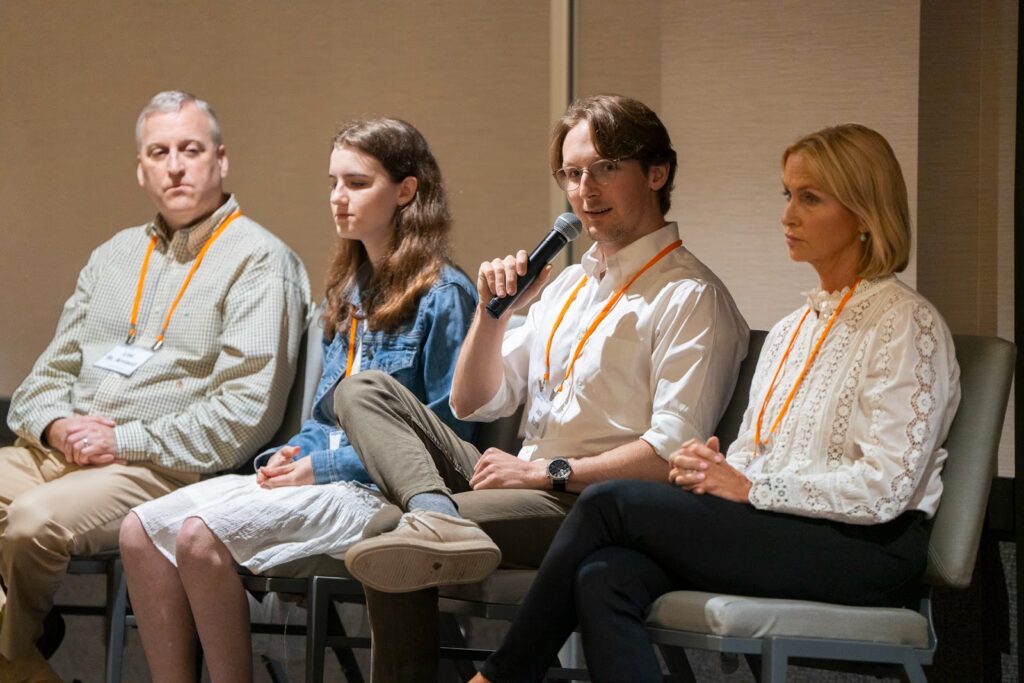
Laura Manfre, Lee St. Arnaud, Elle St. Arnaud, Jack Morris, Leslie Morris

Laura posed questions to the four panel participants, which included 18-year-old Elle St. Arnaud, who has LCA IQCB1/NPHP5 and is attending Boston University this fall, and her father Lee St. Arnaud, and 22-year-old Jack Morris, who has RP CRB1 and is a recent graduate of Brown University, and his mother Leslie Morris.

Below are some of the panelists’ edited responses to Laura’s questions.

What has your school journey been like? What challenges have you faced, and how did you advocate for yourself?

Elle St. Arnaud

Elle was educated in the public schools with a paraprofessional supporting her in class from preschool through fourth grade. She said that a key to her success was learning to advocate for herself early on by participating in her individualized education plan (IEP) meetings, explaining her accommodations to teachers, and taking responsibility for communicating her needs, especially regarding her vision. Elle reflected on the importance of self-advocacy and how it has shaped her life.

“It’s vital for kids to be able to explain their accommodations, as others often don’t fully understand visual impairments,” she said. “While I’ve had positive experiences, I’ve also faced challenges, such as being discouraged from joining the debate team or taking advanced classes. I pursued both anyway, proving that being blind doesn’t limit one’s ability to succeed. Self-advocacy and standing up for your needs are essential life skills.”

Jack Morris

Jack started in public schools and later switched to a private school. His vision was relatively good throughout most of his schooling. Jack thought he might have done even more to advocate for himself. Still, regular meetings with teachers and advisors proved very helpful. He said, “When people understand what you need, they generally want to help.” Although at the university level, he said some professors were resistant to making accommodations.

He stressed that “Accommodations are not favors—they are necessary for success. Blind individuals are not less intelligent; they simply need equal access to materials to perform just as well as others. Having confidence in advocating for these needs is crucial, and legal protections like the ADA support this.”

As parents, can you share a little about your journey? How was it seeking a diagnosis, and what are some things you wish you’d known earlier?

Lee St. Arnaud

Lee explained that Elle and her older brother, Patrick, both have LCA. When trying to diagnose Patrick’s vision issues, he shared how difficult it was when the doctor offered only a brief response, instructing them to return in five months to confirm their son’s blindness. Overwhelmed, the family immediately reached out to resources like the Chicago Lighthouse for the Blind, which connected them with supportive networks and foundations.

Lee stressed the importance of parents being proactive and finding tools like a detailed year-by-year visual goals guide, which they used effectively in IEP meetings to advocate for their children’s needs. He emphasized the importance of being prepared, pushing for necessary services, and actively advocating for the child and family.

The St. Arnauds encouraged their children to participate in outside activities like adaptive climbing and the live hockey association. “So many times we were nervous and sweating bullets. But by the time we got done, the kids were like, you know what? We can do this!” Lee said.

Leslie Morris

Leslie said that Jack’s diagnosis with a recessive form of RP at age five came as a shock because there was no family history. She described feeling heartbroken and overwhelmed by a sense of loss and isolation. Despite these emotions, Leslie and her husband, Jason, chose not to accept discouraging responses from doctors. Instead, they took action—connecting with others affected by IRDs and becoming involved with the Foundation Fighting Blindness, where both serve as trustees.

Advocacy became like a second job for the Morris family, as they worked to ensure Jack had every opportunity for a full and meaningful life. Leslie said they didn’t want the disease to define their son, and they encouraged him to try various activities like baseball, football, swimming, wrestling, and guitar. “We focused on letting Jack decide when to step away from activities while gently steering him toward pursuits that offered long-term fulfillment,” Leslie said.

How do you give your child enough independence to grow and to learn, while also wanting to protect and keep them safe?

Lee St. Arnaud

Lee felt that they didn’t experience significant disagreements with Elle or Patrick regarding their ability to self-manage. He stressed the importance of balancing caution with encouragement and supporting early opportunities for independent experiences in the community without rushing the process. He also reflected on the importance of understanding your child’s interests as they mature.

Elle St. Arnaud

Elle immediately spoke up after her father, expressing her childhood frustration and conflict with her parents over having to take Orientation and Mobility (O&M) training particularly the inconvenience and social discomfort of being taken out of school. Despite hating it at the time, she admitted the lessons had long-term value, especially in promoting independence. She noted the importance of starting children early with independent tasks at home, like cooking and laundry, while pacing community-based skills more carefully. “I think parents should keep their children engaged in O&M even if the child resists,” Elle said. “Because it equips them with critical life skills—such as safely crossing the street—that pay off later.”

Leslie Morris

Leslie emphasized the importance of parental teamwork and unity, particularly when supporting a child’s journey toward independence. She admitted to being a bit of a helicopter mom. “My husband, Jason, and I agreed on things before letting Jack go out and try them,” she said. “Having somebody by your side through this journey is very important.” She added that when parents are aligned in decisions and approaches, it helps minimize conflict and makes the process smoother.

Panelists seated on stage during a clinical trial discussion, with Jack Morris speaking into a microphone

Jack Morris speaking at the 2025 LCA Family Conference

Jack Morris

Jack didn’t recall having major conflicts and expressed gratitude for the trust his parents placed in him. One slight regret he had was not wearing sunglasses earlier, due to self-consciousness. Jack said he appreciated the opportunity to try things—even fail—while still feeling supported and safe.

Much to the amusement of the conference attendees, Jack recounted a brief period when he was legally allowed to drive, a decision made with medical guidance that, in hindsight, seemed very questionable.

“I appreciated that my parents trusted me to be able to take care of myself. This journey makes you resilient, tough, and resourceful,” Jack said. “Kids can be very clever in planning solutions to their unique circumstances, and my parents trusted me in that.”

Community members have expressed that mental wellness and accepting vision loss can be difficult. Elle and Jack, what are your thoughts?

Elle St. Arnaud

“Not wanting someone to see your pain and not wanting to wear sunglasses or use a cane will likely peak around middle school,” Elle said. “No one wants to be different, and you want to be ‘on trend’ with everybody else.”

She added that having a para in the classroom with her all of the time was an inhibitor and made it harder for her to talk with other kids. “Parents should try not to hover when their child is with other children because it can make them feel less confident or social,” she said.

Elle said she made it a priority to share her experiences as a blind person with her sighted friends. “We’d make jokes about it, and I talk about it constantly. I’d share what I’ve experienced and every blind story I’ve had,” she explained. “I think that’s important because when you need to ask your friends for help, they are a lot more understanding because you’ve explained it and talked about it so many times with them.”

For example, she told her friends about walking into a door, which helped them be more aware that she might not see it, allowing them to take the initiative to guide her when needed. “I think the easiest way to be accepted is to talk more about your blindness so it feels more normal,” Elle said.

Jack Morris

“I think there’s a line to be found between letting a disease define you and rejecting that it’s a part of you, because retinitis pigmentosa (RP) has been a huge part of my story—a beautiful but also a tough part. It’s something that feels different and lonely, but also unifying and community-building,” Jack said. “If we can find ways to live in and with our disease rather than despite it, that’s where truth and freedom lie for me.”

He offered advice to parents, saying that they needed to be strong in ways that aren’t obvious. “One of the hardest things for parents is watching their child struggle. But sometimes the biggest strength is allowing them to struggle. Kids need to feel the full spectrum of emotions—challenge, loneliness, empowerment, and togetherness,” Jack said. “If parents can be there as a foundation, even when things are hard, and let them be hard before stepping in with action, that’s one of the most powerful and meaningful things they can do for their children.”

LCA5 Gene Therapy Provides Vision Improvements in Clinical Trial

Nothing is more hopeful or gratifying for the retinal disease community than an emerging or FDA-approved therapy that provides vision to people with advanced retinal disease. Such is the case with Opus Genetics’ gene therapy for Leber congenital amaurosis 5 (LCA5) in an early-stage clinical trial.

In March 2024, the company announced vision improvements for the first three adult patients in its Phase 1/2 LCA5 gene therapy clinical trial. Some patients, who had been almost totally blind since birth, can now see and identify objects for the first time. The company has also reported positive safety data for the trial thus far.

Though LCA5 patients have severe vision loss at birth, they have some surviving retinal structure that researchers believe can be harnessed for improved vision using gene therapy.

Known as OPGx-001, the gene therapy uses a human-engineered adeno-associated virus (AAV) to deliver healthy copies of the LCA5 gene to patients’ retinas, augmenting the mutated copies that cause vision loss. The therapy is administered through a one-time injection underneath the retina. Researchers believe gene therapies will be effective for many years, perhaps for the patient’s lifetime.

Opus plans to administer the next highest dose of its LCA5 gene therapy to the next cohort of adult patients in mid-2024. The company also has plans to dose patients as young as 13 years old sometime in the future.

The Phase 1/2 clinical trial is led by Tomas S. Aleman, M.D., at the Center for Advanced Retinal and Ocular Therapeutics (CAROT), Scheie Eye Institute, Department of Ophthalmology of the Perelman School of Medicine, University of Pennsylvania.

Courtney Coates, Hope in Focus’s Director of Outreach and Development, stated, “We are thrilled that patients in this trial are having early success with the low-dose treatment. We look forward to hearing more as the next cohort is enrolled for the mid-dose.”

The LCA5 gene therapy clinical trial is the first launched by Opus, a company founded in 2021 by the RD Fund, the venture arm of the Foundation Fighting Blindness, which is investing in companies near or in early-stage clinical trials for their retinal degenerative disease treatments.

VISION BEYOND SIGHT: The Power of Community

It can be easy to feel alone living with an inherited retinal disease (IRD). As a kid, only one other person in my school had a visual impairment. Recently, I went on a first date with someone who said, “Forgive me if I ask any dumb questions—I’ve never dated someone who is visually impaired before.” She is not the first person to express such a sentiment on a date with me. In fact, I’m pretty sure I’m the first visually impaired person for every woman I’ve dated. I’m also the first visually impaired colleague, friend, etc., for most people in my life.

Throughout my life, community has played a significant role in helping me feel less alone in these moments. I’ve been fortunate to be connected to groups of other visually impaired people, where I’ve been able to learn from their successes, feel less alone by connecting with others who have similar experiences, and support people who are experiencing challenges I have overcome.

It is common for young people with visual impairments not to feel fully seen or understood by their sighted peers. For many, finding a community of visually impaired peers is the first time they feel they can truly be themselves in social situations. These environments can help them develop more confidence interacting in other social situations.

Having access to such communities has helped me get to where I am today. When I think that accessibility barriers are too significant to overcome, I can look in my community for proof that it can be done. When I feel like I am the only person going through a particular challenge, I can ask my community to find someone who has already overcome it. When I encounter an accessibility = barrier that feels unfair, my community and I can work together to fix it.

Many things can contribute to a visually impaired person’s success, and having a community is one of those foundational things that I encourage everyone with a visual impairment to seek. Of course, a community can only do so much. But I’ve learned that people are resilient, and having a community can help us find and develop resiliency.

Connecting with organizations like Hope in Focus can be an excellent opportunity for you and your family. Learn more about the Hope in Focus Family Connections program, our LCA conference 2025, and other organizations supporting those living with visual impairment on our website at hopeinfocus.org.

MEET ANTHONY FERRARO: Social Media Star, Professional Athlete, Musician, and Dad Living with LCA

Prepare to be inspired by Anthony Ferraro, the featured speaker at our major fundraising event, Dinner in the Dark, on November 2, 2024, at Foxwoods Resort Casino in Mashantucket, Connecticut. Here is a sneak peek into his incredible journey.

With supercharged energy and positivity, Anthony, born with Leber congenital amaurosis (LCA), shares what it’s like to be blind through motivational speaking and his various social media platforms. His wife, Kelly Anne, helps him plan out what he wants to portray, and then she shoots and edits the videos about their life that later appear on TikTok, Instagram, Facebook, and YouTube. Anthony’s social platforms have become popular as he shares what managing the world without vision is like. As an advocate for increased accessibility, whether he’s changing diapers, making smoothies, or skateboarding, he shares how he tackles a variety of activities without sight.

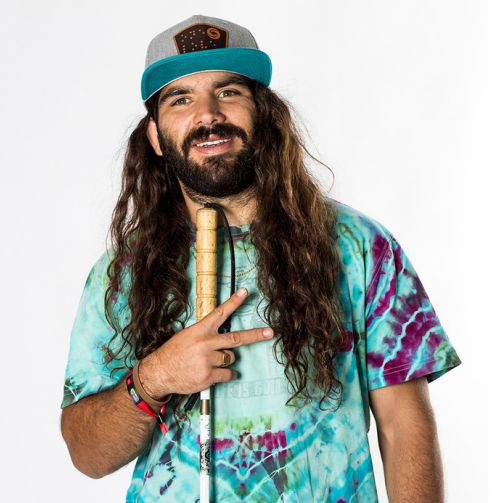
Anthony wearing a tie-dye tee-shirt holding up a peace sign and his guide cane.
Anthony Ferraro

Growing up in Spring Lake, New Jersey, the youngest of five children, Anthony was born with only 20/400 visual acuity (profound vision loss). He lost a chunk of vision in seventh grade and then again in his junior year of high school. Now in his late twenties, Anthony’s vision is decreasing daily, and he says, “The light is starting to go black.”

Against the odds, Anthony became a champion wrestler in high school and was the subject of an award-winning film, A Shot in the Dark, documenting his attempt to win a state wrestling championship in his senior year. In a previous interview with Hope in Focus, he said, “Wrestling has taught me a lot of things. It taught me hard work, that things don’t happen overnight, discipline, and how to deal with loss. It helped me prepare for life.”

Anthony aims to participate in the Los Angeles Paralympic Games in 2028 in Judo. The pivot from wrestling to Judo resulted from a concussion that ended his wrestling career in college. However, this event opened the door to pursuing Judo when the U.S. Paralympic team asked him to train for the team.

Open about his life, Anthony talks about struggling with depression. “When I was 19, I got so depressed that I checked myself into a mental health hospital. I learned a lot about mental health and not bottling things up. I got to work on myself and learn about what I was feeling and going through,” he said. “When I was 21 or 22, I started accepting the fact that I was blind and started using my cane and the resources that were around. That’s when my whole life changed. Soon after, I met Kelly Anne!”

An accomplished musician and skateboarder, Anthony is game to try almost anything. He and Kelly Anne have a baby girl, and some of his videos demonstrate how he cares for her. One example is his TikTok video “How I Find My Baby as a Blind Dad.” With unending zeal and courage, which Kelly Anne fully matches, Anthony propels himself into life.

Come meet Anthony and his family at Dinner in the Dark 2024 and hear him speak about his personal experiences and hopes for a possible treatment for LCA, tickets are available at hopeinfocus.org/dinner. Learn more about Anthony and connect with him on social media at asfvision.com.

HOPE IN ACTION: A Conversation with Laura Manfre

How did Hope in Focus begin?

In 2013, after our daughter, Sofia, was diagnosed with Leber congenital amaurosis (LCA) IQCB1/NPHP5, the Foundation for Retinal Research (FRR) asked if my husband and I would be willing to raise funds for treatments for her genetic mutation. The FRR was started in 1998 by David and Betsy Brint, whose son had LCA. Little was known then about the disease, and there wasn’t an LCA community when they began. The Brints faithfully stewarded the research and a handful of LCA families to grow that organization into a real community. So, we said yes to the FRR’s request and quickly raised about fifty thousand dollars, largely from our local community in southeastern Connecticut. This success blew us away, but there wasn’t an active research project for Sofia’s gene.

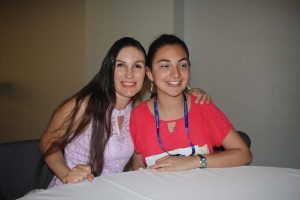
Two girls at the LCA Family Conference

Realizing that so many people were willing to help us, we thought, why not raise funds for all LCA conditions so we can put the funds we raise into use sooner? A broader funding goal would allow us to designate monies for the most promising research and advance projects already in the pipeline. All boats float in a high tide, right? It was the right thing to do. Honestly, I also thought pushing the projects that are further along faster might be the most effective way to help advance the research related to Sofia’s gene. In 2014, we incorporated our 501(c)(3). Setting up the nonprofit made it easier to steward and thank donors. In Connecticut, three people are needed to create a nonprofit. So, my husband, Chuck, myself, and our good friend, Elisse Rosen, founded Sofia Sees Hope, later called Hope in Focus when we changed our name in 2021.

I think it was in early 2017 when David Brint became chair of the board of directors for the Foundation Fighting Blindness (FFB) that the FRR was rolled into the FFB. This change was significant for LCA research because of the FFB’s incredible influence and expertise in research. At the same time, because the FFB serves all forms of blindness, this change opened a gap for focused support for our LCA community. As a single, rare disease-focused organization, Hope in Focus was able to fit right in and fill that gap.

How did your mission/vision evolve?

LCA is a rare disease, which means we are a small community, but we have shared experiences that create a strong sense of unity. As I interacted increasingly with industry and researchers, I learned just how vital it was to have an empowered community equipped to engage with research and biotech to support the advancement of treatments. At the time, it was also apparent that we needed to focus on genetic testing. Genetic diagnosis is still an issue for our community, although we’ve come a long way, and I’m pleased that our work at Hope in Focus has made a real impact in this arena with our fundraising, outreach, and awareness campaigns. When individuals in our community have a confirmed genetic diagnosis and understand how treatments are developed and brought to market, they will also know why we must speak up, be involved in fundraising, and consider participating in patient registries, natural studies, and, hopefully, clinical trials.

When I think about how we’ve evolved, although our mission has stayed the same and is still very relevant, the biggest “a-ha” for me has been realizing that it’s not enough to raise money for research. Understanding the importance of advocacy and our voice in developing our treatments is critical. As a community, we can’t wait for these treatments to fall like manna from heaven. That might be how it works for a lucky few in the future, but that is not how this process works. We must actively participate in registries, natural history studies, patient advisory boards, and legislation. And the community with a voice and a level of representation will garner interest in its rare disease. The more aware and connected we are with the entire ecosystem involved in developing treatments, the greater the opportunity to influence these things.

What have you learned about the research community?

I was surprised by how meaningful it was to meet the people behind the science. As I spoke at events and met the community working on treatments, I stopped thinking about them as a monolith. These are dedicated, caring individuals working daily to benefit people they don’t know. When they have a chance to hear from folks living with LCA, these interactions help inform their work and motivate them to keep at it. We need them to keep working hard to find those treatments, and I think hearing our stories helps. As I experienced these interactions, I realized that to achieve our mission, we needed to facilitate engagement across the entire LCA ecosystem, including everyone impacted by the disease, biotech, regulatory agencies, investors, other nonprofits, and advocacy groups. It takes a lot of people to bring a treatment to market, and we all have a part to play.

Another thing I learned was that an informed LCA community needs to make sure that positive policy decisions are made regarding research and access to treatments. Unfortunately, many legislators don’t understand rare conditions, patient protections, and the actual cost of living with a life-long disease. We must educate our legislators and ensure they make sound, sensible policies.

What helps you see the progress made by Hope in Focus?

I was very fortunate to testify at the FDA AdComm (Advisory Committee) meeting in 2017 for the approval of LUXTURNA®. That opportunity was very emotional and a significant milestone not just for those living with LCA but for all rare diseases and gene therapy. For me, it also underscored the importance of our organization. Two years later, at the LCA Family Conference, we hosted in 2019 in Philadelphia, a woman from Washington State shared the story of her son. Before he turned three years old, he was genetically diagnosed with RPE65 and treated with LUXTURNA, still the only genetic treatment for LCA available on the market. Wow! The room went silent. We were talking about getting to this point, but I was surprised it was already happening to someone in the room.

Meanwhile, there were families in that room who were still unable to get a genetic diagnosis. Hearing about her son’s early diagnosis and treatment was incredible and gave us all hope. I want to hear more of these stories for all genetic variants of LCA. Another exciting development is the growth of our international community. At our LCA Family Conference in 2023, we had folks attend from all over the world, including a family living in China who told us about their database of 130 families with the CRB1 genetic mutation. Everyone was shocked that such a large group was identified for a single gene. LCA is a rare disease, making it hard to find and connect people, and here were 130 families with the same gene. Again, wow!

What do you hope for the future?

When we started Hope in Focus, it didn’t seem like anything was happening with research for LCA from my perspective as a parent. But under the surface, research was moving forward, and many dedicated folks in the LCA ecosystem were hard at work. Ten years later, we have a treatment on the market, LUXTURNA®, with four potential treatments currently in the clinic, several preparing for trials, and multiple gene-agnostic therapies in development. There is so much hope as the science is advancing. On the other hand, it has been SEVEN YEARS since I testified before the FDA, and LUXTURNA was approved for just one of our LCA genes, and there are still no new treatments on the market for other LCA variants. We need to keep the pressure on.

What do I hope for the future? This year, Hope in Focus is engaging in strategic planning to ensure that, as an organization, we are prepared and able to meet the changing needs of our LCA families and individuals as science, regulation, and industry evolve over the next 10+ years. When I started ten years ago, LCA research was a ripple, and now it feels more like a big wave. Hope in Focus needs more help to row the boat as that wave grows, including program funding, volunteer support, and dedicated staff. As we plan for the next ten years, we must define what this looks like and what it will take to get there. I also hope that Hope in Focus will participate in more Advisory Committee meetings for drug approvals. I’m disappointed I only got to testify at one of these events! How cool would it be if we could shift from a focus on supporting the advancement of treatments to market to helping members of our community as they evaluate whether or not they want to choose a treatment and then supporting them through that process? (Make sure to read Jack’s story.)

After creating Hope in Focus, have you asked yourself, what have I done?

Yes, I ask myself that question all of the time. At the very beginning, I was one person doing almost everything. Managing a startup nonprofit is exhausting. Today, we have a small but mighty team that includes one full-time employee, but I’m still volunteering at almost the same level as in those early years. Why? Because Hope in Focus is like tapioca; it just keeps growing. I’m very grateful for all of the volunteers and our incredible staff. We’ve connected with and helped so many people from whom I’ve learned so much. While growing Hope in Focus has been very demanding, it also fills my cup, and I feel so lucky to be a part of it.

What other thoughts would you like to share?

Hope in Focus has given me a sense of control over something I had no control over and felt utterly overwhelming. I think our work does the same for other parents and individuals living with this rare disease. I see how we are helping folks today, and I know that we’re helping to advance treatments that will help someone in the future. Hope drives action, and as we keep pushing forward, I’m excited to see what the next ten years bring for our community and Hope in Focus.

Hope in Focus Brings Voices of People Living with LCA Directly to the FDA

Allison Wolf, whose 9-year-old son Elliot lives with the encroaching blindness of Leber congenital amaurosis (LCA), spoke directly to staff from the country’s regulatory agency to help them understand the dire need for treatments for the rare inherited retinal disease.

Elliot Wolf sitting on red chair

“Elliot’s eyes are dying, Allison said. “They are dying, and we have nothing to help slow down the progressive loss of his eyesight,” she told the Food and Drug Administration (FDA).

“What would a timely and effective treatment mean? The whole world,” the mother of four said.

Allison and five others affected by LCA shared their stories with the FDA during a recent Patient Listening Session hosted by Hope in Focus.

We brought together the voices of people living with LCA, caregivers, and a clinician treating people with LCA to FDA staff members in a 90-minute online meeting Oct. 30, 2023. Simply put, we wanted the FDA to truly hear our community’s  voices.

Our year-long planning resulted in a successful session to help regulators understand patient/caregiver experiences related to LCA. We requested the meeting to raise awareness with FDA staff about clinical differences of LCA genotypes, share patient experiences of LCA’s impact on the quality of their lives, given the scarcity of treatments, and communicate the extraordinary significance of vision stabilization for patients.

Raising awareness is key to advancing research

People in our community struggle daily to find ways to cope and try to live normal lives in a sighted world. Still, they never give up hope for new treatments and the possibility of a cure. As an advocacy organization, one of our biggest challenges is creating awareness of LCA.

Courtney Coates, our Director of Outreach and Development, introduced the Hope in Focus mission and said LCA affects about one in 33,000 people and presents early in life, resulting in total blindness. Twenty-seven genes have been identified to cause LCA, with treatment available for one form, while a handful of others are in clinical trials.

Co-founder and Board Chair Laura Manfre said as the parent and caregiver of their daughter Sofia living with LCA, raising awareness, searching out new treatments, and providing support to the growing LCA community became the mission of Hope in Focus.

Laura said she wanted to underscore the goals of treatment, in particular around the stabilization of vision for Sofia and others with LCA.

“While vision restoration would be fantastic, having access to a treatment that stabilizes her vision would be huge for her. Not having to constantly change her accommodations for her changing vision is a huge win, and not having to fall asleep every night worried that the next morning might be the one she wakes up without any vision at all. That would be life changing.”

Sharing a chart showing seven current clinical trials, she explained two are not recruiting at this time, two have been discontinued, and all seven represented only four LCA genetic variations.

“So, there is still a lot of work to be done to advance potential treatments.”

Caregivers and people living with LCA tell their stories

Six people from our community shared their experiences.

Elliot Wolf wearing red glasses and a red shirt
Elliot Wolf

Allison Wolf, who is 45 and from North Dakota, said doctors diagnosed her son Elliot with LCA13 (RDH12) when he was 6, and as he gets older, her challenges also grow.

“Nobody knows how to raise a visually impaired child. I must be taught. I must teach him the sighted world, while also dealing with the challenge of teaching him the non-sighted world,” she told agency staff. “My heart hurts when I hear Elliot say, ‘I just want to be done with all this work and I just want to play.’”

***

Mohamed Farid
Mohamed Farid

Mohamed Farid of Illinois is a 36-year-old entrepreneur, diagnosed with LCA5 at 40 days old. His mother quit her job to take care of him, and they moved back to Egypt. Preserving his sight concerns him the most, and his greatest fear is the risk of injury.

“For new treatments,” Mohamed told the FDA, “the first thing I would look for is something to stop any degradation – I sense that my functional vision has degraded slightly over time and would imagine there is something going on with my retina, but do not know.

I have been told by doctors that I will lose my sight in the next two to three years ever since I was 5, and that lack of a prognosis is a killer. Following conservation, I care most about night blindness, then field of vision. …

“I was lucky to have a huge support network of people, who went out of their way and had a lot of energy and stress tolerance. This does not mean that life was easy or that I would not want a cure, even a partial cure would be life changing. It does mean that the cost of LCA is high, but barely bearable.”

***

Joy Goodwine, 40, of New York is the mother of 7-year-old Jordynn, diagnosed at age 1 with LCA2 (RPE65), and received a new diagnosis last year of LCA1 (GUCY2D). She always wanted Jordynn to have some sense of normalcy.

Jordynn Erwin in pink dress with a hot pink background
Jordynn Erwin

“I’ve always asked family and friends to treat her like any other child,” Joy said. “I do not want people to feel sorry for her and I do not want her to have any special treatment because of her

visual impairment. Jordynn is being raised to know that she is capable of doing anything she wants with limitations…

“What I fear most as a parent with a child living with LCA is I worry that her kindness and vulnerability will lead to unwanted interactions when she gets old enough to go off on her own, or her eyes get worse if treatment is not available.”

***

Linda Wirth is 76 and lives in Colorado. Her vision loss remained a mystery until her diagnosis of LCA10 (CEP290) at age 68. As a child, she learned about the world around her by touching things and holding them.

Linda Wirth
Linda Wirth

“My family often told me, ‘Don’t touch that! You will break it. Don’t act strange. People will stare at you.’ So, I began to fake it, pretending I understood things which I did not in order to get along and not appear any different.”

One doctor early on told her: “You are blind! What do you want me to tell you? If you are looking for a miracle, there is none.”

A retired clinical social worker, Linda’s been angrily dismissed from jury duty and job interviews, ignored by waitstaff, and questioned whether she deserved to be a parent.

“Just as many differently abled folks, I have encountered individuals with various stereotypes and prejudices.”

***

DJ Broadbin of Connecticut is a 34-year-old mother and caregiver to 5-year-old Jace, who was diagnosed with LCA4 (AIPL1) at 10 months old. Through a Hope in Focus connection, she succeeded in getting compassionate use treatment in the UK for Jace. The treatment, which applied only to his specific gene mutation, has restored some of his sight in one eye.

Jace Broadbin
Jace Broadbin

“No matter what happens with his vision or developing new treatments,” DJ told the FDA, “I remain steadfast in having the same goal I had for Jace since the very second I found out I was going to be a mom – I just want him to be happy. And I will continue to fight for his inclusion in this world to make sure that he always is.”

She often finds herself exhausted by the constant stress of being a caregiver.

“I also wish sometimes,” DJ said as her voice broke, “I just got to be a mom. Not a medical coordinator, an occupational therapist, and a Teacher of the Visually Impaired all rolled up into one. Just mom.

“But then I think about all the things that Jace’s diagnosis has given me personally: Clarity. Patience. Compassion and empathy in a way that I myself was too blind to see in those earlier days.”

***

Mirielle St. Arnaud is 16 and lives in Illinois. She was diagnosed with LCA (IQCB1/NPHP5) at 6 months old. Her early diagnosis was possible because her older brother had been diagnosed with LCA.

Mirielle St. Arnaud
Mirielle St. Arnaud

Mirielle worries about her safety and struggles to fit in with her classmates because she misses social cues. She hopes her fairly stable vision will not get worse.

She shared a wish list with the FDA that included personal independence, the opportunity to participate in sports, and more certainty about achieving the career of her choice (she dreams of being a lawyer).

“Some of the more significant challenges I face because of visual impairment relate to jobs and getting hired. It takes longer for me to learn certain skills at a job. I have to rely on others when out in public, especially when traveling. I also struggle to find accommodations for my impairment. It seems that other people know my needs better than I do.”

***

Rachel M. Huckfeldt
Rachel M. Huckfeldt

Our representative clinician, Rachel M. Huckfeldt, MD, PhD, of Massachusetts Eye & Ear, spoke about the difficulties of diagnosing and managing LCA and the small number of clinical trials. Identifying the responsible genes can be difficult, and the small number of patients severely limits opportunities for clinical trials.

Questions asked by FDA staff members focused on a few common themes: Have you participated in clinical trials? What are the key impediments to clinical trial participation? What are your deal-breakers to participation? What would a successful treatment look like to you?

One result certainly not on the agenda was the deep emotional impact of the stories shared by those living with LCA and caregivers. The session manifested itself as a profoundly moving event.

A full summary of the FDA Patient Listening Session will be available on our website.

Plans in the Works for Connecticut’s New Rare Disease Advisory Council and 2023 Rare Disease Day

Advocates for people living with rare diseases are collaborating with Connecticut Gov. Ned Lamont’s office and leaders of the Connecticut General Assembly’s Public Health Committee to build the state’s new Rare Disease Advisory Council (RDAC) that requires appointees, budgets, and bylaws be in place this summer.

Assistant Director of Advocacy for the National Organization for Rare Disorders (NORD) Kristin Angell joined Co-Ambassadors Katie Gillick and Lesley Bennett of NORD’s Connecticut Rare Action Network (CT-RAN) in hosting a Zoom conference with more than 30 people, including state legislators, patient advocates, doctors, researchers, industry leaders, health care providers, caregivers, and people living with rare disease.

NORD Rare Action Network logo

The meeting included two representatives from Connecticut-based Hope in Focus and discussions about the range of needs to be addressed by the new council and the planning of next month’s celebration of Rare Disease Day on Feb. 28.

“We are working on it, and we will get it done,” Bennett said.

A rare disease is defined as one affecting fewer than 200,000 people nationwide. More than 7,000 known rare diseases affect an estimated one in 10 people in the United States, translating to about 30 million people or 10 percent of the country’s population. Globally, 300 million people live with rare diseases.

With the establishment of a permanent Connecticut RDAC, 13 members will be appointed to advise and make recommendations to the Department of Public Health, the Department of Social Services, and other state agencies about the needs of people living in Connecticut with a rare disease and their caregivers. Advisory councils may differ from state to state. Please click here to check whether your state has an RDAC or is working to establish one.

Hope in Focus, in its advocacy for people living with Leber congenital amaurosis (LCA) and other rare inherited retinal diseases (IRDs), helped generate awareness of the need for an RDAC and for the legislation to make it happen.

The cause of many rare diseases is unknown, but about 80 percent are genetic, such as LCA and other IRDs, and about half of all rare diseases affect children.

Getting state agencies to understand the rare disease population is key to the RDAC. Even something as simple as putting links to national rare disease resources on state government departments’ websites would be a big step.

More than 40 people submitted applications to become part of Connecticut’s council, and six have been appointed so far. The names of the new members will be announced when all 13 have been appointed.

The group will include insurance, public health, and social services commissioners, or their designees, and 10 members appointed by the Governor and the Public Health Committee leadership.
Those 10 members will be:

  • a representative of an association of hospitals or a hospital administrator, and a physician with expertise in medical genetics
  • a representative of a patient advocacy group in the state representing all rare diseases, and a family member or caregiver of a pediatric patient living with a rare disease
  • a representative of the biopharmaceutical industry involved in rare disease research and therapy development, and an adult living with a rare disease
  • a member of the scientific community engaged in rare disease research, and a caregiver of a child or adult living with a rare disease
  • a physician who treats people living with a rare disease, and a representative, family member, or caregiver of a person living with a rare disease

Following the midterm elections and changes in some legislative seats at Connecticut’s General Assembly, educating lawmakers is key to finding solutions for people living with rare disease to have the necessary access, resources, and educational tools to enjoy their best quality of life.

One person attending the meeting talked about the need for more doctors and patient advocates in Connecticut because people living with rare disease often must travel to another state for medical care. She also mentioned the potential of patients being charged for sending simple questions to doctors through computer health care portals, and whether lawmakers attending upcoming Rare Disease Day events could help mitigate or eliminate those costs.

Please share any ideas to help raise awareness for Rare Disease Day and your thoughts on bringing Connecticut’s RDAC to fruition by getting in touch with Kristin Angell at kangell@rarediseases.org, Katie Gillick at katie.gillick@rareaction.org, or Lesley Bennett at lesley.bennett@rareaction.org.

NORD and CT-RAN plan another meeting later this month to discuss updates on the RDAC and Rare Disease Day.

Let’s Chat About … Self-Advocacy and Supporting Your Child’s Education with Beth Borysewicz

Children living with visual impairment become more independent and empowered when parents set high expectations for their kids and challenge them every day.

Just ask Beth Borysewicz. In her role with Connecticut’s Bureau of Education Services for the Blind, she makes a living helping children with visual disabilities realize their potential as strong, self-determined adults. And she’s the first one to say, often with tears in her eyes, that her job is to work herself out of a job.

Beth Borysewicz headshot
Beth Borysewicz

She described her work in helping children from birth to 22 years old with visual impairment or blindness become more independent as adults as part of the Hope in Focus “Let’s Chat About …” webinar series. Our March episode, moderated by Courtney Coates, Director of Outreach and Development, featured Borysewicz, an Education Consultant for the Department of Aging and Disabilities, Bureau of Education Services for the Blind.

We developed the series with those living with Leber congenital amaurosis (LCA) and other rare inherited retinal diseases (IRDs) in mind, but we invite all members of our community, including those in research, industry, and the regulatory communities to join any of the sessions, as we look ahead to a common goal of advancing treatments for rare retinal disease. Click here to view this episode.

Borysewicz found her passion working with the blind and low-vision community unexpectedly 16 years ago, when she had a 3-year-old student named Sofia, who was diagnosed with LCA. Yes, that would be the same Sofia as in Sofia Sees Hope, our organization’s original name until a recent rebranding to Hope in Focus. Borysewicz also is Vice Chair of our Board of Directors.

She said parents need to be the biggest advocates for their children.

“If you think your child is not getting what they need, you can ask for it.”

She also encouraged connections with people who have been on this journey before, bringing to mind the Hope in Focus Family Connections program that helps ease feelings of isolation that can arise when a family member is diagnosed with a rare disease.

“It’s the people that have already gone through it who will help you the most, including Hope in Focus. That’s why I’m on the board. What Hope in Focus does for families is immeasurable.”

All the Little Things We Do Every Day

As a Teacher of Students with Visual Impairments (TVI), Borysewicz focuses on teaching students self-advocacy and exploring the Expanded Core Curriculum (E.C.C.), distinguished from a school’s standard core curriculum consisting of courses in math, science, reading, and the like.

E.C.C. comes from the perspective of teaching students with blindness or low-vision and encompasses nine areas: Compensatory Skills, Orientation and Mobility, Social Interaction, Independent Living, Recreation and Leisure, Sensory Efficiency, Assistive Technology, Career Education, and Self-Determination.

The curriculum is more than a checklist or lesson plans for learners with a visual impairment, according to The E.C.C. and Me website. It’s all the little things we do every day, done with intention so children with visual impairments can learn skills they need for a fulfilling life.

Hope in Focus Let's Chat About ... logo

“I wish everyone would do what I do,” Borysewicz told her webinar audience. “There is a shortage worldwide of TVIs.”

She advised parents to set expectations high for their children, challenge them every day, and give them a safe place to learn.

“Children can do anything they set their minds to. Do anything you can do to empower them,” she said. “Celebrate everything. Celebrate every little thing.”

She talked about self-determination, saying it’s her favorite part of the curriculum and the most important.

“It’s teaching a child to believe in themselves and just take that leap,” she said. “It’s taking that step off the curb to cross the street with a cane or initiating a conversation at a lunch table that builds self-confidence.”

Her work with people from birth to age 22 encompasses figuring out resources for newly diagnosed children, for school-aged students, and for young adults transitioning to the workforce or college.

“I switch hats from appointment to appointment every day,” she said. “As you can tell, I love my job.”

Working with individualized education plans (IEP), she and her team helps students become the best they can be in all the E.C.C. areas.

“It’s so important for the student to say, ‘This is what I need and why I need it,’ and just building those skills will make them successful as adults.”

And a lot of it is fun, especially with Borysewicz who excels in the Recreation and Leisure department. It goes back to when she was growing up and her dad always told her she was good at playing with people and should get a degree in play.

She implements that play degree often by creating board games to make math more fun or putting together programs to help students from prekindergarten through grade 3 explore the nine E.C.C. areas in their daily lives.

In an Expedition to Explore, students in the Young Passport Program worked on accumulating life skills at home over the summer. Each student has a passport consisting of pages designated for each of the nine E.C.C. areas, with a slant toward adventure. For example, “Career Education Caves” focuses on conversational skills, encouraging children to stay connected with their friends over the summer, known in the business world as networking, and holding mock interviews with their siblings or stuffed animals.

In “Self-Determination Safari,” a goal is to get the child to ask for help. A parent asks a child to do an unfamiliar chore, such as taking out the trash or putting toys away but doesn’t give guidance on how to do it or where to put the trash or toys, prompting or encouraging the child to ask for assistance or directions.

“Social Skills Glaciers” encourages children to spread kindness to neighbors and the community and recommends an online guide called “100 Acts of Kindness for Kids.” Activities include listening, following directions, taking turns, ignoring distractions, cooperating, and showing empathy. (Sounds great for adults, too!)

Resources for People with Blindness or Low Vision

Borysewicz talked about her work from the perspective of Connecticut and said services may differ from state to state.

She authors a blog dedicated to professionals, families, and students called I Love Brl (Braille) and she provided webinar viewers this list of resources:

9 More than Core; The Independent Little Bee; Expanded Core Curriculum Ideas for Preschoolers and Early Elementary; Is My Child Getting a Quality V1 Program?; Integrating E.C.C. Activities into Literacy Instruction; Family Connect; and Wonder Baby.

Our New Name – FAQs

Why did we change our name?

It’s simple: we’ve grown and matured as an organization. And we’re looking ahead to how we can best position this organization for the future. We were never about one individual – we’ve always been for all of the Sofias – all the individuals, all the families, and all the genetic variants associated with LCA. The new name has simply evolved to reflect that. 

The pandemic gave us an unintentional break from normal operations, kind of like many of us since early 2020. Unable to plan and go forward with public events, such as our Dinner in the Dark gala fundraiser and our LCA Family Conference, we had time to work on a new name.

Who decided to change the name?

Our President and Co-Founder Laura Manfre has been thinking about changing the name for a long time. Researchers asked her and her family to fundraise when she learned of Sofia’s genetic LCA diagnosis in 2012. She and others founded Sofia Sees Hope in 2014 to advocate and raise funds for all in the LCA and IRD communities, and Sofia came to represent all Sofias. The organization was founded to be inclusive, and we are now updating the name to reflect that inclusivity. 

Has anything else about the organization changed?

Nope. Our mission is the same; only our name has changed, and we hope this will better position us to grow and extend the reach of our work and focus. 

Why did we work with a branding firm?

We’ve come to know a lot about rare inherited retinal diseases, genetic testing, clinical trials, federal drug approval, 27 different forms of LCA, and tons more about rare inherited retinal diseases, but we needed professional help in the branding department.

We found that help through an old friend, Bonnie Southcott, who has been with us since the beginning and knows our people and our mission. She also is Director of Patient Engagement at Toolhouse, a digital marketing firm in the life sciences sector. 

She describes the essence of rebranding or renaming as carefully identifying a brand’s DNA and then capturing it in the new words, look, and feel of the name, the logo, and the tagline. The three-month process involved our founders, board members, staff, donors, and the people we connect with in the LCA and IRD communities. We think she did a great job and hope you do, too!

How was the rebranding funded? 

We are very fortunate to have generous supporters who donated their significant talent, and their time to our rebranding initiative. For the expenses we did incur, these were covered with grant funding designated for administrative expenses and capacity building as we position our organization for the future. 

It is important to us that contributions received from individual donors are used solely for the benefit of research and genetic testing. Meanwhile, our education, outreach, and advocacy programs, as well as our capacity-building activities and administrative expenses are supported by grants and restricted contributions designated for those activities. 

What does Sofia think about the name change? 

She is excited for the update! She has always known that the organization’s mission was to serve the broader community, and she looks forward to continuing her involvement, which has included everything from leading a book club for middle schoolers to supporting fundraising to representing the organization at partner events. 

Will Dinner in the Dark return?

YES! And here is the date to save: Saturday, October 8, 2022, at the Mystic Marriott in Groton, Connecticut.  We cannot wait to gather safely again, for this, and for other in-person events like our LCA Family Conference, A Rare Opportunity, and more. 

Sofia Sees Hope Rebrands with an Eye to the Future

Sofia Sees Hope this month unveiled a new name and logo — Hope in Focus — as the organization sets its course for the next decade of work to benefit the Leber congenital amaurosis (LCA) community.

Embracing and encompassing, Hope in Focus is our new name: Embracing because research advancements fuel hope and ease feelings of isolation that often accompany a rare-disease diagnosis, and encompassing because our global advocacy reaches all of those living with LCA and other rare inherited retinal diseases (IRDs).

Our organizational namesake, Sofia, was a little girl with LCA in 2014. She has now come of age, and so have we. Throughout the last seven years, Sofia Sees Hope has transformed from a small NPO into a robust, international organization, and that’s why we’ve taken the exciting step of evolving our name while keeping hope as its centerpiece.

“Hope is built on the bedrock of yearning; not an unrequited yearning, but the yearning for what we know can be,” President and Co-Founder Laura Manfre said. “Hope is fuel, driving us to action. It binds us together and soothes our souls when darkness falls. Hope is our Polaris; the brightest star in the IRD constellation.”

Hope also is empowering and a strong motivator. It is the role of Hope in Focus to make sure we hear those voices of the patients, families, and community, and we help craft compassionate, forward-thinking policy.

“Without hope there is not a chance you’re going to advance treatment,” Manfre said. “We cannot sit back and wait for it like manna from heaven because that’s just not going to work.”

Why The Name Change?

As Sofia Sees Hope grew from its beginnings, so did its reach geographically and genetically with those living with LCA and IRDs. The development and 2017 federal approval of LUXTURNA®, a vision-restoring gene therapy, marked an incredible milestone in the rare retinal disease world. Several factors powered the name change.

Sofia Sees Hope established steady grant funding and strong corporate partnerships over the years to support advocacy programs, such as our LCA Family Conferences, quarterly newsletter, and monthly webinars.

“We are grateful to our grantors and corporate partners, and, for the most part, that funding has remained steady and that’s what we use for outreach and for continuing to build a sustainable organization,” Manfre said.

Our advocacy group forged vital relationships with global organizations like Foundation Fighting Blindness and Retina International and with pharmaceutical and biotechnology companies, resulting in remarkable research advancements. These include improved access to genetic testing and the development of more than 30 clinical trials into retinal disease research.

“We’ve reached this level of organizational maturity where we’re well-known enough that we can manage a name change and continue to provide even better service to the community,” Manfre said. “We are well-positioned for the future and believe this name change will only help us to be more successful.”

Unintentional Opportunity of Time

Manfre said she didn’t necessarily want her daughter’s name attached to the organization because from the beginning it was about so much more than her. After Sofia received her confirmed genetic diagnosis of the gene causing her vision loss — IQCB1 — her family was asked to fundraise.

“Every year I would step back and question it. Is it time to change our name? It was never about Sofia specifically,” she said. “Since our incorporation, we provided funding to support a variety of research initiatives, including My Retina Tracker® Program.”

But then the COVID-19 pandemic set in, giving an unintentional opportunity to press the pause button for time to re-evaluate.

“COVID gave us time, although that’s not how we would have wanted to do it.” The name Sofia Sees Hope served our organization well once we established we were reaching out to people like Manfre’s daughter, Sofia, and people living with any one of the 27 known forms of LCA and a host of IRDs.

Now in the eighth year since our founding, research has advanced exponentially, and we wanted to be clear that we are there for the whole LCA and IRD community” she said.

“We are not changing who we are or what we do. We’re just changing the name.” Manfre said the name change also relieves the pressure on Sofia that comes with having her name be part of the organization. Sofia has supported at fundraisers, educational events, and most recently by leading a book club for middle schoolers with LCA and other visual impairments.

The Process Behind Our New Name

We had amazing help with finding the right name. Bonnie Southcott led the three-month project. Southcott is former Director of Patient Engagement at Toolhouse, a digital marketing firm in the life sciences sector, based in Washington state. Under her guidance, we developed a new name, Hope in Focus, a new tagline, “Seeing a cure for blindness,” and a new logo.

“I think it’s important to know that the organization itself hasn’t changed. The (new) name is more reflective of the greatest audience that they serve and of their vision for the future,” she said. “The other piece of it is that it takes away one of the questions, and that question was ‘Who’s Sofia?’ ”

Sofia represented people with LCA, but some might not get that and think twice before reaching out to our organization, thinking, ‘I don’t know who Sofia is, the organization might not be right for me.’

“That only has to happen once to have an impact,” Southcott said. “To take away that question was key.”

She describes the essence of rebranding or renaming as carefully identifying a brand’s DNA and then capturing it in the new words, look, and  feel of the name, the logo, and the tagline. By involving representatives from each  stakeholder group and planning a careful rollout, she said, the organization’s supporters, constituents, and staff become champions of the reimagined brand.

“Hope: That was almost like a life raft that people jumped into. You have to focus on hope. It is too central for what this organization stands for.”

The name also reflects the human connection the organization makes with the LCA and IRD communities: “The warm embrace that Hope in Focus stands for.” The name also differentiated our group nicely from others in the field and that’s important for messaging, important for fundraising, and important for growth, she said.

“Some do offer that sense of hope, but you don’t get that from the name. The new name really had to convey that, and it had to underscore that the purpose is not only Sofia, but all the Sofias. “The hope component — that sets us apart.”

Science and research comprised the other piece folding into the mix, thinking about microscopes and getting a clearer focus on treatments and cures, especially with one gene therapy on the market and more developing research in clinical trials.

Southcott and her colleague Chance Martenson began with 40 possibilities for names and narrowed them to 12 after conversations with our founders, board members, staff, donors, and the people we connect with in the LCA and IRD communities. From there, they recommended three for consideration.

The name change or rebrand of our organization stood out among other projects she has done. “It was more an evolution of what existed, as opposed to a revolution or the creation of something brand new, where nothing existed before.”

Finding the right name also meant not disenfranchising people involved with our advocacy group. “There is this real sense of dedication to the organization and a yearning to protect it from anything else, Southcott said. At the end of the day, it had to serve the people that support it and use it.”

Our Future

We at Hope in Focus will expand the reach in our advocacy efforts and continue to grow as a small team doing big things, Manfre said. The vision for Hope in Focus is far reaching, and we are developing exciting ways to engage our community members and bring them together as we support them, and they support one another.

“We’ve been powered by a small team of part-time consultants and volunteers, and we’ve just recently
brought on board a full-time development and outreach director,” Manfre said. “To be able to continue to expand to meet the needs and the demands of the LCA and IRD communities, we need to keep growing. I view this as the first step in that growth.

“We’re checking all the boxes, working to fill unmet needs. This is much bigger than me and much bigger than Sofia. We only began something that is going to continue to grow, and we’re very excited about where it will go.”