On Rare Disease Day, Shining A Light

Lisa Kurec never heard of the National Organization for Rare Disorders (NORD) until Wednesday, but after many years of finding no answers for her son’s rare disease, she decided to attend NORD’s Rare Disease Day event in Hartford at the Legislative Office Building.  She joined patients, families, caregivers, medical professionals, industry representatives and legislators, all gathered on Rare Disease Day to help shine a light on these conditions.

Over the years Kurec, of Middletown, took her son to 25 doctors, all unable to determine why he suffered from painful ulcers throughout his body. Some symptoms were even attributed to age-appropriate conditions, such as acne.

She finally took him to a dentist, who sent him to the emergency room, where he was referred to an infectious disease doctor. By 2014, her now 26-year-old son was diagnosed with Behcet’s disease (pronounced beh-CHETS), a rare disorder that causes blood vessel inflammation throughout the body. Signs and symptoms seem unrelated at first, and include mouth sores, eye inflammation, skin rashes and lesions, and genital sores.

At Wednesday’s event, hosted by NORD, the official sponsor of Rare Disease Day in the United States, and NORD’s Connecticut Rare Action Network, Kurec immediately learned about NORD’s Patient Assistance programs and much more to help her find support for her son.

NORD President Peter Saltonstall told the gathering of about 120 people that there are about 7,000 rare diseases, with fewer than 500 having FDA-approved therapies; that leaves 95 percent of patients with no available treatment.

“There’s still a lot of work to be done,” he said, adding, “NORD is the voice for the rare disease patient.” Thirty million Americans have rare diseases, including 300,000 in Connecticut.

He noted that NORD receives more than a million hits monthly on its website from people looking for help and said Rare Disease Day is the one day people come together globally to close the gap between the number of rare diseases and the number of available treatments.

NORD has more than 260 member organizations, including Hope in Focus (formally Sofia Sees Hope), which unite to promote patient and caregiver advocacy, and research for treatment and cures for those with rare diseases.

Speakers at Wednesday’s event promoted Connecticut as a good place for investment in research and development in creating new treatments, and for job opportunities and economic growth. They reached out to legislators, asking them to keep in mind tax incentives and other ways of encouraging the business of research in the state.

Legislators attending included Republican State Sen. Len Fasano, who said, “In this building, people care. Republicans and Democrats care. This is not a Republican or Democrat issue.”

He introduced Hunter Pageau, an articulate 7th grader who is one of 80 people in the world with Spinal Muscular Atrophy with Respiratory Distress or SMARD.

Hunter said he founded a new group called Youth Empowerment Society or YES, and he told the gathering, “While a disease may be rare, hope never should be.”

Democratic State Rep. Joe Aresimowicz, Speaker of the House, said rare disease advocacy and research needs “money and legislation to fully understand what is going on.”

“We genuinely care,” he said. “We want to be helpful.”

The Speaker introduced Greta Stifel, who has a rare cancer called neuroendocrine tumor carcinoid cancer (NET).

She told the group, “We have a set of struggles that other patients don’t have.”

She directed people to #RareLivesMatter and said, “We do matter. We need more funding, more visibility.”

Dr. Mridu Gulati, a pulmonary disorder specialist at Yale School of Medicine and chair of the Connecticut General Assembly’s Task Force to Study Rare Diseases , thanked the many, many legislators, medical experts and rare disease advocates that she and task force members have met with since February 2016.

She said the group plans to hold more meetings examining rare disease research, diagnoses, treatment and education, and the task force will make recommendations for creating a permanent group of experts to advise Connecticut’s Department of Public Health on rare diseases.

‘We know how important it is to know your gene. We’ve lived it.’

It took more than seven years to get a genetic diagnosis for our daughter. During that time, doctors were pretty sure she had LCA, although we also heard that maybe she had cone-rod dystrophy or perhaps Stargardt’s Syndrome. We argued with insurance over genetic testing, paid out-of-pocket, took time off work and school for trips out of state and sent blood work all over. Still, no one could give us a genetic diagnosis. Some labs never even bothered to return phone calls to tell us if they had any results.  

And then things changed. More genes had been identified and there were new and better ways of genetically diagnosing IRDs. Finally, in 2013, I we received a confirmed diagnosis for Sofia.

Flash forward another five years to today and there are even more changes. While many aspects of obtaining a genetic diagnosis are still challenging, thanks to continued research, increased awareness, and accessible testing programs, it’s no longer a seven-year ordeal. Patients can get tested today without incurring travel expense and are much more likely to receive a confirmed genetic diagnosis.  

Thanks to donations to our organization, we have been able to support accessible genetic testing for families. Thanks to our donors and supporters, we are also able to provide outreach and education to families, driving awareness and access for genetic testing and encouraging participation in natural history studies and patient registries.  

Our awareness campaign this year is Know Your Gene: Get Tested, Get Connected.  Knowledge is power and we are helping more families get tested so they can receive their genetic diagnosis and then connect in ways that will accelerate research for treatments and cures for IRDs. We want to stress the importance of connecting to a patient registry or a genetic counselor. We want to help families and individuals find each other for support and sharing of information. And we are driving those programs and communications that will continue to advance cures for blindness.

We know how important it is to know your gene. We’ve lived it.

Living with LCA: ‘Then All Our Dreams Were Realized’

Hannah Reif, 7, will be treated with LUXTURNA™ at Children’s Hospital of Philadelphia (CHOP) to cure her blindness caused by LCA-RPE65.

Amy Reif still can’t hold back tears when she recounts first hearing that a ground-breaking genetic-therapy treatment targeting her daughter’s LCA-RPE65 gene officially received approval.

Amy knew in October that the Food and Drug Administration was holding a meeting about LUXTURNA™, a gene therapy developed by Spark Therapeutics, and felt hopeful for a cure for her 7-year-old, Hannah’s vision loss.

“We didn’t actually realize there was a vote on it at the end, and it received unanimous support,” she recalled. She wondered, “Is this it?”

Hannah, center, with her mom Amy, dad Christopher and brothers Jacob and Matthew, standing in front of a giant bald eagle statue.

In October the FDA’s Cellular, Tissue and Gene Therapies Committee heard testimony, including that of Laura Manfre, co-founder and board chair of Sofia Sees Hope. 

The committee voted unanimously to recommend approval of the breakthrough drug.

“Then we realized it was a good next step in the process,” Amy said. “Then when the FDA approval actually happened in December – I can’t even talk about it without crying – we just had so much hope for seven years and all of a sudden all of our dreams were realized,” she said through her tears. “And it was just incredible.”

Amy, a 41-year-old mother of three living in Maple Glen, PA, with her husband, Christopher, still marvels at the idea that the genetic research focused on the same gene mutation as her daughter’s.

“What were the chances that was going to be her gene? It was just amazing.”

Hannah and her dad Christopher.

The first-grader will be treated with LUXTURNA™ at Children’s Hospital of Philadelphia (CHOP), where Jean Bennett, M.D., Ph.D., and Albert M. Maguire, M.D., researched and conducted studies, working with mice and dogs, resulting in this extraordinary gene therapy. LUXTURNA™ is the first genetic therapy treatment for LCA-RPE65, and it is the first treatment in the United States for any inherited disease.

Hannah and her family are serendipitously located 45 minutes from CHOP. Hannah has been seen by Dr. Maguire, the principal investigator for the clinical trials that led to the approval of LUXTURNA™ .

“We didn’t have to search far and wide,” Amy said.

Treatment likely this summer

The family met Feb. 12 with Bart P. Leroy, M.D., Ph.D., for their first appointment at CHOP to get ready for surgery, which probably will happen this summer. Dr. Leroy is director of Ophthalmic Genetics and Retinal Degenerations clinics in the Division of Ophthalmology and Center for Cellular and Molecular Therapeutics.

They discussed the surgery and took more photographs of Hannah’s eyes. They’re waiting to be scheduled for their next appointment.

Doctors told Amy that Hannah has one of the milder forms of LCA. She has night blindness that extends to any dimly-lit area any time of the day. She also has poor peripheral vision.  

An ophthalmologist who saw Hannah at 2 months old suggested LCA as the possible cause of her visual impairment and sent her to CHOP for an electroretinogram (ERG). 

At age 3 at CHOP, Hannah attempted to do simple tasks as part of getting into clinical trials, but she was too young, and the testing was difficult and upsetting. Two years later when they went back for their next ophthalmology appointment at CHOP, the trials were winding down.

“Had we had the opportunity to be in the trial, we would have, but it just didn’t work out.”

Over the last seven years, the family has raised more than $20,000 for Foundation Fighting Blindness through VisionWalk.

For help with the insurance process for Hannah’s surgery, Amy called Spark Therapeutics in January on the recommendation of other moms of children with LCA-RPE65. She said Spark is working with her insurance company on the $850,000 cost to treat both of Hannah’s eyes. The company has established Spark Therapeutics Generation Patient Services™ to support commercially insured patients and caregivers through the treatment experience and help them navigate insurance issues.

Amid all this preparation, Amy said she doesn’t know that Hannah has fully grasped what is going to happen.

“She knows that she’s going to see better, but I’m not sure at age 7 if she knows what that means. She knows that she can’t see stars and rainbows like other people can. At this point, we haven’t talked a lot about it because summer is several months away.

“She is very scared.”

Hannah and her mom Amy

Amy said her daughter had surgery for a lazy eye and still remembers having a hard time coming out of anesthesia and her eyes being crusty.

“She’s excited about the surgery, but she’s afraid she’s going to have crusty eyes. It doesn’t seem like a big deal to us, but for her it is.”

For now, though, Hannah’s enjoying life like any other kid. She attends regular first-grade classes and loves to play with her friends and with Barbies. She especially loves riding her scooter.

“The principal will be outside to meet the kids in the morning and he just sees her flying down the sidewalk on her scooter, and they know my child is visually impaired and they just can’t believe it.”

Hannah in red jacket with pink helmet riding her pink scooter.

CT Rare Disease Day: Patients Must Be Advocates

On Rare Disease Day – Wednesday, February 28 – doctors, researchers, advocates, patients, caregivers, industry representatives and legislators will come together in Connecticut and around the globe to focus on the critical role patients play in understanding rare diseases and in developing innovative treatments and cures.

Research is the 2018 theme for Rare Disease Day, and this year’s slogan is “Patients are not only subjects but proactive actors in research.” Nearly 7,000 diseases are considered rare in the United States and about 300,000 people in Connecticut have a rare disease.

Hosted by the National Organization for Rare Disorders (NORD) and the NORD’s Connecticut Rare Action Network, Rare Disease Day will be celebrated on the last day of February from 8:30 to 10:30 a.m. in the 2nd Floor Atrium of the Legislative Office Building, 300 Capitol Ave., Hartford.

The event, held nationally and in more than 85 countries, serves as an opportunity to hear from the many voices of those dealing with rare diseases and the daily challenges patients and their families face in Connecticut.

NORD President Pete Saltonstall and a bi-partisan team of Connecticut General Assembly (CGA) members will open the event. The governor is expected to honor the day with an official proclamation.

Dr. Mridu Gulati, a pulmonary disorder specialist at Yale School of Medicine and chair of the CGA’s Task Force to Study Rare Diseases, will report on the group’s findings. The task force, created in 2015 under Public Act 15-242, comprises legislators, medical experts and rare disease advocates. It is charged with examining rare disease research, diagnoses, treatment and education. The group also makes recommendations for creating a permanent group of experts to advise Connecticut’s Department of Public Health on rare diseases.
Also, within the legislative session, Jean Kelley, whose son has X-linked Adrenoleukodystrophy, will give an update on ALD and newborn screening.

Speaking on behalf of research will be: Dr. Emily Germain-Lee of Connecticut Children’s Medical Center and University of Connecticut, Albright Syndrome; Stormy Chamberlain, Ph.D., of University of Connecticut, Angelman’s Syndrome and Prader Willi; and Dr. Thomas Carpenter of Yale, X-linked Hypophosphatemia.

Event organizer Lesley Bennett said discussion is open to other rare diseases, such as Leber congenital amaurosis and other rare inherited retinal diseases. Advocates could add their concerns in the patient-issues portion of the event, which includes legislators and rare disease patients.

A five-member business panel will help inform the CGA about patient organizations in our state, patient participation in clinical trials and helping to fund research to develop therapies for rare disorders.

Bennett is part of NORD’s Rare Action Network and she is Connecticut’s Volunteer State Ambassador. For more information, please email her at Lesley.bennett@rareaction.org

Curing Blindness: The Road To Treatment With LUXTURNA™

This is the first in a series following the progress of Creed Pettit, a 9-year-old Florida third-grader, who is a candidate for the breakthrough gene-therapy drug called LUXTURNA™, approved as the first gene therapy for Leber congenital amaurosis (LCA), and as the first-ever genetic therapy in the United States for an inherited disease.

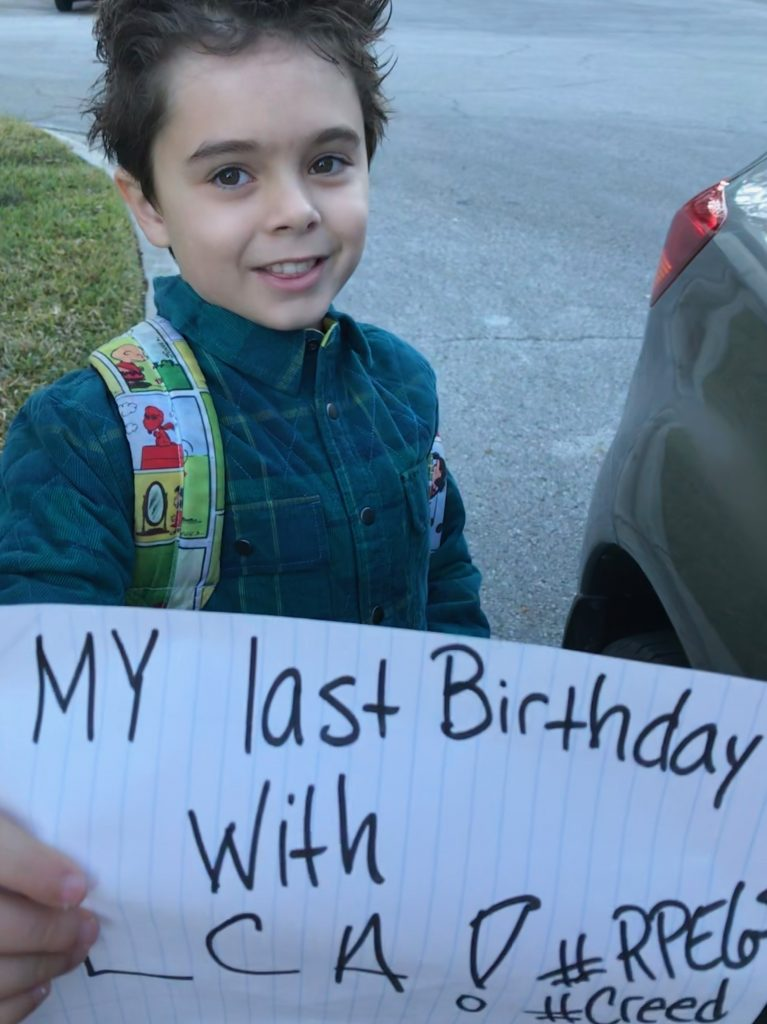
A birthday wish for 9-year-old Creed Pettit, diagnosed with LCA-RPE65, comes closer than ever to coming true today when the Florida boy and his mom meet with a surgeon to schedule treatment with LUXTURNA™, the just-approved, revolutionary gene therapy that corrects his specific gene mutation.

Creed smiling and holding up a piece of paper that writes, "My last birthday with LCA! #RPE65 #CREED
Creed, LCA2 RPE65

Creed had wished that his January 9th birthday would mark his very last with LCA-RPE65.

This third time might truly be the charm for Creed, as his mom, 41-year-old Sarah St. Pierre-Pettit of Mount Dora, Fla., twice tried to get her son, at ages 3 and 4, into clinical gene-therapy trials in Iowa. He was not approved for the trial because he could not perform steps required by the study, such as trying to navigate a maze.

Sarah learned a few days ago that her insurance company gave the go-ahead to schedule the surgery that costs $850,000.

“No more hurdles,” she wrote in an email. “I am a wreck of happy tears!!!”

Sarah and her son drove to Miami’s Bascom Palmer Eye Institute to meet today with Dr. Audina Berrocal to discuss the procedure and answer questions.

Brand new treatment

It was last October when decades of research culminated in a Food and Drug Administration advisory committee hearing in which the group recommended approval of LUXTURNA™, Spark Therapeutics’ breakthrough gene-therapy treatment.  

“One of the doctors spoke about my son in the FDA approval process, which was just amazing,” Sarah said. “That day I knew Creed could be treated.”

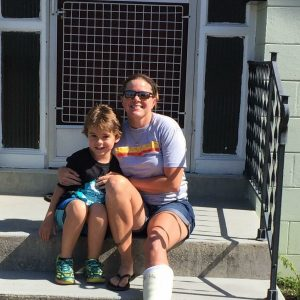
Creed and his mom Sarah sitting on steps.
Creed and his mom, Sarah St. Pierre-Pettit of Mount Dora, Fla. Creed meets with his surgeon Feb. 19 to schedule his treatment with LUXTURNA to reverse his blindness caused by LCA-RPE65.

Hope in Focus (formally Sofia Sees Hope) founder and board chair Laura Manfre also counted among those speaking on behalf of this ground-breaking treatment, sharing with the committee a story of a woman whose vision greatly improved in the clinical trials and changed her life.

The FDA granted approval of the treatment in December, paving the way for patients like Creed with LCA-RPE65 to receive, LUXTURNA™, the first genetic therapy treatment for an inherited retinal disease (IRD), and the first genetic therapy in the United States created for any inherited disease.

RPE65 is a form of Leber congenital amaurosis in which the body can’t make a protein needed by the retina to convert light into vision-enabling signals, which are sent to the brain. This new therapy involves injecting under the retina a human-engineered virus containing copies of a normal gene, so cells can express the protein. LCA is a rare inherited retinal disease, and nearly 30 gene mutations are associated with it.

Creed said that after the surgery, he can’t wait to see a real rainbow and he can’t wait to throw his canes in the lake.

His mom, on speakerphone last week while driving to pick up a new batch of “Creed’s Cause” T-shirts that she designed, talked about her most recent effort to help pay for medical bills not covered by insurance, and for travel expenses.

At $20 apiece, Sarah sells them locally and through Facebook and Instagram. When she’s not making T-shirts, she’s an elementary school physical education assistant, and hosts trivia nights at a brewery owned by her sister and brother-in-law.

Creed is a third-grader at Mount Dora Christian Academy, a school that better serves his needs than the public system. MDCA is like family to Creed and his mom, hosting lots of fundraisers, including a January basketball event that raised $5,000. The Douglas G. Halliday Foundation of Orlando recently made a generous contribution, adding to the more than $100,000 raised from 5K races, a CrossFit event and contributions from many friends and people she doesn’t even know.

In 2011, doctors diagnosed Creed with LCA; in the months following he received a genetic diagnosis of LCA-RPE65. Image: Toddler-aged Creed wearing patches over both eyes.

Sarah knew something was wrong with her baby shortly after he was born in January 2009.

“He missed all of the milestones. He would run into everything. He wasn’t walking. Instead, he did this weird Army crawl. He’d feel for his food and look up.

“Everything just said something’s not right.”

Then came the heartache of trying to figure out what was wrong. Doctors diagnosed Creed at 18 months old as autistic, and another said he had problems with his peripheral vision.

For the first year of Creed’s life, his mom thought he had colic because he would spend his days contentedly on a blanket outside, and at the end of the day when he went back into the house, he cried, all night.

An autism teacher advised Sarah to black out all the windows in the house, keep everything dark and not allow him to be in light, the exact opposite of what he needed.

She found the right advice from a woman specializing in depth perception and dyslexia. For the first time, and coming from a non-doctor, Sarah learned that her son probably was blind.

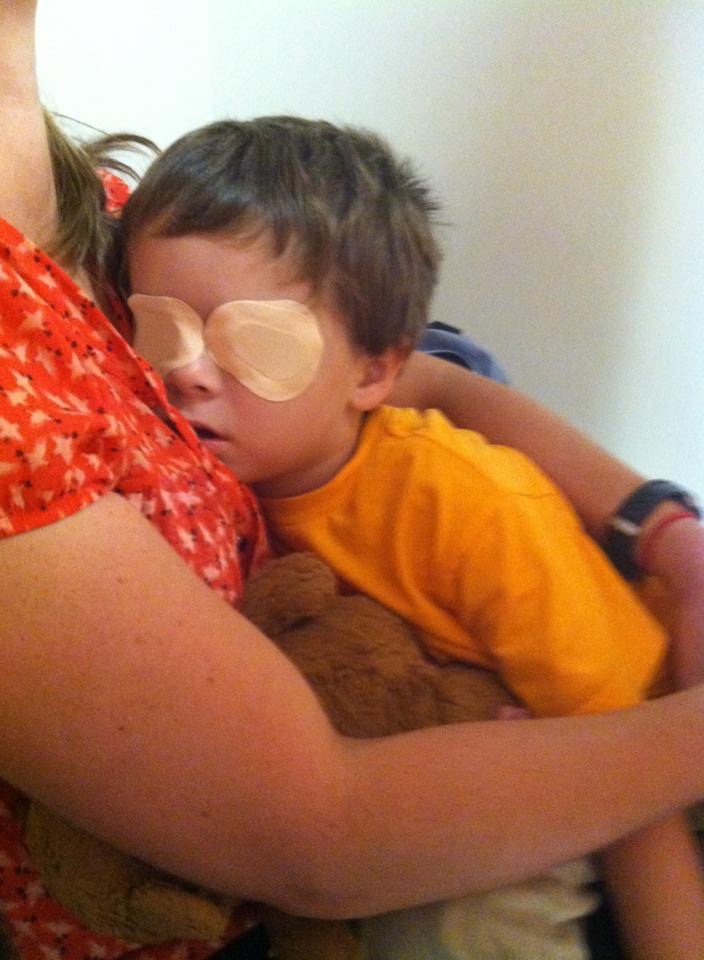
Creed with eye patches on his eyes, his mom is holding him
In 2011, doctors diagnosed Creed at 2 years and 8 months with LCA; in the months following he received a genetic diagnosis of LCA-RPE65. A week later, Sarah began her fundraising endeavors.

She also reached out for support that resulted in a team of therapists and specialists to address Creed’s movement, vision, speech, orientation, mobility and behavior.

Trying for a gene therapy trial

Sarah learned about RPE65 gene-therapy trials. She, her mother, Mary, and Creed traveled to Iowa twice for what turned out to be unsuccessful attempts to be part of the research.

Creed’s visual acuity is actually very good; when he has light, he can see. When he doesn’t have light, he can’t see anything. As Sarah says, “No light, no sight.”

He needed light and he got it, with his mom installing special bright lights all over the house.

“I’m positive they can see us in space,” she said of the lights in and around her home. Creed also has more light in school, including a light in his desk.

At school and in life, Creed has another light shining on him – his best buddy Michael, who bonded with him in first grade. He helps him be safe and gives Sarah updates about her son.

She said she can’t believe Michael’s maturity and sensitivity and believes he was put on this earth to help her son and others.

For Valentine’s Day, teachers filled bags with candy and sold them for $1 each, with proceeds going toward Creed’s expenses.

The words on the candy bag say, “Help Creed see how much we love him.”

#KnowYourGene: AGTC Working On Multiple IRD Treatments

Applied Genetic Technologies Corporation (AGTC), a clinical stage biotech company that focuses on rare inherited retinal diseases (IRDs), develops therapies that replace “broken” genes with normal functional genes – treatments that allow a patient’s own body to produce proteins to treat their disease.

As a headline touts from an AGTC website story: “Imagine That the Power to Beat Genetic Disease Lies Within Us.”

The work that companies such as AGTC undertake serves to underscore the importance of genetic testing in the treatment of rare inherited retinal diseases. This month, Sofia Sees Hope has launched a #KnowYourGene campaign in advance of International Rare Disease Day on Feb. 28.

A clinical diagnosis of a named disease is not enough to help find cures and treatments for these and other rare IRDs.

For meaningful and productive research to advance, patients need to take the most important step to help further research into correcting the mutated genes affecting their vision:

  • Get a definitive genetic diagnosis of their eye condition with genetic testing. Talk to your doctor about ordering a test through one of several laboratories or contact Foundation Fighting Blindness (FFB) about free testing.

Genetic testing is key

AGTC (headquartered in Alachua, Fla., with offices in Cambridge, Mass.) strives to get the word out through their patient advocacy work headed by Jill Dolgin, Pharm.D. The company partners with Hope in Focus (formally Sofia Sees Hope (SSH)), which helps fund FFB’s free genetic testing and genetic counseling program.

A priority for AGTC is to find and educate people with rare inherited retinal diseases and encourage them to get genetic testing. Patients with the same gene mutations studied by AGTC could potentially participate in one of their clinical trials.

The company also is collaborating with advocacy groups to inform individuals with the conditions for which AGTC is conducting clinical research, including:

  • Achroma Corp. , an organization providing support and education to those affected individuals and families with Achromatopsia
  • MomsForSight, which provides information to affected individuals and families with X-Linked Retinoschisis
  • Foundation Fighting Blindness of US and Canada
Applied Genetic Technologies Corporation (AGTC), a clinical stage biotech company that focuses on rare inherited retinal diseases (IRDs), develops therapies that replace “broken” genes with normal functional genes – treatments that allow a patient’s own body to produce proteins to treat their disease.

AGTC also reaches people with rare inherited retinal diseases through online and print articles, social media, medical publications, national vision conferences and their website.

The conditions for which treatments are under Phase 1 and Phase 2 clinical investigation include:

X-linked retinoschisis (XLRS) is the leading cause of macular degeneration in males. An inherited form of retinal degeneration affecting young males, patients affected by XLRS present with poor vision by school age. Visual acuity usually worsens during the teenage years and then can lead to serious complications such as vitreous hemorrhage or retinal detachment during adulthood.

Mutations in the RS1 gene cause early onset retinal disease. In animal models of XLRS, treatment with an AGTC gene-therapy candidate leads to long-term improvement in retinal function and preventing retinal cell degeneration. Based on preclinical proof-of-concept data, AGTC is conducting a clinical study to evaluate the safety and efficacy of an investigational gene therapy in patients with XLRS.

Achromatopsia causes visual acuity loss, extreme light sensitivity resulting in daytime blindness and reduced or complete loss of color distinction. About 75 percent of cases are associated with mutations in the CNGB3 and CNGA3 genes, also known as ACHM B3 and ACHM A3 genes, respectively. The company is currently evaluating a gene therapy in a Phase 1/ 2 trial for individuals diagnosed with Achromatopsia caused by mutations in either the CNGB3 gene or CNGA3 gene.

To better understand the condition, researchers from the University of Pennsylvania School of Veterinary Medicine and the Michigan State University College of Veterinary Medicine filmed a dog with ACHM B3 unsuccessfully trying to navigate a maze. Four months later, after receiving gene therapy treatment developed by AGTC, the pooch easily finds its way through the maze.

Check out the video showing how sheep affected by achromatopsia due to ACHM A3 mutations also were able to successfully navigate a maze following gene therapy administration.

X-Linked Retinitis Pigmentosa (XLRP) is an inherited condition that causes progressive vision loss in boys and young men. Symptoms begin with night blindness in young boys followed by progressive constriction of the field of vision. Affected men become legally blind at about 45 years of age, on average. AGTC is currently recruiting for a Natural History Study, intended to gather information about the condition over time for a better understanding of the disease’s progression and its effect on the individual’s quality of life, and for a Phase 1/ 2 clinical trial.

AGTC is committed to advancing clinical programs to deliver novel gene-based therapies for rare conditions without any available treatment options. The company would like to express its deep appreciation to patients who have participated in their clinical trials and is grateful to its partners for their dedication and continued support.