Shaberman Combines Love of Science, Writing in Sci-Fi Novel Debut

Ben Shaberman – Senior Director of Scientific Outreach & Community Engagement at Foundation Fighting Blindness – combines his skills in science and storytelling to create Retina Boy, a sci-fi young-adult novel that weaves friendship, love, music, and an alien world of blind inhabitants into a delightful read.

Shaberman tells of the adventures of a Midwestern boy named Doug Anderson, who was born without retinas. Researchers were mystified by the boy from Des Moines, while strangers and friends were mesmerized by his luminescent, aquamarine eyes. A school kid taunts him, calling him Retina Boy, and Doug decides he likes his new nickname; it sounds like a moniker for a superhero, rather than a label given to someone who didn’t quite fit in, Shaberman writes. 
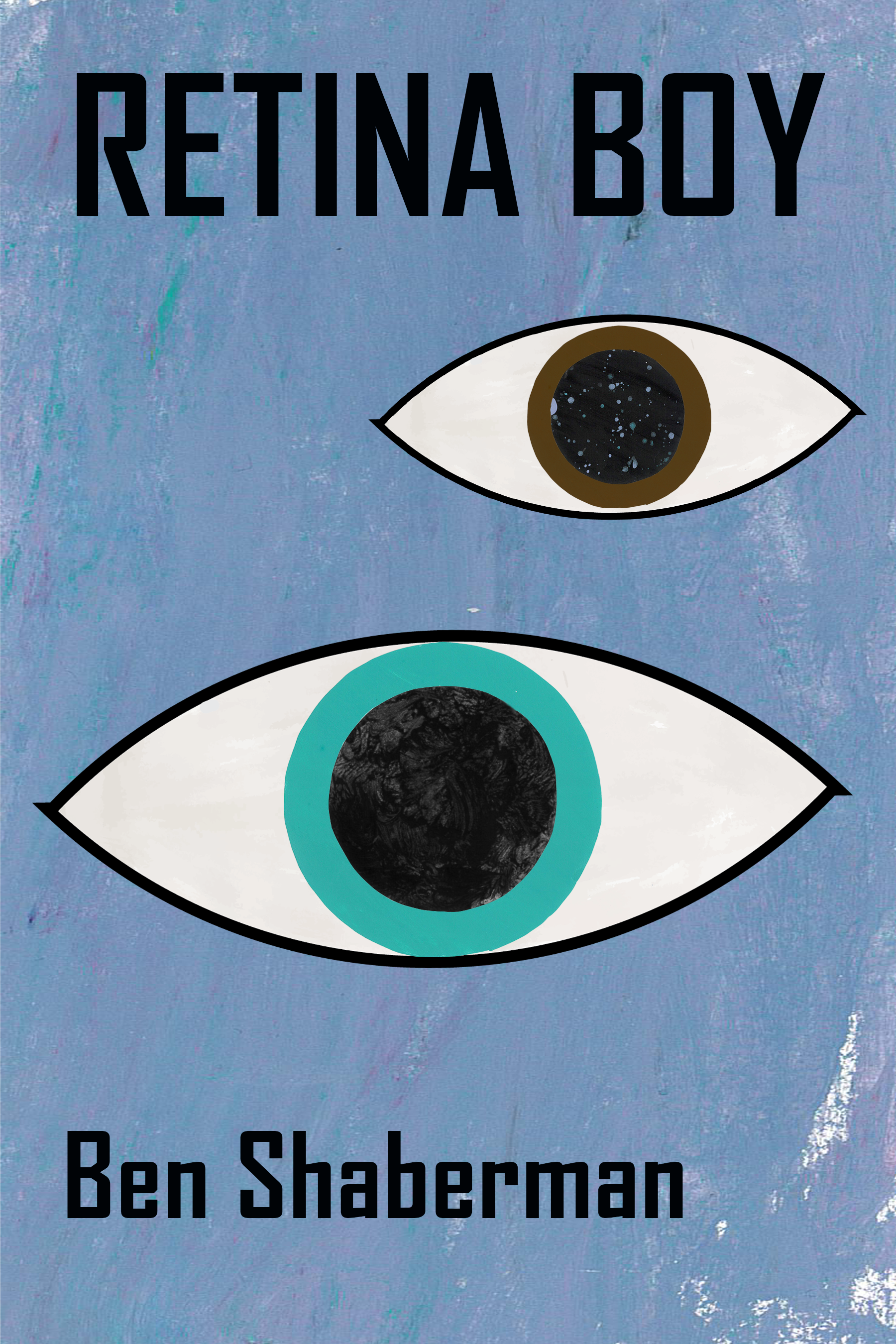
Book cover with blue background and two large hand-drawn eyeballs. Title: Retina Boy Author: Ben Shaberman

The 59-year-old author and Washington, D.C., resident chose Des Moines as the setting for his novel published last fall because he lived there for a while and was taken by the expanse of the landscape and the endless cornfields. 

“Iowa was very different from the mostly urban places where I’ve lived,” Shaberman said. “I also needed a place to land an alien spacecraft undetected and be relatively near a retinal research center. University of Iowa is about 100 miles from Des Moines.” 

Retina Boy grew up to be a carefree teenager, playing lead guitar in an awesome, classic rock cover band. His girlfriend, Marcy, though unable to walk, was the smartest kid in their school. They were a perfect pair – she was his eyes and he was her legs. Never did Retina Boy imagine he was from another planet, and that he and Marcy would be called upon to save the Earth and an alien world of blind inhabitants on the brink of environmental collapse.

Shaberman’s talent as a science writer for the Foundation shines throughout the 202-page book, and we read familiar passages about genetic therapies and rare inherited retinal diseases (IRDs) that he writes about regularly in a column for Hope in Focus (formally Sofia Sees Hope)’s newsletter, Seeing Hope

“One of my roles early on at the Foundation was to write about families affected by inherited retinal diseases. While there were always obvious and significant challenges for parents, I was often amazed by how well the kids were doing in their lives,” he said. “Their courage and perseverance always impressed me. That was part of the inspiration. 

“But I also wanted to write something fun and adventurous that would appeal to both adults and children of all backgrounds and abilities. And, it was nice for me to take a break from the serious business of reporting on research.”

Among praise for the book from the rare retinal disease community, Sofia Sees Hope Co-Founder and President Laura Manfre, wrote: “A dynamic and fun read from beginning to end that touches on all of the elements of YA fiction today, while also dealing with issues of being different – being rare in one’s world or another world. I thoroughly enjoyed it!”

One of Shaberman’s characters, Dr. Ted Strong, a long-time clinical researcher into rare retinal diseases, had delivered difficult news to hundreds of parents in his 25-year career. But with Doug’s parents, Peter and Peg, he struggles, as Shaberman writes:

“Usually there’s some atrophy or dysplasia of the rods or cones. We often see pigmentary changes,” he said, rubbing his hand through his thinning brown hair. “But with your son, I mean, well, there’s hardly any retina. It’s so thin, a shadow of what it should be. Yet, the rest of his eyes appear to be relatively normal. The way eye development works, this can’t… uh… this shouldn’t happen.” 

Dr. Strong tries to reassure the parents, who understand their son is blind but feel scared upon hearing their son’s case is singularly rare.

“I understand your concern, but there’s no easy answer,” the doc says. “Your son might have a very rare genetic defect. It could have been some type of spontaneous mutation during early development, or it could be inherited.” 

Reality vs Science Fiction

With Shaberman’s career firmly based in reality, why write sci-fi?
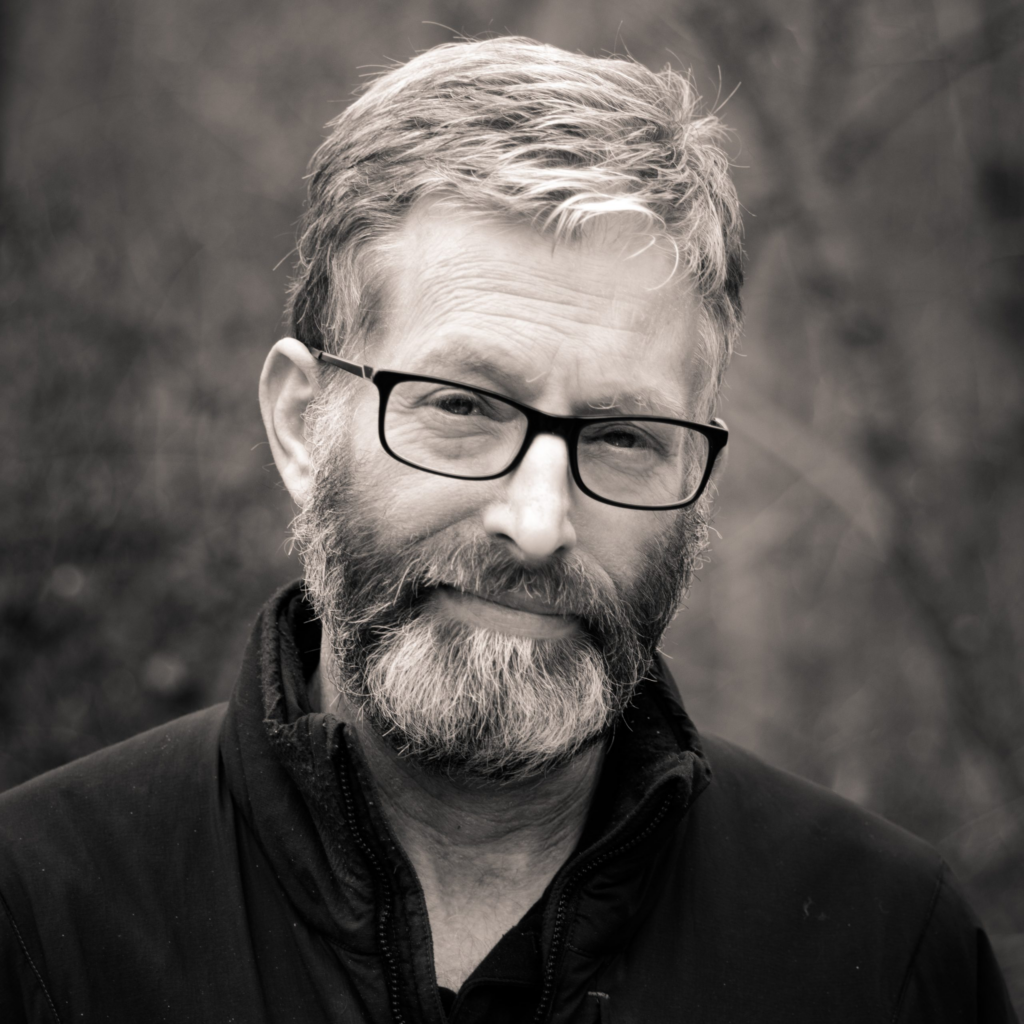
Black and white headshot of Ben Shaberman
Ben Shaberman

“Early on, I came up with the premise of a planet of blind inhabitants and that made the science-fiction genre inevitable. Science fiction was an entirely new genre for me and quite daunting. Creating an alien world of blind inhabitants was an incredibly difficult process,” he said.

“The story alternates between Earth and Zooba, the planet of the blind. I didn’t intend for the book to be YA and the story has appealed to all ages. But the story’s main characters are kids who become teenagers, so I think the YA label fits.”

Shaberman said he wanted to emphasize music in the novel, which he describes as an adventure of friends, aliens, retinas, and rock & roll.

“The book is filled with references to music, especially classic rock and electronica from the early ’70s and some other popular songs and artists. In essence, the book has a soundtrack. For obvious reasons, I tried to make sound an important element in the story.” 

In the writing process, Retina Boy’s girlfriend, Marcy, emerges as a central character.

“In many ways, I became more attached to her than Retina Boy. She is a genius and a force to be reckoned with. Many times, she is running the show.”

Shaberman also said he’s received a wide range of reactions to the book’s ending.

“No spoilers here, but all I can say is it isn’t conventional.” 

Readers can view an animated trailer of the book on YouTube. 

Shaberman dedicated his book to all individuals and families with challenging visual impairments. 

“I am especially grateful to those with retinal degenerative diseases, such as retinitis pigmentosa (RP), Leber congenital amaurosis (LCA)Usher syndromeStargardt disease, and age-related macular degeneration.

“As a writer for the Foundation Fighting Blindness, I’ve had the privilege of interviewing dozens of people and families impacted by these retinal conditions. While I fully embrace the Foundation’s mission to eradicate all retinal degenerative diseases, Retina Boy is an homage to those who persevere and thrive despite having few treatments or cures for their vision loss. Their courage, resourcefulness, and resilience have been incredibly inspiring for me. They are my heroes.”

“I’ve also had the privilege of reporting on retinal research advancements for emerging therapies to save and restore vision. It has been a fascinating journey.”

Shaberman offers thanks to more than 65 scientific investigators for enlightening him – a nonscientist – about the retina and related research. 

His previous books include a work of fiction called Jerry’s Vegan Women and a collection of essays called The Vegan Monologues. His essays, articles and commentaries have appeared in The Washington Post, Chicago Tribune, The Baltimore Sun, Des Moines Register, VegNews magazine, Sky & Telescope magazine, and on National Public Radio.
Living with LCA: Finding Her ‘Light’ In the Kitchen

A recipe for addiction recovery transformed Orly Shamir’s life, and now it’s about to change her future.

Orly, who’s name in Hebrew means “My Light,” lives with LCA4, a form of Leber congenital amaurosis caused by a mutation in her AIPL1 gene. 

The 52-year-old Canadian, newly transplanted to southeastern Florida, takes her Hebrew name literally.

“I am light, and I am vision,” she said. “I want to offer everything I have for others to realize their perfect light and vision is possible.”

As a child she had enough vision to read large print, but in her 20s, Orly’s sight deteriorated to minimal light perception and shadows. In 2014, she was part of a clinical trial in Canada for the Argus Retinal Prosthesis System (Argus II). The Argus II, known as the bionic eye, stimulates the eye with electrodes to transmit visual information captured by a video camera to the patient’s brain. You can read about her experience in the trial here.

“Still, I have true 20/20 vision,” she said. “My blindness forces a mindful clarity through all my other senses and that enriches everything from my cooking and healing, to my service to others.”

Along her journey through the darkness of an opiate addiction, she rediscovered her mother’s traditional Moroccan fish dish, served as part of each Friday’s sabbath dinner. 

Little did she know the importance this recipe would have to her survival.

From 1999, after having her third child, until 2012, she said, “My opiate addiction took a huge chunk of my life away because it

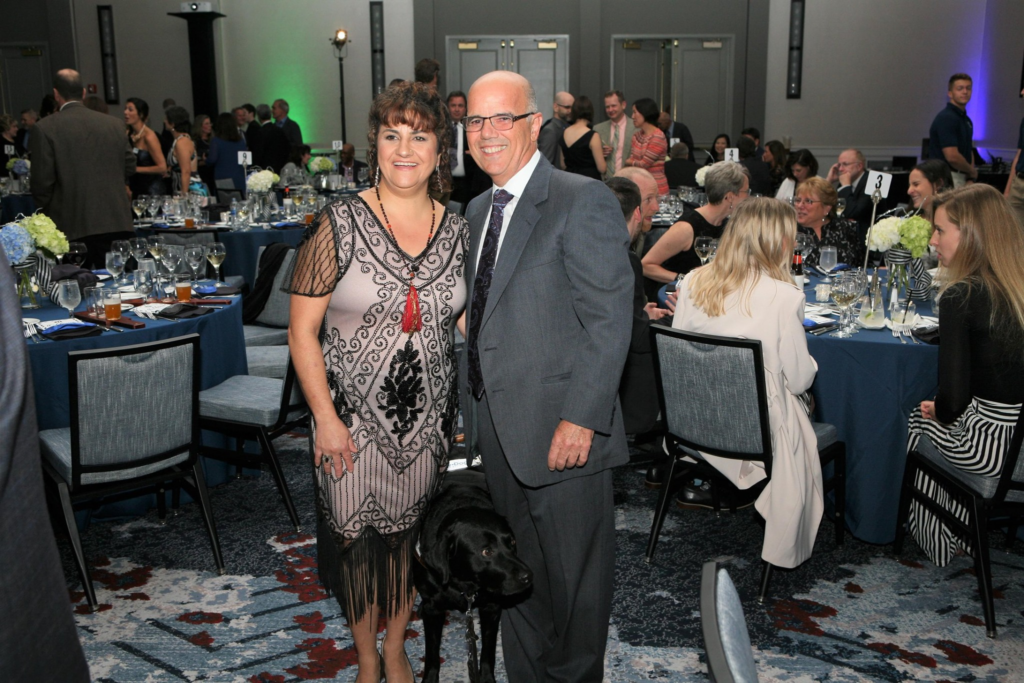
Orly and Amit nicely dressed at Dinner in the Dark 2019
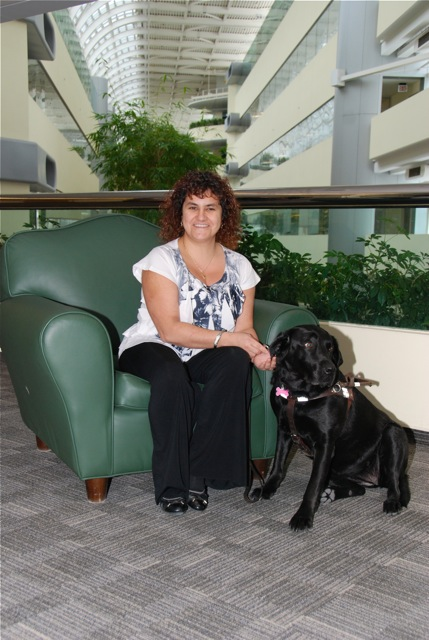
Orly Shamir and her husband Amit (and guide dog Regan at the 2019 Dinner in the Dark to benefit Hope in Focus (formally Sofia Sees Hope).

was a fight. That’s why I want to give back and give light to the darkness.”

It began with chronic pain and prescriptions for Percocet and Oxycontin that offered relief and a false sense of well-being. Domestic abuse led to living in a shelter with her children. Orly finally realized she needed to get off the pills, but she could not.

“It was the beginning of torture for several years. That’s why we have an epidemic with opiates. It takes a lot of strength and support, and I tried three times over a four-year period. It takes everything out of you to get to the other end and never look back.”

Childhood memories of simmering aromas of lemons, parsley, cilantro, peppers, tomatoes and all the spices helped get her to the other side.

She tweaked her mother’s recipe during one of her mom’s visits from Montreal to Orly’s home in Toronto. When her don’t-you-dare-mess-with-ingredients mom left the kitchen, she took the opportunity, with guilt-laced excitement, to add a few more to the pot. 

“Voila, my specialty Moroccan Salmon, the champion of my life was born! At dinner my mom raved about her wonderful fish, and all I did was smile while my soul did a happy dance.”

Years later her addiction took its toll with memory loss and less ability to perform skills. She realized that improving her cognition could be accomplished several ways, including by eating healthy food, especially fish like salmon with lots of omega-3s.

It’s fatty, versatile and widely available, which is why Orly says her dish is champion food for anyone on any recovery journey, whether from illness, addiction or the blues.

“Without knowing it, this spiritually comforting food became physical healing food.”

Blind Ambition

Orly is a gifted chef, a title-holding athlete (Italian and Canadian dragon-boat racing!), a financial analyst fluent in French and a motivational speaker. She has two sons and a transgender daughter, all in their 20s living in Canada. Orly, her husband of 12 years, Amit, and her guide dog, a 6-year-old Black Lab named Regan, live in Hollywood, Fla.

She just graduated from a Florida culinary school with her sights set on developing a YouTube cooking series and a recipe app.

To help finance her project, she applied in January for the Holman Prize for Blind Ambition by making a 90-second video about her project of combining culinary and cooking expertise with her inspirational recovery story.

“Do you know blind people are 40 percent more likely to develop addictions?” she tells viewers in her video. “And did you know proper nutrition is key to recovery? … Although I’ve been legally blind my whole life, I lost my soul’s true vision through opioid addiction and poor health.”

Orly sitting next to her black lab
Orly Shamir with her guide dog Regan.

Orly is turning her recovery story into a series of videos demonstrating healthy, delicious culinary delights, an accessible-to-all recipe app, and input from guest experts to help heal through the art of cooking.

She fashioned her simple and nutritious recovery recipes by using pronounceable ingredients, healthy fats, nuts and seeds and the like.

“It gives us more mental and physical strength because we start to feel better. We’re not as sluggish.”

Orly learned in March that she is one of 39 semi-finalists for the Holman Prize, selected from 109 applicants worldwide. Three winners will be selected in May.

The Holman Prize for Blind Ambition is annually awarded to three blind individuals to carry out a dream project to push limits and change perceptions about blindness around the world. The prize honors James Holman, a Victorian-era adventurer and author who became the first blind person to circumnavigate the globe; he also holds the distinction of being the most prolific traveler in history, sighted or not, prior to the invention of modern transportation.

Each Holman Prize winner receives up to $25,000 to fund a project or an adventure that will make an impact. The contest is sponsored by LightHouse for the Blind and Visually Impaired in San Francisco. The organization launched the prize concept to support the emerging adventurousness and can-do spirit of blind and low-vision people worldwide.

LightHouse CEO Bryan Bashin said the Holman Prize is not meant to save the world nor to congratulate someone for leaving the house. It is meant to change perceptions about what blind people can do.

“This prize will spark unanticipated accomplishments in the blindness community. You will see blind people doing things that surprise and perhaps even confuse you.” 

Previous winning projects include teaching blind people to become beekeepers in Uganda, hosting the first conference in Mexico for blind children and their families led by blind professionals, and recording a documentary series called “Planes, Trains & Canes” about navigating and accessing transportation systems in five cities around the world.

For the next step in the contest, Orly is creating an in-depth proposal due by the end of April. 

“My talent for cooking, my experiences all over the world tasting a plethora of inspiring favors, and my own story of failure, addiction and abuse woven in with courage, resilience and recovery – it was all for this.”

She Made Canadian Medical History When She Received a ‘Bionic Eye’

Orly Shamir made Canadian medical history when she became the first person in the country to receive a bionic eye. 

In a clinical trial six years ago, Dr. Robert Devenyi and his surgical team at a Toronto hospital implanted an Argus Retinal Prosthesis System (Argus II) onto the surface of Orly’s retina.

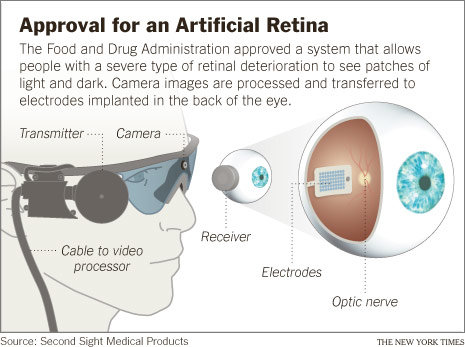
The Argus II, known as the bionic eye, stimulates the eye with electrodes to transmit visual information captured by a video camera to the patient’s brain. Toronto Western Hospital-University Health Network and Foundation Fighting Blindness provided support as collaborators on the 2014 clinical trial. California-based Second Sight developed the device.

Health Canada approved the system in 2015. It was approved in the United States in 2014 and in Europe in 2011. 

Orly has a form of Leber congenital amaurosis called LCA4 caused by a mutation in her AIPL1 gene. She could read large print as a child, but her vision deteriorated to minimal light perception and shadows in her 20s. Now 52, Orly took part in the 2014 trial when she was 46.

Photoreceptors in a healthy retina convert light into electrochemical pulses sent through the optic nerve and into the brain where they are decoded into images. When photoreceptors don’t function properly, as in the case of people with LCA, the first step in the vision process is disrupted and cannot transform light into images.

Approval for an Artificial Retina graphic

The Argus II bypasses damaged photoreceptors through electrodes implanted on the retina. Following the delicate three-hour surgery, Orly wore glasses containing a tiny camera that converted video images into a series of small electrical impulses transmitted wirelessly to the electrodes. Visual information transmits to the brain’s optic nerve when the pulses stimulate the retina’s remaining cells.

The visual improvement does not equal regular sight, but it allows patients to perceive light patterns, observe whether doors and windows are open, or pick up a glass.

Orly worked with rehabilitation experts, low-vision therapists and consultants from Second Sight. Three months following the surgery, she could detect contrast and recognize the difference between white and black. Because patients receive a form of artificial vision through this bionic eye, they need to re-train their brains through rehabilitation to learn and understand messages sent by the device. It’s kind of like learning a new language.

Orly volunteered to take part in the clinical trial for a year but presently does not use the technology. 

“I worked hard for two years, then decided to not use the system for personal use, as it didn’t provide any benefits as of yet.” 

Orly’s participation is exactly what a clinical trial is all about. She committed to making frequent visits and underwent testing over the course of a year. She knew that the goal of a clinical trial is to see whether a potential treatment is safe and effective, and that, while a trial participant might benefit, the trial’s purpose is to determine if the therapy works. 

“I was prepared in being part of advancing technology for blind/visually impaired people in the future. That’s always who I am,” she said. “I’m 100 percent ready and available to get updates and keep trying.”