
Over the years, I’ve learned that most people don’t understand that visual impairment is a spectrum. Most people think there are three options: 20/20 vision, vision that can be corrected by glasses, or total blindness.
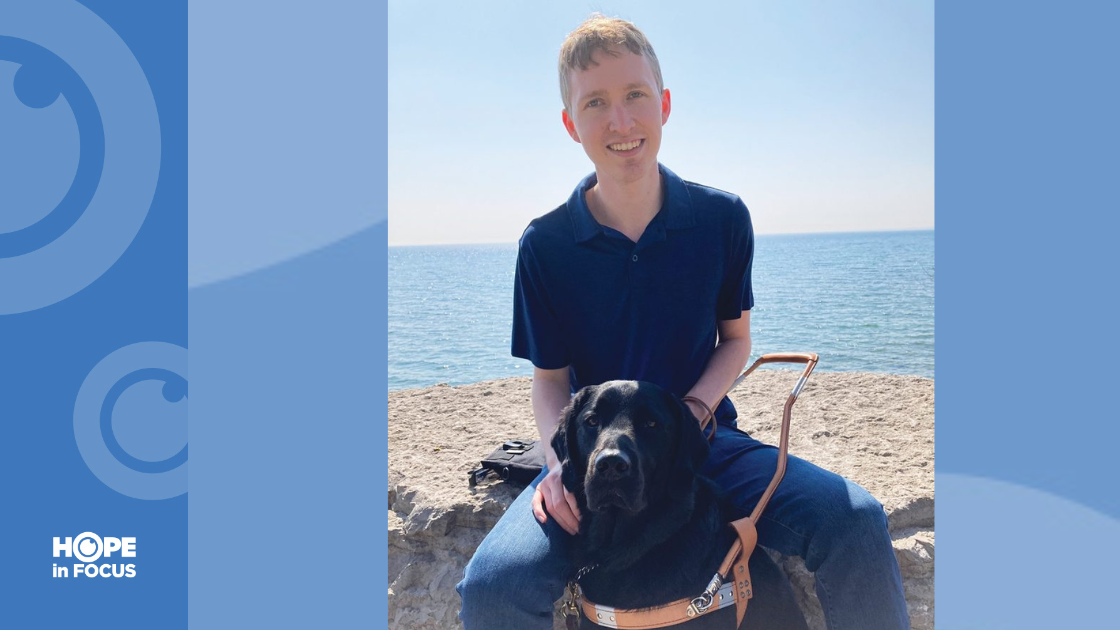
As a child, I passed as fully sighted in most situations. When I told people that I was visually impaired, their first question often was, “Why don’t you wear glasses?” After getting a guide dog, I get fewer questions like that; however, people now assume that I am totally blind.
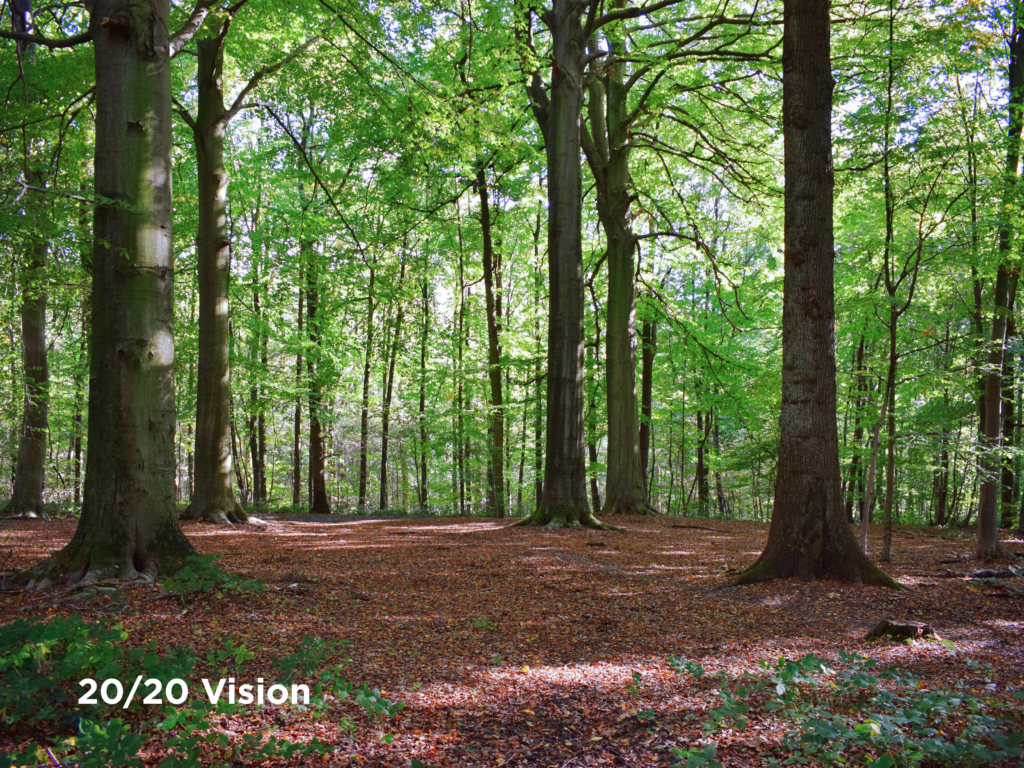
When people know what you can see, you are more likely to experience environments where you feel included. This is why it is so helpful to be able to explain what you can and can’t see in simple terms. It’s also important to take the initiative to share this information.
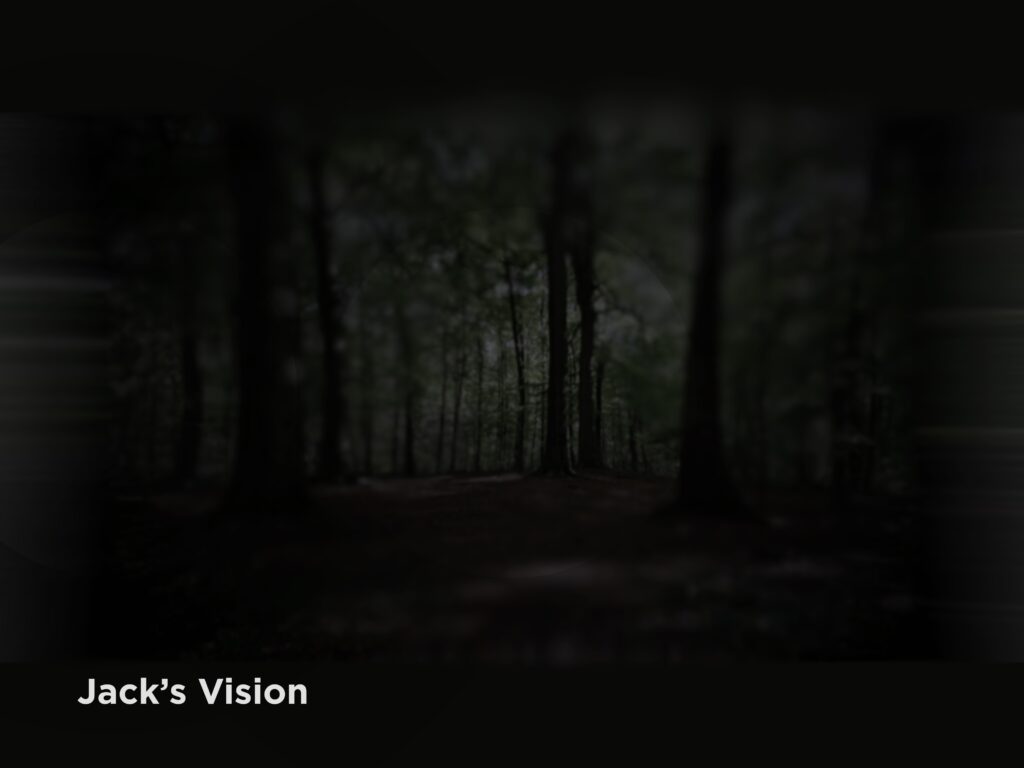
I describe my vision as looking backward through binoculars while wearing several pairs of sunglasses. This lets people know that things look much smaller to me, that I can’t read printed text, and that I can’t see in dark/dim lighting. It is much more effective to use this analogy than to list things I can’t see.
Sharing my analogy also helps someone to imagine what it would be like to look through binoculars backwards, wearing several pairs of sunglasses. But they often can’t imagine what it is like not to see in dim lighting. It is also hard for some people to ask what I can and cannot see since they don’t want to highlight my limited vision or are just uncomfortable asking.
Providing information about your visual impairment or offering an analogy often puts people at ease. When people know you are comfortable talking about it, they feel freer to ask questions.
Imagine playing cards with a new group of friends. One person at the table asks, “Will you be able to play cards with us?” You know you won’t be able to see the cards in the center of the table, but you share your vision impairment analogy or description. By helping your friends understand that you can see the cards in your hand but will need them to announce the card that they lay down, allows them to make simple accommodations so you can participate. Because you were able to describe your vision loss simply, you and your friends had a great evening together.
I encourage you to come up with your own analogy to describe how you see. I know I am not alone in worrying about the accessibility of new environments. Most people are happy to do what they can to make things more accessible. Helping them understand what you can see will help them help you and lead to a more fulfilling, connected life.