
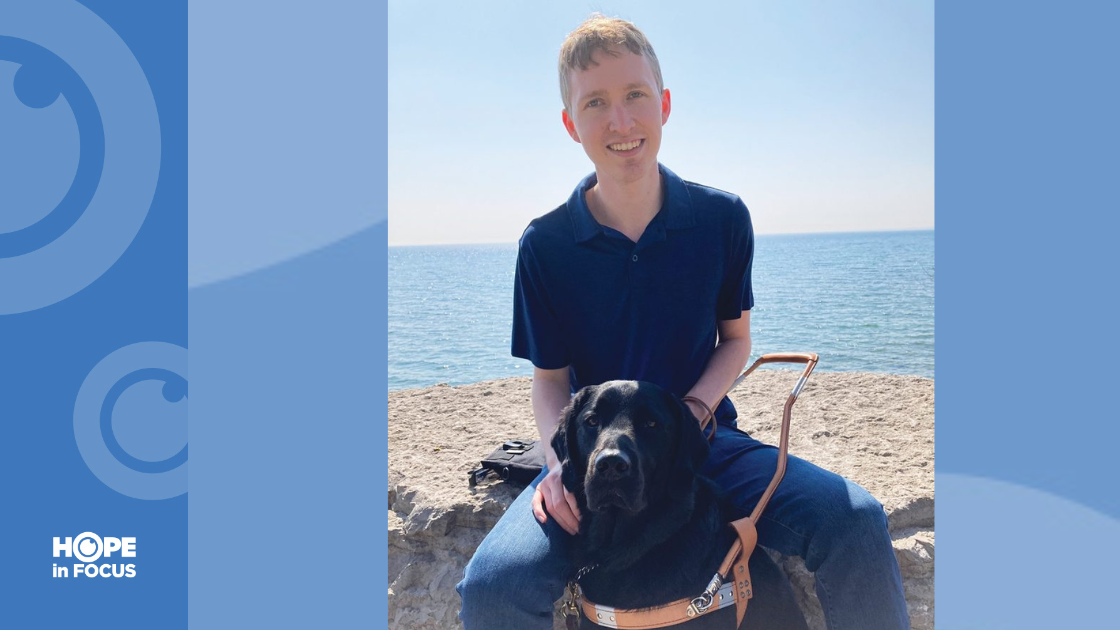
As someone with a visual impairment, getting around once felt overwhelming. I was plagued by the “what ifs.” What if I got lost? What if I missed a bus or got off at the wrong stop? What if I couldn’t find the right platform at the train station? If you or a loved one is dealing with these concerns, this article is for you.
The good news is that over time, navigating has become easy for me. Because of my experiences, I’d like to share some tips for moving through the world with a visual impairment.
Step 1: Orientation & Mobility
It is important to learn how to use a cane and practice using it every day. Many people with vision loss live in denial of their visual impairment. If you’re not currently using a cane or a guide dog and have recently bumped into something you didn’t see, start using one.
Once you’ve mastered the basics of the cane, learn to navigate independently in your immediate neighborhood. (Parents, this is when you need to step back.) Have a friend or family member walk beside you the first time, pointing out obstacles and naming streets as you cross them. When starting out, it can be helpful to count how many streets you cross before you need to turn. Consider making notes on your phone to help you remember. For example, “To get to the doctor’s office, turn right out of my house, turn left at the first intersection, turn left after walking under the train bridge, and cross two streets before turning right. The doctor’s office is the first building on the left.”
If you are nervous the first time you try the route alone, have someone walk behind you and ask them not to talk to you unless you get completely lost. It is okay to get a bit lost! Part of becoming a better navigator is making mistakes. You can also video call a friend or family member if you need help.
Step 2: Generalization
Eventually, you will start to notice patterns such as how buildings are spaced, that street addresses with odd numbers are usually on the east or south sides of the street, and the typical layout of train stations, etc.
At this point, you won’t need someone’s help traveling a route for the first time. Instead, you will use the tools available to you—reviewing routes before you leave your home, leveraging GPS along the way, and not being afraid to ask someone to confirm your location or that you are at the correct building.
Step 3: Challenge Yourself
When I was in my second year of university, I was invited to attend an event to receive a scholarship I’d won. But it was two hours away. I called my mom to ask for a ride. She lived an hour from me in the opposite direction from the event. She said that if I wanted to go, I’d need to figure out how to use the bus on my own. It was one of her best parenting decisions.
I was terrified and had to ask a lot of people for help along the way, but I did it. It was an eye-opening experience and set the wheels in motion for me to feel comfortable traveling. In previous articles, I’ve talked about hiking in the mountains and trekking up Mount Kilimanjaro. These amazing experiences wouldn’t have been possible without a lot of experience negotiating daily life with my visual impairment. With enough practice, I am confident that you can reach a point where you can travel as easily as I do.