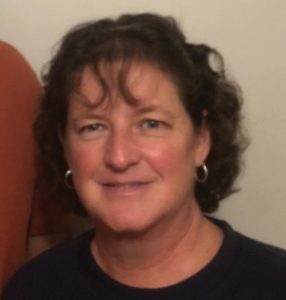
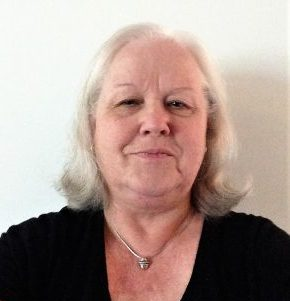
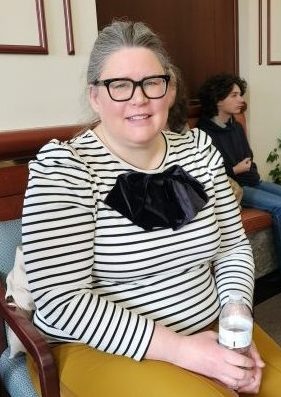
Tami Morehouse is grateful for improved vision after undergoing groundbreaking gene therapy treatment at age 44 for LCA2 RPE65, but at times she still is sad and disappointed at the difficulties presented to her as a person with some functional vision, but who cannot see well.
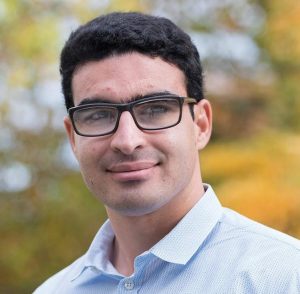
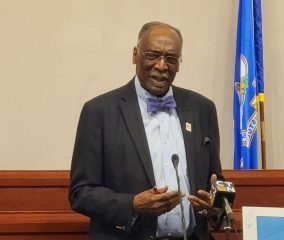
Mohamed Farid found life living with LCA5 more challenging as a child than as an adult, especially before screen readers and other assistive technology. The young professional also remembers growing up and his grandmother spending a lot of time convincing him he couldn’t be a pilot.
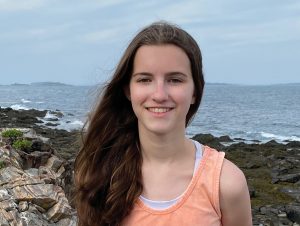
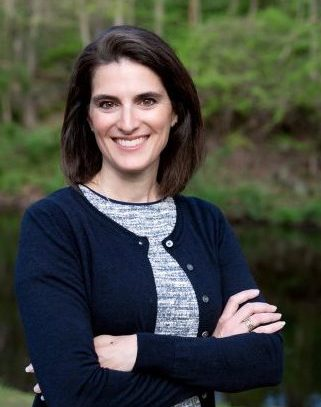
Mirielle St. Arnaud, a junior in high school living with LCA caused by a mutation in her IQCB1/NPHP5 gene, tries to get involved with clubs and activities to ward off struggles with socializing. She learned to adapt to change and said her experiences with vision challenges have been good.
Tami, Mohamed, and Mirielle talked about their day-to-day lives, challenges, and feelings at our 2023 LCA Family Conference* in Indianapolis in late June. They took part in a panel discussion called Living with LCA, moderated by Beth Borysewicz, an educational consultant with the Connecticut Department of Aging and Disability Services with Bureau of Education Services for the Blind.
These three people – an LCA research pioneer, a young professional, and a high school student – help illustrate the manifestation of research advances and assistive technology in the last decade or so.
Here is what they shared with more than 100 people convened for the third Hope in Focus LCA Family Conference.
***
Tami Morehouse
Tami, 59 and from the Cleveland area, is thankful to see with more brightness following her participation in a pioneering clinical trial for what now is known as LUXTURNA®, the only federally approved treatment for one of the 27 identified forms of LCA – LCA2 RPE65.
She gained some vision in 2009 and 2010, when she received the treatment under development by Spark Therapeutics.
“My whole world was a lot brighter,” she said.
She could see a cup on the table, gorgeous sunsets, the lush green of spring, and details in the faces of her three children. It also improved her parenting skills.
“Mom can see things now,” she joked. “It’s bittersweet in our world.”
She also feels she lives in a kind of limbo between seeing and not seeing. She wished and still wishes the public would be more receptive to her being between having sight and not having sight, rather than completely blind.
Tami Morehouse
Tami’s world has widened, and she enjoys much happiness since receiving the gene therapy. She is a Hope in Focus Ambassador, working with our Family Connections program, reaching out to people living with LCA, offering them comfort and kindness. The research pioneer works as an information and referral specialist for 211 in Ohio.
People in the LCA community, like others dealing with a rare disease, experience anxiety, depression, and social isolation.
Tami opened up at the conference, sharing struggles to maintain mental wellness.
She experienced a lot of awkward moments and has worked at becoming comfortable with who she is as a blind person.
“There are so many times when I’m very sad and disappointed about my limitations. There are a lot of barriers in the way and that’s hard to take.”
She misses experiences she could have had with her children and husband and parents.
“Those are just facts of life. Those are my facts, but I think many others go through the same.
“Sometimes we just feel the burn.”
***
Mohamed Farid
Mohamed Farid navigates life with LCA deftly, now that he is an adult.
“It’s harder growing up. It’s easier when you’re older.”
Life became easier with innovative technology, such as screen readers and other optical character-recognition technology that extracts and converts data into a machine-readable form.
“It’s all about assistive technology,” he said.
Mohamed Farid
The 36-year-old founded MKF Continuity, a middle-market investment firm in Chicago. He earned an MBA from Harvard Business School.
There was a time when he was running away from his blindness.
“Now, I’m just ‘whatever’. I need to be independent. It’s important for my dignity. I don’t want to be relying on people.
“Every once in a while, I think the world is unfair,” he said, but over time he’s developed self-acceptance and is at peace with his blindness.
He compared his moving through life now not even thinking about his blindness to his perception of his vision as a child.
“My grandma had to spend a lot of time convincing me I could not be a pilot.”
In contrast, as an adult at his workplace, people think he can create slide presentations.
Mohamed said his blindness has made him strong, describing himself as “alert, scrappy, and resilient.”
***
Mirielle St. Arnaud
Mirielle St. Arnaud, a 16-year-old from the Chicago area, said she’s dealt with people who assume she’s not a capable person.
“We’re probably more resourceful than you think,” she said.
Mirielle is a junior in high school, where she runs on the cross-country team with a guide and is a captain of the Congressional Debate team.
Mirielle St. Arnaud
She learned to advocate for herself and set boundaries for others.
Mirielle worked at her difficulties with socialization at school by getting involved in the blind and sighted communities, whether through summer camps or extra-curricular activities, and by meeting as many people as she can.
“At some point, you’ll find your people who will understand you.”
She characterizes her ability to see as “Swiss-cheese vision.”
At school, she collaborates with an advocate throughout the year, using an Independent Education Plan as a guide.
Mirielle said vision specialists collaborating with her schools have been especially helpful along the way. She’s worked with Teachers of students with Visual Impairments, who are educators with expertise with the visually impaired, and Orientation and Mobility specialists, who teach safe and effective navigation through environments.
“I’ve had pretty good experiences,” she said.
***
Wrapping up the session, panelist Mohamed Farid left the audience with this message:
“Our journey can be bumpy. Don’t ever give up hope.”
*Please go to our Hope in Focus website to see three more stories detailing sessions from our 2023 LCA Family Conference. Click here to see a video about the conference.
Here’s what you need to know about advocating for advanced treatments for Leber congenital amaurosis: Get genetically tested, get legislatively connected, and get enrolled in a patient registry.
The Hope in Focus 2023 LCA Family Conference* panel on Advocating for Treatments repeatedly returned to this action trio to move treatments forward for this rare inherited retinal disease (IRD) affecting about 8,000 people in the United States and 160,000 worldwide.
Jonathan Stokes, Senior Director of Patient-Centered Outcomes Research with the biopharmaceutical company AbbVie, moderated the five-member panel at the June 23-24, 2023, LCA family-centered conference in Indianapolis. This session marked the first of four for more than 100 people gathered at the conference.
Genetic Testing is Critical
Emily Place, Senior Genetic Counselor and Manager of Genetics and Genetic Counseling at Massachusetts Eye and Ear, said the first place to start is to get genetically tested, a process becoming easier with time. An open-access genetic testing program managed by the Foundation Fighting Blindness creates a smoother journey to finding the specific gene causing a mutation resulting in LCA or other IRDs.
Your new confirmed genetic diagnosis opens the door to advocacy groups and researchers working to develop treatments and cures for blindness.
The National Society of Genetic Counselors (NSGC) offers in-depth genetic testing information, including a search tool to help find a certified genetic counselor in your area.
Emily said listening to the voice of the patient is the way to move research forward. And, in the rare inherited retinal disease world, that begins with genetic testing and genetic counseling.
A genetic test provides one of three results: Positive, negative, or inconclusive.
A positive result means the test found mutations in a specific gene that can identify the cause of vision impairment.
A negative result means the test could not identify a specific genetic cause for the disease, but it does not rule out a retinal disease diagnosis.
An inconclusive result means the test didn’t find helpful information about the gene in question. Because it can be difficult to distinguish between a disease-causing gene and a harmless gene variation, follow-up testing or periodic review of the gene over time might be necessary.
Emily said it’s important to stay connected with your genetic counselor for support along the way, especially with an inclusive result. As the knowledge base of genetic data grows, future tests could garner more definitive results.
Genetic testing information can be found at Hope in Focus, which has contributed more than $200,000 to help support the Foundation’s free access to genetic testing.
Empower U.S. Senators and Representatives to Advocate for LCA
Our panelist from the U.S. Food and Drug Administration agreed with importance of genetic testing. Wiley A. Chambers, MD, Supervisory Medical Officers of the Office of New Drugs for FDA’s Center for Drug Evaluation and Research, also advised bringing information to Congress for action. He and his eight-member team have signed off on 200 approvals of new drugs.
“The best place you can make an important impact is to talk with your representatives and senators,” Dr. Chambers said.
A good place to start is with their staff of congressional aides, who can synthesize and relay relevant information to lawmakers.
He noted a key change at the FDA in the 1960s that informs the current drug approval process.
In October 1962, Congress passed the Kefauver-Harris Drug Amendments to the Federal Food, Drug & Cosmetic Act, which contains regulatory requirements defining the FDA’s level of control over these products. Before marketing a drug, firms still had to prove safety; now they also need to provide substantial evidence of effectiveness for the product’s intended use. This requires adequate and well-controlled studies, and, before marketing, the FDA needs to specifically approve a marketing application, according to the FDA.
Dr. Chambers emphasized that any clinical trial needs to show what the product is going to do to benefit a particular individual. He cited one of the endpoints or outcomes – early in Spark Therapeutics‘ gene therapy trial – that enlarged the size of the pupil.
“So what?” he said. “That’s not an endpoint that is meaningful to any individual.”
An endpoint of value would improve vision, slow, or stop vision loss, and help with daily activities.
Panelist Jacose Bell, Senior Patient Advocacy Lead at Spark Therapeutics, said the clinical trial at issue needed light as a factor as an endpoint.
Spark redesigned its trial to include a relevant endpoint instrumental in demonstrating how voretigene neparvovec could improve vision in LCA2 RPE65 patients, leading to the approval of LUXTURNA®. The endpoint – a multi-luminance mobility test (MLMT) – measured functional vision or how a person navigates in a vision-related activity across a range of light levels in daily living.
Engage state lawmakers to advocate for LCA advances
Reaching out to congressional aides is important, and even before taking that action, people can inform and raise awareness of the needs of the LCA and IRD community on local and state levels. This means calling, writing, or emailing your governor and state representatives and senators. It means acting and being participatory.
The National Organization for Rare Disorders (NORD) runs a state-by-state Rare Action Network that works to establish Rare Disease Advisory Boards or RDACs. Connecticut, headquarters for Hope in Focus, recently became the 24th state establishing a council specifically to address the complexities of living with a rare disease (including LCA and other IRDs), caring for someone with a rare disease, gaining access to treatment, and getting better insurance coverage.
The RDAC gives patients, families, caregivers, healthcare providers, advocates, researchers, and other stakeholders the opportunity to make formal recommendations to state agencies and the legislature to improve the lives of people living with rare disease and their caregivers.
Click here to find out if your state has an RDAC or is developing one and you would like to help make it a reality.
Lighthouse Guild also provides medical assistance and social support to people who are blind or visually impaired so they can fulfill their goals and live with independence.
EveryLife is another resource providing help for people living with rare diseases, including LCA and other IRDs.
Results of surveys filled out by people living with LCA and other IRDs also help define areas in need of advocacy, resources, and research.
LCA and IRD Patient Registry – My Retina Tracker®
Panel member Laura Manfre, Board Chair and Co-Founder of Hope in Focus, centered on patient registries as a driving factor in advancing treatment.
“MRT, MRT, MRT,” she said as a mantra to the group. MRT – My Retina Tracker® – is an online, confidential registry of people with rare retinal degeneration, including those with LCA or other IRDs.
Foundation Fighting Blindness launched and manages the registry with the purpose of enabling people with inherited retinal degenerative disease, their doctors, and researchers to actively collaborate in the research process.
To optimize the power of MRT, registrants should seek a genetic diagnosis, which the registry facilitates by making registrants eligible for free genetic testing.
Patients share information about the history, progression, and personal impact of their disease, they authorize their doctors to add their diagnosis and clinical information to their profile, and they take part in research studies when identified and contacted through MRT by researchers as potentially good subject for their studies.
The larger and more detailed the registry, the more beneficial the data becomes to doctors and scientists in helping advance research.
Another specific way to bring research to the labs and new treatments to market is through patient advisory councils established by biotechnology companies.
Panelist Jill Dolgin, PharmD, Executive Director of Global Patient Advocacy & Scientific Management for Beacon Therapeutics, said she even brings people into the lab to explain in plain language the complexities of clinical trials. This brings a broader understanding and familiarity to people who potentially might participate in trial research, including natural history studies of patients.
“You’re the experts,” Jill told her audience. “We’re not.”
Natural history studies identify demographic, genetic, environmental, and other factors shaping the drug development process. They give scientists and researchers a better estimate of the prevalence of the disease, help identify potential biomarkers, affect clinical outcome assessments, and determine the feasibility of established assessments for clinical trials.
Finding people to take part in research into a rare disease is inherently difficult, so reaching out to patients and helping them learn about the process helps expand the pool of potential participants.
Dr. Chambers says he hears about the difficulties of natural history studies from both sides, with researchers saying they can’t find patients to take part in the study, and patients saying they can’t find the study in which to participate.
“The starting point for each of these is genetic testing,” he said.
***
Hope in Focus would like to thank this session’s moderator, Jonathan Stokes, and its panelists, Emily Place, Dr. Wiley A. Chambers, Jill Dolgin, and Jacose Bell.
*Please see our Hope in Focus website for three more stories detailing sessions from our 2023 LCA Family Conference. Click here to see a video about the conference.
Our 2023 LCA Family Conference in Indianapolis offered many reasons to feel hopeful about more retinal disease treatments coming to fruition and in less time than the dozen or more years it’s taken to bring a therapy to market, despite the deep complexities and tremendous expense of researching and developing LCA therapies.
More than 100 people gathered in late June from around the globe in Indianapolis for the Hope in Focus LCA Family Conference – making friends, meeting researchers, and establishing connections to help better navigate life with Leber congenital amaurosis, a rare inherited degenerative retinal disease.
The conference succeeded in its goal of creating an ideal environment for thoughtful and interactive exchanges of knowledge, ideas, and viewpoints in sessions focusing on research, future treatments, advocacy, shared stories, and connections with people traveling similar journeys.
The Hotel Omni Severin’s mezzanine on Friday, June 23, to Saturday, June 24, buzzed with the sounds of LCA families socializing with conference speakers and families, kids with LCA running around having fun, and grownups meeting other adults living with the rare disease.
As one caregiver said of the event: “This is fantastic! I’m getting answers to questions I didn’t even know how to ask.”
People from the Midwest, the rest of the country, and around the globe – from Canada, Mexico, Turkey, and China – converged in the Racing Capital of the World to hear from LCA families, retinal doctors, researchers, advocates, and representatives of the biotechnology and pharmaceutical industries.
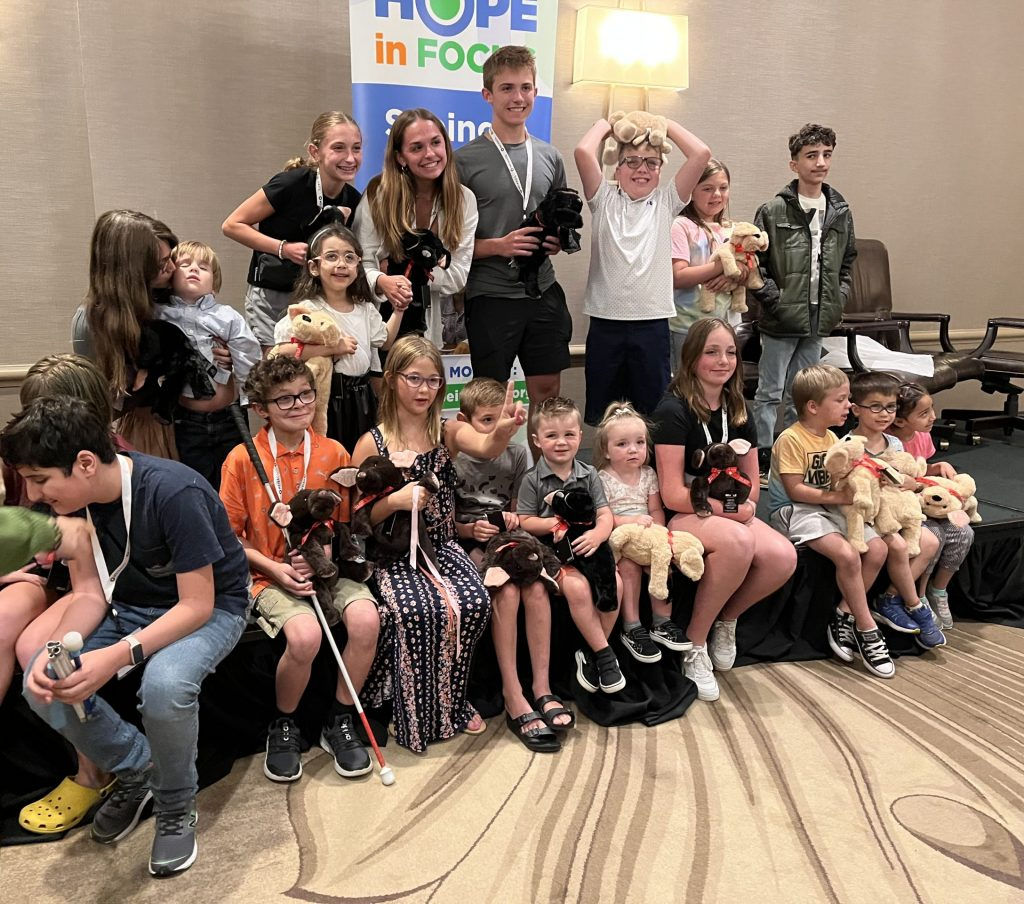
A mix of kids and caregivers attending the 2023 Hope in Focus LCA Family Conference in Indianapolis
Navigating the LCA Ecosystem
Laura Manfre, Board Chair and Co-Founder of Hope in Focus, welcomed the group to our third LCA Family Conference, and its first in four years because of in-person social limitations caused by the COVID-19 pandemic. The next conference is set for 2025.
Advancing treatments for LCA is part of an ecosystem many may not have thought about before being thrown into it with a rare disease diagnosis, Laura told the group.
“No one asked to be a part of this disease or came into this knowing how to navigate this journey for their child, their family, or themselves,” she said. “We are all figuring it out as we go, and the more we can connect with one another, the better we are able to learn and share and support one another.”
Hope in Focus gathered representatives from this LCA ecosystem – from pharma and biotech, to regulatory to research and healthcare, with each stakeholder playing a critical role necessary to developing treatments for LCA.
“We all need one another to make this work.”
Even having the kids at the conference get together for a day at the Children’s Museum of Indianapolis, while their parents attended panel discussions, marked a milestone of sorts for children with LCA.
“How often does that happen that sighted and visually impaired siblings get to be in a group together like that? It’s really cool.”
Laura, her husband, Charles Priebe, and their good friend Elisse Rosen founded Hope in Focus nearly 10 years ago to raise funds for research, after doctors told Laura and Chuck their 11-year-old daughter Sofia had LCA17 caused by a mutation in herIQCB1/NPHP5 gene.
Laura explained Sofia’s absence from the conference, where she had planned to talk about living with LCA.
“She is now 20, a rising junior in college, and her vision is getting worse,” Sofia’s mom said. “Yes, she was supposed to be here and be on a panel, but she finally, after years of waiting, got a guide dog and is just wrapping up two weeks of training with her new dog.” (By the end of the conference, Sofia received her new pal, a beautiful black lab named Winsome.)
Laura learned raising funds was important, but money alone doesn’t solve the issue.
“Personally, and, for Hope in Focus, the last decade has been a learning experience of all the things that need to come together to pave the way for treatments for ourselves and our children.
Lennon Schleihauf hugs her new doggie. She and other children at the Hope in Focus LCA Family Conference received the plush toys as a gift from Two Blind Brothers. Each dog’s name is embossed in Braille on one of its ears.
“That’s everything from making sure our community has access to genetic testing and is getting diagnosed and not misdiagnosed, which is still an issue in some regions. It includes participating in patient registries and in Natural History studies. It means advocating for policy changes with our legislators, and making sure we are well-informed and educated, and we are all heard.”
Zero to more than 30 Clinical Trials
Ben Shaberman, Vice President of Scientific Communications for the Foundation Fighting Blindness, told the group when he started at the Foundation in 2004, research into blindness consisted of lab work with mice and sometimes dogs, not humans.
Four years later, researchers at Children’s Hospital of Philadelphia began clinical trials for a drug to treat LCA2 RPE65. In 2017, after 12 years and $500 million in research and development, the gene therapy LUXTURNA® received regulatory approval. It is the first treatment in the United States for any inherited disease and the only treatment shown to restore vision in people living with one of the 27 identified forms of LCA.
Today, about three dozen clinical trials involving retinal disease are underway, with 40 biotechnology companies investing in the development of a range of treatment therapies.
“It really is an ecosystem, and you are so much a part of that,” said Ben, who also is an Advisor to Hope in Focus.
He also talked about CRISPR/Cas9, a gene-editing therapy in clinical trials for LCA10 CEP290.
“This was the first ever clinical trial for CRISPR/Cas9, and it was in the retina, and it was for LCA. That clinical trial moved the whole field forward.”
With LCA affecting 8,000 people in the United States and 160,000 globally, Ben told the audience:
“You are moving mountains. Please, please, please, do not underestimate the power that you have to move this forward.”
Hope is Imperative
Years ago, Laura said, someone told her having the word ‘hope’ in our organization’s name was a mistake because hope isn’t a strategy and wouldn’t get us anywhere.
“He’s wrong. Hope is a very powerful thing. And it’s the bedrock of why we founded this organization, and why we still exist. Ten years ago, we didn’t have a single treatment in sight, and we only had hope – hope that someday there just might be a treatment for our child.
“And it was from that hope that this organization was built and continues to grow. There’s not a single person in this room that came here thinking, ‘This is never going to happen, but I’m going to go to Indy anyways.’
“No, everyone is gathered here today because we have some kind of hope in focus – hope to learn something new about this rare disease community, hope to make a meaningful connection with someone else on this journey, hope to bring new information back to organizations in their country, or hope to be the one that brings the next LCA treatment to market.”
*Please see our Hope in Focus website for three more stories detailing sessions from our 2023 LCA Family Conference. Click here to see a video about the conference.
People living with LCA, family members, retinal doctors, researchers, advocates, and representatives of the biotechnology and pharmaceutical industries converge in the racing capital of the world this weekend, when Hope in Focus presents its third LCA Family Conference.
A global advocacy organization helping those affected by blindness, Hope in Focus connects families living with Leber congenital amaurosis (LCA) and other rare inherited retinal diseases (IRDs) through its Family Connections program and through events such as this conference at the Omni Severin Hotel in downtown Indianapolis from Friday, June 23, to Saturday, June 24.
The gathering creates an ideal environment for creating opportunities for thoughtful and interactive exchanges of knowledge, ideas, and viewpoints in sessions focusing on research, future treatments, advocacy, people sharing their stories, and making connections with people traveling similar journeys.
The conference is sponsored by Spark Therapeutics, Foundation Fighting Blindness, MeiraGTx, Janssen, Atsena Therapeutics, Ocugen, and Kiora Pharmaceuticals. We offer special thanks to Eighty Six Media, Indiana School for the Blind and Visually Impaired, Scott D. Allison, OD, MBA, Lori St. Arnaud, and Lee St. Arnaud.
Courtney Coates, Director of Outreach and Development for Hope in Focus, and Laura Manfre, Board Chair and Co-Founder of our organization, kick off the event by sharing the ways in which we are supporting the LCA and rare IRD community.
Our first panel is about Advocating for Treatments, moderated by Jonathan Stokes, AbbVie’s Senior Director of Patient-Centered Outcomes Research. Panelists are:
* Jacose Bell, Senior Patient Advocacy Lead at Spark Therapeutics
* Wiley A. Chambers, MD, Supervisory Medical Officer of New Drugs, Center for Drug Evaluation at the U.S. Food and Drug Administration
* Jill Dolgin, PharmD, Executive Director of Global Patient Advocacy & Scientific Engagement at Beacon Therapeutics
* Laura Manfre, Co-Founder and Board of Directors’ Chair
* Emily Place, MS LCGC, Senior Genetic Counselor and Manager of Genetics and Genetic Counseling at Mass Eye and Ear
***
A second panel explores Living with LCA, moderated by Lee St. Arnaud, a father of two teen-agers living with LCA. Panelists are:
* Beth Borysewicz, Educational Consultant, State of Connecticut Department of Aging and Disability Services with the Bureau of Education Services for the Blind
* Mohamed Farid, Founder and CEO, MFK Continuity
* Tami Morehouse, LCA research pioneer, who lives with LCA2 RPE65 and volunteered for the first clinical trial for gene therapy
* Patrick St. Arnaud, who lives with LCA17 IQCB1/NPHP5 and is a high school senior
* Mirielle St. Arnaud, who lives with LCA17 IQCB1/NPHP5 and is a high school junior
***
A session will be held on LCA Drug Development by our partners at the Foundation Fighting Blindness. The speakers are Chad R. Jackson, PhD, Senior Director of the Foundation’s Preclinical Translational Research Program, and Ben Shaberman, Foundation Vice President of Science Communications.
***
Another panel will discuss Gene Agnostic Therapies, moderated by Chad R. Jackson, PhD, with panelists:
* Huma Qamar, MD, MPH, CMI, Head of Clinical Development and Medical Affairs at Ocugen
* Eric Daniels, MD, Chief Development Officer at Kiora Pharmaceuticals
* Ben Shaberman, Vice President of Science Communications at Foundation Fighting Blindness
***
The last panel will discuss Gene Therapies for LCA, moderated by Ben Shaberman of the Foundation. Panelists are:
*Shannon E. Boye, Founder and Director and Acting Chief Science Officer at Atsena Therapeutics
* Ash Jayagopal, PhD, Chief Scientific Officer, Opus Genetics
* Thomas Mendel, MD, PhD, Assistant Professor of Ophthalmology, and Vitreoretinal Surgeon, Havener Eye Institute, Department of Ophthalmology & Visual Sciences of The Ohio State University
* Bikash R. Pattnaik, PhD, Professor, University of Wisconsin-Madison
***
Hope in Focus is dedicated to generating awareness, raising funds for research, and providing support, education, and outreach to the LCA and rare inherited retinal disease community.
We look forward to seeing you at our LCA Family Conference!
Five-year-old Noah Johnson lives in a special place where he can see rockets shoot into the air at night.
“I can see,” he yells to his mom, Stephanie. “I can see the rocket!”
One of the big joys of living in Melbourne on Florida’s Space Coast is witnessing dramatic liftoffs from nearby Cape Canaveral, especially when it’s dark.
“It’s so heartwarming because he can see what everyone else can see,” his mom said.
Noah also can see colors, faces, and at night, he can see the moon.
During the day, he can hear the booming roar of the magnificent engines, but unlike in darkness, he can’t see the spacecraft soar into the great beyond.
Noah
Stephanie and her husband, Brian, noticed in 2018 the rapid, side-to-side movements in the eyes of their 4-month-old. Stephanie now knows that the eye-movement condition, known as nystagmus, presents as a symptom of the rare inherited retinal disease Leber congenital amaurosis, known as LCA.
After following up with a pediatric ophthalmologist, the doctor asked Stephanie’s other children if they could leave the room, while she wondered, “What is going on?”
The family left the office with many questions and only one vague answer: Something was extremely concerning about Noah’s retina.
Getting a confirmed genetic diagnosis
Noah soon underwent what his mom described as a “horrible and kind of brutal” eye exam. She wants doctors and parents to understand the difficulty of getting an infant to sit still and open his eyes.
The extensive exam used eye hooks to expose his eyeball.
“They put the ultrasound gel directly on the eyeball. I am so thankful as a parent that we’re beyond that, as it was extremely difficult to watch and for him to experience.
“Everyone has their own journey. If I had known there were better imaging options when he got older, I would have asked more questions and inquired if we could wait. The imaging is different and a 2-year-old has the ability to sit and look straight.”
The couple declined an electroretinography (ERG) test that detects abnormalities in retinal function. Even if the earlier testing had gone more smoothly, they didn’t want the doctors to perform the test.
“We were not comfortable putting him under anesthesia,” Stephanie said. “It would give a disease diagnosis but would not confirm the type of LCA. For us we decided against it, for now.”
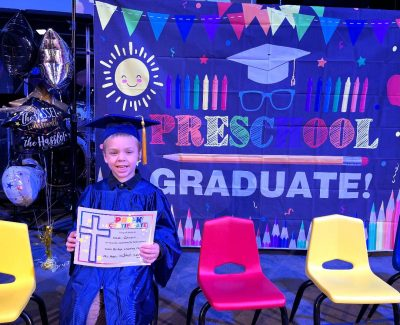
Noah graduating from Pre-K
Noah’s parents instead moved forward with genetic testing, receiving their son’s diagnosis of LCA and a confirmed genetic diagnosis of LCA9NMNAT1.
“I can tell you this, when we first got Noah’s diagnosis, it was extremely emotionally hard, and it took a whole season of trying to come to grips with it,” she said. “What does it look like? We don’t wear glasses, no one in our family wears glasses or has anything wrong with their vision. It came completely out of nowhere; it was a bit of a shock.
“We just dove deep into our faith, and we had so much of a peace about it. We just cried to God about it. That sustained us through that time of all these things going through your head about what he’ll ever be able to do and whether vision is the only issue.
“There’s a still a unique peace about it that we carry to this day.”
Looking forward to the 2023 LCA Family Conference
The mother of five, working at home full-time as a health insurance account manager, and her husband, who is an occupational therapist with the Veterans Administration, sought out as many people and organizations as possible to find services, to understand LCA, and to learn about retinal disease research.
“I was thinking of people to walk this journey with because it’s an extremely rare diagnosis,” Stephanie said. “I was trying to find other people who have walked through this and are now adults.”
She also attended the 2019 Hope in Focus LCA Family Conference in Philadelphia, where she connected with other families living with LCA and researchers working on treatments for the disease.
And she’s planning to attend Hope in Focus’ third LCA Family Conference this week from June 23-24, 2023.
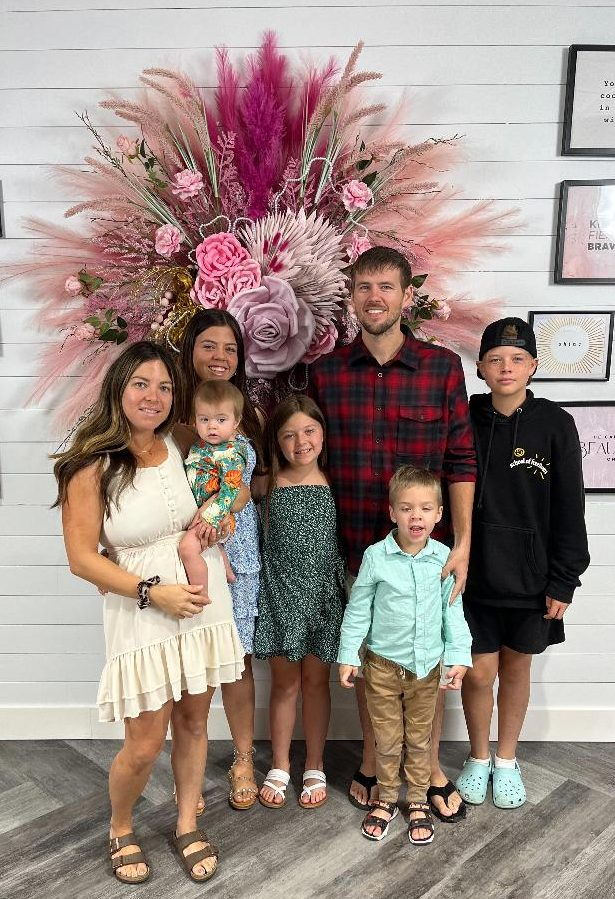
The Johnson Family
“I think the LCA conference is so vital. It was a great experience, and I’m looking forward to it even more this year.
“We’ve been at this much longer. We know more, we know what to ask. With Noah going into kindergarten, it’s important to connect with families and talk about how their children went through kindergarten.”
While she’s excited about advances in LCA research that could help Noah, she worries about the effectiveness and risks of trying new therapies.
“The progress made in just the past five years is amazing, and we are optimistic for further advancements, especially for NMNAT1.”
Biotech to advance NMNAT1 gene therapy research
Stephanie finds comfort knowing Noah’s form of LCA is among three in the scope of research advancement by Opus Genetics, a biotech created through the Foundation Fighting Blindness’Retinal Degeneration Fund (RD Fund) to invest in projects in, or advancing toward, early-stage clinical trials.
Ben Yerxa, PhD, Chief Executive Officer of Opus, characterized the company as a first-of-its-kind model for patient-focused development.
“As the first company launched by the Foundation’s venture arm, RD Fund, Opus is uniquely positioned to bring experts, resources, and patients together to efficiently advance ocular gene therapies for small groups of patients that to-date have been neglected.”
Opus’ lead program addresses mutations in the LCA5 gene encoding the lebercilin protein. The next one focuses on LCA13 RDH12, caused by mutations in the retinal dehydrogenase gene.
The company’s third program targets LCA9 NMNAT1, the gene mutation affecting Noah’s vision.
Stephanie met the Foundation’s Ben Shaberman and Ben Yerxa at the 2019 conference when he served as Foundation’s CEO.
“It just feels so exciting that he is leading Opus. He is a wealth of knowledge for the blind community and has been essential in raising money for research, as money is such a major part of moving this research forward.”
Noah
Onward to kindergarten
Doctors think Noah’s vision is 20/200, with little central vision and more peripheral vision. Considered legally blind, Noah navigates well, with most people not even knowing he has vision loss.
“I’m just excited, but nervous, about him going into the school this fall, just because I’ve never walked this journey with a school-aged child.”
Stephanie and Brian look forward to meeting and talking with other families living with LCA to gain insight into their son’s progress.
For now, though, Noah continues enjoying his favorite food – pepperoni pizza – and his favorite things: Toy Story movie’s Buzz Lightyear, monster trucks, and, at night: the rockets and the moon.
Through global data sharing and analysis, the nonprofit RARE-X (the research arm of Global Genes) is working to accelerate treatments for rare diseases, including Leber congenital amaurosis (LCA) and other rare inherited retinal diseases (IRDs).
Hope in Focus featured Karmen Trzupek, RARE-X’s Senior Director of Scientific Programs, in its webinar episode “Let’s Chat About…RARE-X.’ Our Director of Outreach and Development Courtney Coates discussed with Karmen RARE-X’s mission and goals, and its recent merger with Global Genes. The March 7, 2023, session can be viewed here.
“Let’s Chat About…” is our free webinar series bringing together researchers, advocates, industry leaders, and people living with LCA and other rare IRDs for conversations important to the rare retinal disease community.
RARE-X and its founding
Nicole Boice founded Global Genes to support patients, families, and patient advocacy groups dedicated to rare diseases. At Global Genes, Nicole and others recognized a tremendous need to solve data collection and sharing problems for patient communities affected by rare diseases, and founded RARE-X to address those critical data issues
Rare disease patients’ data often is collected somewhere and sits privately in a silo where it is inaccessible to others. Or, the patient community actively manages the data in a format precious to a particular researcher, but unhelpful to others. Or, the data doesn’t exist, as is the case with many rare diseases.
RARE-X began addressing these issues through its data collection platform that enables rare disease communities to start gathering data in a highly structured and streamlined way that aligns with existing research philosophies.
“We work very hard at RARE-X to make sure that every single question asked of patients and families is a valid data point,” Karmen said. “Then we also share that data. With patient permission, all the data collected on the platform gets migrated to a data-analysis platform, and any qualified researcher can access that data.”
Collecting the data
“When someone first comes onto the RARE-X platform and starts entering data, it will ask them for their self-reported diagnosis. Do you have a genetic test? It asks about symptoms and the progression of those symptoms over time.
“We have people upload a copy of their genetic test results for the genetic testing data. Then we have a genetic curation team that reviews those, pulls out that data and makes sure that that data is in discrete data points. That’s useful to researchers because a researcher coming onto the platform does not want to pour through a whole bunch of PDFs and sometimes pictures from somebody’s phone of their test results, so we curate all of that data and make sure that that’s available on the research portal.”
Collaborations through RARE-X
Karmen develops programming and strategic collaborations to ensure the company makes the best use of the data that patients and families entrust to them.
In one program, she’s managing an “Open Science Data Challenge” with data from about 30 patient advocacy groups in the pediatric neurodevelopmental space, in collaboration with families of children with disorders causing seizures and global developmental delays.
“We are pulling the data and aligning it with other partner data, and then making it widely available to an extensive research community under a challenging environment, like a hackathon, to try to generate valuable insights and create research proposals for grants.”
Karmen also is looking at how RARE-X develops partnerships for additional data sources and uses of the data that circle back to benefit the patient community. Other groups on the platform include some adult-onset neurodegenerative disorders and some inherited retinal disorders.
“Usher syndrome, for example, that community is actively collecting data on the platform. And then other related inherited ocular conditions that aren’t retinal but share overlapping issues and needs, like Leber hereditary optic neuropathy, are collecting data.”
The company also plans to make digital optical coherence tomography (OCT) data available side-by-side with patient reported data.
“Those images are proprietary to the software and the hardware used. Multiple companies make OCTs, and we’re working with an artificial intelligence group that has developed ways to bring that data together and make it cross-comparative.”
RARE-X plans future LCA community data collection
“The platform has been live for about a year and a half, and we are very much building this plane as we fly it,” she said. “We’re working in the vision consortium to ensure that we’re adding the right kinds of surveys and patient-reported outcome measures to the platform that are most useful to this patient community.
“We’re continuing to talk with Hope in Focus and other groups within the LCA family of diseases. As soon as we start to have some more vision-specific surveys, we’ll begin collecting data pretty actively.”
From genetic counselor to RARE-X’s mission
Karmen’s career began as a genetic counselor in inherited retinal diseases. She worked at the Casey Eye Institute and then InformedDNA, where she developed ways to share the experience and information received by patients and families seen at a major academic research center with patients and families unable to physically get to a major center. Telemedicine and collaborations and partnerships with local retinal specialists accomplished much of that.
But she realized a much greater need overall for rare disease information sharing and for funding. Through the Usher Syndrome Coalition, Karmen met Nicole and Charlene, the RARE-X founders.
“I loved the mission and that they’re enabling even the smallest patient groups to start becoming very actively involved in clinical research,” she said.
“They are flipping that paradigm where a patient community doesn’t have to wait for a clinical trial or a natural history study for their data to be valuable. But flipping where the patient communities drive the research agenda and begin to say, ‘look, we have the data, and we have started to de-risk this disease as a disease that would be valuable to pharma to invest in.’ I love that paradigm shift. I love getting to be part of that.”
Merger benefits the rare disease community
“Coming together and joining Global Genes helps the entire journey of the patient advocate. If you think about a rare disease patient or parent, you start on your diagnostic journey searching for the diagnosis, right?
“You get that diagnosis, and maybe a patient foundation or community already exists. Maybe not, if it’s an ultra-rare disease. Those patients and families going through that have lots of needs. Those questions might include: Where do I go from here? How do I best support my child in the school system?
“The patient-advocacy journey is something that Global Genes, for a long time, has been very involved in. RARE-X has been developing this platform and developing partnerships to use this data, and now we can provide an extension of that patient advocate journey.
“So much of what both Global Genes and RARE-X have been doing is related to how we educate and support patient advocates in becoming more active participants in research and helping to drive that research agenda. I think there was a lot of overlap that was beginning to develop there. It made sense to merge.”
data from an ongoing natural history study as essentially a control arm.
“That brought up a lot of excitement and questions around patient-generated data because the patient community drove that natural history study. RARE-X and Global Genes have an opportunity to be part of this story and its evolution,” Karmen said.
“Now I am not suggesting that clinical data and traditional natural history studies will be replaced. There’s so much value in those studies, but we also know that they only ever capture a small percentage of the patient community who can travel.
“How can we make that kind of research more broadly available to a much larger population of patients and find something that’s a little bit more hybrid? That is a massive part of where I see us going in the next five years.”
Desirae Potts breaks into tears when she recalls the first time a doctor said her infant son James had a disease she’d never heard of – Leber congenital amaurosis, known as LCA.
“I had no earthly idea what she was talking about. I left that appointment, I remember feeling so confused and so sad,” the 33-year-old mom said.
The doctor didn’t or couldn’t give Desirae and her husband, Robert, any information about LCA because the doc didn’t know a thing about the rare inherited retinal disease.
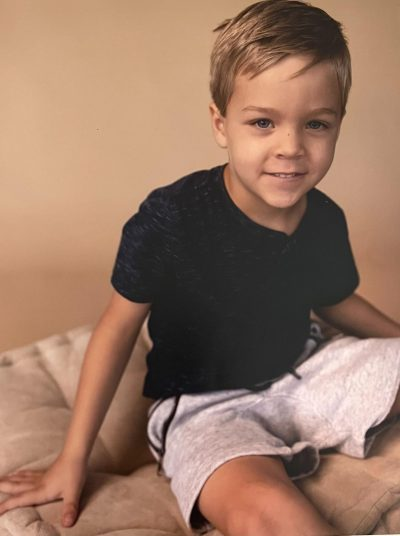
A smiling James Potts
“I had to grieve the life that my son would have had,” she said. “But I also wish that I knew then what I know now, that is: Whether he could see or not, I have a bright light!
“He’s so amazing, I couldn’t imagine him any other way and I wouldn’t change it if I could.”
She thought about the best way to bring up her son.
“I quickly learned the best way to raise him would be to raise him like my sighted children. He is the most resilient and bright young man. I know he is so smart. He amazes me every day.”
Mom becomes nurse to better help her son
James was 10 months old when his parents learned their younger son’s genetic diagnosis: LCA1* caused by a mutation in his GUCY2D gene.
About the same time, Desirae kept listening to doctors talking over her head and decided to become a nurse.
“I wanted to help him with my knowledge. It definitely helps because I have more medical knowledge than I did before. I understand what the doctor is saying. The doctors used all these words I didn’t know, and I was scared that I didn’t know.”
She began nursing school in James’ first year and earned her nursing degree about a year and a half ago. James is now 4.
“I’m not as worried now, and I know what to do in certain situations.”
James goes to school for the full day in an integrated classroom at the same school as his older brother, 9-year-old Robert. His older sister, Ariona, is in high school.
Their mom is the school nurse at the four middle schools in the district of their South Texas coastal city.
Keeps informed of LCA1 GUCY2D research
Desirae knew something wasn’t right with her baby’s vision at 2 months when he didn’t track objects or light. At 4 months, an ophthalmologist prescribed glasses, but they didn’t help.
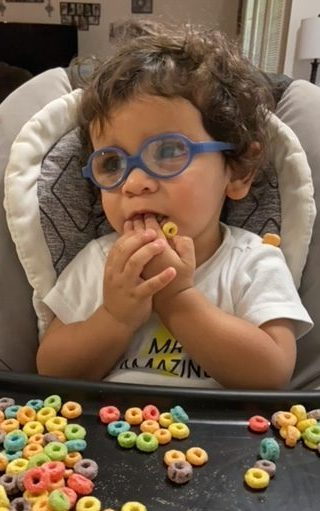
James wearing his “Mr. Amazing” shirt
After the initial retinal disease diagnosis, James received his confirmed genetic diagnosis 6 months later at Baylor College of Medicine by Richard A. Lewis, MD, MS, Professor of Molecular and Human Genetics at the Houston medical school.
Annually, James visits John T. Stout, MD, PhD, who keeps the family informed of research in the LCA1 GUCY2D space. Dr. Stout specializes in retina/macular and retinal vascular diseases at Texas Children’s Hospital. His current research projects include human gene and stem cell therapy for proliferative and inherited ocular disease, retinal disease genotype-phenotype correlation, and intraocular angiogenesis, the formation of new blood vessels from the existing vascular tree.
LCA accounts for 5 percent of all retinal dystrophies and 20 percent of blindness in school-age children.
James received early-intervention therapy, and orientation and mobility therapy during his first years. He also sees a speech therapist at school and a developmental specialist in town.
Right now, his favorite food is bagels and butter. And he absolutely loves music and Daniel the Tiger, a spinoff from Mr. Rogers Neighborhood, where he sings songs about learning, and growing, and what to do with feelings.
James does not yet have words to describe his sight, which makes it hard to explain what he can see, although his mom believes he has light perception.
James’ vision is a family affair
“It not only affected him, but it also affected all of us,” Desirae said. “We all had to adjust and learn how to make things in a way that he could do things on his own and foster his independence.”
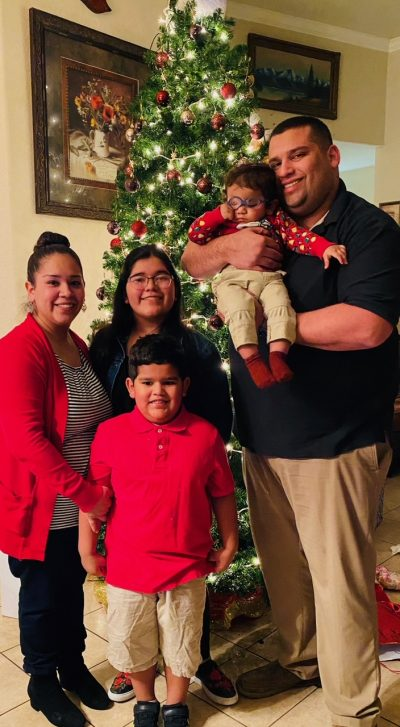
The Potts Family
Ariona, James’ 17-year-old sister, nurtures her little brother, with mom adding, “She’s the closest thing to me he can get. She’s very, very helpful.”
Robert was 5 when James was born.
“He didn’t quite understand what’s going on and how to be accommodating to his brother. We definitely had to inform him.”
Desirae is concerned about James pressing or rubbing his eyes, a symptom of LCA called oculodigital reflex. While the doctor said the reflex is normal, she is worried the action may cause harm. She tries to keep him occupied.
“I try very hard, but James is maybe the most headstrong person I have ever met in my entire life. If you tell him to do something, he will do the complete opposite. So, I tell him, ‘Don’t let me see your eyes,’ even though I don’t want him to defy me.”
James loves to explore and see with his hands.
“We don’t use the word ‘blind.’ We prefer to say that he sees with his hands. We don’t say ‘blind’ or ‘visually impaired.’ We do not want him to think that that would define him.
“That was something I had to teach both of our children, my husband, and all of our family. Some relatives are still in denial. We don’t put him in a box. We let him explore and have the same toys as his brother and sister,” she said.
“We try to have everyone stay on the same page to help build his confidence. Like it’s normal for him that he sees with his hands.”
One woman called doctor after doctor, only to hear they would not treat her and her two rare pediatric conditions because she turned 18 and no longer qualified for help.
Another fights for life-saving medicine to treat her rare disease that causes dangerous swelling.
While another faces $60,000 in annual medical expenses for her two teenagers living with a rare metabolic disorder requiring a special diet to stave off life-threatening symptoms.
“The medicine is there but you can’t get to it,” Candice Flewharty told the group gathered in Hartford, Connecticut, for Rare Disease Day. “Each phone call I make is a battle for my childs’ lives.”
State Sen. Cathy Osten, who has proposed legislation requiring insurance coverage for medical foods, accompanied Candice and her daughter to the gathering.
Candice Flewharty (L) with State Senator Cathy Osten
People living with rare diseases told their stories to Connecticut legislators on Rare Disease Day on March 23, about a month after a New England snowstorm canceled the event usually celebrated the last day of February.
Through the state’s newly minted Rare Disease Advisory Council, known as the RDAC, legislators of Connecticut’s General Assembly now have a collaborative and organized way to improve the lives of residents living with rare diseases.
The council’s first report of its findings and recommendations is due in November. Click here for a summary of the RDAC legislation, effective last July.
Lesley Bennett, CT-RAN State Volunteer and new RDAC member
The council will give patients, families, caregivers, health care providers, advocates, researchers, and other stakeholders the opportunity to make formal recommendations to state agencies and the legislature on ways to develop policy and health care legislation to improve the lives of those people living with rare disease and their caregivers, according to Lesley Bennett, Volunteer Ambassador for the Connecticut Rare Action Network (CT-RAN) of the National Organization for Rare Disorders (NORD).
Connecticut Gov. Ned Lamont signed legislation establishing the council after rare disease advocates worked for years to get it going.
“We did it,” Lesley said. “It took eight years, but we did it.”
Introducing six new council appointees
Rare Disease Advisory Council members will include Insurance, Public Health, and Social Services commissioners, or their designees, and 10 members appointed by the Governor and the Public Health Committee leadership. Six new members were introduced at the Rare Disease Day event; four have yet to be announced.
James Rawlings, President/CEO Sickle Cell Disease Association of America Connecticut Chapter, and new RDAC member
The six members and their council roles are:
Patient Advocate Representative: Lesley Bennett, RDAC Coalition Leader and CT-RAN Volunteer State Ambassador.
Pediatric Patient Representative: Saurabh Vaidya, Connecticut Hemophilia Society President, and father of a son with hemophilia.
Caregiver Representative: Mary Caruso, Friedreich’s Ataxia Research Alliance Founding Member, and caregiver for two adult children living with the disease.
Researcher: Joanna Gell, MD, Pediatric Oncologist and Hematologist, Connecticut Children’s, and Research Scientist, Jackson Laboratories.
Physician Treating Rare Disease Patients: Emily Germain-Lee, MD, Division Head, Pediatric Endocrinology & Diabetes; Director, Center for Rare Bone Disorders, Albright Center, and Osteogenesis Imperfecta Center.
Patient Representative: James Rawlings, R.PH, MPH, President/CEO Sickle Cell Disease Association of America, Connecticut, Michelle’s House.
“Everybody is here to help each other out.”
State Senator Saud Anwar
Connecticut Public Health Committee Co-Chair Sen. Saud Anwar told the gathering the time is here to find solutions to take care of and invest in the health of the rare disease population, saying the council must go forward with this mindset:
“Every illness is treatable. Every disease has an answer and a solution.”
The senator spoke about the realities of national and international collaborations resulting in developing regenerative medicine.
“We will put our hearts together a make sure we come out of the room with solutions. Everybody is here to help each other out.”
Connecticut Public Health Committee Co-Chair Rep. Cristin McCarthy Vahey told the group, “I look forward to working with you and being supportive in making things happen for all of you.”
State Representative Cristin McCarthy Vahey
Fewer than 40 treatments existed for rare disease 40 years ago; the number is now 600, according to Annissa Reed, NORD’s Associate Director of State Policy. She said she hopes the collaborative effort makes the dream of finding more rare disease solutions and access to medicine a reality.
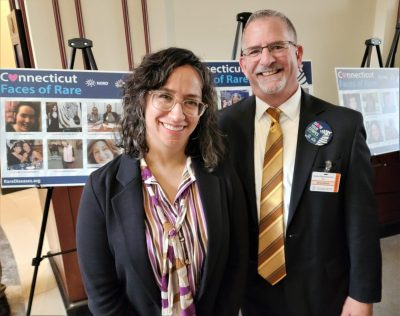
Connecticut-based Hope in Focus advocated throughout the years with the Rare Action Network to help create the council, with Co-Founder and President Laura Manfre attending the Rare Disease Day event.
Hope in Focus’ Laura Manfre with Brian Rosen of Axion Pharmaceuticals
Connecticut joins 24 states in establishing a council specifically to address the complexities of living with a rare disease, caring for someone with a rare disease, gaining access to treatment, and getting better insurance coverage. To find out whether your state has an RDAC or is developing one, please go to: https://rarediseases.org/rare-disease-advisory-councils/map/.
The council is critical, as it is exponentially more difficult for the rare disease population – inherently fewer in number than the rest of Connecticut – to have a voice on the state level.
A rare disease in the United States is characterized as any disease, disorder, illness, or condition affecting fewer than 200,000 people. With more than 7,000 known rare diseases, upwards of 90 percent have no FDA-approved treatment. About 1 in 10 people – more than 30 million Americans – live with a rare disease.
Most rare diseases are genetic or have a genetic component, more than half of those affected by rare diseases are children, and all pediatric cancers are rare.
Dominic Cotton, a rare disease parent and co-leader of the RDAC Coalition, thanked the Department of Public Health and its nearly 60 years of support for newborn screening.
“Without newborn screening, my son wouldn’t be alive today.”
Kristen Angell and Jennifer Huron of the National Organization for Rare Disorders (NORD)
Every newborn in Connecticut is assessed for a range of diseases, and each year more than a hundred babies tested for any one of the diseases are on a critical, early-intervention path leading to keeping a disease in check and people living fulfilled lives.
Kristen Angell, NORD’s Associate Director of Patient Advocacy, said the gathering is important for our population living with rare diseases.
“It gives them an opportunity to speak face to face with our General Assembly and let them know the daily struggles and challenges they face, and it provides the legislators an opportunity to assist in making a possible impact.”
Access to medication a matter of life or death
Rare Disease Day is all about awareness. Here is a sampling of what legislators learned from people living with rare diseases:
Pamela Johnson and her 10-year-old son have a rare, life-threatening disease called Hereditary Angioedema (HAE), a genetic condition that can cause severe swelling in various parts of the body and affects about 1 in 50,000 people globally. She has a well-paying job and feels she should be able to afford to pay for her medications, but they cost $90,000 a month.
With no access to life-saving drugs in 2017, she underwent two surgeries for severe swelling in her throat. Without medication, two or three times monthly, she would experience attacks making it extremely difficult to breathe.
Pamela Johnson
David Leeds, who helped with the day’s introductions and has HAE, highlighted one aspect of life more difficult with a rare disease – getting treatment at a hospital. It is a place of stress, anxiety, and fear of not receiving the treatment he needs because doctors and nurses never encountered his disease.
He described two published investigations of major insurance companies denying coverage for medication to help people live. Insurance companies, rather than treating doctors, are deciding who gets to have medication and who doesn’t.
“This is every day for rare disease patients.” he said. “Insurance companies cannot be relied upon to determine what is medically necessary.”
***
Megan Freeman said no one should ever have to go through what a person living with a rare disease has to experience.
As if it were yesterday, she remembers the day she got her diagnosis, and her response:
Alissa DeJonge (L), Megan Freeman, and her friend Elizabeth Nagle
“Am I going to die? Am I going to live? Am I going to be able to live to get married and live to have kids.”
Megan lives with 2q37 deletion syndrome. She is one of about a hundred people worldwide with the ultra-rare chromosome disease that can affect many parts of the body. She is an advocate and founder of her own rare disease organization. She praised the legislators for creating the RDAC, saying, “I give you guys an A for effort!”
***
Rachel O’Grady was diagnosed as an adult with two pediatric conditions: Tethered Cord Syndrome, a neurologic disorder caused by tissue attachments limiting spinal cord movement, and Spina Bifida Occulta that causes a small gap in the spine. Any resources for Rachel in Connecticut dried up when she turned 18, no longer qualifying for help as a minor.
“They would not see me, nor would they treat me,” she said. Maxed out in medical debt, she found help in Massachusetts.
***
Alissa DeJonge’s sixth-grade son lives with a bleeding disorder called Hemophilia A. She knows people living with rare diseases make tough choices, given the huge cost of necessary medicines, and looks forward to having the new council work to protect patient care, help caregivers, and allow parents to take time off from work.
***
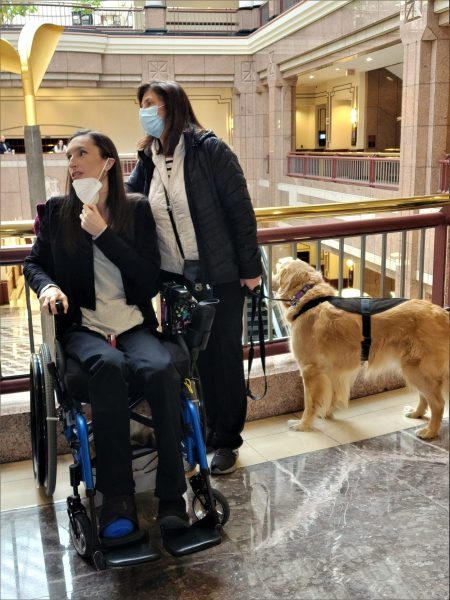
Kelly Considine, with her mother, Susan, and service dog, Gunner, in the atrium of the Legislative Office Building
Kelly Considine, accompanied by her mother, Susan, came to raise awareness about and promote research for a rare chronic pain disorder she lives with called Complex Regulatory Pain Syndrome.
Kelly characterized the disease as the most painful condition known to modern medicine. She receives some relief from an implanted therapeutic device and receives help and love, from her mother and her service dog, a golden retriever named Gunner.
***
Amy LaChance, the mother and caregiver of a child with Syngap1, a genetic mutation affecting 1,200 people worldwide, said people need access to genetic testing to support research and trials for a treatment to fix this genetic typo.
It makes a difference when people with rare disease tell lawmakers their stories about needing access to tests and medicine, saying, “The squeaky wheel really does get the grease.”
Biotechnology growth important to state economy
Paul Pescatello, JD, PhD, is Senior Counsel and Executive Director of the Connecticut Bioscience Growth Council, a committee of the Connecticut Business and Industry Association’s biotech and biopharma members.
Amy LaChance
The bioscience council fosters collaboration with the life-science institutions of biotech and biopharma, and with the state to help grow this sector of Connecticut’s economy. Developing a new medicine costs about $2.7 billion and takes 12 to 15 years, he said.
“Essentially, it costs what it costs, no matter the size of the patient population,” he said. “That’s why it’s important to underscore how rare disease new medicine research typically leads to many insights and advances in drug development for larger patient populations.”
Keep telling your rare disease stories
Representative Vincent Candelora, house minority leader and rare disease champion, urged people to tell their stories to make people aware so lawmakers can help fashion policy to help them.
“If we don’t hear from you, it’s harder for us to do our job. It’s the true stories that tell us everything that’s going on.”
His advice echoed the encouragement we at Hope in Focus give to our LCA and IRD community – tell your stories to feel less isolated in your journey of living with a rare inherited retinal disease and to help advance research into treatments to improve vision or to halt vision loss.
The council will give patients, families, caregivers, health care providers, advocates, researchers, and other stakeholders the opportunity to make formal recommendations to state agencies and the legislature on developing policy and health care legislation to improve the lives people living with rare disease and their caregivers.
The council will deliver its first report of findings and recommendations in November. Please click here for a summary of the RDAC legislation that Gov. Ned Lamont signed into law. Connecticut joins 24 states having a Rare Disease Advisory Council. To see whether your state is working to create such a group, please check here.
RDAC members will include Insurance, Public Health, and Social Services commissioners, or their designees, and 10 members appointed by the governor and the Public Health Committee leadership. Of those 10 appointments, here are the six announced at Connecticut’s March 23, 2023, celebration of Rare Disease Day:
Patient Advocate Representative: Lesley Bennett, RDAC Coalition Leader, and CT-Rare Action Network Volunteer State Ambassador, National Organization for Rare Disorders.
Pediatric Patient Representative: Saurabh Vaidya, Connecticut Hemophilia Society President, and father of a son with Hemophilia.
Caregiver Representative: Mary Caruso, Friedreich’s Ataxia Research Alliance Founding Member, and caregiver for two adult children living with that rare disease.
Researcher: Joanna Gell, MD, Pediatric Oncologist and Hematologist, Connecticut Children’s Hospital, and Research Scientist, Jackson Laboratories.
Physician Treating Rare Disease Patients: Emily Germain-Lee, MD, Division Head, Pediatric Endocrinology and Diabetes, and Director, Center for Rare Bone Disorders, Albright Center, and Osteogenesis Imperfecta.
Patient Representative: James Rawlings, R.PH, MPH, President/CEO Sickle Cell Disease Association of America, Connecticut, Michelle’s House.
We’ll let you know when the rest of the appointments are official. They include representation of hospitals, the biopharmaceutical industry, and people living with a rare disease.
Jessi Crawford fancied the clarinet when she played in her middle school band, while classmate Ted Beaman favored the trombone and guitar. Never did they dream their love of music would manifest a half lifetime later with the birth of their youngest son.
Atlas mixing it up!
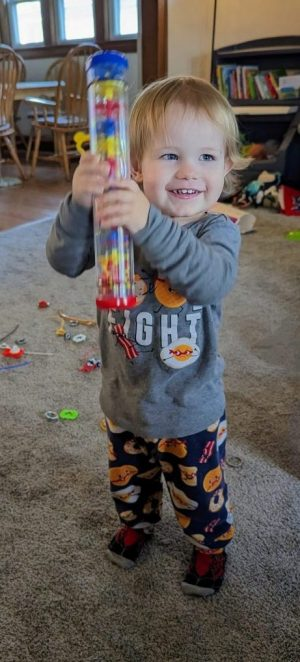
Music is everything to almost 2-year-old Atlas – he loves to sing, he loves to dance, and he loves all kinds of music.
Before the toddler developed his interest in music, his parents noticed something about his eye movements.
“Out of nowhere,” at one-and-a-half-months old, his mom said, he developed horizontal and vertical nystagmus, characterized by side-to-side and up-and-down rapid, repetitive, uncontrolled eye movements.
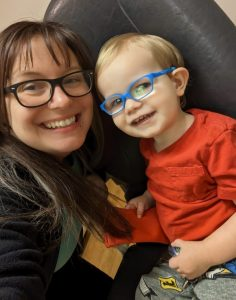
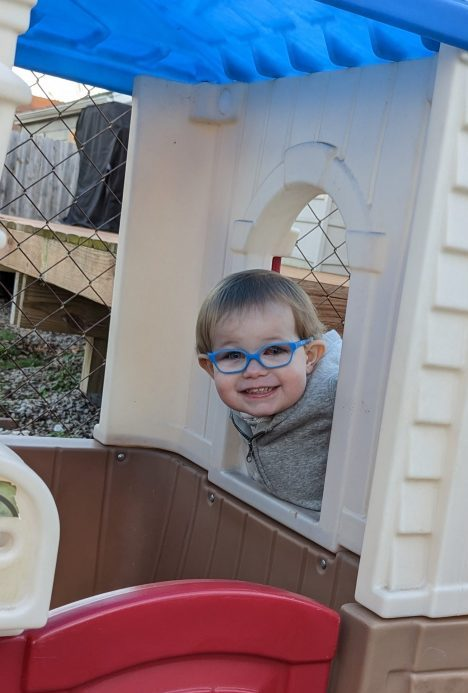
Atlas received his first pair of glasses at 3 months from Kellogg Eye Center in Ann Arbor, Michigan, about an hour drive from the family’s home in Toledo, Ohio.
A month later, doctors suspected Atlas had Leber congenital amaurosis (LCA), a rare genetic eye disorder in which the rods and the cones of the retina – the light-gathering cells – do not function properly.
Geneticists confirmed his genetic diagnosis as LCA6 caused by a mutation in his RPGRIP1 gene. LCA6 can be particularly devastating because of its rapid onset and progression.
“This took us completely by surprise,” Jessi said. “What do you mean, we both have this dysfunctional gene? What are you talking about?”
She was more than floored, especially because her oldest son, 11-year-old Brayden-Lee, has a rare, life-threatening form of autism and epilepsy. Brayden-Lee and Atlas also have a 7-year-old brother named Ronan.
Jessi found comfort and encouragement from the geneticist and the genetic counselor, but it took time to process the idea that her son’s vision would deteriorate.
Atlas and mom, Jessi
“You have all these stigmas around losing your vision being the worst thing on the planet, but I realized he could still have a happy life. He’s not dying, he’s just going to lose his vision – that perspective helped a lot.”
She’d already enlisted state and local resources to help Brayden-Lee, so she began searching for any available support and assistance for Atlas.
“I found him an O&M (Orientation and Mobility) specialist, a developmental specialist, and a vision specialist, so he wouldn’t fall behind in anything – movement, sensory output, anything.
“I was still really kind of sad and overwhelmed, and, of course, worried, because I never experienced anything like this before. My oldest son had occupational therapy, speech therapy, hospital visits galore, but I never dealt with anyone who couldn’t see.”
LCA6 RPGRIP1 preclinical research underway
Atlas turns 2 in May and he’s quite advanced, talking in 4-, 5-, 6-word sentences.
“He knows his shapes and he’s working on colors, which is hard because he sometimes blends colors.”
Atlas has no vision from the midline of his eye, down. He has vision above, for now, and cannot see close up.
Jessi and Ted’s little boy underwent eye muscle surgery in February to release his eyes from crossing, which has helped his vision.
Atlas
Jessi connected with Odylia Therapeutics, a biotech working on late-stage preclinical studies for a potential treatment for the RPGRIP1 mutation, and, hoping to help advance research, she authorized the company’s use of images taken of her son’s eyes during the surgery.
The Atlanta-based business is developing an investigational gene therapy to treat vision loss caused by LCA6 and is working with vector technology developed by Odylia Co-Founder Luk Vandenberghe, PhD. The research builds on data generated at Massachusetts Eye and Ear in the labs of Vandenberghe and Eric Pierce, MD, PhD, a physician and surgeon at Mass Eye.
Odylia hopes to begin trials in 2025 and is seeking partnership or philanthropic funding for the estimated $3.5 million development costs.
Jessi said she’d like to enroll Atlas in a clinical trial, just not the first one because she fears possible, yet undiscovered, side effects from experimental treatment.
Watching Mickey Mouse and Listening to Rock ‘n’ roll, Country, Celtic, and Native American
Atlas loves music, singing, and watching TV.
“He loves watching Mickey Mouse-anything. He stood at the mirror, pointed at his shirt in the mirror and said, “Mickey Mouse, blue shirt, mamma.”
A happy child who loves raisins and pizza, he reaches for things and gets his spoon or fork to his mouth, while getting food into it is another thing.
Jessi said Atlas has a tough time with the letter ‘f’ and says shork when he means fork.
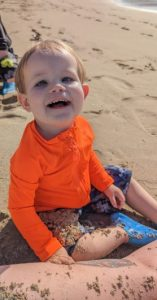
Atlas enjoying the beach
“He tells me every day, fork and bowl, fork and bowl, or ‘shork a bow, mamma, shork a bow.’” Jessi said just thinking about it makes her laugh.
The 31-year-old characterized herself and her fiancée, 32-year-old Ted, as “both huge, huge, musical people,” beginning back in the school band, when they started dating in their teens and later went their separate ways, only to start dating again four years ago.
“The fact that Atlas likes music so much is better for us. He loves Disney music, also rock, country music and Celtic, and Native American.
“So, when I say we’re well rounded, we’re well rounded.”