Hope Rules at 2023 Hope in Focus LCA Family Conference in Indianapolis

Our 2023 LCA Family Conference in Indianapolis offered many reasons to feel hopeful about more retinal disease treatments coming to fruition and in less time than the dozen or more years it’s taken to bring a therapy to market, despite the deep complexities and tremendous expense of researching and developing LCA therapies.

More than 100 people gathered in late June from around the globe in Indianapolis for the Hope in Focus LCA Family Conference – making friends, meeting researchers, and establishing connections to help better navigate life with Leber congenital amaurosis, a rare inherited degenerative retinal disease.

The conference succeeded in its goal of creating an ideal environment for thoughtful and interactive exchanges of knowledge, ideas, and viewpoints in sessions focusing on research, future treatments, advocacy, shared stories, and connections with people traveling similar journeys.

The Hotel Omni Severin’s mezzanine on Friday, June 23, to Saturday, June 24, buzzed with the sounds of LCA families socializing with conference speakers and families, kids with LCA running around having fun, and grownups meeting other adults living with the rare disease.

As one caregiver said of the event: “This is fantastic! I’m getting answers to questions I didn’t even know how to ask.”

People from the Midwest, the rest of the country, and around the globe – from Canada, Mexico, Turkey, and China – converged in the Racing Capital of the World to hear from LCA families, retinal doctors, researchers, advocates, and representatives of the biotechnology and pharmaceutical industries.
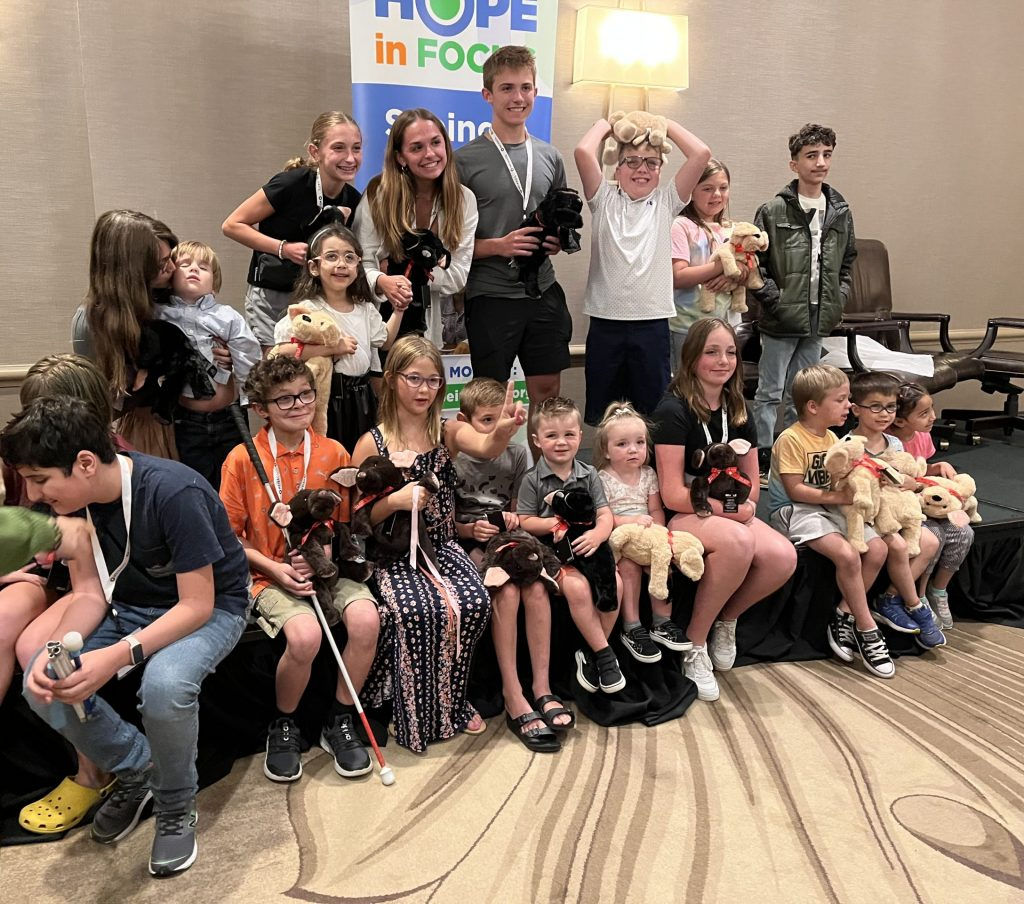
A mix of kids and caregivers attending the 2023 Hope in Focus LCA Family Conference in Indianapolis

Navigating the LCA Ecosystem

Laura Manfre, Board Chair and Co-Founder of Hope in Focus, welcomed the group to our third LCA Family Conference, and its first in four years because of in-person social limitations caused by the COVID-19 pandemic. The next conference is set for 2025.

Advancing treatments for LCA is part of an ecosystem many may not have thought about before being thrown into it with a rare disease diagnosis, Laura told the group.

“No one asked to be a part of this disease or came into this knowing how to navigate this journey for their child, their family, or themselves,” she said. “We are all figuring it out as we go, and the more we can connect with one another, the better we are able to learn and share and support one another.”

Hope in Focus gathered representatives from this LCA ecosystem – from pharma and biotech, to regulatory to research and healthcare, with each stakeholder playing a critical role necessary to developing treatments for LCA.

“We all need one another to make this work.”

Even having the kids at the conference get together for a day at the Children’s Museum of Indianapolis, while their parents attended panel discussions, marked a milestone of sorts for children with LCA.

“How often does that happen that sighted and visually impaired siblings get to be in a group together like that? It’s really cool.”

Laura, her husband, Charles Priebe, and their good friend Elisse Rosen founded Hope in Focus nearly 10 years ago to raise funds for research, after doctors told Laura and Chuck their 11-year-old daughter Sofia had LCA17 caused by a mutation in her IQCB1/NPHP5 gene.

Laura explained Sofia’s absence from the conference, where she had planned to talk about living with LCA.

“She is now 20, a rising junior in college, and her vision is getting worse,” Sofia’s mom said. “Yes, she was supposed to be here and be on a panel, but she finally, after years of waiting, got a guide dog and is just wrapping up two weeks of training with her new dog.” (By the end of the conference, Sofia received her new pal, a beautiful black lab named Winsome.)

Laura learned raising funds was important, but money alone doesn’t solve the issue.

“Personally, and, for Hope in Focus, the last decade has been a learning experience of all the things that need to come together to pave the way for treatments for ourselves and our children.

Lennon Schleihauf hugs her new doggie. She and other children at the Hope in Focus LCA Family Conference received the plush toys as a gift from Two Blind Brothers. Each dog’s name is embossed in Braille on one of its ears.

“That’s everything from making sure our community has access to genetic testing and is getting diagnosed and not misdiagnosed, which is still an issue in some regions. It includes participating in patient registries and in Natural History studies. It means advocating for policy changes with our legislators, and making sure we are well-informed and educated, and we are all heard.”

Zero to more than 30 Clinical Trials

Ben Shaberman, Vice President of Scientific Communications for the Foundation Fighting Blindness, told the group when he started at the Foundation in 2004, research into blindness consisted of  lab work with mice and sometimes dogs, not humans.

Four years later, researchers at Children’s Hospital of Philadelphia began clinical trials for a drug to treat LCA2 RPE65. In 2017, after 12 years and $500 million in research and development, the gene therapy LUXTURNA® received regulatory approval. It is the first treatment in the United States for any inherited disease and the only treatment shown to restore vision in people living with one of the 27 identified forms of LCA.

Today, about three dozen clinical trials involving retinal disease are underway, with 40 biotechnology companies investing in the development of a range of treatment therapies.

“It really is an ecosystem, and you are so much a part of that,” said Ben, who also is an Advisor to Hope in Focus.

He also talked about CRISPR/Cas9, a gene-editing therapy in clinical trials for LCA10 CEP290.

“This was the first ever clinical trial for CRISPR/Cas9, and it was in the retina, and it was for LCA. That clinical trial moved the whole field forward.”

With LCA affecting 8,000 people in the United States and 160,000 globally, Ben told the audience:

“You are moving mountains. Please, please, please, do not underestimate the power that you have to move this forward.”

Hope is Imperative

Years ago, Laura said, someone told her having the word ‘hope’ in our organization’s name was a mistake because hope isn’t a strategy and wouldn’t get us anywhere.

“He’s wrong. Hope is a very powerful thing. And it’s the bedrock of why we founded this organization, and why we still exist. Ten years ago, we didn’t have a single treatment in sight, and we only had hope – hope that someday there just might be a treatment for our child.

“And it was from that hope that this organization was built and continues to grow. There’s not a single person in this room that came here thinking, ‘This is never going to happen, but I’m going to go to Indy anyways.’

“No, everyone is gathered here today because we have some kind of hope in focus – hope to learn something new about this rare disease community, hope to make a meaningful connection with someone else on this journey, hope to bring new information back to organizations in their country, or hope to be the one that brings the next LCA treatment to market.”

*Please see our Hope in Focus website for three more stories detailing sessions from our 2023 LCA Family Conference. Click here to see a video about the conference.
Ready, Set, Go! Hope in Focus 2023 LCA Family Conference Brings Together Rare Retinal Disease Community in Indianapolis

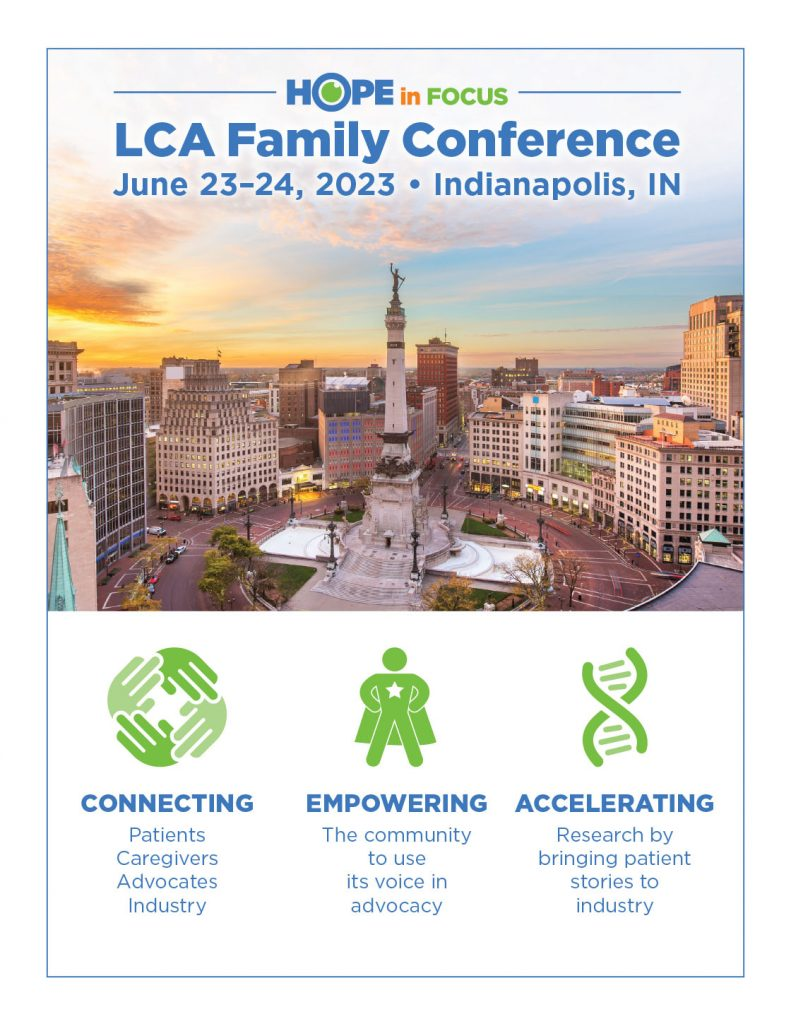
The LCA Family Conference 2023 poster with the date, and times.

People living with LCA, family members, retinal doctors, researchers, advocates, and representatives of the biotechnology and pharmaceutical industries converge in the racing capital of the world this weekend, when Hope in Focus presents its third LCA Family Conference.

A global advocacy organization helping those affected by blindness, Hope in Focus connects families living with Leber congenital amaurosis (LCA) and other rare inherited retinal diseases (IRDs) through its Family Connections program and through events such as this conference at the Omni Severin Hotel in downtown Indianapolis from Friday, June 23, to Saturday, June 24.

The gathering creates an ideal environment for creating opportunities for thoughtful and interactive exchanges of knowledge, ideas, and viewpoints in sessions focusing on research, future treatments, advocacy, people sharing their stories, and making connections with people traveling similar journeys.

The conference is sponsored by Spark Therapeutics, Foundation Fighting Blindness, MeiraGTx, Janssen, Atsena Therapeutics, Ocugen, and Kiora Pharmaceuticals. We offer special thanks to Eighty Six Media, Indiana School for the Blind and Visually Impaired, Scott D. Allison, OD, MBA, Lori St. Arnaud, and Lee St. Arnaud.

Courtney Coates, Director of Outreach and Development for Hope in Focus, and Laura Manfre, Board Chair and Co-Founder of our organization, kick off the event by sharing the ways in which we are supporting the LCA and rare IRD community.

Our first panel is about Advocating for Treatments, moderated by Jonathan Stokes, AbbVie’s Senior Director of Patient-Centered Outcomes Research. Panelists are:

* Jacose Bell, Senior Patient Advocacy Lead at Spark Therapeutics

* Wiley A. Chambers, MD, Supervisory Medical Officer of New Drugs, Center for Drug Evaluation at the U.S. Food and Drug Administration

* Jill Dolgin, PharmD, Executive Director of Global Patient Advocacy & Scientific Engagement at Beacon Therapeutics

* Laura Manfre, Co-Founder and Board of Directors’ Chair

* Emily Place, MS LCGC, Senior Genetic Counselor and Manager of Genetics and Genetic Counseling at Mass Eye and Ear

***

A second panel explores Living with LCA, moderated by Lee St. Arnaud, a father of two teen-agers living with LCA. Panelists are:

* Beth Borysewicz, Educational Consultant, State of Connecticut Department of Aging and Disability Services with the Bureau of Education Services for the Blind

* Mohamed Farid, Founder and CEO, MFK Continuity

* Tami Morehouse, LCA research pioneer, who lives with LCA2 RPE65 and volunteered for the first clinical trial for gene therapy

* Patrick St. Arnaud, who lives with LCA17 IQCB1/NPHP5 and is a high school senior

* Mirielle St. Arnaud, who lives with LCA17 IQCB1/NPHP5 and is a high school junior

***

A session will be held on LCA Drug Development by our partners at the Foundation Fighting Blindness. The speakers are Chad R. Jackson, PhD, Senior Director of the Foundation’s Preclinical Translational Research Program, and Ben Shaberman, Foundation Vice President of Science Communications.

***

Another panel will discuss Gene Agnostic Therapies, moderated by Chad R. Jackson, PhD, with panelists:

* Huma Qamar, MD, MPH, CMI, Head of Clinical Development and Medical Affairs at Ocugen

* Eric Daniels, MD, Chief Development Officer at Kiora Pharmaceuticals

* Ben Shaberman, Vice President of Science Communications at Foundation Fighting Blindness

***

The last panel will discuss Gene Therapies for LCA, moderated by Ben Shaberman of the Foundation. Panelists are:

*Shannon E. Boye, Founder and Director and Acting Chief Science Officer at Atsena Therapeutics

* Ash Jayagopal, PhD, Chief Scientific Officer, Opus Genetics

* Thomas Mendel, MD, PhD, Assistant Professor of Ophthalmology, and Vitreoretinal Surgeon, Havener Eye Institute, Department of Ophthalmology & Visual Sciences of The Ohio State University

* Bikash R. Pattnaik, PhD, Professor, University of Wisconsin-Madison

***

Hope in Focus is dedicated to generating awareness, raising funds for research, and providing support, education, and outreach to the LCA and rare inherited retinal disease community.

We look forward to seeing you at our LCA Family Conference!

Let’s Chat About … RARE-X with Karmen Trzupek

Through global data sharing and analysis, the nonprofit RARE-X (the research arm of Global Genes) is working to accelerate treatments for rare diseases, including Leber congenital amaurosis (LCA) and other rare inherited retinal diseases (IRDs).

Hope in Focus featured Karmen Trzupek, RARE-X’s Senior Director of Scientific Programs, in its webinar episode “Let’s Chat About…RARE-X.’ Our Director of Outreach and Development Courtney Coates discussed with Karmen RARE-X’s mission and goals, and its recent merger with Global Genes. The March 7, 2023, session can be viewed here.

Let’s Chat About…” is our free webinar series bringing together researchers, advocates, industry leaders, and people living with LCA and other rare IRDs for conversations important to the rare retinal disease community.

RARE-X and its founding 

Nicole Boice founded Global Genes to support patients, families, and patient advocacy groups dedicated to rare diseases. At Global Genes, Nicole and others recognized a tremendous need to solve data collection and sharing problems for patient communities affected by rare diseases, and founded RARE-X to address those critical data issues

Rare disease patients’ data often is collected somewhere and sits privately in a silo where it is inaccessible to others. Or, the patient community actively manages the data in a format precious to a particular researcher, but unhelpful to others. Or, the data doesn’t exist, as is the case with many rare diseases.

RARE-X began addressing these issues through its data collection platform that enables rare disease communities to start gathering data in a highly structured and streamlined way that aligns with existing research philosophies.

“We work very hard at RARE-X to make sure that every single question asked of patients and families is a valid data point,” Karmen said. “Then we also share that data. With patient permission, all the data collected on the platform gets migrated to a data-analysis platform, and any qualified researcher can access that data.”

“When someone first comes onto the RARE-X platform and starts entering data, it will ask them for their self-reported diagnosis. Do you have a genetic test? It asks about symptoms and the progression of those symptoms over time.

“We have people upload a copy of their genetic test results for the genetic testing data. Then we have a genetic curation team that reviews those, pulls out that data and makes sure that that data is in discrete data points. That’s useful to researchers because a researcher coming onto the platform does not want to pour through a whole bunch of PDFs and sometimes pictures from somebody’s phone of their test results, so we curate all of that data and make sure that that’s available on the research portal.”

Collaborations through RARE-X 

Karmen develops programming and strategic collaborations to ensure the company makes the best use of the data that patients and families entrust to them.

In one program, she’s managing an “Open Science Data Challenge” with data from about 30 patient advocacy groups in the pediatric neurodevelopmental space, in collaboration with families of children with disorders causing seizures and global developmental delays.

“We are pulling the data and aligning it with other partner data, and then making it widely available to an extensive research community under a challenging environment, like a hackathon, to try to generate valuable insights and create research proposals for grants.”

Karmen also is looking at how RARE-X develops partnerships for additional data sources and uses of the data that circle back to benefit the patient community. Other groups on the platform include some adult-onset neurodegenerative disorders and some inherited retinal disorders.

Usher syndrome, for example, that community is actively collecting data on the platform. And then other related inherited ocular conditions that aren’t retinal but share overlapping issues and needs, like Leber hereditary optic neuropathy, are collecting data.”

The company also plans to make digital optical coherence tomography (OCT) data available side-by-side with patient reported data.

“Those images are proprietary to the software and the hardware used. Multiple companies make OCTs, and we’re working with an artificial intelligence group that has developed ways to bring that data together and make it cross-comparative.”

RARE-X plans future LCA community data collection

“The platform has been live for about a year and a half, and we are very much building this plane as we fly it,” she said. “We’re working in the vision consortium to ensure that we’re adding the right kinds of surveys and patient-reported outcome measures to the platform that are most useful to this patient community.

“We’re continuing to talk with Hope in Focus and other groups within the LCA family of diseases. As soon as we start to have some more vision-specific surveys, we’ll begin collecting data pretty actively.”

From genetic counselor to RARE-X’s mission 

Karmen’s career began as a genetic counselor in inherited retinal diseases. She worked at the Casey Eye Institute and then InformedDNA, where she developed ways to share the experience and information received by patients and families seen at a major academic research center with patients and families unable to physically get to a major center. Telemedicine and collaborations and partnerships with local retinal specialists accomplished much of that.

But she realized a much greater need overall for rare disease information sharing and for funding. Through the Usher Syndrome Coalition, Karmen met Nicole and Charlene, the RARE-X founders.

“I loved the mission and that they’re enabling even the smallest patient groups to start becoming very actively involved in clinical research,” she said.

“They are flipping that paradigm where a patient community doesn’t have to wait for a clinical trial or a natural history study for their data to be valuable. But flipping where the patient communities drive the research agenda and begin to say, ‘look, we have the data, and we have started to de-risk this disease as a disease that would be valuable to pharma to invest in.’ I love that paradigm shift. I love getting to be part of that.”

Merger benefits the rare disease community 

“Coming together and joining Global Genes helps the entire journey of the patient advocate. If you think about a rare disease patient or parent, you start on your diagnostic journey searching for the diagnosis, right?

“You get that diagnosis, and maybe a patient foundation or community already exists. Maybe not, if it’s an ultra-rare disease. Those patients and families going through that have lots of needs. Those questions might include:  Where do I go from here? How do I best support my child in the school system?

“The patient-advocacy journey is something that Global Genes, for a long time, has been very involved in. RARE-X has been developing this platform and developing partnerships to use this data, and now we can provide an extension of that patient advocate journey.

“So much of what both Global Genes and RARE-X have been doing is related to how we educate and support patient advocates in becoming more active participants in research and helping to drive that research agenda. I think there was a lot of overlap that was beginning to develop there. It made sense to merge.”

The future for RARE-X 

The U.S. Food and Drug Administration recently approved therapy for a rare neurologic disorder, and for the first time, it accepted

data from an ongoing natural history study as essentially a control arm.

“That brought up a lot of excitement and questions around patient-generated data because the patient community drove that natural history study. RARE-X and Global Genes have an opportunity to be part of this story and its evolution,” Karmen said.

“Now I am not suggesting that clinical data and traditional natural history studies will be replaced. There’s so much value in those studies, but we also know that they only ever capture a small percentage of the patient community who can travel.

“How can we make that kind of research more broadly available to a much larger population of patients and find something that’s a little bit more hybrid? That is a massive part of where I see us going in the next five years.”

Connecticut Residents Living with Rare Diseases Voice Concerns to State Lawmakers

One woman called doctor after doctor, only to hear they would not treat her and her two rare pediatric conditions because she turned 18 and no longer qualified for help.

Another fights for life-saving medicine to treat her rare disease that causes dangerous swelling.

While another faces $60,000 in annual medical expenses for her two teenagers living with a rare metabolic disorder requiring a special diet to stave off life-threatening symptoms.

“The medicine is there but you can’t get to it,” Candice Flewharty told the group gathered in Hartford, Connecticut, for Rare Disease Day. “Each phone call I make is a battle for my childs’ lives.”

State Sen. Cathy Osten, who has proposed legislation requiring insurance coverage for medical foods, accompanied Candice and her daughter to the gathering.

Candice Flewharty (L) with State Senator Cathy Osten (R)
Candice Flewharty (L) with State Senator Cathy Osten

People living with rare diseases told their stories to Connecticut legislators on Rare Disease Day on March 23, about a month after a New England snowstorm canceled the event usually celebrated the last day of February.

Through the state’s newly minted Rare Disease Advisory Council, known as the RDAC, legislators of Connecticut’s General Assembly now have a collaborative and organized way to improve the lives of residents living with rare diseases.

The council’s first report of its findings and recommendations is due in November. Click here for a summary of the RDAC legislation, effective last July.

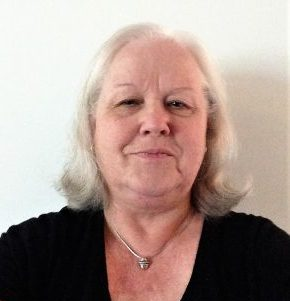
Headshot of Lesley Bennett wearing a black shirt.
Lesley Bennett, CT-RAN State Volunteer and new RDAC member

The council will give patients, families, caregivers, health care providers, advocates, researchers, and other stakeholders the opportunity to make formal recommendations to state agencies and the legislature on ways to develop policy and health care legislation to improve the lives of those people living with rare disease and their caregivers, according to Lesley Bennett, Volunteer Ambassador for the Connecticut Rare Action Network (CT-RAN) of the National Organization for Rare Disorders (NORD).

Connecticut Gov. Ned Lamont signed legislation establishing the council after rare disease advocates worked for years to get it going.

“We did it,” Lesley said. “It took eight years, but we did it.”

Introducing six new council appointees

Rare Disease Advisory Council members will include Insurance, Public Health, and Social Services commissioners, or their designees, and 10 members appointed by the Governor and the Public Health Committee leadership. Six new members were introduced at the Rare Disease Day event; four have yet to be announced.

James Rawlings speaking on podium.
James Rawlings, President/CEO Sickle Cell Disease Association of America Connecticut Chapter, and new RDAC member

The six members and their council roles are:

Patient Advocate Representative: Lesley Bennett, RDAC Coalition Leader and CT-RAN Volunteer State Ambassador.

Pediatric Patient Representative: Saurabh Vaidya, Connecticut Hemophilia Society President, and father of a son with hemophilia.

Caregiver Representative: Mary Caruso, Friedreich’s Ataxia Research Alliance Founding Member, and caregiver for two adult children living with the disease.

Researcher: Joanna Gell, MD, Pediatric Oncologist and Hematologist, Connecticut Children’s, and Research Scientist, Jackson Laboratories.

Physician Treating Rare Disease Patients: Emily Germain-Lee, MD, Division Head, Pediatric Endocrinology & Diabetes; Director, Center for Rare Bone Disorders, Albright Center, and Osteogenesis Imperfecta Center.

Patient Representative: James Rawlings, R.PH, MPH, President/CEO Sickle Cell Disease Association of America, Connecticut, Michelle’s House.

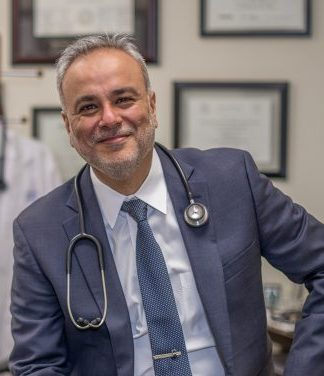
Saud Anwar in a blue suit with a stethoscope around his neck.
State Senator Saud Anwar

Connecticut Public Health Committee Co-Chair Sen. Saud Anwar told the gathering the time is here to find solutions to take care of and invest in the health of the rare disease population, saying the council must go forward with this mindset:

“Every illness is treatable. Every disease has an answer and a solution.”

The senator spoke about the realities of national and international collaborations resulting in developing regenerative medicine.

“We will put our hearts together a make sure we come out of the room with solutions. Everybody is here to help each other out.”

Connecticut Public Health Committee Co-Chair Rep. Cristin McCarthy Vahey told the group, “I look forward to working with you and being supportive in making things happen for all of you.”

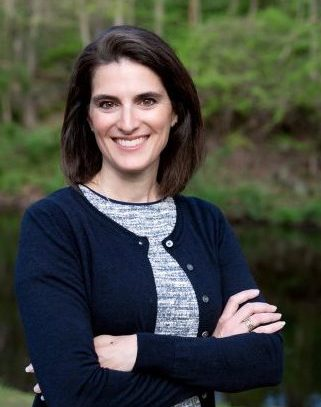
Cristin McCarthy Vahey wearing a blue cardigan.
State Representative Cristin McCarthy Vahey

Fewer than 40 treatments existed for rare disease 40 years ago; the number is now 600, according to Annissa Reed, NORD’s Associate Director of State Policy. She said she hopes the collaborative effort makes the dream of finding more rare disease solutions and access to medicine a reality.

Connecticut-based Hope in Focus advocated throughout the years with the Rare Action Network to help create the council, with Co-Founder and President Laura Manfre attending the Rare Disease Day event.

To see this year’s Hope in Focus statement in support of raising awareness of rare disease, including Leber congenital amaurosis and other rare inherited retinal diseases, please go to: https://old.hopeinfocus.org/hope-in-focus-rare-disease-day-statement-to-connecticuts-legislature/.

Having a voice at the state level

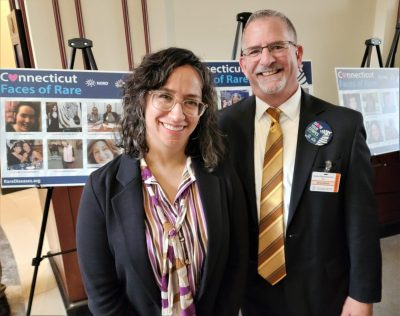
Laura (L) and Brian (R) in front of posters saying "Connecticut Faces of Rare".
Hope in Focus’ Laura Manfre with Brian Rosen of Axion Pharmaceuticals

Connecticut joins 24 states in establishing a council specifically to address the complexities of living with a rare disease, caring for someone with a rare disease, gaining access to treatment, and getting better insurance coverage. To find out whether your state has an RDAC or is developing one, please go to: https://rarediseases.org/rare-disease-advisory-councils/map/.

The council is critical, as it is exponentially more difficult for the rare disease population – inherently fewer in number than the rest of Connecticut – to have a voice on the state level.

A rare disease in the United States is characterized as any disease, disorder, illness, or condition affecting fewer than 200,000 people. With more than 7,000 known rare diseases, upwards of 90 percent have no FDA-approved treatment. About 1 in 10 people – more than 30 million Americans – live with a rare disease.

Most rare diseases are genetic or have a genetic component, more than half of those affected by rare diseases are children, and all pediatric cancers are rare.

Dominic Cotton, a rare disease parent and co-leader of the RDAC Coalition, thanked the Department of Public Health and its nearly 60 years of support for newborn screening.

“Without newborn screening, my son wouldn’t be alive today.”

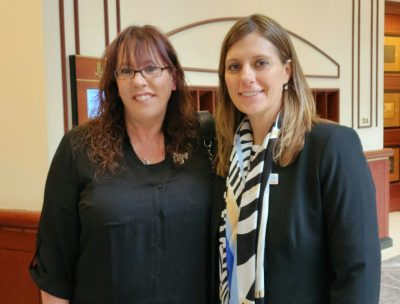
Kristen (L)  wearing all black and Jennifer (R) wearing black and zebra stripes.
Kristen Angell and Jennifer Huron of the National Organization for Rare Disorders (NORD)

Every newborn in Connecticut is assessed for a range of diseases, and each year more than a hundred babies tested for any one of the diseases are on a critical, early-intervention path leading to keeping a disease in check and people living fulfilled lives.

Kristen Angell, NORD’s Associate Director of Patient Advocacy, said the gathering is important for our population living with rare diseases.

“It gives them an opportunity to speak face to face with our General Assembly and let them know the daily struggles and challenges they face, and it provides the legislators an opportunity to assist in making a possible impact.”

Access to medication a matter of life or death

Rare Disease Day is all about awareness. Here is a sampling of what legislators learned from people living with rare diseases:

Pamela Johnson and her 10-year-old son have a rare, life-threatening disease called Hereditary Angioedema (HAE), a genetic condition that can cause severe swelling in various parts of the body and affects about 1 in 50,000 people globally. She has a well-paying job and feels she should be able to afford to pay for her medications, but they cost $90,000 a month.

With no access to life-saving drugs in 2017, she underwent two surgeries for severe swelling in her throat. Without medication, two or three times monthly, she would experience attacks making it extremely difficult to breathe.

Pamela Johnson wearing stripes and a NORD pin saying, "Show Your Stripes".
Pamela Johnson

David Leeds, who helped with the day’s introductions and has HAE, highlighted one aspect of life more difficult with a rare disease – getting treatment at a hospital. It is a place of stress, anxiety, and fear of not receiving the treatment he needs because doctors and nurses never encountered his disease.

He described two published investigations of major insurance companies denying coverage for medication to help people live. Insurance companies, rather than treating doctors, are deciding who gets to have medication and who doesn’t.

“This is every day for rare disease patients.” he said. “Insurance companies cannot be relied upon to determine what is medically necessary.”

***

Megan Freeman said no one should ever have to go through what a person living with a rare disease has to experience.

As if it were yesterday, she remembers the day she got her diagnosis, and her response:

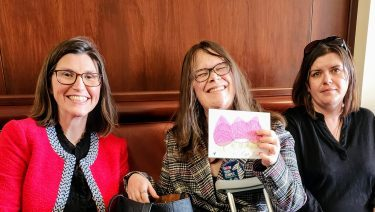
Three women smiling, Megan in the middle is holding up a drawing.
Alissa DeJonge (L), Megan Freeman, and her friend Elizabeth Nagle

“Am I going to die? Am I going to live? Am I going to be able to live to get married and live to have kids.”

Megan lives with 2q37 deletion syndrome. She is one of about a hundred people worldwide with the ultra-rare chromosome disease that can affect many parts of the body. She is an advocate and founder of her own rare disease organization. She praised the legislators for creating the RDAC, saying, “I give you guys an A for effort!”

***

Rachel O’Grady was diagnosed as an adult with two pediatric conditions: Tethered Cord Syndrome, a neurologic disorder caused by tissue attachments limiting spinal cord movement, and Spina Bifida Occulta that causes a small gap in the spine. Any resources for Rachel in Connecticut dried up when she turned 18, no longer qualifying for help as a minor.

“They would not see me, nor would they treat me,” she said. Maxed out in medical debt, she found help in Massachusetts.

***

Alissa DeJonge’s sixth-grade son lives with a bleeding disorder called Hemophilia A. She knows people living with rare diseases make tough choices, given the huge cost of necessary medicines, and looks forward to having the new council work to protect patient care, help caregivers, and allow parents to take time off from work.

***

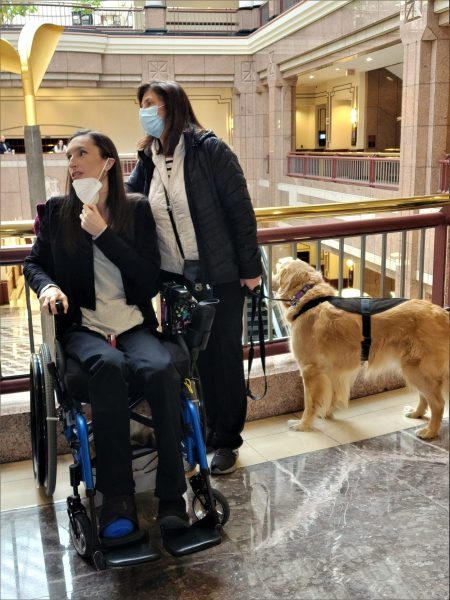
Kelly in her wheelchair, her mother is besides her holding her guide dog's leash.
Kelly Considine, with her mother, Susan, and service dog, Gunner, in the atrium of the Legislative Office Building

Kelly Considine, accompanied by her mother, Susan, came to raise awareness about and promote research for a rare chronic pain disorder she lives with called Complex Regulatory Pain Syndrome.

Kelly characterized the disease as the most painful condition known to modern medicine. She receives some relief from an implanted therapeutic device and receives help and love, from her mother and her service dog, a golden retriever named Gunner.

***

Amy LaChance, the mother and caregiver of a child with Syngap1, a genetic mutation affecting 1,200 people worldwide, said people need access to genetic testing to support research and trials for a treatment to fix this genetic typo.

It makes a difference when people with rare disease tell lawmakers their stories about needing access to tests and medicine, saying, “The squeaky wheel really does get the grease.”

Biotechnology growth important to state economy

Paul Pescatello, JD, PhD, is Senior Counsel and Executive Director of the Connecticut Bioscience Growth Council, a committee of the Connecticut Business and Industry Association’s biotech and biopharma members.

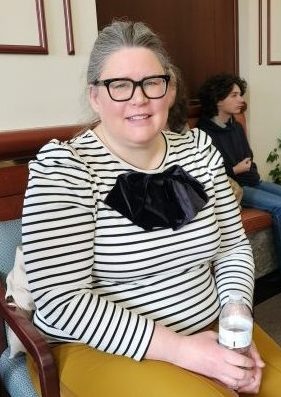
Amy LaChance wearing a striped shirt.
Amy LaChance

The bioscience council fosters collaboration with the life-science institutions of biotech and biopharma, and with the state to help grow this sector of Connecticut’s economy. Developing a new medicine costs about $2.7 billion and takes 12 to 15 years, he said.

“Essentially, it costs what it costs, no matter the size of the patient population,” he said. “That’s why it’s important to underscore how rare disease new medicine research typically leads to many insights and advances in drug development for larger patient populations.”

Keep telling your rare disease stories

Representative Vincent Candelora, house minority leader and rare disease champion, urged people to tell their stories to make people aware so lawmakers can help fashion policy to help them.

“If we don’t hear from you, it’s harder for us to do our job. It’s the true stories that tell us everything that’s going on.”

His advice echoed the encouragement we at Hope in Focus give to our LCA and IRD community – tell your stories to feel less isolated in your journey of living with a rare inherited retinal disease and to help advance research into treatments to improve vision or to halt vision loss.                                           

Connecticut Rare Disease Advisory Council Begins to Take Shape

The 13-member Connecticut Rare Disease Advisory Council (RDAC) is in the middle of its making, with the announcement of its first six members.

The council will give patients, families, caregivers, health care providers, advocates, researchers, and other stakeholders the opportunity to make formal recommendations to state agencies and the legislature on developing policy and health care legislation to improve the lives people living with rare disease and their caregivers.

The council will deliver its first report of findings and recommendations in November. Please click here for a summary of the RDAC legislation that Gov. Ned Lamont signed into law. Connecticut joins 24 states having a Rare Disease Advisory Council. To see whether your state is working to create such a group, please check here.

RDAC members will include Insurance, Public Health, and Social Services commissioners, or their designees, and 10 members appointed by the governor and the Public Health Committee leadership. Of those 10 appointments, here are the six announced at Connecticut’s March 23, 2023, celebration of Rare Disease Day:

Patient Advocate Representative: Lesley Bennett, RDAC Coalition Leader, and CT-Rare Action Network Volunteer State Ambassador, National Organization for Rare Disorders.

Pediatric Patient Representative: Saurabh Vaidya, Connecticut Hemophilia Society President, and father of a son with Hemophilia.

Caregiver Representative: Mary Caruso, Friedreich’s Ataxia Research Alliance Founding Member, and caregiver for two adult children living with that rare disease.

Researcher: Joanna Gell, MD, Pediatric Oncologist and Hematologist, Connecticut Children’s Hospital, and Research Scientist, Jackson Laboratories.

Physician Treating Rare Disease Patients: Emily Germain-Lee, MD, Division Head, Pediatric Endocrinology and Diabetes, and Director, Center for Rare Bone Disorders, Albright Center, and Osteogenesis Imperfecta.

Patient Representative: James Rawlings, R.PH, MPH, President/CEO Sickle Cell Disease Association of America, Connecticut, Michelle’s House.

We’ll let you know when the rest of the appointments are official. They include representation of hospitals, the biopharmaceutical industry, and people living with a rare disease.

Plans in the Works for Connecticut’s New Rare Disease Advisory Council and 2023 Rare Disease Day

Advocates for people living with rare diseases are collaborating with Connecticut Gov. Ned Lamont’s office and leaders of the Connecticut General Assembly’s Public Health Committee to build the state’s new Rare Disease Advisory Council (RDAC) that requires appointees, budgets, and bylaws be in place this summer.

Assistant Director of Advocacy for the National Organization for Rare Disorders (NORD) Kristin Angell joined Co-Ambassadors Katie Gillick and Lesley Bennett of NORD’s Connecticut Rare Action Network (CT-RAN) in hosting a Zoom conference with more than 30 people, including state legislators, patient advocates, doctors, researchers, industry leaders, health care providers, caregivers, and people living with rare disease.

NORD Rare Action Network logo

The meeting included two representatives from Connecticut-based Hope in Focus and discussions about the range of needs to be addressed by the new council and the planning of next month’s celebration of Rare Disease Day on Feb. 28.

“We are working on it, and we will get it done,” Bennett said.

A rare disease is defined as one affecting fewer than 200,000 people nationwide. More than 7,000 known rare diseases affect an estimated one in 10 people in the United States, translating to about 30 million people or 10 percent of the country’s population. Globally, 300 million people live with rare diseases.

With the establishment of a permanent Connecticut RDAC, 13 members will be appointed to advise and make recommendations to the Department of Public Health, the Department of Social Services, and other state agencies about the needs of people living in Connecticut with a rare disease and their caregivers. Advisory councils may differ from state to state. Please click here to check whether your state has an RDAC or is working to establish one.

Hope in Focus, in its advocacy for people living with Leber congenital amaurosis (LCA) and other rare inherited retinal diseases (IRDs), helped generate awareness of the need for an RDAC and for the legislation to make it happen.

The cause of many rare diseases is unknown, but about 80 percent are genetic, such as LCA and other IRDs, and about half of all rare diseases affect children.

Getting state agencies to understand the rare disease population is key to the RDAC. Even something as simple as putting links to national rare disease resources on state government departments’ websites would be a big step.

More than 40 people submitted applications to become part of Connecticut’s council, and six have been appointed so far. The names of the new members will be announced when all 13 have been appointed.

The group will include insurance, public health, and social services commissioners, or their designees, and 10 members appointed by the Governor and the Public Health Committee leadership.
Those 10 members will be:

  • a representative of an association of hospitals or a hospital administrator, and a physician with expertise in medical genetics
  • a representative of a patient advocacy group in the state representing all rare diseases, and a family member or caregiver of a pediatric patient living with a rare disease
  • a representative of the biopharmaceutical industry involved in rare disease research and therapy development, and an adult living with a rare disease
  • a member of the scientific community engaged in rare disease research, and a caregiver of a child or adult living with a rare disease
  • a physician who treats people living with a rare disease, and a representative, family member, or caregiver of a person living with a rare disease

Following the midterm elections and changes in some legislative seats at Connecticut’s General Assembly, educating lawmakers is key to finding solutions for people living with rare disease to have the necessary access, resources, and educational tools to enjoy their best quality of life.

One person attending the meeting talked about the need for more doctors and patient advocates in Connecticut because people living with rare disease often must travel to another state for medical care. She also mentioned the potential of patients being charged for sending simple questions to doctors through computer health care portals, and whether lawmakers attending upcoming Rare Disease Day events could help mitigate or eliminate those costs.

Please share any ideas to help raise awareness for Rare Disease Day and your thoughts on bringing Connecticut’s RDAC to fruition by getting in touch with Kristin Angell at kangell@rarediseases.org, Katie Gillick at katie.gillick@rareaction.org, or Lesley Bennett at lesley.bennett@rareaction.org.

NORD and CT-RAN plan another meeting later this month to discuss updates on the RDAC and Rare Disease Day.