The Importance of Newborn Screening

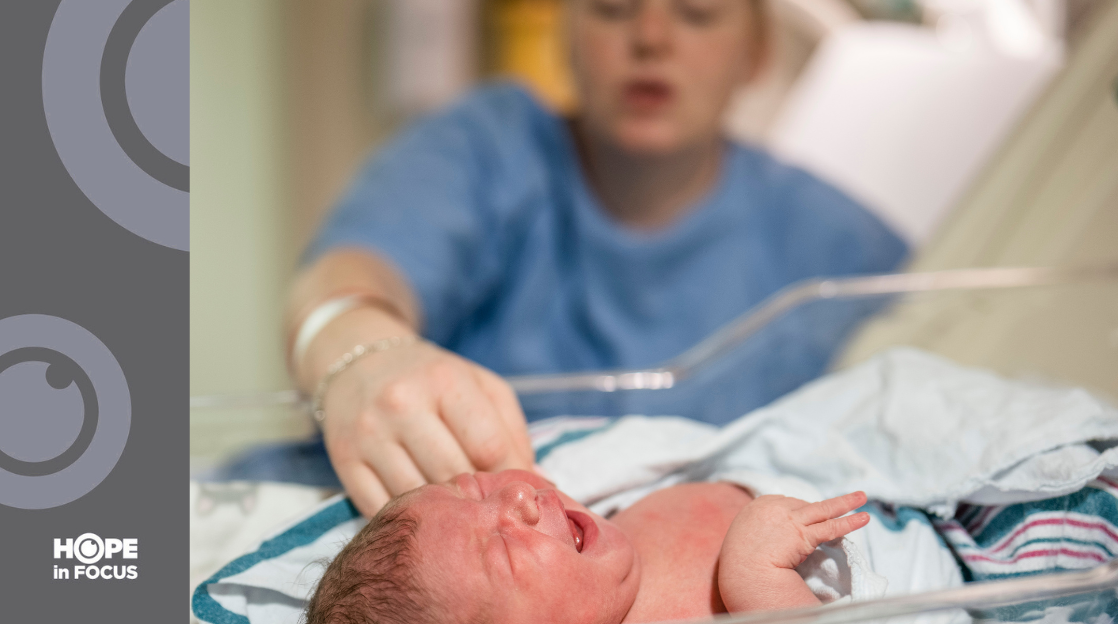
Newborn screening is essential for identifying genetic conditions, such asĀ Leber congenital amaurosis (LCA), at the earliest possible stage. As LCA is an early-onset inherited retinal disease with severe vision loss at birth, early diagnosis is necessary for timely medical intervention, access to specialized care, and critical support for families. According to theĀ National Organization for Rare Disorders (NORD), newborn screenings detect approximately 14,000 infants each year with conditions that could affect their development or survival if left undetected.

The sudden shutdown of the federal committee, the Recommended Uniform Screening Panel (RUSP), which helps guide which conditions are included in newborn screenings is alarming. Without the committee, progress would slow and create a serious threat to the consistency of newborn screening nationwide.

The National Organization for Rare Disorders (NORD) is advocating for the reinstatement of this committee and continued investment in comprehensive, state-wide newborn screening programs. Hope in Focus signed on to a letter of support to HHS Secretary Kennedy. As members of the LCA community, we push our community to recognize the importance of preserving and advancing early detection for rare diseases.

We encourage our community to spread awareness of newborn screening programs and rare disease research.

Working to Create Rare Disease Advisory Councils in all 50 States

Fifteen states done, 35 to go.

Fifteen states have established aĀ Rare Disease Advisory CouncilĀ (RDAC) to give the rare disease community, including those living withĀ Leber congenital amaurosisĀ (LCA), a stronger voice in state government. Another dozen states are actively working to establish RDACs this year.

With assistance from theĀ National Organization for Rare DisordersĀ (NORD), patient organizations, such asĀ Hope in Focus (formally Sofia Sees Hope), and the broader rare disease community, RDACs around the country work to help states strategically address barriers faced by people living with rare diseases. The councils give stakeholders an opportunity to make formal recommendations to state leaders on critical rare disease issues, including increased awareness, diagnostic tools, and access to affordable treatments and cures.

Sofia Sees Hope, based in Ledyard, Conn., annually gives information to legislators on the Connecticut General Assembly’s Public Health Committee, letting them know that rare disease advocates and those living with a rare disease, need state and federal support in crafting legislation to help the rare disease community. 

The last day of February each year is officially Rare Disease Day, a time to raise awareness among the public and decision makers about rare diseases and their impacts on patients’ lives. NORD sponsors Rare Disease Day in the United States, alongside its sister organization, the European Organization for Rare Disorders (EURODIS), which organizes the official international campaign.

Find out here what is happening globally in celebration of Rare Disease Day. 

7,000 Rare Diseases in the U.S.

A disease is defined as rare in the United States if it affects fewer than 200,000 Americans. LCA and other inherited retinal diseases (IRDs) are among the approximately 7,000 rare diseases that exist nationally, affecting 1 in 10 people. These diseases include more than 500 types of rare cancers and all pediatric cancers. 

Between 25-30 million Americans live with a rare disease, including about 300,000 in Connecticut. 

NORD’s Connecticut Rare Action Network, along with other such groups nationwide, will highlight RDACs as part of its virtual celebration of Rare Disease Day 2021. Connecticut’s Rare Disease Day celebration will be at 9 a.m. ET, Friday, Feb. 26. You can register to participate in this free event by clicking here. 

NORD also just released its sixth edition of its State Report Card* that analyzes the 50 states and Washington, D.C., on eight policy issues that impact the rare disease community. The organization launched its report card project to evaluate the effectiveness of states serving people with rare diseases.

Each state has its own report card that addresses Medicaid Financial Eligibility, Medicaid Nutrition, Newborn Screening, Prescription Drug Out-of-Pocket Costs, Protecting Patients in State Medicaid Programs, Protecting Patients in State-Regulated Insurance, Rare Disease Advisory Councils, and Step Therapy (trying less expensive options before ā€œstepping upā€ to drugs that cost more).

State governments make decisions every day affecting the rare community. They play critical roles in ensuring access to health care providers, services, and treatments needed to thrive, along with the design of their Medicaid program benefits, and regulation of some insurance plans. The councils offer forums for discussion about these issues.

Learn which states have Rare Disease Advisory Councils

As one Connecticut legislator said at a previous celebration, having one day to recognize rare diseases is not enough. 

ā€œIt needs to be Rare Disease Day every day in the state of Connecticut,ā€ said State Rep. Jonathan Steinberg, co-chairman of the General Assembly’s Public Health Committee.

Connecticut Volunteer State Ambassador Lesley Bennet  ā€“ along with ambassadors nationwide, doctors, researchers, advocates, caregivers, patients, legislators, and business leaders – take this time to advocate state-by-state for better resources and outcomes for people living with rare diseases.

Bennett said many of their patients have difficulty getting access to services because people don’t understand the disorders. 

Patients, caregivers, families, and providers in North Carolina created the first RDAC six years ago; 15 states have active councils with1 2 more on their way toward fruition, for a total of 27 states.

Another 23 states, including Connecticut, do not have such councils but efforts continue through NORD’s Project RDAC, launched last fall. Connecticut established a task force to study whether to create an RDAC, but the group disbanded in 2019. 

Check out this map to see if your state has an RDAC or if NORD is working on legislation to create one. To start an effort in a new state, go to RDAC@rarediseases.org

Council composition varies from state to state in size, duties, and accountability requirements. It also depends on the type of entity that houses the RDAC, such as a state department of health or a non-profit organization.

A council typically comprises various stakeholders, including patients, caregivers, doctors, insurers, biotechnology companies, researchers, and state officials.

Project RDAC aims to optimize the existing councils and increase the number of groups nationwide by opening collaborative opportunities among the councils, creating educational resources to guide them, and helping more states pass legislation establishing high-functioning councils.

Which States Have Rare Disease Advisory Councils?

15 states with an established Rare Disease Advisory Council:

Alabama, Kentucky, Illinois, Massachusetts, Minnesota, Missouri, Nevada, New Hampshire, New York, North Carolina, Ohio, Pennsylvania, Utah, Tennessee, and West Virginia.

Arkansas, California, Florida, Georgia, Kansas, Michigan, New Jersey, South Carolina, Texas, Virginia, Washington, and Wisconsin.

23 states with no Rare Disease Advisory Council:

Alaska, Arizona, Colorado, Connecticut, Delaware, Hawaii, Idaho, Indiana, Iowa, Louisiana, Maryland, Maine, Mississippi, Montana, Nebraska, New Mexico, North Dakota, Oklahoma, Oregon, Rhode Island, South Dakota, Vermont, and Wyoming.

Register Now for LCA-CRX Webinar Set for July 15

Drew’s Beacon for BlindnessĀ andĀ Foundation Fighting BlindnessĀ are hosting a webinar Wednesday, July 15, at 4:30 p.m. EST on current research involvingĀ LCA-CRX, an extremely rare form ofĀ Leber congenital amaurosisĀ (LCA) caused by a mutation in theĀ CRXĀ gene.

Drew’s Beacon for Blindness was founded by the parents ofĀ Drew Picinich, a now 4-year-old preschooler who was diagnosed in 2016 with LCA-CRX, also calledĀ LCA7.

The more thanĀ 25 identified forms of LCAĀ usually occur inĀ 1 to 2 per 100,000 births. The exceedingly rare CRX affects 1 to 2 percent of all LCA patients.

To attend the informational webinar, please send your email contact information to Drew’s mom, Monica Picinich, atĀ mpicinich@drewsbeacon.org. A follow-up email with the Zoom access link will be sent to you.

Interested parties also can contact Monica by email with any questions or concerns.

Shaberman Combines Love of Science, Writing in Sci-Fi Novel Debut

Ben Shaberman – Senior Director of Scientific Outreach & Community Engagement atĀ Foundation Fighting Blindness – combines his skills in science and storytelling to createĀ Retina Boy, a sci-fi young-adult novel that weaves friendship, love, music, and an alien world of blind inhabitants into a delightful read.

Shaberman tells of the adventures of a Midwestern boy named Doug Anderson, who was born without retinas. Researchers were mystified by the boy from Des Moines, while strangers and friends were mesmerized by his luminescent, aquamarine eyes. A school kid taunts him, calling him Retina Boy, and Doug decides he likes his new nickname; it sounds like a moniker for a superhero, rather than a label given to someone who didn’t quite fit in, Shaberman writes. 

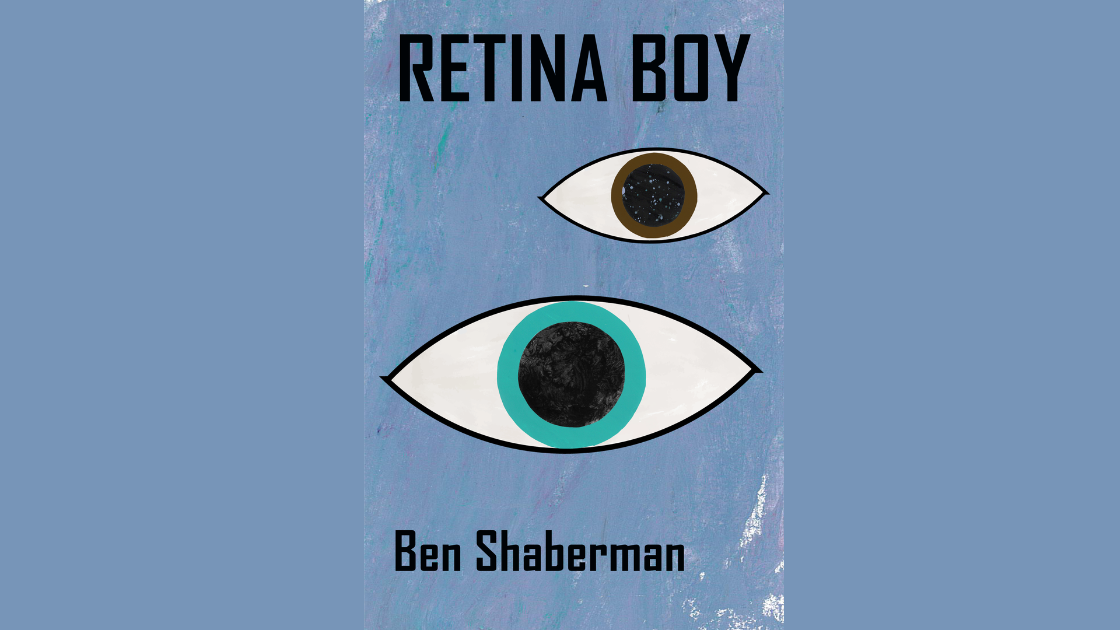
Book cover with blue background and two large hand-drawn eyeballs. Title: Retina Boy Author: Ben Shaberman

The 59-year-old author and Washington, D.C., resident chose Des Moines as the setting for his novel published last fall because he lived there for a while and was taken by the expanse of the landscape and the endless cornfields. 

ā€œIowa was very different from the mostly urban places where I’ve lived,ā€ Shaberman said. ā€œI also needed a place to land an alien spacecraft undetected and be relatively near a retinal research center. University of Iowa is about 100 miles from Des Moines.ā€ 

Retina Boy grew up to be a carefree teenager, playing lead guitar in an awesome, classic rock cover band. His girlfriend, Marcy, though unable to walk, was the smartest kid in their school. They were a perfect pair – she was his eyes and he was her legs. Never did Retina Boy imagine he was from another planet, and that he and Marcy would be called upon to save the Earth and an alien world of blind inhabitants on the brink of environmental collapse.

Shaberman’s talent as a science writer for the Foundation shines throughout the 202-page book, and we read familiar passages about genetic therapies andĀ rare inherited retinal diseasesĀ (IRDs) that he writes about regularly in a column for Hope in Focus (formally Sofia Sees Hope)’s newsletter,Ā Seeing Hope.Ā 

ā€œOne of my roles early on at the Foundation was to write about families affected by inherited retinal diseases. While there were always obvious and significant challenges for parents, I was often amazed by how well the kids were doing in their lives,ā€ he said. ā€œTheir courage and perseverance always impressed me. That was part of the inspiration. 

ā€œBut I also wanted to write something fun and adventurous that would appeal to both adults and children of all backgrounds and abilities. And, it was nice for me to take a break from the serious business of reporting on research.ā€

Among praise for the book from the rare retinal disease community, Sofia Sees Hope Co-Founder and President Laura Manfre, wrote: ā€œA dynamic and fun read from beginning to end that touches on all of the elements of YA fiction today, while also dealing with issues of being different – being rare in one’s world or another world. I thoroughly enjoyed it!ā€

One of Shaberman’s characters, Dr. Ted Strong, a long-time clinical researcher into rare retinal diseases, had delivered difficult news to hundreds of parents in his 25-year career. But with Doug’s parents, Peter and Peg, he struggles, as Shaberman writes:

ā€œUsually there’s some atrophy or dysplasia of the rods or cones. We often see pigmentary changes,ā€ he said, rubbing his hand through his thinning brown hair. ā€œBut with your son, I mean, well, there’s hardly any retina. It’s so thin, a shadow of what it should be. Yet, the rest of his eyes appear to be relatively normal. The way eye development works, this can’t… uh… this shouldn’t happen.ā€ 

Dr. Strong tries to reassure the parents, who understand their son is blind but feel scared upon hearing their son’s case is singularly rare.

ā€œI understand your concern, but there’s no easy answer,ā€ the doc says. ā€œYour son might have a very rare genetic defect. It could have been some type of spontaneous mutation during early development, or it could be inherited.ā€ 

Reality vs Science Fiction

With Shaberman’s career firmly based in reality, why write sci-fi?

Black and white headshot of Ben Shaberman
Ben Shaberman

ā€œEarly on, I came up with the premise of a planet of blind inhabitants and that made the science-fiction genre inevitable. Science fiction was an entirely new genre for me and quite daunting. Creating an alien world of blind inhabitants was an incredibly difficult process,ā€ he said.

ā€œThe story alternates between Earth and Zooba, the planet of the blind. I didn’t intend for the book to be YA and the story has appealed to all ages. But the story’s main characters are kids who become teenagers, so I think the YA label fits.ā€

Shaberman said he wanted to emphasize music in the novel, which he describes as an adventure of friends, aliens, retinas, and rock & roll.

ā€œThe book is filled with references to music, especially classic rock and electronica from the early ’70s and some other popular songs and artists. In essence, the book has a soundtrack. For obvious reasons, I tried to make sound an important element in the story.ā€ 

In the writing process, Retina Boy’s girlfriend, Marcy, emerges as a central character.

ā€œIn many ways, I became more attached to her than Retina Boy. She is a genius and a force to be reckoned with. Many times, she is running the show.ā€

Shaberman also said he’s received a wide range of reactions to the book’s ending.

ā€œNo spoilers here, but all I can say is it isn’t conventional.ā€ 

Readers can view anĀ animated trailerĀ of the book on YouTube.Ā 

Shaberman dedicated his book to all individuals and families with challenging visual impairments. 

ā€œI am especially grateful to those with retinal degenerative diseases, such asĀ retinitis pigmentosaĀ (RP),Ā Leber congenital amaurosisĀ (LCA),Ā Usher syndrome,Ā Stargardt disease, and age-relatedĀ macular degeneration.

ā€œAs a writer for the Foundation Fighting Blindness, I’ve had the privilege of interviewing dozens of people and families impacted by these retinal conditions. While I fully embrace the Foundation’s mission to eradicate all retinal degenerative diseases, Retina Boy is an homage to those who persevere and thrive despite having few treatments or cures for their vision loss. Their courage, resourcefulness, and resilience have been incredibly inspiring for me. They are my heroes.ā€

ā€œI’ve also had the privilege of reporting on retinal research advancements for emerging therapies to save and restore vision. It has been a fascinating journey.ā€

Shaberman offers thanks to more than 65 scientific investigators for enlightening him – a nonscientist – about the retina and related research. 

His previous books include a work of fiction called Jerry’s Vegan Women and a collection of essays called The Vegan Monologues. His essays, articles and commentaries have appeared in The Washington Post, Chicago Tribune, The Baltimore Sun, Des Moines Register, VegNews magazine, Sky & Telescope magazine, and on National Public Radio.

#KnowYourGene: AGTC Working On Multiple IRD Treatments

Applied Genetic Technologies Corporation (AGTC), a clinical stage biotech company that focuses on rare inherited retinal diseases (IRDs), develops therapies that replace ā€œbrokenā€ genes with normal functional genes – treatments that allow a patient’s own body to produce proteins to treat their disease.

As a headline touts from an AGTC website story: ā€œImagine That the Power to Beat Genetic Disease Lies Within Us.ā€

The work that companies such as AGTC undertake serves to underscore the importance of genetic testing in the treatment of rare inherited retinal diseases. This month, Sofia Sees Hope has launched aĀ #KnowYourGene campaignĀ in advance of International Rare Disease Day on Feb. 28.

A clinical diagnosis of a named disease is not enough to help find cures and treatments for these and other rare IRDs.

For meaningful and productive research to advance, patients need to take the most important step to help further research into correcting the mutated genes affecting their vision:

  • Get a definitive genetic diagnosis of their eye condition with genetic testing. Talk to your doctor about ordering a test through one of several laboratories or contactĀ Foundation Fighting BlindnessĀ (FFB)Ā about free testing.

Genetic testing is key

AGTC (headquartered in Alachua, Fla., with offices in Cambridge, Mass.) strives to get the word out through their patient advocacy work headed by Jill Dolgin, Pharm.D. The company partners with Hope in Focus (formally Sofia Sees Hope (SSH)),Ā which helps fund FFB’s free genetic testing and genetic counseling program.

A priority for AGTC is to find and educate people with rare inherited retinal diseases and encourage them to get genetic testing. Patients with the same gene mutations studied by AGTC could potentially participate in one of their clinical trials.

The company also is collaborating with advocacy groups to inform individuals with the conditions for which AGTC is conducting clinical research, including:

  • Achroma Corp. , an organization providing support and education to those affected individuals and families with Achromatopsia
  • MomsForSight, which provides information to affected individuals and families with X-Linked Retinoschisis
  • Foundation Fighting Blindness of US and Canada
Applied Genetic Technologies Corporation (AGTC), a clinical stage biotech company that focuses on rare inherited retinal diseases (IRDs), develops therapies that replace ā€œbrokenā€ genes with normal functional genes – treatments that allow a patient’s own body to produce proteins to treat their disease.

AGTC also reaches people with rare inherited retinal diseases through online and print articles, social media, medical publications, national vision conferences and their website.

The conditions for which treatments are under Phase 1 and Phase 2 clinical investigation include:

X-linked retinoschisis (XLRS) is the leading cause of macular degeneration in males. An inherited form of retinal degeneration affecting young males, patients affected by XLRS present with poor vision by school age. Visual acuity usually worsens during the teenage years and then can lead to serious complications such as vitreous hemorrhage or retinal detachment during adulthood.

Mutations in the RS1 gene cause early onset retinal disease. In animal models of XLRS, treatment with an AGTC gene-therapy candidate leads to long-term improvement in retinal function and preventing retinal cell degeneration. Based on preclinical proof-of-concept data, AGTC is conducting a clinical study to evaluate the safety and efficacy of an investigational gene therapy in patients with XLRS.

AchromatopsiaĀ causes visual acuity loss, extreme light sensitivity resulting in daytime blindness and reduced or complete loss of color distinction. About 75 percent of cases are associated with mutations in the CNGB3 and CNGA3 genes, also known as ACHM B3 and ACHM A3 genes, respectively. The company is currently evaluating a gene therapy in a Phase 1/ 2 trial for individuals diagnosed with AchromatopsiaĀ caused by mutations in either the CNGB3 gene or CNGA3 gene.

To better understand the condition, researchers from the University of Pennsylvania School of Veterinary Medicine and the Michigan State University College of Veterinary Medicine filmed a dog with ACHM B3 unsuccessfully trying to navigate a maze. Four months later, after receiving gene therapy treatment developed by AGTC, the pooch easily finds its way through the maze.

Check out the video showing how sheep affected by achromatopsia due to ACHM A3 mutations also were able to successfully navigate a maze following gene therapy administration.

X-Linked Retinitis Pigmentosa (XLRP) is an inherited condition that causes progressive vision loss in boys and young men. Symptoms begin with night blindness in young boys followed by progressive constriction of the field of vision. Affected men become legally blind at about 45 years of age, on average. AGTC is currently recruiting for a Natural History Study, intended to gather information about the condition over time for a better understanding of the disease’s progression and its effect on the individual’s quality of life, and for a Phase 1/ 2 clinical trial.

AGTC is committed to advancing clinical programs to deliver novel gene-based therapies for rare conditions without any available treatment options. The company would like to express its deep appreciation to patients who have participated in their clinical trials and is grateful to its partners for their dedication and continued support.