“Look like you can see!” Dante Priebe implores to his panicked, visually impaired sister Sofia as she struggles behind the wheel to make a three-point turn in her driveway.
“I do this horrible, 18-point turn and a cop car drives by in those three minutes,” Sofia says.
She ends up in the street and Dante yells at her to pull into the neighbor’s driveway and “act like she can see.”
The car ends up on their lawn, with Sofia shouting at her brother, “I don’t want to do this anymore!!!”
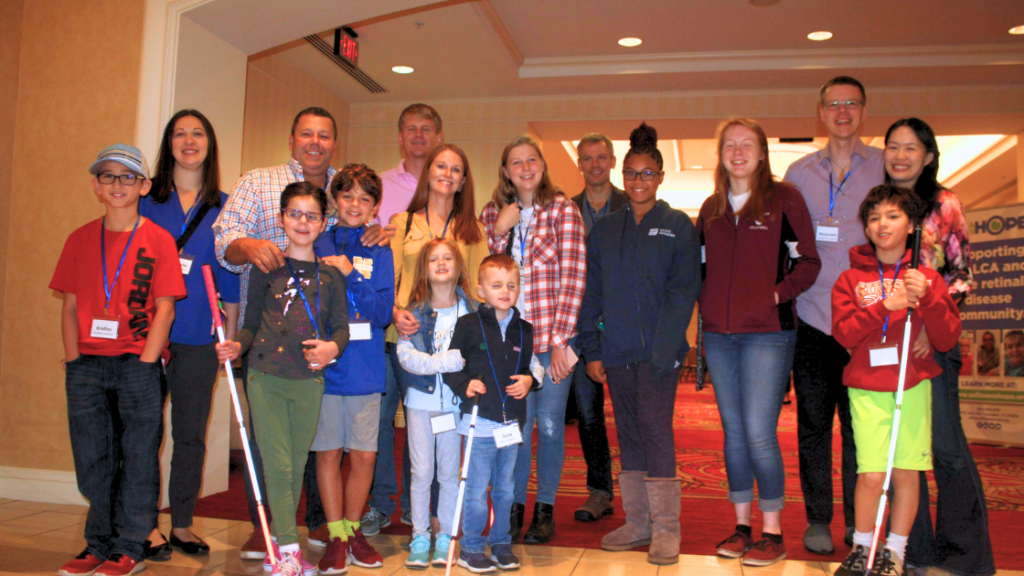
The audience laughed, and so did Sofia, as she recounted her story during a discussion at “A Rare Opportunity,” a gathering of more than 100 people to hear stories from people with Leber congenital amaurosis (LCA) and other rare inherited retinal diseases (IRDs).
Sofia is the daughter of Laura Manfre and Chuck Priebe, co-founders of Hope in Focus (formally Sofia Sees Hope), dedicated to helping people affected by LCA and other IRDs. Sofia’s parents founded the organization after her 2013 genetic diagnosis, giving hope that genetic research could produce sight-saving treatment.
Nicole, of Brooklyn, NY, joined a panel discussion with Sofia, Christian Guardino and Diana Owen for an exchange about what it’s like to live with visual impairment.
In the panel moderated by Nicole’s friend, author and professor Dr. Amy Bass, the participants said they wished people would be more aware of others with disabilities.
Nineteen-year-old Christian of Patchogue, NY, said he wishes he could take part in a common teenage rite of passage.
“I think one of the biggest things is I see all of my friends driving and getting their licenses, and it makes me want to do it even more.
“But I feel like I’m saving a lot of money.”
In 2017, Christian stepped onto the America’s Got Talent audition stage and blew away the judges with his rendition of the Jackson 5’s “Who’s Lovin’ You.”
He recently released his first original song, “Waiting,” executive produced by country singing star Hunter Hayes.
Christian lived with degenerative vision due to LCA2, known as LCA-RPE65, since he was a toddler, but all that changed when he underwent experimental surgery five years ago in a clinical trial for a revolutionary genetic treatment. His vision improved dramatically with the treatment called LUXTURNA™. Spark Therapeutics developed the drug that the Food and Drug Administration approved at the end of 2017.
Independence vs. asking for help
Diana Owen, Head of School at Pine Point School in Stonington, CT, was diagnosed in her 40s with a macular hole, a condition resulting in vision changes over time.
She lives with a constant, sometimes frustrating, sense of having to work around situations to accommodate her vision.
“When my issue developed what I didn’t understand was about acuity,” she said.
Her visual acuity manifested as darkened spots, haze and distortion.
A macular hole is a small break in the macula, in the center of the eye’s light-sensitive tissue called the retina. The macula provides the sharp, central vision needed for reading, driving and seeing fine detail. It can cause blurred and distorted central vision.
Nicole said she never wanted to use a cane: “When you open the cane, this is the cane and I’ve disappeared.”
Sofia is a high school sophomore who savors independence. She has LCA with a mutation of her IQCB1/NPHP5 gene, one of the more than 25 gene mutations known to cause the disease.
“I’m very stubborn,” she said. “I’d like to do things on my own. Being blind doesn’t mean full no-vision. (People) try to help me with things and, I’m like, I got it!”
And she does! In academics, dancing and rowing. Sofia’s a spokesperson for “Remote Coxswain” technology, invented by her rowing coach, so she can row solo. The tool features a remote-controlled rudder than can be operated by a coxswain up to 500 feet away.
Transitioning to dinner, the panel and the audience heard Christian’s new song fill the grand room. Listen for yourself.
Sixth-grader Daniela Delgado told Connecticut lawmakers on Rare Disease Day that she lives with rare disease just like 30 million other people in the United States – and just like them – she matters.
“We are not a burden. We are human beings just like everybody else,” Daniela told about 130 people gathered at the Capitol in Hartford for Rare Disease Day. The day is celebrated nationally and globally on the last day of February each year. (Click here for state-by-state information.)
Daniela was diagnosed with not one, but two, rare diseases: von Willebrand Disease, a rare, lifelong bleeding disorder; and Ehlers Danlos Syndrome, a group of disorders affecting connective tissue supporting the skin, bones, blood vessels and many other organs and tissues.
She needs expensive drugs to treat her disease and ease her symptoms; without them, the cost would be exponentially more for hospitalizations.
“These are real treatments, and they keep us alive,” she said. “We need this medication to live.”
Daniela is a patient advocate from Sandy Hook, CT, who at age 4, with the help of her parents, created Daniela’s Little Wish, bringing joy to kids facing serious illnesses by baking and delivering one-of-a-kind birthday cakes.
She joined about two dozen speakers at a legislative informational session that included legislators, patients, doctors, researchers, nurses, caregivers, advocates, business people and a representative of Sofia Sees Hope.
7,000 Rare Diseases in the US
Rare disease is more common than most people realize.
A rare disease is defined as any disease, disorder, illness or condition affecting fewer than 200,000 people in the United States. An estimated 25-30 million Americans, almost 1 in 10, have rare diseases. In Connecticut, an estimated 300,000 people have rare diseases.
Connecticut may be the Insurance Capital of the World, but the Nutmeg State gets an F when it comes to individual insurance protections, according to Connecticut’s rare disease report card prepared by the National Organization for Rare Disorders and NORD’s Rare Action Network (RAN), the hosts of Connecticut’s Rare Disease Day.
The state requires some insurers to offer guaranteed plans to a limited number of people. It does not have an individual mandate and has not enacted a reinsurance waiver to keep insurance affordable for people with pre-existing conditions. Connecticut had minimal limits on issuing short-term, limited-duration health plans or association health plans.
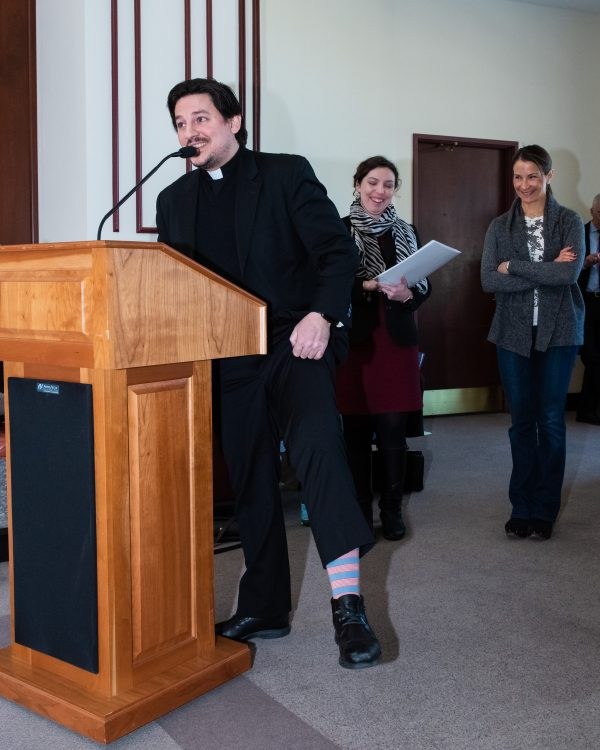
Father Nikolas Karloutsos
State Rep. Joe Aresimowicz, Democratic House Speaker, and State Sen. Len Fasano, Republican Senate Minority Leader, have introduced several pieces of legislation addressing medical education in screening for rare cancers and assistance for patients and families with developmental disabilities. Fasano also helped the state become one of the first to add Adrenoleukodystrophy (ALD) to Connecticut’s Newborn Screening (NBS) panel.
Aresimowicz said the focus of the event was not on politics or political parties.
“We are here because we want to make Connecticut a better place.”
Fasano told the gathering: “This is a civil rights issue to get the proper medications and research to go forward.”
Greta Stifel, who has two rare diseases on top of cancer, detailed her grueling journey of misdiagnoses and many surgeries. In 2016, she established the Stifle Cancer Foundation to bring awareness to a type of cancer comprised of Neuroendocrine Tumors (NETS).
“We are the ‘Rare Rebels’,” she said. “We are the ‘Rare Revolution’.”
She is a constituent of Aresimowicz, and the proposal behind the pending legislation of House Bill 6522 comes from her. The bill’s title is: An act concerning continuing medical education in screening for inflammatory breast cancer and gastrointestinal cancers.
Stifle said the legislation is a step in the right direction, but the state needs to do much more with rare disease awareness, education, funding and research. “
Connecticut actually should be the Silicon Valley of Rare Disease,” she said.
State Rep. Jonathan Steinberg, chairman of the General Assembly’s Public Health Committee, said having one day to recognize rare diseases is not enough.
“It needs to be Rare Disease Day every day in the state of Connecticut.”
Steinberg, along with RAN’s Volunteer State Ambassador Lesley Bennett, said the legislature needs to form a Rare Disease Advisory Council to find treatments, fund research and advocate for Connecticut’s constituency living with rare disease.
“A lot of our patients have problems getting access to services because people don’t understand the disorders,” Bennett said.
The advisory council would be comprised of patients, patient advocates, doctors, researchers, business leaders and community members to address the emerging public health priority of rare diseases, including LCA and other IRDs.
Erica Mumm, a Clinical Assistant Professor at the Quinnipiac School of Nursing and mother of a son with a rare genetic disorder, said the system needs to change. She also supports the creation of a rare disease advisory council.
Not a one-size-fits-all community
“We are rare, so we don’t fit into a one-size-fits-all system,” Mumm said.
Her son, who turns 3 this month, has a rare genetic disorder called KCNQ2 encephalopathy, a type of epilepsy that becomes apparent in the first three months of life and is characterized by frequent and difficult-to-treat body seizures.
Mumm advocated for care coordination and described the drain and debilitation she feels as a caregiver. She also advocated for a palliative care network to improve emotional support for caregivers. She has exhausted her savings and said as her voice cracked through tears that her home needs extensive renovations to accommodate her son.
She also implored lawmakers to do away with resetting the clocks twice a year with Daylight Savings Time.
“For us, it’s a change of medication routine,” she said. To keep her son on track with his medications, three weeks before changing the clocks, she must begin making incremental changes in dosages.
A family panel of four caregivers told the group Connecticut needs to support businesses researching and developing treatments for rare diseases.
Alissa Dejonge
“The sky’s the limit because of research,” Alissa DeJonge said. She is Vice President of Research for the Connecticut Economic Resource Center, Inc., and the mother of a 2½-year-old son with severe hemophilia.
Heather Knapp, a panelist and mother of three, described the benefits of the state-mandated NBS program that in 1964 began statewide blood-spot screening for Phenylketonuria (PKU), the same rare disease doctors identified in her son at birth. Early detection and treatments can mean the difference between lifelong impairment and healthy development. Knapp praised NORD for helping her with resources, saying she finally found peace of mind when she connected with the organization.
Panelist Father Nikolas Karloutsos, a Greek Orthodox priest, detailed the difficulties in getting a diagnosis for his daughter, who has a BRAF mutation RASopathy, which probably is Cardiofaciocutaneous (CFC) Syndrome. The very rare disorder particularly affects the heart (cardio-), facial features (facio-) and the skin and hair (cutaneous); it causes moderate to severe delayed development and intellectual disability.
For Jennifer Ianuzzi, it took 20 months until doctors diagnosed her daughter with Smith-Magenis Syndrome, a developmental disorder caused by chromosome 17 microdeletions. She appealed to the group for support for respite from 24/7 caregiving.
Researchers, scientists and professors also presented updates in their fields.
Ching Lau, MD, Ph.D., the Division Head of Connecticut Children’s Medical Center’s (CCMC) Center for Cancer & Blood Disorders and Professor of Genomic Medicine at JAX Laboratory, said that developing and strengthening international genetic research collaborations will help people around the globe access rare disease information through genetic registries. Dr. Lau specializes in finding treatments for children with rare blood, bone and brain cancers.
“We will conquer these diseases at the end,” he said.
Dr. Charles Whitaker, a neuromuscular neurologist at the Hospital for Special Care (HFSC), specializes in adult neuromuscular disorders, such as Amyotrophic Lateral Sclerosis (ALS) and muscular dystrophy. Dr. Whitaker said patients, physicians and experts need to work together to evaluate changes at a policy level that address the special needs of the rare disease population, which, along with having pre-existing conditions, in many instances are highly debilitated. As a clinical researcher working on treatments and cures, he said: “We would love to be part of that cure.”
Gyula Acsadi, MD, Ph.D., said interventions never possible in rare diseases are changing the lives of young children because researchers are focused on discovering genetics and the biology of disease.
“This last five, six years were amazing with how research succeeded,” he said.
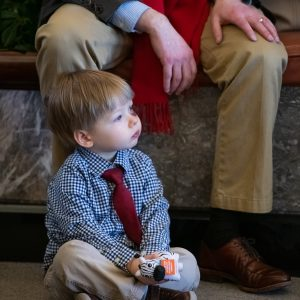
Alissa Dejonge’s son listens as she speaks at the podium.
Dr. Acsadi, Division Head of Neurology at CCMC and Professor of Pediatrics and Neurology at UConn School of Medicine, works with children living with Spinal Muscular Atrophy (SMA), the leading cause of death of infants and toddlers of any genetic disorder. SMA robs children of physical strength.
Newly approved NBS for SMA and new treatments administered early in children show remarkable results, he said. Even so, ongoing fights continue with insurance companies unwilling, for example, to pay $15,000 for a treatment that will save $2 million in care. One young patient spent more than 300 days in the hospital before receiving treatment, followed by zero days in the hospital.
“It’s an easy win in terms financially,” Dr. Acsadi said.
Dr. Saquib Lakhani, Clinical Director of Yale Medicine’s Pediatric Genomics Discovery Program, said 30 percent of children in the Intensive Care Unit have rare diseases and very complex needs.
“It’s a collective mistake to ignore rare diseases,” he said. “They have to be addressed.”
Dr. Lakhani specializes in caring for newborns and infants with undiagnosed birth disorders. Using DNA sequencing allows for many more diagnoses, he said.
“It’s been a remarkable change.”
He described a whole exome sequencing test that relies on new technology and allows rapid sequencing of large amounts of DNA with the potential to discover hundreds and hundreds of diseases.
While patients could benefit from this amazing vehicle to find the source of a disorder, they have difficulty getting insurance coverage.
“We don’t know what we’re looking for. (The DNA sequencing) can actually give you the diagnosis that you didn’t have before.”
Moving forward with research and developing treatments for rare disease requires that critical diagnosis.
As Daniela – our young cake-baker extraordinaire living with two rare diseases – summed up in her address to the legislative group:
“We are 30 million and counting. We are alive and we deserve better.”
The lack of information on rare diseases can create difficulty in developing drugs to treat them. To help, it is important to study the natural history of rare diseases.
Compared with common diseases, researchers know little about rare disease signs and symptoms, how the disease changes over time, and ways in which the disease affects the lives of patients and their families.
Natural History studies track the course of a patient’s disease over time. They identify demographic, genetic, environmental, and other variables that shape the drug development process
Dr. Eric Pierce, Massachusetts Eye and Ear
“In general, Natural History studies can be helpful precursors to clinical trials of potential treatments for inherited retinal degenerations for multiple reasons,” said Eric A. Pierce, MD, Ph.D., with Massachusetts Eye and Ear. “For example, they can help identify the tests or measurements which would be most appropriate to use as endpoints in therapeutic studies.”
Another way to view such studies is to “Begin with the end in mind,” as suggested by Anne R. Pariser, MD, in her work on Natural History studies for the U.S. Food and Drug Administration
Natural History data provide knowledge and an independent understanding of a disease, while establishing an essential foundation for building drug development programs. These studies have been characterized as the “pillar of epidemiologic research on rare conditions,” and, along with assisting in developing drugs, they help with patient care, best practices, research priorities, and clinical trial readiness, according to Dr. Pariser, director of the Office of Rare Diseases Research at the National Center for Advancing Translational Sciences.
The studies give scientists and researchers a better estimate of the prevalence of the disease, help identify potential biomarkers, affect clinical outcome assessments, and determine the feasibility of established assessments for clinical trials.
A rare disease is a disease or a condition that affects fewer than 200,000 Americans. With a relatively small number of people affected by the 7,000 diseases considered rare, scientists sometimes face daunting odds in finding enough people meeting study requirements.
In the Leber congenital amaurosis (LCA) community, scientists are looking for people to take part in different stages of drug development.
Editas Medicine, a genome-editing company based in Cambridge, Mass., is sponsoring a Natural History study of LCA10, known by its gene name CEP290, to inform the design of potential future treatment studies involving genome editing in LCA10. The purpose of the study is to understand and better describe the clinical course of LCA10-related retinal degeneration that is associated with a particular genetic change in the CEP290 gene called c.2991+1655A<G.
The study will be used to characterize the range of visual function in patients, evaluate which visual tests may be most useful, and determine the rate of change in visual function over a one-year period.
Dr. Pierce, director of the Ocular Genomics Institute and the William F. Chatlos Professor of Ophthalmology at Massachusetts Eye and Ear (MEE) and Harvard Medical School, is the principal investigator at one of the seven sites in the United States and Europe actively recruiting patients for this Natural History study. For more information, call MEE at 617-573-6060 or visit www.enlightenLCA10study.com/. Study details also can be found at ClinicalTrials.gov Identifier: NCT03396042.
The two groups of conditions below describe the parameters for taking part in the study. Taken together, they illustrate the potential difficulty in finding the 40 participants needed for the study of this rare disease.
Patients must meet six conditions, known as inclusion criteria:
3 years of age or older;
Abnormally decreased vision, with examination and test results consistent with inherited retinal degeneration due to mutations in the CEP290 gene;
Able to cooperate with assessments relative to the patient’s age;
Clear ocular media and adequate pupil dilation in at least one eye to permit good-quality examination of the interior surface of the eye opposite the lens and optical coherence tomography (OCT) imaging;
Able to successfully navigate a mobility maze at a level of difficulty below the maximum performance level.
Patients cannot participant if one or more of the five following conditions, called exclusion criteria, exist:
Visual acuity of no light perception in both eyes;
History or current evidence of a range of medical conditions that may preclude attending scheduled study visits, safe participation in the study, or affect the study results;
History or current evidence of ocular disease in either eye that may confound assessment of this inherited retinal disease;
Currently receiving gene therapy and/or has received gene therapy;
Currently enrolled in an investigational or interventional drug or device study and /or has participated in such a study within 30 days of screening.
Participants currently are being recruited for a Foundation-funded Natural History study of disease progression in patients with USH2A-related retinal degeneration associated with congenital hearing loss (Usher syndrome type2a) or non-syndromic retinitis pigmentosa (RP39).
1971 – Just those numbers in white on a black page appeared on the big screen.
That’s how Brian Mansfield, PhD., began his presentation to families and patients living with Leber congenital amaurosis at Hope in Focus (formally Sofia Sees Hope) LCA Family Conference on Saturday, Oct. 6, in Groton, CT.
The year on that otherwise empty page marked the founding of Foundation Fighting Blindness – a time when patients losing vision often heard, “Go home. Learn Braille. You are going to go blind.”
Mansfield’s audience at the conference was made up of people diagnosed with a variety of rare inherited retinal diseases, including LCA, their caregivers and relatives, and representatives of various bio-tech and pharmaceutical companies working in the IRD arena. It was Sofia Sees Hope’s first such conference.
Dr. Brian Mansfield
Mansfield is the foundation’s senior vice president of research. He brought his audience up to date with information about clinical trials for inherited retinal diseases (IRDs), the rich preclinical therapeutic pipeline, how the Foundation uses money to move treatments forward and what people can do to drive change for IRD treatments and therapies.
His presentation culminated in a projected slide filled with logos of bio-technology and pharmaceutical firms, many of which are in contact with the Foundation, and represent the ever-expanding research and development field to help people with visual impairment.
$725 million in funding
In its 47 years, Foundation Fighting Blindness has raised more than $725 million toward research, development and public health education. It partners with several dozen U.S. non-profit organizations, including Sofia Sees Hope.
Mansfield traced the rapid trajectory of identifying genes causing retinal disease, from the founding of the National Eye Institute in 1968 through the Foundation’s funding of the Berman-Gund Laboratory for the Study of Retina Degenerations in 1971. It included the 1989-90 work identifying the rhodopsin gene as the genetic cause of Retina Pigmentosa (RP), and conducting the first retinal disease gene therapy trials in 2007. And of course culminated in last December’s federal approval LUXTURNA™, a gene therapy that helps restore vision in people with LCA2 (RPE65).
For people affected by LCA, more than 80 percent can now get a clear genetic diagnosis. For IRDs, more than 260 retinal disease genes have been identified, and the overall success in providing a clear genetic diagnosis is 65 percent.
Mansfield said that 23 gene-based clinical trials targeting 13 different genes are currently underway, including the LCA4 (AIPL1) gene trial by MeiraGTx.
A promising pipeline
He said the gene therapy preclinical pipeline is promising, with 100 genes under investigation. Researchers also are conducting preclinical studies of optogenetic gene therapies, in which light is used to control genetically modified retinal cells.
ProQR is planning a pivotal Phase 2/3 gene patch clinical trial for the LCA10 (CEP290) gene that involves injecting a short DNA molecule to cover up the faulty instruction the gene otherwise gives to act incorrectly. Also, Mansfield said, Editas Medicine is close to gene editing clinical trials, called “cut and paste” because an enzyme seeks out and repairs the defective gene. Another editing therapy in the pipeline, called base editing, essentially backspaces over the mutation and types the correction over it.
Also underway are more than 20 retinal cell therapy trials in which lost cells are put back to replace missing cells or used as biofactories to produce factors that help stabilize the retinal cells.
To help propel research and trials, the Foundation funds Career Development Awards to attract and retain clinician researchers dedicated to retinal disease research. The Foundation also provides awards to the brightest minds in the field, individually or as a team, to drive research.
It also gave 16 years of preclinical research support amounting to $10 million toward Spark Therapeutics’ commercial gene therapy, LUXTURNA, the first directly administered gene therapy approved in the United States that targets a disease caused by mutations in a specific gene – LCA RPE65.
Mansfield talked about how Applied Genetics Technology Corp. (AGTC) leveraged an early Foundation investment to garner $265 million to develop genetic therapies, some of which are in clinical trials.
The Foundation also supports 20 centers – the International Clinical Consortium – that have standardized assessment protocols for clinical trials.
Patient involvement is key
To continue to attract industry interest, Mansfield detailed the Foundation’s My Retina Tracker registry, with its tagline “Track your vision. Drive the research.” It’s a free, secure, online patient registry that notifies registrants of clinical trials and gives researchers access to their disease data – but not their personal information – to advance studies on any number of research and therapy development efforts associated with IRDs.
The power of My Retina Tracker is optimized by registrants getting a genetic diagnosis. Sofia Sees Hope donated $65,000 to help people receive genetic testing and counseling.
Mansfield emphasized to his audience the vital importance of their knowledge, what they carry with them, and that patient input is critical to drug development.
On October 5-6, 2018, Hope in Focus (formally Sofia Sees Hope) held its first Family Conference for LCA and IRD families and caregivers. Thank you to all who attended and thank you to our sponsors, who made it all possible!
This event was the culmination of our first five years of work and fulfills our mission to connect LCA and IRD patients and families to researchers, industry experts and others who are keenly interested in LCA and and rare inherited retinal diseases. The goal of this conference was to get you excited about advances in research, deepen your understanding of the roles various organizations play in developing treatments, and provide insight into how an active patient community can support and accelerate treatment.
Below is the description of the panels and included are the presentations given by some of the speakers.
IRD Milestones: Reasons to Be Excited
Dr. Brian Mansfield, Senior Vice President of Research, Foundation Fighting Blindness
At no time in history has there been more promising research applied to genetically inherited eye disease. Hear from our partners at the Foundation Fighting Blindness about how much easier it is today to access genetic testing and genetic counseling and the exciting research and trials that are underway.
Download the presentation.
The Road to Treatment: Understanding How Therapies Are Developed
Moderator: JEFFREY FINMAN, Jupiter Point Pharma Consulting, LLC, Board Member, Sofia Sees Hope Panelists: • DR. WILEY CHAMBERS, Supervisory Medical Officer in the Office of New Drugs at the FDA • JENNIFER HUNT, Vice President of Clinical Operations, Editas Medicine • TAMI MOREHOUSE, Phase 1 RPE65 Trial Subject RPE65 genetic therapy trial
From research to federal approval, what does it take to develop and approve a new treatment for rare disease? We’ll explore the regulatory, clinical, and industry aspects so you have a deeper understanding of what is involved in developing treatments, including how rare disease is different.
Hope in Focus (formally Sofia Sees Hope) is holding its first LCA Family Conference on Saturday in Groton, CT. This event is the culmination of our first five years of work and fulfills our mission to connect LCA patients and families to researchers, industry experts and others who are keenly interested in LCA and and rare inherited retinal diseases.
The goal of this conference is to provide updates about advances in research, deepen understanding of the roles various organizations play in developing treatments, and provide insight into how an active patient community can support and accelerate treatment.
We are pleased to welcome Jamie Ring, Head of Patient Advocacy, Spark Therapeutics; Jill Dolgin, Head of Patient Advocacy, AGTC; Kristen Angell, Associate Director, Advocacy, National Organization for Rare Disorders (NORD) to our panel, “The Role of the Patient Voice in Developing Treatments for Rare Disease.”
Kristen Angell took a few minutes recently to chat with us about her work.
Kristen Angell, NORD
Angell’s devotion and exuberance in her work with people with rare disease is literally in her DNA. A graphic designer by trade, life carried her in a different direction when she began volunteering for local non-profits. Shortly after, when her mother was diagnosed with breast cancer, Angell “dove in feet first.” Then her father was diagnosed with stage 4 pancreatic cancer. Her cousin, who is her best friend, has cystic fibrosis, and later her sister was diagnosed with a rare blood cancer.
“Rare disease has always been common in my family,” she said. “Rare diseases in general don’t have a lot of research and funding, so I ran with that and began networking and started learning about rare diseases. I decided I wanted to do more in the community. I had a passion for patient advocacy.”
Angell, NORD’s Associate Director of Advocacy since 2014, works with rare disease patients, families, industry leaders, medical professionals and legislators spanning the 50 states on public policy and advocacy initiatives to improve the lives of those affected by rare disease.
Angell runs NORD’s Rare Action Network that has 5,000 members nationally and ambassadors in 31 states. NORD, a voice for the 30 million Americans with rare diseases, is the official U.S. sponsor of Rare Disease Day, which takes place the last day of February each year.
She works to empower patient advocates, making sure they have the tools and resources to educate the community and to join the Rare Action Network. She helps advocates set up meetings with elected officials and overcome their fear of talking to policy makers.
She said it warms her heart that she can help her family and others who live with rare disease. “I literally say I am one of the luckiest people,” she said. “I have the best job and I look forward to going into work each day.”
Hope in Focus (formally Sofia Sees Hope) is holding its first LCA Family Conference on Saturday in Groton, CT. This event is the culmination of our first five years of work and fulfills our mission to connect LCA patients and families to researchers, industry experts and others who are keenly interested in LCA and and rare inherited retinal diseases.
The goal of this conference is to provide updates about advances in research, deepen understanding of the roles various organizations play in developing treatments, and provide insight into how an active patient community can support and accelerate treatment.
We are pleased to welcome Jeffrey Finman, Jupiter Point Pharma Consulting, LLC, Board Member and
Sofia Sees Hope; Dr. Wiley Chambers II, Supervisory Medical Officer in the Office of New Drugs at the FDA; Jennifer Hunt, Vice President of Clinical Operations, Editas Medicine; Tami Morehouse, Phase 1 RPE65 Trial Subject RPE65 genetic therapy trial, to talk about the The Road to Treatment: Understanding How Therapies Are Developed.
Dr. Chambers took a few minutes recently to chat with us.
Dr. Wiley Chambers II, MD
Wiley Chambers planned to join his ophthalmologist father in Connecticut after his residency at George Washington University Medical Center. But word got around the Washington, D.C., medical community that the Food and Drug Administration had no ophthalmologists; he thought he’d give the job a try for a year or two. He could always go to Connecticut.
Thirty-one years later, and having married a lobbyist along the way, Chambers remains in D.C. at the FDA where he has held multiple positions that have all included reviewing ophthalmology products. He has received numerous Public Health Service, FDA and Center for Drug Evaluation and Research awards for his work at the agency. Since 2011, he has been Deputy Director of the Division of Transplant and Ophthalmology Products, Office of New Drugs, in the FDA’s Center for Drug Evaluation and Research. As a Supervisory Medical Officer, he is usually the final person to review and sign off on new proposals before the beginning of clinical trials.
The FDA is involved anytime anyone wants to use an unapproved drug in humans or an approved drug for a different use in humans.
Chambers has clinically reviewed more than 100 ophthalmology drugs that have received FDA approval, including the first gene therapy “done inside a person,” as he said, in the form of LUXTURNA™, approved in December. The drug is a human-engineered virus, injected under the retina in the back of the eye, which contains a healthy version of the RPE65 gene that causes blindness in patients with Leber congenital amaurosis (LCA).
You won’t hear Chambers describe LUXTURNA as groundbreaking or extraordinary. He does not care for the superlatives, because every product that helps an individual is important to the person that it helps. Instead: “If it’s safe and effective, that’s what I care about most.”
In the study process, he said, reviewers and the company that makes LUXTURNA, Spark Therapeutics, ultimately came up with a maze for patients to navigate. “The issue was not how quickly you got through it. The issue was, could you navigate the maze in a lower level of light?”
He called the review and approval process of the medication “routine,” except for the endpoint. “The endpoint was different than one we used for any other drug product – the ability to navigate in low light. We had never approved something for that before.”
Ultimately, Chambers says, his goal is to have cures, saying “Treatments are OK, but I’d much prefer cures.
Hope in Focus (formally Sofia Sees Hope) is holding its first LCA Family Conference on Saturday in Groton, CT. This event is the culmination of our first five years of work and fulfills our mission to connect LCA patients and families to researchers, industry experts and others who are keenly interested in LCA and and rare inherited retinal diseases.
The goal of this conference is to provide updates about advances in research, deepen understanding of the roles various organizations play in developing treatments, and provide insight into how an active patient community can support and accelerate treatment.
We are pleased to welcome Dr. Brian Mansfield, Senior Vice President of Research with Foundation
Fighting Blindness, who will speak on “IRD Milestones: Reasons to Be Excited.”
Mansfield joined the Foundation Fighting Blindness a little more than seven years ago and, while he was excited about his new job, he lamented the absence of therapies for genetic eye diseases.
Dr. Brian Mansfield
For years, affected people were told: “Go home and learn Braille; there’s nothing we can do for you,” he recalled. But the foundation was committed to changing that message.
A mere seven years later, the treatment landscape for inherited retinal diseases (IRDs) has changed dramatically, with multiple clinical trials offering patients hope and improved vision. When FFB started 47 years ago in 1971, researchers were just at the very start of understanding the complexities of IRDs and had little knowledge about the genetics of the diseases.
Now, Mansfield said, more than 260 genes are involved in these diseases, and probably more. “We’re learning about the genetics of the diseases all the time.”
As Senior Vice President of Research, Mansfield implements the foundation’s scientific research strategic plan and leads scientific assessments of new technologies, treatments and therapies for retinal degenerative disease. He also leads the My Retina Tracker patient registry team and the foundation’s genetic testing study.
“The challenge for me is to see how we can try and continue this program,” he said. “It’s a very expensive program. It’s a very valuable program.”
People registering take an active role in advancing research to find treatments and cures for specific rare inherited retinal diseases, affording the opportunity to join others and “stand up and be counted.”
The foundation’s expanded testing program, helped in part by a $65,000 donation from Sofia Sees Hope, came soon after the Food and Drug Administration’s December approval of LUXTURNA™, which treats people with Leber congenital amaurosis (LCA) and a mutation of the RPE65 gene. Developed by Spark Therapeutics and decades in the making, LUXTURNA is the first genetic therapy for an inherited retinal disease and the first genetic therapy for ANY inherited disease in the United States.
“I’m optimistic about how the field has changed so dramatically, from a lack of knowledge of what causes retinal disease, to actually have a treatment. This has really been a rapidly changing and exciting time.” Mansfield said he hopes continued successes will one day bring treatments and cures for all retinal diseases.
“We’re committed to soldiering on, to drive research, to get those solutions for everyone,” he said. “It’s a big job, but if people aren’t pushing for it, it doesn’t move.
“It takes time to get there, but it does happen. It takes lots of money and research and the role of our foundation is to make sure we can maintain that momentum.”
Dinner in the Dark‘s live auction is like no other! With charming master auctioneer Mike O’Farrell to guide you, our committee has gathered amazing experiences, travel, and more! Get your bidding arm in shape!
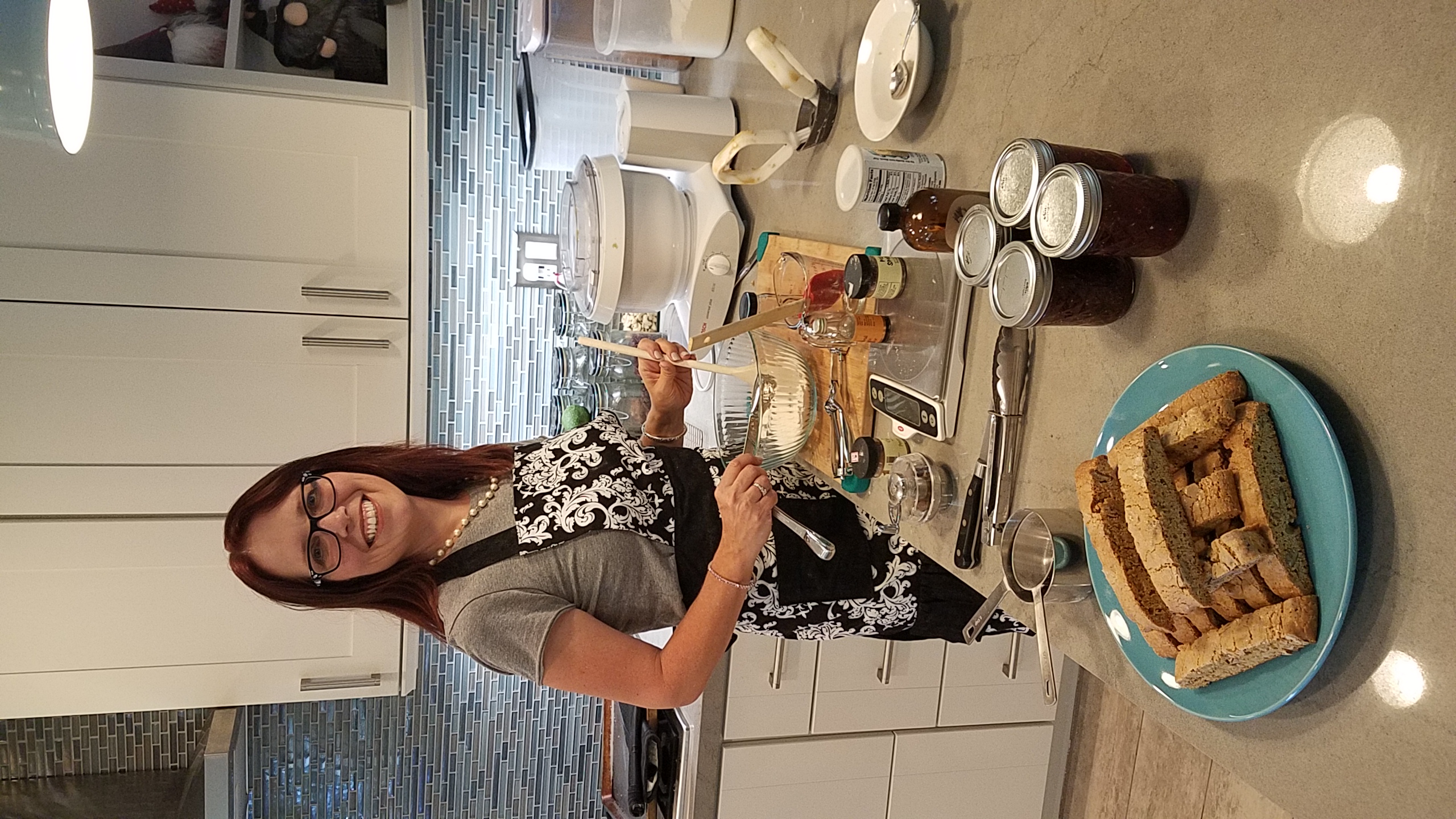
FROM KIM’S KITCHEN TO YOURS!
What’s better than receiving a little piece of Southern California on your doorstep once a month for a whole year? Kim’s creations have won multiple awards and each month she will send you a package valued between $35 and $45 of seasonal jams and treats that will have you waiting by the mailbox. From homemade blueberry or cherry jams to Cherry Garcia cookies and more, this is a gift that keeps on giving, all year long!
Details: Kim will mail a package to you anywhere in the continental U.S. One package per month, for 12 months. Pick up the first month’s gift tonight, or let us know and we will mail it to you.
Value: $500
Donors: Kim Christiansen
MORE MYSTIC MARRIOTT: DINNER, OVERNIGHT STAY AND THE RED DOOR
EXPERIENCE FOR TWO
Come back another night to enjoy dinner at the award-winning Octagon restaurant along with an overnight stay and a little pampering for you both at The Red Door Salon & Spa.
Details: Reservations are required by calling 860-326-0320. Non-transferable and non-extend able. Not valid for cash. Dinner not to exceed $200 value. Gratuity not included. May be redeemed Sunday through Friday nights, based on availability. Certain restrictions and additional blackout dates may apply. Must present certificate upon arrival.
Value: $550
Donor: Mystic Marriott, Octagon Restaurant, Red Door Spa
CRUISIN’ ON MAMIE, OUR FAVORITE LOBSTER YACHT
Your private cruise on board Mamie begins from the dock at scenic Mystic Seaport Museum. From there, the boat cruises down river to Noank and Fishers Island Sound. Once in the Sound, why not have a picnic lunch anchored off a secluded beach followed by a swim? Or, you could tie up alongside a restaurant and get a traditional New England lobster lunch followed by shoreside explorations. You choose the adventure.
The cruise is available to a group of six or fewer guests, and you get the whole boat to yourself for four hours. BYOB food and drink is encouraged! The boat provides a cooler with ice and water to keep drinks and food cold. They also have all the eating and drinking utensils you may need including bottle openers and wine coolers. Mamie has a below-deck area that includes a head (bathroom).
Details: Charters available June 1, 2019, through Columbus Day 2019 and may be booked directly with Mystic Seaport Museum. Dates and times based on availability.
Value: $600
Donor: Mystic Seaport Museum
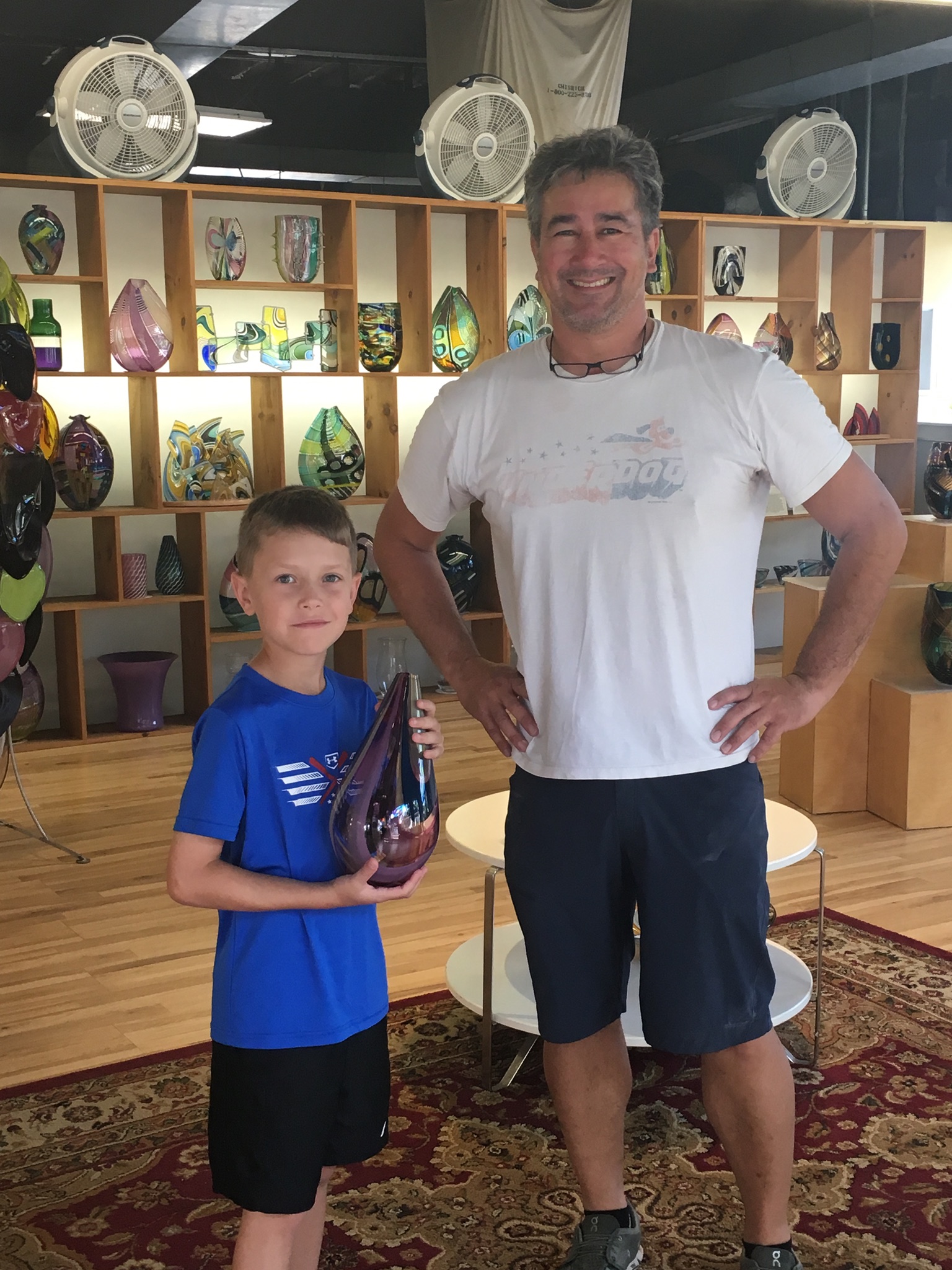
“TEARDROP” BY JEFFREY P’AN
Bring home a little bit of Mystic and a little bit of Murano with this beautiful original piece created by American glass artist Jeffrey P’an. This 11-inch tall purple teardrop was created in 2018. The teardrop was created using a combination of traditional glassblowing techniques combined with Jeffrey’s modern twist. Jeffrey P’an studied in Murano, Italy, and founded Prescient Studios in 1994 upon his return to Mystic. Today, Jeffrey’s work can be found in all corners of the world, and Studio Jeffrey P’an is a design house, artist’s workshop, and factory in the tradition of the factories of Murano.
In addition to Jeffrey’s one-of-a-kind sculptural work, all manner of glass-related work is performed—from jewelry making, to cut crystal, to glassware and repairs of historical pieces by an expanded team of apprentices and specialists. The winner may take home this gift tonight, or Studio Jeffrey P’an will ship this piece free of charge to your home.
Value: $650
Donor: Jeffrey P’an
DIRECT FROM MIKE’S WINE CELLAR
Look what we took from Mike’s wine collection! Valued at more than $1,000, this package includes:
Details: Dirty old wheelbarrow and flashing police light not included.
Value: $1,100
Donor: Michael Mondello – Former SSH Director
SIMPLY MAJESTIC PRESENTS
This exquisite three-piece set from Simply Majestic’s Classic Designer series includes a sterling silver double circle pendant, matching hoop earrings and a cuff bracelet. The pieces are a woven style with simulated diamonds.
Details: This gift is donated exclusively to Sofia Sees Hope and no cash, credit or exchanges are permitted in the store.
Value: $1,100
Donor: Simply Majestic
MIXOLOGY WITH A MASTER
Party for six people
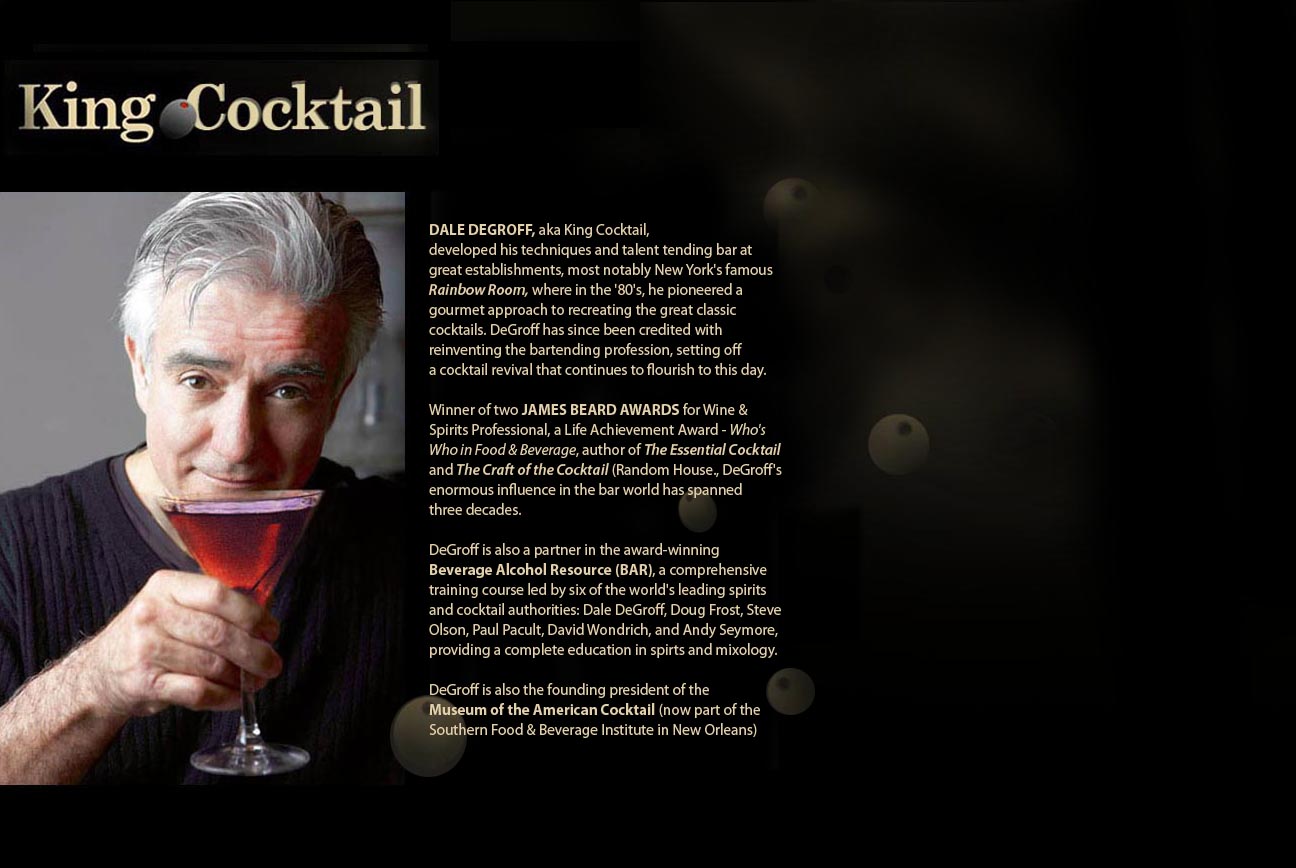
A unique educational opportunity to warm you this winter! Two-time James Beard Award winner and Master Mixologist Dale DeGroff, also known as King Cocktail, will come to your home and teach a party of six how to mix the perfect punch, eggnog, and a winter cocktail. Includes one of Dale’s books on mixology and a bottle of his aromatic bitters made in France. Dale is a Lifetime Achievement Award recipient from Food & Beverage magazine and the Founding President of the Museum of the American Cocktail. He is credited with re-inventing the bartending profession, setting off a cocktail revival that continues to flourish.
Details: Winner is responsible for purchasing liquor and providing food for guests. Mixology party dates are subject to availability between January 1, 2019, and December 1, 2019, and must be mutually agreed upon and confirmed at least six weeks in advance. Dale will travel just about anywhere in the world, but the winner is responsible for Dale’s travel and lodging expense beyond a 50-mile radius of the Mystic Marriott or Nassau, Long Island.
Value: $3000
Donor: Dale DeGroff, King of Cocktail
ESCAPE TO ANTIGUA
Seven nights for up to four people
Enjoy this getaway to Antigua in the British Virgin Islands, where crystal waters lap more than 360 white sand beaches and ocean breezes carry the scent of jasmine and hibiscus. This getaway is for up to four people in a beautifully decorated two-level waterfront villetta in Jolly Harbor. It’s an easy stroll from your home for the week to all the exceptional restaurants, nightlife, beaches, weekly sailing regattas and access to land and water sports.
The villetta is newly renovated and features two bedrooms, 1.5 baths, open floor plan on the main level with a fully equipped kitchen, and a large terra cotta patio overlooking the water and boat docks. Perfect for outdoor dining and watching the sunset.
Details: There is no expiration date on this gift and the winner may postpone travel until any year in the future. No blackout dates. Dates are based on availability.
Value: $2,400
Minimum bid: $2,000
PARK CITY, UTAH IN SNOW OR SUN (OR BOTH!)
Seven nights for up to seven guests
Park City lies east of Salt Lake City in Utah. Framed by the craggy Wasatch Range, it’s bordered by the Deer Valley Resort and the huge Park City Mountain Resort, both renowned for incredible skiing.
Stay in Park City Parks Edge, a new luxury three-bedroom, three-bath condo that sleeps up to seven guests! This 1,671-square-foot property features a top-floor large master bedroom suite with a king bed, a large private bathroom with stone shower, soaking tub, and dual vanities. It offers great mountain views and private decks overlooking the mountains and surrounding open space. Across the road is the community clubhouse with pool table, full kitchen for entertaining, a large outdoor hot tub, a community pool, a well-equipped workout room. It’s an easy drive to ski, hike, mountain bike, or stroll the historic downtown for shopping and dining!
Details: This is for a seven-day rental from Saturday to Saturday. The owner is flexible if other days are required. Blackout dates include December 24 to January 1. Expires June 1, 2020.
Value: $2,000 to $3,000+ based on season
Minimum bid: $2,000
CARIBBEAN VILLA IN MONTSERRAT
Seven nights for six guests
Montserrat is a small, tranquil island described as the “best-kept secret of the Caribbean.” Unwind in a villa with three king-sized bedrooms, a private outdoor pool, outdoor terrace with dining area overlooking the ocean. Located in Salem, Montserrat, the area is known for its black sand beaches, coral reefs, cliffs, and shoreline caves to explore. For the more adventurous, visit the Montserrat Volcano Observatory, schedule a guide (we recommend “Sunny”) to visit the restricted side of the island, or hike up into the mountains. For lunch, ask John for the best roti on the island—tell him Laura sent you. In town, you can enjoy local bars and restaurants, snorkeling, scuba diving, sailing, motor boats, and shopping.
Details: This package includes a seven-night, eight-day stay. Dates are subject to availability. Blackout dates include Thanksgiving, Christmas, and New Year holiday weeks. Travel must be booked within 12 months and traveled within 24 months.
Value: $4,300
Minimum bid: $3,500
UNDER THE TUSCAN SUN
Seven nights for four guests
Situated at the top of two ancient Tuscan hills are the Etruscan towns of Pitigliano and Manciano, both with breathtaking views in all directions. This package includes seven nights of accommodations for four people in Manciano or Pitigliano, Italy, located 1.5 hours north of Rome on the southern edge of Tuscany. You may choose from among more than six different villas. Wondering how much fun this is or need pointers on the area? Ask any of the four couples who won this before and gave rave reviews!
Details: There is no expiration date on this gift and the winner may postpone travel until any year in the future. No blackout dates. Dates are based on availability.
LCA1 through LCA18 exist in a continually updated online catalog of human genes and genetic disorders called Online Mendelian Inheritance in Man. Mendelian inheritance is based on the ideas of Gregor Johann Mendel, a 19th-century Moravian monk known as the father of modern genetics.
One source of confusion for LCA families is that there are 27 genes that can cause LCA, but only LCA1 through LCA18 are cataloged. For most genes, OMIM includes only selected mutations based on criteria such as the first mutation discovered, high-population frequency, distinctive phenotype and more. LCA families with genes not included in the database are left to wonder why they’ve been left out.
OMIM focuses on the molecular relationship between genetic variation and phenotypic expression and is considered a phenotypic companion to the Human Genome Project, which funds the database. The HGP international research effort from 1990 to 2003 culminated in a blueprint for building a person by completing an entire sequence of the human genome.
For example, OMIM refers to GUCY2D as LCA1, #204000 (phenotype MIM number), located at 17p13.1 with a gene/locus MIM number of 600179.
Translated:
“A number sign (#) is used with this entry because of evidence that Leber congenital amaurosis-1 (LCA1) is caused by a homozygous mutation in the gene encoding retinal guanylate cyclase (GUCY2D: 600179) on chromosome 17p13.”
There’s more, but that can be left to physicians, genetics’ professionals, researchers and students studying advanced science and medicine.
“For a patient with LCA or their family, what’s important is not the LCA## symbol, but, rather, a) the underlying affected gene; b) whether inheritance is dominant or recessive (dominant is rare); and c) the specific mutation or mutations,” according to Stephen P. Daiger, PhD, Professor in Environmental and Genetic Sciences at the University of Texas Health Science Center and director of the Laboratory for Molecular Diagnosis of Inherited Eye Diseases.
“This is the information which decides, for example, whether someone is eligible for a clinical trail focused on a specific gene, e.g., LUXTURNA™ for RPE65,” he said. “It is very important to know and remember this information.”