LIGHT IN THE DARKNESS: From an LCA Diagnosis to Advocacy in Turkey

Toprak Kulekci is a vivacious, seven-year-old budding ballerina who lives with her parents in Ankara, Turkey. When she was born in 2017, her father, Haydar, a software engineer, and mother, Gizem, an agricultural engineer, had no forewarning that their daughter could inherit a blinding retinal disease. However, with early concerns about her eyesight, they later discovered that Toprak had only five percent vision as a result of GUCY2D-associated Leber congenital amaurosis (LCA1). Thanks to her parents’ teamwork and tenacity, Toprak is thriving in school, taking ballet lessons and performing on stage with her class.

The Beginning

Haydar credits Gizem with having unique insights about their daughter. One morning, close to the end of her pregnancy, Gizem woke up feeling ill. “She said that something was wrong. The baby usually moved after she ate sweet things, but that morning, nothing happened after breakfast,” Haydar explained. A trip to the hospital resulted in an emergency cesarean section. “The umbilical cord was wrapped around Toprak’s neck eight times. If my wife hadn’t been paying attention to all of their little habits, we would have lost our daughter.”

Then, about a month after her birth, Gizem noticed that Toprak wasn’t making eye contact or closing her eyes when breastfeeding. “We waited about 40 days,” Haydar said, “and then we took her to the doctor. He said not to worry. Her eyes will get better.” A follow-up exam five months later showed no improvement.

The doctor’s evaluation ignited the couple’s problem-solving instincts. Determined to find an answer, they took Toprak to five or six doctors over the next year and a half. “Finally, one doctor said it could be LCA, and this was our first real answer,” Haydar said. “That day, we went to a research center for genetic testing, and several months later, it was confirmed that she had LCA1.”

With little to no information about LCA available in Turkey, the Kulekcis turned to the internet for answers. Haydar was elated when he discovered Shannon Boye, PhD, professor and chief – Division of Cellular and Molecular Therapy, Department of Pediatrics at the University of Florida. Dr. Boye and her team were researching an adeno-associated viral vector (AAV) delivered gene therapy treatment for LCA1. Not only was there someone who had deep knowledge about LCA1, but her lab was also working on a possible treatment. “That night, I emailed Dr. Boye,” Haydar said. “A couple of hours later, I received a response. In that moment, I cried, filled with hope again. It was so important to hear from a doctor on the other side of the world who knew about this disease and might be able to help fix it.” Haydar, who is fluent in English, asked Dr. Boye for her research papers so he could learn more about Toprak’s condition. He also contacted Penn Medicine, regularly sending them Toprak’s exam reports. Meanwhile, Toprak was receiving help at a local rehabilitation center. At the rehabilitation center and home, the focus was on helping her use and “love the light and contrasts” she could detect.

The Inclusive And Accessible Life Association

Through his research, Haydar realized that some organizations in other countries are focused on helping the blind and visually impaired. Others, including Hope in Focus (HIF), were dedicated to providing information and support for specific conditions such as LCA. Excited by the content on the HIF website, Haydar translated some of its articles into Turkish, putting them out to the media and on his blog while asking friends to share them.
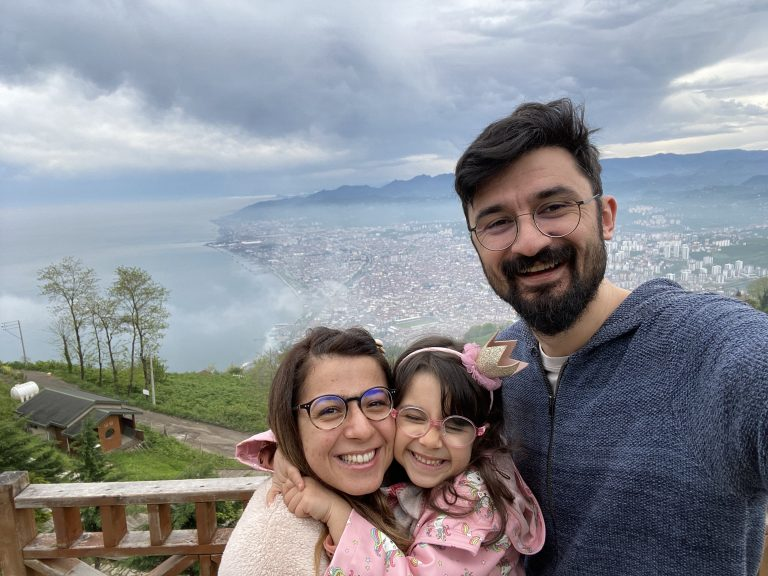
Family photo with Gizem, Toprak, and Haydar on a mountain with the ocean and city behind them
Gizem, Toprak, and Haydar

“I realized what other organizations are doing to help the visually impaired, and I thought we needed to do this in Turkey,” he said. “Hope in Focus and Dr. Boye were role models for me, and in 2021, I created the Inclusive and Accessible Life Association. People with limited vision, blindness, or LCA all face similar issues, so our goal is to provide information and resources to anyone who is visually impaired in Turkey.”

Kindergarten Companion

Determined to continually improve Toprak’s quality of life, the Kulekcis’ information needs accelerated as she got older. “About two years before she went to school, I started researching what was available for education and how we could help her,” Haydar explained. “Many blind or visually impaired children in Turkey don’t go to kindergarten because families are not educated about it.”

Toprak’s kindergarten experience provided Haydar with firsthand information he could share with other parents. “When she started school, they told us that they didn’t know what they could do to help her. I took a two-month vacation from my job and sat with her every day in class, helping the teacher understand how to help my daughter,” Haydar said as he described perching on a tiny chair next to Toprak.

“I told the teacher that Toprak could handle everything and that she could help the teacher help her. I didn’t solve my daughter’s problems for her. I taught her how to solve them on her own,” he said. At the end of two months, Toprak told her father that she was fine and he should go home.

Haydar encourages other parents of visually impaired children to send their children to school and not be fearful about what might happen. He emphasizes the importance of parents allowing their children to solve some of their problems. “Many children who are visually impaired are less fearful than their parents. And most of them can manage and do much more than their parents expect.”

Let’s Dance!

Living across the street from a ballet school gave Toprak an unexpected opportunity. Her parents’ discussions about the school’s problematic traffic jams sparked her curiosity. “What is ballet?” she asked.

Toprak in her blue ballet leotard with the number 2 tag on her chest
Toprak ready for Ballet

After doing their best to describe ballet, Haydar found a high-contrast video of a performance to show Toprak. The video resulted in a torrent of questions about how to do ballet, whether there were special clothes for ballerinas, and whether she could take ballet lessons.

“We realized this could be an opportunity for her,” said Haydar. “But we didn’t have any experience with ballet. The school said we could do it but that they didn’t know how to teach her. So, I said, I am here for this problem!” Haydar began attending the classes, helping Toprak stretch and move her body correctly. “We’d get additional help from the teacher to explain how and where to put her foot or leg using words and moving her body into the correct position.” Haydar noted that ballet has additional benefits because visually impaired children often have difficulty understanding where their body is in space. “Ballet is not just visual but also a feeling and understanding of how the body works,” he said.

Toprak’s ballet experience has thus far culminated in two performances with her classmates, each before a thousand people at a performing arts center. “We tested her in the classes, and she hit the mirror a couple of times, but the teacher said not to worry. She can handle it,” Haydar said. Anxious about her first performance, the Kuleckis sat close to the stage in case she fell off. However, Toprak’s classmates successfully guided her when needed.

“When she was on the stage, she was like an angel walking and running around with her friends helping her,” Haydar said, his voice vibrant with joy. “Toprak solved some of her problems, and when she couldn’t see where to sit or stand, she gave a friend her arm. She didn’t give up! Isn’t this the solution for all of us—learning to ask for help and helping each other?”

In 2023, the Kuleckis attended the HIF Family Conference in Indianapolis. Haydar said it was a significant event for them to attend. “We met many people there with LCA and some with the same gene as Toprak. We also met Dr. Boye there, and it was like a dream for us,” he said. “To think that we sent an email in 2019 to someone in the US who gave us answers and information about our daughter’s LCA, and now we see that person is real.”

Life Continues

In Turkey, schools often lack the knowledge or resources to meet the needs of visually impaired students, and Haydar often relies on his engineering background to find solutions. For example, Toprak finished first grade in June of this year. But she at first struggled to see the blackboard. Her father put a camera in front of the board, sending pictures to Toprak’s tablet so she could zoom in on the content. She also reads books using a digital magnifier, and the rehabilitation center teaches her Braille. The Kuleckis are grateful that Toprak’s last eye exam indicated stable vision, at least for now.

Gizem and Haydar work together to forge the best quality of life for Toprak that they can while sharing information and offering support to others through the Inclusive and Accessible Life Association. “We are a great family team! Gizem identifies a problem, I am the problem solver, and Toprak is a hardworking teammate who keeps us learning new things,” Haydar said.

2023 LCA Family Conference: Developing LCA Treatments

Luxturna®, the only approved treatment for one of 27 identified forms of Leber congenital amaurosis (LCA), cost $500 million to develop and took more than 12 years to come to market.

With such an enormous investment in time and money, it would make sense to use that same platform for developing new treatments to improve vision or halt progression of blindness.

But that’s just not how it works, said Chad R. Jackson, PhD, Senior Director of the Foundation Fighting Blindness Preclinical Transitional Acceleration Research Program.

Every individual clinical study must complete a set of rigorous requirements – which cost time and money – to receive regulatory approval from the Food and Drug Administration (FDA).

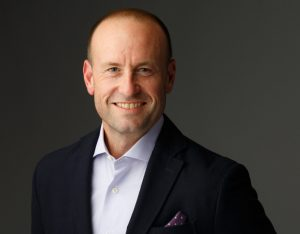
Chad R. Jackson
Chad R. Jackson

The Foundation’s translational research program steps up the pace of preclinical studies toward clinical studies involving humans through proactive management and industry-level advice to drive research leading to prevention, treatment, and vision restoration for degenerative retinal diseases.

A Hope in Focus partner, the Foundation has raised nearly $900 million since its founding in 1971 and funds more than 90 programs worldwide, including no-cost genetic testing and the My Retina Tracker® patient registry. The Foundation also launched a Retinal Degeneration Fund (RD Fund) to help accelerate life-changing outcomes for people with retinal degenerations through direct mission-related investments in therapeutic companies.

Chad and other presenters shared information about drug development, gene therapies, and non-gene therapies during two sessions of the Hope in Focus 2023 LCA Family Conference* in Indianapolis this summer.

More than 100 people attended the forum to hear the latest in LCA research and to network with families living with LCA and other rare inherited retinal diseases (IRDs).

Bringing a drug from inception to market takes 10 to 15 years, Chad said, and costs tens and tens of millions of dollars. He said bringing a developing drug from preclinical studies to the FDA requires three steps:

Identify your target to know what you’re seeking to do; conduct invitro studies by expressing patient cells in a lab or as it’s referred to, retinas in a dish; and perform animal-model studies, which save time and money to determine whether emerging therapies are safe and perhaps ready to move toward clinical trials using humans.

Gene-Agnostic Therapies

Chad moderated a panel discussion about research moving beyond single-gene correction to gene-independent therapies to help delay progression of blindness or restore levels of vision.

Eric Daniels
Eric Daniels

Kiora Pharmaceuticals’ Chief Development Officer Eric J. Daniels, MD, MBA, discussed the company’s first-in-human study for a non-gene therapy treatment for retinitis pigmentosa (RP), a group of inherited eye diseases that cause progressive vision loss. It is characterized by the gradual death of light-sensitive photoreceptor cells in the retina, known as rods and cones, responsible for converting light into neutral signals sent to the brain.

Dr. Daniels said his company’s technology shifts retinal ganglion cells from their off state, in which they respond to decreases in light. Kiora has discovered a way to shift these cells into their on state in the presence of light through channeled photoswitch molecules.

According to Kiora, the mutation-agnostic treatment has the potential for use in any of the various genetic forms of RP, as well as other retinal degenerative diseases; its intravitreal injection allows for more consistent and tolerable administration, and the small molecule can be manufactured and provided to patients at a much lower expense than the $450,000 per eye cost of Luxturna.

Huma Qamar, MD, MPH, CMI, the head of Clinical Development and Medical Affairs for Ocugen, discussed the biotech’s work on treatments for LCA10 (CEP290), RP, and other IRDs. One of their clinical trials involves a novel gene therapy, OCU400, consisting of a functional copy of a nuclear hormone receptor gene delivered to target retinal cells using an adeno-associated viral (AAV) vector. Expression of this receptor within the retina may potentially help stabilize cells and rescue photoreceptor degeneration, Dr. Qamar said.

Huma Qamar
Huma Qamar

Ocugen demonstrated the potential of a novel modifier gene therapy to elicit broad-spectrum benefits in early and intermediate stages of RP and LCA, based on animal studies, showing the potential for a mutation-agnostic treatment.

Since the conference, Ocugen reported an update on its Phase 1/2 clinical trial for OCU400 for 12 patients who had follow-ups from six to 12 months after a subretinal injection in one eye. The developing drug had a favorable safety profile in this trial phase. Also eight of the 12 patients showed stabilization or improvement in the visual function measures of best corrected visual acuity, low-luminance visual activity, and navigating a multi-luminance mobility test.

The trial is currently enrolling patients, including pediatric patients with LCA10.

Gene Therapies

In the conference’s final session, moderated by Foundation Vice President of Science Communications Ben Shaberman, four panelists discussed their work on LCA gene therapies.

Shannon E. Boye
Shannon E. Boye

Shannon Boye, PhD, Co-Founder, Director, and Acting Chief Science Officer of Atsena Therapeutics, said the road to drug development is long and bumpy. She helped design early studies on LCA1 (GUCY2D) in 2001.

With the process going so slowly, Shannon reached out to then-Foundation CEO Ben Yerxa, who helped push her and her husband into starting their own company.

In 2019 doctors dosed the first patient. Earlier this year, in a Phase 1/2 clinical trial, their LCA1 gene therapy, known as ATSN-101, showed clinically meaningful improvements in vision at the highest dose with no drug-related serious adverse events at six months after treatment.

Ash Jayagopal
Ash Jayagopal
Ben Yerxa
Ben Yerxa

At Opus Genetics, Chief Scientific Officer Ash Jayagopal, PhD, discussed the biotech’s progress for various programs in, or advancing toward, early-stage clinical trials.

Opus, headed by CEO Ben Yerxa, PhD, is the first spin-out company internally conceived and launched by the Foundation’s RD Fund. The Fund’s purpose is to accelerate advancing research into gene therapy for several forms of LCA and other retinal degenerative diseases.

Opus’ most advanced program for LCA5 (lebercilin), OPGx-LCA5, is dosing patients, while two other LCA programs involving LCA13 (RDH12) and LCA9 (NMNAT1) are in preclinical development.

Thomas Mendel, MD, PhD, talked about his research at The Ohio State University, where he is Assistant Professor of Ophthalmology and Vitreoretinal Surgery at the university’s Havener Eye Institute, Department of Ophthalmology & Visual Sciences. He is building a research program to develop and implement gene therapies for  Professor of Ophthalmology and Vitreoretinal patients with inherited retinal disease.

Bikash R. Pattnaik
Bikash R. Pattnaik
Thomas Mendel
Thomas Mendel

The goal is to build a translational lab with a team and accelerate development and clinical trials with gene-based treatments.

Bikash R. Pattnaik, PhD, told the audience about his work at the University of Wisconsin-Madison (UWM), where he is a professor and Clinical Director for Electrophysiology in the departments of Pediatrics, Ophthalmology, and Visual Sciences.

This summer, the National Institutes of Health awarded UWM a $29 million grant to develop gene-editing therapies for two inherited retinal conditions: LCA16 (KCNJ13) and Best disease. Bikash said the LCA16 treatment in development could be in clinical trials next year.

*Please go to our Hope in Focus website to see our previous three stories detailing sessions from our 2023 LCA Family Conference. Click here to see a video about the conference.

From Uncertainty to Understanding for Family of 4-year-old Living with LCA1 GUCY2D

Desirae Potts breaks into tears when she recalls the first time a doctor said her infant son James had a disease she’d never heard of – Leber congenital amaurosis, known as LCA.

“I had no earthly idea what she was talking about. I left that appointment, I remember feeling so confused and so sad,” the 33-year-old mom said.

The doctor didn’t or couldn’t give Desirae and her husband, Robert, any information about LCA because the doc didn’t know a thing about the rare inherited retinal disease.

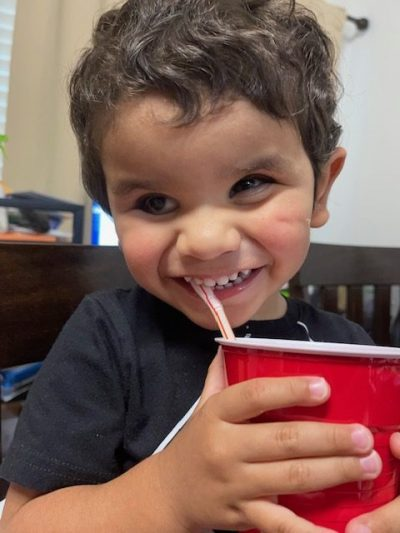
James holding a red solo cup and smiling.
A smiling James Potts

“I had to grieve the life that my son would have had,” she said. “But I also wish that I knew then what I know now, that is: Whether he could see or not, I have a bright light!

“He’s so amazing, I couldn’t imagine him any other way and I wouldn’t change it if I could.”

She thought about the best way to bring up her son.

“I quickly learned the best way to raise him would be to raise him like my sighted children. He is the most resilient and bright young man. I know he is so smart. He amazes me every day.”

Mom becomes nurse to better help her son

James was 10 months old when his parents learned their younger son’s genetic diagnosis: LCA1* caused by a mutation in his GUCY2D gene.

About the same time, Desirae kept listening to doctors talking over her head and decided to become a nurse.

“I wanted to help him with my knowledge. It definitely helps because I have more medical knowledge than I did before. I understand what the doctor is saying. The doctors used all these words I didn’t know, and I was scared that I didn’t know.”

She began nursing school in James’ first year and earned her nursing degree about a year and a half ago. James is now 4.

“I’m not as worried now, and I know what to do in certain situations.”

James goes to school for the full day in an integrated classroom at the same school as his older brother, 9-year-old Robert. His older sister, Ariona, is in high school.

Their mom is the school nurse at the four middle schools in the district of their South Texas coastal city.

Keeps informed of LCA1 GUCY2D research

Desirae knew something wasn’t right with her baby’s vision at 2 months when he didn’t track objects or light. At 4 months, an ophthalmologist prescribed glasses, but they didn’t help.

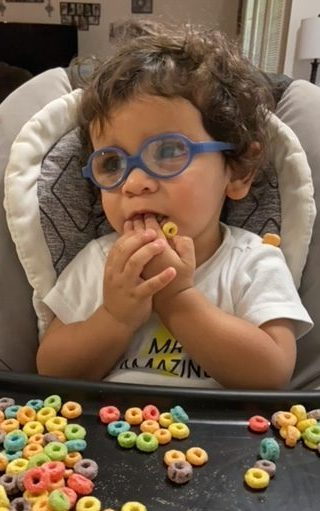
James with his hands in his mouth, sits in his high chair wearing a graphic tee.
James wearing his “Mr. Amazing” shirt

After the initial retinal disease diagnosis, James received his confirmed genetic diagnosis 6 months later at Baylor College of Medicine by Richard A. Lewis, MD, MS, Professor of Molecular and Human Genetics at the Houston medical school.

Annually, James visits John T. Stout, MD, PhD, who keeps the family informed of research in the LCA1 GUCY2D space. Dr. Stout specializes in retina/macular and retinal vascular diseases at Texas Children’s Hospital. His current research projects include human gene and stem cell therapy for proliferative and inherited ocular disease, retinal disease genotype-phenotype correlation, and intraocular angiogenesis, the formation of new blood vessels from the existing vascular tree.

LCA accounts for 5 percent of all retinal dystrophies and 20 percent of blindness in school-age children.

LCA1* is one of the most common of the more than 27 identified forms of the rare inherited retinal disease, affecting about 20 percent of people who live with the disease.

James received early-intervention therapy, and orientation and mobility therapy during his first years. He also sees a speech therapist at school and a developmental specialist in town.

Right now, his favorite food is bagels and butter. And he absolutely loves music and Daniel the Tiger, a spinoff from Mr. Rogers Neighborhood, where he sings songs about learning, and growing, and what to do with feelings.

James does not yet have words to describe his sight, which makes it hard to explain what he can see, although his mom believes he has light perception.

James’ vision is a family affair

“It not only affected him, but it also affected all of us,” Desirae said. “We all had to adjust and learn how to make things in a way that he could do things on his own and foster his independence.”

The Potts Family: Robert wearing red shirt in front, with L-R: Mom Desirae, Ariona, James, and Dad Robert
The Potts Family

Ariona, James’ 17-year-old sister, nurtures her little brother, with mom adding, “She’s the closest thing to me he can get. She’s very, very helpful.”

Robert was 5 when James was born.

“He didn’t quite understand what’s going on and how to be accommodating to his brother. We definitely had to inform him.”

Desirae is concerned about James pressing or rubbing his eyes, a symptom of LCA called oculodigital reflex. While the doctor said the reflex is normal, she is worried the action may cause harm. She tries to keep him occupied.

“I try very hard, but James is maybe the most headstrong person I have ever met in my entire life. If you tell him to do something, he will do the complete opposite. So, I tell him, ‘Don’t let me see your eyes,’ even though I don’t want him to defy me.”

James loves to explore and see with his hands.

“We don’t use the word ‘blind.’ We prefer to say that he sees with his hands. We don’t say ‘blind’ or ‘visually impaired.’ We do not want him to think that that would define him.

“That was something I had to teach both of our children, my husband, and all of our family. Some relatives are still in denial. We don’t put him in a box. We let him explore and have the same toys as his brother and sister,” she said.

“We try to have everyone stay on the same page to help build his confidence. Like it’s normal for him that he sees with his hands.”

*Next month, our Hope in Focus LCA Family Conference includes a presentation from an LCA1 GUCY2D researcher. The June 23-24 conference is in Indianapolis.

Let’s Chat About … Atsena Therapeutics’ LCA Research with Kara Fick and Shannon Boye

Atsena Therapeutics, a clinical-stage gene therapy company focused on reversing and preventing blindness, has an ongoing Phase 1/2 clinical trial evaluating a potential therapy for Leber congenital amaurosis 1 (LCA1) caused by mutations in the GUCY2D gene.

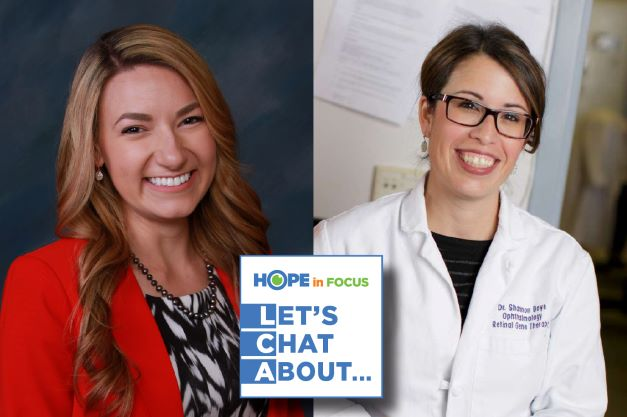
Headshot of Kara and Shannon with the Hope in Focus Let's Chat About ... webinar logo center bottom
Kara Fick (L) and Shannon Boye (R) on Hope in Focus Let’s Chat About … series

We learned about this research from Kara Fick, head of Patient Advocacy and Medical Affairs at Atsena Therapeutics, and Atsena Founder and Director Shannon E. Boye, PhD, during our Oct. 27, 2022, webinar episode titled “Let’s Chat About…Atsena Therapeutics’ work in LCA.” Courtney Coates, Hope in Focus Director of Outreach and Development, moderated the session, which can be viewed here. 

Let’s Chat About…” is our free webinar series bringing together researchers, advocates, industry leaders, and people living with Leber congenital amaurosis (LCA) or other rare inherited retinal diseases (IRDs) for conversations important to the rare retinal disease community.

How did Atsena Therapeutics come to be?

Shannon and her husband, Sanford, met in grad school.

“It was a nerd romance,” she said.

Boye’s thesis involved developing viral vectors for retinal disease treatment, specifically for LCA1 (GUCY2D), and she became known for generating gene technology. She has authored more than 60 peer-reviewed manuscripts and multiple textbook chapters. She also has been actively involved in grant and manuscript review, and she has received several major awards.

Over several years, the couple worked with large, medium, and small pharmaceutical companies, but they grew frustrated at how long it took to bring developing therapies to patients.

“It was going very slowly and that was frustrating,” Boye said. “We saw business decisions overriding sound scientific decisions.”

Eventually, she sent a big long vent to Foundation for Fighting Blindness CEO Ben Yerxa, and he helped push her and her husband into starting their own company, Atsena Therapeutics. The couple co-founded the business, with Sanford Boye serving as Chief Technology Officer.

Kara Fick, who has been working as a patient advocate for rare diseases in the biotech world for nearly a decade, is passionate about bringing the patient voice, perspective, and expertise to the table.

“It’s pretty apparent, and you know from Atsena’s founding, that really keeping patients at the center and trying to move research forward so that it can get to patients is super important,” Fick said.

At Atsena, she strives to bridge the gap between the science of innovative therapies and the daily needs of individuals living with rare diseases. She also works to understand more clearly the barriers to diagnosis, treatment, and management of rare diseases and how to better address those hurdles with patients and clinicians.

What is gene therapy?

All of us have genes. They give us blue eyes or brown eyes, for instance. But our genes also make proteins. Proteins are the building blocks of life. They can act alone or in combination with other proteins to perform essential functions in our cells.

A good example of proteins important for vision are the proteins in our photoreceptors and retinas. Those proteins all work together to convert light into an electrochemical signal that is sent to the brain and processed as vision.

Genes make proteins, and proteins perform essential functions. But sometimes, we can have a misspelling in our genes — in other words, a mutation. Because of that misspelling or mutation, in some cases, the protein that gene was supposed to make did not form. In other cases, perhaps, the protein forms, but it’s misshapen and can’t interact properly with the other proteins. When that happens, the normal biological function of the protein is disrupted, for example, in your photoreceptors. As a result, your photoreceptors are unable to transmit light into a signal processed as vision.

The concept of gene therapy involves taking a healthy copy of a gene that lacks that misspelling and delivering that healthy version of the gene to the photoreceptor cells.

How is the LCA gene therapy trial going?

Drug development and gene therapy development take a long time, and there are a lot of processes that companies have to go through to ensure that anything given to patients is safe and effective.

Work to develop this gene therapy began in earnest in 2004 in Boye’s lab at the University of Florida. After pre-clinical studies in chickens and mice, they were ready for clinical trials in humans.

Atsena is working on a combination Phase 1/2 clinical trial for LCA1 (GUCY2D). In this phase of the trial, researchers test different gene therapy doses, find the best dose, and closely monitor the safety of the therapy.

“Because we’re doing a combo Phase 1/2, we’re looking primarily at safety, but we’re also incorporating some tests into the clinical trial that can help to tell us a little bit about the efficacy of the gene therapy,” Boye said.

‘Researchers began with adults aged 18 and up but recently opened it up to ages 6 and up. Fifteen people, all with GUCY2D mutations, are taking part in the trial, ranging in age from 12 to 76 years old.

So far, the trial is going well, with no participants reporting serious side effects related to the gene therapy. They did see two cases of inflammation, but both were mild and resolved after treatment.

Besides safety monitoring, Atsena has conducted several tests, including the Full-field Stimulus Test (FST). The test quantifies visual perception through flashes of varying luminance. Researchers saw significant improvements in the results of that test from individuals who received the highest dose of the gene therapy.

Participants receiving the gene therapy also showed clear improvement in a multi-luminance mobility test (MLMT), in which they navigated a course with obstacles of varying height and under different levels of illumination.

Participants also underwent a third test, called the BCVA or Best Corrected Visual Acuity, which measures everyday vision. (Think of the poster with different letters you’re asked to read at the eye doctor’s.) That test had more mixed results, with some patients seeing improvement and others not seeing much, if any, improvement.

What happens next?

This is still just the preliminary data. Atsena needs all 15 participants in its trial to get through their first full year after being treated with gene therapy. Then, they’ll collect all of the data, analyze it, and summarize it vigorously and thoroughly before moving on to the next phase.

At that point, they’ll need to meet with the Food and Drug Administration (FDA) and other regulatory agencies to get their agreement and permission to move forward with a Phase 3 trial. That trial will focus on efficacy and seeing how well the gene therapy works. It’ll still pay attention to safety, but the primary goal of Phase 3 is to focus on efficacy and use that as supportive data that could be submitted to the FDA and other agencies to get full approval of the gene therapy.

Why genetic testing is essential for clinical trials?

As more trials are starting and more gene-specific research is being done, it’s going to become more important to know precisely which genetic mutation may be causing your LCA.

“Getting genetic testing is essential for figuring out the specific genetic mutation that may be causing your LCA,” says Boye.

If you have not been genetically tested, talk to Hope in Focus. There’s no cost to patients and family members to receive genetic testing.

‘Let’s Chat About …’ Webinar Offers LCA Overview and Updates on Clinical Trials

In the debut of Hope in Focus (formally Sofia Sees Hope) ‘Let’s Chat About …’ monthly webinar series, Ben Shaberman of the Foundation Fighting Blindness, provided his Zoom audience with a plethora of information about Leber congenital amaurosis (LCA), highlighting some of the more than 40 clinical trials underway to find treatments and cures for LCA and other rare inherited retinal diseases (IRDs) and giving updates on promising preclinical research. 

The recorded webinar aired 1 p.m. Wednesday, Jan. 27, 2021, and can be seen here. Elissa Bass, our marketing and communications director, moderated the session.

Shaberman, Senior Director, Scientific Outreach & Community Engagement, stumbled across a science writing position at the Foundation Fighting Blindness 16 years ago without a clue about retinas or blindness. He called his move to the Foundation serendipitous. He knew he made the right choice after hearing retinal researcher Dean Bok, PhD, tell attendees at a 2005 Foundation conference how he was drawn to the field by the seduction of the retina’s myriad complexities and inner workings.

Shaberman, too, felt pulled by the intriguing science of the retina.

As such, so are the 27 forms of LCA that cause varying kinds of visual impairment within each gene mutation and within each affected person. An estimated 8,000 people in the United States have LCA.

The path of retinal research

Shaberman took his audience from the beginnings of identifying the RPE65 gene in 1993 and learning shortly thereafter it could lead to LCA, to using mice models and later studying Briard dogs that had the same gene mutation that caused LCA in humans. A clinical trial at Children’s Hospital of Philadelphia led to the 2017 FDA approval of the breakthrough gene therapy LUXTURNA®, developed by Spark Therapeutics. The drug successfully improved the vision of many of the LCA2-RPE65 patients who received the treatment through subretinal injections.

When children receive an LCA diagnosis, their families should find a good retinal specialist, get regular exams, and ultimately get a confirmed genetic diagnosis to be on the path to more specific information and research into that form of LCA, Shaberman said.

Families also should register with the Foundation’s My Retina Tracker®, a free and secure online registry that facilitates getting a confirmed genetic diagnosis by making registrants eligible for free genetic testing.

The registry becomes your personal retinal health record, updated by you. It employs state-of-the-art database technology to protect privacy and adheres to the highest standards of confidentiality and ethics. 

It also notifies registrants of clinical trials and gives researchers access to their disease data – not their personal information – to advance research and therapy development associated with LCA and IRDs. 

Reading research publications and attending events sponsored by the Foundation and by Sofia Sees Hope also provide opportunities for families to interact and learn the latest research. Shaberman and Bass encouraged people affected by LCA and their families to contact them, respectively, through the Foundation’s website and/or the Sofia Sees Hope website for specific information on clinical trials or other questions and concerns about living with LCA. 

“Yes, it’s work,” Shaberman said. “You have to be your own advocate and your own child’s advocate, but more and more information is becoming available, and that’s the good news.”

Shaberman also reviewed some of the more than 40 retinal clinical trials in the pipeline for LCA and other IRDs:

Join us Feb. 16

February’s “Lets Chat About …” webinar airs at 3 p.m. ET, Tuesday, Feb. 16. Our guest will be Wiley A. Chambers, MD, Supervisory Medical Officer for the Office of New Drugs, Center for Drug Evaluation and Research at the U.S. Food and Drug Administration. Register here.

Living with Leber Congenital Amaurosis: Dami’s Story

I was born in 1976 in Spokane, Washington. By the time I was born, my parents’ relationship was basically over, so I was raised by a single mom. It was clear from a very young age that I had significant vision loss. I started wearing glasses at 18 months. I went through lots of grueling tests as a toddler to figure out the cause of my vision loss with no real answers. Despite this, I lived a very full life. I was a Girl Scout. I did gymnastics. Basically, I did everything my friends did.

When I was 10, my mother took me to a research hospital in Portland, Oregon. After two days of testing, they told my mother I had Leber congenital amaurosis type 1. They told her I would likely be totally blind by the time I was 17.

So, I lived my days after that doing and seeing what I could because my vision had an expiration date. I didn’t just do the same stuff as my friends. I did more. I also got involved in the blindness community. I did public speaking in high school. I worked with blind kids, noticing that parents were not doing their children any favors by treating their children like fragile flowers. I worked with children with so few social skills because their parents didn’t expect them to act like the other kids. All that did was hurt them. But, I digress from my story.

So, I turned 17, and I could still see. Now, instead of vision having an expiration date, every day with vision was a gift. I went to college and met an amazing boy. We were married and pregnant with our first child within a year of meeting because I couldn’t stand the thought of not seeing my baby’s face.

I could go on forever about my life, but most of it is only interesting to me, so I’ll fast forward. I am 43, still married to that amazing boy, and we have two amazing boys of our own. I earned a Master’s degree in communications, and I work for a state agency that does vocational rehabilitation for people with visual impairments. I also still have a decent amount of vision, from my perspective.

A few weeks ago, I read a Facebook post about genetic testing. Nobody had ever talked to me about this before. I have regular eye appointments, but they really just check my vision and cataracts. I want to know more. I have started thinking I may have been misdiagnosed years ago, but I don’t even know where to begin. I’ve signed up for the genetic databases, but now what? It is such a strange feeling to doubt the one thing that had seemed certain my whole life.

So, that’s me. I’m not inspiring or pitiful. I’m just me, trying to figure out where I go from here and so glad to know I’m not alone.