Rare Disease Day 2020: Lawmakers Hear From Advocates

Rare disease patients, caregivers, advocates, researchers, doctors, healthcare providers and lawmakers gathered at Connecticut’s capitol in Hartford on Friday, Feb. 28, to celebrate Rare Disease Day 2020 and raise awareness because rare medical conditions often are overlooked by health-policy decision makers and the medical community. 

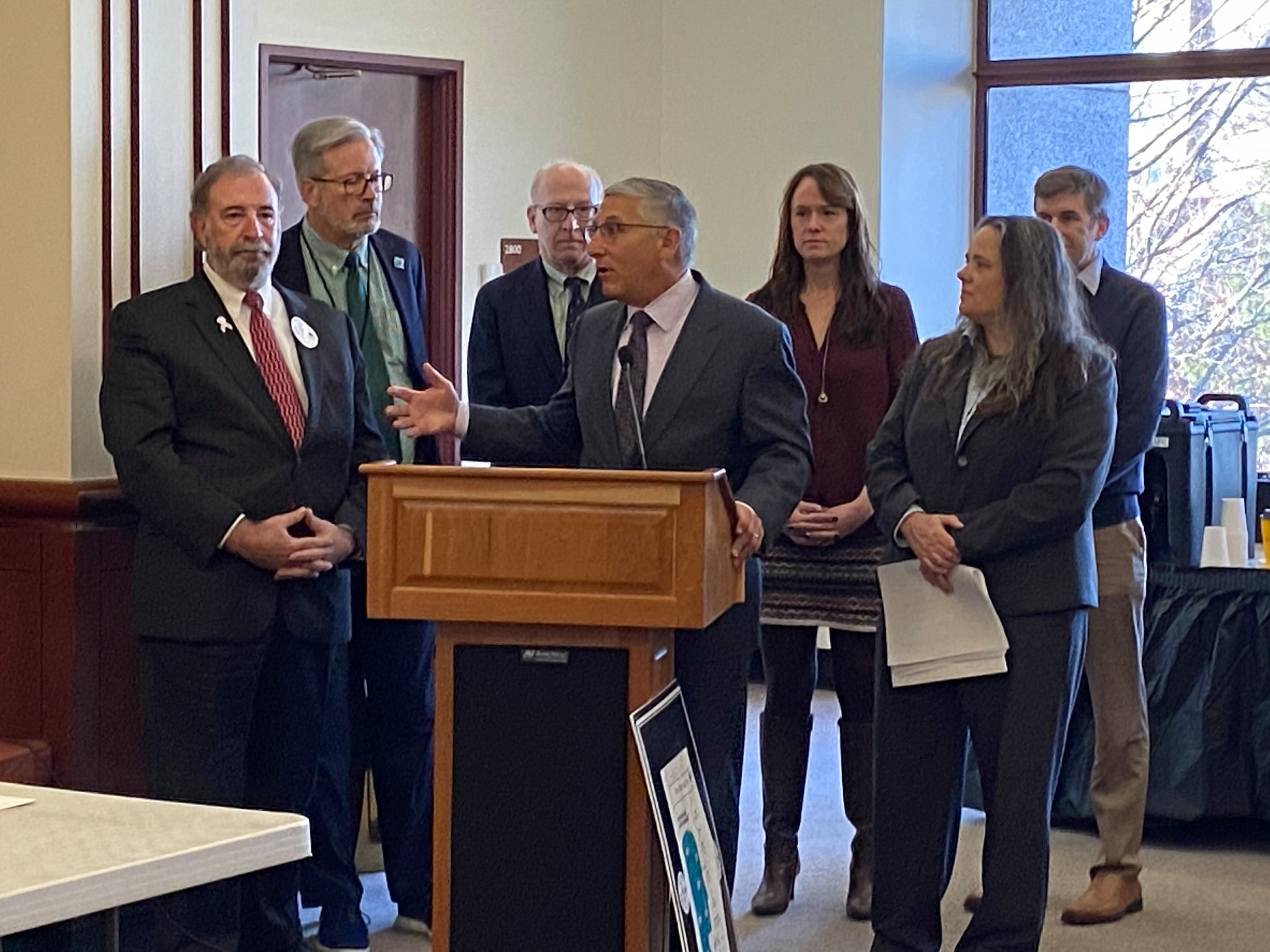
CT Rare Disease Day at the state Capitol in Hartford. Photo courtesy NORD.

The National Organization for Rare Disorders (NORD) and its Rare Action Network (RAN) organized the event for Rare Disease Day, celebrated nationally and in more than 85 countries. Click here for information on your state’s events, RAN and Rare Disease Day.

A disease is defined as rare in the United States if it affects fewer than 200,000 Americans. As many as 7,000 rare diseases exist nationally, affecting 1 in 10 people. Between 25 million and 30 million Americans live with a rare disease, including about 300,000 in Connecticut alone. 

Sofia Sees Hope, based in Ledyard, Conn., gave information to legislators on the Connecticut General Assembly’s Public Health Committee, letting them know that rare disease advocates and those living with a rare disease, such as Leber congenital amaurosis (LCA) and other rare inherited retinal diseases (IRDs), need state and federal support in crafting legislation to help the rare disease community. 

Awareness helps research

We wanted to impress upon the committee that dedicated, grassroots attention and awareness to specific rare diseases generate incredible results in finding cures and treatments. Children living with visual impairment now can regain their vision through a ground-breaking retinal medicine called LUXTURNA

The legislators learned that for six years Sofia Sees Hope has been generating awareness, supporting affected families and raising funds to advance research for diagnosis, treatments and cures for blindness caused by LCA and other IRDs, such as retinitis pigmentosa (RP). 

Here’s our legislative statement in its entirety: 

LCA is characterized by severe vision loss at birth. While some children are born with little or no vision, others may have significant vision loss in the first few years of life, stable vision for a period, and then eventually complete vision loss as the retina deteriorates into total blindness.

The optimal window for reversing vision loss is during the early phase of the disease. Creating avenues to affordable treatments and accessibility to resources is imperative and often can be inhibited by insurance regulations and other rules limiting access to help and support patients.

More than 25 genes are associated with LCA and a mutation in just one of these can result in blindness. The rare disease occurs in 1 in 33,000 to 1 in 88,000 people and makes up 5 percent of all retinal dystrophies. Twenty percent of children with visual impairment and attending special schools have LCA; it is the second most common inherited retinal dystrophy after retinitis pigmentosa.

A patient needs a confirmed genetic diagnosis to proceed with appropriate treatment avenues. Sofia Sees Hope has given more than $100,000 to provide families, including those in Connecticut, free access to genetic testing and has directed $275,000 to genetic retinal research. Patients also need support from their lawmakers to ensure they receive the quality of life to which they are deserving.

After decades of research and dedicated investment in studies, scientists created a breakthrough genetic therapy that helps restore vision in patients with one of the genetic mutations causing LCA. The U.S. Food and Drug Administration in 2017 approved this treatment – developed by Spark Therapeutics and called LUXTURNA – which also is the first genetic therapy ever in the United States to treat ANY rare inherited disease.

LCA patients treated with LUXTURNA experienced dramatic changes in their lives with greatly improved or restored vision. Children who are 5, 6, 7 years old and have been treated with LUXTURNA view life in a new light in big and little ways. They now can see rainbows in the sky and stars shining at night.

Our lawmakers need to know that we fully support the principle that all FDA-approved treatments should be made available to all those who will benefit from such treatment, and to reject any proposed requirements restricting access to medications.

Sofia Sees Hope also encourages the Connecticut General Assembly to establish a Rare Disease Advisory Council comprised of patients, patient advocates, doctors, researchers and community members to address the emerging public health priority of rare diseases, including LCA.

More than 20 people – legislators, patient advocates, patients, caregivers, researchers, doctors and businesspeople – spoke during the morning event to a crowd gathered in the second-floor atrium of Connecticut’s Legislative Office Building. 

Jean Kelly, co-founder of Brian’s Hope, spoke on behalf of her son, Brian, and others with Adrenoleukodystrophy (ALD), an x-linked metabolic disorder that destroys myelin, the protective sheath that surrounds the brain’s neurons – the nerve cells that allow us to think and to control our muscles. She and her husband are 24/7 caregivers of Brian who was diagnosed at age 6 and is now 31. Their son can hear but he cannot speak, see or walk. She advocated for more help for parents who must devote their lives to caring for their children. She and her husband advocated for mandatory ALD newborn screening in Connecticut, which was passed into law in 2013.  

Laura Morris from the state’s Office of Health Strategy thanked legislators for the passage 10 years ago of a law requiring health insurance coverage for wound care for people like her daughter, who lived with Epidermolysis Bullosa (EB), a group of rare genetic conditions that result in easy blistering of the skin and mucous membranes. 

A host of other speakers talked about dealing with enormous monthly bills, tangles over insurance coverage and the overwhelming stress on rare disease patients and caregivers.

NORD Director of State Policy Heidi Ross, in a statement from the organization’s President and CEO Peter L. Saltonstall, told the group:

“The purpose of Rare Disease Day is to bring patients and advocates together to articulate with one voice the shared message that millions of people around the world are suffering with unmet medical needs and need help. Our patients need earlier diagnosis; safe, effective treatments; and assured access to medical care and other services …

“There are events like ours today taking place in state capitol buildings across the nation, where elected officials are meeting with patient advocates to better understand what life is like with a rare disease, and how health care decisions they make at the state level – on issues such as newborn screening, medical insurance, cost-sharing and (specially formulated) medical foods – have a major impact” on those living with a rare disease.

Saltonstall’s statement ended with NORD’s credo:

Yes, we are.

Connecticut Rare Disease Day 2020

Rare Disease Day banner with zebra stripes. "Make an Impact on Rare Disease Day! Show Your Stripes."

The end of February signals the time to focus awareness on rare conditions by celebrating Rare Disease Day, a global event addressing the thousands of rare diseases that affect one in every 10 Americans.

Rare medical conditions affect 300,000 people in Connecticut, the home state of Sofia Sees Hope, and 30 million nationwide.

Yes, those are astounding figures that call for astounding action to bring attention to the needs of people living with rare diseases, such as Leber congenital amaurosis (LCA), one of the more than 7,000 rare diseases. The day – and its events that happen nationally and in more than 85 countries – fosters awareness needed to drive research for cures and treatments for rare diseases often overlooked by health-policy decision makers and the medical community.

In Connecticut, people living with rare disorders and their families, along with lawmakers, caregivers, advocates, advocacy organizations, healthcare providers, industry leaders and researchers will gather at the Capitol in Hartford to celebrate Rare Disease Day 2020 by highlighting their concerns and seeking help for solutions from state lawmakers.

Sofia Sees Hope plans to relay rare disease advocacy information, including the importance of genetic testing, to legislators on behalf of people living with LCA and other rare inherited retinal diseases (IRDs).

The public is invited to attend this legislative forum and breakfast at the Legislative Office Building, 100 Capitol Ave., Hartford, from 8 a.m. to 11 a.m., Friday, Feb. 28, the last business day before 2020’s official Rare Disease Day, Saturday, Feb. 29. The event takes place in the building’s second-floor atrium that looks out to the gold-domed Capitol building.

The National Organization for Rare Disorders (NORD) is the U.S. sponsor for Rare Disease Day 2020. The Hartford gathering, as with many others across the nation, is organized by NORD and its Rare Action Network (RAN). The focus for this year’s Rare Disease Day is the impact that rare diseases have on patients, families, caregivers, healthcare providers and local communities.   

For more information about this free event, please contact Lesley Bennett, RAN’s Connecticut Volunteer State Ambassador at Lesley.bennett@rareaction.org or 203-829-7650. Also, here is a link to information on all states regarding RAN and Rare Disease Day: https://rareaction.org/resources-for-advocates/state-profiles/

Here’s a look at the prospective speakers 

Dominic Cotton, a father and advocate for those with rare diseases and brain injuries, will emcee the event that begins after the 8 a.m. sign-in and breakfast.

Heidi Ross, NORD’s Director of State Policy, will offer opening remarks, followed by the legislative welcome by state Rep. Jonathan Steinberg, Co-Chair of the General Assembly’s* Public Health Committee; Rep. Michelle Cook,* member of the Public Health Committee; Sen. Len Fasano, Senate Majority Leader; and Jean Kelly of Brian’s Hope, a non-profit she and her husband, Jack, founded in 2012 for their son, Brian, diagnosed at age 6 with Adrenoleukodystrophy (ALD), an x-linked metabolic disorder. The couple advocated for mandatory ALD newborn screening in Connecticut, which was passed as law in June 2013. 

Dr. Karen Rubin, a pediatric endocrinologist at Connecticut Children’s Medical Center (CCMC), and Adrienne ManningConnecticut’s Newborn Screening (CT NBS) Program Division Director in the Department of Public Health Laboratory, will address diagnoses and treatments in newborns. State law requires all newborns to be screened for certain genetic and metabolic disorders. The program’s efforts help prevent disability and premature death by ensuring newborns receive the screening and, when needed, evaluation and treatment.

Dr. Rubin and Manning are part of a new partnership between the NBS Program and CCMC called the Connecticut Newborn Diagnosis and Treatment Network.

Silvia Vilarinho, MD, PhD, and Donna Sciacca of the American Liver Foundation are  scheduled to talk about rare liver disorders. Dr. Vilarinho, Assistant Professor of Medicine (Digestive Diseases) and of Pathology at Yale University, is a physician-scientist who uses genetics, genomics and human samples to investigate the molecular basis of various liver diseases of unknown causes. Sciacca is the Community Outreach and Education Manager for the foundation’s Connecticut division.

Dr. Joanna Gell of Jackson Laboratories and CCMC will address germ cell tumors, which can be cancerous or noncancerous growths that form from reproductive cells. Dr. Gell is Assistant Professor in the Department of Pediatrics at the UConn School of Medicine.

Dr. Charles Whitaker, a neurologist who sees patients at the Hospital for Special Care (HSC), will talk about adult neuromuscular disorders.

Laura Morris, mother of a patient with epidermolysis bullosa (EB), a group of rare genetic conditions that result in easy blistering of the skin and mucous membranes, will appear with Rep. Russ Morin, who authored legislation that helped EB patients. Morris is Outreach Coordinator for the state’s Office of Health Strategy.

Dan Donovan, Co-Founder and CEO of rareLife solutions, will address the scarcity of literature on rare diseases.

Father Nikolas Karloutsos will moderate a pediatric panel about the impact of pediatric rare diseases on families. He is a caregiver for his daughter who has a BRAF mutation Rasopathy – probably Cardiofaciocutaneous (CFC) Syndrome – which causes issues with behavioral health and cognition. 

Taking part in the panel will be: 

  • Heather Knapp, caregiver and mother of four, whose youngest was identified at birth through the NBS Program with Phenylketonuria (PKU), an inherited disorder that increases the levels of a substance called phenylalanine in the blood. If untreated, phenylalanine can build up to harmful levels in the body, causing intellectual disability and other serious health problems.
  • Jim Kubicza, who has a son with Angelman syndrome, a complex genetic disorder that primarily affects the nervous system.
  • Information that will be shared on behalf of Marissa B., mother of a child with CDKL5, a neurodevelopmental and epileptic encephalopathy disease characterized by difficult-to-control seizures that begin in infancy, followed by significant delays in many aspects of development. She and her husband provide 24/7 care for their child, who is among those on a years’ long waiting list for a special children’s waiver for Medicaid coverage.  

A panel on the impact on adults with rare diseases will follow, and includes:

  • Carmen Wooster, mother of a daughter with Stiff Person Syndrome (SPS), a rare, progressive syndrome that affects the nervous system, specifically the brain and spinal cord.
  • Beverly St. Onge on Common Variable Immune Deficiency (CVID), one of the most frequently diagnosed primary immunodeficiencies, especially in adults, characterized by low levels of serum immunoglobulins and antibodies, which cause an increased susceptibility to infection.
  • Input on DiGeorge syndrome, a chromosomal disorder that results in poor development of several body systems.
  • The Leeds family regarding hereditary angioedema, a disorder characterized by recurrent episodes of severe swelling.

Paul Pescatello is also set to speak. Pescatello is President and CEO of the New England Biotech Association and chairs Connecticut Business & Industry’s Bioscience Growth Council.

Successful Strategies for Patient Organizations

Your voice counts! Lawmakers on the state level need to hear from people living with Leber congenital amaurosis (LCA) and other rare diseases to help secure funding for research, patients’ needs, costs associated with living with a rare disease and accessibility on all fronts.

Your voices and those of organizations representing the rare disease community need to be heard by your state senators and representatives now to prevent elimination or reduction in funding, especially in these times of tight budgets.

This advice came during a conference workshop – Successful Strategies for Patient Organizations – at the recent 2017 Rare Disease & Orphan Products Breakthrough Summit presented by the National Organization for Rare Disorders (NORD).

Rare diseases number more than 7,000. You can make a difference because of the power in numbers. Start making contacts now as we approach Rare Disease Day on Feb. 28, 2018. Plan to combine efforts with other rare disease organizations in your state and rally for cures, regardless of the disease/gene that you represent.

Rare disease community members represent 10 percent of legislators’ constituents. Know that number before you meet. For instance, if 20,000 people live in your district, 2,000 live with rare diseases.

The legislators in any state’s capital, work for you. Don’t be intimidated; realize the impact you can have by reaching out and/or meeting with your representative or senator. Research them in advance online, find out on which committees they serve, when and where they are in session, and contact their offices regularly.

For instance, in Connecticut, the Human Services Committee  has jurisdiction over all matters relating to the Department of Social Services and would include services for the rare disease community.

Meeting with legislators or their staff does not have to happen at their offices. Build a relationship by inviting them to key events and meeting them at theirs. Always say hello so you stand out from the crowd. Keep calling and keep emailing.

Tell them your personal rare disease stories. Talking from the heart has impact. Even if they oppose your proposals for legislation, they’ve heard your story and you’ve offered them a worthwhile perspective that in the end may help change their minds.

Brings notes to keep on-point. Avoid making your pitch sound too complex and don’t share irrelevant information. Leave behind business cards and notepads or pens imprinted with your organization’s logo. Follow up the meeting with a thank-you card and a phone call.

Also, your best friends in the world of lawmakers are their staff members. Staffers keep track of legislators’ calendars and decide when meetings take place. If you do secure a meeting with staff and not the legislator, don’t be insulted as this often is the first step in meeting with a lawmaker in person. Staffers will relay your key points.

Remember, legislators want to do a good job representing the people in their district. They do that by receiving pertinent information from you and your organizations so they can make a difference by developing, sponsoring and enacting legislation beneficial to our rare disease community.

2017 Rare Disease & Orphan Products Breakthrough Summit

A two-day conference in Washington, D.C., earlier this month offered the opportunity for organizations such as Hope in Focus (formally Sofia Sees Hope) to discover the latest in the rare disease community, meet the nation’s top rare-disease professionals, and gather resources and ideas to help with the Leber congenital amaurosis (LCA) community.

More than 670 people attended the first day of the 2017 Rare Disease & Orphan Products Breakthrough Summit on Monday, Oct. 16.

The summit, presented by the National Organization for Rare Diseases (NORD) , included a range of topics, from the challenges of healthcare costs, to the ethical guidelines for patient organizations and themes of collaboration, urgency and transparency.

The summit’s second day featured presentations by the Food & Drug Administration’s leading Division Directors and discussions of improving the lives of patients with rare diseases.

Peter L. Saltonstall headshot
Peter L. Saltonstall, President and CEO of NORD

The conference kicked off with a welcome by Peter L. Saltonstall, President and CEO of NORD, and Marshall L. Summar, M.D., Director of Children’s National Rare Disease Institute, Chief of Genetics and Metabolism at Children’s National Medical Center , and Chairman of NORD’s Board of Directors.

Key presentations included ensuring patient access, sustaining orphan drug development and availability, and reviewing achievements in rare disease drug, biologic and device development.

Mike Porath, founder and CEO of The Mighty and a parent of a child with a rare disease, gave a motivating, multi-faceted presentation in his keynote community address. His advice to families living with a rare disease included asking for help, embracing the moments and dreaming big to open doors for people with rare diseases.

Scott Gottlieb, M.D., Commissioner of the FDA, delivered the administration’s keynote address, talking about the group’s rare disease priorities, the rapid changes in rare disease product development and the basis of the Orphan Drug Act