Working to Create Rare Disease Advisory Councils in all 50 States

Fifteen states done, 35 to go.

Fifteen states have established a Rare Disease Advisory Council (RDAC) to give the rare disease community, including those living with Leber congenital amaurosis (LCA), a stronger voice in state government. Another dozen states are actively working to establish RDACs this year.

With assistance from the National Organization for Rare Disorders (NORD), patient organizations, such as Hope in Focus (formally Sofia Sees Hope), and the broader rare disease community, RDACs around the country work to help states strategically address barriers faced by people living with rare diseases. The councils give stakeholders an opportunity to make formal recommendations to state leaders on critical rare disease issues, including increased awareness, diagnostic tools, and access to affordable treatments and cures.

Sofia Sees Hope, based in Ledyard, Conn., annually gives information to legislators on the Connecticut General Assembly’s Public Health Committee, letting them know that rare disease advocates and those living with a rare disease, need state and federal support in crafting legislation to help the rare disease community. 

The last day of February each year is officially Rare Disease Day, a time to raise awareness among the public and decision makers about rare diseases and their impacts on patients’ lives. NORD sponsors Rare Disease Day in the United States, alongside its sister organization, the European Organization for Rare Disorders (EURODIS), which organizes the official international campaign.

Find out here what is happening globally in celebration of Rare Disease Day. 

7,000 Rare Diseases in the U.S.

A disease is defined as rare in the United States if it affects fewer than 200,000 Americans. LCA and other inherited retinal diseases (IRDs) are among the approximately 7,000 rare diseases that exist nationally, affecting 1 in 10 people. These diseases include more than 500 types of rare cancers and all pediatric cancers. 

Between 25-30 million Americans live with a rare disease, including about 300,000 in Connecticut. 

NORD’s Connecticut Rare Action Network, along with other such groups nationwide, will highlight RDACs as part of its virtual celebration of Rare Disease Day 2021. Connecticut’s Rare Disease Day celebration will be at 9 a.m. ET, Friday, Feb. 26. You can register to participate in this free event by clicking here. 

NORD also just released its sixth edition of its State Report Card* that analyzes the 50 states and Washington, D.C., on eight policy issues that impact the rare disease community. The organization launched its report card project to evaluate the effectiveness of states serving people with rare diseases.

Each state has its own report card that addresses Medicaid Financial Eligibility, Medicaid Nutrition, Newborn Screening, Prescription Drug Out-of-Pocket Costs, Protecting Patients in State Medicaid Programs, Protecting Patients in State-Regulated Insurance, Rare Disease Advisory Councils, and Step Therapy (trying less expensive options before “stepping up” to drugs that cost more).

State governments make decisions every day affecting the rare community. They play critical roles in ensuring access to health care providers, services, and treatments needed to thrive, along with the design of their Medicaid program benefits, and regulation of some insurance plans. The councils offer forums for discussion about these issues.

Learn which states have Rare Disease Advisory Councils

As one Connecticut legislator said at a previous celebration, having one day to recognize rare diseases is not enough. 

“It needs to be Rare Disease Day every day in the state of Connecticut,” said State Rep. Jonathan Steinberg, co-chairman of the General Assembly’s Public Health Committee.

Connecticut Volunteer State Ambassador Lesley Bennet  – along with ambassadors nationwide, doctors, researchers, advocates, caregivers, patients, legislators, and business leaders – take this time to advocate state-by-state for better resources and outcomes for people living with rare diseases.

Bennett said many of their patients have difficulty getting access to services because people don’t understand the disorders. 

Patients, caregivers, families, and providers in North Carolina created the first RDAC six years ago; 15 states have active councils with1 2 more on their way toward fruition, for a total of 27 states.

Another 23 states, including Connecticut, do not have such councils but efforts continue through NORD’s Project RDAC, launched last fall. Connecticut established a task force to study whether to create an RDAC, but the group disbanded in 2019. 

Check out this map to see if your state has an RDAC or if NORD is working on legislation to create one. To start an effort in a new state, go to RDAC@rarediseases.org

Council composition varies from state to state in size, duties, and accountability requirements. It also depends on the type of entity that houses the RDAC, such as a state department of health or a non-profit organization.

A council typically comprises various stakeholders, including patients, caregivers, doctors, insurers, biotechnology companies, researchers, and state officials.

Project RDAC aims to optimize the existing councils and increase the number of groups nationwide by opening collaborative opportunities among the councils, creating educational resources to guide them, and helping more states pass legislation establishing high-functioning councils.
Which States Have Rare Disease Advisory Councils?

15 states with an established Rare Disease Advisory Council:

Alabama, Kentucky, Illinois, Massachusetts, Minnesota, Missouri, Nevada, New Hampshire, New York, North Carolina, Ohio, Pennsylvania, Utah, Tennessee, and West Virginia.

Arkansas, California, Florida, Georgia, Kansas, Michigan, New Jersey, South Carolina, Texas, Virginia, Washington, and Wisconsin.

23 states with no Rare Disease Advisory Council:

Alaska, Arizona, Colorado, Connecticut, Delaware, Hawaii, Idaho, Indiana, Iowa, Louisiana, Maryland, Maine, Mississippi, Montana, Nebraska, New Mexico, North Dakota, Oklahoma, Oregon, Rhode Island, South Dakota, Vermont, and Wyoming.

The Patient Voice: A Critical Piece of the Rare Disease Advocacy Puzzle

Two people deeply involved in patient advocacy and public policy recently urged members of the rare disease community to use their personal experiences as a means of advocating for research and treatment of rare disease.

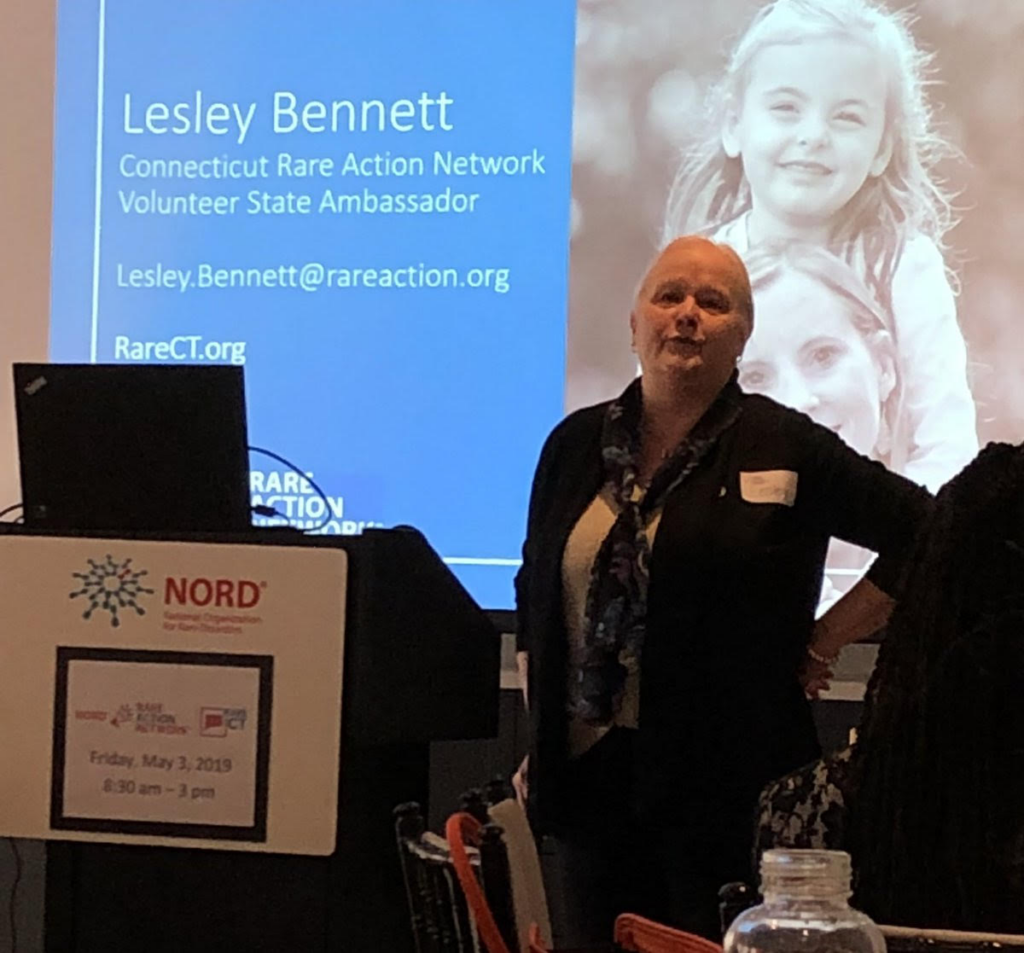
Lesley Bennet presenting on a podium
Lesley Bennett, Connecticut’s Rare Action Network volunteer state ambassador

Kristen Angell, Associate Director of Advocacy for the National Organization for Rare Disorders (NORD)  and Tim Boyd, NORD’s Director of State Public Policy, urged rare disease patients and their families to use their voices to let people know about their conditions at a recent rare disease advocacy workshop held in conjunction with the Connecticut Rare Action Network (RAN).

The importance of the patient voice is also a key focus of Hope in Focus (formally Sofia Sees Hope)‘s upcoming LCA Family Conference, July 26-28 in Philadelphia. Panels and speakers at the conference will deal with how an active patient community can support and accelerate treatment, among many other topics. 

Much like Sofia Sees Hope encourages people living with Leber congenital amaurosis (LCA) and other rare inherited retinal diseases (IRDs) to tell their stories, Angell and Boyd told an audience of about 20 rare disease patients, caregivers and advocates that sharing their stories will help alleviate feelings of isolation and educate policy makers to work on their behalf by getting care-giving help, fostering research and finding new treatments.

Boyd and Angell helped workshop participants frame and rehearse the stories they would tell legislators to get their attention. People need to say who they are and where they live. They need to tell them about their connections to the rare disease community and ask for their support of legislation, such as the Orphan Drug Act of 1983 (ODA), and their help with caregiving, financial relief or other needs.

“Legislators do, in fact, want to help the people they serve, and they cannot do that without hearing from you,” Boyd said.

Lesley Bennett, Connecticut’s RAN volunteer state ambassador, urged the audience to be part of legislative committees to get the word out about the needs of the rare disease population. NORD established RAN to unite, develop and mobilize grassroots advocacy in all 50 states on state and federal policy

About one in 10 people have a rare disease. In Connecticut that means about 300,000; in the United States that’s about 25 million to 30 million people.

Angell said patients, caregivers and patient organization leaders created the ODA to unite the voices of rare disease patients, caregivers and advocates.

Since ODA’s passage, the Food and Drug Administration approved more than 450 orphan therapies, compared with 10 therapies approved in the decade before the 1983 legislation. A grant program within the ODA has funded $15 million in grants annually, which included, among other projects, 700 studies. The program also contributed to more than 60 drugs on the market.

CT Rare Action Network Advocacy Workshop May 3

Learn more about rare disease patient advocacy and connect with the National Organization for Rare Disorders (NORD) about current legislative action on Friday, May 3, at the Connecticut Rare Action Network (RAN) Advocacy Workshop.

The event runs from 8:30 a.m. to 3 p.m. at The Goodwin Hotel, One Haynes St., Hartford, CT. It is hosted at no cost to participants; breakfast and lunch will be provided.

The workshop features an opportunity to speak directly with members of Congress from Connecticut about the Orphan Drug Act (ODA) of 1983. Orphan drugs are medications intended for the safe and effective treatment, diagnosis or prevention of rare diseases/disorders that affect fewer than 200,000 people in the United States, or that affect more than 200,000 people but are not expected to recover the costs of development and marketing a treatment drug, according to the Food and Drug Administration.

Online registration closes at noon, Tuesday, April 30.

Register Here

The ODA encouraged increased development of drugs for rare diseases. More than 450 orphan therapies have been developed by private industry since its enactment, compared with 10 therapies, 10 years before the 1983 legislation. Thirty years later, in 2013, orphan therapies comprised one-third of all drugs approved by the FDA, according to NORD.

NORD founders helped spearhead the Orphan Drug Tax Credit, characterized as one of the most important incentives for orphan drug development, and enacted as part of the ODA. The provision allows a 25 percent tax credit for sponsors on certain research and development costs for orphan drugs. NORD said that coupled with other incentives in the ODA, the tax credit has proven its efficacy, and it is in danger of repeal.

For information on RAN events nationally, check your state RAN and sign up to receive notice of upcoming activities.

If you have any questions, please contact NORD’s Associate Director of Advocacy Kristen Angell at 203-304-7251 or kangell@rarediseases.org

Living With LCA: Enzo’s Story

Enzo was born in 2014 in Lausanne, Switzerland, with a clubfoot. He immediately received physical therapy, then a plaster cast for three months and one minor surgery.

His parents – Laura Steinbusch, a post-doctoral fellow researching the neuroscience of diabetes, and Merlijn Meens, a scientist investigating cardiovascular function – felt confident as they were reassured through medical literature and by doctors that in time their son’s left foot would be fine.

But there was more to come. At 3 months, as Enzo’s therapy for his foot progressed, something seemed wrong with his vision and his ability to focus. Doctors diagnosed him with nystagmus, a condition in which Enzo’s eyes involuntarily moved side to side.

An MRI showed normal brain development and then doctors did an electroretinogram (ERG), placing electrodes on his eyes to measure the electric response of their light-sensitive cells. Enzo also underwent Visual Evoked Potential (VEP) testing, a non-invasive exam that measures his entire vision system.
Doctors fitted Enzo with glasses at 6 months and said the ERG and VEP results needed further study.

Enzo began rubbing his eyes, prompting people to ask Laura whether her son was tired or shy. A few months later, doctors diagnosed 10-month-old Enzo with Leber congenital amaurosis.

‘He is still our cheerful son’

“While walking home from this last doctor’s appointment, we were in shock, but after a while we realized that Enzo had not changed. He was still our cheerful son that likes to sing and cuddle,” Laura wrote in her blog for the Eye Association of the Netherlands.

“We wondered how we could raise Enzo as normal as possible and how we could help him discover the world. The solution turned out to be simple: We will not despair and (will) come up with creative solutions so he can participate in everything that this world has to offer.”

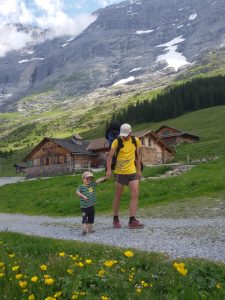
Enzo with Dad on a trail outside

That Christmas, Enzo’s parents designed their holiday in a way that greatly fostered their son’s vocabulary, sensory and motor skills, exposing him to chickens on a farm, rocks and water at the beach and a mountain climb with a summit lunch of pancakes and omelets.

Also, for the first time he said, “Dad,” “Mom” and a version of his own name, “Echoo.”

Leber congenital amaurosis genetic diagnosis

Then, at 18 months, Enzo received the genetic diagnosis of LCA10-CEP290. LCA10 is a severe retinal dystrophy caused by mutations in the CEP290 gene.

Laura interviewed doctors about research on LCA10-CEP290, becoming an intense advocate and learning myriad facets of the genetics behind Enzo’s disease and the stakeholders at work to find a treatment.
With global health organizations headquartered in the Lake Geneva region, Laura attended conferences, including a recent policy event about “the right to health” organized by Rare Diseases International.
She learned that researchers in the International Rare Diseases Research Consortium are working toward their goal of all people living with rare disease to receive diagnosis, care and therapy within a year “of coming to subspecialty medical attention.”

“Big visions and great goals,” Laura wrote in her blog for wonderbaby.org. “It made me hopeful for a future with inclusive education for all our children, job possibilities for all our children, a quick diagnosis for new patients and maybe a treatment for improved vision.”

Singing, reading, taking the bus

At home, Laura and Merlijn initially did not have access to many Braille and tactile books for Enzo so they created their own. For instance, they brought to life a picture-book hedgehog by fashioning spines with nails and duct tape.

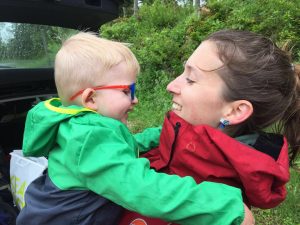
Mom holding Enzo, they are both wearing rain coats

Laura now is working on a multilingual children’s songbook with songs in English, French, Dutch and German. She got the idea because Enzo easily learned new words in French or English through songs, especially when he already knew the song in Dutch. Two Dutch foundations said they want to help pay for part of the project, but Laura is still searching for funding and she is reaching out to ask whether anyone knows of groups she can contact for help in the United States, United Kingdom, Canada or Australia.

Enzo just turned 3. He loves playing with other children at nursery school and he is learning to be more independent. Also, doctors successfully treated his foot, with Enzo’s mom adding, “It was probably harder on us than on him.”

In September, he and his parents moved from Switzerland to their homeland, the Netherlands.
“Enzo is doing very well,” Laura said. “He loves listening to music, singing, reading books, everything that has to do with movement. He adores taking the bus, the train, the metro, the cable car, a bike ride…

“One of his favorite sentences nowadays is ‘What is that?’ (something he heard) or ‘Who is that?’ (someone talking), meaning that he is really curious.”


Read more stories of families living with LCA on our blog.

Sign up for our newsletter to stay in touch with the LCA community.