Music Brings Together Family Living with LCA6 RPGRIP1

Jessi Crawford fancied the clarinet when she played in her middle school band, while classmate Ted Beaman favored the trombone and guitar. Never did they dream their love of music would manifest a half lifetime later with the birth of their youngest son.

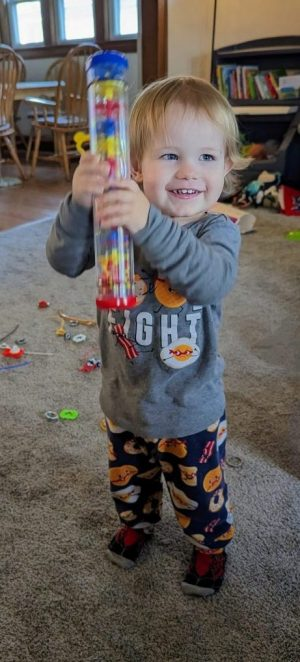
Atlas in pajamas and shaking a toy
Atlas mixing it up!

Music is everything to almost 2-year-old Atlas – he loves to sing, he loves to dance, and he loves all kinds of music.

Before the toddler developed his interest in music, his parents noticed something about his eye movements.

“Out of nowhere,” at one-and-a-half-months old, his mom said, he developed horizontal and vertical nystagmus, characterized by side-to-side and up-and-down rapid, repetitive, uncontrolled eye movements.

Atlas received his first pair of glasses at 3 months from Kellogg Eye Center in Ann Arbor, Michigan, about an hour drive from the family’s home in Toledo, Ohio.

A month later, doctors suspected Atlas had Leber congenital amaurosis (LCA), a rare genetic eye disorder in which the rods and the cones of the retina – the light-gathering cells – do not function properly.

Geneticists confirmed his genetic diagnosis as LCA6 caused by a mutation in his RPGRIP1 gene. LCA6 can be particularly devastating because of its rapid onset and progression.

“This took us completely by surprise,” Jessi said. “What do you mean, we both have this dysfunctional gene? What are you talking about?”

She was more than floored, especially because her oldest son, 11-year-old Brayden-Lee, has a rare, life-threatening form of autism and epilepsy. Brayden-Lee and Atlas also have a 7-year-old brother named Ronan.

Jessi found comfort and encouragement from the geneticist and the genetic counselor, but it took time to process the idea that her son’s vision would deteriorate.

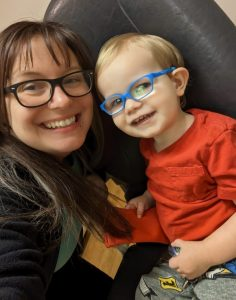
Jessi (L) and Atlas (R) both wearing glasses and smiling.
Atlas and mom, Jessi

“You have all these stigmas around losing your vision being the worst thing on the planet, but I realized he could still have a happy life. He’s not dying, he’s just going to lose his vision – that perspective helped a lot.”

She’d already enlisted state and local resources to help Brayden-Lee, so she began searching for any available support and assistance for Atlas.

“I found him an O&M (Orientation and Mobility) specialist, a developmental specialist, and a vision specialist, so he wouldn’t fall behind in anything – movement, sensory output, anything.

“I was still really kind of sad and overwhelmed, and, of course, worried, because I never experienced anything like this before. My oldest son had occupational therapy, speech therapy, hospital visits galore, but I never dealt with anyone who couldn’t see.”

LCA6 RPGRIP1 preclinical research underway

Atlas turns 2 in May and he’s quite advanced, talking in 4-, 5-, 6-word sentences.

“He knows his shapes and he’s working on colors, which is hard because he sometimes blends colors.”

Atlas has no vision from the midline of his eye, down. He has vision above, for now, and cannot see close up.

Jessi and Ted’s little boy underwent eye muscle surgery in February to release his eyes from crossing, which has helped his vision.

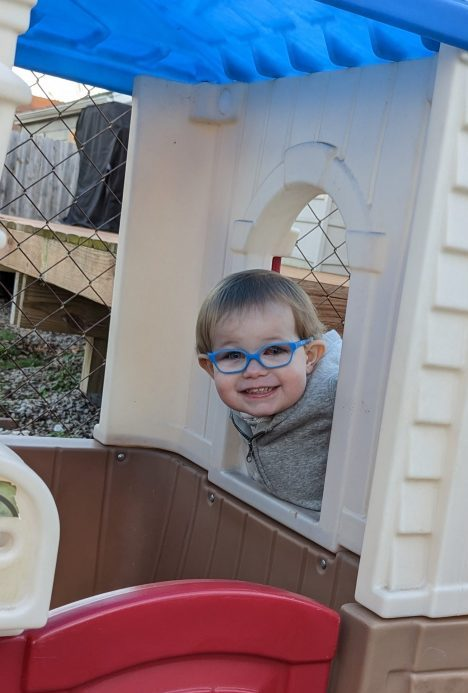
Atlas poking his head out of a playhouse.
Atlas

Jessi connected with Odylia Therapeutics, a biotech working on late-stage preclinical studies for a potential treatment for the RPGRIP1 mutation, and, hoping to help advance research, she authorized the company’s use of images taken of her son’s eyes during the surgery.

The Atlanta-based business is developing an investigational gene therapy to treat vision loss caused by LCA6 and is working with vector technology developed by Odylia Co-Founder Luk Vandenberghe, PhD. The research builds on data generated at Massachusetts Eye and Ear in the labs of Vandenberghe and Eric Pierce, MD, PhD, a physician and surgeon at Mass Eye.

The company is preparing its IND submission, or Investigational New Drug Application to the U.S. Food and Drug Administration (FDA). An IND is a request from a study sponsor to obtain FDA permission to start human clinical trials.

Odylia hopes to begin trials in 2025 and is seeking partnership or philanthropic funding for the estimated $3.5 million development costs.

Jessi said she’d like to enroll Atlas in a clinical trial, just not the first one because she fears possible, yet undiscovered, side effects from experimental treatment.

Atlas loves music, singing, and watching TV.

“He loves watching Mickey Mouse-anything. He stood at the mirror, pointed at his shirt in the mirror and said, “Mickey Mouse, blue shirt, mamma.”

A happy child who loves raisins and pizza, he reaches for things and gets his spoon or fork to his mouth, while getting food into it is another thing.

Jessi said Atlas has a tough time with the letter ‘f’ and says shork when he means fork.

Atlas sitting on the sand wearing a bright orange shirt
Atlas enjoying the beach

“He tells me every day, fork and bowl, fork and bowl, or ‘shork a bow, mamma, shork a bow.’” Jessi said just thinking about it makes her laugh.

The 31-year-old characterized herself and her fiancée, 32-year-old Ted, as “both huge, huge, musical people,” beginning back in the school band, when they started dating in their teens and later went their separate ways, only to start dating again four years ago.

“The fact that Atlas likes music so much is better for us. He loves Disney music, also rock, country music and Celtic, and Native American.

“So, when I say we’re well rounded, we’re well rounded.”

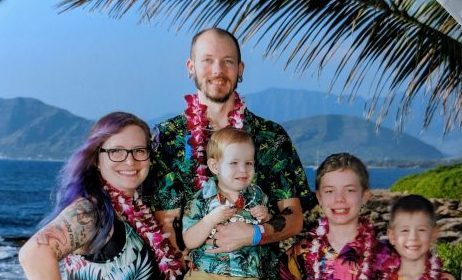
A family photo wearing Hawaiian shirts and flowers around their necks.
Jessi, Ted, Atlas, Brayden-Lee, and Ronan

Mother of Toddler Living with LCA6 RPGRIP1 Collaborates with Biotech Odylia to Help Advance Gene Therapy Research

After crazy months of looking for answers to questions about her infant’s vision, Melissa Matias learned her baby girl, Dylan, had a form of Leber congenital amaurosis known as LCA6 caused by mutations in her RPGRIP1 gene, a protein needed for healthy photoreceptors.

“I put my big-girl pants on and said, ‘This is the card she and I have been handed.’ ” The Georgetown, Texas, mom added: “There’s a reason for this.”

When Dylan received her confirmed genetic diagnosis in May 2020 at age 5 months, her mother did not assume someone else had the time or resources to search for a treatment or cure for her daughter’s form of blindness. Melissa organized people, advocates, and information. She created the RPGRIP1.com website and began collaborating with the nonprofit biotech Odylia Therapeutics on a $4 million fundraising effort to advance therapy for the RPGRIP1 LCA6 program.

The Atlanta-based biotechnology company is in late-stage preclinical trials, with the goal to be in clinical trials in about two years. Melissa is hoping Dylan – a gregarious trampoline-jumping gymnast – will benefit from this developing gene therapy.

Dylan in a pink stripped shirt and sunglasses, bouncing on her trampoline
Dylan on her trampoline

“We aren’t trying to fix or change Dylan. There’s nothing wrong with her. But if there’s a chance for gene therapy to enhance her life, you would want to do that,” she said. “Blindness doesn’t mean darkness. It means ‘I can do this; I just might need to do it in a different way.’ ”

Dylan’s doctor told the Matias family that the possibility of sight-saving therapy coming to fruition was not a matter of if, but when.

“This therapy, if it’s in reach, let’s get going,” Melissa said. “Let’s get the word out and open the door to gene therapy, not just for RPGRIP1, but for other genetic visual impairments and rare diseases.”

Financing poses the major obstacle. Melissa enlisted the help of patient families and organizations, such as Hope in Focus, to help spread the word and secure necessary funding to bring the treatment to market. About $115,000 has been raised, including donations from Dylan’s brothers, 8-year-old Colton and 12-year-old Brayden.

Funded by Massachusetts Eye and Ear and the Usher 2020 Foundation, Odylia Therapeutics started in 2017 with the goal of facilitating treatments for low-prevalence retinal disease with proof-of-concept science to Phase I/II/III clinical trials.

LCA6/RPGRIP1 Gene Therapy – Following LUXTURNA® Path

The gene therapy uses vector technology developed by Odylia Co-founder Luk Vandenberghe, PhD, Director of the Grousbeck Gene Therapy Center at Mass Eye and Ear, and Assistant Professor of Ophthalmology at Harvard Medical School. The research builds on proof-of-concept data generated at Mass Eye in the labs of Vandenberghe and Eric Pierce, MD, PhD, a physician and surgeon at Mass Eye and the William F. Chatlos Professor of Ophthalmology at Harvard Medical School.

LUXTURNA® currently is the only gene therapy on the market. Developed by Spark Therapeutics and federally approved in 2017, the drug treats a form of LCA known as LCA2 (RPE65), and it is the only gene therapy approved in the United States for any inherited disease.

Odylia hopes to follow in LUXTURNA’s path with its research. Delivered by injection under the retina in each eye, LUXTURNA® has helped improve vision in patients for the last four years.

“The success of LUXTURNA has proven to be life changing for many patients,” Odylia said in a news release. “It’s very exciting that with the efforts of Odylia, those affected with RPGRIP1 mutation could possibly have the same opportunity in the near future.”

Developing treatments and administering them to young patients is paramount to stall vision deterioration, as LCA6, along with the more than 27 forms of LCA, is degenerative.

Odylia says its goal is to bring proven therapeutics to patients, regardless of the number of people with the disease or the opportunity for a company to make money.

By identifying promising treatments, the company said it can partner with patient groups, community experts, and financial sponsors to develop strategic, scientific, and clinical plans. Through collaboration with industry and foundations, the organization said it can move treatments from concept through development and to patients with rare diseases.

These partnerships are needed for the estimated $3.9 to $4.3 million in development costs to advance the research through toxicology studies and fund clinical manufacturing costs. Odylia says it will work to lower costs and reduce overall expenses.

Partnerships and funding also will help with Odylia submitting an Investigative New Drug (IND) application to the U.S. Food and Drug Administration. Federal law requires that a drug be the subject of an approved marketing application before it is transported or distributed across state lines. Because a sponsor will probably want to ship the investigational drug to clinical investigators in many states, it must seek an exemption from that legal requirement. The IND is the means through which the sponsor technically obtains this exemption from the FDA.

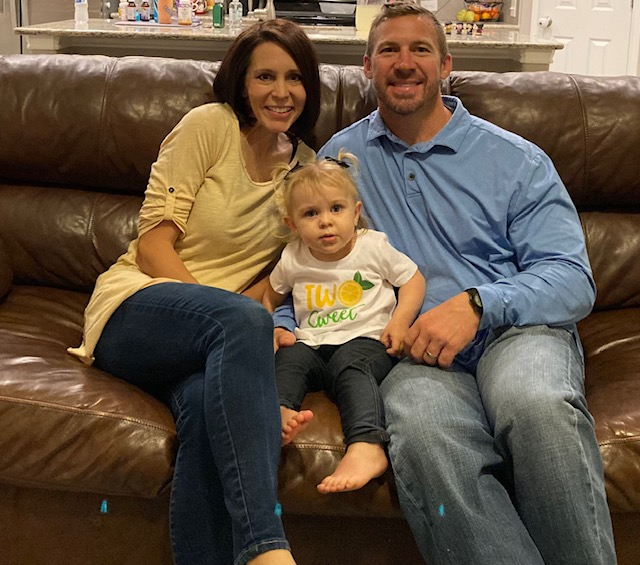
Mom (L) with Dylan and Dad (R) sitting on a brown couch
Dylan with mom (Melissa) and dad (James)

The FDA recently granted both orphan drug and rare pediatric disease designations for Odylia’s lead gene therapy. The company said the designations are granted for the “treatment of RPGRIP1 mutation-associated retinal dystrophies,” which most commonly includes LCA6 but is also associated with diagnoses of cone-rod dystrophy 13 (CORD13) and forms of early-onset retinitis pigmentosa (RP).

“Receiving orphan drug and rare pediatric disease designations represents an important milestone for Odylia and recognizes the potential of this gene therapy to deliver life-changing results to LCA6 patients and RPGRIP1 associated retinal dystrophies,” according to Ashley Winslow, PhD, Odylia’s Chief Scientific Officer.

Between 400 and 600 people are affected with LCA6 in the U.S., with about 20,000 globally.

Orphan drug designation is granted to therapeutics intended for treatment, diagnosis, or prevention of diseases affecting fewer than 200,000 people in the United States. Rare pediatric disease designation is granted to serious or life-threatening rare diseases that primarily affect individuals under age 18. Orphan drug and rare pediatric designations provide companies like Odylia with benefits, including access to research grants to support clinical studies, waiver of regulatory fees, seven-year marketing exclusivity, and eligibility for a priority review voucher.

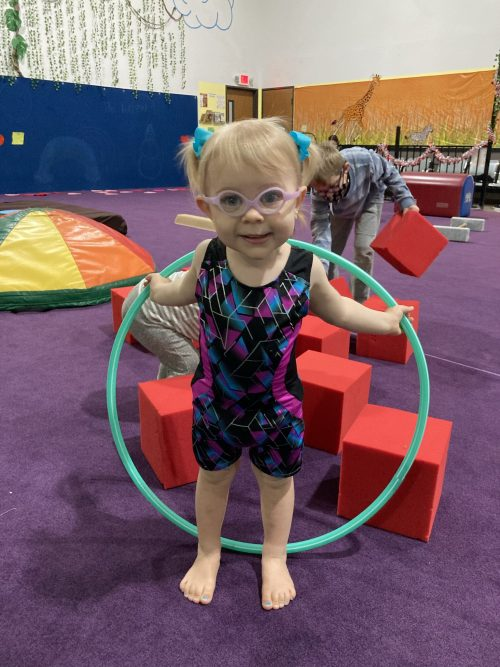
Dylan with a Hula hoop at the gym
At the gym

Struggle to Find Confirmed RPGRIP1 Diagnosis

Melissa’s persistence pushed her through incredibly trying times, having six back-to-back miscarriages during 2016 and 2017 after having her two sons. Two years later, she and her husband, James, got the news she was pregnant with Dylan.

“She was so meant to be,” Melissa said. “It was unreal when it came time to deliver. Everyone in that room was crying.

“They had all seen on my chart that I had 10 pregnancies. They were all just like…” she said trailing off. “It was such an emotional time.”

Two months later, though, Melissa and James realized something didn’t seem right with Dylan’s vision; her eyes jerked from side to side from a condition known as nystagmus. It was February 2020 with the tentacles of COVID spreading over the globe, creating an overworked, overwhelmed medical world focusing on patients infected with this strange new virus.

Finding an initial diagnosis for Dylan proved extremely difficult, especially when one doctor said nothing was wrong, probably just delayed maturation of vision, and another mentioned LCA but brushed it off. So, Melissa did what we all do now when we don’t get answers: She Googled the disease.

“The more I learned about LCA, I knew in my heart right away what we were looking at. But I’d also think, it’s so rare, what are the chances?”

She also learned the next step to move forward with treatment or care for 2-month-old Dylan depended on a confirmed genetic diagnosis determined through genetic testing.

No genetic testing, not now, she was told. Not until COVID is over. Melissa wasn’t waiting for the end of the pandemic, now into its third year. She knew she needed a doctor’s order but hadn’t yet connected with a retinal specialist; she sought out the help of Dylan’s pediatrician, a doctor she characterized as amazing, who ordered the test.

Waiting for the results, Dylan’s parents scheduled an appointment for May 28  with a Houston retinal specialist; the confirmed diagnosis of LCA6/RPGRIP1 came through May 27, paving the way to finding resources in orientation, mobility, and education for Dylan.

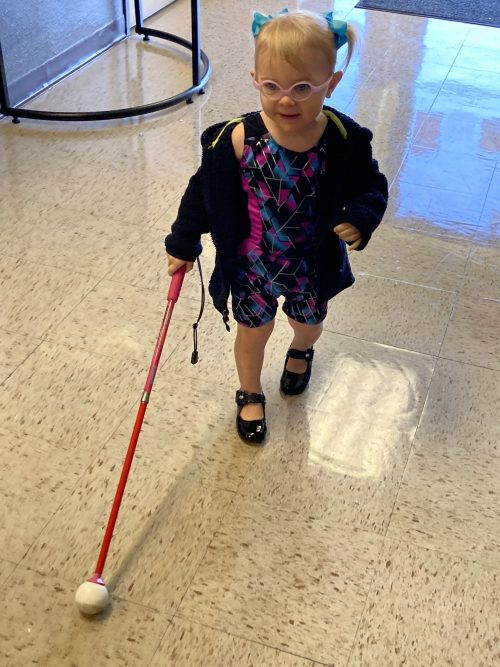
Dylan using her cane

Living with LCA6/RPGRIP1 / Like Mother, Like Daughter: Stubborn and Persistent

Dylan is now 2 years old. Her parents believe she has tunnel vision and does best seeing objects 10 or 15 feet away. She’s better now at keeping her glasses on, rather than ripping them off all the time like she used to.

On her first day of Orientation and Mobility training, she picked up a cane and used it just the right way, a milestone the instructor said he had never seen in a child her age.

“Indoors, she’s just amazing,” Melissa said. “She loves picture flashcards, playing in her toy kitchen, always wants someone to read her books, and she loves her new mini trampoline she got for Christmas. And music – she loves to sing and dance.”

Dylan takes her time in new environments and is a little more cautious than other toddlers because of her visual limitations. With  photophobia being one of the symptoms of LCA, Melissa said her daughter finds bright outdoor sunlight to be the most challenging and where she relies more on her cane skills.

The little girl also is very vocal and visual.

“Her vocabulary is comparable to a child much older than 2,” Dylan’s mom said. “We know she is very visual, something we feel blessed with, since LCA can present with a wide range of visual capabilities. We’ve actually had to teach her to bend down and feel for objects she drops, because her instinct is always to look for something first.”

She’s also persistent.

“She has a very strong desire for mastery, having to do things over and over again. She likes a challenge.

“I have no doubt this girl is going to change the world. No matter what happens if gene therapy comes about for her or not. She’s going to be on skis this winter. I’m not going to give her an excuse not to do something or at least to not try.

“She can and will do anything she wants, just in her own ways. Stubborn and persistent, exactly what she needs.”

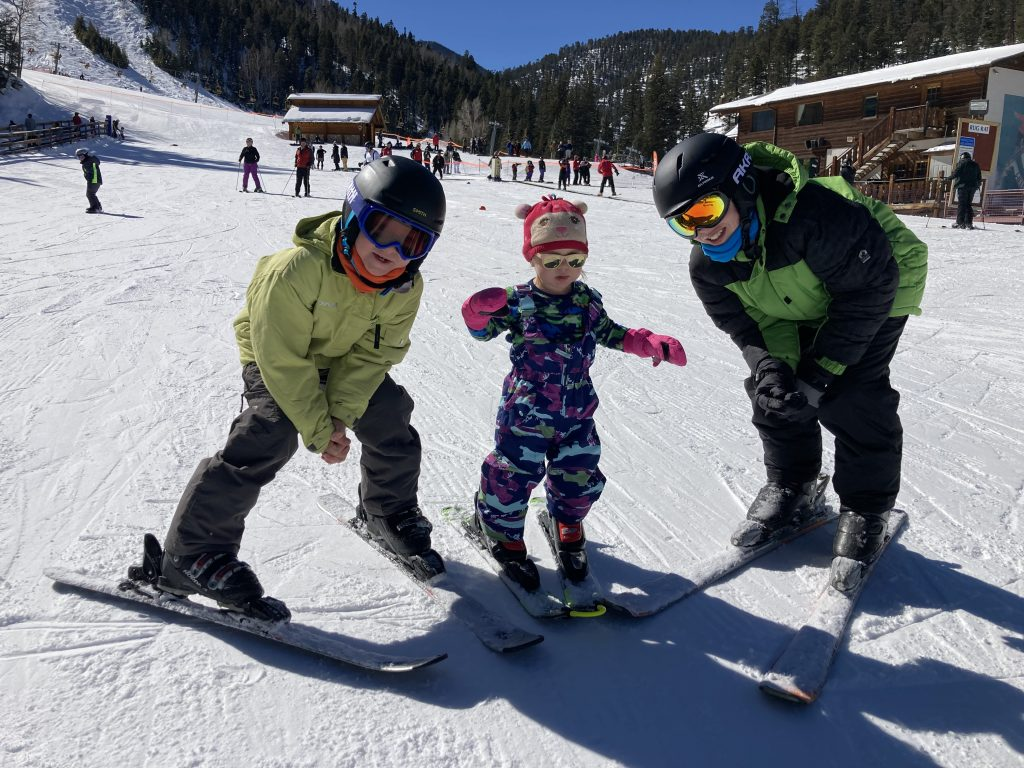
Dylan standing in between her brothers with skis on.
With her brothers, Colton and Brayden

Living with LCA: ‘It does no good to have pity’

Mikayla Larson, a 30-year-old mother living with a rare inherited retinal disease (IRD) called Leber congenital amaurosis (LCA) wants to reassure children living with the same disease that they’re going to be OK.

“I feel that there are a lot of parents out there that are terrified for their kids to live this life,” she says from her southeastern Texas home. “And while it’s not ideal, it doesn’t mean that they aren’t capable of living a fulfilled life and love it like they should.”

Larson’s form of LCA, known as LCA6 caused by a mutation of the RPGRIP1 gene, is considered rare even within the realm of rare disease, accounting for only about 5 percent of the total LCA patient population. LCA in its more than two dozen genetic mutations affects fewer than 4,000 people in the United States; it accounts for 5 percent of all retinal dystrophies and 20 percent of blindness in school-age children.

Photoreceptors lacking RPGRIP1 are unable to maintain the retina’s light-sensing outer segments, resulting in patients losing retinal functions at an early age but retaining photoreceptors in the central retina well into adulthood, according to the National Institutes of Health.

Having grown up with vision loss, Larson says children born with LCA need the support of knowing that others have gone through life with the same inherited retinal disease and survived the bullying, mistreatment or embarrassment.

“I think I’d tell any parent that getting their child into therapy is a necessity,” she says. “Most of us need help navigating these very important emotional things in life. Like when you get made fun of, or when your sibling or friends get their driver’s license and you can’t. Just coping with what this will mean for their life and how to navigate it.”

Larson speaks from experience. More than anything, she wants to take the element of pity out of dealing with the disease.

“It does no good to have pity, or on the other side, to put people on a pedestal for doing things everyone can do,” she says. “It’s demeaning and degrading as a human to get praise for doing something everyone else can do, just because we can’t see well.”

She has some light perception and equates her field of vision to about the length of a drinking straw. With lenses, her visual acuity is 20/200 and 20/400.

Larson had vision loss early and began learning Braille at age 4. She was diagnosed at age 12, although incorrectly, with Retinitis Pigmentosa (RP). She worked with specialists to improve her independence but being around other kids never was easy. She was teased.

“You need extra help. You don’t want to stick out,” she recalls. “I made myself want to fly under the radar.”

By middle school, she didn’t want to deal with Braille or learn more about skills and concepts to help her get around and to be more independent.

“It was something that I just despised. I don’t want to be identified that way. I don’t want to be that kind of person.”

Larson did, however, go to Arizona State School for the Deaf and Blind in Tucson for her last two years of high school, graduating in 2007. She pursuing job training through the state’s Vocational Rehabilitation (VR) services, but the program lacked funding and was not accepting new clients.

While on the VR program waiting list in 2008, she met Andrew, who is now her husband, and in 2009 became pregnant with their first child.

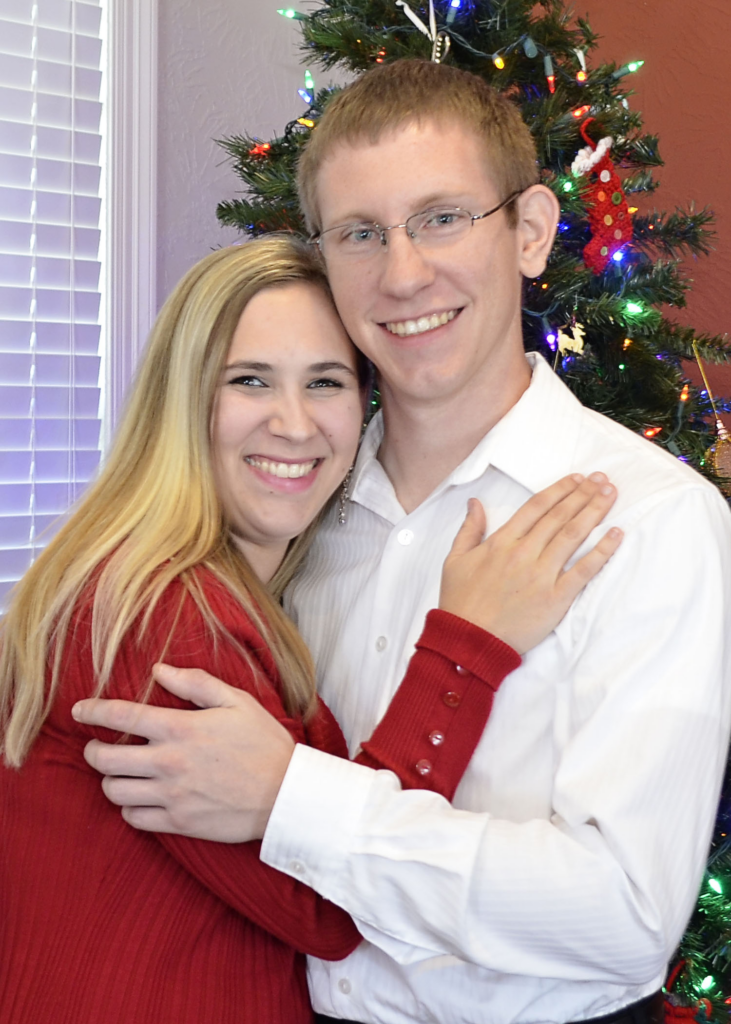
Mikayla in a red shirt and Andrew next to her in a white shirt. There is a Christmas tree in the background
Mikayla and Andrew Larson

They married in 2011, when their first-born, Conner, was 1. The day after the wedding, she was pregnant with her little girl, Aubrie. They lived outside of Phoenix and then moved even farther from family, southeast to a small Arizona town for Andrew’s first job as a chemical engineer.

The family moved in 2013 to another small town in southeastern Texas.

She is the mother of four children, “three here and one in heaven.” Their son Liam died from Sudden Infant Death Syndrome on April 3, 2015. He was 4 months old.

“My kids are very independent,” she says of 8-year-old Conner, 6-year-old Aubrie and Carter, 5. “They get up on their own with an alarm and get themselves dressed, and then Andrew and I make breakfast and make sure they have brushed teeth and are ready for school.” 

Not being able to drive is a big deal, especially in rural Texas with no public transportation. Her children are picked up for school and driven home. Cooking has gotten easier and more comfortable with the advent of Air Fryers and Instant Pots.

Tripping over toys and three cats – Max, Teddy and Chester – is part of life. She shops with family and reads with the help of reading glasses and her phone’s camera, zooming in for small print.

“I would say I’m pretty self-reliant and just do what I need without any real thought.” She does suffer from anxiety.

“Once we lost Liam, the anxiety kind of crossed over into other parts of my life.” She is seeking help and open to resources.

Her biggest advocate, Andrew, contacted Spark Therapeutics, the developer of a new gene therapy called LUXTURNA™ for LCA2 (RPE65) because he thought she might have that form of LCA. The company suggested she receive genetic testing.

When Larson visited an ophthalmologist for a genetic testing referral, she was met with disbelief. The doctor said she couldn’t have LCA. “It’s too rare. That’s not possible,” he told her.

She finally got the doctor’s signature for testing, and, in January 2017 at age 28, her test revealed a mutation in her RPGRIP1 gene, also known as LCA6.

Larson says she was then in touch with Eric Pierce, MD and PhD, who is conducting lab-based research on RPGRIP1 at Massachusetts Eye and Ear. Dr. Pierce’s gene research involves evaluating the latest treatment version in a mouse model, with the plan to generate a gene-therapy vector for toxicology studies, ultimately leading to clinical trials.

While hopeful for a treatment, Larson prides herself on helping others and moving forward.

“We are still smart and capable. We have different challenges but that doesn’t mean we aren’t able.”

Tell Us Your Story: ‘Do Not Limit Yourself’

I am 22 years old and I have LCA.

My name is Angélica Bretón Morán, I am from Mexico, I am 22 years old and I have Leber congenital amaurosis (LCA). Two years ago I learned that the gene that affects me is the RPGRIP1.

I’ve been reading many sites on the Internet, and I have realized that there are many comments from parents concerned about the development of their children, however there are almost no comments from parents with older children or people with LCA who talk about their development.

My intention is to tell you a little about my story to bring you peace.

LCA diagnosis: Many wrong turns

Angélica holding red roses and standing next to her parents and brother

When I was 2 months old, my mom realized that I did not follow people or toys with my eyes, and that when they did not speak, I cried as if I was alone and my eyes were standing down.

My mother is licensed in special education and specialized in hearing and language; she has many diplomas in different disabilities, including visual disability, so she realized that something was not completely normal.

The doctor told my parents that my eyes had to mature, but the months passed and nothing changed. My mom was certain that my characteristics were those of a blind person.

Finally, the doctors diagnosed that I was blind and there was a rain of bad diagnoses, syndromes that would terribly affect me, or that I would die a premature death, or that I would be like furniture, without the ability to do anything. They also said that maybe I would lose some other sense, that I could never talk, walk, eat ,among many other things Of course all this broke my parents’ hearts.

Other doctors recommended surgery but my mom never agreed and my dad supported her, he trusted in her because my dad did not have the experience with people with disabilities like my mom.

It was a painful road for my parents until a doctor told them “If they force me to give a diagnosis, I would say to you that it is LCA.” I was 2 years old.

My dad searched for information about this new diagnosis on the Internet, and what he found was not nice things, as I see that happens today. In one of the Internet searches, my parents found a writing made by a 22-year-old Italian young lady who was a musician; this for them was something hopeful.

From that moment we were in the group of research families, and for many years that was the diagnosis even though there was nothing that would formally confirm it. However, my parents did not lose details about my development; they were still worried because there was not something completely defined, since the disease was little known.

While my mom stimulated my touch with toys with different textures, placing hands in containers with different seeds, she strengthened my hands and enrolled me in mud classes. I was very afraid of the people, so she enrolled me in ballet classes where I would meet more girls and teachers. I was very little and I liked the music and the stage.

Then I went to kindergarten. It was not easy to find a school where they would admit me, but my parents never agreed that I was in a school for people with disabilities. As I had already been in the Ballet, it was easier for me to adapt to the classroom.

My parents never treated me differently, when I told my mom that when I grew up I wanted to be a pianist and opera singer, she told me that I could reach where I wanted. I liked to hear Charlotte Church and I admired Andrea Bocelli, because he was an example for me.

I have always been shy, I work hard to be sociable. This has been good, even though it has not been easy, but the reality is that we live in this world that will not be especially easy for us. This is achieved gradually and with personal life experiences, but I believe that above all with great patience and understanding of our parents and relatives, then we personally will learn to have it.

To give an example, my mother let my friends go to my house, and she let me go to their homes too. My parents did not make me see that my case was something special, because I could play with dolls, the kitchen, to be a doctor etc., like all the girls; only that when there were obvious things like playing jump on the stairs, the adults had to tell us that this was dangerous, because this is dangerous for any child, do not you think?

Angélica with roses and smiling

When I behaved differently from other children, my parents told me that this was not a good behavior. They explained to me how I should behave, without showing myself. When I waved my hands my mother held them and told me not to do it, she did it kindly but firmly and little by little I stopped doing it.

What made my parents angry was that I pressed my eyes with my fingers, because this was harmful to my eyes, every time they saw me doing it, they rebuked me more strongly; but now I thank them, because my eyes have no harm and in the future if the cure for my gene is found, there will be no injury that prevents me from receiving the treatment.

My parents educated me with a lot of love, but above all with discipline, an orderly and coherent discipline. I had to keep my toys like all children, learn to eat correctly like everyone else, not put my hands in food and just touch it with a finger that my mom called “guide finger”, this as a support because I cannot see the food.

I am weak visually, when I was a girl I could see better than now. Now I see lights and shadows but I cannot distinguish differences between colors as I used to, this has been so progressive that I did not realize until recently.

My disability has never been a secret, but neither has it been something for which I have to be different from others. It is true that you have to adapt some things, this is logical; however you have to look for how to achieve the objectives.

Going back to my life story, I have always studied in regular school; all my life music has been present. I graduated from music training at the Autonomous University of Nuevo Leon (UANL) while studying elementary school. I finished high school and got the second place for qualifications. I entered the technical career in music and finished it with honors while I studied online high school, all this in the UANL. I am currently studying a degree in music with an emphasis in piano at the same university and I have been studying professional singing for five years with a private teacher to become an opera singer.

I think it’s important to mention that I’m not an only child, I’m the oldest of two. My parents, like many of you, were afraid that the second child would have something worse than mine, but they have always had great faith in God and my brother was born. He does not have any disability, but he was asthmatic since he was a child and my parents have faced their situation in the same way they have faced mine … they never treated him differently, nor did they make him see that he had disadvantages. But to achieve something you had to look for how to do it. He is a high-performance swimmer, asthma attacks are becoming less frequent, and he is currently a healthy boy.

All this I tell you so that you know how important it is not to limit yourself. If you limit yourself as parents, you will limit us as children. My brother has been a great support for me in many situations, he has taught me to be the older sister. Our illnesses and the education of my parents, they taught us that neither he nor I have an obligation to take care of each other, we simply do it because we are brother and sister and we love each other

I played with my brother, we made mischief, we laughed late at night until my parents scolded us to sleep, as any pair of siblings can. My parents have never marked differences between us, everyone is accepted with their differences, we all have, but I am not more important than him, nor is he more important than me.

All this we have worked for 23 years as a family, we have been wrong many times, some other times we have felt that our effort has been in vain. We have stumbled like any family, we have asked for help when we consider that it is necessary. We have also tried to help when we think it is appropriate. But above all things, the strength of my parents and my family has been their faith in God, which they have transmitted to me and my brother and this faith has been my reason to continue in difficult times.

Speaking about people with LCA, they may have other disabilities, I have witnessed them myself, or they may not have them as is my case. However, I can tell you that when you treat a person different from the others, that person will behave differently regardless of whether they have a disability or not.

You have to be aware of the limitations, but you also have to find a way around the obstacles, or pass through them, or use them as a catapult, or see them as a feature that makes us unique and special as people, as we all are.

I hope my words help many families, since that is my intention. I invite more adults with LCA to tell their stories and how they have faced life! I think we would give a much more encouraging approach when new parents enter the Internet looking for information about the diagnosis of their children, and why not, for those who are newly diagnosed patients and research the internet on their own.

I have known fathers and mothers with LCA, young people, babies, children, even a child who was cured with genetic therapy because he has RPE65. We met him when he was blind and the second time we saw him, he saw and guided the other children who were still blind. It was amazing! We were all very excited and we could not stop the tears.

Finally I want you to know that I am in the best position to answer your questions in this post from my personal perspective. As I mentioned before, my only intention is to help because I am greatly moved to see your anguish and I feel that it is my duty to be now the 22-year-old girl who brings a hopeful message to those who enter the internet looking for information about LCA.

I would like to know, is there anyone else that has the RPGRIP1 GEN? I do not know anyone else!

God be with each one of you, blessings!