Moving emerging therapies through clinical trials and across the finish line is often challenging—and in some cases, harrowing. Many treatments never make it.
In early 2022, the future looked bleak for ProQR Therapeutics’ two RNA therapies in clinical trials. The biotech company reported that sepofarsen, its RNA therapy for LCA10 (IVS26 mutation in CEP290), did not meet its primary endpoint of improvement of at least three lines in best-corrected visual acuity or BCVA. (Improvement in BCVA was only on average two lines in the Phase 2/3 trial.) That news came despite vision improvements, some significant, for many patients. But missing the primary endpoint led ProQR to stop development of its ophthalmology assets—sepofarsen and ultevursen (exon 13 mutations in USH2A)—and attempt to find a company to acquire them.
Mike Schwartz, who was then vice president, global project leader, at ProQR, said, “That was devastating for me, the doctors, and the patients.” He noted that one patient with LCA10 in the trial with only light perception gained enough vision after receiving sepofarsen to see letters on an eye chart. Another LCA10 patient in the study returned to his work as a carpenter after treatment.
Fortunately, a year and a half later, the large European eye care company Théa acquired sepofarsen and ultevursen and formed the Sepul Bio business unit to move the therapies back into clinical trials. Many former ProQR staff went to Sepul Bio, including Mr. Schwartz, who is now their chief operating officer.
The global HYPERION Phase 3 clinical trial for sepofarsen and the LUNA Phase 2 trial for ultevursen are now underway. Using what was learned from the ProQR trials, the Sepul Bio team made significant changes to the designs (protocols) for the clinical trials, changes they believe will greatly improve chances for success. Mr. Schwartz thanked the Hope in Focus team for providing input from patients for the sepofarsen clinical development program.
One major change in the new sepofarsen clinical trial protocol has to do with the placebo. In most clinical trials with regulatory authorization, the treatment group is compared to a placebo or control group to ensure that efficacy is indeed a result of the treatment. In the original sepofarsen trial, treated eyes of LCA10 patients were compared to the eyes of untreated LCA10 patients (i.e., the control group). Comparing treated patients to untreated patients was less than ideal because of significant variations in vision loss among LCA10 patients. So, in the new trial, each LCA10 patient will have one eye injected with sepofarsen and the other will get a saline placebo injection. The patient won’t know which eye is getting the treatment. Sepul Bio believes comparing untreated and treated eyes for the same patient will lead to less variation and a stronger efficacy signal.
Keep in mind that sepofarsen injections are made into the vitreous, the soft gel in the middle of the eye. These intravitreal injections are performed routinely (e.g., monthly) and safely in doctors’ offices for treating age-related macular degeneration. In the sepofarsen clinical trial, patients will receive injections every six months.
Sepul Bio’s RNA therapies, known as antisense oligonucleotides (ASOs), are tiny pieces of genetic material that fix mutations in RNA—the genetic messages that cells read to make proteins critical to the cells’ health and function.
Stay tuned. We will report on updates from the trials as soon as we receive them.
For more information on the sepofarsen or ultevursen trials, send an email to: contact@sepulbio.com.
In December 2023, ProQR sold its sepofarsen (LCA10) and ultevursen (USH2A) programs to Théa, a large European biotechnology company focused on ophthalmology. Théa, through its new dedicated business unit, Sepul Bio, will continue developing sepofarsen and ultevursen. I asked representatives at Sepul Bio a few questions about their emerging therapies, plans, and efforts. Here are their answers.
What are sepofarsen and ultevursen? Who developed these therapies, and how did they perform in clinical trials?
Sepofarsen is an experimental mRNA therapy designed to improve visual function for patients with Leber congenital amaurosis 10 (LCA10). Sepofarsen targets a specific genetic mutation (c.2991+1655A>G) in the CEP290 gene. This mutation stops the cell from producing an essential protein needed for the cells in the retina to function. By addressing this mutation with a piece of genetic material called an antisense oligonucleotide (AON), sepofarsen aims to restore cell function in the retina. The AON is delivered by an intravitreal injection. Sepofarsen is entering Phase 3 clinical development.
Ultevursen is an experimental mRNA therapy designed to stabilize visual function for patients with Usher syndrome type 2A or non-syndromic retinitis pigmentosa caused by mutations in exon 13 of the USH2A gene. These mutations stop the cell from producing usherin, an essential protein needed for the cells in the retina to function. By addressing this mutation with an AON, ultevursen aims to restore cell function in the retina. The AON is delivered by an intravitreal injection. Ultevursen is entering Phase 2 clinical development.
Both sepofarsen and ultevursen were first clinically developed at the biotechnology company ProQR Therapeutics, based in the Netherlands. Both emerging therapies improved vision in some patients participating in ProQR’s previous clinical trials.
What is Sepul Bio? What is its mission?
Sepul Bio is a dedicated business unit of Théa. The team is at the forefront of advancing transformative RNA therapies for inherited retinal diseases, particularly emphasizing the further development of sepofarsen and ultevursen.
Sepul Bio’s projects are driven by the vision of a future where patients with inherited eye diseases have treatment options for their eye condition. Through ongoing research and rigorous development, Sepul Bio hopes to bring new therapies to patients. Learn more at www.sepulbio.com.
As part of the divestment from ProQR, the dedicated team at Sepul Bio includes former members of the previous clinical development teams. This structure maintains consistency and brings previous experience with the programs to the new clinical development steps. The new business unit underlines Théa’s firm commitment to advancing therapeutic products for eye disorders, particularly where medical needs are unmet.
What are the lessons learned from the ProQR trials? What will Sepul Bio do differently to improve the two therapies’ chances of success?
The Sepul Bio team previously worked on the sepofarsen and ultevursen programs at ProQR. This experience has enabled the team to learn from previous regulatory and clinical interactions in formulating new plans for the programs.
All the previous learnings from the years of clinical development have been incorporated into the new designs, with further validation from key physicians and inherited retinal disease specialists. A key area of focus has been new tests and novel study designs that are more suited for developing therapies for rare retinal diseases.
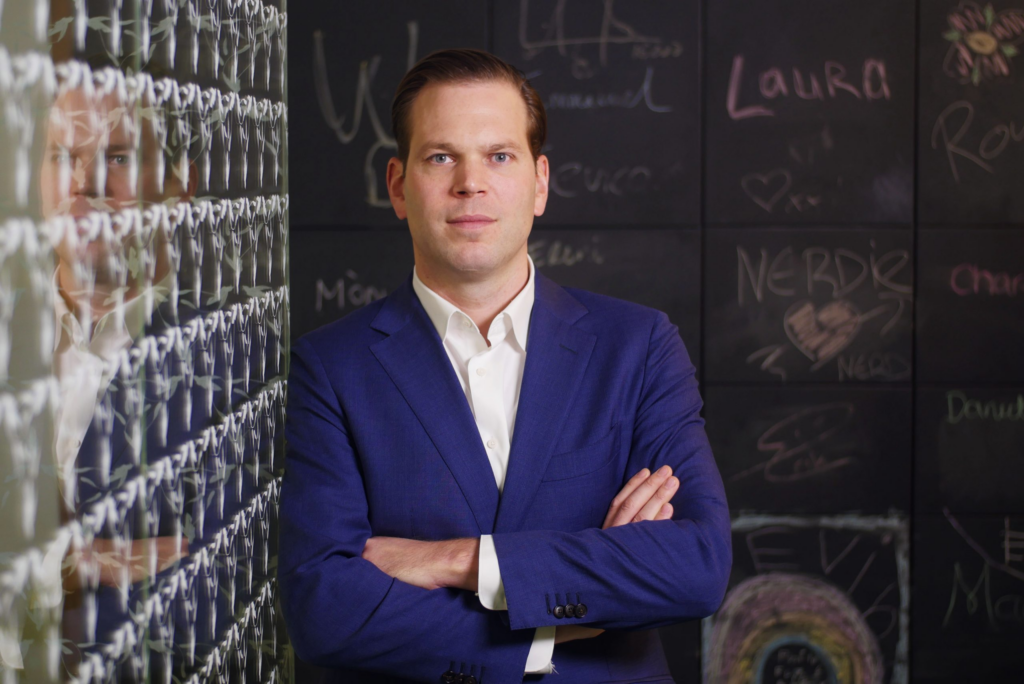
Daniel de Boer told a Hope in Focus webinar audience that his company’s mission is to help patients by creating RNA (ribonucleic acid) therapies that aim to stop vision loss or even reverse some of the symptoms caused by IRDs.
Daniel de Boer
“We see that there’s a large unmet medical need, as there are more than 5 million people in the world who have a form of an inherited retinal disease and just very few of them have treatments available for them and at ProQR our plan it to change that,” de Boer said in our January session, which can be viewed here.
In the episode called “Let’s Chat About…ProQR’s work in treatments for inherited retinal disease,” he described the company’s projects involving sepofarsen, explained RNA therapy versus DNA therapy, and discussed the method of administering the treatment to patients. The session is part of our free monthly series developed with those living with LCA and IRDs in mind but open to anyone interested in what’s happening in our communities.
After one of de Boer’s children was diagnosed with a rare disease, he started the Dutch biotechnology company to develop RNA therapies for rare diseases. Under his leadership, ProQR developed a platform that yielded a diversified pipeline of potential treatments for rare diseases and raised more than $400 million in funding. Before starting ProQR, he founded several technology companies.
De Boer also is co-founder and strategic advisor to Amylon Therapeutics and Wings Therapeutics, strategic advisor at Frame Therapeutics, Meatable, Algramo, and a member of the advisory board at the Termeer Foundation. He was named “Emerging Entrepreneur of the Year” in 2018 by EY, the multinational professional services network Ernst & Young, and in 2019 was selected for the Young Global Leader program at the World Economic Forum.
Sepofarsen and multiple studies on LCA10 and other IRDs
De Boer said ProQR expects results in the coming months from its Phase 2/3 Illuminate clinical trial of sepofarsen in LCA10 caused by a mutation in the CEP290 gene.
Sepofarsen is an investigational RNA therapy that aims to restore vision in people living with LCA10 due to the p.Cys998X mutation in the CEP290 gene.
Researchers initiated the trial based on data from a Phase 1/2 study that indicated patients treated 12 months with sepofarsen showed improvement in visual acuity measured by best-corrected visual acuity (BCVA).
Earlier this month marked the end of the Phase 2/3 trial, when de Boer said, “The last patient having completed their 12-month visit is an important milestone toward the top-line results from the Phase 2/3 Illuminate trial of our lead program for sepofarsen for LCA10.”
Other major projects underway at ProQR include:
Brighten, a clinical study for children under age 8 living with LCA10;
Aurora, a clinical trial of QR-1123 in Phase 1/2 for RP, due to the P23H mutation, also known as c.68C>A, in the rhodopsin (RHO) gene;
QR-504a, an investigational RNA therapy that aims to slow down degeneration of the cornea and thereby vision loss in people with Fuchs endothelial corneal dystrophy due to the most common mutation.
You can learn more about ProQR’s studies by visiting the company’s website and/or emailing Andy Bolan, Associate Director of Patient and Community Engagement at patientinfo@proQR.com
RNA therapies repair DNA without changing DNA
De Boer explained in the webinar: “RNA therapy is innovative technology that treats genetic eye conditions such as LCA10 or Usher Syndrome and it is important because the RNA help to carry out the instructions that are in the DNA to make proteins.
“We’re all familiar with genes and DNA that we have in our cells and the RNA is essentially helping to carry out the instructions that are described in the DNA, which is to make certain proteins and these proteins are critical to the healthy functioning of a cell.”
In LCA10 the gene mutation gets copied into the RNA and causes a loss of protein so that the protein is not functioning or missing altogether, leading to a cell unable to work well or even die over time, he said.
ProQR is developing RNA therapies for a range of diseases, including their lead sepofarsen therapy.
“RNA therapies can repair the DNA without altering or changing the DNA, so we don’t have to touch the DNA. We don’t have to change any of the genes, we can leave all of that untouched and we can alter the RNA in between so that cell can make its own functional and healthy proteins.”
Explaining the difference between RNA therapies and DNA therapies, de Boer began with the billions of cells, our DNA, the library of our genes.
“The DNA is copied into the RNA and the RNA is essentially a blueprint that then makes proteins and proteins are expressing in your cells through all kinds of different tasks and essentially that is what makes our bodies function.
“Now, with RNA therapy, what we can do is we can repair the blueprint so we give it an RNA therapy that repairs the blueprint and from this repaired blueprint, the cell can now make its own new functional protein.”
On the other hand, DNA therapy, or gene therapy, replaces the gene into the DNA, which then expresses RNA that makes protein.
Different delivery mechanisms in RNA and gene therapies
De Boer also made the distinction between the delivery systems of RNA therapy and gene therapy and described the advantages of the RNA route.
Gene therapies often require a viral vector, meaning that the therapy is packaged in a virus made in a way that it is no longer harmful to humans. The treatment is delivered through subretinal injection.
“It is used as a delivery system, so this virus is then loaded with the new gene and injected into the back of the eye where it then is entering the cells and expressing the protein.”
RNA therapy is delivered through intravitreal injection (IVT), which entails an injection in the side part of the eye – the wide part of the eye – in a 15-minute procedure.
“Through that route of administration, we have a big advantage that we can treat the entire retina, so only with a small injection in the side of the eye, the RNA therapy will distribute itself throughout the entire eye and will go to all different parts of the retina. That means that we can treat the central retina, as well as the peripheral, which allows us, for example, also to treat early-stage disease, which generally started in the outer part, in the peripheral part of the retina.”
RNA therapies generally need to be administered twice a year in each eye for a sustained benefit over lengthy periods of time.
Lab-grown retinas enhance research process
ProQR is among those biotechnology companies finding new ways to improve efficiency in research, thereby accelerating the process in bringing retinal disease treatments and cures to market.
The company’s researchers grow organoids from skin samples to produce a human retina in the lab.
“From this retina we can then test the activity of our therapeutics so we can administer drugs on these retinal organoids, which then tell us in the lab already if they’re going to be functional, if the drug is going to work once we give it to a person.
“All of this is obviously in a testing phase still, so we can’t have 100 percent certainty that the preclinical model will always be predictive, but so far we have seen that in both sepofarsen and in Usher, the model was spot-on in predicting the activity and also the active dose level that we had to give once we started clinical trials.
“If you think about that I think there is really potential to find more synergies and speed up the development from preclinical to approval once we generate some more data across more of these programs that can help us to validate the correlation with the preclinical models to potentially really accelerate the development timelines.”
ProQR’s beginnings
Daniel de Boer started ProQR about 10 years ago after his son was born with cystic fibrosis (CF). He focused on CF until another company developed a good therapy for the rare disease.
Headquartered in Leiden, Netherlands, with offices in Cambridge, Mass., ProQR reinvented itself over time as a global ophthalmology company.
De Boer developed a partnership with Professor Rob Collin, PhD, from Radboud University in the Netherlands. The molecular geneticist had discovered an LCA10 RNA therapy that evolved into sepofarsen, and clinical trials began in 2017.
By the next year, an interim analysis showed examples of transformational improvements in vision, de Boer said.
One participant began by only being able to perceive light – day or night, no shape, motion, form, or color.
“After a single dose of sepofarsen, this participant then improved his vision such that he could now read, he could recognize people’s faces, and he could essentially navigate the world independently for the first time in decades.
“We saw the hypothesis confirmed that RNA therapy in the eye could potentially make a really meaningful impact. So fast forward to today, we completed our Illuminate Phase 2/3 pivotal trial for sepofarsen recently and are now awaiting the results.”
The lack of information on rare diseases can create difficulty in developing drugs to treat them. To help, it is important to study the natural history of rare diseases.
Compared with common diseases, researchers know little about rare disease signs and symptoms, how the disease changes over time, and ways in which the disease affects the lives of patients and their families.
Natural History studies track the course of a patient’s disease over time. They identify demographic, genetic, environmental, and other variables that shape the drug development process
Dr. Eric Pierce, Massachusetts Eye and Ear
“In general, Natural History studies can be helpful precursors to clinical trials of potential treatments for inherited retinal degenerations for multiple reasons,” said Eric A. Pierce, MD, Ph.D., with Massachusetts Eye and Ear. “For example, they can help identify the tests or measurements which would be most appropriate to use as endpoints in therapeutic studies.”
Another way to view such studies is to “Begin with the end in mind,” as suggested by Anne R. Pariser, MD, in her work on Natural History studies for the U.S. Food and Drug Administration
Natural History data provide knowledge and an independent understanding of a disease, while establishing an essential foundation for building drug development programs. These studies have been characterized as the “pillar of epidemiologic research on rare conditions,” and, along with assisting in developing drugs, they help with patient care, best practices, research priorities, and clinical trial readiness, according to Dr. Pariser, director of the Office of Rare Diseases Research at the National Center for Advancing Translational Sciences.
The studies give scientists and researchers a better estimate of the prevalence of the disease, help identify potential biomarkers, affect clinical outcome assessments, and determine the feasibility of established assessments for clinical trials.
A rare disease is a disease or a condition that affects fewer than 200,000 Americans. With a relatively small number of people affected by the 7,000 diseases considered rare, scientists sometimes face daunting odds in finding enough people meeting study requirements.
In the Leber congenital amaurosis (LCA) community, scientists are looking for people to take part in different stages of drug development.
Editas Medicine, a genome-editing company based in Cambridge, Mass., is sponsoring a Natural History study of LCA10, known by its gene name CEP290, to inform the design of potential future treatment studies involving genome editing in LCA10. The purpose of the study is to understand and better describe the clinical course of LCA10-related retinal degeneration that is associated with a particular genetic change in the CEP290 gene called c.2991+1655A<G.
The study will be used to characterize the range of visual function in patients, evaluate which visual tests may be most useful, and determine the rate of change in visual function over a one-year period.
Dr. Pierce, director of the Ocular Genomics Institute and the William F. Chatlos Professor of Ophthalmology at Massachusetts Eye and Ear (MEE) and Harvard Medical School, is the principal investigator at one of the seven sites in the United States and Europe actively recruiting patients for this Natural History study. For more information, call MEE at 617-573-6060 or visit www.enlightenLCA10study.com/. Study details also can be found at ClinicalTrials.gov Identifier: NCT03396042.
The two groups of conditions below describe the parameters for taking part in the study. Taken together, they illustrate the potential difficulty in finding the 40 participants needed for the study of this rare disease.
Patients must meet six conditions, known as inclusion criteria:
3 years of age or older;
Abnormally decreased vision, with examination and test results consistent with inherited retinal degeneration due to mutations in the CEP290 gene;
Able to cooperate with assessments relative to the patient’s age;
Clear ocular media and adequate pupil dilation in at least one eye to permit good-quality examination of the interior surface of the eye opposite the lens and optical coherence tomography (OCT) imaging;
Able to successfully navigate a mobility maze at a level of difficulty below the maximum performance level.
Patients cannot participant if one or more of the five following conditions, called exclusion criteria, exist:
Visual acuity of no light perception in both eyes;
History or current evidence of a range of medical conditions that may preclude attending scheduled study visits, safe participation in the study, or affect the study results;
History or current evidence of ocular disease in either eye that may confound assessment of this inherited retinal disease;
Currently receiving gene therapy and/or has received gene therapy;
Currently enrolled in an investigational or interventional drug or device study and /or has participated in such a study within 30 days of screening.
Participants currently are being recruited for a Foundation-funded Natural History study of disease progression in patients with USH2A-related retinal degeneration associated with congenital hearing loss (Usher syndrome type2a) or non-syndromic retinitis pigmentosa (RP39).