
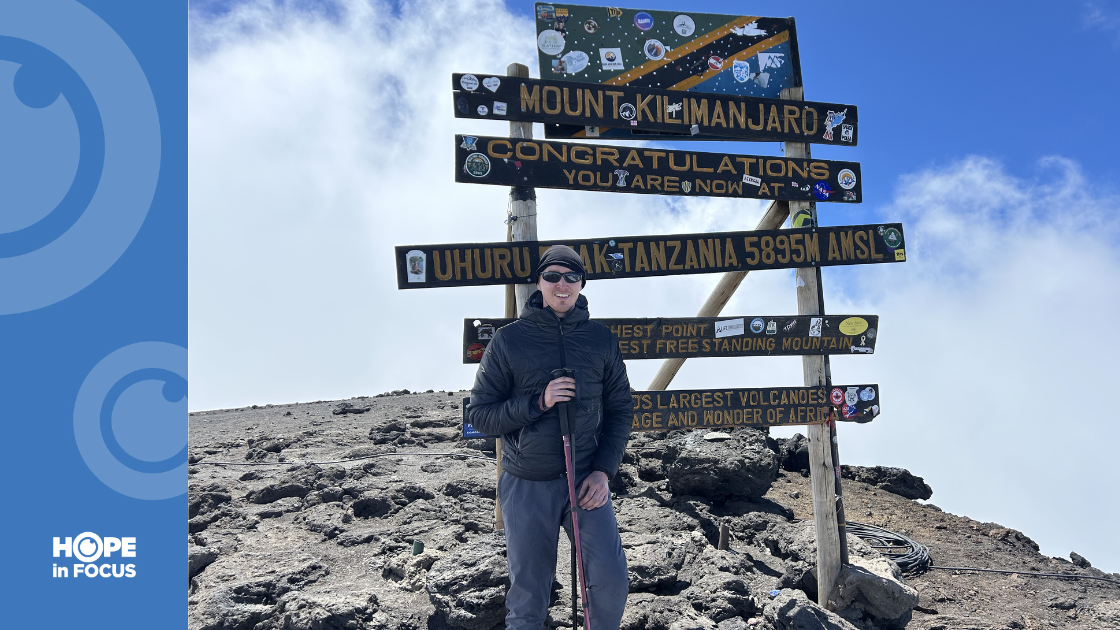
Throughout my life, I’ve pushed my body to do some incredible things—from wrestling in high school to running a marathon to later backpacking in the wilds of British Columbia. But on October 7, 2025, I literally reached new heights as part of a group of nine legally blind individuals who successfully summited Tanzania’s Mount Kilimanjaro. Our group set a world record for the largest number of legally blind climbers to reach the mountain’s summit in a 24-hour period!
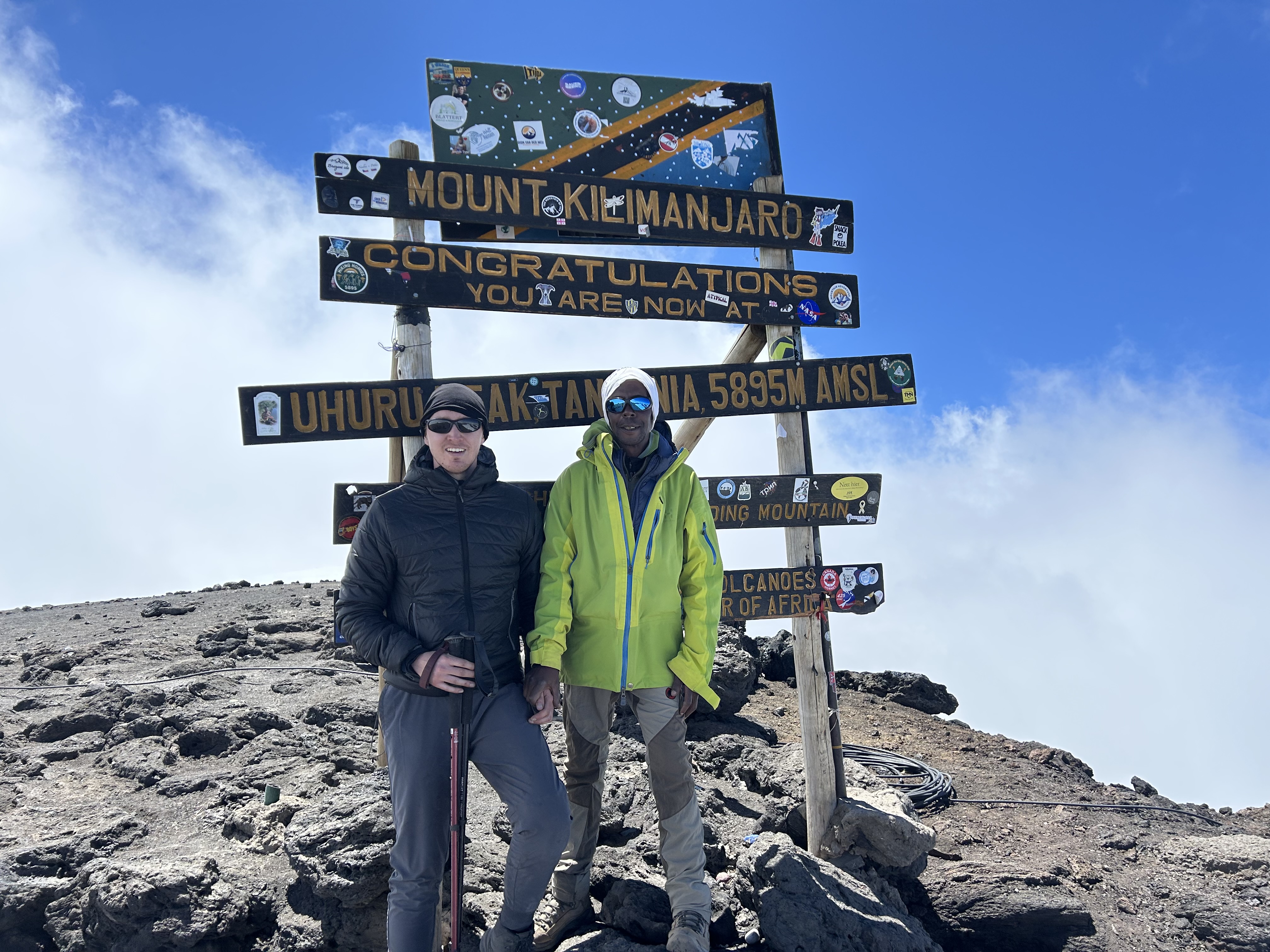
As the biggest mountain in Africa and the highest freestanding peak in the world, Kilimanjaro is challenging for everyone. It took seven days of grit, fatigue, and trust in our guides to reach the point where we began the final climb to the top. The physical strain left my body aching, and altitude sickness gave me one of the worst headaches I’ve ever had. Sleeping in a tent in freezing conditions was wearing, and I quickly missed hot showers. Within twenty minutes of starting our ascent, I lost count of the rocks I had to climb over. Being legally blind required my full concentration. I had to carefully probe the ground ahead with my hiking poles before each step and listen intently to my guide’s directions, alerting me to constant obstacles along the trail.
I also experienced many challenges. On day three, I had severe dehydration and nearly fainted trying to make it to the washroom in the night. Reaching the summit meant experiencing oxygen levels as low as 47 percent, leaving me breathless every few steps. The descent was no less demanding, for hours I slid down loose gravel, followed by two days of climbing down rocky terrain on tired legs.
Getting to the top of this famous mountain was worth it, but I’d be lying if I said I wanted to do it again. You might be thinking this sounds like a great adventure and wonder how you might do something like this. Or, maybe you’re wondering how we safely accomplished the climb.
The answer is simple—with a lot of support from local experts. We partnered with Nana Safaris, a tour company experienced in guiding legally blind climbers, which matched each member of our group with a local guide. My guide, Thomas, was certified by the Tanzanian government and had summited Kilimanjaro 370 times before our climb. Before setting out, we discussed how he could best assist me. Throughout the trek, Thomas carefully led the way, holding one of my hiking poles so I could sense the path ahead. He gave clear verbal directions and, in high-risk sections, had me hold on to a rock or showed me exactly where to step by placing my pole. Thanks to his expert guidance, I always felt safe.
Challenging adventures like this are possible with proper planning and support. If you’re considering climbing Kilimanjaro or visiting Tanzania, Nana Safaris is the most experienced company for supporting people with disabilities. We documented our journey and will be releasing a documentary about our adventure—follow us on Facebook to stay updated.
Nana Safaris: www.nanasafaris.com
Kilimanjaro Blind on Facebook: www.facebook.com/people/Kilimanjaro-Blind/61580093186046/