Dinner in the Dark 2018 Live Auction

Dinner in the Dark‘s live auction is like no other! With charming master auctioneer Mike O’Farrell to guide you, our committee has gathered amazing experiences, travel, and more! Get your bidding arm in shape!

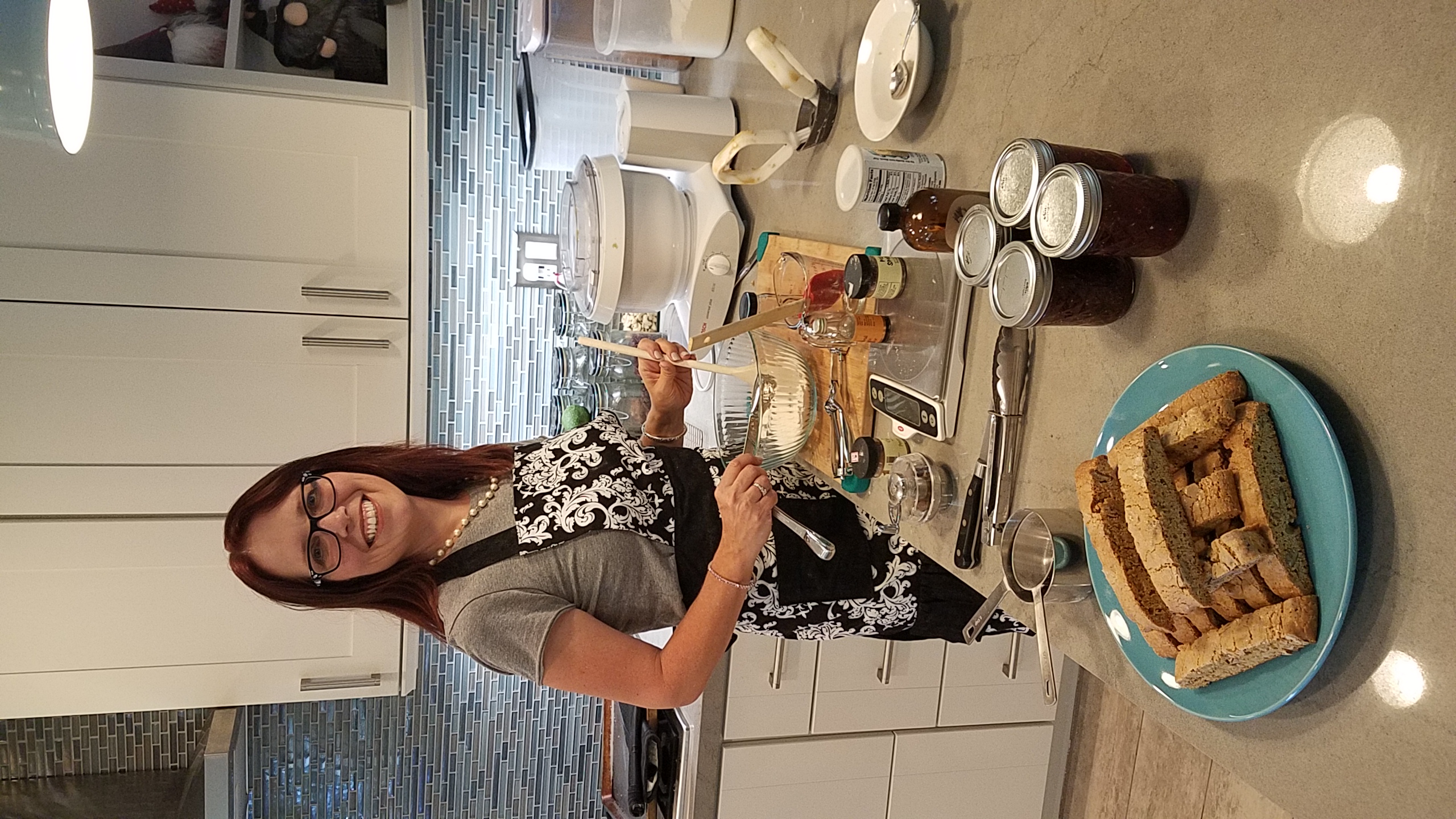
FROM KIM’S KITCHEN TO YOURS!

What’s better than receiving a little piece of Southern California on your doorstep once a month for a whole year? Kim’s creations have won multiple awards and each month she will send you a package valued between $35 and $45 of seasonal jams and treats that will have you waiting by the mailbox. From homemade blueberry or cherry jams to Cherry Garcia cookies and more, this is a gift that keeps on giving, all year long!

Details: Kim  will mail a package to you anywhere in the continental U.S. One package per month, for 12 months. Pick up the first month’s gift tonight, or let us know and we will mail it to you.

Value: $500

Donors: Kim Christiansen

Come back another night to enjoy dinner at the award-winning Octagon restaurant along with an overnight stay and a little pampering for you both at The Red Door Salon & Spa.

Details: Reservations are required by calling 860-326-0320. Non-transferable and non-extend able. Not valid for cash. Dinner not to exceed $200 value. Gratuity not included. May be redeemed Sunday through Friday nights, based on availability. Certain restrictions and additional blackout dates may apply. Must present certificate upon arrival.

Value: $550

Donor: Mystic Marriott, Octagon Restaurant, Red Door Spa

Your private cruise on board Mamie begins from the dock at scenic Mystic Seaport Museum. From there, the boat cruises down river to Noank and Fishers Island Sound. Once in the Sound, why not have a picnic lunch anchored off a secluded beach followed by a swim? Or, you could tie up alongside a restaurant and get a traditional New England lobster lunch followed by shoreside explorations. You choose the adventure.

The cruise is available to a group of six or fewer guests, and you get the whole boat to yourself for four hours. BYOB food and drink is encouraged! The boat provides a cooler with ice and water to keep drinks and food cold. They also have all the eating and drinking utensils you may need including bottle openers and wine coolers. Mamie has a below-deck area that includes a head (bathroom).

Details: Charters available June 1, 2019, through Columbus Day 2019 and may be booked directly with Mystic Seaport Museum. Dates and times based on availability.

Value: $600

Donor: Mystic Seaport Museum

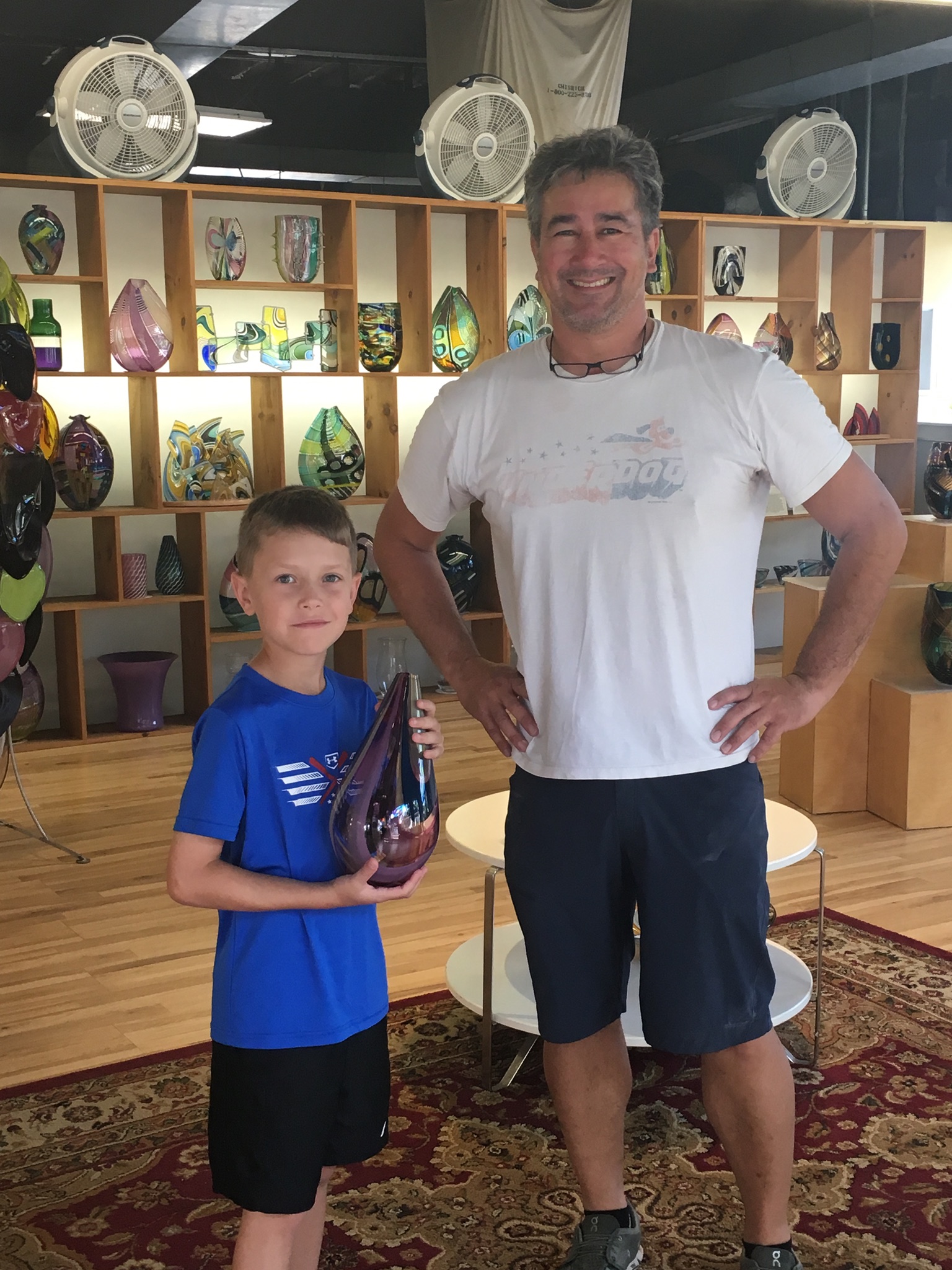
Bring home a little bit of Mystic and a little bit of Murano with this beautiful original piece created by American glass artist Jeffrey P’an. This 11-inch tall purple teardrop was created in 2018. The teardrop was created using a combination of traditional glassblowing techniques combined with Jeffrey’s modern twist. Jeffrey P’an studied in Murano, Italy, and founded Prescient Studios in 1994 upon his return to Mystic. Today, Jeffrey’s work can be found in all corners of the world, and Studio Jeffrey P’an is a design house, artist’s workshop, and factory in the tradition of the factories of Murano.

In addition to Jeffrey’s one-of-a-kind sculptural work, all manner of glass-related work is performed—from jewelry making, to cut crystal, to glassware and repairs of historical pieces by an expanded team of apprentices and specialists. The winner may take home this gift tonight, or Studio Jeffrey P’an will ship this piece free of charge to your home.

Value: $650

Donor: Jeffrey P’an

Look what we took from Mike’s wine collection! Valued at more than $1,000, this package includes:

  • 2012 Caymus Vineyards 40th Anniversary Cabernet Sauvignon ($240)
  • 2009 Louis Roederer “Cristal” Brut Champagne ($200)
  • 2012 La Castellana Super Tuscan Blend ($125)
  • 2013 Williams Selyem “Bucher Vineyard” Russian River Valley Pinot Noir ($100) 
  • 2009 VinRoc Napa Valley Atlas Peak Cabernet Sauvignon ($90)
  • 2010 Clos de L’Oratoire Saint – Emillion Grand Cru Classe ($75)
  • 2003 Chateau Raymond – La Fon Sauternes ($65)
  • 2012 Jordan Alexander Valley Cabernet Sauvignon ($55)
  • Moet & Chandon Imperial Brut Champagne ($42)
  • 2004 Faustino I Gran Reserva Rioja ($40)
  • 2007 La Rioja Alta Vina Ardanza Reserva Rioja ($30)
  • 2011 Portia Ribera del duero Crianza Tempranillo ($28)
  • 2013 Bourgone Passetoutgrain Cuvee Desite Burgundy ($18)

Details: Dirty old wheelbarrow and flashing police light not included.

Value: $1,100

Donor: Michael Mondello – Former SSH Director

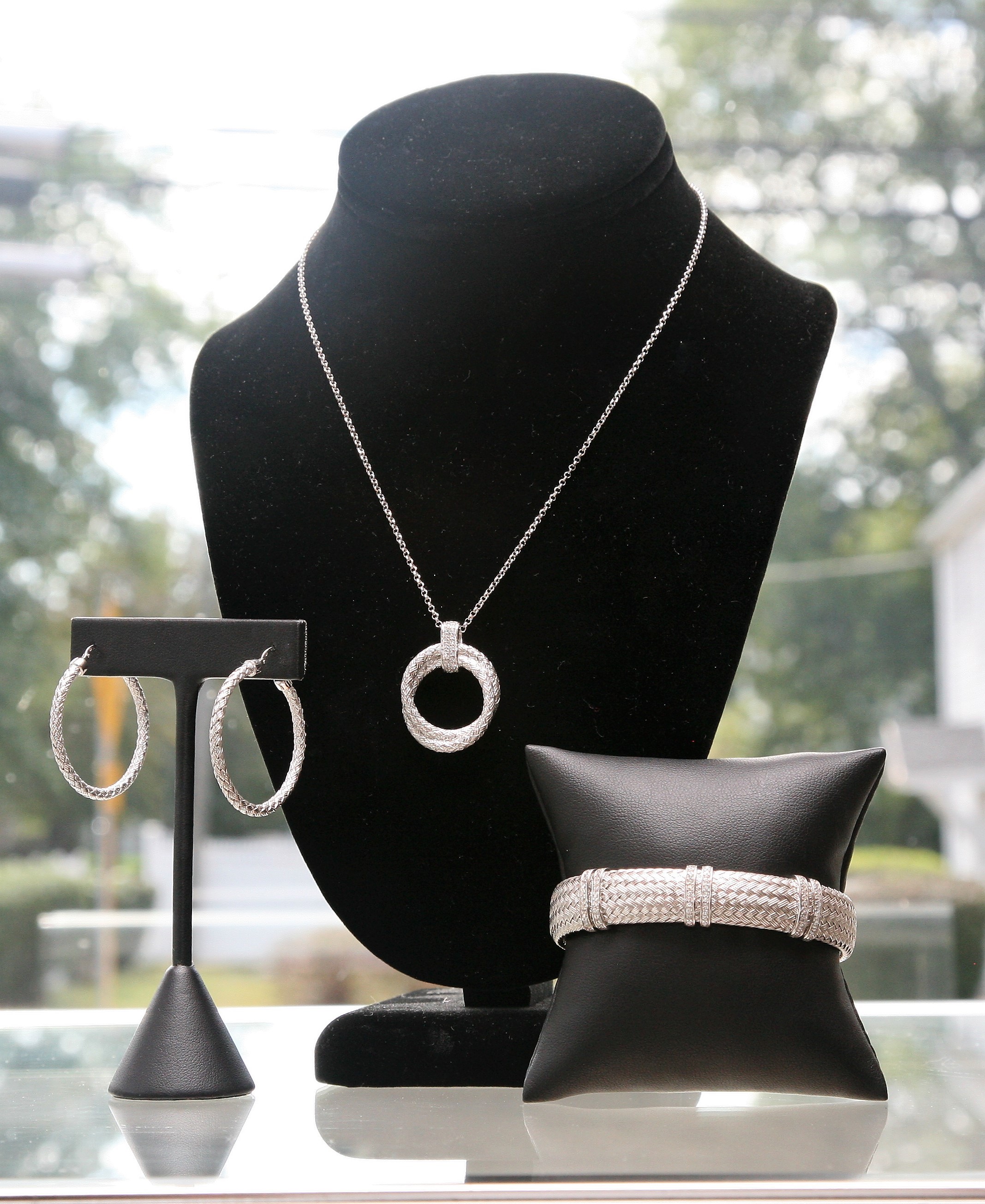
This exquisite three-piece set from Simply Majestic’s Classic Designer series includes a sterling silver double circle pendant, matching hoop earrings and a cuff bracelet. The pieces are a woven style with simulated diamonds.

Details: This gift is donated exclusively to Sofia Sees Hope and no cash, credit or exchanges are permitted in the store.

Value: $1,100

Donor: Simply Majestic

MIXOLOGY WITH A MASTER

Party for six people

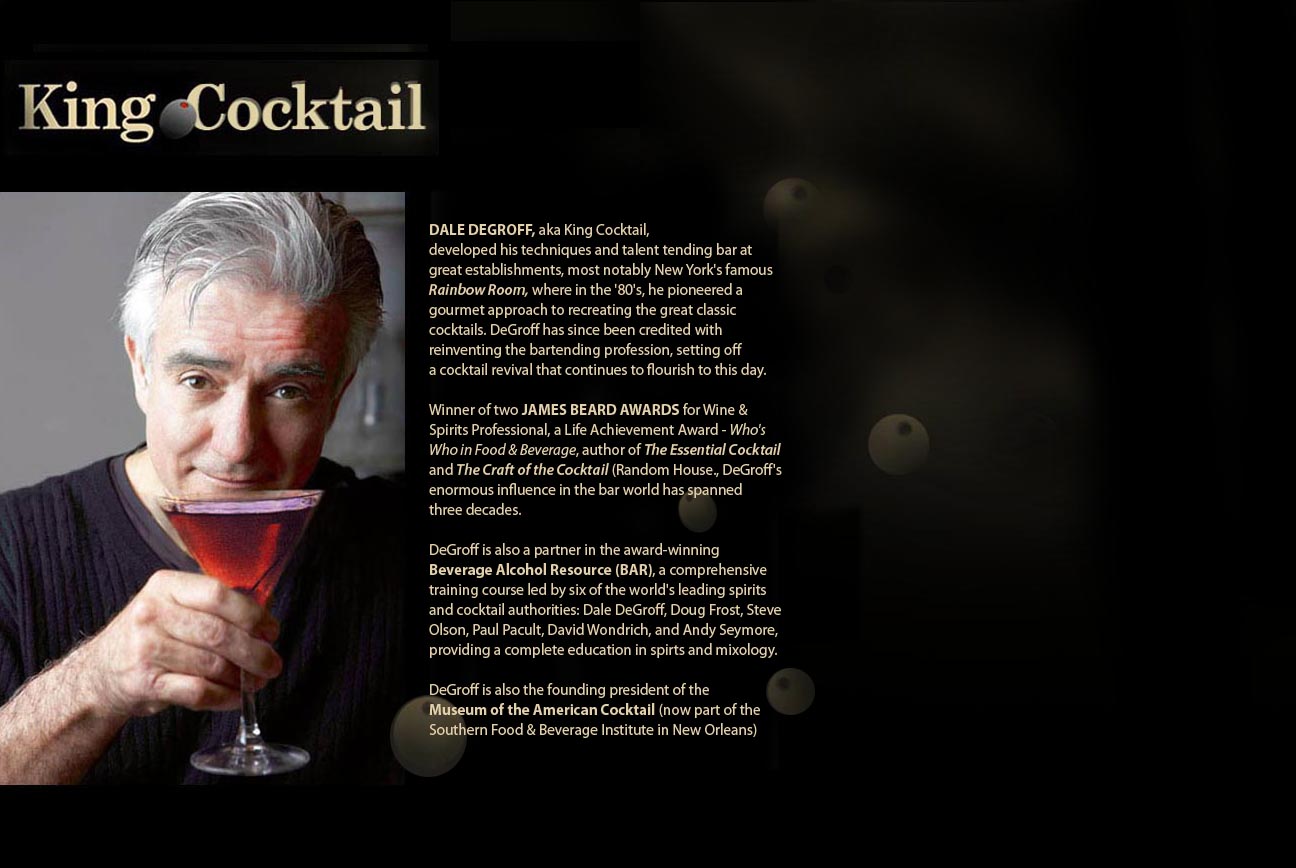
A unique educational opportunity to warm you this winter! Two-time James Beard Award winner and Master Mixologist Dale DeGroff, also known as King Cocktail, will come to your home and teach a party of six how to mix the perfect punch, eggnog, and a winter cocktail. Includes one of Dale’s books on mixology and a bottle of his aromatic bitters made in France. Dale is a Lifetime Achievement Award recipient from Food & Beverage magazine and the Founding President of the Museum of the American Cocktail. He is credited with re-inventing the bartending profession, setting off a cocktail revival that continues to flourish.

Details: Winner is responsible for purchasing liquor and providing food for guests. Mixology party dates are subject to availability between January 1, 2019, and December 1, 2019, and must be mutually agreed upon and confirmed at least six weeks in advance. Dale will travel just about anywhere in the world, but the winner is responsible for Dale’s travel and lodging expense beyond a 50-mile radius of the Mystic Marriott or Nassau, Long Island.

Value: $3000

Donor: Dale DeGroff, King of Cocktail

ESCAPE TO ANTIGUA

Seven nights for up to four people

Enjoy this getaway to Antigua in the British Virgin Islands, where crystal waters lap more than 360 white sand beaches and ocean breezes carry the scent of jasmine and hibiscus. This getaway is for up to four people in a beautifully decorated two-level waterfront villetta in Jolly Harbor. It’s an easy stroll from your home for the week to all the exceptional restaurants, nightlife, beaches, weekly sailing regattas and access to land and water sports.

The villetta is newly renovated and features two bedrooms, 1.5 baths, open floor plan on the main level with a fully equipped kitchen, and a large terra cotta patio overlooking the water and boat docks. Perfect for outdoor dining and watching the sunset.

Details: There is no expiration date on this gift and the winner may postpone travel until any year in the future. No blackout dates. Dates are based on availability.

Value: $2,400

Minimum bid: $2,000

PARK CITY, UTAH IN SNOW OR SUN (OR BOTH!)

Seven nights for up to seven guests

Park City lies east of Salt Lake City in Utah. Framed by the craggy Wasatch Range, it’s bordered by the Deer Valley Resort and the huge Park City Mountain Resort, both renowned for incredible skiing.

Stay in Park City Parks Edge, a new luxury three-bedroom, three-bath condo that sleeps up to seven guests! This 1,671-square-foot property features a top-floor large master bedroom suite with a king bed, a large private bathroom with stone shower, soaking tub, and dual vanities. It offers great mountain views and private decks overlooking the mountains and surrounding open space. Across the road is the community clubhouse with pool table, full kitchen for entertaining, a large outdoor hot tub, a community pool, a well-equipped workout room. It’s an easy drive to ski, hike, mountain bike, or stroll the historic downtown for shopping and dining!

Details: This is for a seven-day rental from Saturday to Saturday. The owner is flexible if other days are required. Blackout dates include December 24 to January 1. Expires June 1, 2020.

Value: $2,000 to $3,000+ based on season

Minimum bid: $2,000

CARIBBEAN VILLA IN MONTSERRAT

Seven nights for six guests

Montserrat is a small, tranquil island described as the “best-kept secret of the Caribbean.” Unwind in a villa with three king-sized bedrooms, a private outdoor pool, outdoor terrace with dining area overlooking the ocean. Located in Salem, Montserrat, the area is known for its black sand beaches, coral reefs, cliffs, and shoreline caves to explore. For the more adventurous, visit the Montserrat Volcano Observatory, schedule a guide (we recommend “Sunny”) to visit the restricted side of the island, or hike up into the mountains. For lunch, ask John for the best roti on the island—tell him Laura sent you. In town, you can enjoy local bars and restaurants, snorkeling, scuba diving, sailing, motor boats, and shopping.

Details: This package includes a seven-night, eight-day stay. Dates are subject to availability. Blackout dates include Thanksgiving, Christmas, and New Year holiday weeks. Travel must be booked within 12 months and traveled within 24 months.

Value: $4,300

Minimum bid: $3,500

UNDER THE TUSCAN SUN

Seven nights for four guests

Situated at the top of two ancient Tuscan hills are the Etruscan towns of Pitigliano and Manciano, both with breathtaking views in all directions. This package includes seven nights of accommodations for four people in Manciano or Pitigliano, Italy, located 1.5 hours north of Rome on the southern edge of Tuscany. You may choose from among more than six different villas. Wondering how much fun this is or need pointers on the area? Ask any of the four couples who won this before and gave rave reviews!

Details: There is no expiration date on this gift and the winner may postpone travel until any year in the future. No blackout dates. Dates are based on availability.

Value: $4,550

Minimum bid: $2,500

‘As A Doctor, You Will Never Forget’

Transforming laboratory research into real-life therapy for patients is a rare occurrence.

But when it does happen, it’s big. Huge, in fact.

Ask Dr. Audina M. Berrocal, the pediatric retinal surgeon who performed ground-breaking retinal surgery in March on 9-year-old Creed Pettit. Creed lived with severe vision loss caused by a rare inherited retinal disease (IRD) called Leber congenital amaurosis (LCA)* manifested by a mutation in his RPE65 gene. At the time of his treatment, he was the nation’s youngest patient to receive it.

Dr. Berrocal’s surgery at Miami’s Bascom Palmer Eye Institute on the third-grader marked one of those extraordinary times when research goes from clinical to surgical – from bench to bedside.

“It’s one of those honestly amazing moments in medicine,” she said. “Things that you think you are never going to see and here I am, doing it. As a doctor you will never forget.”

Dr. Berrocal, Dr. Byron Lam (who diagnosed Creed at age 2½ with LCA), and a surgical team, removed the vitreous, a gel-like substance attached to the retina’s surface – though Creed’s vitreous was thinner than normal – before administering the medication – LUXTURNA™ – a genetically engineered virus that supplanted Creed’s mutated RPE65 gene with healthy versions of the gene.

“The challenge is to lift the retina with the medication,” she said. “Detaching the retina, especially of a child, is pretty hard to do. We are looking through microscopes and special equipment that makes seeing the retinal layers easier, but it’s still challenging.”

Working with two syringes filled with the medication that is viable for only four hours, Dr. Berrocal said she could not find the right subretinal space to inject the treatment with the first syringe. She then successfully injected LUXTURNA with the second syringe.

“With the first case, everything is new,” she said of the surgery, which took about an hour. “The second eye, everything went smoother, quicker and faster.”

‘Science that revolutionizes medicine’

“It’s extraordinary,” she said. “It makes you feel you are on the brink of a new area of science that is going to revolutionize medicine and eradicate disease. This truly is the brink of an era of gene manipulation and gene therapy.

“To be living this as a physician is really, really unique and special.”

Before the surgery, Dr. Berrocal trained with people from Spark Therapeutics, LUXTURNA’s developer, to learn about the drug’s pharmacology and to train in the knowledge of the surgical process. This genetic treatment came to fruition after decades of research and millions of dollars, followed by approval by the Food and Drug Administration in December.

“The viral vector provides the correct gene that you need,” she said of the medication’s delivery system. “The concept can be used for any gene and I think this is truly the beginning of a revolution of genetic manipulation.”

Soon after the surgery, Creed enjoyed improved vision.

“We never expected it to change so quickly. I don’t think anyone was expecting it.”

“No one believed it,” she said when Creed’s mother, Sarah, reported two days after the surgery that her son’s vision dramatically improved.

No one except Dr. Berrocal.

“The thing is, people do not always believe mothers, but as a mom myself, I will tell you that no one knows a child better than mom. If Creed’s mom is saying that Creed never walked around with such little light before, then it’s true.”

Given her background, Dr. Berrocal being at this point in her career seems a little unsurprising. Her father, Dr. Jose Berrocal, trained with Dr. Charles Schepens, a Belgian ophthalmologist known as the father of modern retina surgery.

Her father became Bascom Palmer’s first trained retina specialist and the first such specialist in Puerto Rico. Dr. Berrocal’s older sister, Dr. Maria H. Berrocal, became a retina specialist and practiced with their father. Both women turned to medical school after graduating with degrees in political science and realizing politics wasn’t for them.

Dr. Berrocal, now 51, has two daughters and one son with her physician husband. She grew up helping her dad in the office, as ophthalmology was part of the family. She is now medical director of Retinopathy of Prematurity Services at Bascom Palmer and professor of Clinical Ophthalmology at the University of Miami.

Asked whether her sister was jealous of her doing breakthrough surgery, Dr. Berrocal laughed and said, “She’s very proud of me.”

Dr. Berrocal’s father always told her she’d end up doing something with kids, and she sealed the deal working under a mentor dealing with pediatrics and retinas in her 2002 fellowship at Bascom Palmer in Vitreoretinal Diseases and Surgery.

“I truly like kids more than I like adults. They’re honest, sincere, concrete. You can never lie to them; if you do, you lose their trust forever.”

Dr. Berrocal respects Creed, listened to him and talked to him as an adult. She said he wasn’t interacting during their first meeting in January. Over time, she won him over by caring about what he wanted and needed, especially the little things. Creed didn’t like having the ID band on his wrist, so she took off the band and he felt better.

“He’s much more comfortable with me now,” she said. “It makes it really special.”  

“They have to feel that they’re part of the process. It’s their body and it’s their eyes. I think empowering kids to be part of the process, taking in their feelings and their emotions, directing the conversation to them – that’s essential to make it work.”

Dr. Berrocal, as with most retinal specialists, is much more used to seeing children lose their vision and become blind.

“One of the most important things for me in this process has been watching a kid regain vision. This was a kid who couldn’t do things. He’s seeing the world in a different way. That is so powerful and so overwhelming. We cannot forget the importance of getting him ready for something so overwhelming.

“Learning to see again is hard emotionally. We have to somehow have these kids talk about it, how different their lives will be. How to guide them through it…We have never reversed the road to blindness before.”

Dr. Berrocal sees Creed for check-ups and more, confiding: “I can’t separate.”

Looks like that won’t be a problem for the surgeon – when she retires she knows Creed will be at the party.

In LCA: Naming Versus Numbering

Gene mutations in the rare inherited retinal disease of Leber congenital amaurosis (LCA) commonly are referred to by their gene name, such as GUCY2DRPE65 and CEP290. But sometimes, as LCA patients and families have discovered, they are referenced numerically as LCA1LCA2 and LCA10, respectively.

Why the difference? It’s confusing.

LCA1 through LCA18 exist in a continually updated online catalog of human genes and genetic disorders called Online Mendelian Inheritance in Man. Mendelian inheritance is based on the ideas of Gregor Johann Mendel, a 19th-century Moravian monk known as the father of modern genetics.

One source of confusion for LCA families is that there are 27 genes that can cause LCA, but only LCA1 through LCA18 are cataloged. For most genes, OMIM includes only selected mutations based on criteria such as the first mutation discovered, high-population frequency, distinctive phenotype and more. LCA families with genes not included in the database are left to wonder why they’ve been left out.

OMIM focuses on the molecular relationship between genetic variation and phenotypic expression and is considered a phenotypic companion to the Human Genome Project, which funds the database. The HGP international research effort from 1990 to 2003 culminated in a blueprint for building a person by completing an entire sequence of the human genome.

OMIM is a continuation of Dr. Victor A. McKusick’s Mendelian Inheritance in Man published through 1998. Created in 1985 through a collaboration between the National Library of Medicine and the William H. Welch Medical Library  at Johns Hopkins University School of Medicine, OMIM went online in 1987.

For example, OMIM refers to GUCY2D as LCA1, #204000 (phenotype MIM number), located at 17p13.1 with a gene/locus MIM number of 600179.

Translated:

“A number sign (#) is used with this entry because of evidence that Leber congenital amaurosis-1 (LCA1) is caused by a homozygous mutation in the gene encoding retinal guanylate cyclase (GUCY2D: 600179) on chromosome 17p13.”

There’s more, but that can be left to physicians, genetics’ professionals, researchers and students studying advanced science and medicine.

“For a patient with LCA or their family, what’s important is not the LCA## symbol, but, rather, a) the underlying affected gene; b) whether inheritance is dominant or recessive (dominant is rare); and c) the specific mutation or mutations,” according to Stephen P. Daiger, PhD, Professor in Environmental and Genetic Sciences at the University of Texas Health Science Center and director of the Laboratory for Molecular Diagnosis of Inherited Eye Diseases.

“This is the information which decides, for example, whether someone is eligible for a clinical trail focused on a specific gene, e.g., LUXTURNA™ for RPE65,” he said. “It is very important to know and remember this information.”

Tell Us Your Story: ‘Do Not Limit Yourself’

I am 22 years old and I have LCA.

My name is Angélica Bretón Morán, I am from Mexico, I am 22 years old and I have Leber congenital amaurosis (LCA). Two years ago I learned that the gene that affects me is the RPGRIP1.

I’ve been reading many sites on the Internet, and I have realized that there are many comments from parents concerned about the development of their children, however there are almost no comments from parents with older children or people with LCA who talk about their development.

My intention is to tell you a little about my story to bring you peace.

LCA diagnosis: Many wrong turns

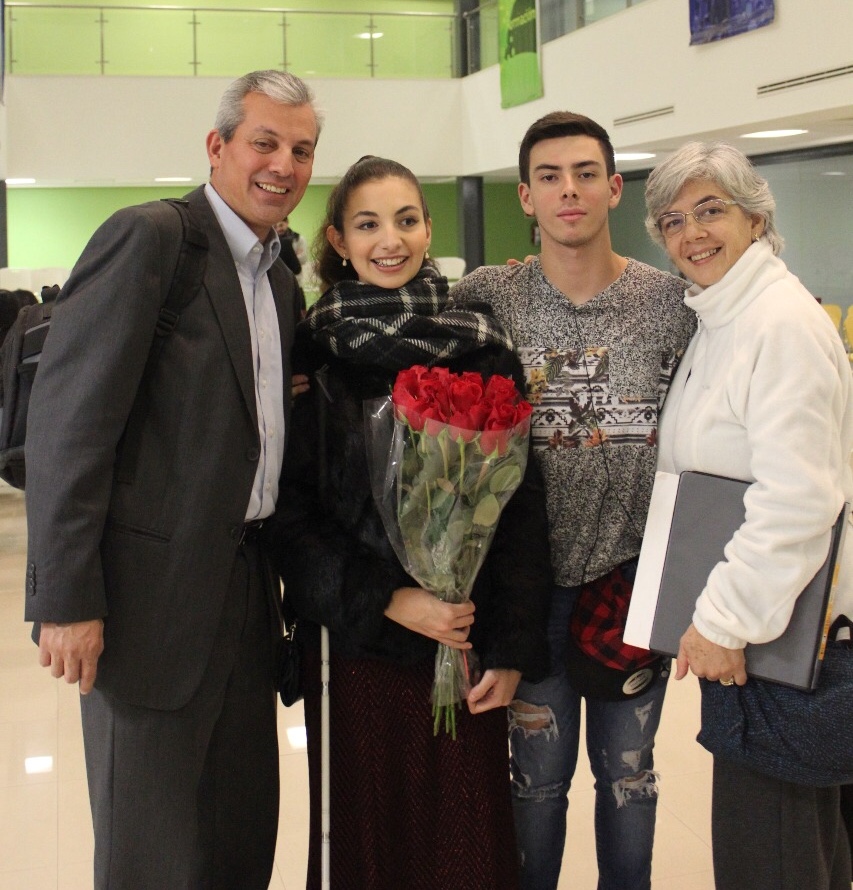
Angélica holding red roses and standing next to her parents and brother

When I was 2 months old, my mom realized that I did not follow people or toys with my eyes, and that when they did not speak, I cried as if I was alone and my eyes were standing down.

My mother is licensed in special education and specialized in hearing and language; she has many diplomas in different disabilities, including visual disability, so she realized that something was not completely normal.

The doctor told my parents that my eyes had to mature, but the months passed and nothing changed. My mom was certain that my characteristics were those of a blind person.

Finally, the doctors diagnosed that I was blind and there was a rain of bad diagnoses, syndromes that would terribly affect me, or that I would die a premature death, or that I would be like furniture, without the ability to do anything. They also said that maybe I would lose some other sense, that I could never talk, walk, eat ,among many other things Of course all this broke my parents’ hearts.

Other doctors recommended surgery but my mom never agreed and my dad supported her, he trusted in her because my dad did not have the experience with people with disabilities like my mom.

It was a painful road for my parents until a doctor told them “If they force me to give a diagnosis, I would say to you that it is LCA.” I was 2 years old.

My dad searched for information about this new diagnosis on the Internet, and what he found was not nice things, as I see that happens today. In one of the Internet searches, my parents found a writing made by a 22-year-old Italian young lady who was a musician; this for them was something hopeful.

From that moment we were in the group of research families, and for many years that was the diagnosis even though there was nothing that would formally confirm it. However, my parents did not lose details about my development; they were still worried because there was not something completely defined, since the disease was little known.

While my mom stimulated my touch with toys with different textures, placing hands in containers with different seeds, she strengthened my hands and enrolled me in mud classes. I was very afraid of the people, so she enrolled me in ballet classes where I would meet more girls and teachers. I was very little and I liked the music and the stage.

Then I went to kindergarten. It was not easy to find a school where they would admit me, but my parents never agreed that I was in a school for people with disabilities. As I had already been in the Ballet, it was easier for me to adapt to the classroom.

My parents never treated me differently, when I told my mom that when I grew up I wanted to be a pianist and opera singer, she told me that I could reach where I wanted. I liked to hear Charlotte Church and I admired Andrea Bocelli, because he was an example for me.

I have always been shy, I work hard to be sociable. This has been good, even though it has not been easy, but the reality is that we live in this world that will not be especially easy for us. This is achieved gradually and with personal life experiences, but I believe that above all with great patience and understanding of our parents and relatives, then we personally will learn to have it.

To give an example, my mother let my friends go to my house, and she let me go to their homes too. My parents did not make me see that my case was something special, because I could play with dolls, the kitchen, to be a doctor etc., like all the girls; only that when there were obvious things like playing jump on the stairs, the adults had to tell us that this was dangerous, because this is dangerous for any child, do not you think?

Angélica with roses and smiling

When I behaved differently from other children, my parents told me that this was not a good behavior. They explained to me how I should behave, without showing myself. When I waved my hands my mother held them and told me not to do it, she did it kindly but firmly and little by little I stopped doing it.

What made my parents angry was that I pressed my eyes with my fingers, because this was harmful to my eyes, every time they saw me doing it, they rebuked me more strongly; but now I thank them, because my eyes have no harm and in the future if the cure for my gene is found, there will be no injury that prevents me from receiving the treatment.

My parents educated me with a lot of love, but above all with discipline, an orderly and coherent discipline. I had to keep my toys like all children, learn to eat correctly like everyone else, not put my hands in food and just touch it with a finger that my mom called “guide finger”, this as a support because I cannot see the food.

I am weak visually, when I was a girl I could see better than now. Now I see lights and shadows but I cannot distinguish differences between colors as I used to, this has been so progressive that I did not realize until recently.

My disability has never been a secret, but neither has it been something for which I have to be different from others. It is true that you have to adapt some things, this is logical; however you have to look for how to achieve the objectives.

Going back to my life story, I have always studied in regular school; all my life music has been present. I graduated from music training at the Autonomous University of Nuevo Leon (UANL) while studying elementary school. I finished high school and got the second place for qualifications. I entered the technical career in music and finished it with honors while I studied online high school, all this in the UANL. I am currently studying a degree in music with an emphasis in piano at the same university and I have been studying professional singing for five years with a private teacher to become an opera singer.

I think it’s important to mention that I’m not an only child, I’m the oldest of two. My parents, like many of you, were afraid that the second child would have something worse than mine, but they have always had great faith in God and my brother was born. He does not have any disability, but he was asthmatic since he was a child and my parents have faced their situation in the same way they have faced mine … they never treated him differently, nor did they make him see that he had disadvantages. But to achieve something you had to look for how to do it. He is a high-performance swimmer, asthma attacks are becoming less frequent, and he is currently a healthy boy.

All this I tell you so that you know how important it is not to limit yourself. If you limit yourself as parents, you will limit us as children. My brother has been a great support for me in many situations, he has taught me to be the older sister. Our illnesses and the education of my parents, they taught us that neither he nor I have an obligation to take care of each other, we simply do it because we are brother and sister and we love each other

I played with my brother, we made mischief, we laughed late at night until my parents scolded us to sleep, as any pair of siblings can. My parents have never marked differences between us, everyone is accepted with their differences, we all have, but I am not more important than him, nor is he more important than me.

All this we have worked for 23 years as a family, we have been wrong many times, some other times we have felt that our effort has been in vain. We have stumbled like any family, we have asked for help when we consider that it is necessary. We have also tried to help when we think it is appropriate. But above all things, the strength of my parents and my family has been their faith in God, which they have transmitted to me and my brother and this faith has been my reason to continue in difficult times.

Speaking about people with LCA, they may have other disabilities, I have witnessed them myself, or they may not have them as is my case. However, I can tell you that when you treat a person different from the others, that person will behave differently regardless of whether they have a disability or not.

You have to be aware of the limitations, but you also have to find a way around the obstacles, or pass through them, or use them as a catapult, or see them as a feature that makes us unique and special as people, as we all are.

I hope my words help many families, since that is my intention. I invite more adults with LCA to tell their stories and how they have faced life! I think we would give a much more encouraging approach when new parents enter the Internet looking for information about the diagnosis of their children, and why not, for those who are newly diagnosed patients and research the internet on their own.

I have known fathers and mothers with LCA, young people, babies, children, even a child who was cured with genetic therapy because he has RPE65. We met him when he was blind and the second time we saw him, he saw and guided the other children who were still blind. It was amazing! We were all very excited and we could not stop the tears.

Finally I want you to know that I am in the best position to answer your questions in this post from my personal perspective. As I mentioned before, my only intention is to help because I am greatly moved to see your anguish and I feel that it is my duty to be now the 22-year-old girl who brings a hopeful message to those who enter the internet looking for information about LCA.

I would like to know, is there anyone else that has the RPGRIP1 GEN? I do not know anyone else!

God be with each one of you, blessings!

An Amazing Year

This is the seventh in a series following the progress of Creed Pettit, a 9-year-old Florida third-grader, who completed treatment in March with the breakthrough gene-therapy drug called LUXTURNA™, approved as the first gene therapy for RPE65 genetic mutations and as the first-ever genetic therapy in the United States for an inherited disease.

MOUNT DORA, Fla. – Third grade tends to be one of those childhood times we remember with fondness. For Creed Pettit, his third year in elementary school marked the amazing and life-changing experience of dramatically improved vision through a breakthrough genetic therapy

Creed underwent surgery in March for a mutation in his RPE65 gene that caused a rare inherited retinal disease (IRD) called Leber congenital amaurosis (LCA).

Returning to school, the 9-year-old, from the Orlando suburb of Mount Dora, for the first time could see the words written on his classroom white board. Before surgery, he received most of his information up close from a computer monitor on a desk shared with his teacher.

Creed no longer needs special bright light bulbs to see. He navigates around Mount Dora Christian Academy more easily, although he still has help from his buddy, Michael, who’s been a human guiding light at school since they became friends in first grade.

Even more so, Creed is coming into his own, socializing more with classmates and feeling more confident about his classwork.

He is now joyfully celebrating his first summer with much better vision, or as he says, his first summer without LCA.

The young boy is one of the first patients to receive LUXTURNA™, a ground-breaking treatment developed by Spark Therapeutics. The surgery entailed injecting into his retinas a genetically engineered virus containing copies of a normal gene that pumps out a version of an enzyme needed for healthy vision. Dr. Audina Berrocal performed the surgery at Bascom Palmer Eye Institute in Miami.

Creed’s vision before surgery measured 20/200 in his right eye and 20/600 in the left. Now it is 20/40 and 20/100. A person with 20/600 vision sees something 20 feet away that a person with 20/20 vision would see 600 feet away.

Before the school year ended in June, Creed received his first-ever pair of prescription eyeglasses. As a toddler, he wore non-prescription glasses that looked like goggles to help with what doctors incorrectly diagnosed as a lack of depth perception.

Creed in a blue shirt reading a book

His teal-framed glasses mark another milestone in his elementary school years at school, where teachers and staff showed understanding, patience and compassion with their new charge.

“What we did was give him a chance to be normal,” Principal Lori Hadley said. “He’s been a special and unexpected blessing, for sure.”

His first-grade teacher, Marissa Rapp, said Creed becoming part of her class presented a new experience for everyone. She put his desk next to a floor plug, so he could have his light ready to charge and made sure he had extra light in class. She avoided moving furniture, but when she did she would walk with Creed around the classroom to familiarize him with a new setup.

Mrs. Rapp characterized Creed as remarkable. She wasn’t sure whether he would enjoy one of the first events at school – the annual grandparents’ day program – because of the extra noise and more people.

“So, we tried to talk it up and make him excited about it. He had music all week, so he could learn the songs the kids had been working on. Once he got on stage and the music started, he sang and was so excited. He loved it. It was a very special moment to watch him and his grandmother in the front row.”

Back in first grade, Creed didn’t go on the annual field trip to Disney’s Animal Kingdom because it would have been difficult for him to see the animals.

This year, he told Mrs. Rapp all about the animals he saw at the Disney theme park.

“It is amazing to see all the things that he now gets to experience. I am blessed to have been a part of Creed’s journey and am excited to continue to watch him grow.”

Creed and family out for lunch

In second grade, teacher Denita Snider accommodated Creed’s needs with bright lights, an extra storage bin for easy access to his supplies, larger fonts, special wide-lined paper and extra help. She realized Creed was an auditory learner and gave him explicit oral instruction and directions and checked for understanding.

She made sure Creed walked in the front of the line and he often held her hand as the hallways were dark and difficult to navigate.

Mrs. Snider also had Michael Hamburg in her class. Michael is a classmate with a big heart who took it upon himself in first grade to help Creed.

She said Michael is Creed’s buddy when they walked in line, sat at lunch, sat in chapel and went to the restroom.

“He helped Creed pack his backpack, find supplies he couldn’t see, you name it. Michael was always there to help. In fact, Michael was just awarded “Disney’s Dreamer and Doer” award at our awards day ceremony for all he has done for Creed in the last three years.”

Mrs. Snider tutored Creed this past school year, and since surgery he’s gradually learning he can do more things, such as see inside his desk, find stuff in his backpack, see the chair legs and go around them and see faces around him.

“He has been so used to not being able to see the little things we take for granted that he is now learning to really look at all the amazing things around him that he couldn’t see before. A whole new world has opened up for Creed.”

Creed and two friends from school

When third-grade teacher Faye Shyers learned Creed was going to be in her class, she accommodated him with brighter lights, a computer monitor and working closely with him.

“I wanted to make him as independent as he could be,” Mrs. Shyers said.

Before surgery, she said, Creed would stay at his desk and read during breaks in class.

“Since the surgery, he is actually getting up and being one of the guys.”

Mrs. Shyers, knowing one of Creed’s wishes after surgery was to see a rainbow, began a project in which each of his 15 classmates created an image of a rainbow, put the pictures together into a book called “Somewhere Over the Rainbow,” and presented it to Creed when he first came back to school.

“He looked at each and every one and made a comment about every one. “‘Oh wow, they put a lot of time into this,’” she recalled Creed saying.

Before the end of the school year, though, Creed’s wish came true. He reveled in seeing two rainbows so far, the latest with his mom and her fiancé from their front yard.

“Wow, that’s pretty,” he told his mom as he pointed to the spectrum in the sky.

Read Creed’s story

Life after LUXTURNA

Future so Bright, Need to Wear Shades!

Beginning to See the Light

Annnnnd We’re Off!

Ready, Set, Scheduled

The Road To Treatment

Parent Support On Line 1

In the sometimes-isolating world of rare inherited retinal diseases (IRDs) such as Leber congenital amaurosis (LCA), another option exists to help bring people together – support by telephone.

The Lighthouse Guild of New York City offers a Parent Tele-Support Group in which parents of children with LCA across the country can come together every other week to share problems and solutions about parenting, genetic testing, education, socialization, accessibility and more.

The Lighthouse Guild is a not-for-profit vision and healthcare organization helping people who are blind or visually impaired gain their maximum level of independence.

The Guild offers nine Parent Tele-Support Groups to help connect families living with LCA, Cortical Visual ImpairmentAutism and BlindnessRetinopathy of Prematurity and other eye conditions.

For the past nine years, social worker Judith Millman, LCSW, has facilitated the LCA tele-support group

Judith outside with water behind her
Judith Millman

that usually convenes every other Wednesday evening, 8:45 p.m. EST. Nationwide, the group reaches people of all ages who may not have access to those having similar experiences.

Parents interested in joining the group can enroll online. For more information, including upcoming dates for tele-support sessions, please email Judith at judithmillman@aol.com.

She estimates about 50 families have been supported through the group over the years. Very occasionally, the sessions include a special guest.

Some years ago, Dr. Jean Bennett, part of the research team that created the breakthrough genetic treatment for LCA RPE65 called LUXTURNA™, took part in a call, back when her research was still in its clinical trial stages. Spark Therapeutics developed LUXTURNA™, which received approval in December from the Food and Drug Administration.

Other guests have included the inventor of a cane for toddlers, specialists in orientation mobility, and Betsy Brint, who is affiliated with the Foundation Fighting Blindness (FFB)* and the mother of a child with LCA.

Parents of children – from babies to teen-agers – participate in the sessions. The LCA telephone group is not gene-specific and includes people from across the LCA gene-mutation spectrum that includes an estimated 27 genes.

Even more so, the group is an avenue to inclusion, another resource for people to find comfort and a sense of belonging within the LCA community.

Living With LCA: Maverick Johnston

A revolutionary genetic treatment could improve the vision of 5-year-old Maverick Johnston, but his mom first wants to know more about the side effects and capabilities of the breakthrough drug called LUXTURNA™, developed by Spark Therapeutics.

Maverick, a kindergartener from Paso Robles, Calif., lives with Leber congenital amaurosis LCA RPE65 and enjoys a great quality of life, said his mom, 35-year-old Laurel Singletary-Johnston.

Laurel worries about LUXTURNA’s™ possible adverse effects, specifically citing any potential cataract development. She will continue to have doctors scan and check Maverick’s vision every six months, but she wants to review information about the drug’s longer-term effects before going forward with the treatment.

“Emotionally and mentally,” she said, “it’s going to have to be my decision. What if we give him this window of what he can potentially see, and then what?…

“In the grand scheme of things, he’s really healthy and that’s really important to me. His quality of life is so amazing, and we really don’t have a lot to complain about,” she said. “It’s scary to go through a procedure that’s so new.”

While she has reservations about LUXTURNA™, Laurel connected with Dr. Aaron Nagiel of Children’s Hospital Los Angeles on Feb. 28 – National Rare Disease Day. She and Maverick consulted with Dr. Nagiel to be on track to potentially receive the gene therapy treatment after evaluating the three-year results of the drug’s clinical trials.

Patients in Spark’s Phase 3 clinical trials are being followed from the time of their initial treatment to 15 years out to determine the efficacy, durability and safety of LUXTURNA™.

Monique da Silva, head of Corporate Communications for Spark Therapeutics, said the data have been presented at multiple medical meetings since November 2017 and that the three-year-safety data were submitted to the Food and Drug Administration in the fall of 2017.

In December 2017, the FDA approved LUXTURNA™ and doctors performed their first surgeries during the week of March 19, including that of 9-year-old Creed Pettit of Mount Dora, Fla., at Miami’s Bascom Palmer Eye Institute. Treatment with LUXTURNA™ entails injecting a human-engineered virus containing copies of a normal gene so that the cells can express a protein the retina needs to convert light into vision-enabling signals sent to the brain.

5-year-old Maverick Johnston holding his dog with a big smile on his face

In California, Maverick is blossoming in kindergarten, and while he rides his bike and can hit a ball off a tee, he’s found his perfect sport: Swimming – spring, summer and fall, two days a week.

“He loves his Speedo,” his mom said. “He is such a good swimmer and there’s a big black line at the bottom that he can follow.”

Laurel and her husband, Jason, a 36-year-old Army retiree working with the National Guard, do not let their son use his level of vision as an excuse not to do something. Maverick uses a headlamp to find toys that fall under the table, flashlights are all over the house, and his home is filled with bright lights.

She feels the family doesn’t have to make a rash decision.

“I don’t feel bad about my decision. You have to trust your mom-gut. Right now, I just feel this is the right decision for my family.”

A rough road to LCA diagnosis

Getting to this point for Maverick, his mom, his dad, and little sister, 3-year-old Dagny, has been more than a rough road.

Laurel had an otherwise uneventful pregnancy with Maverick, but during delivery experienced extreme difficulty. She said it was strange, because they checked out of the hospital fine, but Maverick had a very wide-eyed, blank stare and would not let anyone hold him except her.

His first pediatrician diagnosed Maverick as autistic at 2 months old.

“She told me he had autism and I’m not a doctor, but I knew that was crazy.”

The next doctor told her to get Maverick’s eyes checked. She took him to a well-known ophthalmologist where Maverick did well tracking a toy, until Laurel mentioned that he could track it because it jingled, not because he could see it.

When her son was about 4 months old, she was told: “There’s really nothing we can do but follow his progress to see if anything improves.”

The day before his third birthday, Maverick was diagnosed with nystagmus, or involuntary eye movement, which Laurel also had noticed.

Then the doctor told her that Maverick had a brain tumor, despite already having had an MRI for a sacral dimple.

“Brain tumor?! … I was literally losing my mind,” she said.

A second MRI showed no brain tumor.

In between all of this, she said, “It was every optical diagnosis you could imagine, detached optical nerves, visual maturation delay and 50 other eye diagnoses they tried to give us.”

Maverick at 3 years old saw Dr. Mark Borchert of Children’s Hospital Los Angeles and he recommended an electroretinogram (ERG), which produced the doctor’s suspected diagnosis: LCA, a rare inherited retinal disease (IRD).

Maverick then received a genetic diagnosis of LCA RPE65, but only after his parents paid $3,000 for the test. A neurologist later wrote on Laurel’s behalf to a community non-profit organization in nearby San Luis Obispo called Jack’s Helping Hand, which reimbursed most of the cost.

Even early interventionists had few answers and a visual therapist didn’t seem to challenge Maverick to move him along.  

Laurel asked what she could do and was told: “Wait until he gets into school and see how much he struggles.”

Maverick and family at LegoLand

“It felt like, in a way, we were brushed under the rug. I had to beg for him to have a cane. I had to beg to have someone show him how to use a cane.”

“He’s 65 pounds right now and I still carry him” in crowds because he can’t navigate through movement around him.

“People think he’s playing chicken with them and think he’s a disrespectful little kid when in reality he is so kind and has the best heart. The lack of patience, understanding and compassion among the general public is sad. We’re just trying to enjoy our lives like everyone else.”

Finally, about a year ago, a supervisor of the home-visiting visual therapist intervened and determined Maverick should have begun therapy when he was 2. He received more intensive attention before starting in kindergarten last fall and now receives in-school therapy twice a week.

Through all of this, Maverick has played and learned like other kids.

Then came December 19, 2017, the day the FDA approved LUXTURNA™, the ground-breaking genetic therapy treatment for people with a mutation of their RPE65 gene. It is also the first drug in the United States to treat an inherited disease.

“I never posted one single thing on my Facebook page (about Maverick’s LCA) until that day because I never wanted someone to feel sorry. On that day I posted it because I had something positive to share.”

She didn’t want to hear, “ ‘Oh, my God, I don’t know how you do it.’ My answer is yes you can, you do not have a choice. I was really meant in my heart to be Maverick’s mom; I don’t ever put him in a situation where he can fail. I put him in situations where he can succeed.

“I really hate the judgment and I hate all the things that he has to go through. I wish he could drive and have 100 percent independence like every other kid, but I really believe he’s going to have a happy, fulfilled and successful life.”

Laurel’s advice to other parents of children with LCA is persistence.

“You have to be their advocate. You are the Number One person to advocate for them until you can have peace with what’s happening. Without hope, you have nothing.”

And what has helped Laurel hang on to hope while navigating the maze of doctors and diagnoses, opinions and judgments? One little quote:

“The key to success is playing the hand you were dealt like it was the hand you wanted.”

Life After LUXTURNA: ‘Now He Can See’

This is the sixth in a series following the progress of Creed Pettit, a 9-year-old Florida third-grader, who completed treatment in March with the breakthrough gene-therapy drug called LUXTURNA™, approved as the first gene therapy for RPE65 genetic mutations and as the first-ever genetic therapy in the United States for an inherited disease.

Sarah St. Pierre Pettit’s life has been filled with lots of firsts these days as she watches her little boy literally see his world in a brighter light.

Before retinal surgery with LUXTURNA™, a ground-breaking, gene-therapy treatment, 9-year-old Creed needed very bright lights to see; post-surgery, he can see into a dark box, read books and discern crisper details in standard lighting.

One of the most unexpected differences to Sarah after her son’s surgery is his state of mind.

“I’m surprised at how much more relaxed he is,” the mom from Mount Dora., Fla., said. “That’s the biggest difference to me.”

Creed never was hyperactive, but his sense of relief and calm manifested as an unforeseen result of his revolutionary eye surgery.

“I think he’s relieved because the surgery is over and because now he can see,” she said. “He’s not so nervous about everything.”

Doctors diagnosed Creed with Leber congenital amaurosis (LCA) caused by a mutation in his RPE65 gene when he was nearing 3 years old in 2011 – the same time scientists at Spark Therapeutics worked to research and develop the innovative gene therapy that came to market as LUXTURNA™ in December.

The new drug is an injectable, human-engineered virus with copies of RPE65 to prompt the creation of more RPE65.

Creed’s surgery last month went well, though he had his issues with sticky things, even though he and his mother practiced at home with special tape from the doctor to get him used to the bandage he’d need over his eye afterward. He did well with the first patch because he mostly slept before it came off, 24 hours after surgery. The second wasn’t so easy. Creed didn’t sleep and obsessed about the patch, so taking it off was hard.

“As soon as it was off, he was happy. Everything was good again. He was ready to go.”

Creed in a blue shirt reading a book
Creed reading the menu at his favorite restaurant, Mount Dora Pizza, without a flashlight or extra lamps.

Wednesday marked a milestone after Creed’s surgery, reaching what doctors call the 30-day peak, meaning 30 days after surgery on Creed’s right eye, his vision will have improved as much as it is going to from the treatment.

Creed met with Dr. Christine Kay of Vitreo Retinal Associates in Gainesville, Fla., Thursday to check his vision at this 30-day point. On Monday, which will be about a month from surgery on his left eye, he is scheduled to meet with Dr. Audina Berracol, his surgeon at Miami’s Bascom Palmer Eye Institute.

As Sarah awaits medical word on Creed’s level of vision improvement, she sees signs of great progress every day.

He no longer needs help keeping the handlebars straight when he rides his three-wheeled bicycle.

“He was so excited. He did awesome, looking right at me, smiling, and I’m thinking, oh my god, he’s gotta slow down.”

Creed also climbed onto to the wheel well of a boat trailer to get into a powerboat before settling in on a cushion to read and draw. Would he have ever done that before? “Heck, no,” Sarah said. “No way.”

Since he’s gotten back from Miami, Creed’s also gone to his favorite restaurant, Mount Dora Pizza, where he ate six, count ’em, six, meatballs.

He went back to school at Mount Dora Christian Academy on April 10th.

“He’s doing so good,” his mom said. “He’s right back into chorus. He didn’t want to miss chorus.”

Creed brought his usual lunch – peanut butter and jelly, a bag of cereal, a granola bar and three cookies. He was particularly impressed at lunchtime, though, when he clearly saw for the first time all the food choices in the cafeteria. While he still prefers to bring lunch, he realized students could get two side orders, rather than just one, with their main meal.

That first day back, as she does every school day, Sarah left a note in Creed’s lunch bag, telling him to have an awesome day, not to forget to do eyedrops after lunch and to wash his hands a lot to keep germs out of his eyes.

When she asked him how his first day back was, she said, “Typical Creed. ‘It was good.’”

Then he remembered something any third-grader would want their mom to know: “I saw a kid throw up.”

“A kid who’s sick,” Sarah mused. “This is what I get; I was expecting all these great things.”

The next day when she accompanied her son to school, Creed’s teacher, Mrs. Shyers, handed over a big box filled with all the lamps and bright bulbs that Sarah brought to school for her son to see better in the classroom, long before his surgery.

“He doesn’t need these,” Mrs. Shyers told Creed’s mom.

Read Creed’s story

Future so Bright, Need to Wear Shades!

Beginning to See the Light

Annnnnd We’re Off!

Ready, Set, Scheduled

The Road To Treatment

New Patient Services Program Helps People Navigate Their Road To A Cure

Now that LUXTURNA™ has come to market as a revolutionary vision-restoring genetic treatment, how does it get to patients?

The answer to that question and many others can be found within a new patient services program developed by LUXTURNA™ creator Spark Therapeutics. The newly approved injectable drug treats people with the RPE65 gene mutation that causes Leber congenital amaurosis (LCA)  and retinitis pigmentosa (RP), both of which are inherited retinal diseases (IRDs).

The program is called Spark Therapeutics Generation Patient Services and it is being used by RPE65 patients who underwent surgery with LUXTURNA™ and those who are preparing for treatment. Spark launched the breakthrough drug commercially in March, three months after it received approval from the U.S. Food and Drug Administration.

Spark Therapeutics Generation Patient Services provides each patient with a two-person team to help

navigate insurance coverage and connect them to financial assistance resources as they are needed, said Patient Services Lead Sarah Derewitz.

“We partner with them to help set their expectations along the way because it’s a long and potentially confusing journey,” she said.

Patient Services is dedicated to communicating with patients in the best way for everyone, which means via Language Line interpreters if their primary language is not English, via mail if they don’t use a computer, in person, by text, by email or by telephone.

“Whatever works,” she said.

Sarah St. Pierre Pettit, whose 9-year-old son Creed underwent surgery on both eyes with LUXTURNA™ last month, said she has talked with and emailed questions to the Patient Services people at Spark since January.

Sarah, from Mount Dora, Fla., said her Spark team answered a full range of questions, including those that stemmed from her simply being a nervous mom, worried about her son. No matter what the topic, Sarah noted, Spark always responded quickly.

Amy Reif, whose 7-year-old Hannah is on track for LUXTURNA™ treatment this summer, also started talking with Spark in January. Amy, from Maple Glen, Penn., said Spark hooked her up with a team to help with insurance coverage, available financial assistance and treatment centers.

Derewitz characterized the Patient Services team as “logistical, supportive, proactive and expectation-setting.”

Patient Services is committed to answering any non-medical questions that come their way. She said patients with medical questions are referred to their doctors for answers.

One member of the team is a Patient Access Specialist, the patient’s first point of contact who works in Spark Therapeutic offices and stays in touch by phone or by email.

Spark Therapeutics Patient Access Liaison Lee Liberator

The other team member is a Patient Access Liaison, and as liaison Lee Liberator said of the title’s acronym, PAL, “We try to be a resource.”

“Our driving interest and desire is to have patients reach out to us when they have questions,” she said. “And because of how rare this disease is, we just want to make sure they have access to the tools and information available.”

Liberator is inspired by patients’ life stories and works to alleviate any stress or confusion patients might encounter. She works as a source of in-person support when you need it.

You’ll find more information about her and other liaisons and specialists on the Spark Therapeutics Generation Patient Services website www.mysparkgeneration.com.

As the website says, the goal of Spark’s Patient Services is to be your partner and to help you through your experience. It is voluntary and participating or not taking part in the program does not affect your eligibility for treatment or the nature of your treatment or care.

Genetic diagnosis required

While enrolling in the program is not required to receive LUXTURNA™ treatment, Spark encourages patients to take advantage of the free service.

What is required for program enrollment is a confirmed genetic diagnosis of a mutation in both copies of the RPE65 gene. Humans have two copies of every gene, one from each parent, so each person has two copies of the RPE65 gene.

To learn more about getting genetically tested, go to https://luxturna.com/about-luxturna/#who-luxturna-is-for.

If you already have been genetically diagnosed, fill out an enrollment form available on the www.mysparkgeneration.com website. This allows Spark to enroll you in the program, investigate insurance and schedule a treatment center consultation.

If you already are connected with a treatment center, you will need to have a treatment center specialist fill out a Statement of Medical Necessity (SMN) for you. An SMN confirms eligibility to receive treatment and begins the investigation into insurance benefits.

If you are not connected with a treatment center, this is where your team comes into play to discuss options and insurance requirements to schedule a consultation at treatment center to confirm your eligibility. If eligible, the center specialist will fill out an SMN confirming eligibility and start looking into insurance benefits.

People interested in Spark’s patient services program also can call toll free 1-833-SPARK-PS (1-833-772-7577) between 8:30 a.m.-6:30 p.m. ET, Monday through Friday. Services are confidential and free.

You also can send an email to: mysparkgeneration@sparktx.com

College Connection: Making A Successful Transition To College

Starting high school or going off to college is not easy; new people, classes and sometimes even a new city makes for a stressful transition. Doing it all with a vision impairment adds some additional complexity. I am going to share with you my experience of moving to college with a vision impairment. Hopefully you can learn from my experiences and apply it to your own life.

Four years ago I knew that I wanted to attend Wilfrid Laurier University. When I received my acceptance letter I immediately started to plan, which proved to be incredibly important. I was able to connect with various people at the university: getting a larger dorm room at no additional cost to accommodate my guide dog, speaking with the Accessible Learning Center to arrange exam accommodations (I write my exams on a computer in a private room), and connecting with professors before classes started.

Jack McCormick and his guide dog Jake, center, at a recent “Eye To Eye” event Jack organized at his college. On the left is Dr. Penny Hartin, CEO of the World Blind Union, the guest speaker at the event.

For someone with vision loss it can be challenging to navigate a new place and college campuses are no different. It is so important to learn the layout of your college before move in day because I am telling you, you won’t have time during frosh week and you will want to know where your classes are before they start. There are a lot of benefits to knowing the layout of your campus beyond being able to find your classes and places to eat.

  1.     If you know where things are better than the people on your floor, then you can help them find their classes. It’s a good way to get to know people and show them that you don’t let your vision loss stand in your way.
  2.     Getting involved with campus organizations is a great way to have some fun and get to know like-minded people. These organizations aren’t going to meet in the same places as your classes. So you need to be able to find them or you are going to miss out on one of the best parts of college life!

“So, Jack, I’ve planned and learned the layout of campus. What about the first day? How do I make friends? I am worried that people will judge me because of my vision impairment.”

  • Remember that all people are nervous during their first days of college. You are not alone!
  • Own your vision impairment, tell people about it and be open to answering questions (you will get some dumb ones). This eliminates any awkwardness that people may have about your vision loss and soon you will find a great group of friends!

I hope this helps as you move away to college!

Jack McCormick is a 21-year-old honors business student at Canada’s Wilfrid Laurier University in Waterloo. Jack was diagnosed in high school with Leber congenital amaurosis due to mutations in the RPE65 gene. He is a Hope in Focus (formally Sofia Sees Hope) ambassador, helping people living with LCA and IRDs. Read his blog at jackdamccormick.wordpress.com