Over the years, I’ve learned that most people don’t understand that visual impairment is a spectrum. Most people think there are three options: 20/20 vision, vision that can be corrected by glasses, or total blindness.
As a child, I passed as fully sighted in most situations. When I told people that I was visually impaired, their first question often was, “Why don’t you wear glasses?” After getting a guide dog, I get fewer questions like that; however, people now assume that I am totally blind.
20/20 Vision
When people know what you can see, you are more likely to experience environments where you feel included. This is why it is so helpful to be able to explain what you can and can’t see in simple terms. It’s also important to take the initiative to share this information.
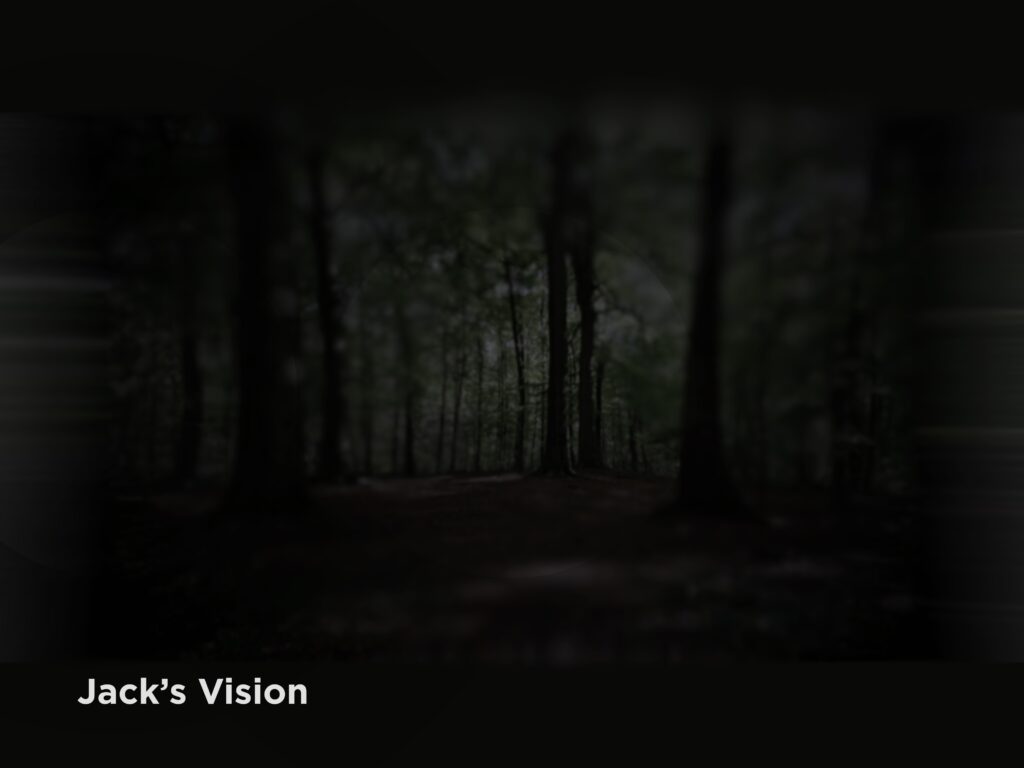
I describe my vision as looking backward through binoculars while wearing several pairs of sunglasses. This lets people know that things look much smaller to me, that I can’t read printed text, and that I can’t see in dark/dim lighting. It is much more effective to use this analogy than to list things I can’t see.
Sharing my analogy also helps someone to imagine what it would be like to look through binoculars backwards, wearing several pairs of sunglasses. But they often can’t imagine what it is like not to see in dim lighting. It is also hard for some people to ask what I can and cannot see since they don’t want to highlight my limited vision or are just uncomfortable asking.
Jack’s Vision
Providing information about your visual impairment or offering an analogy often puts people at ease. When people know you are comfortable talking about it, they feel freer to ask questions.
Imagine playing cards with a new group of friends. One person at the table asks, “Will you be able to play cards with us?” You know you won’t be able to see the cards in the center of the table, but you share your vision impairment analogy or description. By helping your friends understand that you can see the cards in your hand but will need them to announce the card that they lay down, allows them to make simple accommodations so you can participate. Because you were able to describe your vision loss simply, you and your friends had a great evening together.
I encourage you to come up with your own analogy to describe how you see. I know I am not alone in worrying about the accessibility of new environments. Most people are happy to do what they can to make things more accessible. Helping them understand what you can see will help them help you and lead to a more fulfilling, connected life.
Amanda Geffre gripped the steering wheel of her car as she fought back tears. The two-hour trip home from Fargo, ND, with her two-year-old daughter, Pepper, felt far longer than the trip from their home in Oakes earlier that day. Pepper’s appointment with the Fargo pediatric ophthalmologist was supposed to be for updated glasses or maybe bifocals. Amanda hadn’t expected new information, and her mind now churned with the implications of the doctor’s observations.
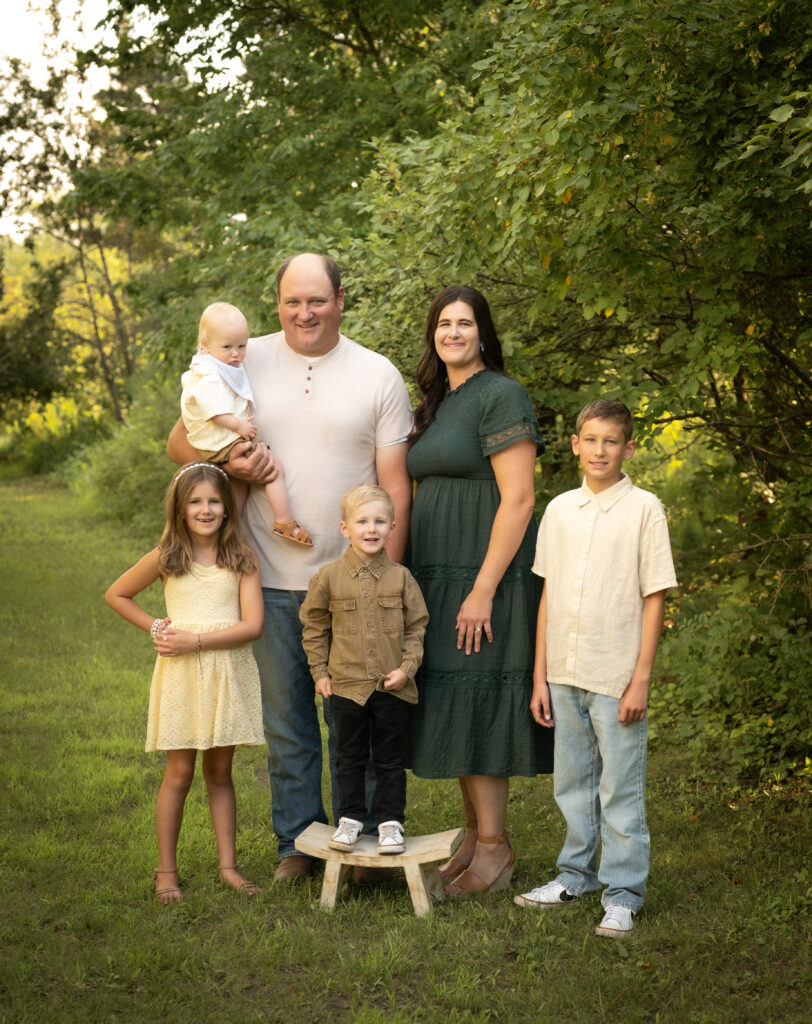
The Geffre Family
She called her husband, Jordan, struggling to find the words to explain what the doctor had said: Pepper had permanent vision loss and damage to her retinas. “I was confused and in shock. The doctor mentioned grieving, but I couldn’t grasp what he meant,” Amanda recalled.
For several years, the Geffres had been trying to uncover what was impeding their daughter’s development. “When we discovered that she had some vision loss, we hoped that glasses and the state’s early intervention program would meet her needs,” Amanda said. “We never expected a diagnosis of a rare genetic condition.”
Early Questions and Uncertainty
Connor, the Geffres’ first child, was born in 2014 and met all his milestones. But when Penelope (“Pepper”) arrived in 2017, Amanda and Jordan quickly noticed she lagged behind. “When she was about six months old, our pediatrician told us she should be evaluated,” Amanda said. “At 11 months, she wasn’t crawling, and she qualified for early intervention. But we still didn’t know the cause.”
Pepper disliked getting dressed and had separation issues when she couldn’t hear Amanda’s voice. “She also avoided physical activities or touching things,” said Amanda. “We wondered if she had hearing, or balance problems, or maybe a sensory disorder.”
Pepper’s inconsistent behaviors made it difficult to pinpoint a cause. For example, when she started eating finger food, sometimes she’d grab it right away, at other times, Amanda would have to tap on the tray or point it out before she’d find it. If she dropped a toy, she might have a hard time locating it, but not always.
When Amanda mentioned these behaviors to the early intervention team, they suggested she might need glasses. An appointment with a local eye doctor, when she was about 18 months old, confirmed that need. “Once she had glasses, Pepper started walking, and we thought the problem was solved,” Amanda recalled. “But she continued to trip or walk into things. It seemed like the glasses weren’t working, and we felt that something wasn’t right.” It was then that their local eye doctor suggested a stronger prescription or bifocals and referred Pepper to the pediatric ophthalmologist in Fargo.
On the Road…Again
Much to Amanda’s surprise, the pediatric ophthalmologist said a new prescription was the least of his worries. “He said Pepper had vision loss and that her retinas weren’t healthy,” Amanda explained. “He also wanted to schedule a brain MRI to see if something brain-related might be causing her vision loss.” Although it felt somewhat contradictory, the couple hoped the MRI might reveal something that could restore Pepper’s vision. But the test was clear, and the conclusion was that their daughter’s vision loss was genetic.
The next referral was to a specialist in the Twin Cities (Minneapolis/Saint Paul, MN). That specialist wasn’t concerned, saying that Pepper had moderate vision loss. But he wanted to evaluate her retinal function with an electroretinogram (ERG). Unfortunately, the test was delayed by the COVID shutdown.
“Pepper had the ERG somewhere between ages two and three,” said Amanda. “Afterwards, the doctor said he was worried about her vision and that we should connect with the North Dakota School for the Blind. He told us genetic testing was expensive and he didn’t think it was necessary.”
Genetic Testing
Fortunately, their local eye doctor was able to arrange for free genetic testing, and Pepper was subsequently diagnosed with the recessive IQCB1/NPHP5 mutation that causes Leber congenital amaurosis. In addition to vision loss, this mutation can cause end-stage kidney failure.
“Getting Pepper’s LCA diagnosis consumed me,” Amanda said. “It was all I could think or talk about. I Googled everything. No one could tell us what her vision might eventually be like.”
Amanda and Jordan underwent genetic testing to determine whether they were carriers or whether Pepper’s LCA was due to a spontaneous mutation. “When we found that we were carriers, I was in my second or third trimester with our son, Jade,” Amanda said. “We now knew that he had a 25 percent chance of having LCA.” Jade, tested soon after his birth in 2021, did not have LCA.
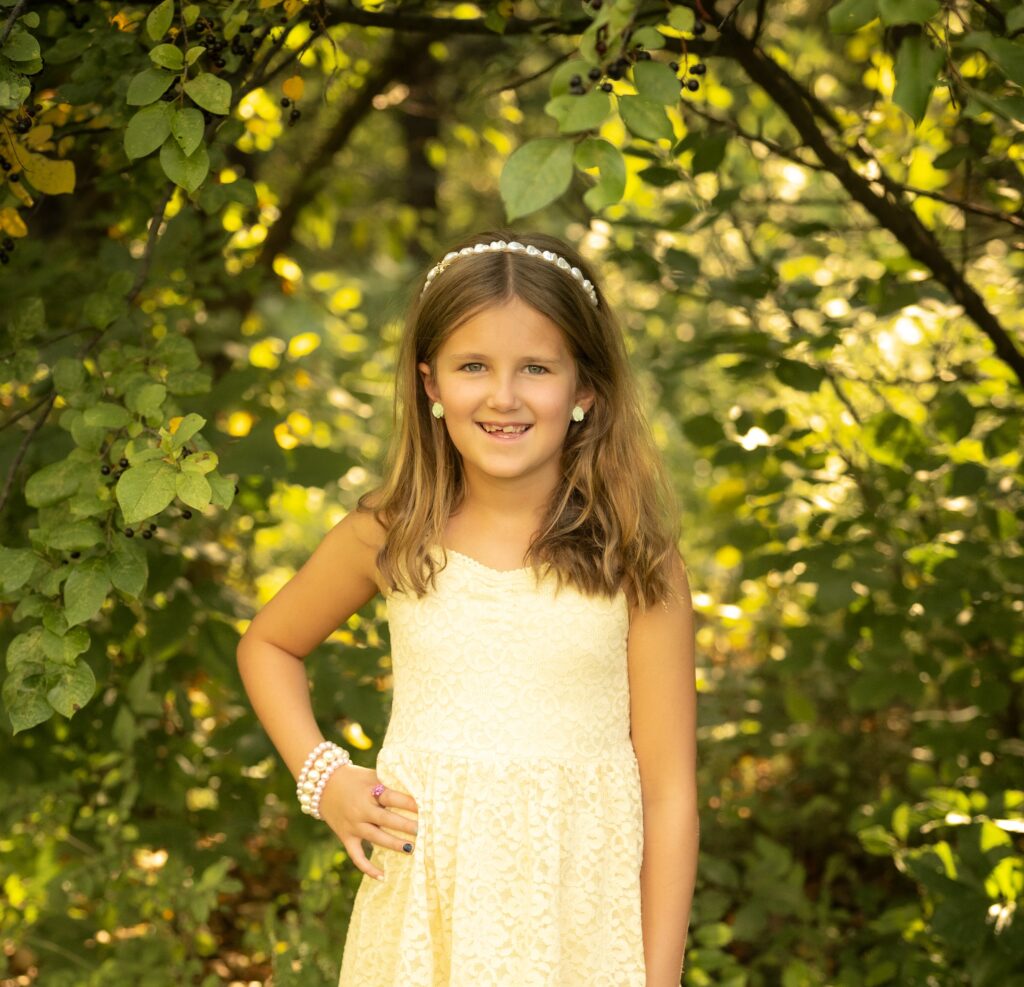
Pepper Geffre
Pepper’s Progress
The support from the state’s early intervention program and vision services was key to Pepper’s development. “I was so relieved when she started walking and using a kind of rolling plastic rectangle that they provided,” said Amanda. “She could move and run because she understood that this thing he was pushing would detect if there was something in the way. It really helped her developmentally.”
Then, just before Pepper turned three, their school district opened a special education preschool. Amanda said it was a battle for Pepper to qualify because the division teacher didn’t understand her diagnosis or the extent of her vision loss. Once that problem was rectified, she qualified and began learning Braille and how to read and write.
As time went on, the Geffres grew comfortable with Pepper’s development. She began using a cane and was telling her parents what was and wasn’t working. “She was doing so well in school, we kind of forgot that we had a risk of LCA if we had another child.”
Baby #4…
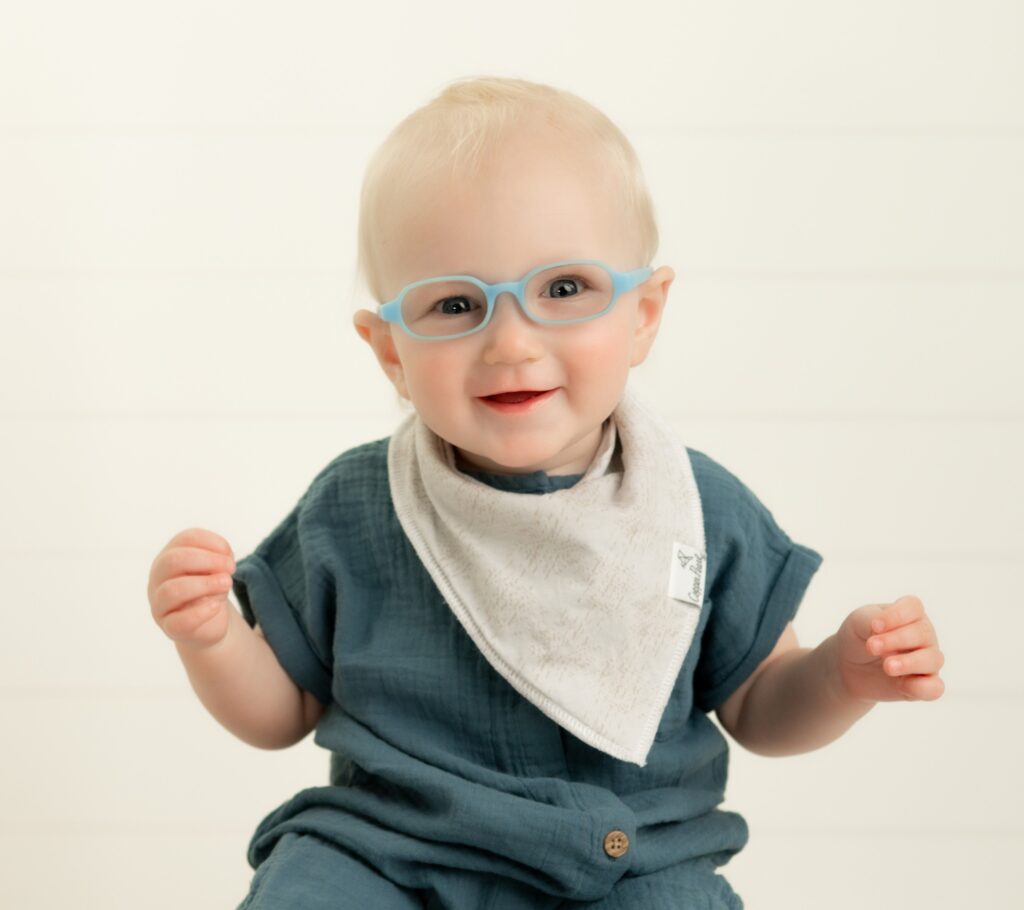
Maverick Geffre
Pregnant with their fourth child, Maverick, the Greffes faced the possibility that this baby could have LCA. “I told myself if it happened again, we knew what to do, who to contact, and who would need to work with this child,” Amanda said.
Maverick was born in 2024 and was diagnosed with LCA. “Even though we were somewhat prepared, it was still very hard,” recalled Amanda. She called the early intervention team and vision services, and Maverick qualified right away.
Although Maverick’s vision was better than Pepper’s, he still had developmental delays. “I was a little disappointed since I hoped that by starting him early, he wouldn’t be as delayed. He was still not walking at 17 months, even though he had gotten glasses at four months old,” Amanda said. “But his physical therapist said that a child with visual impairments is going to be delayed and will have a different developmental timeline.”
When Maverick was about six months old, the Geffres took him to the same pediatric ophthalmologist in Fargo who had seen Pepper. But their visit was confusing. “He didn’t think the genetic test was correct and said that Maverick’s retinas looked fine, and that maybe he had retinitis pigmentosa. That made us wonder if his genetic testing could have been messed up,” Amanda said.
Finding Clarity
A turning point occurred when the Geffres met another family in North Dakota with a son who had LCA, and their recommendation provided Amanda and Jordan with a vital resource. “They were seeing a specialist in retinal diseases in Philadelphia, and encouraged us to see him,” Amanda said. “I wasn’t sure if he would see Maverick because he was so young, but we really needed someone to tell us what was going on! So, we reached out to the specialist in Philadelphia, and he said he would see an infant.”
Both children were evaluated by Tomas Aleman, MD, of the Scheie Eye Institute, which is part of Penn Medicine at the University of Pennsylvania. “He said that Pepper and Maverick had the most vision of children with LCA that he has seen to date. That was somewhat comforting, knowing that at this point they are on the low end of the spectrum and are pretty fortunate,” Amanda said.
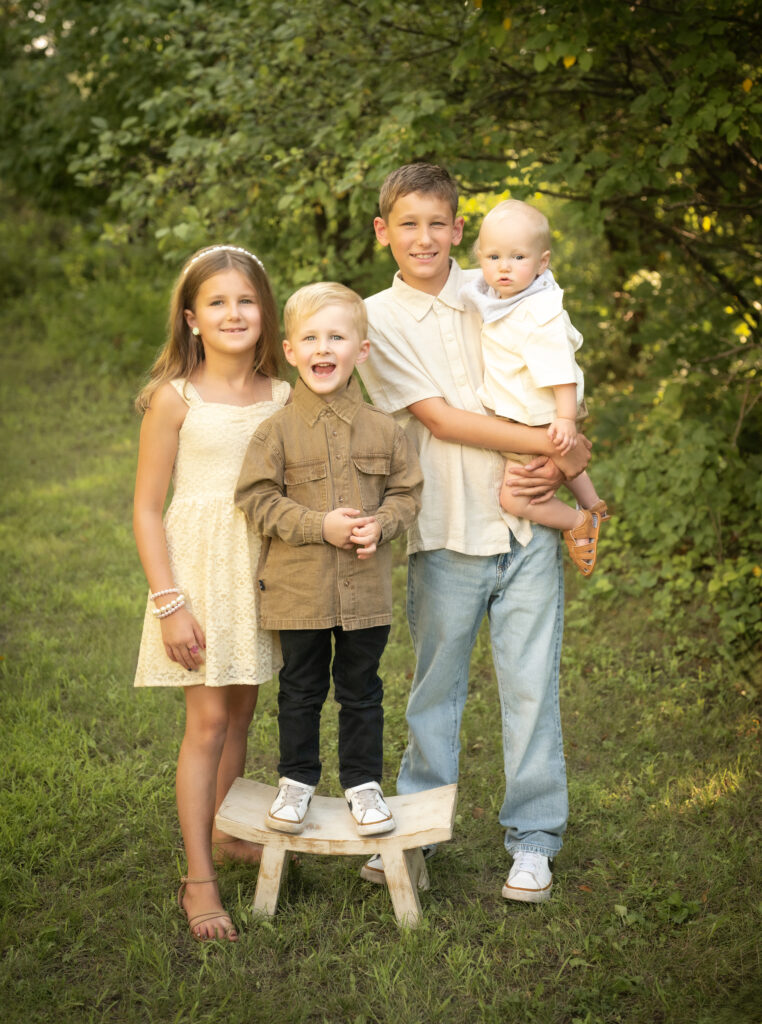
Pepper, Jade, Connor, and Maverick
The Geffres know that both children will have more vision loss, but for now, they take comfort in knowing that their children’s diagnosis is accurate. “Dr. Aleman explained that vision loss with the IQCB1/NPHP5 mutation is generally a slow progression with loss and then a period of stability.” Because this mutation can also cause kidney failure, both children are being regularly monitored via bloodwork and ultrasound.
Life in Motion
The entire family, including Amanda’s parents, attended the Hope in Focus Family Conference this past June. “It was so good! My kids really enjoyed it, and we met another family with a daughter who has LCA and lives in Iowa. She is two or three years older than Pepper, but they made a connection and have been talking,” Amanda said. “It’s been great for Pepper because she feels like she has an older friend, and they have the shared experience of LCA.”
Despite the Geffres’ initial frustrations, the family is forging ahead. Bright-colored tape marks the stairs and other obstacles in their home. It is an ongoing challenge to keep the furniture in the same place — their energetic children, Connor (age 11), Pepper (age 8), Jade (age 4), and Maverick (age 1), love rearranging it. Everyone is adjusting and adapting to the unexpected challenges and joys that arise in a family living with LCA. “We don’t know exactly what the future holds, but we’re facing it together,” said Amanda.
I am excited to report on impressive progress in the development of Odylia Therapeutics’ emerging gene therapy for retinal degeneration caused by RPGRIP1mutations, which is most often diagnosed as LCA6. Like the journey for so many inherited retinal disease treatments and the companies that develop them, there’s a long story here ⎯ a story of commitment, resourcefulness, and persistence. I’ll touch on that in a moment, but I encourage you to learn much more from an enlightening Hope in Focus podcast interview I conducted with Ashley Winslow, PhD, chief executive officer at Odylia, on March 3rd. It’s an excellent episode, if I do say so myself.
Background on RPGRIP1-associated disease
The RPGRIP1 protein is critical for the structural development of photoreceptors (rods and cones) and the trafficking of important proteins. Remember, photoreceptor cells are long, thin, light-sensing cells in the retina that enable us to see, and many different proteins need to move up the length of the cells for them to work properly and survive long term. That movement is called trafficking.
Also, remember that genes are like recipes for proteins. Cells read genetic messages to make proteins, and ultimately, it’s the proteins that are critical to our cells’ function and survival. In the LCA6 case, if there are spelling mistakes (i.e., mutations) in the RPGRIP1 gene, there isn’t sufficient RPGRIP1 protein produced, and photoreceptors suffer.
Mutations in the RPGRIP1 gene cause LCA6 but can also be associated with milder forms of retinal disease, such as cone-rod dystrophy (CORD), retinitis pigmentosa, or achromatopsia. Though LCA6 usually causes significant vision impairment at birth, photoreceptors can potentially survive into young adulthood, thereby providing a wide treatment window for patients.
The RPGRIP1 gene therapy story
Initial development of Odylia’s gene therapy began at Mass Eye and Ear (Harvard) more than 15 years ago. Researchers there demonstrated efficacy for gene therapy in mouse models. With sustained funding from Odylia, the RPGRIP1 gene therapy has moved into a safety and toxicology study, a critical step before moving into a clinical trial. The study will also help researchers determine the optimal dosing range for the trial. Also important, Odylia has clinical manufacturing in place and received positive feedback from the FDA on the trial design. However, additional funding is needed to launch the trial.
Odylia also has gene therapy programs underway for vision loss due to mutations in the USH1C and NPHP1 genes, which are in preclinical development.
The Odylia story
Odylia was formed in 2017 as a nonprofit collaboration between Scott Dorfman, a father of two children with Usher syndrome 1C, and gene-therapy pioneer Luk Vandenberghe, PhD, of Mass Eye and Ear. Their goal: Provide the commitment and resources needed to advance rare disease treatments into early-stage clinical trials. In the podcast, Ashley Winslow, PhD, Odylia’s chief executive officer, said that as a nonprofit, Odylia has a stronger commitment to rare disease therapy development than a typical for-profit biotech or pharmaceutical company that’s focused on minimizing financial risk and maximizing revenue. By de-risking therapies through early-stage development, Odylia aims to attract investment partners (i.e., for-profits) to its programs.
Dr. Winslow explained that the key to Odylia’s success is its collaboration with patient groups, academic researchers, manufacturers, and clinical research organizations to find a way forward both in fundraising and therapy development. “In the rare disease space, you have to think about the science and the fundraising hand in hand because financial resources are often limited,” she said.
If you’re interested in learning more about Odylia and its emerging therapies, you can reach out to Dr. Winslow at awinslow@odylia.org.
In May 2025, Johnson & Johnson (J&J) announced that though its emerging gene therapy bota-vec for X-linked retinitis pigmentosa (XLRP) improved vision for many patients in its Phase 3 clinical trial, the gene therapy didn’t meet its primary endpoint. Not meeting a primary endpoint in a clinical trial is not good news even when overall results are favorable.
So, the question became: Will J&J seek regulatory approval for bota-vec or perhaps continue clinical development for it? Many of us in the inherited retinal disease (IRD) community were not optimistic. We were afraid bota-vec development was finished and the treatment would never make it out to patients who so desperately needed it.
But today I am pleased to say that hope is alive for bota-vec. On April 16, 2026 ⎯ nearly a year later ⎯ MeiraGTx, the original developer of bota-vec, announced it is acquiring the bota-vec license from J&J. MeiraGTx plans to seek regulatory approval for the gene therapy in the US and EU. If approved ⎯ and that’s still a big if ⎯ bota-vec could be available to patients in 2027.
We applaud MeiraGTx ⎯ a Hope in Focus partner and developer of a vision-restoring gene therapy for LCA4 (AIPL1 mutations) ⎯ for giving new life to bota-vec. It was a bold move, no doubt. And, we applaud the many advocates in the IRD community ⎯ including researchers, patient groups, and families ⎯ for being strong voices in support of bota-vec advancement. Our voices were heard.
The important take-away message for all of us in the IRD and LCA communities is to stay tenacious, stay resilient, and continue to do our best in moving the research forward.
In March 2024, the company announced vision improvements for the first three adult patients in its Phase 1/2 LCA5 gene therapy clinical trial. Some patients, who had been almost totally blind since birth, can now see and identify objects for the first time. The company has also reported positive safety data for the trial thus far.
Though LCA5 patients have severe vision loss at birth, they have some surviving retinal structure that researchers believe can be harnessed for improved vision using gene therapy.
Known as OPGx-001, the gene therapy uses a human-engineered adeno-associated virus (AAV) to deliver healthy copies of the LCA5 gene to patients’ retinas, augmenting the mutated copies that cause vision loss. The therapy is administered through a one-time injection underneath the retina. Researchers believe gene therapies will be effective for many years, perhaps for the patient’s lifetime.
Opus plans to administer the next highest dose of its LCA5 gene therapy to the next cohort of adult patients in mid-2024. The company also has plans to dose patients as young as 13 years old sometime in the future.
Courtney Coates, Hope in Focus’s Director of Outreach and Development, stated, “We are thrilled that patients in this trial are having early success with the low-dose treatment. We look forward to hearing more as the next cohort is enrolled for the mid-dose.”
The LCA5 gene therapy clinical trial is the first launched by Opus, a company founded in 2021 by the RD Fund, the venture arm of the Foundation Fighting Blindness, which is investing in companies near or in early-stage clinical trials for their retinal degenerative disease treatments.
Moving emerging therapies through clinical trials and across the finish line is often challenging—and in some cases, harrowing. Many treatments never make it.
In early 2022, the future looked bleak for ProQR Therapeutics’ two RNA therapies in clinical trials. The biotech company reported that sepofarsen, its RNA therapy for LCA10 (IVS26 mutation in CEP290), did not meet its primary endpoint of improvement of at least three lines in best-corrected visual acuity or BCVA. (Improvement in BCVA was only on average two lines in the Phase 2/3 trial.) That news came despite vision improvements, some significant, for many patients. But missing the primary endpoint led ProQR to stop development of its ophthalmology assets—sepofarsen and ultevursen (exon 13 mutations in USH2A)—and attempt to find a company to acquire them.
Mike Schwartz, who was then vice president, global project leader, at ProQR, said, “That was devastating for me, the doctors, and the patients.” He noted that one patient with LCA10 in the trial with only light perception gained enough vision after receiving sepofarsen to see letters on an eye chart. Another LCA10 patient in the study returned to his work as a carpenter after treatment.
Fortunately, a year and a half later, the large European eye care company Théa acquired sepofarsen and ultevursen and formed the Sepul Bio business unit to move the therapies back into clinical trials. Many former ProQR staff went to Sepul Bio, including Mr. Schwartz, who is now their chief operating officer.
The global HYPERION Phase 3 clinical trial for sepofarsen and the LUNA Phase 2 trial for ultevursen are now underway. Using what was learned from the ProQR trials, the Sepul Bio team made significant changes to the designs (protocols) for the clinical trials, changes they believe will greatly improve chances for success. Mr. Schwartz thanked the Hope in Focus team for providing input from patients for the sepofarsen clinical development program.
One major change in the new sepofarsen clinical trial protocol has to do with the placebo. In most clinical trials with regulatory authorization, the treatment group is compared to a placebo or control group to ensure that efficacy is indeed a result of the treatment. In the original sepofarsen trial, treated eyes of LCA10 patients were compared to the eyes of untreated LCA10 patients (i.e., the control group). Comparing treated patients to untreated patients was less than ideal because of significant variations in vision loss among LCA10 patients. So, in the new trial, each LCA10 patient will have one eye injected with sepofarsen and the other will get a saline placebo injection. The patient won’t know which eye is getting the treatment. Sepul Bio believes comparing untreated and treated eyes for the same patient will lead to less variation and a stronger efficacy signal.
Keep in mind that sepofarsen injections are made into the vitreous, the soft gel in the middle of the eye. These intravitreal injections are performed routinely (e.g., monthly) and safely in doctors’ offices for treating age-related macular degeneration. In the sepofarsen clinical trial, patients will receive injections every six months.
Sepul Bio’s RNA therapies, known as antisense oligonucleotides (ASOs), are tiny pieces of genetic material that fix mutations in RNA—the genetic messages that cells read to make proteins critical to the cells’ health and function.
Stay tuned. We will report on updates from the trials as soon as we receive them.
For more information on the sepofarsen or ultevursen trials, send an email to: contact@sepulbio.com.
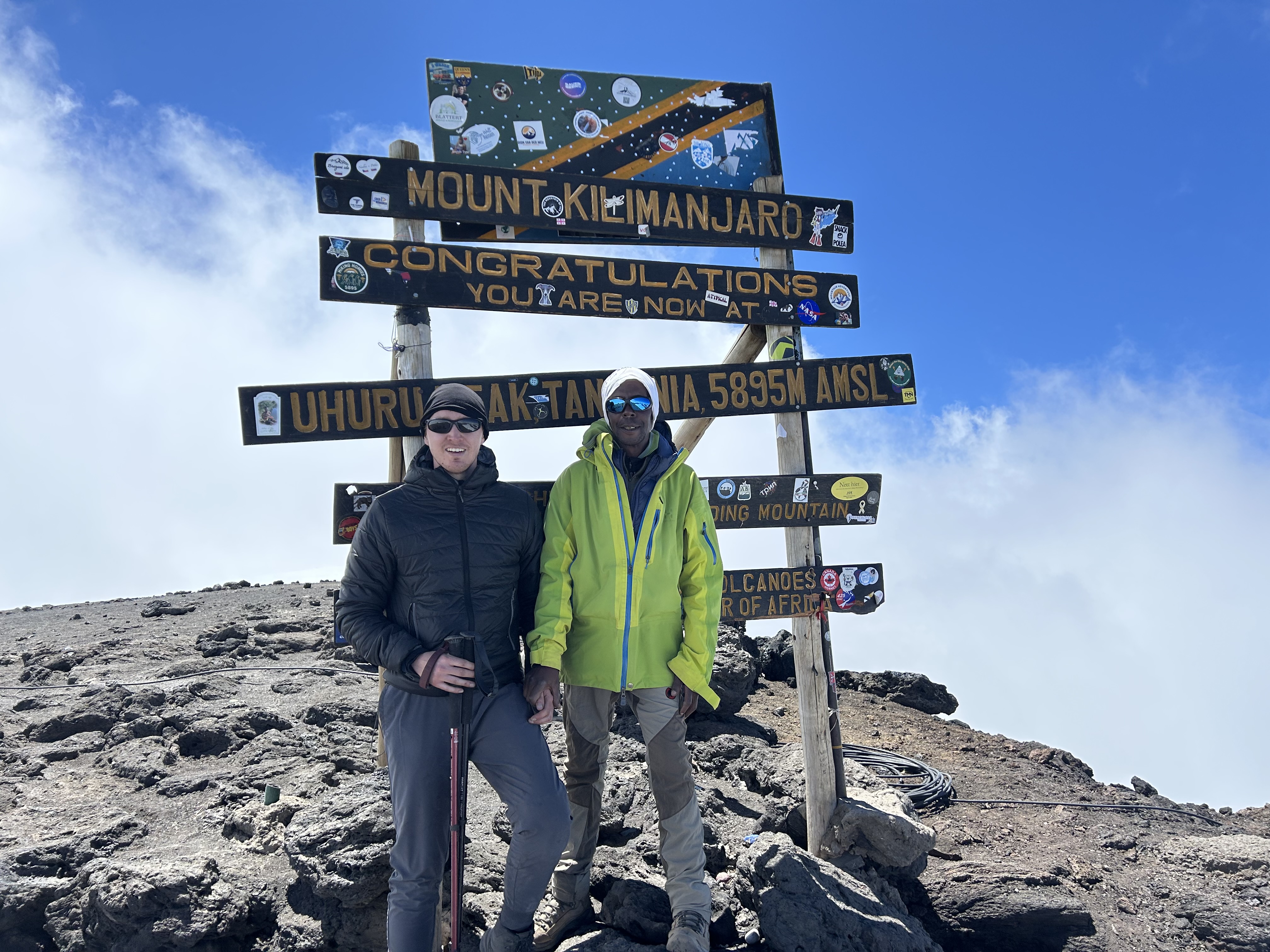
Throughout my life, I’ve pushed my body to do some incredible things—from wrestling in high school to running a marathon to later backpacking in the wilds of British Columbia. But on October 7, 2025, I literally reached new heights as part of a group of nine legally blind individuals who successfully summited Tanzania’s Mount Kilimanjaro. Our group set a world record for the largest number of legally blind climbers to reach the mountain’s summit in a 24-hour period!
Jack with guide on Mount Kilimanjaro
As the biggest mountain in Africa and the highest freestanding peak in the world, Kilimanjaro is challenging for everyone. It took seven days of grit, fatigue, and trust in our guides to reach the point where we began the final climb to the top. The physical strain left my body aching, and altitude sickness gave me one of the worst headaches I’ve ever had. Sleeping in a tent in freezing conditions was wearing, and I quickly missed hot showers. Within twenty minutes of starting our ascent, I lost count of the rocks I had to climb over. Being legally blind required my full concentration. I had to carefully probe the ground ahead with my hiking poles before each step and listen intently to my guide’s directions, alerting me to constant obstacles along the trail.
I also experienced many challenges. On day three, I had severe dehydration and nearly fainted trying to make it to the washroom in the night. Reaching the summit meant experiencing oxygen levels as low as 47 percent, leaving me breathless every few steps. The descent was no less demanding, for hours I slid down loose gravel, followed by two days of climbing down rocky terrain on tired legs.
Getting to the top of this famous mountain was worth it, but I’d be lying if I said I wanted to do it again. You might be thinking this sounds like a great adventure and wonder how you might do something like this. Or, maybe you’re wondering how we safely accomplished the climb.
The answer is simple—with a lot of support from local experts. We partnered with Nana Safaris, a tour company experienced in guiding legally blind climbers, which matched each member of our group with a local guide. My guide, Thomas, was certified by the Tanzanian government and had summited Kilimanjaro 370 times before our climb. Before setting out, we discussed how he could best assist me. Throughout the trek, Thomas carefully led the way, holding one of my hiking poles so I could sense the path ahead. He gave clear verbal directions and, in high-risk sections, had me hold on to a rock or showed me exactly where to step by placing my pole. Thanks to his expert guidance, I always felt safe.
Challenging adventures like this are possible with proper planning and support. If you’re considering climbing Kilimanjaro or visiting Tanzania, Nana Safaris is the most experienced company for supporting people with disabilities. We documented our journey and will be releasing a documentary about our adventure—follow us on Facebook to stay updated.
Wondering what has been served at Dinner in the Dark over the years? Here are the menus!
Dinner in the Dark 2025
This year marked our 10th Dinner in the Dark, held on November 1 at Foxwoods Resort Casino — a milestone we were thrilled to celebrate with new and familiar faces. Together, we dined, danced, and raised our paddles high in support of those living with Leber congenital amaurosis (LCA) and other rare inherited retinal diseases.
This year, we celebrated the 10th anniversary of Hope in Focus at a new venue- Foxwoods Resort Casino. With 330 guests to feed, Foxwoods truly outdid themselves. Here are the fantastic meals we had on the menu!
1st Course: Autumn Panzanella Sweet Potato, Butternut Squash, Asian Pear, Dried Cherries, Bacon Lardons, Crispy Brussel Leaves, Friese, Boston Brown Bread Croutons, Maple-Balsamic Vinaigrette
We had one heck of a blast at our 8th Annual Dinner in the Dark gala fundraiser at the Mystic Marriott and Spa in Groton, Connecticut!
We hope you joined us Saturday, October 14th, for this extraordinary menu designed for our event by the Marriott, and to Foxwoods Resort Casino for their in-kind donation. If you did and could not read the menu scripted in Braille, here is the menu that you and more than 270 people enjoyed that evening:
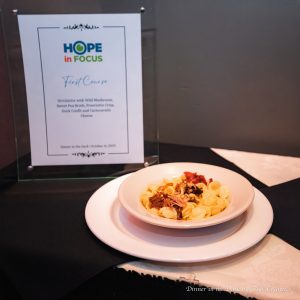
1st Course: Appetizer Orecchiette with Wild Mushroom, Sweet Pea Broth, Prosciutto Crisp, Duck Confit, and Caciocavallo Cheese
Vegan Option: Hummus Falafel
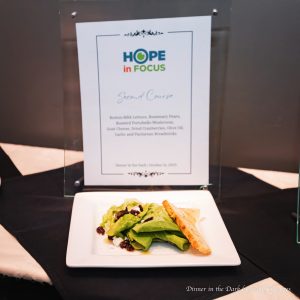
2nd Course: Salad Boston Bibb, Rosemary Pears, Goat Cheese, Dried Cranberries, Olive Oil, Garlic and Parmesan Gluten-Free Breadsticks
Vegan Option: Same Salad without the Goat Cheese
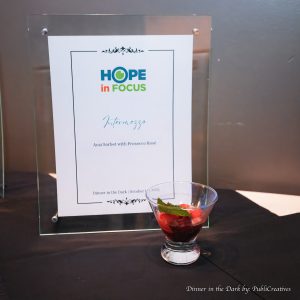
3rd Course: Intermezzo Acai (Sorbet) with or without Prosecco Rosé
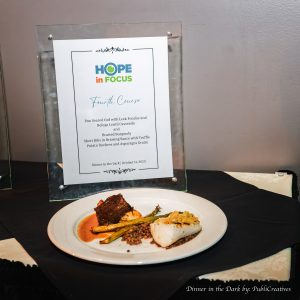
4th Course: Entrée Duet Plate Seafood & Short Rib Pan Seared Cod with Leek Fondue and Beluga Lentil Casserole with Braised Burgundy Short Ribs in Braising Sauce, Truffled Potato Duchess, and Asparagus Gratin
Vegan Option: Plant-Based Meatloaf with Mushroom Gravy, Olive Oil Mashed Potatoes and Gratin Byaldi
Dinner in the Dark 2022
Passed Hors d’Oeuvres Butler passed beef wellington with horseradish cream Lemongrass and chicken pot stickers with teriyaki dipping sauce Truffle mushroom arancini
1st Course: Aged Grana Padano Pan Seared 10/20 Scallops over Sweet Potato & Cumin Cured Pork Belly Hash and Butternut Squash & Aged Grana Padano Caponata
2nd Course: Burrata and Tuscan Salad Petit Burrata/Aged Balsamic Reduction/Mixed Olives/Oven Roasted Tomatoes/Grilled Artichokes/Vermont Cheddar Curds/Micro Basil/Passionfruit Caviar/Focaccia Crostini
3rd Course: Duet Plate of Filet & Salmon Cocoa & Coffee Rubbed Filet with Pan Roast Chimichurri Mushrooms and Duck Fat Roasted Potato Lyonnaise Petit Farroe Island Salmon with Peach and Orange Botanical Vodka Beurre Blanc, Black Lentils, Warm Fennel Salad, Cauliflower Puree
Dessert Buffet:
Dinner in the Dark 2019
Passed Hors d’Oeuvres
1st Course: Asian Fall vegetable wrap with dipping sauces
2nd Course: Wild boar & sausage Bolognese with bucatini pasta and shaved fennel
3rd Course: Chicken Tamale
Dessert Buffet:
Dinner in the Dark 2018
1st Course: Pan Seared Scallops Sweet Pea Puree, Shitake and Bacon Hash, Charred Asparagus Tips, Roasted Baby Heirloom Tomatoes
2nd Course: Caprese Napoleon Smoked Paprika, Roasted Herb Tomato, Black Truffle Burrata Cheese, Black Truffle Pearls, Pesto, Balsamic Fig Reduction, Micro Basil
Dessert: Assorted mousse station Raspberry, Blackberry, Nutella
Dinner in the Dark 2017
1st Course: Japanese potato crusted Scallops with cauliflower curry puree accompanied with segments of citrus (grapefruit, lemon, lime) and scent of pine
2nd Course: Warm zucchini soup topped with zucchini noodles and a cool red pepper foam
3rd Course: Beef Wellington with red pepper ragout, grilled vegetables, potato gratin, rosemary scent
Dessert Station: Smoked S’mores – Live action station Graham cracker tart, chocolate ganache, chocolate mousse and torched marshmallow topping
Dinner in the Dark 2016
Passed Hors d’Oeuvres Greek salad skewers with cucumbers, kalamata olives grape tomatoes and a feta-oregano vinaigrette Lemongrass chicken skewer with a mint-ginger rub and pickled plum jam Lobster profiteroles Micro arugula & grapefruit
1st Course: Soup & salad duet plate with roasted chestnut mushroom cappuccino soup & baby spinach salad with pomegranate, candied walnuts and a cider vinaigrette
2nd Course: Smoked duck breast sliced over pumpkin flan, balsamic-fig gastrique
3rd Course: Wild King Salmon en papillote with fennel, arugula, carrots and grapefruit
Dessert Buffet: Pumpkin crème brulee Apple tartlet Mocha pot d’ crème French macaroons
Dinner in the Dark 2015
Reception International cheese display & vegetable crudite & dips
Parmigiano Reggiano, Vermont cheddar, smoked gouda, brie, herb-crusted chevre with artisan breads and gourmet crackers
1st Course: “Popcorn” Shrimp – chili lime marinated grilled shrimp on a skewer served over avocado salad with pickled onions, mini seasoned popcorn & wine
2nd Course: Sunburst Salad Trio served in savory cones with three types of dressings for dipping: sherried green goddess dressing, verjus feta vinaigrette, yuzo wasabi vinaigrette
3rd Course: Moroccan braised beef short rib served with risotto timbale & roasted winter vegetables
Dessert Buffet: Chocolate coffee & donuts Apple cobbler in a mini apple Fizzy fruit shooters Pumpkin chestnut panna cotta in a mini pumpkin
Dinner in the Dark 2014
Reception: Local artisan cheeses with artisan breads and gourmet crackers
Gene therapy is unequivocally the most advanced approach for treating retinal diseases like Leber congenital amaurosis (LCA). Of course, there’s LUXTURNA® which is FDA-approved and has restored significant vision for people with LCA caused by RPE65 mutations. But several other emerging gene therapies are, or will soon be, in clinical trials. Excitingly, some are restoring vision early in human studies.
I had the honor and privilege of moderating an expert research panel at the 2025 Hope in Focus Conference last June in Minneapolis to discuss some of the exciting developments in LCA gene therapies. The three panelists were Kenji Fujita, MD, chief medical officer, at Atsena Therapeutics; Sarah Tuller, JD, chief regulatory officer at Opus Genetics; and Bikash Pattnaik, PhD, a professor at University of Wisconsin-Madison.
Atsena’s LCA1 Gene Therapy Moving into Phase 3
Dr. Fujita delivered the exciting news that Atsena’s LCA1 (GUCY2D) performed very impressively in a Phase 1/2 clinical trial. “We were super-thrilled with the results,” he said. “The gene therapy worked better than we expected.” Thanks to the excellent results, the gene therapy is moving into Phase 3 in a co-development partnership with Nippon Shinyaku which brought a few of their representatives to Minneapolis.
The Phase 1/2 trial enrolled nine adults in Part A (the dose escalation group) to evaluate initial safety and determine the optimal dose. An additional three adults and three pediatric patients were subsequently dosed. Patients receiving the highest dose (all were treated in one eye) had 100-fold improvement in retinal sensitivity, as measured by full-field sensitivity (FST). Some had10,000-fold improvement. Patients were also able to navigate a multi-luminance mobility test (MLMT) in dimmer light (two lux levels lower) after treatment. “This was a transformative difference, on par what we have seen with LUXTURNA,” said Dr. Fujita.
The Phase 3 clinical trial will enroll a larger group of patients and treat both eyes. Some patients will be in a deferred treatment group, serving initially as controls.
The Foundation Fighting Blindness, through its RD Fund, is an original investor in Atsena.
Opus Reports Vision Improvements in LCA5 Gene Therapy Clinical Trial
Opus Genetics, a company established by the Foundation Fighting Blindness in 2021, launched its first clinical trial in 2023 for an LCA5 gene therapy. LCA5 is a severe retinal degeneration diagnosed in a child’s first year. It is also very rare, affecting only about 200 patients in the US.
Opus reported excellent results for the first three patients (adults) in the trial with improvements in FST and virtual maze navigation. The company is now dosing pediatric patients and expects to report on them in the third quarter of 2025. “We are trying to move forward as aggressively as the FDA will allow,” said Ms. Tuller.
She acknowledged the great work of Dr. Tomas Aleman, the principal investigator on the trial, who was also at the meeting and had an engaging discussion with Sarah McCabe, one of the first patients to receive an RPE65 gene therapy.
A CRISPR Therapy is Emerging for LCA 16
Dr. Pattnaik reviewed his team’s emerging CRISPR gene editing approach for correcting the W53X mutation in the gene KCNJ13 which causes LCA16. He explained that the treatment works like molecular scissors to cut out the mutation.
Dr. Pattnaik is using lipid nanoparticles ⎯ which are like microbubbles ⎯ to deliver the treatment into retinal pigment epithelial (RPE) cells. Unlike most other genetic therapies which use engineered viruses to get genetic cargo into cells, nanoparticles have the advantage of being able to deliver therapeutic cargo of any size. Also, they are less likely to cause an immune reaction than viral systems.
Dr. Pattnaik tested the approach in cells and small animal models, and is now evaluating it in a large animal. He said the FDA is very positive about their current development plan.
The CRISPR therapy is currently funded through a grant from the National Institutes of Health (NIH) and was previously supported by the Foundation Fighting Blindness.
Dr. Pattnaik is also a co-founder of Hubble Therapeutics which is advancing a KCNJ13 gene augmentation therapy developed in his lab.
The development of diverse treatment approaches for Leber congenital amaurosis (LCA) is necessary because no single modality will work for everyone affected. While development of gene augmentation therapies (i.e., replacing mutated genes with healthy genes) has much momentum, other approaches also show promise as they move into and through clinical trials. Three of those emerging alternatives were discussed by a panel of experts at the Minneapolis meeting in June. The panel was moderated by Amy Laster, PhD, chief scientific officer, Foundation Fighting Blindness.
Optogenetics is a gene-independent approach for restoring some vision for people with advanced inherited retinal diseases (IRDs) who have lost most or all their photoreceptors (rods and cones), the retinal cells that make vision possible. Ray’s therapies deliver genes that express a light-sensing protein called channelrhodopsin to either bipolar or ganglion cells ⎯ cells that are normally not light sensitive but survive after photoreceptors are lost. In essence, the therapies enable bipolar or ganglion cells to work like a back-up system for photoreceptors. The therapies are delivered by a one-time injection into the vitreous, the soft gel in the middle of the eye. These non-invasive injections are performed thousands of times every day in retinal doctors’ offices for treatment of AMD and diabetic retinopathy.
While Ray’s clinical trials are at an early stage, Dr. Agrawal said early reports for safety and efficacy have been encouraging. Stay tuned.
Sepul Bio’s RNA Therapies for LCA10 and USH2A
In early 2022, the biotech company ProQR reported that sepofarsen, its RNA therapy for LCA10 (IVS26 mutation in CEP290), did not meet its primary endpoint in a Phase 2/3 clinical. That news came despite vision improvements, some significant, for many patients in the trial. The endpoint miss led ProQR to stop development of its ophthalmology assets ⎯ sepofarsen and ultevusen (exon 13 mutations in USH2A) ⎯ and find a company to acquire them.
Mike Schwartz, who was then vice president, global project leader, at ProQR, said, “That was devastating for me, the doctors, and the patients.” He noted that one patient with LCA10 in the trial with only light perception gained enough vision after receiving sepoafarsen to see letters on an eye chart. Another LCA10 patient in the study was able to return to his work as a carpenter after treatment.
Fortunately, a year and a half later, the large European eye care company Théa acquired sepofarsen and ultevursen and formed the Sepul Bio business unit to move the therapies back into clinical trials. Many former ProQR staff went to Sepul Bio including Dr. Schwartz who is now their chief operating officer.
A Phase 2 clinical trial for ultevursen is underway and a global Phase 3 trial for sepofarsen is imminent. Using what was learned from the ProQR trials, the Sepul Bio team made significant changes to designs for the forthcoming trials ⎯ changes they believe will greatly improve chances for success. Mr. Schwartz thanked the Hope in Focus team for providing input from patients for the sepofarsen clinical development program.
Sepul Bio’s RNA therapies, known as antisense oligonucleotides (ASOs), are tiny pieces of genetic material that fix mutations in RNA, the genetic messages that cells read to make protein that’s critical to the cells’ health and function. Both sepofarsen and ultevursen are delivered by intravitreal injections every six months.
The development of cell therapies for IRDs has been challenging for numerous reasons. Therapeutic cells haven’t been easy to source and enabling them to survive and integrate when transplanted into patients’ retinas has been difficult.
As a panelist for the session, I had the privilege of discussing a promising photoreceptor replacement therapy from BlueRock Therapeutics which came out of the lab of stem cell pioneer David Gamm, MD, PhD, University of Wisconsin-Madison. Excitingly, BlueRock’s therapy just moved into a clinical trial for people with RP and cone-rod dystrophy. Dr. Gamm said the cells might at some point be relevant to LCA patients.
The photoreceptor precursors used in the trial came from induced pluripotent stem cells (iPSC). The iPSC were derived from a small sample of mature blood or skin cells from a healthy donor. The cells were genetically tweaked to revert back to a stem cell state. The iPSC were then coaxed forward to develop into the photoreceptor precursors. As precursors, they aren’t fully mature. Dr. Gamm research showed that precursors have the best chance at survival and integration after transplantation.
BlueRock has the backing of two prominent companies: Bayer and Fuji Film. The Foundation Fighting Blindness funded Dr. Gamm’s previous iPSC-related lab research.
The BlueRock trial is moving forward methodically so that investigators can ensure safety for patients and best understand which patients and conditions can benefit most from the approach.