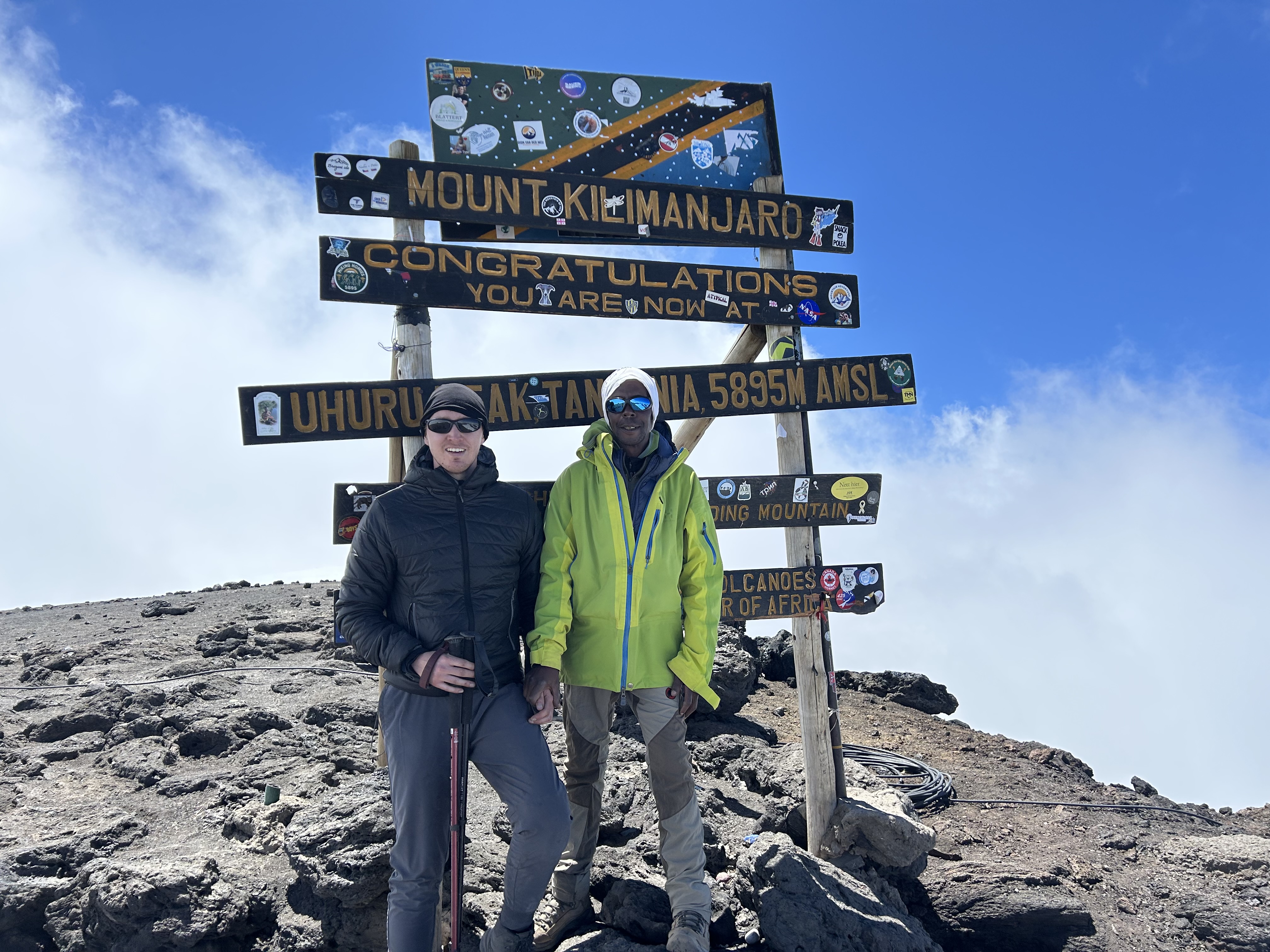
Throughout my life, I’ve pushed my body to do some incredible things—from wrestling in high school to running a marathon to later backpacking in the wilds of British Columbia. But on October 7, 2025, I literally reached new heights as part of a group of nine legally blind individuals who successfully summited Tanzania’s Mount Kilimanjaro. Our group set a world record for the largest number of legally blind climbers to reach the mountain’s summit in a 24-hour period!
Jack with guide on Mount Kilimanjaro
As the biggest mountain in Africa and the highest freestanding peak in the world, Kilimanjaro is challenging for everyone. It took seven days of grit, fatigue, and trust in our guides to reach the point where we began the final climb to the top. The physical strain left my body aching, and altitude sickness gave me one of the worst headaches I’ve ever had. Sleeping in a tent in freezing conditions was wearing, and I quickly missed hot showers. Within twenty minutes of starting our ascent, I lost count of the rocks I had to climb over. Being legally blind required my full concentration. I had to carefully probe the ground ahead with my hiking poles before each step and listen intently to my guide’s directions, alerting me to constant obstacles along the trail.
I also experienced many challenges. On day three, I had severe dehydration and nearly fainted trying to make it to the washroom in the night. Reaching the summit meant experiencing oxygen levels as low as 47 percent, leaving me breathless every few steps. The descent was no less demanding, for hours I slid down loose gravel, followed by two days of climbing down rocky terrain on tired legs.
Getting to the top of this famous mountain was worth it, but I’d be lying if I said I wanted to do it again. You might be thinking this sounds like a great adventure and wonder how you might do something like this. Or, maybe you’re wondering how we safely accomplished the climb.
The answer is simple—with a lot of support from local experts. We partnered with Nana Safaris, a tour company experienced in guiding legally blind climbers, which matched each member of our group with a local guide. My guide, Thomas, was certified by the Tanzanian government and had summited Kilimanjaro 370 times before our climb. Before setting out, we discussed how he could best assist me. Throughout the trek, Thomas carefully led the way, holding one of my hiking poles so I could sense the path ahead. He gave clear verbal directions and, in high-risk sections, had me hold on to a rock or showed me exactly where to step by placing my pole. Thanks to his expert guidance, I always felt safe.
Challenging adventures like this are possible with proper planning and support. If you’re considering climbing Kilimanjaro or visiting Tanzania, Nana Safaris is the most experienced company for supporting people with disabilities. We documented our journey and will be releasing a documentary about our adventure—follow us on Facebook to stay updated.
Three-year-old Luca Corso’s preschool teacher announced that everyone should quickly sit on their floor shapes for carpet time. As the other children eagerly scattered to their assigned spots, Luca wandered. He wasn’t being disruptive—he just wasn’t sure what to do. Even with glasses and a cane, he couldn’t locate a flat shape on the floor. Luca’s vigilant parents, Blair and John Corso, along with his early intervention team, got involved, and the preschool quickly provided him with a small chair for carpet time.
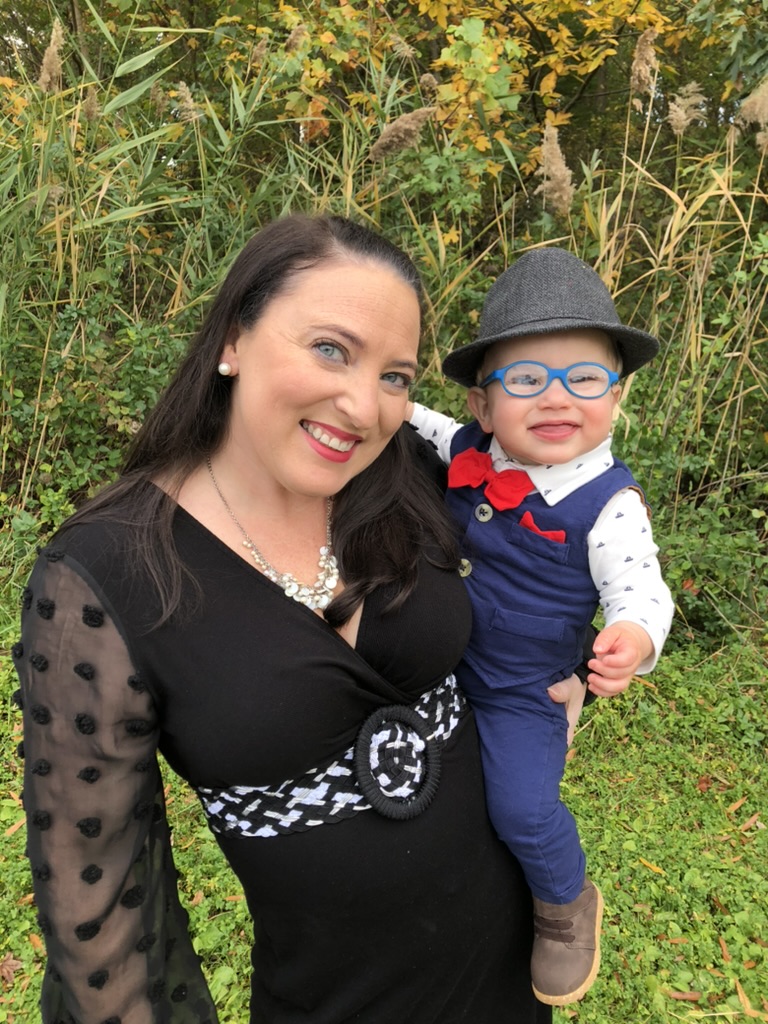
Blair and Luca
Diagnosis Shock
Luca was diagnosed with the recessive AIPL1 gene mutation that causes Leber congenital amaurosis 4 (LCA4) when he was about 14 months old. According to the Foundation Fighting Blindness, this rare but severe form of LCA affects “only a few hundred people in the US and less than 10,000 people globally.” The news was devastating to first-time parents, Blair and John, and almost unbearable when they were told that their little boy would likely lose all of his vision by age four.
A Ray of Hope
The family was given a ray of hope after hearing about a new LCA4 treatment developed by MeiraGTx that showed efficacy in a trial involving 11 children in the United Kingdom (UK). The therapy, which uses a human-engineered adeno-associated virus (AAV) to deliver copies of the therapeutic gene into remaining photoreceptors, has not yet been approved for use in the UK or the United States. If successful, the treatment could restore some of Luca’s vision.
Hoping beyond hope that the treatment becomes available before Luca turns four, the Corsos know that his window of opportunity is rapidly closing. Another potential hurdle is the cost. “Not only does the treatment require approval, but we don’t know the cost, since the trial would no longer fund it,” Blair said.
Balancing Emotions
For Blair, the news of the UK trial’s success was at once wonderful and disheartening. “I saw one of the boys who had the treatment and spoke with his mother,” she said, choking back tears. “After the treatment, he could see facial expressions. It would mean everything if Luca could experience that too. When I read stories about the children treated, it struck me that being able to see things like that could really help Luca interact with us and his peers.”
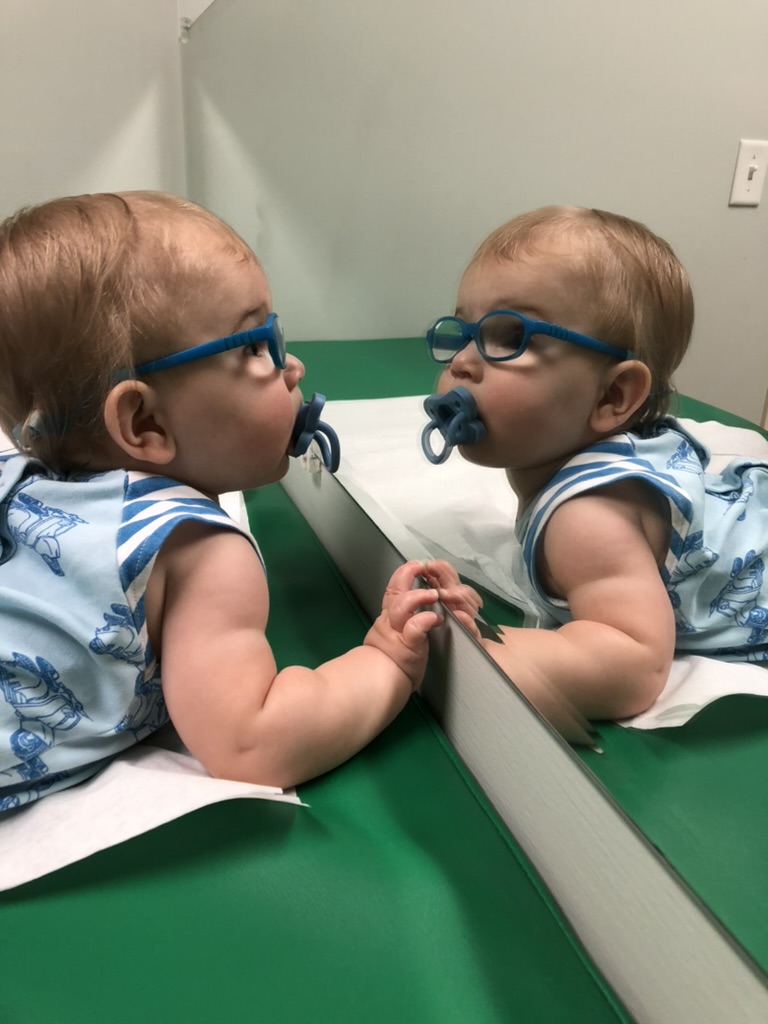
Baby Luca wearing his new glasses
The Diagnostic Journey
When Luca was born, the Corsos were living with Blair’s parents while they searched for a house. It was then that they first suspected something was wrong with Luca’s vision. “My Dad kept wondering why Luca’s eyes were going back and forth so much,” Blair said. “Was it normal?”
The pediatrician was also concerned about their four-month-old son’s eye movements (nystagmus) and quickly referred Luca to a local eye doctor. After confirming Luca’s vision loss but seeming less worried about the nystagmus, the eye doctor referred the family to Mays Al El-Dairi, MD, a pediatric ophthalmologist and neuro-ophthalmologist at Duke University Eye Center.
“Dr. El-Dairi examined Luca and mentioned the possibility of LCA and recommended genetic testing with Ramiro Maldonado, MD, a retinal specialist at Duke,” Blair said. Dr. Maldonado arranged the genetic testing and wanted to do an electroretinography (ERG), a diagnostic test that measures the electrical activity of the retina. But Luca needed to be at least a year old to have the ERG.
Test Results
“Luca was about 14 months old when the ERG was done, and it showed that he had about 50 percent of his vision. The genetic test indicated LCA4, and Dr. Maldonado said that our toddler would likely be blind by age four,” said Blair. “It was a very rough day. John was at home sick, our dog had just died, and my mother and I were in the surgery waiting area, bawling our eyes out.” Luca was Dr. Maldonado’s first case of LCA4.
Help!
Like all parents hearing an LCA diagnosis, the Corso family was desperate for more information and support. They immediately began looking on Facebook, where they discovered Hope in Focus (HIF). Through HIF, they started connecting with the LCA community, and Blair was paired with an HIF Ambassador, Ashlyn, whose young son has LCA10.
“I can pick up the phone or shoot a Facebook message to her, and I don’t have to explain things,” Blair said. “It’s wonderful to have the support, especially when you don’t know what you are doing. If I have a question, Ashlyn offers input or helps me reach out to someone else. It’s like a big family of support, and it’s so encouraging to know that other children with LCA are thriving.”
Early Intervention
Early in Luca’s diagnostic journey, the local eye doctor suggested pursuing ‘early intervention’ due to his vision loss. Unsure what ‘early intervention’ meant, the Corsos learned more about it and reached out for help, a decision that would prove crucial in Luca’s journey.
The Corso’s live in North Carolina, where early intervention is available through the state’s Children’s Developmental Services Agencies (CDSAs). “They sent some people out to talk with us about LCA, and there was an actual team involved. We had a caseworker, a vision teacher, and an orientation and mobility coach,” Blair said. “They were fantastic in guiding us about how to teach Luca and helping him keep on track with his learning.”
Blair stressed the importance of accessing early intervention and said, “Our CDSA team visited us before Luca was in preschool and worked with him at least once a week. When he began preschool, the team went there as well, helping the teacher to understand his needs, such as where to position him so he could see in the classroom.”
The team also conducted many in-home learning sessions. “They suggested different things to support Luca in school and at home. His occupational therapist recommended that we help him learn how to move to songs so he wouldn’t stand motionless while his classmates danced,” Blair said. “You know, it’s not always obvious or intuitive for parents to know what to do!”
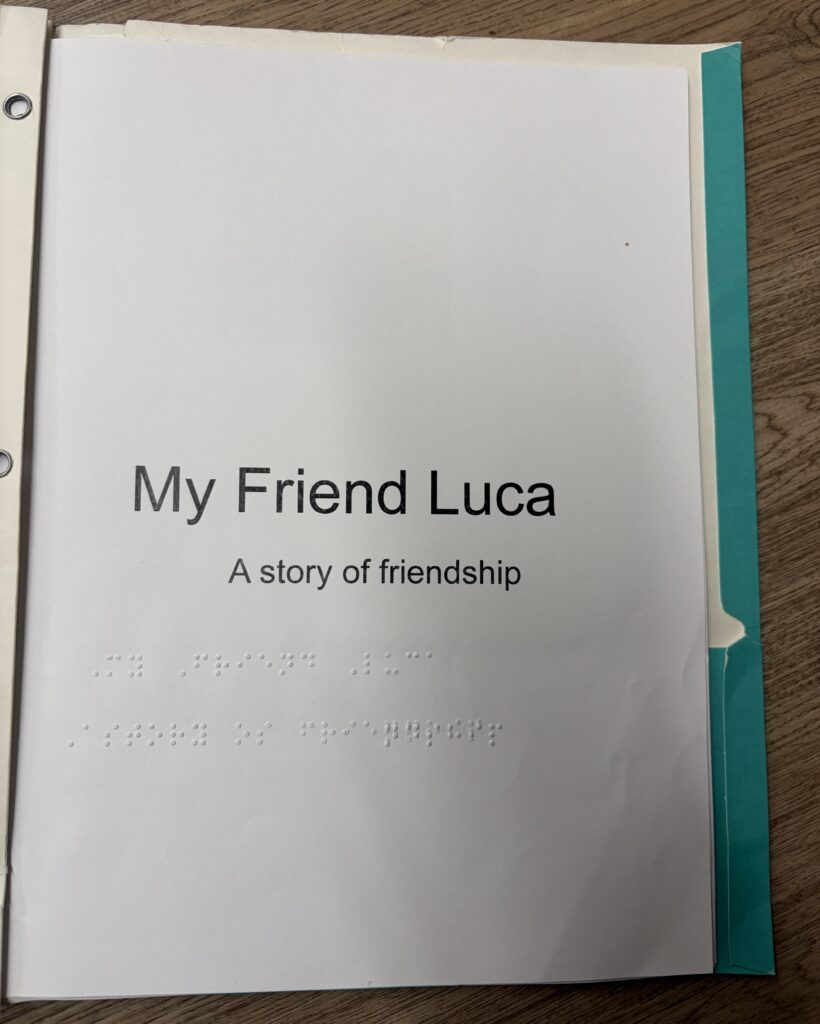
One of his vision teachers, Ms. Charli, created a book for his preschool called “My Friend Luca,” which explains that Luca’s eyes don’t work well and that he uses his hands to see the world. “It helps other children understand why Luca might want to hold their hand or reach out and touch their face,” Blair said.
There were also monthly trips into the community with his orientation and mobility coach, Ms. Annette. “We went to the strawberry patch, the grocery store, and Lowe’s,” Blair said. “We did normal things so she could observe him in public—such as how he navigated with his cane.”
Luca’s current mobility and orientation coach, Mr. Mike, is the past president of the Maryland School for the Blind and a member of the local school system that now serves Luca’s needs. “Mr. Mike is just amazing!” said Blair. “He focuses on learning through play and wants Luca to think of him as a fun grandpa. He even got Luca to sit on the swing, which he was terrified to do.”
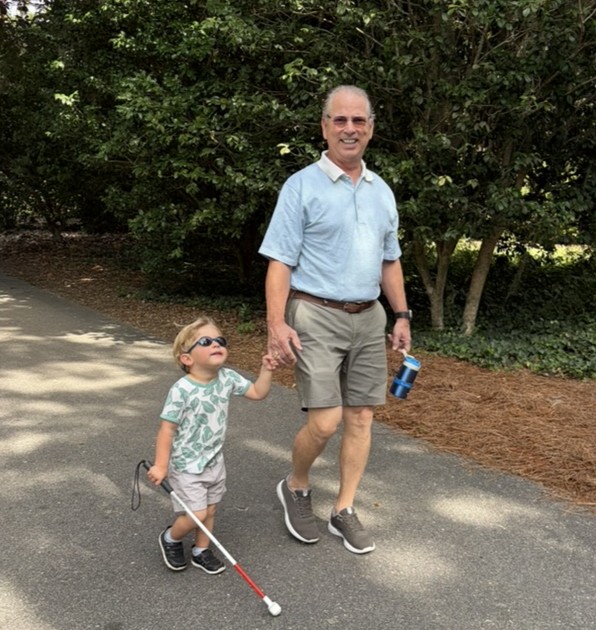
Luca holding his cane and walking next to his grandfather
Going Forward
The Corso’s attended this year’s Hope in Focus Family Conference for the first time and found the information and variety of speakers very helpful. Meeting other families with children who have LCA was supportive, especially those dealing with the same gene mutation and its consequences.
Blair and John recommend that parents seek early intervention resources for their child with LCA and be open to help. They hold out hope that the treatment in the UK might become available for Luca while continuing to prepare him for a future where he is blind.
For now, the couple finds great joy in their little boy and his “can-do” spirit, delightful personality, and bright, engaging mind. They have and will continue to ardently advocate for Luca as he walks into the future surrounded by their unending love and support.
Throughout her 29 years, Michelle Ward Caton has embraced life with unwavering curiosity and gusto. Determined to test her abilities and not be limited by vision loss from Leber congenital amaurosis (LCA), she is, among other things, a competitive adaptive rock climber and teacher of the visually impaired (TVI).
Growing up in North Haven, Connecticut, Michelle’s route to an LCA diagnosis took time. Initially, her parents noticed that she wasn’t focusing on faces. “Once I was walking, I bumped into a lot of things! But when this was discussed with my pediatrician, he said it was Michelle being Michelle,” she said. “When I was three, we moved into a new house, and while running around, I hit my head on the kitchen island overhang. My concerned parents took me to a pediatric ophthalmologist, where my poor eyesight was finally confirmed.”
Several years later, the eye doctor detected white blood cells in her eyes and sent her to a Boston eye specialist. By the time they got to Boston, the white cells were gone. However, it wasn’t until she did genetic testing during high school that Michelle was diagnosed with LCA8 from a mutation in the CRB1 gene.
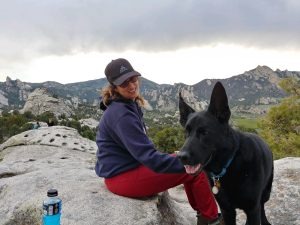
Michelle with her guide dog, Ryder
The Journey
Early intervention services started at age three, and by age five, Michelle had a TVI. Refusing to be sidelined, she did everything that her older sister did at the same time. “If she learned to bike ride or swim, I did too!” Michelle said. We were only a year apart, and it was almost like being twins. But determined to keep up, I did many daring things for a blind person.”
Her resolve to play softball in elementary school was dashed, she said, “When my dad took me outside and tossed a few softballs at me until I realized I couldn’t play. When you’re a kid, you think you can do anything. Sometimes, you have to realize you can’t.”
Michelle’s parents exposed her to various activities, including the piano, flute, and bass guitar. Later, she participated in gymnastics and was a ballroom dancer throughout high school. “I did Brazilian jiu jitsu and then Muay Thai, a form of kickboxing, which my dad practiced with me, allowing me to get the rhythm of the sport and have incredible workouts,” she said.
In college, Michelle tackled the gym and weightlifting, and when she was at UMass Boston working on her TVI degree, she met a friend who did rock climbing. “I began climbing with an adaptive climbing group that participated in competitions,” she said. “I went to nationals and placed second, got on the United States team, and went to the international competition in France,” she said.
Rock Climbing Lessons
Michelle and her husband, Jason, continue to climb and discuss competing again. “It’s important to go out of your comfort zone. I still have some vision, and being outside and up high with a view is incredible,” she said. “When I’m climbing in the gym and hit the spot where I’ve fallen many times and finally figure out the right move and body positioning, it’s a small victory. It’s great getting to the top of the wall, whether I can see it or not. The top of the wall isn’t necessarily the prize. It’s the fact that you did it that builds confidence.”
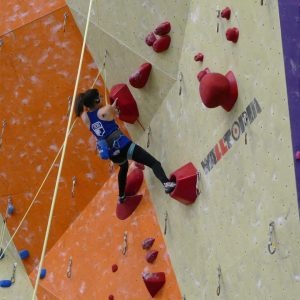
Michelle at the 2019 national adaptive climbing competition
Michelle Ward Caton competes on a climbing wall at the national adaptive climbing competition
Children with visual impairments often find body awareness and balance difficult, but these can also be tough for adults. Sometimes, when Jason tells Michelle how to move on the climbing wall, getting her correct body part to the right location is challenging. “Jason might say to move my right foot three feet, and I move my left foot one foot,” she said.
Helping children with body awareness is something Michelle focused on teaching in her preschool classes during TVI training. “I’d set up obstacle courses for the children to climb over, under, or step through or over,” she said. “I think climbing and jiu-jitsu are some of the best sports for kids with vision impairments because they help build body awareness.”
Vision Changes
When Michelle was about 26, her vision dramatically worsened. “I abruptly lost acuity, and my nystagmus got much worse. There was no time to adjust,” she said. “I’ve always had some nystagmus but could focus through it; now my vision always vibrates.”
As a TVI, Michelle teaches braille, but she also uses it to access all of the appliances in her home. She also does most of her visual work in the morning because the nystagmus exhausts her by evening. “You have to adapt your scenario to your specific needs. It feels like I’m constantly adjusting. I keep puzzling things together to see what works,” she said. “This is the reality for everyone with LCA; each situation is different, and you must finesse things until something works.”
The Right People
Dating during college helped Michelle discern that “it’s the people that don’t care about my vision that make the best friends. I’d meet someone, and when they found out about my vision impairment, they would shift from ‘You’re cute!’ to ‘You’re a science project.’ They’d ask me how many fingers they held up and what I could see. I got all of the stereotypical questions.”
Michelle loves that her husband doesn’t care that she is blind. “Jason does things for me that I don’t even notice. I’ll be looking for something, and he will grab it, hand it to me, and walk away without commenting. Or he will get out of the car and offer me his arm. We never talked about my limitations—he just got it!”
She said finding supportive people who don’t coddle is essential. “Jason encourages me to learn new things that a friend might say are dangerous. Instead, he teaches me how to do it. He doesn’t make assumptions about what’s possible for me.”
A sense of humor is vital for navigating a degenerative condition; Michelle explained, “I trip and fall and knock things over all the time! My visual decline in the last couple of years has been very tough, which makes it essential to find someone who laughs with you. Being morose doesn’t work!”
Family Interactions
Reflecting on growing up with LCA, she said, “My parents always treated me like my sister. Being blind was a characteristic that only meant I did things differently. My sister didn’t acknowledge my being blind for a long time. I don’t think she fully realized what it meant. Instead, she would stare at me and say, ‘Just do it,’ which is what a big sister does.”
“My parents never wallowed in my diagnosis, and we had many real-life conversations about my vision loss. But my dad struggled because he knew my vision would get worse, and I would face lifelong challenges.” Michelle said. “In high school, we met Robin Clark, a teacher passionate about ensuring kids had the independent living skills to live successfully. We implemented creative strategies, worked on things at home, and discussed what would help.”
TVI Responsibilities
As a TVI, Michelle travels between schools in New Hampshire, helping elementary through high school-aged students based on their individualized education plans (IEPs). “I love working with the teams that work daily with the kids to support their vision in class,” she said. “Life with LCA is like rock climbing. Starting out, you have no idea what you are doing, but you feel your way along, and eventually, you’re competing!”
Angélica Bretón Morán, a 29-year-old musician and educator from Mexico, was born with Leber congenital amaurosis (LCA) due to RPGRIP1 gene mutations (LCA6). In 2018, she shared her inspiring story with Hope in Focus (HIF), and since then, she has attended several LCA family conferences. We checked in with her seven years later to see how her journey has evolved. Through a Q&A, Angélica reflects on her experiences and insights.
What changes have you experienced over the past seven years?
I graduated from college in 2020 with a degree in music as a pianist, just as COVID-19 started. The plan was to take two exams—one as a soloist and another with the chamber orchestra but the pandemic delayed graduation. Graduating students were instructed to upload their performances to YouTube, and our professors evaluated them. The results were announced during an online graduation ceremony.
In October 2020, I began an online master’s degree in education at Universidad Tecmilenio. At the same time, I was working on my project titled “Area of Musical Research for the Blind and Visually Impaired,” which I had been volunteering on since I was age 10. It resulted in my job as the creator, founder, and leader of that department, later renamed the Music Research Center for Visual Disabilities (CIMUDIV). I completed my master’s degree in 2022, became certified as a professional instructor to conduct workshops, took a leadership course, and completed a diploma in music psychology.
At ISU University, I began a doctorate in the Development and Innovation of Educational Institutions in November 2024 to create academic content about the inclusion of people with visual disabilities in professional music. This area has very little content developed by someone who has lived this reality firsthand.
Can you share more about your job?
I work at the Faculty of Music of the Universidad Autónoma de Nuevo León (UANL). As the coordinator, founder, and creator of the Music Research Center for Visual Disabilities (CIMUDIV), we make the curriculum accessible to students with visual disabilities, including creating braille sheet music and providing personalized student support. It is not a special program for blind students. Instead, students use the same materials and perform like their sighted peers in their classes. I teach musicography to students with visual disabilities so they can read sheet music, and I support their teachers when needed.
We are constantly searching for tools and strategies that make our work and the students’ learning easier, which involves researching, experimenting, and adapting. It’s not unusual to find people with visual disabilities who are active music community members, but much still needs to be done! Changing our mindset and that of society requires patience.
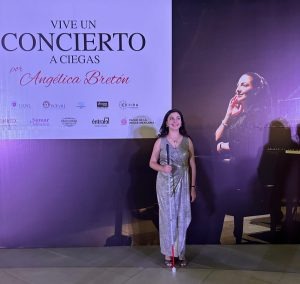
Angélica Bretón Morán at the 2024 Blind Concert in Mexico
What has been encouraging?
Something that thrilled me was the Blind Concert performance held in November 2023. Because it was canceled during the pandemic, I thought we might never experience it again. The concert, held for 11 years in various locations, raises awareness through music by taking the audience on an emotional journey. For me, music is a powerful language that reaches the deepest fibers of the soul. Seeing the entire cast reunited was an unforgettable and emotional experience. In May 2024, the concert was performed outdoors for the first time before 300 people, achieving another milestone.
What are your observations related to LCA?
Learning never stops, and it is fantastic to see how the topic of LCA has progressed. We’re talking about clinical trials, experimental treatments, research, and new diagnoses, things that seemed unthinkable 20 years ago. When I was younger, we weren’t sure if I had LCA. Now, hearing that someone has a genetic diagnosis is incredible.
It’s become easier to access the LCA community, which is more informed and has more people willing to share their experiences. The support network is stronger, and patients of all ages are involved. Social media and Facebook groups allow us to stay in touch with other families and organizations like Hope in Focus.
One exciting breakthrough is that Odylia Therapeutics is developing a gene therapy for my mutation, the RPGRIP1 gene, and testing it on mice. As a 29-year-old blind person, the idea that my vision might improve in the future is exciting and terrifying!
What are your thoughts about the LCA Family conferences you’ve attended?
My experiences at the conferences have been wonderful! I met many people whom I now care deeply for. At the 2023 conference, we met Toprak and her family from Turkey. Toprak’s parents saw my story on the HIF website, and it was touching to hear that my story gave them hope. It’s important for adults with LCA to attend the conference and share their experiences with other families.
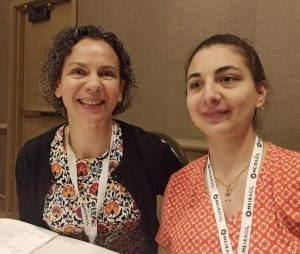
We hear from the researchers, foundations, and people who make LCA research possible during the conference. At the first LCA conference, I met Dr. Emily Place, who gave me my genetic result when I was 20. I couldn’t believe she was standing before me, and I hugged her with gratitude.
Meeting Toprak reminded me of another family at my first LCA conference. We met a 2-year-old girl named Dafne and her parents. Our parents started talking, and the girl and I had similar characteristics. My parents said that seeing Dafne was like seeing me when I was little, and the anxiety expressed by her parents was similar to theirs. I understood how important it was to be at the conference and how difficult it is for other families to process what I live with daily. I felt a moral commitment to be more involved in the LCA community as an adult.
At another conference, I met a mother with LCA traveling alone with her baby, who did not have LCA, leaving her other children at home. I was a teenager and had never met a mother with LCA. This woman became a role model for me.
I’ve learned the most about LCA at the conferences. There, we can ask our questions directly to professionals, listen to others’ concerns, and learn from their stories. I’ve also seen how the LCA community has grown in numbers and knowledge. Moreover, there’s yet to be published scientific information shared, which feels like privileged access.
Attending the LCA conference feels like reuniting with a big family. I am deeply grateful to HIF for all the support they’ve given. Every second I’ve spent at the conferences has been worth it.
Angélica Bretón Morán (right) with Dr. Emily Place (left) during the 2023 Hope in Focus Family Conference in Indianapolis
How do you bring conference content back to your LCA community?
Whenever someone contacts me, I tell them about HIF and ask them to follow its social media. I also share my conference experiences and explain why attending and getting involved in the community is so important.
Our Spanish-speaking WhatsApp group has people from different parts of the world. We share what is discussed when I attend conferences or when a group member attends other LCA-related events. Many members speak only Spanish, so I support them when they need translations, but I also encourage them to write in Spanish in the Facebook groups. Many people from other countries post in their languages, but we can translate texts easily thanks to technology.
Also, artificial intelligence and technology are quickly advancing, so the language barrier is now less complicated. I encourage people not to let language be a limitation. My dad and I started attending these conferences when we spoke little English and didn’t understand much. That experience pushed us to improve our skills.
You are an ambassador for LCA in Mexico. How did that evolve, and what did it look like?
When I was young, no community or information about LCA existed in Mexico. My parents were very worried about my development and diagnosis. However, one day, they read a letter from a 22-year-old Italian girl with LCA who studied music, giving them great hope.
When I was 22, I wrote a post on my Facebook blog about my experience with LCA and mentioned not knowing other people with my genetic mutation. The response was unexpected! Many people and organizations shared my story, and that’s how I met people from Mexico and Spain.
Most of the people with LCA who reach out to me do so via social media or through the families in our WhatsApp group. Using WhatsApp, we share any relevant information we find. If a question arises, I consult with my geneticist in Mexico, and some members offer to check with their doctors. When I find people or communities on social media sharing information related to LCA, I invite them to join the group or follow related pages. Our goal is to provide information and mutual support.
I also created a Facebook group for people with my genetic mutation, similar to the RPE65 group and others. In the RPGRIP1 group, we communicate closely with Odylia Therapeutics.
In 2019, I started a civil association in Mexico, equivalent to a United States foundation. My idea was to help and receive support, but Mexico’s legal aspect is very complicated. After careful consideration, my family and I decided to dissolve the association and continue supporting the community in other ways.
What are your hopes for the future?
I hope to find better ways to continue supporting the community and that everyone with an LCA diagnosis finds a strong support group. From experience, unity is more powerful than material resources. It is crucial that we not only look out for ourselves but also for others. Although the future is uncertain, that’s nothing new to me. I do everything within my power and fully trust that my safety is in God’s hands. He knows what I don’t, and that’s enough to keep moving forward.
Christine and Anthony Gonzales dreamed of having a large family and were thrilled when their first child, Iliana, was born in August 2018. However, within a few months, their excitement turned to concern. “About a week after Iliana received her four-month childhood vaccine, we noticed her eyes making erratic movements,” Christine said. “We took her to Lucile Packard Children’s Hospital (LPCH) at Stanford and stayed a few days. They ruled out neuroblastoma and did whole-body MRIs to make sure everything was negative. Her eye movements decreased, so she was cleared.”
As Iliana moved into toddlerhood, the couple noticed some things seemed “off.” “Iliana was learning to walk, and occasionally, she would trip and run into things or halt if the lighting changed,” said Anthony. “At other times, she couldn’t locate things or find us. As the months passed, we realized that she wasn’t growing out of it and that something else was at play.”
Increasing Complexity
Then, just before Iliana turned two, her sister Malaya was born in June 2020. At the same time, Iliana’s eye movements increased in frequency.
The couple decided to take both girls to LPCH. “Iliana’s extensive workup, which included genetic testing and an eye exam under anesthesia (EUA), revealed retinal inflammation. They also recommended genetically testing Malaya because getting the results takes a while,” Christine explained.
Although the cause of Iliana’s inflammation wasn’t clear, a member of the Stanford medical team treating Iliana, whose clinical focus was ocular inflammatory disease, suggested treating her with steroids. As a nurse, Christine was acutely aware of possible side effects, and she and Anthony had serious questions about treating the inflammation without knowing its source. But hoping it might help, they consented.
“In December 2020, Iliana was hospitalized again, and the doctor suggested doing infliximab (a drug used to treat autoimmune diseases) infusions in addition to the steroids because the inflammation was so severe,” said Christine. “We started Iliana’s infliximab infusions in January 2021, and Malaya’s first EUA was in February 2021. According to the retinal specialist, Iliana’s inflammation was worse than Malaya’s, causing her vessels to become “leaky.”
At about the same time, the genetic tests revealed that both girls had the CRB1 mutation. “Even so, the doctor recommended continuing Iliana’s once-a-month infusions, which were given for a year,” Christine said.
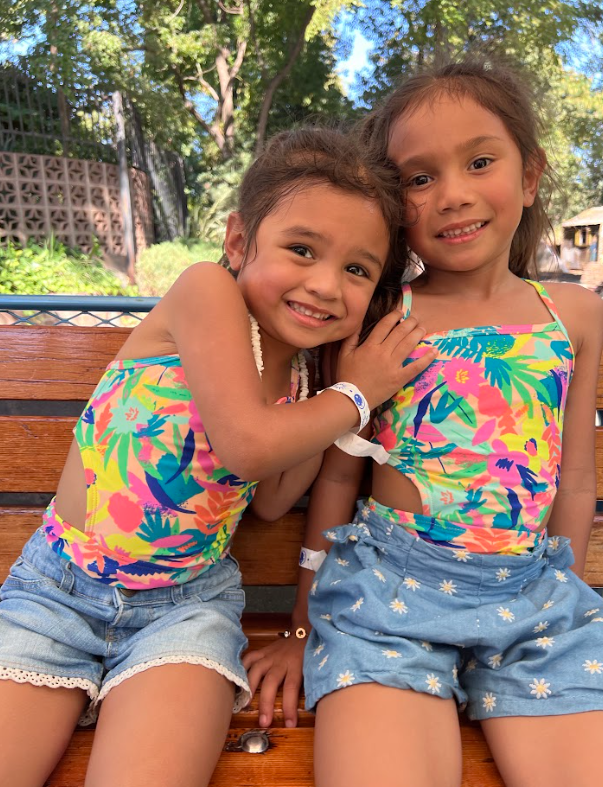
Malaya and Iliana
At Iliana’s follow-up EUA in April 2021, their doctor admitted that the inflammation hadn’t reduced as much as anticipated. But it was still coming down, and he wanted to continue the infusions. “After the December 2021 EUA, he suggested using methotrexate, a chemotherapy drug, but we said no,” said Christine.
Weighing Choices
The fact that their doctor was leaving Stanford, the relative ineffectiveness of the infusions, and that the Gonzales family was moving all contributed to the decision to stop the treatments. This choice provided Iliana with a much-needed break from the poking, prodding, and stress associated with the infusions and testing. It also gave Christine and Anthony the time and space to evaluate their situation, which was now even more complex with Malaya’s diagnosis. They planned to monitor the girls and get a second opinion.
Between 2018 and 2024, the Gonzaleses consulted with eight doctors at four different medical facilities in California to identify what was affecting their daughters’ vision. While the genetic testing revealed the CRB1 mutation in 2020, the focus of the retinal specialist at that time was on treating Iliana’s retinal inflammation. A definitive diagnosis of LCA wasn’t made until 2024, when the Gonzaleses took their daughters to see Jacque Duncan, MD, at the University of San Francisco. Dr. Duncan confirmed a diagnosis of Leber congenital amaurosis (LCA) for both girls and connected the family with the Foundation Fighting Blindness (FFB) to help them find more resources and a supportive community.
Embracing a New Reality
Receiving the genetic diagnosis was simultaneously helpful and crushing. Throughout their medical journey, Christine had done extensive online research, and it was discouraging when she discovered no treatment was available for the CRB1 gene.
It is an understatement to say that the recessive gene mutation had already handed the family a one-two punch, but it wasn’t done. In October 2022, their son Amari was born and found to be a CRB1 carrier. While this diagnosis wouldn’t impact his vision, the information could have implications later in life if he decides to have children. With no family history of eye disease, their children’s genetic diagnoses were shocking for Christine and Anthony and their extended family.
“What was so hard about this process is that young children can’t express what they are feeling or experiencing. There is only so much you can do. It’s like banging your head against the wall, and there is a lot of self-doubt as a parent,” said Christine. “But it’s tough to get the genetic diagnosis. After all of the searching and finding, it comes down to us, as their parents, causing this by passing on a gene mutation we didn’t know we had.”
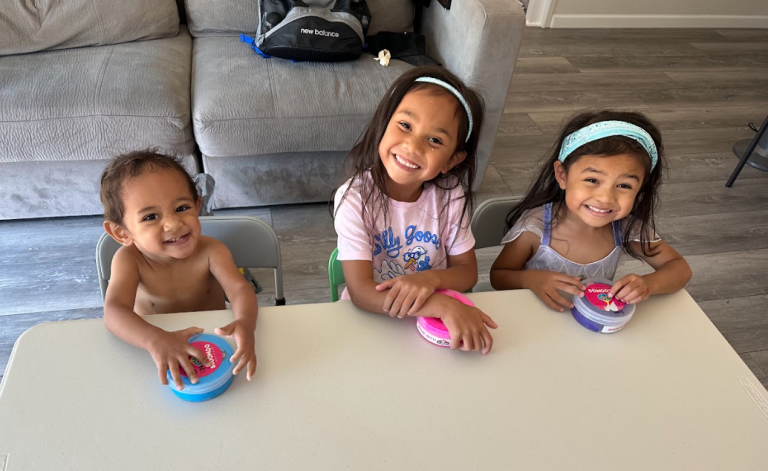
A sibling photo of Amari, Iliana, and Malaya.
Creative Next Steps
Determined to soldier on, Christine and Anthony decided to homeschool the children. Iliana is currently in the first grade and is a bright and eager student. Malaya and Amari are too young for school and are very active and curious, which means there is never a dull moment in the Gonzales household. The couple share child care and homeschooling responsibilities via a carefully choreographed work schedule. Anthony is employed at a local hospital in the dietary department, and Christine, an RN, works nights at the same hospital. The family is working with the county and school to create an individualized education plan (IEP) for Iliana and one for Malaya when she starts kindergarten.
Regarding the girls’ current vision status, Iliana was tested in 2024 and found to have significant peripheral vision loss. For now, Malaya’s vision may not be as impacted as Iliana’s. “Malaya is strong-willed,” Anthony explained, “and she isn’t very compliant at this point, so testing is tricky! But we’re noticing similarities in Malaya’s vision that we initially observed with Iliana.”
Like Iliana, Malaya struggles with night blindness. “It’s hard when the light is dim at night, and they can’t see us,” said Anthony. “And if Malaya drops a toy, she has trouble locating it. Seeing them both feel around for things hurts.” The Gonzaleses have a follow-up visit for the girls with Dr. Duncan in November to learn more about their daughters’ vision status.
Eager to Learn More
When Christine and Anthony heard about FFB’s June VISIONS conference in Chicago, they decided to attend and bring Iliana. During the information sessions, Iliana sat quietly beside her parents, dangling her feet over the seat as she beamed smiles to everyone around her.
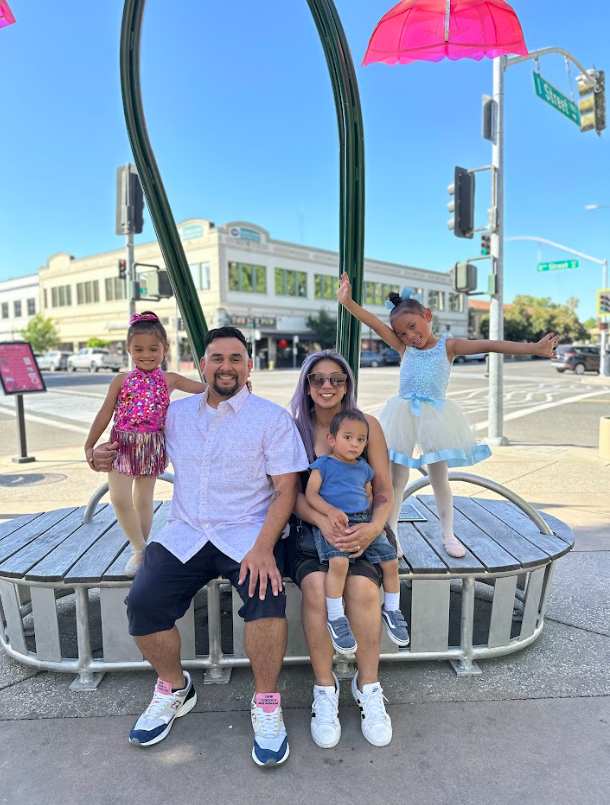
The Gonzales family smiling at the camera outside on a street corner.
The Gonzaleses were relieved to learn more about inherited retinal diseases (IRDs) and LCA at the conference. Anthony said it was impressive to see so many people managing well with a visual disability or blindness, but it was also emotionally challenging. While the information was beneficial, it confirmed that the repercussions of LCA would be a life-long journey for their family.
Excited to be at the conference with her parents, Iliana absorbed as much information as a five-year-old could. When the family returned to California, Iliana’s grandfather asked her about the conference. She quickly summarized her experience without missing a beat by saying, “They just talked about eyes!”
The Gonzaleses met the Hope in Focus (HIF) team at VISIONS 2024 and plan to attend the HIF Family Conference in Minneapolis, MN, on June 20-21, 2025. There, they hope to meet other families and members of the LCA community and glean more information and support to help them guide their children on this unexpected life journey.
As someone with a visual impairment, I’ve learned the importance of choosing accessible environments. I recently purchased my first home and wanted to share some lessons I learned about accessibility and the home-buying process.
One of the most important decisions anyone makes when selecting a home is picking a real estate agent who understands your needs and desires. Of course, you want someone who knows your local market and won’t pressure you to make a decision you aren’t ready for. But as someone living with a visual impairment, I also wanted an agent who had experience helping people with disabilities find a home. I started by speaking with a few agents who mentioned having this expertise on their websites, but I did not find anyone I felt comfortable working with.
The Right Agent
Thankfully, I asked a friend who is also visually impaired and who had recently moved. He had an excellent referral for an agent whom I contacted and chose to work with. Because of my real estate agent’s knowledge and experience, he was able to help me narrow my search by eliminating areas with poor public transit or limited businesses within a walkable distance. He also helped me identify features that would make my life easier as a visually impaired person, such as green space for my guide dog, nearby access to trails making it easier for me to run with a guide, easy-to-use appliances, and lots of lighting.
I looked at a lot of properties, and it was overwhelming! As I searched, I also discovered several things that would make my life better. I eliminated properties that required renovations. I’m not handy and have no interest in supervising a construction project. I also excluded properties on busy roads because it’s much easier for me to navigate quieter spaces, and I like to avoid noise as much as possible.
Adding Accessibility
I ended up purchasing a first-floor condo, which provides for trouble-free maintenance. It has a large patio, making it easy to take my guide dog outdoors, and it allows me to be outside as much as possible.
Once I moved in, there were a few things I needed to do to make my new home more accessible for me. Some rooms were not as bright as I wanted, so I purchased the brightest LED lightbulbs I could find. I was also tired of having thermostats that I could not control independently. Thankfully, there is a wide selection of thermostats that you can control with an app on your phone. I got an EcoBee thermostat and found the app fully accessible. Finally, I put Braille labels on all my appliances so I can use them independently. The Braille Superstore is a great place to get a Braille label maker and other stickers/labels to make your home more accessible.
I’m thrilled to have my own home and to live in an accessible and comfortable place. I hope my experience gives you some ideas regarding purchasing a home and how to make it more accessible for you or a loved one.
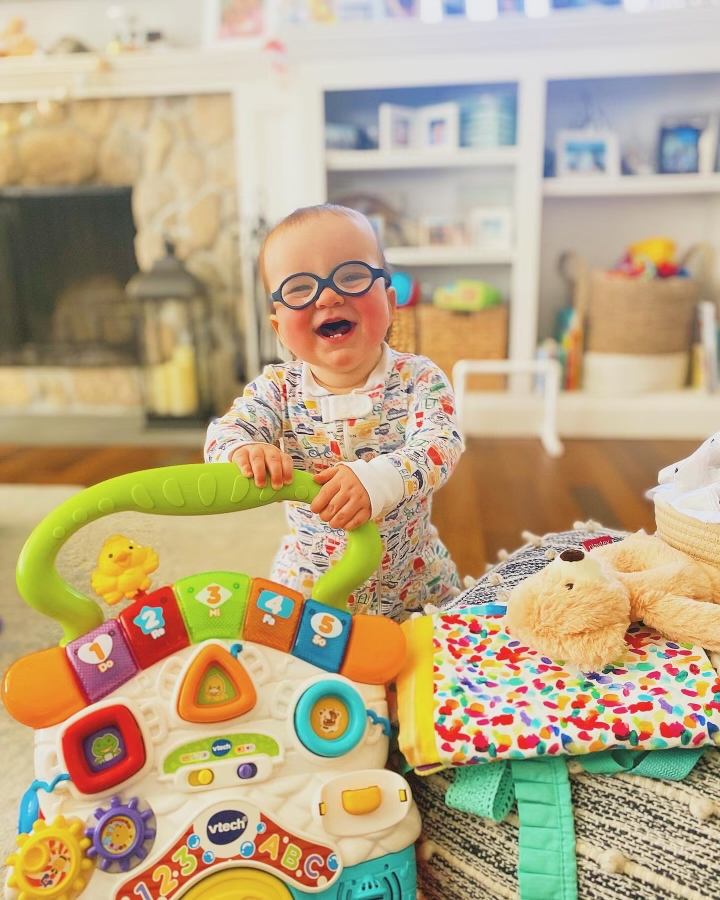
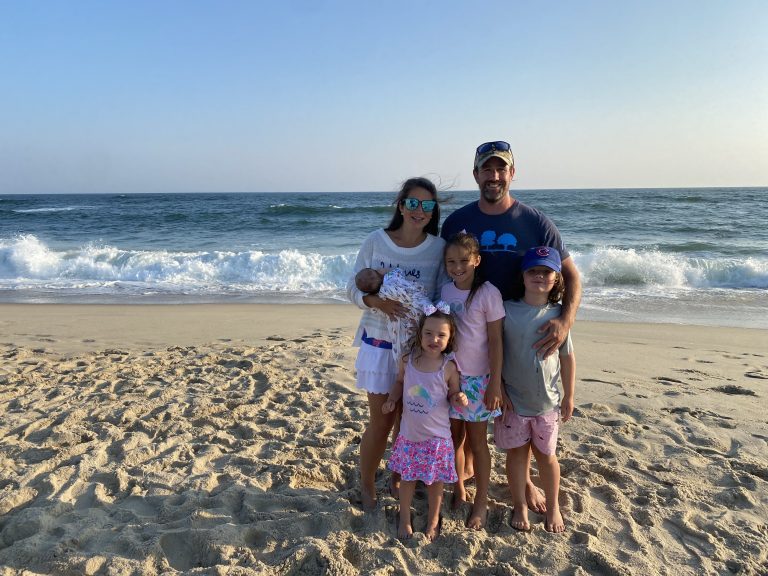
Caitlin and Greg Smith eagerly looked forward to the birth of their fourth child, who would complete their busy family of two girls and a boy. Caitlin’s pregnancy was unremarkable, and the family excitedly welcomed baby James in June 2023. But when he was about two months old, the couple noticed that James wasn’t visually tracking as they had expected. “His eyes were closed much more than our other children, and I remember thinking that was odd,” Caitlin said. “He also wouldn’t lock eyes with us or look directly at objects or our faces.” Worried, the Smiths took James to their pediatrician, who wasn’t overly concerned given his age but suggested seeing a pediatric ophthalmologist.
James with his toys
ADiagnosis
Unfortunately, the ophthalmology exam revealed that something was wrong. “The doctor noticed pigmentation in his macula and mentioned it could be a number of things but recommended that James be seen by a retinal specialist at Boston Children’s Hospital,” said Caitlin. “The doctor did a clinical exam and, based on seeing degeneration in the retina, diagnosed James with Leber congenital amaurosis (LCA). It was a terrible shock. We knew nothing about inherited retinal diseases or LCA.”
The next step was genetic testing, which revealed James had LCA9, caused by a mutation in the NMNAT1 gene. Greg and Caitlin were also tested, and their results verified that James’ LCA was inherited and not the result of a random mutation. “Just knowing what we were dealing with was a big milestone,” Greg said. “But we needed to know where to go from here.”
After learning that many children with LCA9 are born with no light perception or severe vision impairment, they were encouraged that James appears to be on the better end of the spectrum. “We know he has light perception, can see colors, and has some functional vision. Sometimes, he appears to track people or large objects, but it’s hard to know if it’s because he’s hearing or seeing something,” Caitlin said.
Finding Support, Getting Educated
Immediately after the diagnosis, the Smiths dedicated themselves to researching and understanding all they could about LCA and visual impairments. “As a parent, you always want what is best for your child, and to think about and create what would be best for him, we needed to educate ourselves,” said Caitlin. As they searched LCA online, Hope in Focus popped up. “The day we got the clinical diagnosis, or maybe a day later, we found Hope in Focus,” Greg said.
Several days later, Greg spoke with Courtney Coates, Hope in Focus Director of Outreach and Development, who provided him with family and research connections and a high-level review of the current treatments and technologies relevant to LCA9. “It’s hard to put into words how impactful it was to get this diagnosis and to be able to go online and get connected to a community of people that could hear our story and help,” he said. “Having Hope in Focus was incredible for us as we began this journey. It makes such a difference knowing you’re not alone. We are forever grateful to Laura, Courtney, and the rest of the Hope in Focus team.”
Courtney also connected the Smiths with another Hope in Focus family whose son had LCA9, which Caitlin said provided an “awesome jumping-off point for connecting to other families with the same mutation.” They’ve also found other LCA9 families in the US and abroad through social media.
Through recommendations from Hope in Focus and via their research, the Smiths began reaching out and networking with people researching and developing potential treatments. “Getting more involved with the research community has been very helpful, and as a family, we are very focused on helping to advance a treatment for James and others with LCA9,” Greg explained.
In James’ case, early-stage preclinical work has been conducted on a potential gene therapy treatment for the NMNAT1 mutation, with promising results in mouse models. “With these rare diseases, taking a traditional path to treatment development is very challenging given the economics involved,” said Greg.
Living Life
His parents describe James as outgoing, adventurous, fearless, and a ball of fun who is always smiling and laughing. “His siblings are totally in love with him,” said Caitlin. Now, James is just another sibling rather than a sibling with a vision impairment.”
The Smith Family
Greg said that he and Caitlin dealt with James’ diagnosis in different ways. It was more challenging for him to accept the vision impairment, and his mind went to all of the things that his son might not be able to do that his siblings could do. “I think Caitlin did a much better job internalizing all of that,” he said.
Caitlin said that she turned her grief into action by focusing on the next steps, such as identifying and arranging for therapies. “It felt like a blessing that our life is so busy. There wasn’t time to sit around and be depressed or in shock—instead, I focused on James’ immediate needs and how we could best support him and give him an amazing life, just like our other children. I didn’t want him to be treated any differently from other kids. We will not allow his vision to define him, but we will make sure he has every opportunity every other child has,” she said.
Daily life at the Smiths is essentially divide and conquer. Greg works at an investment firm and has taken the lead in researching the disease and potential therapies in his spare time. Caitlin is a stay-at-home mom who is incredibly busy with the three older children’s sports schedules and James’ physical, occupational, vision, and speech therapies. They have gotten involved with the NAPA Center in Boston, which offers specialized coaching and therapies for children with disabilities, and they attend a weekly baby group at the Perkins School for the Blind. They feel lucky and thankful for access to excellent resources and support nearby. “It’s been incredible to see how much James has grown and all the milestones he has accomplished. In certain areas, he is more advanced at this age than our other three were,” Caitlin said.
James currently sees three different doctors, including a local eye specialist who used to work at Boston Children’s Hospital. He also goes to Boston Children’s Hospital once a quarter, and there is a yearly trip to the Children’s Hospital of Philadelphia.
Regarding advice for other LCA families, Greg and Caitlin said it may seem overwhelming initially, but everything will be okay. “I struggled with the diagnosis for a while. But now we’re at a place where we feel like James is not our child with LCA. He is just James!”
It can be easy to feel alone living with an inherited retinal disease (IRD). As a kid, only one other person in my school had a visual impairment. Recently, I went on a first date with someone who said, “Forgive me if I ask any dumb questions—I’ve never dated someone who is visually impaired before.” She is not the first person to express such a sentiment on a date with me. In fact, I’m pretty sure I’m the first visually impaired person for every woman I’ve dated. I’m also the first visually impaired colleague, friend, etc., for most people in my life.
Throughout my life, community has played a significant role in helping me feel less alone in these moments. I’ve been fortunate to be connected to groups of other visually impaired people, where I’ve been able to learn from their successes, feel less alone by connecting with others who have similar experiences, and support people who are experiencing challenges I have overcome.
It is common for young people with visual impairments not to feel fully seen or understood by their sighted peers. For many, finding a community of visually impaired peers is the first time they feel they can truly be themselves in social situations. These environments can help them develop more confidence interacting in other social situations.
Having access to such communities has helped me get to where I am today. When I think that accessibility barriers are too significant to overcome, I can look in my community for proof that it can be done. When I feel like I am the only person going through a particular challenge, I can ask my community to find someone who has already overcome it. When I encounter an accessibility = barrier that feels unfair, my community and I can work together to fix it.
Many things can contribute to a visually impaired person’s success, and having a community is one of those foundational things that I encourage everyone with a visual impairment to seek. Of course, a community can only do so much. But I’ve learned that people are resilient, and having a community can help us find and develop resiliency.
Connecting with organizations like Hope in Focus can be an excellent opportunity for you and your family. Learn more about the Hope in Focus Family Connections program, our LCA conference 2025, and other organizations supporting those living with visual impairment on our website at hopeinfocus.org.
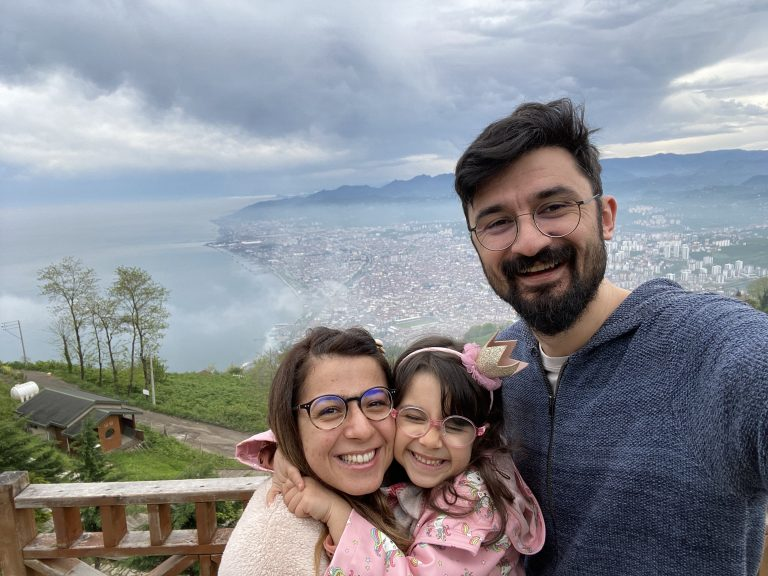
Toprak Kulekci is a vivacious, seven-year-old budding ballerina who lives with her parents in Ankara, Turkey. When she was born in 2017, her father, Haydar, a software engineer, and mother, Gizem, an agricultural engineer, had no forewarning that their daughter could inherit a blinding retinal disease. However, with early concerns about her eyesight, they later discovered that Toprak had only five percent vision as a result ofGUCY2D-associated Leber congenital amaurosis (LCA1). Thanks to her parents’ teamwork and tenacity, Toprak is thriving in school, taking ballet lessons and performing on stage with her class.
The Beginning
Haydar credits Gizem with having unique insights about their daughter. One morning, close to the end of her pregnancy, Gizem woke up feeling ill. “She said that something was wrong. The baby usually moved after she ate sweet things, but that morning, nothing happened after breakfast,” Haydar explained. A trip to the hospital resulted in an emergency cesarean section. “The umbilical cord was wrapped around Toprak’s neck eight times. If my wife hadn’t been paying attention to all of their little habits, we would have lost our daughter.”
Then, about a month after her birth, Gizem noticed that Toprak wasn’t making eye contact or closing her eyes when breastfeeding. “We waited about 40 days,” Haydar said, “and then we took her to the doctor. He said not to worry. Her eyes will get better.” A follow-up exam five months later showed no improvement.
Seeking A Diagnosis
The doctor’s evaluation ignited the couple’s problem-solving instincts. Determined to find an answer, they took Toprak to five or six doctors over the next year and a half. “Finally, one doctor said it could be LCA, and this was our first real answer,” Haydar said. “That day, we went to a research center for genetic testing, and several months later, it was confirmed that she had LCA1.”
With little to no information about LCA available in Turkey, the Kulekcis turned to the internet for answers. Haydar was elated when he discovered Shannon Boye, PhD, professor and chief – Division of Cellular and Molecular Therapy, Department of Pediatrics at the University of Florida. Dr. Boye and her team were researching an adeno-associated viral vector (AAV) delivered gene therapy treatment for LCA1. Not only was there someone who had deep knowledge about LCA1, but her lab was also working on a possible treatment. “That night, I emailed Dr. Boye,” Haydar said. “A couple of hours later, I received a response. In that moment, I cried, filled with hope again. It was so important to hear from a doctor on the other side of the world who knew about this disease and might be able to help fix it.” Haydar, who is fluent in English, asked Dr. Boye for her research papers so he could learn more about Toprak’s condition. He also contacted Penn Medicine, regularly sending them Toprak’s exam reports. Meanwhile, Toprak was receiving help at a local rehabilitation center. At the rehabilitation center and home, the focus was on helping her use and “love the light and contrasts” she could detect.
The Inclusive And Accessible Life Association
Through his research, Haydar realized that some organizations in other countries are focused on helping the blind and visually impaired. Others, including Hope in Focus (HIF), were dedicated to providing information and support for specific conditions such as LCA. Excited by the content on the HIF website, Haydar translated some of its articles into Turkish, putting them out to the media and on his blog while asking friends to share them.
Gizem, Toprak, and Haydar
“I realized what other organizations are doing to help the visually impaired, and I thought we needed to do this in Turkey,” he said. “Hope in Focus and Dr. Boye were role models for me, and in 2021, I created the Inclusive and Accessible Life Association. People with limited vision, blindness, or LCA all face similar issues, so our goal is to provide information and resources to anyone who is visually impaired in Turkey.”
Kindergarten Companion
Determined to continually improve Toprak’s quality of life, the Kulekcis’ information needs accelerated as she got older. “About two years before she went to school, I started researching what was available for education and how we could help her,” Haydar explained. “Many blind or visually impaired children in Turkey don’t go to kindergarten because families are not educated about it.”
Toprak’s kindergarten experience provided Haydar with firsthand information he could share with other parents. “When she started school, they told us that they didn’t know what they could do to help her. I took a two-month vacation from my job and sat with her every day in class, helping the teacher understand how to help my daughter,” Haydar said as he described perching on a tiny chair next to Toprak.
“I told the teacher that Toprak could handle everything and that she could help the teacher help her. I didn’t solve my daughter’s problems for her. I taught her how to solve them on her own,” he said. At the end of two months, Toprak told her father that she was fine and he should go home.
Haydar encourages other parents of visually impaired children to send their children to school and not be fearful about what might happen. He emphasizes the importance of parents allowing their children to solve some of their problems. “Many children who are visually impaired are less fearful than their parents. And most of them can manage and do much more than their parents expect.”
Let’s Dance!
Living across the street from a ballet school gave Toprak an unexpected opportunity. Her parents’ discussions about the school’s problematic traffic jams sparked her curiosity. “What is ballet?” she asked.
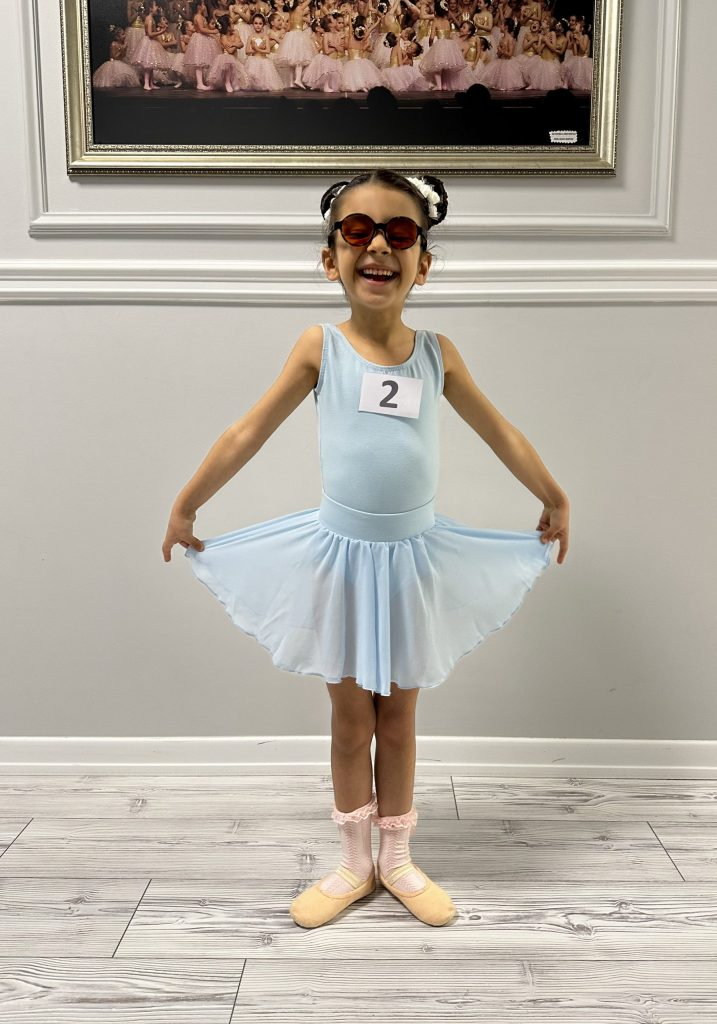
Toprak ready for Ballet
After doing their best to describe ballet, Haydar found a high-contrast video of a performance to show Toprak. The video resulted in a torrent of questions about how to do ballet, whether there were special clothes for ballerinas, and whether she could take ballet lessons.
“We realized this could be an opportunity for her,” said Haydar. “But we didn’t have any experience with ballet. The school said we could do it but that they didn’t know how to teach her. So, I said, I am here for this problem!” Haydar began attending the classes, helping Toprak stretch and move her body correctly. “We’d get additional help from the teacher to explain how and where to put her foot or leg using words and moving her body into the correct position.” Haydar noted that ballet has additional benefits because visually impaired children often have difficulty understanding where their body is in space. “Ballet is not just visual but also a feeling and understanding of how the body works,” he said.
Toprak’s ballet experience has thus far culminated in two performances with her classmates, each before a thousand people at a performing arts center. “We tested her in the classes, and she hit the mirror a couple of times, but the teacher said not to worry. She can handle it,” Haydar said. Anxious about her first performance, the Kuleckis sat close to the stage in case she fell off. However, Toprak’s classmates successfully guided her when needed.
“When she was on the stage, she was like an angel walking and running around with her friends helping her,” Haydar said, his voice vibrant with joy. “Toprak solved some of her problems, and when she couldn’t see where to sit or stand, she gave a friend her arm. She didn’t give up! Isn’t this the solution for all of us—learning to ask for help and helping each other?”
HIF Family Conference
In 2023, the Kuleckis attended the HIF Family Conference in Indianapolis. Haydar said it was a significant event for them to attend. “We met many people there with LCA and some with the same gene as Toprak. We also met Dr. Boye there, and it was like a dream for us,” he said. “To think that we sent an email in 2019 to someone in the US who gave us answers and information about our daughter’s LCA, and now we see that person is real.”
Life Continues
In Turkey, schools often lack the knowledge or resources to meet the needs of visually impaired students, and Haydar often relies on his engineering background to find solutions. For example, Toprak finished first grade in June of this year. But she at first struggled to see the blackboard. Her father put a camera in front of the board, sending pictures to Toprak’s tablet so she could zoom in on the content. She also reads books using a digital magnifier, and the rehabilitation center teaches her Braille. The Kuleckis are grateful that Toprak’s last eye exam indicated stable vision, at least for now.
Gizem and Haydar work together to forge the best quality of life for Toprak that they can while sharing information and offering support to others through the Inclusive and Accessible Life Association. “We are a great family team! Gizem identifies a problem, I am the problem solver, and Toprak is a hardworking teammate who keeps us learning new things,” Haydar said.
With supercharged energy and positivity, Anthony, born with Leber congenital amaurosis (LCA), shares what it’s like to be blind through motivational speaking and his various social media platforms. His wife, Kelly Anne, helps him plan out what he wants to portray, and then she shoots and edits the videos about their life that later appear on TikTok, Instagram, Facebook, and YouTube. Anthony’s social platforms have become popular as he shares what managing the world without vision is like. As an advocate for increased accessibility, whether he’s changing diapers, making smoothies, or skateboarding, he shares how he tackles a variety of activities without sight.
Anthony Ferraro
Growing up in Spring Lake, New Jersey, the youngest of five children, Anthony was born with only 20/400 visual acuity (profound vision loss). He lost a chunk of vision in seventh grade and then again in his junior year of high school. Now in his late twenties, Anthony’s vision is decreasing daily, and he says, “The light is starting to go black.”
Against the odds, Anthony became a champion wrestler in high school and was the subject of an award-winning film, A Shot in the Dark, documenting his attempt to win a state wrestling championship in his senior year. In a previous interview with Hope in Focus, he said, “Wrestling has taught me a lot of things. It taught me hard work, that things don’t happen overnight, discipline, and how to deal with loss. It helped me prepare for life.”
Anthony aims to participate in the Los Angeles Paralympic Games in 2028 in Judo. The pivot from wrestling to Judo resulted from a concussion that ended his wrestling career in college. However, this event opened the door to pursuing Judo when the U.S. Paralympic team asked him to train for the team.
Open about his life, Anthony talks about struggling with depression. “When I was 19, I got so depressed that I checked myself into a mental health hospital. I learned a lot about mental health and not bottling things up. I got to work on myself and learn about what I was feeling and going through,” he said. “When I was 21 or 22, I started accepting the fact that I was blind and started using my cane and the resources that were around. That’s when my whole life changed. Soon after, I met Kelly Anne!”
An accomplished musician and skateboarder, Anthony is game to try almost anything. He and Kelly Anne have a baby girl, and some of his videos demonstrate how he cares for her. One example is his TikTok video “How I Find My Baby as a Blind Dad.” With unending zeal and courage, which Kelly Anne fully matches, Anthony propels himself into life.
Come meet Anthony and his family at Dinner in the Dark 2024 and hear him speak about his personal experiences and hopes for a possible treatment for LCA, tickets are available at hopeinfocus.org/dinner. Learn more about Anthony and connect with him on social media at asfvision.com.