LIGHT IN THE DARKNESS: From an LCA Diagnosis to Advocacy in Turkey

Toprak Kulekci is a vivacious, seven-year-old budding ballerina who lives with her parents in Ankara, Turkey. When she was born in 2017, her father, Haydar, a software engineer, and mother, Gizem, an agricultural engineer, had no forewarning that their daughter could inherit a blinding retinal disease. However, with early concerns about her eyesight, they later discovered that Toprak had only five percent vision as a result of GUCY2D-associated Leber congenital amaurosis (LCA1). Thanks to her parents’ teamwork and tenacity, Toprak is thriving in school, taking ballet lessons and performing on stage with her class.

The Beginning

Haydar credits Gizem with having unique insights about their daughter. One morning, close to the end of her pregnancy, Gizem woke up feeling ill. “She said that something was wrong. The baby usually moved after she ate sweet things, but that morning, nothing happened after breakfast,” Haydar explained. A trip to the hospital resulted in an emergency cesarean section. “The umbilical cord was wrapped around Toprak’s neck eight times. If my wife hadn’t been paying attention to all of their little habits, we would have lost our daughter.”

Then, about a month after her birth, Gizem noticed that Toprak wasn’t making eye contact or closing her eyes when breastfeeding. “We waited about 40 days,” Haydar said, “and then we took her to the doctor. He said not to worry. Her eyes will get better.” A follow-up exam five months later showed no improvement.

The doctor’s evaluation ignited the couple’s problem-solving instincts. Determined to find an answer, they took Toprak to five or six doctors over the next year and a half. “Finally, one doctor said it could be LCA, and this was our first real answer,” Haydar said. “That day, we went to a research center for genetic testing, and several months later, it was confirmed that she had LCA1.”

With little to no information about LCA available in Turkey, the Kulekcis turned to the internet for answers. Haydar was elated when he discovered Shannon Boye, PhD, professor and chief – Division of Cellular and Molecular Therapy, Department of Pediatrics at the University of Florida. Dr. Boye and her team were researching an adeno-associated viral vector (AAV) delivered gene therapy treatment for LCA1. Not only was there someone who had deep knowledge about LCA1, but her lab was also working on a possible treatment. “That night, I emailed Dr. Boye,” Haydar said. “A couple of hours later, I received a response. In that moment, I cried, filled with hope again. It was so important to hear from a doctor on the other side of the world who knew about this disease and might be able to help fix it.” Haydar, who is fluent in English, asked Dr. Boye for her research papers so he could learn more about Toprak’s condition. He also contacted Penn Medicine, regularly sending them Toprak’s exam reports. Meanwhile, Toprak was receiving help at a local rehabilitation center. At the rehabilitation center and home, the focus was on helping her use and “love the light and contrasts” she could detect.

The Inclusive And Accessible Life Association

Through his research, Haydar realized that some organizations in other countries are focused on helping the blind and visually impaired. Others, including Hope in Focus (HIF), were dedicated to providing information and support for specific conditions such as LCA. Excited by the content on the HIF website, Haydar translated some of its articles into Turkish, putting them out to the media and on his blog while asking friends to share them.

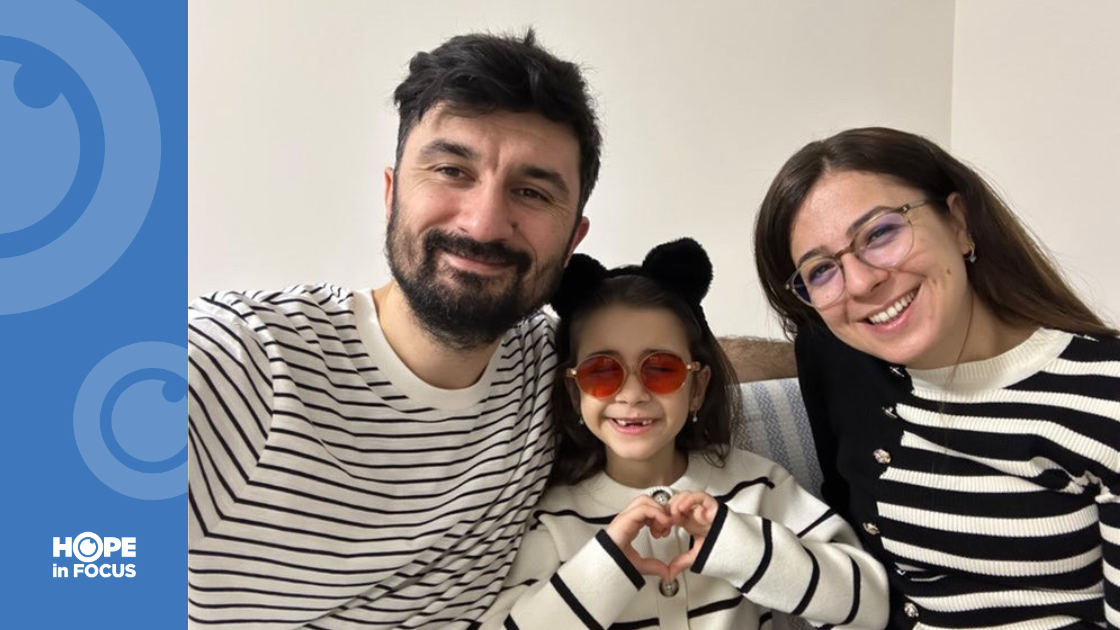
Family photo with Gizem, Toprak, and Haydar on a mountain with the ocean and city behind them
Gizem, Toprak, and Haydar

“I realized what other organizations are doing to help the visually impaired, and I thought we needed to do this in Turkey,” he said. “Hope in Focus and Dr. Boye were role models for me, and in 2021, I created the Inclusive and Accessible Life Association. People with limited vision, blindness, or LCA all face similar issues, so our goal is to provide information and resources to anyone who is visually impaired in Turkey.”

Kindergarten Companion

Determined to continually improve Toprak’s quality of life, the Kulekcis’ information needs accelerated as she got older. “About two years before she went to school, I started researching what was available for education and how we could help her,” Haydar explained. “Many blind or visually impaired children in Turkey don’t go to kindergarten because families are not educated about it.”

Toprak’s kindergarten experience provided Haydar with firsthand information he could share with other parents. “When she started school, they told us that they didn’t know what they could do to help her. I took a two-month vacation from my job and sat with her every day in class, helping the teacher understand how to help my daughter,” Haydar said as he described perching on a tiny chair next to Toprak.

“I told the teacher that Toprak could handle everything and that she could help the teacher help her. I didn’t solve my daughter’s problems for her. I taught her how to solve them on her own,” he said. At the end of two months, Toprak told her father that she was fine and he should go home.

Haydar encourages other parents of visually impaired children to send their children to school and not be fearful about what might happen. He emphasizes the importance of parents allowing their children to solve some of their problems. “Many children who are visually impaired are less fearful than their parents. And most of them can manage and do much more than their parents expect.”

Let’s Dance!

Living across the street from a ballet school gave Toprak an unexpected opportunity. Her parents’ discussions about the school’s problematic traffic jams sparked her curiosity. “What is ballet?” she asked.

Toprak in her blue ballet leotard with the number 2 tag on her chest
Toprak ready for Ballet

After doing their best to describe ballet, Haydar found a high-contrast video of a performance to show Toprak. The video resulted in a torrent of questions about how to do ballet, whether there were special clothes for ballerinas, and whether she could take ballet lessons.

“We realized this could be an opportunity for her,” said Haydar. “But we didn’t have any experience with ballet. The school said we could do it but that they didn’t know how to teach her. So, I said, I am here for this problem!” Haydar began attending the classes, helping Toprak stretch and move her body correctly. “We’d get additional help from the teacher to explain how and where to put her foot or leg using words and moving her body into the correct position.” Haydar noted that ballet has additional benefits because visually impaired children often have difficulty understanding where their body is in space. “Ballet is not just visual but also a feeling and understanding of how the body works,” he said.

Toprak’s ballet experience has thus far culminated in two performances with her classmates, each before a thousand people at a performing arts center. “We tested her in the classes, and she hit the mirror a couple of times, but the teacher said not to worry. She can handle it,” Haydar said. Anxious about her first performance, the Kuleckis sat close to the stage in case she fell off. However, Toprak’s classmates successfully guided her when needed.

“When she was on the stage, she was like an angel walking and running around with her friends helping her,” Haydar said, his voice vibrant with joy. “Toprak solved some of her problems, and when she couldn’t see where to sit or stand, she gave a friend her arm. She didn’t give up! Isn’t this the solution for all of us—learning to ask for help and helping each other?”

In 2023, the Kuleckis attended the HIF Family Conference in Indianapolis. Haydar said it was a significant event for them to attend. “We met many people there with LCA and some with the same gene as Toprak. We also met Dr. Boye there, and it was like a dream for us,” he said. “To think that we sent an email in 2019 to someone in the US who gave us answers and information about our daughter’s LCA, and now we see that person is real.”

Life Continues

In Turkey, schools often lack the knowledge or resources to meet the needs of visually impaired students, and Haydar often relies on his engineering background to find solutions. For example, Toprak finished first grade in June of this year. But she at first struggled to see the blackboard. Her father put a camera in front of the board, sending pictures to Toprak’s tablet so she could zoom in on the content. She also reads books using a digital magnifier, and the rehabilitation center teaches her Braille. The Kuleckis are grateful that Toprak’s last eye exam indicated stable vision, at least for now.

Gizem and Haydar work together to forge the best quality of life for Toprak that they can while sharing information and offering support to others through the Inclusive and Accessible Life Association. “We are a great family team! Gizem identifies a problem, I am the problem solver, and Toprak is a hardworking teammate who keeps us learning new things,” Haydar said.

MEET ANTHONY FERRARO: Social Media Star, Professional Athlete, Musician, and Dad Living with LCA

Prepare to be inspired by Anthony Ferraro, the featured speaker at our major fundraising event, Dinner in the Dark, on November 2, 2024, at Foxwoods Resort Casino in Mashantucket, Connecticut. Here is a sneak peek into his incredible journey.

With supercharged energy and positivity, Anthony, born with Leber congenital amaurosis (LCA), shares what it’s like to be blind through motivational speaking and his various social media platforms. His wife, Kelly Anne, helps him plan out what he wants to portray, and then she shoots and edits the videos about their life that later appear on TikTok, Instagram, Facebook, and YouTube. Anthony’s social platforms have become popular as he shares what managing the world without vision is like. As an advocate for increased accessibility, whether he’s changing diapers, making smoothies, or skateboarding, he shares how he tackles a variety of activities without sight.

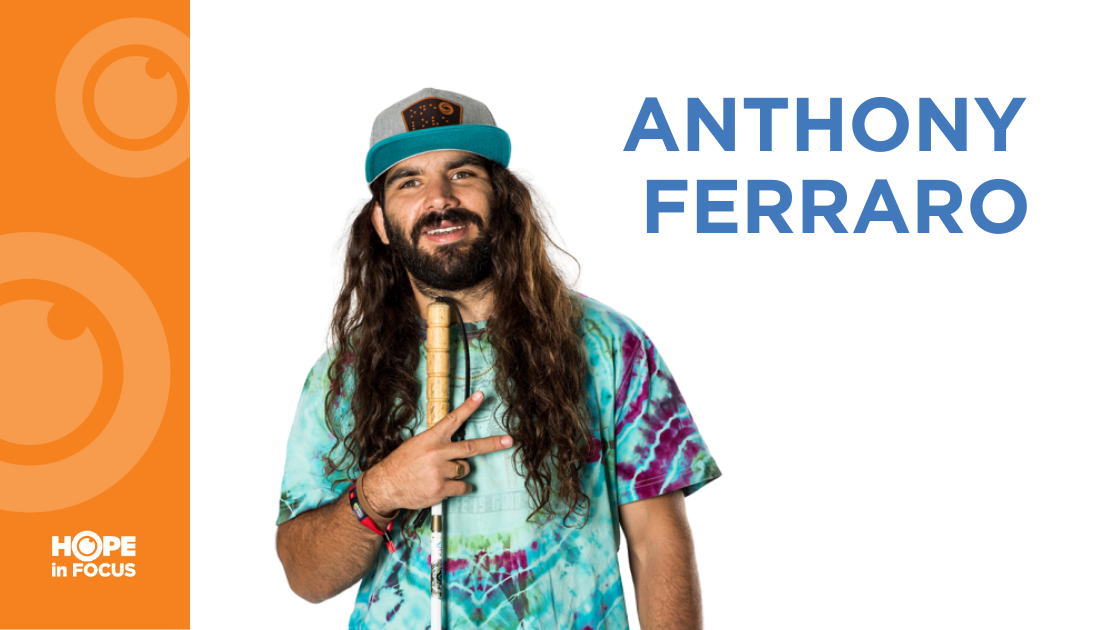
Anthony wearing a tie-dye tee-shirt holding up a peace sign and his guide cane.
Anthony Ferraro

Growing up in Spring Lake, New Jersey, the youngest of five children, Anthony was born with only 20/400 visual acuity (profound vision loss). He lost a chunk of vision in seventh grade and then again in his junior year of high school. Now in his late twenties, Anthony’s vision is decreasing daily, and he says, “The light is starting to go black.”

Against the odds, Anthony became a champion wrestler in high school and was the subject of an award-winning film, A Shot in the Dark, documenting his attempt to win a state wrestling championship in his senior year. In a previous interview with Hope in Focus, he said, “Wrestling has taught me a lot of things. It taught me hard work, that things don’t happen overnight, discipline, and how to deal with loss. It helped me prepare for life.”

Anthony aims to participate in the Los Angeles Paralympic Games in 2028 in Judo. The pivot from wrestling to Judo resulted from a concussion that ended his wrestling career in college. However, this event opened the door to pursuing Judo when the U.S. Paralympic team asked him to train for the team.

Open about his life, Anthony talks about struggling with depression. “When I was 19, I got so depressed that I checked myself into a mental health hospital. I learned a lot about mental health and not bottling things up. I got to work on myself and learn about what I was feeling and going through,” he said. “When I was 21 or 22, I started accepting the fact that I was blind and started using my cane and the resources that were around. That’s when my whole life changed. Soon after, I met Kelly Anne!”

An accomplished musician and skateboarder, Anthony is game to try almost anything. He and Kelly Anne have a baby girl, and some of his videos demonstrate how he cares for her. One example is his TikTok video “How I Find My Baby as a Blind Dad.” With unending zeal and courage, which Kelly Anne fully matches, Anthony propels himself into life.

Come meet Anthony and his family at Dinner in the Dark 2024 and hear him speak about his personal experiences and hopes for a possible treatment for LCA, tickets are available at hopeinfocus.org/dinner. Learn more about Anthony and connect with him on social media at asfvision.com.

A TREATMENT JOURNEY: Jumping Hurdles, Taking Risks

“If someone told me that having access to perfect vision tomorrow meant not having impaired vision for my entire life, I would not change the past. While my visual impairment has created many challenges, it has shaped who I am and influenced me in many positive ways. I’ve become more resourceful, compassionate, creative, and resilient.” —Jack McCormick

Jack McCormick lives a story of hope, tenacity, and measured success while embracing an unknown visual future. When Jack was two, a diagnosis of cone-rod dystrophy confirmed that he had impaired vision. As a teenager, genetic testing revealed that he had Leber congenital amaurosis type 2 (LCA2), due to a mutation in the RPE65 gene and that he was losing his vision. This form of LCA interferes with the production of the RPE65 protein affecting the eyes’ ability to process Vitamin A, leading to progressive vision loss. “It was tough to accept. I was only 15 and thought my life would be a certain way. Now, it was going to be different,” Jack recalled.

Fast-forward to 2022, when Jack, now 25, was treated with LUXTURNA®, a gene therapy for RPE65, becoming the first Canadian to receive a gene therapy. But his journey to treatment involved overcoming substantial hurdles with the Canadian healthcare system, even as his sight declined.

To have a chance for treatment, Jack realized he had to advocate for LUXTURNA® to be available in Canada. “I wrote letters to Parliament and was interviewed on national television to create awareness and to help expedite the process,” he explained. “My vision was getting worse every time I visited the eye doctor, and my window as a viable patient for this treatment was quickly narrowing.”

Even after clearing the bureaucratic obstacles and identifying a hospital and qualified surgeons, there was still no clear path for funding the expensive treatment. “There was a year lag between Health Canada approving LUXTURNA® and my lining up private funding,” he said.

While Jack wanted the treatment, the immediate or long-term outcomes were not guaranteed. His doctors set his expectations sufficiently low, saying he might see a little better in dim lighting. “My goal was to have stable vision for longer,” he said.

Jack finally received the treatment in March 2022. But the surgery was not easy. It took a long time to recover, and the effects were not immediate. His eye with the poorest vision was treated first, and the second eye was treated two weeks later.

“It is important to be realistic about the surgery. They’re injecting an air bubble and a drug into your eye. There are incisions with microscopic stitches that rub against the eye, causing an intense headache,” Jack said. “I was on my back for the first 24 hours. Later, I had to prevent putting pressure on the eye and couldn’t bend over.”

Another huge challenge was having to quickly decide after the first surgery whether to pursue the treatment for the right eye. “With my left eye, it took a week to see what I saw before the surgery,” he explained. “A few days later, my doctors began talking about the next surgery, and I still wasn’t seeing better. It was very stressful and resulted in multiple conversations with my ophthalmologists about whether to proceed.”

After weighing the risks, Jack chose to have his right eye treated. “At that point, my goal was to see as well as I did before the surgery and, ideally, a little better,” he said. “I’m very happy I did it because the treatment made a much bigger difference for my right eye.” His doctors were also pleased when testing showed vision improvement in dim lighting and an increase in color detection.

“Before the surgery, I didn’t see much walking around the city at night. Now, I might notice someone passing me. I can also see the lines of a crosswalk,” he said. “For me, these improvements are huge!” It’s unknown how long these changes will last, but it’s a future Jack is willing to live with.

His advice for people seeking treatment is to be persistent. “My obstacles were fighting the government and finding a way to pay for the treatment privately,” Jack said. “It’s also vital to find a community. It’s one thing to be a visually impaired person saying that I need this treatment. But it is much more impactful when a group says the same thing and gets others to care about it. Allying with organizations like Hope in Focus helps unite our voices while providing much-needed support and education.”

Jack McCormick graduated in 2018 from Canada’s Wilfrid Laurier University in Waterloo, Ontario. He was diagnosed in high school with LCA2 RPE65. Jack is a Hope in Focus ambassador, helping people living with LCA and IRDs. You can read his blog at jackdamccormick.wordpress.com

Hope in Focus Brings Voices of People Living with LCA Directly to the FDA

Allison Wolf, whose 9-year-old son Elliot lives with the encroaching blindness of Leber congenital amaurosis (LCA), spoke directly to staff from the country’s regulatory agency to help them understand the dire need for treatments for the rare inherited retinal disease.

Elliot Wolf sitting on red chair

“Elliot’s eyes are dying, Allison said. “They are dying, and we have nothing to help slow down the progressive loss of his eyesight,” she told the Food and Drug Administration (FDA).

“What would a timely and effective treatment mean? The whole world,” the mother of four said.

Allison and five others affected by LCA shared their stories with the FDA during a recent Patient Listening Session hosted by Hope in Focus.

We brought together the voices of people living with LCA, caregivers, and a clinician treating people with LCA to FDA staff members in a 90-minute online meeting Oct. 30, 2023. Simply put, we wanted the FDA to truly hear our community’s  voices.

Our year-long planning resulted in a successful session to help regulators understand patient/caregiver experiences related to LCA. We requested the meeting to raise awareness with FDA staff about clinical differences of LCA genotypes, share patient experiences of LCA’s impact on the quality of their lives, given the scarcity of treatments, and communicate the extraordinary significance of vision stabilization for patients.

Raising awareness is key to advancing research

People in our community struggle daily to find ways to cope and try to live normal lives in a sighted world. Still, they never give up hope for new treatments and the possibility of a cure. As an advocacy organization, one of our biggest challenges is creating awareness of LCA.

Courtney Coates, our Director of Outreach and Development, introduced the Hope in Focus mission and said LCA affects about one in 33,000 people and presents early in life, resulting in total blindness. Twenty-seven genes have been identified to cause LCA, with treatment available for one form, while a handful of others are in clinical trials.

Co-founder and Board Chair Laura Manfre said as the parent and caregiver of their daughter Sofia living with LCA, raising awareness, searching out new treatments, and providing support to the growing LCA community became the mission of Hope in Focus.

Laura said she wanted to underscore the goals of treatment, in particular around the stabilization of vision for Sofia and others with LCA.

“While vision restoration would be fantastic, having access to a treatment that stabilizes her vision would be huge for her. Not having to constantly change her accommodations for her changing vision is a huge win, and not having to fall asleep every night worried that the next morning might be the one she wakes up without any vision at all. That would be life changing.”

Sharing a chart showing seven current clinical trials, she explained two are not recruiting at this time, two have been discontinued, and all seven represented only four LCA genetic variations.

“So, there is still a lot of work to be done to advance potential treatments.”

Caregivers and people living with LCA tell their stories

Six people from our community shared their experiences.

Elliot Wolf wearing red glasses and a red shirt
Elliot Wolf

Allison Wolf, who is 45 and from North Dakota, said doctors diagnosed her son Elliot with LCA13 (RDH12) when he was 6, and as he gets older, her challenges also grow.

“Nobody knows how to raise a visually impaired child. I must be taught. I must teach him the sighted world, while also dealing with the challenge of teaching him the non-sighted world,” she told agency staff. “My heart hurts when I hear Elliot say, ‘I just want to be done with all this work and I just want to play.’”

***

Mohamed Farid
Mohamed Farid

Mohamed Farid of Illinois is a 36-year-old entrepreneur, diagnosed with LCA5 at 40 days old. His mother quit her job to take care of him, and they moved back to Egypt. Preserving his sight concerns him the most, and his greatest fear is the risk of injury.

“For new treatments,” Mohamed told the FDA, “the first thing I would look for is something to stop any degradation – I sense that my functional vision has degraded slightly over time and would imagine there is something going on with my retina, but do not know.

I have been told by doctors that I will lose my sight in the next two to three years ever since I was 5, and that lack of a prognosis is a killer. Following conservation, I care most about night blindness, then field of vision. …

“I was lucky to have a huge support network of people, who went out of their way and had a lot of energy and stress tolerance. This does not mean that life was easy or that I would not want a cure, even a partial cure would be life changing. It does mean that the cost of LCA is high, but barely bearable.”

***

Joy Goodwine, 40, of New York is the mother of 7-year-old Jordynn, diagnosed at age 1 with LCA2 (RPE65), and received a new diagnosis last year of LCA1 (GUCY2D). She always wanted Jordynn to have some sense of normalcy.

Jordynn Erwin in pink dress with a hot pink background
Jordynn Erwin

“I’ve always asked family and friends to treat her like any other child,” Joy said. “I do not want people to feel sorry for her and I do not want her to have any special treatment because of her

visual impairment. Jordynn is being raised to know that she is capable of doing anything she wants with limitations…

“What I fear most as a parent with a child living with LCA is I worry that her kindness and vulnerability will lead to unwanted interactions when she gets old enough to go off on her own, or her eyes get worse if treatment is not available.”

***

Linda Wirth is 76 and lives in Colorado. Her vision loss remained a mystery until her diagnosis of LCA10 (CEP290) at age 68. As a child, she learned about the world around her by touching things and holding them.

Linda Wirth
Linda Wirth

“My family often told me, ‘Don’t touch that! You will break it. Don’t act strange. People will stare at you.’ So, I began to fake it, pretending I understood things which I did not in order to get along and not appear any different.”

One doctor early on told her: “You are blind! What do you want me to tell you? If you are looking for a miracle, there is none.”

A retired clinical social worker, Linda’s been angrily dismissed from jury duty and job interviews, ignored by waitstaff, and questioned whether she deserved to be a parent.

“Just as many differently abled folks, I have encountered individuals with various stereotypes and prejudices.”

***

DJ Broadbin of Connecticut is a 34-year-old mother and caregiver to 5-year-old Jace, who was diagnosed with LCA4 (AIPL1) at 10 months old. Through a Hope in Focus connection, she succeeded in getting compassionate use treatment in the UK for Jace. The treatment, which applied only to his specific gene mutation, has restored some of his sight in one eye.

Jace Broadbin
Jace Broadbin

“No matter what happens with his vision or developing new treatments,” DJ told the FDA, “I remain steadfast in having the same goal I had for Jace since the very second I found out I was going to be a mom – I just want him to be happy. And I will continue to fight for his inclusion in this world to make sure that he always is.”

She often finds herself exhausted by the constant stress of being a caregiver.

“I also wish sometimes,” DJ said as her voice broke, “I just got to be a mom. Not a medical coordinator, an occupational therapist, and a Teacher of the Visually Impaired all rolled up into one. Just mom.

“But then I think about all the things that Jace’s diagnosis has given me personally: Clarity. Patience. Compassion and empathy in a way that I myself was too blind to see in those earlier days.”

***

Mirielle St. Arnaud is 16 and lives in Illinois. She was diagnosed with LCA (IQCB1/NPHP5) at 6 months old. Her early diagnosis was possible because her older brother had been diagnosed with LCA.

Mirielle St. Arnaud
Mirielle St. Arnaud

Mirielle worries about her safety and struggles to fit in with her classmates because she misses social cues. She hopes her fairly stable vision will not get worse.

She shared a wish list with the FDA that included personal independence, the opportunity to participate in sports, and more certainty about achieving the career of her choice (she dreams of being a lawyer).

“Some of the more significant challenges I face because of visual impairment relate to jobs and getting hired. It takes longer for me to learn certain skills at a job. I have to rely on others when out in public, especially when traveling. I also struggle to find accommodations for my impairment. It seems that other people know my needs better than I do.”

***

Rachel M. Huckfeldt
Rachel M. Huckfeldt

Our representative clinician, Rachel M. Huckfeldt, MD, PhD, of Massachusetts Eye & Ear, spoke about the difficulties of diagnosing and managing LCA and the small number of clinical trials. Identifying the responsible genes can be difficult, and the small number of patients severely limits opportunities for clinical trials.

Questions asked by FDA staff members focused on a few common themes: Have you participated in clinical trials? What are the key impediments to clinical trial participation? What are your deal-breakers to participation? What would a successful treatment look like to you?

One result certainly not on the agenda was the deep emotional impact of the stories shared by those living with LCA and caregivers. The session manifested itself as a profoundly moving event.

A full summary of the FDA Patient Listening Session will be available on our website.

Noah’s Journey: Living and thriving with LCA9 NMNAT1

Five-year-old Noah Johnson lives in a special place where he can see rockets shoot into the air at night.

“I can see,” he yells to his mom, Stephanie. “I can see the rocket!”

One of the big joys of living in Melbourne on Florida’s Space Coast is witnessing dramatic liftoffs from nearby Cape Canaveral, especially when it’s dark.

“It’s so heartwarming because he can see what everyone else can see,” his mom said.

Noah also can see colors, faces, and at night, he can see the moon.

During the day, he can hear the booming roar of the magnificent engines, but unlike in darkness, he can’t see the spacecraft soar into the great beyond.

Noah sitting with a black shirt and grey shorts.
Noah

Stephanie and her husband, Brian, noticed in 2018 the rapid, side-to-side movements in the eyes of their 4-month-old. Stephanie now knows that the eye-movement condition, known as nystagmus, presents as a symptom of the rare inherited retinal disease Leber congenital amaurosis, known as LCA.

After following up with a pediatric ophthalmologist, the doctor asked Stephanie’s other children if they could leave the room, while she wondered, “What is going on?”

The family left the office with many questions and only one vague answer: Something was extremely concerning about Noah’s retina.

Getting a confirmed genetic diagnosis

Noah soon underwent what his mom described as a “horrible and kind of brutal” eye exam. She wants doctors and parents to understand the difficulty of getting an infant to sit still and open his eyes.

The extensive exam used eye hooks to expose his eyeball.

“They put the ultrasound gel directly on the eyeball. I am so thankful as a parent that we’re beyond that, as it was extremely difficult to watch and for him to experience.

“Everyone has their own journey. If I had known there were better imaging options when he got older, I would have asked more questions and inquired if we could wait. The imaging is different and a 2-year-old has the ability to sit and look straight.”

The couple declined an electroretinography (ERG) test that detects abnormalities in retinal function. Even if the earlier testing had gone more smoothly, they didn’t want the doctors to perform the test.

“We were not comfortable putting him under anesthesia,” Stephanie said. “It would give a disease diagnosis but would not confirm the type of LCA. For us we decided against it, for now.”

Noah with his graduation cap on holding his certificate with a fun background saying "Preschool graduate!".
Noah graduating from Pre-K

Noah’s parents instead moved forward with genetic testing, receiving their son’s diagnosis of LCA and a confirmed genetic diagnosis of LCA9 NMNAT1.

“I can tell you this, when we first got Noah’s diagnosis, it was extremely emotionally hard, and it took a whole season of trying to come to grips with it,” she said. “What does it look like? We don’t wear glasses, no one in our family wears glasses or has anything wrong with their vision. It came completely out of nowhere; it was a bit of a shock.

“We just dove deep into our faith, and we had so much of a peace about it. We just cried to God about it. That sustained us through that time of all these things going through your head about what he’ll ever be able to do and whether vision is the only issue.

“There’s a still a unique peace about it that we carry to this day.”

Looking forward to the 2023 LCA Family Conference

The mother of five, working at home full-time as a health insurance account manager, and her husband, who is an occupational therapist with the Veterans Administration, sought out as many people and organizations as possible to find services, to understand LCA, and to learn about retinal disease research.

“I was thinking of people to walk this journey with because it’s an extremely rare diagnosis,” Stephanie said. “I was trying to find other people who have walked through this and are now adults.”

She also attended the 2019 Hope in Focus LCA Family Conference in Philadelphia, where she connected with other families living with LCA and researchers working on treatments for the disease.

And she’s planning to attend Hope in Focus’ third LCA Family Conference this week from June 23-24, 2023.

The Johnson Family: (L) Stephanie (mom) holding Addisyn; Faith (behind Addisyn); Emma, Brian (dad), Noah, and Ryan
The Johnson Family

“I think the LCA conference is so vital. It was a great experience, and I’m looking forward to it even more this year.

“We’ve been at this much longer. We know more, we know what to ask. With Noah going into kindergarten, it’s important to connect with families and talk about how their children went through kindergarten.”

While she’s excited about advances in LCA research that could help Noah, she worries about the effectiveness and risks of trying new therapies.

“The progress made in just the past five years is amazing, and we are optimistic for further advancements, especially for NMNAT1.”

Biotech to advance NMNAT1 gene therapy research

Stephanie finds comfort knowing Noah’s form of LCA is among three in the scope of research advancement by Opus Genetics, a biotech created through the Foundation Fighting Blindness’ Retinal Degeneration Fund (RD Fund) to invest in projects in, or advancing toward, early-stage clinical trials.

Ben Yerxa, PhD, Chief Executive Officer of Opus, characterized the company as a first-of-its-kind model for patient-focused development.

“As the first company launched by the Foundation’s venture arm, RD Fund, Opus is uniquely positioned to bring experts, resources, and patients together to efficiently advance ocular gene therapies for small groups of patients that to-date have been neglected.”

Opus’ lead program addresses mutations in the LCA5 gene encoding the lebercilin protein. The next one focuses on LCA13 RDH12, caused by mutations in the retinal dehydrogenase gene.

The company’s third program targets LCA9 NMNAT1, the gene mutation affecting Noah’s vision.

Stephanie met the Foundation’s Ben Shaberman and Ben Yerxa at the 2019 conference when he served as Foundation’s CEO.

“It just feels so exciting that he is leading Opus. He is a wealth of knowledge for the blind community and has been essential in raising money for research, as money is such a major part of moving this research forward.”

Black and white photo of Noah standing
Noah

Onward to kindergarten

Doctors think Noah’s vision is 20/200, with little central vision and more peripheral vision. Considered legally blind, Noah navigates well, with most people not even knowing he has vision loss.

“I’m just excited, but nervous, about him going into the school this fall, just because I’ve never walked this journey with a school-aged child.”

Stephanie and Brian look forward to meeting and talking with other families living with LCA to gain insight into their son’s progress.

For now, though, Noah continues enjoying his favorite food – pepperoni pizza – and his favorite things: Toy Story movie’s Buzz Lightyear, monster trucks, and, at night: the rockets and the moon.

From Uncertainty to Understanding for Family of 4-year-old Living with LCA1 GUCY2D

Desirae Potts breaks into tears when she recalls the first time a doctor said her infant son James had a disease she’d never heard of – Leber congenital amaurosis, known as LCA.

“I had no earthly idea what she was talking about. I left that appointment, I remember feeling so confused and so sad,” the 33-year-old mom said.

The doctor didn’t or couldn’t give Desirae and her husband, Robert, any information about LCA because the doc didn’t know a thing about the rare inherited retinal disease.

James holding a red solo cup and smiling.
A smiling James Potts

“I had to grieve the life that my son would have had,” she said. “But I also wish that I knew then what I know now, that is: Whether he could see or not, I have a bright light!

“He’s so amazing, I couldn’t imagine him any other way and I wouldn’t change it if I could.”

She thought about the best way to bring up her son.

“I quickly learned the best way to raise him would be to raise him like my sighted children. He is the most resilient and bright young man. I know he is so smart. He amazes me every day.”

Mom becomes nurse to better help her son

James was 10 months old when his parents learned their younger son’s genetic diagnosis: LCA1* caused by a mutation in his GUCY2D gene.

About the same time, Desirae kept listening to doctors talking over her head and decided to become a nurse.

“I wanted to help him with my knowledge. It definitely helps because I have more medical knowledge than I did before. I understand what the doctor is saying. The doctors used all these words I didn’t know, and I was scared that I didn’t know.”

She began nursing school in James’ first year and earned her nursing degree about a year and a half ago. James is now 4.

“I’m not as worried now, and I know what to do in certain situations.”

James goes to school for the full day in an integrated classroom at the same school as his older brother, 9-year-old Robert. His older sister, Ariona, is in high school.

Their mom is the school nurse at the four middle schools in the district of their South Texas coastal city.

Keeps informed of LCA1 GUCY2D research

Desirae knew something wasn’t right with her baby’s vision at 2 months when he didn’t track objects or light. At 4 months, an ophthalmologist prescribed glasses, but they didn’t help.

James with his hands in his mouth, sits in his high chair wearing a graphic tee.
James wearing his “Mr. Amazing” shirt

After the initial retinal disease diagnosis, James received his confirmed genetic diagnosis 6 months later at Baylor College of Medicine by Richard A. Lewis, MD, MS, Professor of Molecular and Human Genetics at the Houston medical school.

Annually, James visits John T. Stout, MD, PhD, who keeps the family informed of research in the LCA1 GUCY2D space. Dr. Stout specializes in retina/macular and retinal vascular diseases at Texas Children’s Hospital. His current research projects include human gene and stem cell therapy for proliferative and inherited ocular disease, retinal disease genotype-phenotype correlation, and intraocular angiogenesis, the formation of new blood vessels from the existing vascular tree.

LCA accounts for 5 percent of all retinal dystrophies and 20 percent of blindness in school-age children.

LCA1* is one of the most common of the more than 27 identified forms of the rare inherited retinal disease, affecting about 20 percent of people who live with the disease.

James received early-intervention therapy, and orientation and mobility therapy during his first years. He also sees a speech therapist at school and a developmental specialist in town.

Right now, his favorite food is bagels and butter. And he absolutely loves music and Daniel the Tiger, a spinoff from Mr. Rogers Neighborhood, where he sings songs about learning, and growing, and what to do with feelings.

James does not yet have words to describe his sight, which makes it hard to explain what he can see, although his mom believes he has light perception.

James’ vision is a family affair

“It not only affected him, but it also affected all of us,” Desirae said. “We all had to adjust and learn how to make things in a way that he could do things on his own and foster his independence.”

The Potts Family: Robert wearing red shirt in front, with L-R: Mom Desirae, Ariona, James, and Dad Robert
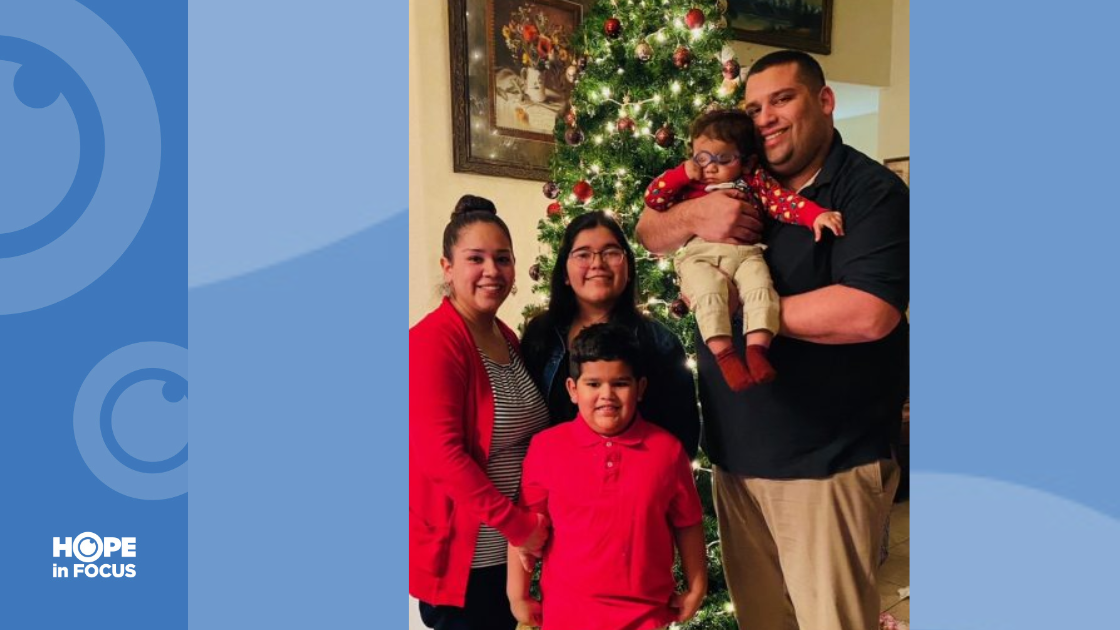
The Potts Family

Ariona, James’ 17-year-old sister, nurtures her little brother, with mom adding, “She’s the closest thing to me he can get. She’s very, very helpful.”

Robert was 5 when James was born.

“He didn’t quite understand what’s going on and how to be accommodating to his brother. We definitely had to inform him.”

Desirae is concerned about James pressing or rubbing his eyes, a symptom of LCA called oculodigital reflex. While the doctor said the reflex is normal, she is worried the action may cause harm. She tries to keep him occupied.

“I try very hard, but James is maybe the most headstrong person I have ever met in my entire life. If you tell him to do something, he will do the complete opposite. So, I tell him, ‘Don’t let me see your eyes,’ even though I don’t want him to defy me.”

James loves to explore and see with his hands.

“We don’t use the word ‘blind.’ We prefer to say that he sees with his hands. We don’t say ‘blind’ or ‘visually impaired.’ We do not want him to think that that would define him.

“That was something I had to teach both of our children, my husband, and all of our family. Some relatives are still in denial. We don’t put him in a box. We let him explore and have the same toys as his brother and sister,” she said.

“We try to have everyone stay on the same page to help build his confidence. Like it’s normal for him that he sees with his hands.”

*Next month, our Hope in Focus LCA Family Conference includes a presentation from an LCA1 GUCY2D researcher. The June 23-24 conference is in Indianapolis.

Music Brings Together Family Living with LCA6 RPGRIP1

Jessi Crawford fancied the clarinet when she played in her middle school band, while classmate Ted Beaman favored the trombone and guitar. Never did they dream their love of music would manifest a half lifetime later with the birth of their youngest son.

Atlas in pajamas and shaking a toy
Atlas mixing it up!

Music is everything to almost 2-year-old Atlas – he loves to sing, he loves to dance, and he loves all kinds of music.

Before the toddler developed his interest in music, his parents noticed something about his eye movements.

“Out of nowhere,” at one-and-a-half-months old, his mom said, he developed horizontal and vertical nystagmus, characterized by side-to-side and up-and-down rapid, repetitive, uncontrolled eye movements.

Atlas received his first pair of glasses at 3 months from Kellogg Eye Center in Ann Arbor, Michigan, about an hour drive from the family’s home in Toledo, Ohio.

A month later, doctors suspected Atlas had Leber congenital amaurosis (LCA), a rare genetic eye disorder in which the rods and the cones of the retina – the light-gathering cells – do not function properly.

Geneticists confirmed his genetic diagnosis as LCA6 caused by a mutation in his RPGRIP1 gene. LCA6 can be particularly devastating because of its rapid onset and progression.

“This took us completely by surprise,” Jessi said. “What do you mean, we both have this dysfunctional gene? What are you talking about?”

She was more than floored, especially because her oldest son, 11-year-old Brayden-Lee, has a rare, life-threatening form of autism and epilepsy. Brayden-Lee and Atlas also have a 7-year-old brother named Ronan.

Jessi found comfort and encouragement from the geneticist and the genetic counselor, but it took time to process the idea that her son’s vision would deteriorate.

Jessi (L) and Atlas (R) both wearing glasses and smiling.
Atlas and mom, Jessi

“You have all these stigmas around losing your vision being the worst thing on the planet, but I realized he could still have a happy life. He’s not dying, he’s just going to lose his vision – that perspective helped a lot.”

She’d already enlisted state and local resources to help Brayden-Lee, so she began searching for any available support and assistance for Atlas.

“I found him an O&M (Orientation and Mobility) specialist, a developmental specialist, and a vision specialist, so he wouldn’t fall behind in anything – movement, sensory output, anything.

“I was still really kind of sad and overwhelmed, and, of course, worried, because I never experienced anything like this before. My oldest son had occupational therapy, speech therapy, hospital visits galore, but I never dealt with anyone who couldn’t see.”

LCA6 RPGRIP1 preclinical research underway

Atlas turns 2 in May and he’s quite advanced, talking in 4-, 5-, 6-word sentences.

“He knows his shapes and he’s working on colors, which is hard because he sometimes blends colors.”

Atlas has no vision from the midline of his eye, down. He has vision above, for now, and cannot see close up.

Jessi and Ted’s little boy underwent eye muscle surgery in February to release his eyes from crossing, which has helped his vision.

Atlas poking his head out of a playhouse.
Atlas

Jessi connected with Odylia Therapeutics, a biotech working on late-stage preclinical studies for a potential treatment for the RPGRIP1 mutation, and, hoping to help advance research, she authorized the company’s use of images taken of her son’s eyes during the surgery.

The Atlanta-based business is developing an investigational gene therapy to treat vision loss caused by LCA6 and is working with vector technology developed by Odylia Co-Founder Luk Vandenberghe, PhD. The research builds on data generated at Massachusetts Eye and Ear in the labs of Vandenberghe and Eric Pierce, MD, PhD, a physician and surgeon at Mass Eye.

The company is preparing its IND submission, or Investigational New Drug Application to the U.S. Food and Drug Administration (FDA). An IND is a request from a study sponsor to obtain FDA permission to start human clinical trials.

Odylia hopes to begin trials in 2025 and is seeking partnership or philanthropic funding for the estimated $3.5 million development costs.

Jessi said she’d like to enroll Atlas in a clinical trial, just not the first one because she fears possible, yet undiscovered, side effects from experimental treatment.

Atlas loves music, singing, and watching TV.

“He loves watching Mickey Mouse-anything. He stood at the mirror, pointed at his shirt in the mirror and said, “Mickey Mouse, blue shirt, mamma.”

A happy child who loves raisins and pizza, he reaches for things and gets his spoon or fork to his mouth, while getting food into it is another thing.

Jessi said Atlas has a tough time with the letter ‘f’ and says shork when he means fork.

Atlas sitting on the sand wearing a bright orange shirt
Atlas enjoying the beach

“He tells me every day, fork and bowl, fork and bowl, or ‘shork a bow, mamma, shork a bow.’” Jessi said just thinking about it makes her laugh.

The 31-year-old characterized herself and her fiancée, 32-year-old Ted, as “both huge, huge, musical people,” beginning back in the school band, when they started dating in their teens and later went their separate ways, only to start dating again four years ago.

“The fact that Atlas likes music so much is better for us. He loves Disney music, also rock, country music and Celtic, and Native American.

“So, when I say we’re well rounded, we’re well rounded.”

A family photo wearing Hawaiian shirts and flowers around their necks.
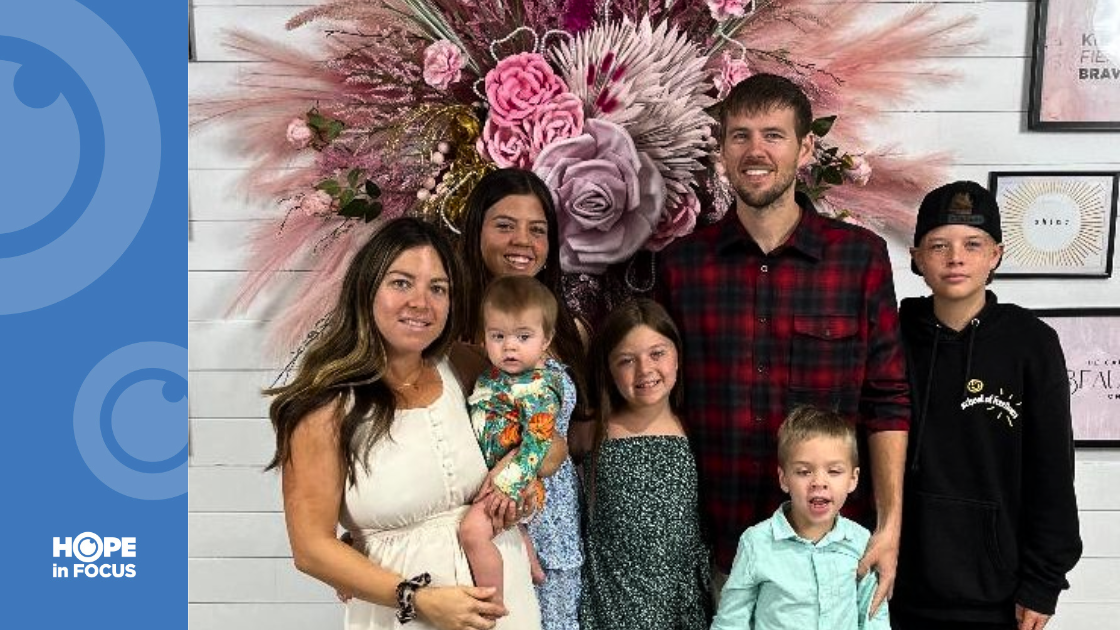
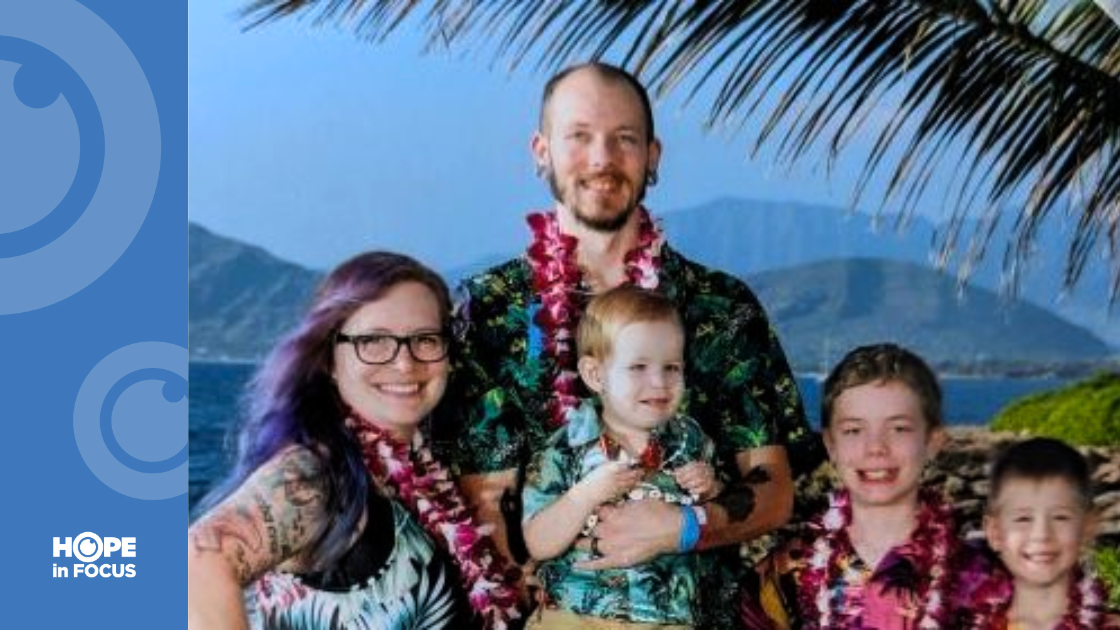
Jessi, Ted, Atlas, Brayden-Lee, and Ronan

Not Your Typical Monday – Connecticut Car Dealership Embraces Hope in Focus Message

As general manager and vice president of Cardinal Honda in Groton, Conn., Kim Cardinal Piscatelli donates time and money to charities. But when she heard about Hope in Focus and the organization’s advocacy for people living with visual impairment, it struck a personal chord.

Piscatelli was a teenager when she watched her late grandmother slowly lose her vision to glaucoma.

“It was scary to watch her go through that,” Piscatelli recently recalled. “I loved her very much, and I saw her world get smaller and smaller.”

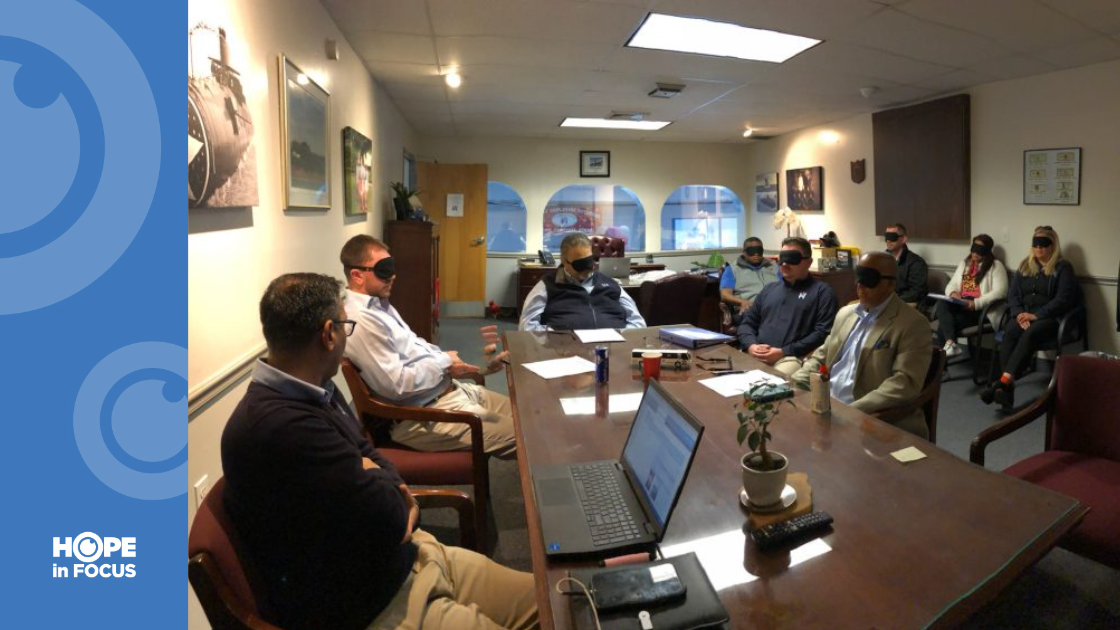
A small group sitting at a table with blindfolds on.
Employees blindfolded

Piscatelli and her family, including her sister, learned how to help her. They closed their eyes and folded laundry. They learned to present meals as if they were on a clock.

“The chicken is at 12 o’clock, and the coleslaw is at 3 o’clock.”

Hope in Focus’ Dinner in the Dark gala fundraiser, an annual culinary adventure that involves wearing a blindfold while eating food from a secret menu, immediately appealed to Piscatelli. She asked her sister to come with her.

“I was so excited,” she said. “As a child, I remember that the empathy I had for my grandmother would lead us to do things to learn to empathize with her.”

Though the concept brought back memories, it wasn’t exactly muscle memory. The two were eager to go, but a bit apprehensive.

“I remember holding hands under the table and being like, ‘I don’t know what is going to happen, but you are right here, right?’” Piscatelli said.

She loved it. Over the years, she’s brought her children, too. But she also has taken the concept back to Cardinal Honda. It started with a morning meeting four years ago. Employees wore blindfolds

“There’s a lot of conversation about diversity and inclusivity,” Piscatelli said. “It seemed like a good way to participate in that conversation.”

That conversation has grown significantly since then, as companies and individuals look to be more inclusive and empathetic to everyone. So, in 2022, the year Dinner in the Dark returned from a two-year pause due to COVID, Piscatelli resurfaced the exercise.

The group blindfolded, sitting at the table and eating.
The group blindfolded.

It was a surprise twist on the typical Monday morning meeting — Piscatelli hadn’t announced her plan. Still, nine of the 10 employees put on blindfolds, while one took photos. When the blindfolds came off, people expressed similar sentiments to those Piscatelli felt during her first Dinner in the Dark.

“They reported they were paying more attention and not worried about what everyone else in the room was doing,” Piscatelli said. “Someone said they felt lonely…because you are not looking around the room making connections or eye contact.”

But even with the uneasiness, people showed interest in trying it again. When Piscatelli asked for six volunteers to put on blindfolds for lunch, the hands shot up.

They tried using tips Piscatelli learned at Dinner in the Dark from Sofia, daughter of Hope in Focus Co-Founder Laura Manfre, and a young woman living with LCA: Bring your food to your face, not your face to your food. Piscatelli announced the clock placement of the meal for the employees, just as she used to do for her grandmother.They huddled up after to discuss.

“Someone said it gave them a whole new perspective,” Piscatelli said. “They didn’t know if they had food on their shirts. They were more aware of what they were eating and how it tasted better, but said it was hard to eat. They lost track of what food was where on the plate.”

Employees sitting in a meeting with blindfolds on

Piscatelli hopes the exercise allows her employees to feel more empathy for people with vision loss and think of strategies to make the world more inclusive for them.

“It forced them to think about different sorts of things,” Piscatelli said. “Instead of changing what was on TV, we had to announce what was going to happen next. It helped people be prepared without visual tools.”

In a home with a person with vision loss, people can announce who they are and why they are coming into the room. For example, “It’s me, Kim, and I am here to do laundry.”

In the end, the staff learned something new and embraced leaving their comfort zones.

“It turned their day…it wasn’t a typical Monday,” Piscatelli said. “Everyone was more aware: What else do I not know?”

Piscatelli hopes other businesspeople feel inspired to learn what they don’t know about vision loss.

“It’s one thing to talk about equity, diversity, and inclusivity.” Piscatelli said. “It’s another thing to immerse everyone in an exercise where they feel empathy for people who have low vision and compassion for other people as they are temporarily trying that on.

Boy’s vision improves after undergoing Compassionate Use gene therapy in UK for LCA4 (AIPL1)

DJ and Brendan Broadbin came to our Hope in Focus LCA Family Conference with a lot of questions about their little boy’s blindness, and they left with amazing answers leading to innovative treatment for his type of Leber congenital amaurosis (LCA).

The couple traveled from their southwestern Connecticut home to the July 2019 Philadelphia conference knowing their son Jace had LCA, but not knowing the specific form of the rare disease because their 11-month-old had yet to be tested genetically.

Jace with his red backpack and toy car
Jace ready for the day

Jace’s parents introduced themselves to retinal specialist Prof. Michel Michaelides, one of Britain’s top ophthalmologists, a founding member of MeiraGTx, where he is Head of Clinical Ophthalmology, and a conference panelist.

“At that time,” DJ said, “we hadn’t even met with a geneticist yet, but Michel gave us his contact information ‘just to have.’ We then got to hear the panel discussion at the conference regarding the clinical trials that were taking place across several of the gene variants.

“A few days before we went to Boston to hear Jace’s genetic results (in October 2019, three months after the conference), we received the Sofia Sees Hope (now Hope in Focus) newsletter in the mail, outlining the treatments that were discussed at the conference.

“We brought the newsletter with us to our appointment and almost fell out of our seats when we learned that Jace had the AIPL1 variant, and that MeiraGTx was currently working on treatment through the Compassionate Use case program in the UK – we emailed Michel that same day.”

Compassionate Use treatment

Dr. Michaelides is a Professor of Ophthalmology at University College London Institute of Ophthalmology in the Department of Genetics. He also serves as a Consultant Ophthalmologist at Moorfields Eye Hospital in the departments of Inherited Eye Disease, Medical Retina, and Paediatric Ophthalmology.

The professor has discussed the United Kingdom’s Compassionate Use program in a Hope in Focus webinar series episode called “Let’s Chat About…Gene Therapy for LCA,” describing LCA4 as an exceedingly rare and severe form of the disease in which children have profoundly reduced vision from birth.

A special unlicensed medicine is one manufactured without marketing authorization from the Medicines and Healthcare products Regulatory Agency. The agency only grants a product license once a medicinal product has been proven to be safe and effective. Prescribed products not holding a marketing authorization include those prepared on an individual basis by “special order” manufacturers, according to the National Institutes of Health.

Jace with his face up against the glass of the jellyfish tank
Floating jellyfish capture Jace’s attention

“There is a narrow window of opportunity (for treatment) because the retina degenerates and thins out by the age of 4 years,” Dr. Michaelides said. “Treatment needs to be before 4 years of age. MeiraGTx has manufactured a gene therapy that they are making available under a Specials license in the UK.”

After months of conversations, sharing test results, and talking with the hospital board members and surgeons, Jace received approval for the Compassionate Use treatment in one eye on March 17, 2020.

The family traveled to London, Jace underwent pre-op testing, and the surgery was cancelled: The world had just begun shutting down because of the COVID-19 pandemic.

DJ and Brendan thought the surgery would be cancelled indefinitely, but to their wonderment, they returned in September, quarantined for two weeks, and Jace received the gene therapy in his left eye, which is stronger, on Sept. 30, 2020. He had just turned 2 that August.

Jace in a hospital gown with a bandage on his left eye. He is holding his monkey binkie and Micky Mouse stuffed animal
Jace after undergoing Compassionate Use gene therapy

Before LCA4 (AIPL1) surgery

The couple first began to realize when Jace was about 8 weeks old that he was not looking at them or trying to track toys.

“He was smiling from touch, but never in response to one of our smiles. He wasn’t blinking when lights were shown in his eyes and wasn’t shutting his eyes or even squinting in the brightest of sunlight. His eyes never seemed to move out of that ‘newborn’ stage of being all over the place,” DJ said.

“When we brought him to the pediatrician, hoping we were just being paranoid and this was something he’d grow out of, they confirmed that something wasn’t right and within an hour we were meeting with a pediatric ophthalmologist – kicking off a year-long journey for answers.”

Before his surgery, Jace had minimal light perception and not much functional vision.

“Lights had to be very bright for him to react to, and his reaction was at least two seconds delayed. Phone screens and TV screens were not bright enough to elicit a reaction from him and outside he had to always be in sunglasses because the sun was never too strong for him to look away from.

“With his left eye, we felt like he could have some shadow perception or make out very high contrast shapes and objects,” DJ said. “He had some words at the time, and labeled toys by feel and sound, but never by sight.”

Prof. Michel Michaelides in a black suit
Prof. Michel Michaelides

Post surgery

About a year after Jace’s surgery, his parents – now both 33, with mom working as a market researcher and dad as a sourcing manager for a major retailer’s store design team – welcomed another son. Jace’s little brother, Gio, just turned 1 in August.

Gio is sighted and in awe of his big brother – so much so, DJ and Brendan said he always felt like a toddler to them, missing the infant stage,  because he’s always trying to keep up with Jace.

He learned how to crawl so he could be closer to his brother and now runs out of bed to meet Jace every morning,” DJ said. “Jace assumed the ‘patient older brother’ role incredibly well. He’s even learned to share his most favorite toys and it’s music to our ears when the boys are both belly-laughing as they rough-house with one another and try out their wrestling moves.”

Jace and Gio sitting in a tent at the beach
Gio loves his big brother

Since the surgery, Jace can identify most of his toys by sight when they’re held three feet or closer to him.

“He is especially good at identifying the ones that are brightly colored and his favorite cars and dinosaurs, of course,” she said.

The couple believe Jace gained valuable functional vision from his surgery.

“Our hope was always that the surgery could protect some of the light perception he did have for a bit longer, never imagining that it could lead to anything more.”

Jace’s mom talked about LUXTURNA®, developed by Spark Therapeutics and the only federally approved treatment for LCA2 caused by a mutation in the RPE65 gene, which has demonstrated improved vision in people who underwent the gene-therapy surgery.

“Someone who received LUXTURNA® described vision improvement as regaining ‘pockets’ of vision in the area where the retina remained intact, and this is exactly how we believe Jace has also regained some vision in his left eye. He will turn his head in certain directions to get a better look at what is in front of him.

The Broadbin Family
Brendan, Jace, Gio, and DJ Broadbin

“In terms of being able to better navigate, Jace now bends down to pick up small objects that might be in his way, noticing them solely based on sight, not feel.”

Jace’s teachers have commented he’ll squat down to look under things when he wants a specific toy in the classroom and stand on tippy toes to find things placed on countertops.

“This makes us laugh to hear.”

Jace, now 4 years old, smiles when he catches a glimpse of his favorite people and things.

“It is heart melting. But he also still flashes that same perfect smile when he feels the sand at beach, hears his favorite country songs, or tastes an ice cream cone – so yes, his vision has changed and it’s amazing to experience, but to us he’s always been amazing to experience.”

P.S. Hope in Focus featured the Broadbin family in its annual Dinner in the Dark video in October 2022. Please click here to view.

Genetic Tests Glean New Diagnoses for People Living with Rare Inherited Retinal Disease

Three people who received diagnoses of Leber congenital amaurosis (LCA) in recent years – but lived most of their lives thinking they had retinitis pigmentosa (RP) – gave us the opportunity to hear their stories at a special session of the VISIONS 2022 conference this summer.

An RP diagnosis is currently given to patients with photoreceptor degeneration but good central vision within the first decade of life; an LCA diagnosis is given to patients who are born blind or who lose vision within a few months after birth.

In the middle of a two-day conference hosted by the Foundation Fighting Blindness, several of us from Hope in Focus in an LCA Mix & Mingle session heard about the sometimes-rocky road to getting a confirmed genetic diagnosis of a rare inherited retinal disease (IRD), especially in the years before access to genetic testing.

Ultimately, though, that difficulty did not hold back these individuals from creating happy and productive lives because they did not allow their blindness to define them.

A college of Linda, Russ, and Emily.
Linda Joy Wirth, Russ Davis, and Emily Townsend Cobb

Linda Joy Wirth

Blind since birth, Linda Joy Wirth, now 75 and living in Lakewood, Colo., was diagnosed with RP in the 1960s. Because she was told from an early age that nothing could be done for her blindness, she stopped thinking about her diagnosis and focused on her education, marriage, and children.

Then she thought: “You can never cure something if you can’t diagnose it.”

In the 1990s, she sought out a highly recommended doctor who treated her with a strong dose of cruel words.

“ ‘You’re blind. What do you want me to tell you?’ ” she recalled the doctor saying. “I was so distraught by the visit; I did not go back to the doctor for years and years and years.”

About 10 years ago, though, she went to a Foundation conference, where she received a referral to a Denver retinal specialist by the name of Dr. Alan Kimura, who changed her life.

“When I finally saw Dr. Kimura, I said I don’t even know why I’m here. I walked out two hours later, and I was walking on cloud nine. It’s so important to have the right retinal doctor.”

Dr. Kimura told her she had LCA. Genetic testing gave her a confirmed genetic diagnosis of LCA10, caused by mutations in the CEP290 gene.

Linda encourages people to get genetically tested to pinpoint the diagnosis, and then, like her, to be aware of the possibility of participating in a clinical trial to advance research into treatments and cures.

People told Linda along the way that because of her blindness, she shouldn’t marry or have children or follow her passion for acting. And, of course, she heard those stinging words from that earlier doctor: “ ‘You’re blind. There’s nothing we can do.’ ”

Linda is a retired clinical social worker in geriatric long-term care, an actor in a theater company, a Foundation volunteer, a mother of four, a grandmother of seven, a motivational speaker, and the author of “Just Because I Am Blind Does Not Mean I Can’t See!”

Russ Davis

Russ Davis, 60, of Jacksonville, Fla., still gets confusing information about the cause of his rare inherited retinal disease.

“One minute I hear it’s probably LCA, or no, that it’s classic RP. I got that at the conference.”

Some retinal experts do consider LCA to be a severe form of RP.

In 2019, Russ received a genetic diagnosis of LCA2, caused by a mutation in the RPE65 gene. Dr. Stephen Russell at the University of Iowa told Russ he could have RP or LCA.

“ ‘It could be either one,’ ” he recalled the doctor saying. “ ‘But at your age with so few retinal cells, we’re not going to know.’ ”

Russ said he’s a little frustrated with the lack of a certain label for the disease, but it’s not going to change his life.

“The blindness part, that’s fine. I am who I am. It doesn’t control my life. But I’d like to have answers.”

These days, Russ is going with LCA.

His vision loss occurred at birth. Growing up he could read a book with a bright light, ride a bike, and he enjoyed long-distance running.

“I could see most everything, except at night when everything disappeared. When the sun went down, I was toast,” he said. “There was nothing there. There was darkness and light bulbs.”

His vision worsened early in his career in his mid-20s working for the State of Florida, looking for people who owed child support and wanted to stay missing. The job was fun for 30 years but about 10 years ago, with his vision getting worse and work getting harder, he retired.

Russ and his partner, Denise Valkema, were like a comedy team at the LCA session, riffing off each other’s words and making the Mix & Mingle group erupt in rounds of laughter.

Denise, who lives with optic nerve hypoplasia, which is an underdevelopment of the optic nerve, met Russ through the National Federation of the Blind. Denise served as NFB’s Florida Affiliate President for seven years.

They both serve on the organization’s board. Their priorities include working with Congress on myriad pieces of legislation to bring about better accessibility to medical care, computer technology, banking, voting, and more.

“The blind community is still not able to participate fully in society because we don’t have access to all the aspects of living that the sighted community has,” Russ said. “Try finding a talking blood pressure cuff.”

Russ advocates for people with diminishing eyesight, reassuring them that that life will go on.

“It’s all about your attitude. I try to tell them, no, that it’s not going to be easy. Lots of times, it’s going to be difficult. There are a lot of things to adjust to. You simply find new ways to do the things you were doing before.

“You can’t let your loss of eyesight define who you are or control you. You have to own it and not let it control you.”

And he lives his words.

“There’s so many times in life, you have the option to laugh or to cry, and I’m going to pick laughter. It would be very easy to pick the other one.”

Emily Townsend Cobb

With a 2½-year-old daughter, another one on the way, and a pediatric physical therapy career, we were lucky we had the chance to talk with Emily Townsend Cobb at the LCA session.

Doctors diagnosed Emily with RP at age 3. Now, 33, she received a confirmed genetic diagnosis in 2019 of LCA13, caused by a mutation in the RDH12 gene.

Emily is in that age group of people misdiagnosed for years before the advent of genetic testing.

“Thirty and over, that’s how it went,” she said.

Getting the confirmed diagnosis didn’t really change her life, especially because LCA13 research is in preliminary stages.

“Now I sit and wait for my number to be called,” Emily said, referring to the possibility of a treatment or cure for her form of LCA. “While we wait for all these things to happen, we have to live life.”

Emily’s husband, and her mom and dad accompanied her at the conference. Her father, Clay, introduced himself, saying, “Oh, I’m the proud father of two girls with RDH12 and I’d do anything to help them.”

As he broke into tears, his wife, Sue, leaned into him, saying, “He’s a crier.”

Without having to say much more, it became clear why Emily credits her family for their loving support and positive approach toward life.

She said she receives 150 percent support from her family.

“That support is so important for anybody, but especially if you have a disability.”

Doctors also diagnosed her 31-year-old sister, Ashley, with RP, and she later received a genetic diagnosis of LCA13 (RDH12).

Emily remembers reading newsprint as a pre-teen and playing soccer, but her vision profoundly worsened as a teen-ager, a tough time for any kid, but especially for her as she was losing her sight.

About the same time, she learned she had LCA but didn’t undergo genetic testing because genetic data was still being mapped out.

We talked with Emily after the session when she returned to her home in Jacksonville, Fla., where early on, she said, her mom set her up with a therapist who had RP, which helped build her confidence as a teen-ager.

She put off using a cane until college and in her sophomore year got her guide dog, a black lab named Fergie, now retired to pet life after 11 years of service.

“She’s currently snuggled up to me on the couch while I fold laundry,” Emily said as her little girl, Elora, napped.

Her second daughter is due in October. And, oh, did we mention she runs half-marathons and is a triathlete?

Emily takes part in triathlons with her husband, Ryan; they are tethered during the running and swimming races and ride a tandem bike for the cycling portion.

“If you ever want to test the strength of a marriage, blindfold one of you and tether to the other,” Emily quipped.

She and Ryan talked about the chances of their children being born with LCA. She recalled her husband saying, “ ‘Emily, if they’re going to end up as awesome as you, I want to.’ ”

They knew their children could be born with LCA, but they also knew the rarity of the disease. Emily said the chances of having a child with LCA are about one in 400.

“I’ll take those odds,” she said. “I’m pretty happy that I’m here.”