Mother of Toddler Living with LCA6 RPGRIP1 Collaborates with Biotech Odylia to Help Advance Gene Therapy Research

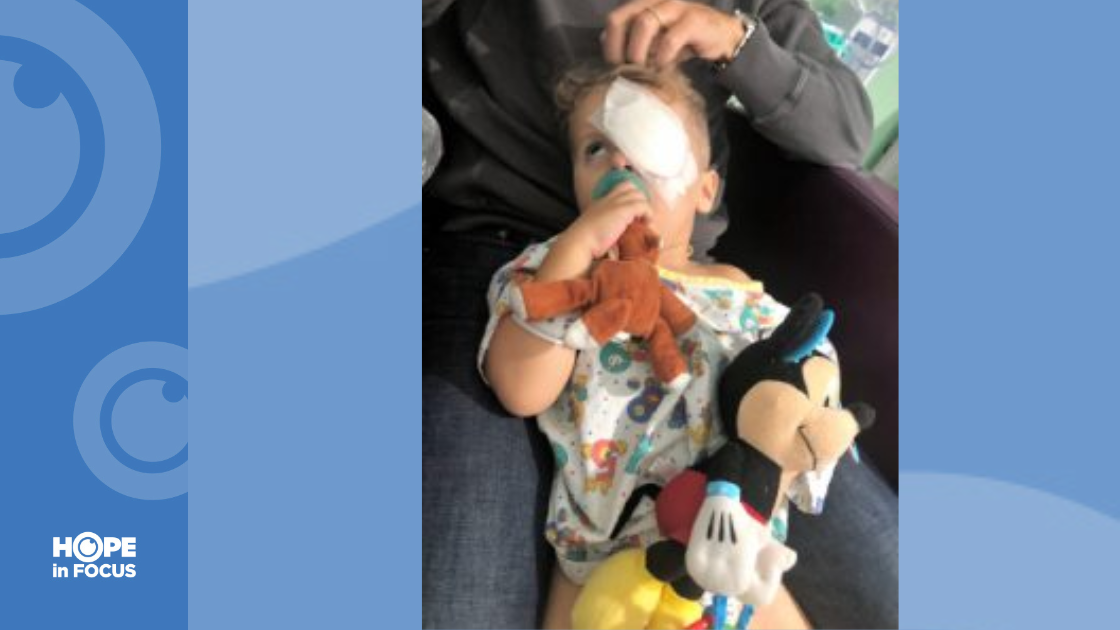
After crazy months of looking for answers to questions about her infant’s vision, Melissa Matias learned her baby girl, Dylan, had a form of Leber congenital amaurosis known as LCA6 caused by mutations in her RPGRIP1 gene, a protein needed for healthy photoreceptors.

“I put my big-girl pants on and said, ‘This is the card she and I have been handed.’ ” The Georgetown, Texas, mom added: “There’s a reason for this.”

When Dylan received her confirmed genetic diagnosis in May 2020 at age 5 months, her mother did not assume someone else had the time or resources to search for a treatment or cure for her daughter’s form of blindness. Melissa organized people, advocates, and information. She created the RPGRIP1.com website and began collaborating with the nonprofit biotech Odylia Therapeutics on a $4 million fundraising effort to advance therapy for the RPGRIP1 LCA6 program.

The Atlanta-based biotechnology company is in late-stage preclinical trials, with the goal to be in clinical trials in about two years. Melissa is hoping Dylan – a gregarious trampoline-jumping gymnast – will benefit from this developing gene therapy.

Dylan in a pink stripped shirt and sunglasses, bouncing on her trampoline
Dylan on her trampoline

“We aren’t trying to fix or change Dylan. There’s nothing wrong with her. But if there’s a chance for gene therapy to enhance her life, you would want to do that,” she said. “Blindness doesn’t mean darkness. It means ‘I can do this; I just might need to do it in a different way.’ ”

Dylan’s doctor told the Matias family that the possibility of sight-saving therapy coming to fruition was not a matter of if, but when.

“This therapy, if it’s in reach, let’s get going,” Melissa said. “Let’s get the word out and open the door to gene therapy, not just for RPGRIP1, but for other genetic visual impairments and rare diseases.”

Financing poses the major obstacle. Melissa enlisted the help of patient families and organizations, such as Hope in Focus, to help spread the word and secure necessary funding to bring the treatment to market. About $115,000 has been raised, including donations from Dylan’s brothers, 8-year-old Colton and 12-year-old Brayden.

Funded by Massachusetts Eye and Ear and the Usher 2020 Foundation, Odylia Therapeutics started in 2017 with the goal of facilitating treatments for low-prevalence retinal disease with proof-of-concept science to Phase I/II/III clinical trials.

LCA6/RPGRIP1 Gene Therapy – Following LUXTURNA® Path

The gene therapy uses vector technology developed by Odylia Co-founder Luk Vandenberghe, PhD, Director of the Grousbeck Gene Therapy Center at Mass Eye and Ear, and Assistant Professor of Ophthalmology at Harvard Medical School. The research builds on proof-of-concept data generated at Mass Eye in the labs of Vandenberghe and Eric Pierce, MD, PhD, a physician and surgeon at Mass Eye and the William F. Chatlos Professor of Ophthalmology at Harvard Medical School.

LUXTURNA® currently is the only gene therapy on the market. Developed by Spark Therapeutics and federally approved in 2017, the drug treats a form of LCA known as LCA2 (RPE65), and it is the only gene therapy approved in the United States for any inherited disease.

Odylia hopes to follow in LUXTURNA’s path with its research. Delivered by injection under the retina in each eye, LUXTURNA® has helped improve vision in patients for the last four years.

“The success of LUXTURNA has proven to be life changing for many patients,” Odylia said in a news release. “It’s very exciting that with the efforts of Odylia, those affected with RPGRIP1 mutation could possibly have the same opportunity in the near future.”

Developing treatments and administering them to young patients is paramount to stall vision deterioration, as LCA6, along with the more than 27 forms of LCA, is degenerative.

Odylia says its goal is to bring proven therapeutics to patients, regardless of the number of people with the disease or the opportunity for a company to make money.

By identifying promising treatments, the company said it can partner with patient groups, community experts, and financial sponsors to develop strategic, scientific, and clinical plans. Through collaboration with industry and foundations, the organization said it can move treatments from concept through development and to patients with rare diseases.

These partnerships are needed for the estimated $3.9 to $4.3 million in development costs to advance the research through toxicology studies and fund clinical manufacturing costs. Odylia says it will work to lower costs and reduce overall expenses.

Partnerships and funding also will help with Odylia submitting an Investigative New Drug (IND) application to the U.S. Food and Drug Administration. Federal law requires that a drug be the subject of an approved marketing application before it is transported or distributed across state lines. Because a sponsor will probably want to ship the investigational drug to clinical investigators in many states, it must seek an exemption from that legal requirement. The IND is the means through which the sponsor technically obtains this exemption from the FDA.

Mom (L) with Dylan and Dad (R) sitting on a brown couch
Dylan with mom (Melissa) and dad (James)

The FDA recently granted both orphan drug and rare pediatric disease designations for Odylia’s lead gene therapy. The company said the designations are granted for the “treatment of RPGRIP1 mutation-associated retinal dystrophies,” which most commonly includes LCA6 but is also associated with diagnoses of cone-rod dystrophy 13 (CORD13) and forms of early-onset retinitis pigmentosa (RP).

“Receiving orphan drug and rare pediatric disease designations represents an important milestone for Odylia and recognizes the potential of this gene therapy to deliver life-changing results to LCA6 patients and RPGRIP1 associated retinal dystrophies,” according to Ashley Winslow, PhD, Odylia’s Chief Scientific Officer.

Between 400 and 600 people are affected with LCA6 in the U.S., with about 20,000 globally.

Orphan drug designation is granted to therapeutics intended for treatment, diagnosis, or prevention of diseases affecting fewer than 200,000 people in the United States. Rare pediatric disease designation is granted to serious or life-threatening rare diseases that primarily affect individuals under age 18. Orphan drug and rare pediatric designations provide companies like Odylia with benefits, including access to research grants to support clinical studies, waiver of regulatory fees, seven-year marketing exclusivity, and eligibility for a priority review voucher.

Dylan with a Hula hoop at the gym
At the gym

Struggle to Find Confirmed RPGRIP1 Diagnosis

Melissa’s persistence pushed her through incredibly trying times, having six back-to-back miscarriages during 2016 and 2017 after having her two sons. Two years later, she and her husband, James, got the news she was pregnant with Dylan.

“She was so meant to be,” Melissa said. “It was unreal when it came time to deliver. Everyone in that room was crying.

“They had all seen on my chart that I had 10 pregnancies. They were all just like…” she said trailing off. “It was such an emotional time.”

Two months later, though, Melissa and James realized something didn’t seem right with Dylan’s vision; her eyes jerked from side to side from a condition known as nystagmus. It was February 2020 with the tentacles of COVID spreading over the globe, creating an overworked, overwhelmed medical world focusing on patients infected with this strange new virus.

Finding an initial diagnosis for Dylan proved extremely difficult, especially when one doctor said nothing was wrong, probably just delayed maturation of vision, and another mentioned LCA but brushed it off. So, Melissa did what we all do now when we don’t get answers: She Googled the disease.

“The more I learned about LCA, I knew in my heart right away what we were looking at. But I’d also think, it’s so rare, what are the chances?”

She also learned the next step to move forward with treatment or care for 2-month-old Dylan depended on a confirmed genetic diagnosis determined through genetic testing.

No genetic testing, not now, she was told. Not until COVID is over. Melissa wasn’t waiting for the end of the pandemic, now into its third year. She knew she needed a doctor’s order but hadn’t yet connected with a retinal specialist; she sought out the help of Dylan’s pediatrician, a doctor she characterized as amazing, who ordered the test.

Waiting for the results, Dylan’s parents scheduled an appointment for May 28  with a Houston retinal specialist; the confirmed diagnosis of LCA6/RPGRIP1 came through May 27, paving the way to finding resources in orientation, mobility, and education for Dylan.

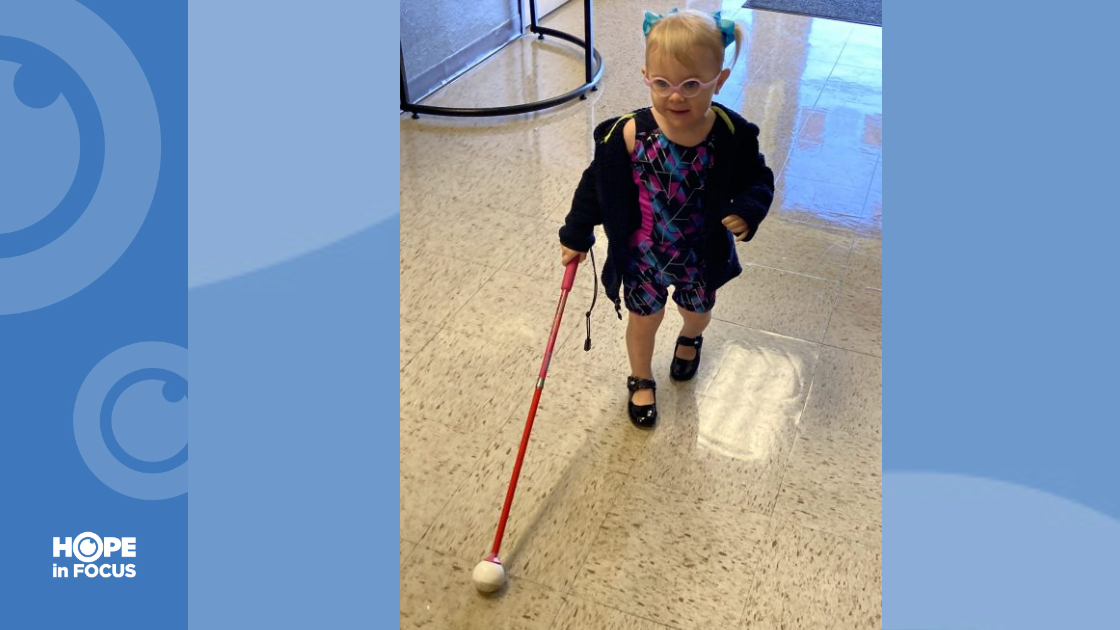
Dylan using her cane

Living with LCA6/RPGRIP1 / Like Mother, Like Daughter: Stubborn and Persistent

Dylan is now 2 years old. Her parents believe she has tunnel vision and does best seeing objects 10 or 15 feet away. She’s better now at keeping her glasses on, rather than ripping them off all the time like she used to.

On her first day of Orientation and Mobility training, she picked up a cane and used it just the right way, a milestone the instructor said he had never seen in a child her age.

“Indoors, she’s just amazing,” Melissa said. “She loves picture flashcards, playing in her toy kitchen, always wants someone to read her books, and she loves her new mini trampoline she got for Christmas. And music – she loves to sing and dance.”

Dylan takes her time in new environments and is a little more cautious than other toddlers because of her visual limitations. With  photophobia being one of the symptoms of LCA, Melissa said her daughter finds bright outdoor sunlight to be the most challenging and where she relies more on her cane skills.

The little girl also is very vocal and visual.

“Her vocabulary is comparable to a child much older than 2,” Dylan’s mom said. “We know she is very visual, something we feel blessed with, since LCA can present with a wide range of visual capabilities. We’ve actually had to teach her to bend down and feel for objects she drops, because her instinct is always to look for something first.”

She’s also persistent.

“She has a very strong desire for mastery, having to do things over and over again. She likes a challenge.

“I have no doubt this girl is going to change the world. No matter what happens if gene therapy comes about for her or not. She’s going to be on skis this winter. I’m not going to give her an excuse not to do something or at least to not try.

“She can and will do anything she wants, just in her own ways. Stubborn and persistent, exactly what she needs.”

Dylan standing in between her brothers with skis on.
With her brothers, Colton and Brayden

Family Excited About New LCA5-Lebercilin Research Program

John Mills says he would crawl over broken glass if it led to a cure for his daughter’s visual impairment caused by one of the rarest of rare inherited retinal diseases.

Fourteen-year-old Naomi Mills of Virginia lives with one of the rarest forms of Leber congenital amaurosis – LCA5, which encodes the protein lebercilin. Lebercilin is responsible for moving proteins up and down, between the inner and outer segments of the photoreceptor cell so it can operate properly and stay healthy.

While most parents of children diagnosed with a rare inherited retinal disease can identify with John’s feelings toward finding a cure, a new genetics company just might save his hands and knees from harm, as the business plans to prioritize research into this severe form of LCA that affects about one in 1.7 million people.

Opus Genetics based in Raleigh, N.C., plans to file an Investigational New Drug (IND) application this year with the U.S. Food and Drug Administration for an LCA5 research program called OPGx-001.

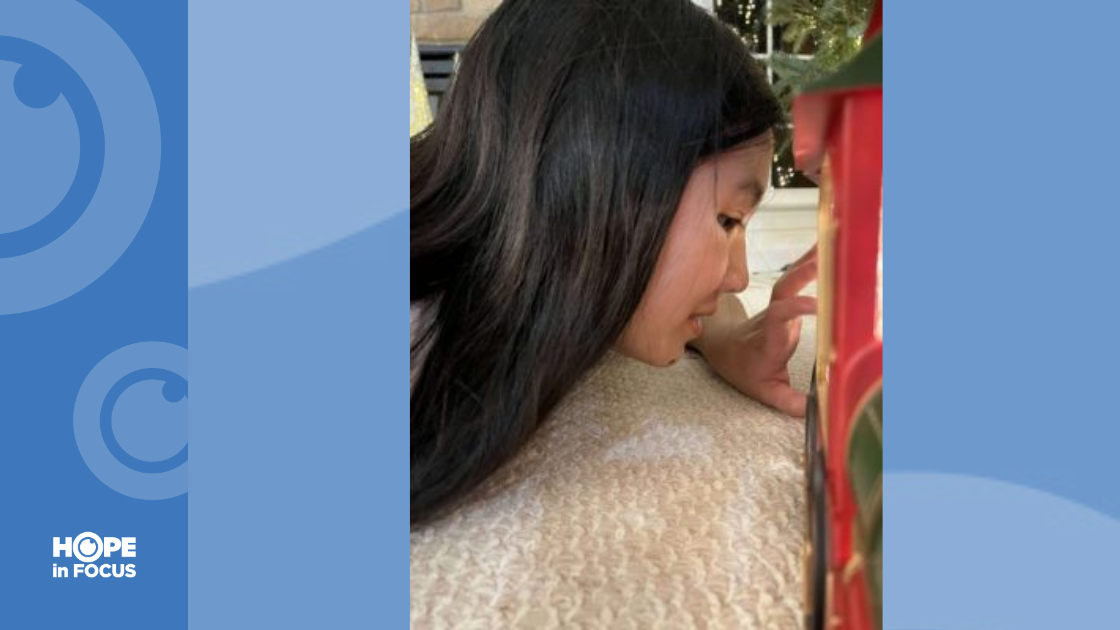
Naomi on the floor, looking at a Christmas train ornament
Naomi Mills, who lives with a rare form of LCA knowns as LCA5-Lebercilin, loves this Christmas train ornament because it moves and it’s colorful and sparkly.

A pharmaceutical company obtains FDA permission to start human clinical trials and to ship an experimental drug across state lines through an IND application before approving a marketing application for the new drug.

“Kathie (John’s wife) and I pray every day that there’ll be a pathway to improve her vision, that she’ll be able to drive someday.”

The Retinal Degeneration Fund (RD Fund), the venture arm of the Foundation Fighting Blindness led the $19 million in seed financing. The funding will allow Opus to advance the preclinical work of its three scientific founders: Jean Bennett, MD, PhD, the F.M. Kirby Emeritus Professor of Ophthalmology at the Perelman School of Medicine at the University of Pennsylvania; Junwei Sun, Chief Administrator for Penn’s Center for Advanced Retinal Ocular Treatments; and Eric Pierce, MD, PhD, the William F. Chatlos Professor of Ophthalmology at Harvard Medical School and Massachusetts Eye and Ear.

“We’re very excited,” John said. “We know there’s a lot of moving parts here – doctors, advocacy groups, medical research, the FDA. Trying to get all of those aligned for the moon shot is quite an orchestration.”

High Aspirations for Teen with LCA5

Low vision aside, her father said Naomi wants the freedom of mobility in owning a car.

“Naomi was given a suggestion by her wonderful teacher that a best practice is to buy a car, even if you’re blind, so you can ask someone to ‘Please drive me in my own car,’” John said. “She also hopes that she can drive her own car someday.”

The couple’s daughter also loves music, plays piano, and wants to be a filmmaker.

How can a person with visual difficulty make a film? Naomi did on a recent Sunday afternoon, John said, documenting the finishing of the family basement, recording clips of action, inserting music, and editing everything into a film.

“It’s beautiful,” he said. “She’s very good at whipping films together.”

He also said Naomi is her own person.

“She wants to grow up and move out as fast as she can and get her own place and live on her own. That’s a good thing,” John said. “She just loves the thought of being independent. That’s a good thing. We encourage that.”

Naomi and her family vacationed in Germany in 2018 and visited the Dialogue in the Dark exhibition at Frankfurt’s DIALOGMUSEUM, where blind guides lead visitors through settings in absolute darkness. John characterized the experience as a wonderful way to better understand the world of people with visual challenges. He said the Mills family would like to establish a similar exhibit in the United States.

With 20/500-600 vision, Naomi needs bright light, and, while colorblind, she can see contrasts and large black letters on white paper.

“My understanding and interpretation is that Naomi has tunnels of goodness that she can see out of. It’s like looking out of a wiffle ball, tunnels she can see through but not consistently,” he said. “She can read large print and she can write fairly well. She’s also proficient at reading and writing braille.”

Confirmed LCA5-Lebercilin Diagnosis

The couple adopted Naomi in 2010 at age 2 from China, knowing doctors diagnosed her with Retinitis Pigmentosa, and said, “We’re taking her on faith. It doesn’t matter.”

Their son, Michael, now 31, accompanied his parents to China when they adopted their first daughter, Sarah, from an orphanage in 2001. Sarah, now 21, went to China with John and Kathie when they brought Naomi home from foster parents nine years later. Back in the United States, the couple followed up any leads to help Naomi with her vision.

“It was very murky and confusing, trying to connect with resources and groups,” he said.

The family received Naomi’s confirmed genetic diagnosis after a visit to a doctor at the National Institutes of Health. Kathie became highly proficient in braille and initially homeschooled Naomi, who now attends the Virginia School for the Deaf and the Blind.

In the past several years, Naomi made the national finals in the Braille Challenge, the only academic competition of its kind in North America for students who are blind or visually impaired.

“She is so sharp, so smart, and such a blessing,” Naomi’s mom said.

Opus Genetics Launch Brings Cautious Optimism For RDH12 Families

Allison Galloway feels cautiously excited about a new genetics company prioritizing research into her children’s form of Leber congenital amaurosis known as LCA13 (RDH12). 

“I would say I’m excited, but I don’t put all my eggs in one basket,” the Colorado mother said of the news to bring a treatment closer to market. Her children, Logan and Zoe, both live with LCA13.

“Many times, we think we made progress and then we had some studies done and invested money, and the researcher never progressed with the research.”

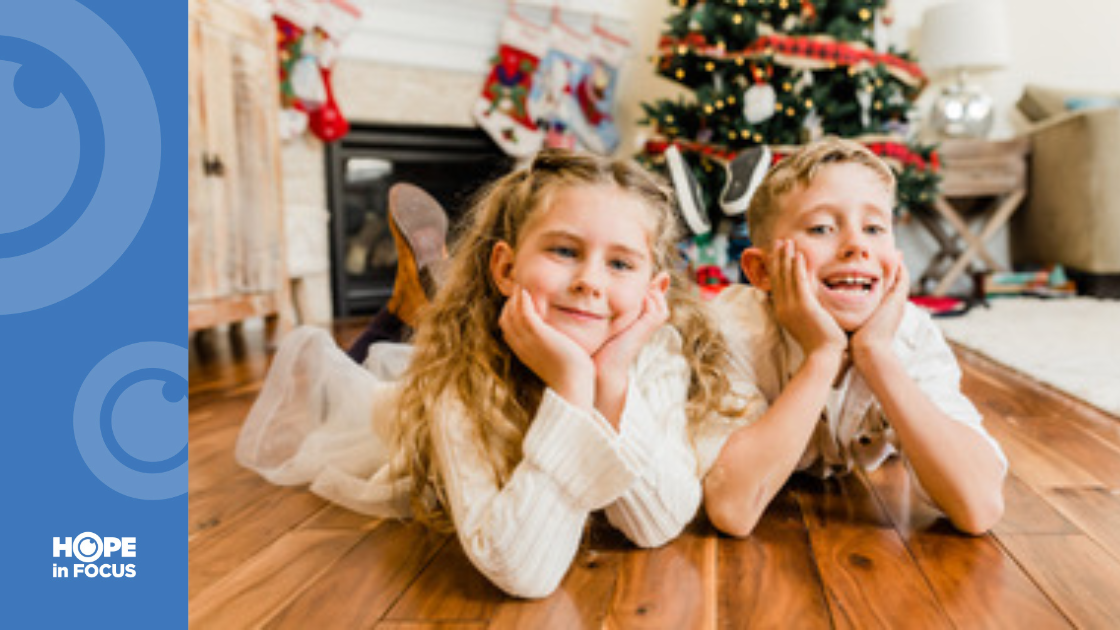
Zoe and Logan on the floor with their hands holding their head
Zoe and Logan Galloway both have LCA13

Now, a new gene therapy company called Opus Genetics plans to target two forms of LCA. The company’s research into LCA13 will focus on restoring protein expression and halting functional deterioration in patients with retinal dystrophy caused by mutations in the retinal dehydrogenase gene RDH12. LCA13 affects one in 288,000 people. Opus also will concentrate on research into LCA5, which encodes the lebercilin protein and affects about one in 1.7 million people.

The Retinal Degeneration Fund (RD Fund) of the Foundation Fighting Blindness led the $19 million in seed financing for Opus, based in Raleigh, N.C.

Motivated Parents

Opus comes amid efforts by the Galloways and a network of motivated parents to raise money, invest in research, and advocate for genetic testing to help drive studies forward to find a treatment for LCA13. 

Allison, a nurse practitioner and founder of a women’s health practice, and her husband, Michael, a VP of Finance, are part of a non-profit that parents of LCA13 patients founded more than 11 years ago called RDH12 Fund for Sight.

“We work with scientists around the world to fund research. We support each other even if we live in the U.S., Italy, Australia, or Saudi Arabia. We try to advocate the importance of all children diagnosed with a rare disease to get genetic testing. Without it, we would have never known what our children had, let alone how to cure it.”

A mutation in the RDH12 gene means an inability for the body to create a simple enzyme called retinal dehydrogenase, which helps in the cleaning and health of the eyes. LCA13 is an autosomal recessive gene defect that appears when each parent has a mutation on the same gene in the same place.

Doctors genetically diagnosed Logan at age 3. Now 10, he is a fifth grader who loves everything technology. Logan loves to ski and is fluent in braille. While his vision is fairly stable, he lost some of his field of vision over the years and his night blindness is severe, his mom said.

When Logan was 5 and Zoe was 3, one day at dinner, Allison noticed her daughter’s eye started to

The Galloway family in white shirts
Michael and Allison Galloway with their kids, Zoe and Logan. Both children have low vision due to LCA13, involving the RDH12 gene.

bounce from side to side. 

“I immediately knew what it meant,” she said. “A nystagmus means that the eye is weak and sick. I didn’t need the gene results to know that not only did my son have LCA, but my beautiful little girl did too. A 6 percent chance.”

Doctors genetically diagnosed Zoe also at age 3. Now 8, she is a third grader who loves painting, clay modeling, reading, writing, and riding horses. Her vision is much better than Logan’s, and while it has also been fairly stable, she has lost some over the years.

RDH12 Natural History Study

The children took part in an RDH12 Natural History study by Drs. Tomas S. Aleman, Katherine E. Uyhazi, and Jean Bennett, among a host of other researchers, at the Perelman Center for Advanced Medicine at the University of Pennsylvania. 

Logan and Zoe were among 21 patients, ages 2 to 17 years old, from 14 families, who underwent exams, imaging, and numerous studies to track details about the gene’s structure and function, and the progression of the disease across a range of patients with the RDH12 mutation. Natural History studies often serve as a critical part in designing clinical trials eventually involving testing on humans.

The journal Retina published results of this segment of the study in an article titled “RDH12 Mutations Cause a Severe Retinal Degeneration with Relatively Spared Rod Function.” 

Allison and Michael attended Hope in Focus’ 2019 LCA Family Conference in Philadelphia, where panels of researchers, including Drs. Aleman and Bennett, shared their study results among an audience of patients, care givers, advocates, scientists, and leaders in biotechnology and the regulatory process.

The Galloways and others in the RDH12 group have been disappointed in the past. In one instance, a biotechnology company announced they were moving forward with RDH12 trials.

“Nothing happened. We’re emotionally battered, so we tend to have a little reluctance until it’s actually occurring.”

Regarding Opus’s plans to drive LCA13 research forward to a viable treatment, Allison said, “While we’re excited, we can’t get all our hopes up. As a board member of the RDH12 Fund for Sight, we have other coals in the fire to keep the research going if this doesn’t progress. But we are hopeful that this is our time, and this study is an answer to our hopes and dreams.

“We’re trying to be part of this study financially because we owe it to our kids and affected members to not be left behind like we have in the past,” she said.

“We have fought too hard and for too long to keep watching them lose their sight.”

Big Journey for Little Girl with LCA3

Parvi Gaddam has endured a lot for a little girl genetically diagnosed at 6 months’ old with a form of Leber congenital amaurosis called LCA3 (SPATA7).

Parvi wearing a pink tank top
Parvi Gaddam has a form of Leber congenital amaurosis called LCA3 (SPATA7)

Like most parents discovering their child has a rare inherited disease, the diagnosis of their now 3-year-old took Harini and Suresh Gaddam by surprise because no one in their families experienced vision loss or blindness. LCA, usually inherited as an autosomal recessive genetic condition, means a child inherits two copies of the mutated gene, one from each parent. 

The couple, who are software engineers living in Tampa, Fla., hoped Parvi’s mutated gene would be RPE65 associated with LCA2, because vision in some patients with that mutation improves through the federally approved LUXTURNA® gene therapy.

LCA3 Diagnosis Confirmed

She underwent rounds of scans and tests, and at 6-months, Parvi and her family traveled to Pennsylvania’s University of Pittsburgh Medical Center Children’s Hospital, where doctors diagnosed her with a mutation in her SPATA7 gene, associated with LCA3,  one of the 27 known forms of LCA. Rare among rare diseases, LCA3 accounts for fewer than 2 percent of all LCA cases. Early-stage research using mice models has shown promising results with gene therapy treatment. 

Parvi does have some light perception. Her vision teacher comes to her home because of the COVID-19 pandemic, and helps her by reading storybooks, singing songs, and touching and seeing objects. Parvi also enjoys the company of her older brother, 8-year-old Thanmay, who returned to class in school.

“She’s very smart, does her routine, enjoys reading the books, songs, walking, and playing with her brother,” Suresh said. 

Her parents follow studies on the gene and reached out to Hope in Focus and the Foundation for Fighting Blindness for help in their journey.

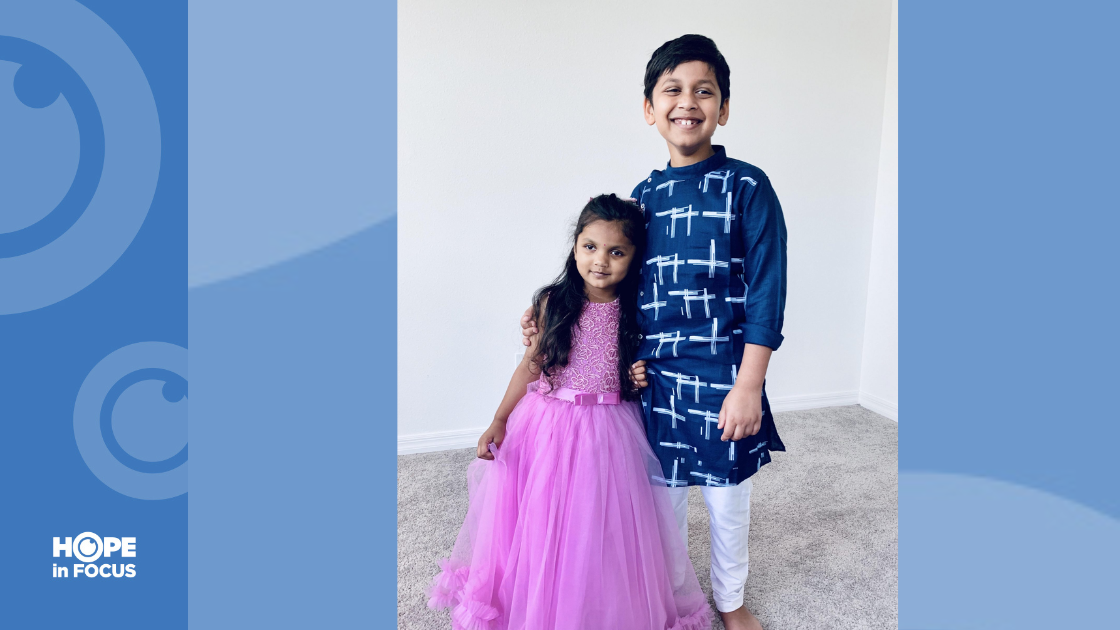
Parvi in a pink long dress with her brother, Thanmay, besides her wearing blue
Parvi with her brother Thanmay

Harini and Suresh began raising funds for SPATA7 research through GoFundMe and through the Foundation, with a goal of $5 million.

The family is searching for more people living with the SPATA7 mutation to gather patients and bring research forward to clinical trials in humans, with the hope that a treatment or cure will come to fruition.

“We will not give up,” her father said. “And we will continue fighting for my little angel and the SPATA7/LCA3 patient group to bring this treatment to humans.”

Navigating Life with CRB1

Joseph F. Smith has been legally blind since birth. He lost what little sight he had in his mid-30s, when he learned he had Leber congenital amaurosis (LCA). Thirty years later, genetic testing revealed a mutation in his CRB1 gene, a diagnosis known as LCA8.  

Joe wrote to us earlier this year after taking part in the question-and-answer segment of a CRB1 Research Update webinar hosted by Sofia Sees Hope and Foundation Fighting Blindness

More than 40 leading experts in ophthalmology and gene research gathered virtually for more than five hours in February to share research and patient perspectives on CRB1 and identify the next steps to advance treatment for the patient community.

The CRB1 gene provides the body with instructions for making a protein that plays an essential role in normal vision. This protein is found in the brain and the retina, which is the specialized tissue at the back of the eye that detects light and color.

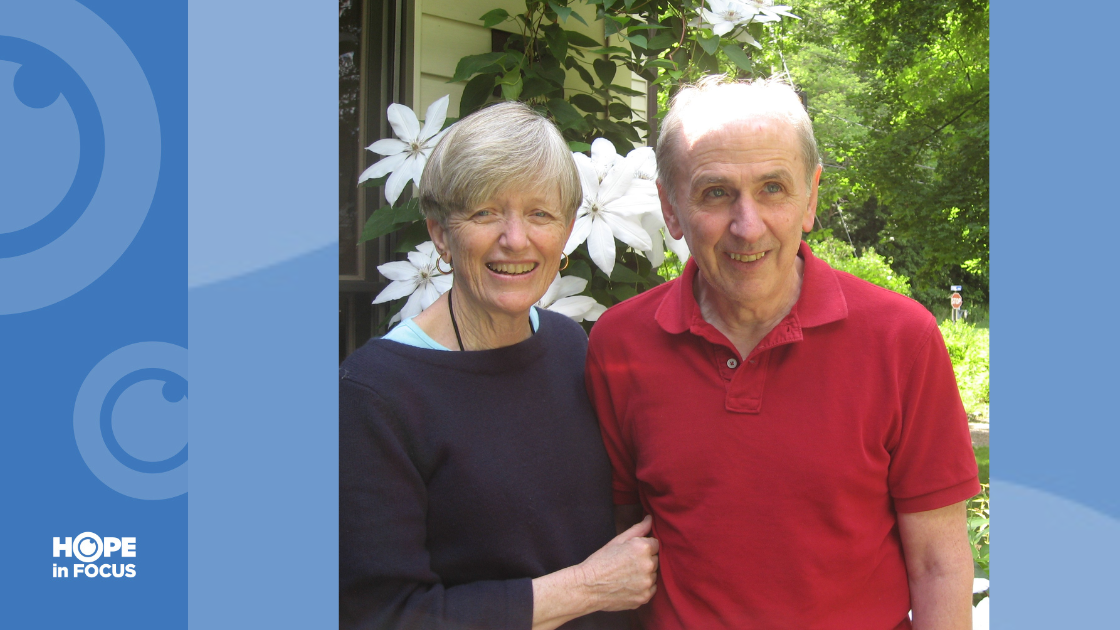
Alice (L) wearing blue and Joe (R) wearing red shirt
Alice and Joe

While the biology for CRB1 is particularly complex, early research produced the discovery of a new version, or isoform, called CRB1b. Preclinical studies give rise to new questions as to whether CRB1a or CRB1b expression, or both, should be the target of a gene therapy. Click here to view the webinar

In his letter, Joe wrote: “I won the CRB1 lottery 76 years ago and spoke briefly during the webinar.”

When we spoke to Joe by phone, he wanted to know what he could do to reassure parents of children who are blind or visually impaired that they can thrive.

Joe earned a law degree from Cornell Law School after graduating as a math major at Alfred University in upstate New York. He worked at the New York City Corporation Counsel’s Office in the Real Estate Tax Division for three years.

While working, Joe began his teaching career at New York’s Dominican College where he taught a business law course. He taught law at the University of Baltimore Law School in 1973, and three years later accepted a job at Fort Lauderdale’s Nova Southeastern University School of Law, where he became a tenured professor and taught for more than 30 years.

He is retired, living in Florida with his wife of 51 years, Alice.

The Importance of Learning Braille

Joe’s 76-year journey began long before the enactment of the Individuals with Disabilities Education Act and the Americans with Disabilities Act, Congressional civil rights legislation prohibiting discrimination and guaranteeing that people with disabilities would have the same opportunities as everyone else. He said he was fortunate to receive scholarships from an earlier version of the Rehabilitation Act of 1973 to fund his higher education.

People with vision difficulty or other challenges must still vigorously advocate for accessibility and equality, but those roads were even bumpier in the past.  

Before retiring, Joe developed a course on the rights of people with disabilities. He also created a program in which he supervised students working for organizations providing services for people with disabilities. 

He understands that ever-evolving technology greatly helps people with vision loss, but he is a proponent of learning braille.

“One thing I do think is very important is that a child who is losing sight or is blind needs to learn braille. I know many educators will say with accessible computers, cell phones, and recorded materials, braille is unnecessary. My simple response is, ‘All that technology is available to sighted people, but they still use pens and pencils.’

“If you learn braille, you have something to keep in your mind. You have a physical image of the written word.”

Joe believes much of the credit for his success goes to his blue-collar parents who did not graduate from high school. 

“I can’t imagine what it must have been like for them to find out I was blind and with no explanation as to why.”

Early on he could distinguish basic colors and he can still see red and orange in his mind’s eye.

Growing up in the 1950s, “back in the dark ages,” Joe said his parents knew that the local Catholic school was not going to work for him because it offered no resources. His mother wanted to wait a year for him to go to first grade, but his father said no. A learning disability kept Joe’s dad back a year because he could not read, prompting him to quit school in eighth grade to play baseball. 

“He knew that education was important.”

Joe attended Lavelle School for the Blind run by Dominican nuns in the Bronx, leaving home Sunday nights and returning Friday afternoons, through eighth grade.

Lavelle served Joe well, but he wanted to attend a regular high school – any school that would take him, as mainstreaming was not a big goal back then and schools were not obligated to accept students who were blind.

He went to Archbishop Stepinac High School in White Plains run by the Archdiocese of New York. His senior year, another blind student was accepted to the school.

Math books in braille were in short supply and books in general were hard to get, so his mom read to him – a lot.

His dad also rarely said no to him trying new things. He rode around the neighborhood on his bike, enjoyed daredevil sledding, and loved cars in high school. His dad took him to an empty parking lot and taught him how to drive a stick-shift.

But the pièce de resistance for this self-described car nut came when he slid behind the wheel of an automatic BMW for the ride of his life on the skidpad at a defensive driving school.

“Truth be told, my wife was taking the course, but the instructors snuck me out for an unforgettable hour of bliss.”

I guess what I’m trying to say is a child who is blind should be encouraged to develop interests in and to try activities, which, at first blush, might not seem suitable for a child with limited or no sight.

His best friend in grammar school read him comic books, and as they got older, car magazines. They didn’t go to the same school, but they managed to get into trouble together and often double dated.

He excelled in math and thought he might be an engineer, toyed with psychology, and after Alfred University, decided to go to law school.

Practicing and Teaching Law

Joe met Alice on a blind date in his second year of law school when she was a sophomore at New York’s Wells College. She earned a Bachelor of Arts and worked in the Criminal Division of the Legal Aid Society of Westchester County while pursuing her master’s degree in early childhood education at Manhattanville College. They married in 1970.

Joe did well in law school and said he knew if he were not blind, he would have received more than one job offer after graduation. He received many rejection letters, heard many excuses, and sometimes heard nothing at all after interviews. 

Still, he almost did not interview for that one job offer; only after repeated urgings from different people, he did so and got the job at New York City’s Corporation Counsel’s Office, which already employed a blind lawyer in the Real Estate Tax Division.

Recounting his getting the job despite almost not interviewing, Joe invoked an ancient adage: “Luck is what happens when preparation meets opportunity,” words from Roman philosopher Seneca, reminding us that we make our own luck.

After three years of practicing tax law, Joe wanted to try something else, perhaps be a trial lawyer or a teacher. He and Alice drove out to Colorado where he planned to take the Colorado bar exam, but the day after they arrived, he was offered a teaching job at the University of Baltimore.

Before returning East, he and Alice goofed off and he learned how to ski, loving the feeling of freedom, and losing his fear of speeding down a mountain.

When they moved to Baltimore, Alice, who worked at the Baltimore Museum of Art, read for Joe from textbooks. 

“Most importantly, from that time until I retired from teaching in 2007, she read all of my exams and papers to me.”

Getting a Confirmed CRB1 Genetic Diagnosis

Joe was diagnosed in his late 20s with retinitis pigmentosa (RP), but he thought it wasn’t correct for several reasons, including that people with RP lose peripheral vision and, in his case, he lost central vision.

Joe and Alice met Gordon and Lulie Gund while learning to ski at Snowmass in Colorado. The Gunds co-founded Foundation Fighting Blindness in 1971 to fund research for treatments and cures for blinding retinal diseases after Gordon was diagnosed with RP and ultimately lost his vision in 1970. He is a Foundation director and chairman emeritus.

In 1975, while in Baltimore, Joe received an LCA diagnosis from Dr. Irene Maumenee at Johns Hopkins’ Wilmer Eye Institute. After moving to Florida the next year, he began seeing a retinal specialist at Bascom Palmer Eye Institute in Miami.

Gordon came back into Joe’s life in the 1990s when he invited him to a Foundation dinner. There he met Iowa State University’s Edwin Stone, MD, PhD, who spoke of emerging research into gene therapy targeting a form of LCA and suggested Joe get genetically tested. 

Joe in a stripped shirt holding his hand out to touch something with Alice next to him
Joe and Alice

Joe’s genetic test showed his LCA was due do a mutation in his CRB1 gene, not the RPE65 gene, the focus of the research that led to the 2017 federal approval of LUXTURNA®, the first gene therapy for the eye or an inherited condition. People with LCA2 (RPE65) cannot make a protein needed by the retina to convert light into vision-enabling signals, which are sent to the brain. The breakthrough therapy involves injecting under the retina a human-engineered virus containing copies of a normal gene, so cells can express the protein.

In the CRB1 Research Update webinar, Joe said he was fortunate to have lived near a teaching hospital where he could learn about the cause of his blindness. In the Q&A, he asked where people with visual impairment should turn for help when living in rural areas with less accessibility to universities or large hospitals.

In answer, Ben Shaberman, Senior Director of Scientific Outreach and Community Engagement for the Foundation, said a team is working nationwide to educate eye-care professionals about LCA and other rare inherited retinal diseases (IRDs), so they can refer patients to specialists. He also encouraged people to email the Foundation at info@fightingblindness.org for contacts in the academic and medical worlds of retinal specialists and researchers.

Laura Manfre, Sofia Sees Hope Co-Founder and President, said people can follow the Foundation and Sofia Sees Hope websites for information and research news. They also can email their questions and concerns to info@sofiaseeshope.org

She suggested people join the new CRB1 Network on Facebook and go to the Resources page on the Sofia Sees Hope website that has a link to a CRB1 group called Curing Retinal Blindness Foundation. Individuals also can find a strong Spanish-speaking community at Grupo CRB1 España y Latinoamérica

As a lawyer, a law professor and a man diagnosed only a decade ago with CRB1, Joe said, “I’m not trying to paint an overly rosy picture of the challenges we face. I realize I am a minority, as I’ve been employed continuously from law school graduation to retirement. I also know with my class rank, I should have had more than just one job offer coming out of law school. At the same time, I realize that technology that was not available to me then has opened up many more opportunities for us …

“I guess what I’m trying to say is a child who is blind should be encouraged to develop interests in and to try activities, which, at first blush, might not seem suitable for a child with limited or no sight.”

Raising Awareness by Sharing Rare Disease Stories

Had he received a more definitive rare disease diagnosis in 2003, Alan Gunzburg said he might not have lost so much vision and still might be able to drive.

In 2016 – 13 years after his initial diagnosis – the Greenwich, Conn., man learned his vision and hearing loss was caused by Adult Refsum Disease (ARD), a genetic metabolic disorder with symptoms that perhaps he could have staved off years ago through dietary restrictions. 

Doctors initially diagnosed Gunzburg with retinitis pigmentosa (RP) – a rare inherited retinal disease (IRD) causing progressive loss of peripheral and night vision. Those are also symptoms of Refsum disease, which, if undiagnosed, can be life-threatening. 

The disorder results in a buildup in the nerves and liver of phytanic acid, a type of fat found in certain foods. Other symptoms are loss of smell and hearing, numbness, unsteadiness, itchy skin, and shortened fingers and toes.

Gunzburg joined more than two dozen speakers who shared their stories during a Feb. 26 virtual Connecticut Rare Disease Day celebration sponsored by the National Organization for Rare Disorders (NORD) and the Connecticut Rare Action Network (RAN)

Read Hope in Focus (formally Sofia Sees Hope) 2021 Rare Disease Day letter to our elected representatives

His story reflects the plight of many people living with a rare disease because the more than 7,000 rare diseases in the United States are just that – rare. 

It’s difficult to correctly diagnose rare diseases when little information exists about them.

Some families living with rare disease find they must create their own advocacy avenues to educate the public and the medical community about diseases they’ve never heard of.

Gunzburg created the Global DARE Foundation with the mission of Defeating Adult Refsum Everywhere. His website gets the word out about the disease and gives information on symptoms, treatments, and research. 

Laura Manfre, co-founder and board president of Hope in Focus (formally Sofia Sees Hope), took that same route in 2014 after doctors genetically diagnosed her daughter with a form of Leber congenital amaurosis (LCA). As a global patient advocacy organization, Sofia Sees Hope helps transform the lives of those affected by blindness caused by LCA and IRDs by generating awareness, supporting affected families, and raising funds to advance research for diagnosis, treatments, and cures.

Creating Rare Disease Advisory Councils

The global phenomenon of Rare Disease Day exists to create awareness of rare disease, characterized in the United States as affecting fewer than 200,000 people. With more than 7,000 rare diseases, 25 million to 30 million Americans are affected by rare disease. That means one in 10 Americans suffer from rare diseases, and more than half of them are children. The European Organization for Rare Disorders (EURODIS) organizes the international campaign.

Nationally, Rare Disease Day brings together each state’s RAN ambassador – in Connecticut’s case, Volunteer State Ambassador Lesley Bennett – along with patients, caregivers, doctors, advocates, legislators, academics, and business and biotech leaders to generate awareness, increase patient and caregiver support, and drive research for treatment and cures.

This year’s event focused on creating Rare Disease Advisory Councils (RDACs) in all 50 states through NORD’s Project RDAC. Councils are made up of various stakeholders, including patients, caregivers, doctors, insurers, biotechnology companies, researchers, and state officials.

Project RDAC’s goals are to optimize existing councils and increase the number of groups nationally by opening collaborative opportunities among councils, creating educational resources to guide them, and helping more states pass legislation that establishes high-functioning councils.

More than a dozen states have RDACs, 12 are pursuing RDAC legislation, and another 23 states do not have an RDAC.

Connecticut is working toward creating a permanent RDAC task force, after a temporary group disbanded in 2019. Check out this map to see if your state has an RDAC or if NORD is working on legislation to create one. To start an effort in a state, click here

NORD’s Kristen Angell moderated the virtual celebration that featured more than two dozen people, sharing stories about the struggles and successes in the world of rare disease. A recording of the celebration will be available soon.

Suzanne Candela literally told an uplifting story as outreach and mission coordinator for Patient Airlift Services (PALS) with the motto: “Going Above and Beyond to Lift People Up.”

Volunteer pilots help eliminate logistical barriers to treatments by using their own aircraft, fuel, and time to fly patients to appointments. Over the course of 10 years, the company helped 2,900 families in 23,000 flights, covering more than 5.4 million miles. Candela told of a girl flown from northern Maine to Boston for repeated cancer treatments. The patient has flown on PALS flights about 60 times and counting.

The service could eliminate transportation barriers for participants in out-of-state clinical trials. The company also has flown 900 flights bringing combat-wounded veterans to appointments.

Connecticut State Sen. Cathy Osten described the story behind proposed legislation that she and State Rep. Christine Conley introduced this session to help a local family struggling to pay for special food for their two children diagnosed with phenylketonuria (PKU). The family’s share of the cost is about $36,000 per child per year. Osten said insurance companies hesitate to pay but the expense is well worth it when it comes to the quality of life for people with PKU.

David Leeds of Avon has the rare disease Hereditary Angioedema with normal C1 Inhibitor (HAE-nC1Inh), a new form of hereditary angioedema (recurring episodes of swelling) identified in 2000.

If he goes to the hospital in this time of the COVID pandemic and no one knows about his rare condition and no one can speak on his behalf, Leeds said, “We just have to hope that my rare disease doesn’t kill me before they send me home.

“I have to know everything about my disease because my doctors don’t.”

John Hopper, one of the emcees of the virtual celebration, heads the Greenwich-based Fibrolamellar Cancer Foundation that advocates for people living with fibrolamellar carcinoma, a rare liver cancer that usually occurs in adolescents and young adults with no history of liver disease.

Hopper, who also co-chairs NORD’s Rare Cancer Coalition, said his strategy is to be what he calls “the mouse that roared.” 

“That means we know we’re small, but we know we have to be loud,” Hopper explains on his foundation’s website. “Most people don’t know about rare diseases. Unfortunately, a lot of people don’t care about them. Our strategy is to be that loud voice – that leader – to make sure that every stakeholder from government to academia to pharmaceutical pays attention to this cancer and understands that working on this small cancer may lead to bigger things too for the rest of them.”

Hopper encouraged all the participants in the virtual rare disease day event to be that mouse that roars.

Michael Kalberer’s Philosophy: Transcend Disability

Born with cerebral palsy (CP), Michael J. Kalberer grew up with a philosophy that has served him well throughout his 43 years.

“My parents raised me as an individual with a disability, not a disabled individual,” the native Long Islander recently said. “So, I never felt there was anything wrong with me or wrong with exploring something that could make things better. I didn’t feel like I had to be fixed and there’s a huge difference between those things.”

When Michael was about 10, he had difficulty with depth perception and felt sensitive to light. 

“Sometimes a curb looked like a driveway, or vice versa,” when walking with his crutches.

Legally blind, Michael attributed his increasing lack of peripheral vision to CP and moved on. 

After enduring an arduous transition from high school, he earned two degrees with honors: a bachelor’s in psychology and speech communications from Hofstra University and a master’s in social work from Adelphi University.

His vision dramatically worsened in his 30s. While at a New York Islanders hockey game, he looked at the scoreboard and suddenly it seemed like it was underwater.

His low-vision specialist referred him to a retinal doctor. 

“He takes one look at my eyes and says, ‘Has anybody ever diagnosed you with a retinal disease?’ ” 

The retinal specialist diagnosed him 10 years ago with Retinitis Pigmentosa (RP) , a group of related eye disorders that causes progressive vision loss as the retina’s light-sensing cells gradually deteriorate.

Michael said he was in shock when the doctor told him that he’ll permanently lose his sight, barring advancements, but advancements are coming.

Cataract surgery and then …

He underwent his first cataract surgery in 2012. He did more research and got involved with Foundation Fighting Blindness, where he served on a Foundation panel of doctors and described his experiences as a patient with visual impairment. 

Listening to the doctor speaking before him, Michael could hardly sit still when he heard him delineate differences between Leber congenital amaurosis (LCA) and RP and realized his visual indicators aligned more strongly with LCA.

“Oh my God, oh my God, I gotta stop this guy,” he recalled saying after finishing his patient portion of the presentation. “Do not let him leave. We need to talk.”

Talk they did and two days later, he was genetically tested at New York’s Columbia Eye Clinic and received a confirmed diagnosis of LCA10, a mutation of the CEP290 gene, one of the more than 25 forms of gene mutations that cause LCA.

Since then, Michael has tracked LCA research advancements and his own experiences with his vision. He has 3 percent vision in one eye and 7 percent to 8 percent in the other. He can discern some shapes, colors and hand motions. 

“I really took a hands-on, very proactive approach to navigating what my vision was like; I took control of logging, charting and tracking. It was kind of my way of taking control of the disease, so I had it and it didn’t have me.”

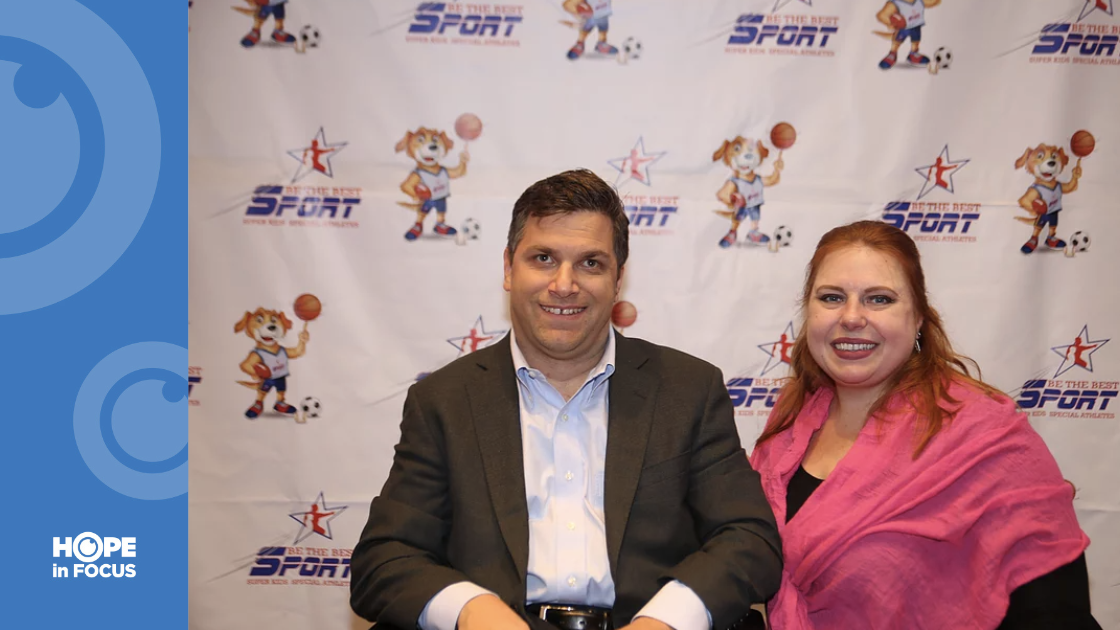
Michael wearing a gray suit and Katie next to him wearing a pink shawl.
Michael Kalberer, left, with Katie van Benschoten of the Foundation Fighting Blindness.

He has also done fundraising for the Foundation, taking on leadership roles as a team captain for the organization’s VisionWalks and speaking at conferences.

“I can’t say enough about Foundation Fighting Blindness’s outreach and their confidence in my ability.”

Addressing the Foundation’s audience at its 2019 Dining in the Dark Spring Forward Fundraiser, he thanked the organization for helping him get a confirmed genetic diagnosis. 

“The root of the Foundation for Fighting Blindness’s success is in cultivating relationships and helping change the way literally thousands of people with LCA and other (inherited rare diseases) IRDs view the world.

“How we process the world shapes who we are,” he told his audience.

Michael also wrote an inspiring piece for the National Organization on Disability’s campaign to increase awareness of the professional ability possessed by individuals with disabilities. 

Even though a career counselor once told him he was unemployable, he shared in his essay that he formed his own business called Michael J. Kalberer Presents. His company’s logo features a rising sun under the phrase “All Humanity Matters,” and he lists his roles as cultural competence presenter, communication etiquette specialist, transition planner, tutor and motivational speaker. 

Michael’s life work now is educating people to maximize their personal strengths and to see others as more than their condition. He also has written an interdisciplinary curriculum to help professionals working with people with disabilities in diverse environments.

In the essay, he also described his work as a New York state licensed social worker at Family and Children’s Association, where he managed cases and helped people living with mental illness obtain and sustain employment in work environments conducive to success.

Michael attributes his feeling of empowerment to the unconditional support he continues to receive from his entire family and all his friends. 

“My diagnosis of LCA could have altered the way they interact with me, but it’s made our relationships stronger. They are as emotionally invested in this journey as I am for myself, and there’s a beauty and a strength in the relationships that’s difficult to put into words.”

He did, however, capture the result of this supportive network of relationships in his closing sentence of that essay:

“I’m Michael J. Kalberer. I transcend cerebral palsy and Leber congenital amaurosis.”

Hope is Believing the Future Can Be Better

I must admit, when I learned that my vision was slowly deteriorating, I lost hope. I didn’t know what the future would bring. I knew that with worse vision came more accessibility barriers and was worried that these barriers would prevent me from achieving my dreams.

But my hope soon returned. I knew that I needed to make a choice. I could either feel bad about myself or do something to make a difference. I chose the second and began to plan. For me, hope is about believing the future can be better.

I wasn’t sure if there was anything I could do about my vision. Genetics had made up its mind. The science was close to a treatment, but I couldn’t count on it. That being said, many treatments were near enough to becoming reality that they would definitely affect many. This was my opportunity. I began raising money for sight-saving research, speaking at events and advocating for treatments. I’ve learned that snails move faster than medical research. It is frustrating and easy to lose hope. But, a snail’s pace is still progress!

For example, LUXTURNA®. The first FDA-approved gene therapy for an inherited retinal disease was approved in the US long before it was approved here in Canada. I’m pleased to say that it was finally approved by Health Canada in October 2020. I have the type of LCA that LUXTURNA treats, and if the provincial government agrees to fund it, I could receive this treatment soon.

The disease that causes my vision loss is advanced. LUXTURNA® will come nowhere close to giving me perfect vision. I’ve learned that having hope for restored vision and hope for life after vision loss are equally important. The best parts of life are not lost with vision loss. I have an amazing life. I have a lot to be thankful for – a good job, an incredible family, fantastic friends and opportunities to participate in accessible activities like sailing and skiing. I hope that you continue to have hope for life after vision loss too.

Jack McCormick was diagnosed in high school with LCA2. He graduated in 2018 from Canada’s Wilfrid Laurier University in Waterloo, Ontario. He is a Hope in Focus (formally Sofia Sees Hope) ambassador, helping people living with LCAs and IRDs. You can read his blog at jackdamccormick.wordpress.com

Using Their Fingers, Blind Children Learn Music and Languages with Lux+Louise

Building on her son’s love of music, singing, moving, and reading, Laura Steinbusch created a multilingual children’s songbook called Lux+Louise to help youngsters learn music by braille.

Black and white cartoon drawings of a lizard and a mouse

With songs in Dutch, English, French and German, the songbook’s characters, Lux the lizard and Louise the mouse, help expose children with blindness or visual impairment to learning other languages from an early age and allow them to independently explore the world.

Laura came up with the idea because her son, Enzo, now 6, easily learned new words early on through songs in French or English, especially when he already knew them in Dutch. 

Enzo was born in 2014 in Lausanne, Switzerland, and genetically diagnosed at 18 months with LCA10-CEP290, a form of Leber congenital amaurosis causing severe retinal dystrophy because of mutations in the CEP290 gene. Enzo lives in The Netherlands with his mom and his dad, Merlijn, and his new little sister, Maud.

He started to learn braille when he was 5 and he enjoys it a lot, his mom said. 

“His favorite story is ‘the story of the little mole who knew it was none of his business,’ which we had to buy in the four

Laura and Enzo playing with large bells
Enzo and his mom Laura at an Austrian playground listening to sounds from a cowbell glockenspiel.

languages of my songbook because he wants to know the whole story in those four languages.”

Lux+Louise contains five popular children’s songs with printing in black and in braille and six visual and tactile illustrations with explanations and questions. Along with singing about a bus and a spider, the book helps with learning body parts and movement.

“This makes it easier for blind children to connect the song texts to the tactile illustrations and the real world,” Laura said. The songs can also be played on the piano or flute.

“Most children adore singing; some children even sing before they speak,” she said. “Blind or visually impaired children use their hearing all the time and mostly enjoy music and making noise … Independence is also important for learning music. It would be best if blind children could learn reading braille music as soon as they have learned to read braille text.”

The songs are: “A Ram Sam Sam,” “Head Shoulders Knees and Toes,” “Are You Sleeping (Brother John)?” “The Wheels on the Bus,” and “Itsy Bitsy Spider.” 

“I hope people enjoy learning another language through music and learn to read music braille,” Laura said. “In the end, I hope it helps blind kids explore the technical world on their own.”

Listen for yourself via YouTube or Spotify

You can order the book on the Lux+Louise website.

Life in the Time of Coronavirus

I first heard about coronavirus on my way back from a weekend of skiing in mid-January. It seemed to be the only thing the radio station we were listening to was talking about. At the time, COVID-19 was only reported in China and I didn’t think it would ever impact my life. I’ve never been so wrong. 

On March 13 I was scheduled to fly to Australia for a dream vacation with my childhood friend. I was subscribed to travel advisories issued by both the Canadian and Australian governments. I woke to an email from the Australian government advising against all travel. I phoned my friend. We needed to cancel the trip. I don’t think he appreciated the 5 AM call. We made the right decision. By noon Canada had issued its own travel advisory. I have never spent so much time on hold and hope to never again. Eventually I received refunds for the flight and hotels. This was only the beginning. 

I work in the human resources department of a hospital. I spent the time I had planned to be on vacation working non-stop. We had to keep our patients and staff safe. Government guidelines seemed to change every day. We didn’t have enough staff. Everyone in our department was working three jobs.

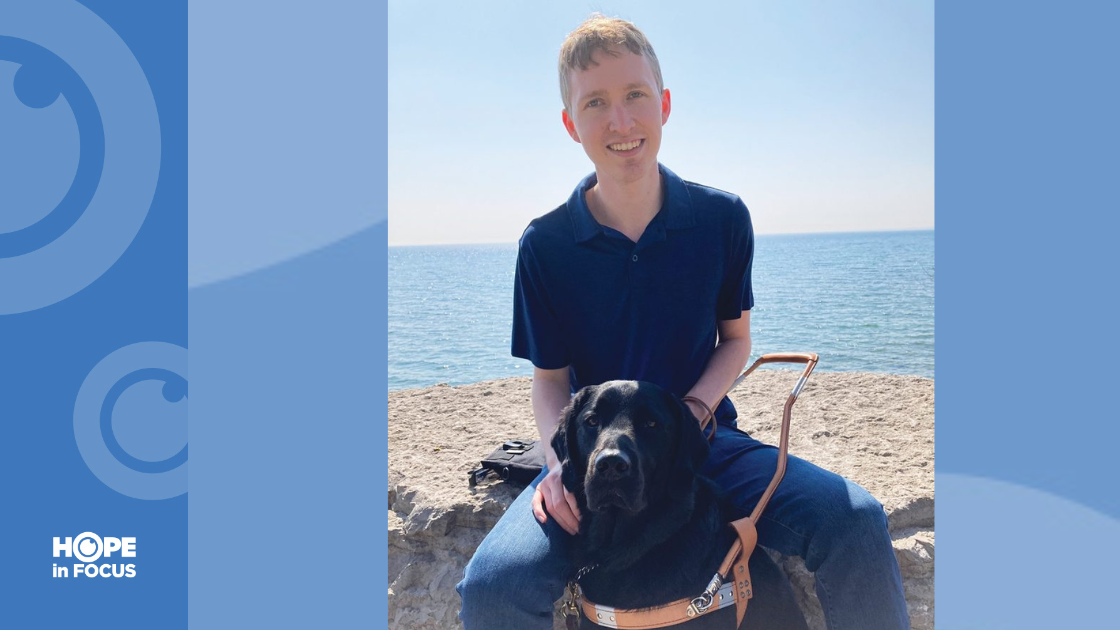
Jack in a light blue shirt with his black lab dog, Jake
Jack and his guide dog Jake

I had no food. I had eaten everything – not wanting to return from Australia to rotten food. As someone with a visual impairment I get assistance from a store employee when I do my groceries. Getting this assistance meant being physically close to someone who wasn’t part of my regular interactions – something I didn’t feel comfortable doing given the pandemic. The alternative was delivery and it was near impossible to book a time. When I finally did, the shopper couldn’t find most of the things I had requested because people were buying up everything. I soon ran out of food again. Someone from work offered to help me do my groceries. The shelves were empty. It felt like something out of a movie.

We fell into a new rhythm at work. I lost count of the number of people I hired. To limit the number of people in the hospital, those who could work from home did. This included me most days. I hardly left my apartment.

Even now, there isn’t much to do outside work. We are all struggling. We don’t know when it will be over.

Throughout this experience my vision loss has created a host of challenges. It has also helped me live in the pandemic. With decreasing vision, I have learned to adapt to change – something we have all had to do in 2020. My vision loss has made me stronger. Living through the pandemic will do the same for you.

For me, I’ve learned more about pain, struggles and the power of connection. I’ve learned to acknowledge the challenges I experience and connect with the people who are important to me (even if it is virtually) to support each other because we are better together even when we are far away. 

Jack McCormick was diagnosed in high school with LCA2. He graduated in 2018 from Canada’s Wilfrid Laurier Universty in Waterloo, Ontario. He is a Hope in Focus (formally Sofia Sees Hope) ambassador, helping people living with LCAs and IRDs. You can read his blog at jackdamccormick.wordpress.com