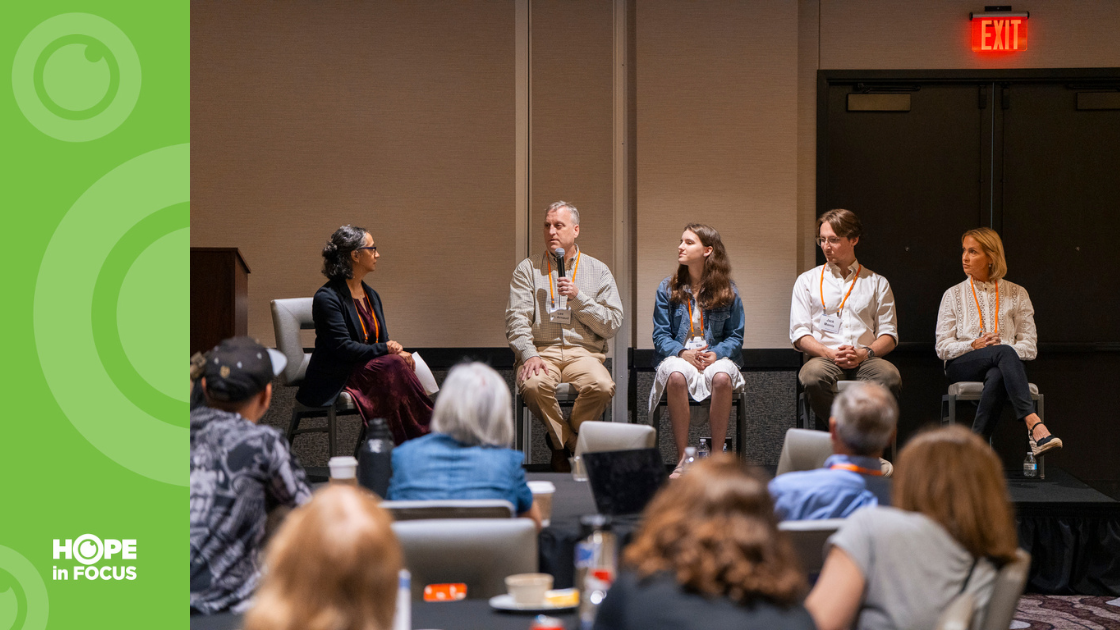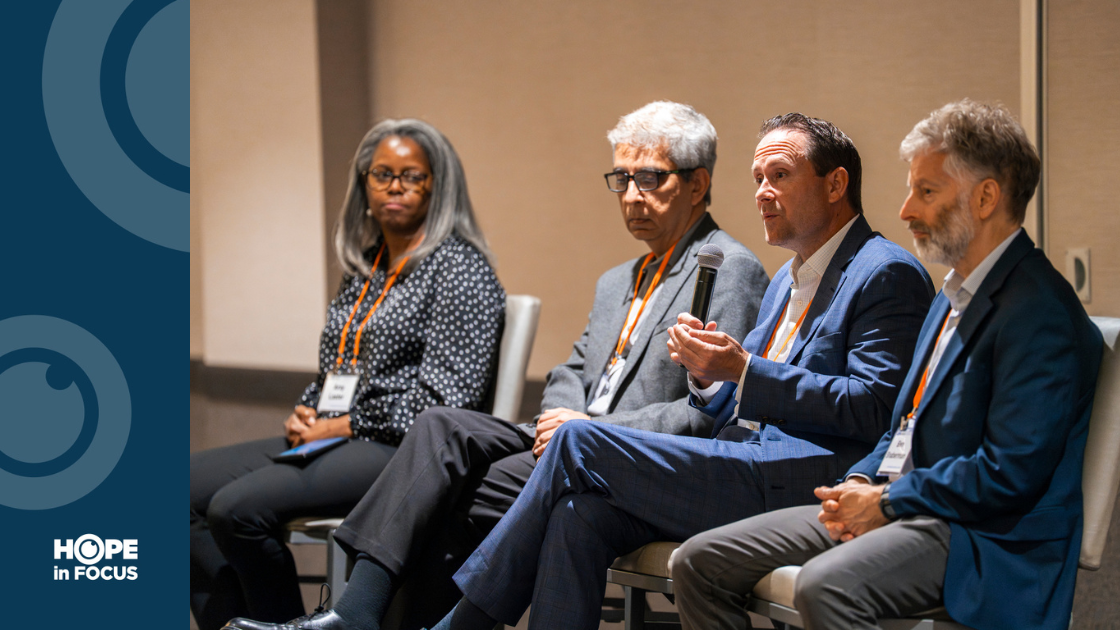
The development of diverse treatment approaches for Leber congenital amaurosis (LCA) is necessary because no single modality will work for everyone affected. While development of gene augmentation therapies (i.e., replacing mutated genes with healthy genes) has much momentum, other approaches also show promise as they move into and through clinical trials. Three of those emerging alternatives were discussed by a panel of experts at the Minneapolis meeting in June. The panel was moderated by Amy Laster, PhD, chief scientific officer, Foundation Fighting Blindness.
Optogenetics is a gene-independent approach for restoring some vision for people with advanced inherited retinal diseases (IRDs) who have lost most or all their photoreceptors (rods and cones), the retinal cells that make vision possible. Ray’s therapies deliver genes that express a light-sensing protein called channelrhodopsin to either bipolar or ganglion cells ⎯ cells that are normally not light sensitive but survive after photoreceptors are lost. In essence, the therapies enable bipolar or ganglion cells to work like a back-up system for photoreceptors. The therapies are delivered by a one-time injection into the vitreous, the soft gel in the middle of the eye. These non-invasive injections are performed thousands of times every day in retinal doctors’ offices for treatment of AMD and diabetic retinopathy.
While Ray’s clinical trials are at an early stage, Dr. Agrawal said early reports for safety and efficacy have been encouraging. Stay tuned.
Sepul Bio’s RNA Therapies for LCA10 and USH2A
In early 2022, the biotech company ProQR reported that sepofarsen, its RNA therapy for LCA10 (IVS26 mutation in CEP290), did not meet its primary endpoint in a Phase 2/3 clinical. That news came despite vision improvements, some significant, for many patients in the trial. The endpoint miss led ProQR to stop development of its ophthalmology assets ⎯ sepofarsen and ultevusen (exon 13 mutations in USH2A) ⎯ and find a company to acquire them.
Mike Schwartz, who was then vice president, global project leader, at ProQR, said, “That was devastating for me, the doctors, and the patients.” He noted that one patient with LCA10 in the trial with only light perception gained enough vision after receiving sepoafarsen to see letters on an eye chart. Another LCA10 patient in the study was able to return to his work as a carpenter after treatment.
Fortunately, a year and a half later, the large European eye care company Théa acquired sepofarsen and ultevursen and formed the Sepul Bio business unit to move the therapies back into clinical trials. Many former ProQR staff went to Sepul Bio including Dr. Schwartz who is now their chief operating officer.
A Phase 2 clinical trial for ultevursen is underway and a global Phase 3 trial for sepofarsen is imminent. Using what was learned from the ProQR trials, the Sepul Bio team made significant changes to designs for the forthcoming trials ⎯ changes they believe will greatly improve chances for success. Mr. Schwartz thanked the Hope in Focus team for providing input from patients for the sepofarsen clinical development program.
Sepul Bio’s RNA therapies, known as antisense oligonucleotides (ASOs), are tiny pieces of genetic material that fix mutations in RNA, the genetic messages that cells read to make protein that’s critical to the cells’ health and function. Both sepofarsen and ultevursen are delivered by intravitreal injections every six months.
The development of cell therapies for IRDs has been challenging for numerous reasons. Therapeutic cells haven’t been easy to source and enabling them to survive and integrate when transplanted into patients’ retinas has been difficult.
As a panelist for the session, I had the privilege of discussing a promising photoreceptor replacement therapy from BlueRock Therapeutics which came out of the lab of stem cell pioneer David Gamm, MD, PhD, University of Wisconsin-Madison. Excitingly, BlueRock’s therapy just moved into a clinical trial for people with RP and cone-rod dystrophy. Dr. Gamm said the cells might at some point be relevant to LCA patients.
The photoreceptor precursors used in the trial came from induced pluripotent stem cells (iPSC). The iPSC were derived from a small sample of mature blood or skin cells from a healthy donor. The cells were genetically tweaked to revert back to a stem cell state. The iPSC were then coaxed forward to develop into the photoreceptor precursors. As precursors, they aren’t fully mature. Dr. Gamm research showed that precursors have the best chance at survival and integration after transplantation.
BlueRock has the backing of two prominent companies: Bayer and Fuji Film. The Foundation Fighting Blindness funded Dr. Gamm’s previous iPSC-related lab research.
The BlueRock trial is moving forward methodically so that investigators can ensure safety for patients and best understand which patients and conditions can benefit most from the approach.
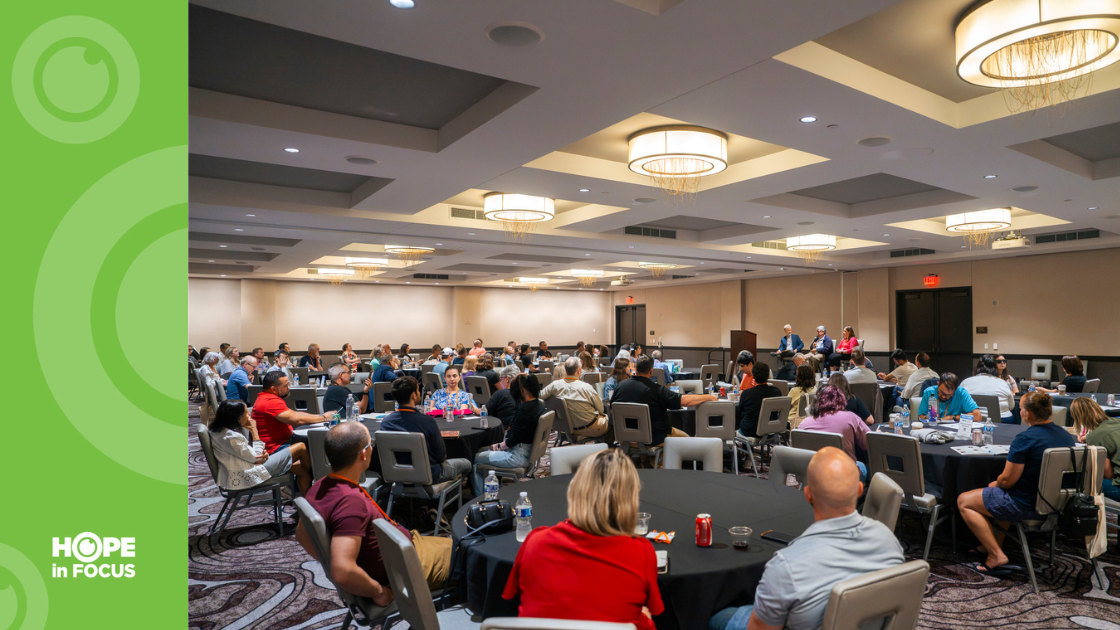
The 2025 LCA Family Conference in Minneapolis, MN, offered four informational panel sessions, where the 135 attendees learned about living with Leber congenital amaurosis (LCA) and other inherited retinal diseases (IRDs), participating in clinical trials, and the latest research and therapy updates.
The first session, “Living with an IRD,” was moderated by Laura Manfre, co-founder and Board Chair of Hope in Focus. This session is often a highlight for families wanting to learn how to support their children diagnosed with an IRD.
Laura Manfre, Lee St. Arnaud, Elle St. Arnaud, Jack Morris, Leslie Morris
Laura posed questions to the four panel participants, which included 18-year-old Elle St. Arnaud, who has LCA IQCB1/NPHP5 and is attending Boston University this fall, and her father Lee St. Arnaud, and 22-year-old Jack Morris, who has RP CRB1and is a recent graduate of Brown University, and his mother Leslie Morris.
Below are some of the panelists’ edited responses to Laura’s questions.
What has your school journey been like? What challenges have you faced, and how did you advocate for yourself?
Elle St. Arnaud
Elle was educated in the public schools with a paraprofessional supporting her in class from preschool through fourth grade. She said that a key to her success was learning to advocate for herself early on by participating in her individualized education plan (IEP) meetings, explaining her accommodations to teachers, and taking responsibility for communicating her needs, especially regarding her vision. Elle reflected on the importance of self-advocacy and how it has shaped her life.
“It’s vital for kids to be able to explain their accommodations, as others often don’t fully understand visual impairments,” she said. “While I’ve had positive experiences, I’ve also faced challenges, such as being discouraged from joining the debate team or taking advanced classes. I pursued both anyway, proving that being blind doesn’t limit one’s ability to succeed. Self-advocacy and standing up for your needs are essential life skills.”
Jack Morris
Jack started in public schools and later switched to a private school. His vision was relatively good throughout most of his schooling. Jack thought he might have done even more to advocate for himself. Still, regular meetings with teachers and advisors proved very helpful. He said, “When people understand what you need, they generally want to help.” Although at the university level, he said some professors were resistant to making accommodations.
He stressed that “Accommodations are not favors—they are necessary for success. Blind individuals are not less intelligent; they simply need equal access to materials to perform just as well as others. Having confidence in advocating for these needs is crucial, and legal protections like the ADA support this.”
As parents, can you share a little about your journey? How was it seeking a diagnosis, and what are some things you wish you’d known earlier?
Lee St. Arnaud
Lee explained that Elle and her older brother, Patrick, both have LCA. When trying to diagnose Patrick’s vision issues, he shared how difficult it was when the doctor offered only a brief response, instructing them to return in five months to confirm their son’s blindness. Overwhelmed, the family immediately reached out to resources like the Chicago Lighthouse for the Blind, which connected them with supportive networks and foundations.
Lee stressed the importance of parents being proactive and finding tools like a detailed year-by-year visual goals guide, which they used effectively in IEP meetings to advocate for their children’s needs. He emphasized the importance of being prepared, pushing for necessary services, and actively advocating for the child and family.
The St. Arnauds encouraged their children to participate in outside activities like adaptive climbing and the live hockey association. “So many times we were nervous and sweating bullets. But by the time we got done, the kids were like, you know what? We can do this!” Lee said.
Leslie Morris
Leslie said that Jack’s diagnosis with a recessive form of RP at age five came as a shock because there was no family history. She described feeling heartbroken and overwhelmed by a sense of loss and isolation. Despite these emotions, Leslie and her husband, Jason, chose not to accept discouraging responses from doctors. Instead, they took action—connecting with others affected by IRDs and becoming involved with the Foundation Fighting Blindness, where both serve as trustees.
Advocacy became like a second job for the Morris family, as they worked to ensure Jack had every opportunity for a full and meaningful life. Leslie said they didn’t want the disease to define their son, and they encouraged him to try various activities like baseball, football, swimming, wrestling, and guitar. “We focused on letting Jack decide when to step away from activities while gently steering him toward pursuits that offered long-term fulfillment,” Leslie said.
How do you give your child enough independence to grow and to learn, while also wanting to protect and keep them safe?
Lee St. Arnaud
Lee felt that they didn’t experience significant disagreements with Elle or Patrick regarding their ability to self-manage. He stressed the importance of balancing caution with encouragement and supporting early opportunities for independent experiences in the community without rushing the process. He also reflected on the importance of understanding your child’s interests as they mature.
Elle St. Arnaud
Elle immediately spoke up after her father, expressing her childhood frustration and conflict with her parents over having to take Orientation and Mobility (O&M) training particularly the inconvenience and social discomfort of being taken out of school. Despite hating it at the time, she admitted the lessons had long-term value, especially in promoting independence. She noted the importance of starting children early with independent tasks at home, like cooking and laundry, while pacing community-based skills more carefully. “I think parents should keep their children engaged in O&M even if the child resists,” Elle said. “Because it equips them with critical life skills—such as safely crossing the street—that pay off later.”
Leslie Morris
Leslie emphasized the importance of parental teamwork and unity, particularly when supporting a child’s journey toward independence. She admitted to being a bit of a helicopter mom. “My husband, Jason, and I agreed on things before letting Jack go out and try them,” she said. “Having somebody by your side through this journey is very important.” She added that when parents are aligned in decisions and approaches, it helps minimize conflict and makes the process smoother.
Jack Morris speaking at the 2025 LCA Family Conference
Jack Morris
Jack didn’t recall having major conflicts and expressed gratitude for the trust his parents placed in him. One slight regret he had was not wearing sunglasses earlier, due to self-consciousness. Jack said he appreciated the opportunity to try things—even fail—while still feeling supported and safe.
Much to the amusement of the conference attendees, Jack recounted a brief period when he was legally allowed to drive, a decision made with medical guidance that, in hindsight, seemed very questionable.
“I appreciated that my parents trusted me to be able to take care of myself. This journey makes you resilient, tough, and resourceful,” Jack said. “Kids can be very clever in planning solutions to their unique circumstances, and my parents trusted me in that.”
Community members have expressed that mental wellness and accepting vision loss can be difficult. Elle and Jack, what are your thoughts?
Elle St. Arnaud
“Not wanting someone to see your pain and not wanting to wear sunglasses or use a cane will likely peak around middle school,” Elle said. “No one wants to be different, and you want to be ‘on trend’ with everybody else.”
She added that having a para in the classroom with her all of the time was an inhibitor and made it harder for her to talk with other kids. “Parents should try not to hover when their child is with other children because it can make them feel less confident or social,” she said.
Elle said she made it a priority to share her experiences as a blind person with her sighted friends. “We’d make jokes about it, and I talk about it constantly. I’d share what I’ve experienced and every blind story I’ve had,” she explained. “I think that’s important because when you need to ask your friends for help, they are a lot more understanding because you’ve explained it and talked about it so many times with them.”
For example, she told her friends about walking into a door, which helped them be more aware that she might not see it, allowing them to take the initiative to guide her when needed. “I think the easiest way to be accepted is to talk more about your blindness so it feels more normal,” Elle said.
Jack Morris
“I think there’s a line to be found between letting a disease define you and rejecting that it’s a part of you, because retinitis pigmentosa (RP) has been a huge part of my story—a beautiful but also a tough part. It’s something that feels different and lonely, but also unifying and community-building,” Jack said. “If we can find ways to live in and with our disease rather than despite it, that’s where truth and freedom lie for me.”
He offered advice to parents, saying that they needed to be strong in ways that aren’t obvious. “One of the hardest things for parents is watching their child struggle. But sometimes the biggest strength is allowing them to struggle. Kids need to feel the full spectrum of emotions—challenge, loneliness, empowerment, and togetherness,” Jack said. “If parents can be there as a foundation, even when things are hard, and let them be hard before stepping in with action, that’s one of the most powerful and meaningful things they can do for their children.”
The second panel session of the 2025 LCA Family Conference, “Participating in a Clinical Trial,” examined clinical trial development and participation from the researcher and patient perspectives. This session supports a goal of Hope in Focus to educate the Leber congenital amaurosis (LCA) community so members are ready to participate in clinical trials when opportunities occur. For researchers, informed and prepared LCA patient groups are critical to moving a new drug or therapy through the testing pipeline.
Ben Shaberman, vice president of Science Communications at the Foundation Fighting Blindness, was the moderator. The panelists were Tomas Aleman, MD, a researcher with over 30 years of experience in researching genetic therapies related to inherited retinal diseases (IRDs), and Sarah McCabe, a mother and teacher from Iowa, and an LCA individual with the RPE65 gene mutation. Sarah participated in a gene therapy study in 2007, and 14 years later was treated with LUXTURNA®.
Overview of the Research Process
Ben began with an overview of the drug development process, highlighting that it is complex, demanding, and lengthy—often taking 10–15 years, and costing tens of millions of dollars. For retinal diseases like LCA, the development of a drug or therapy begins with identifying and understanding the mutated gene causing the degeneration. Researchers study these genes and their effects on the retina, then create disease models—traditionally in mice, but now also using “mini-retinas” grown in dishes.
Conference attendees listening to the “Participating in a Clinical Trial” panel session.
Transitioning from animal or lab models to human trials is a significant hurdle, requiring higher-quality manufacturing standards, regulatory compliance (e.g., FDA), considerable funding, and specialized expertise. “This phase, called translational research, is often referred to as the ‘valley of death,’ Ben said. “Because many therapies fail to progress to clinical trials.”
For LCA, gene therapies can take 5–8 years to develop. Researchers must determine the right therapy, dosage, and method of administration before progressing to clinical trials, which can last 6–8 years, are extremely expensive, and often pose challenges for researchers and patients. While the process is rigorous and time-consuming, it is critical for developing effective therapies.
LCA Gene Research
Tomas Aleman, MD, co-directs the Center for Hereditary Retinal Degenerations (CHRD) at the Scheie Eye Institute at the Perelman School of Medicine, University of Pennsylvania. Dr. Aleman’s groundbreaking work has transformed the treatment of LCA, becoming the first disease where gene editing techniques were applied and gene therapy successfully restored vision. “Unlike what many people believe, most LCA patients are not completely blind, and their retinas often remain structurally intact,” Dr. Aleman said. “This makes the condition an ideal candidate for experimental therapies.”
Early research focused on RPE65-related LCA and started with animal models, including a dog, that helped pave the way for clinical applications, eventually leading to the first successful human treatments. After a decade of preclinical research, Dr. Aleman’s team moved into human trials, with LCA patients like Sarah McCabe playing a vital role. Dr. Aleman stressed the essential role of patients in clinical trials, saying that “Patient feedback is often critical to recognizing early signs of success.”
Clinical trials present both opportunities and challenges. They require long-term patient commitment and rely heavily on funding from smaller biotech companies. Patient selection for trials is also strategic—those chosen typically have structurally preserved retinas with poor function, maximizing the likelihood of measurable improvement. Dr. Aleman emphasized that exclusion from a trial does not mean the therapy won’t eventually be available for an individual; rather, it reflects the strict criteria needed to answer key safety and efficacy questions.
Looking ahead, Dr. Aleman said the goal is to expand the proportion of treatable LCA forms from roughly 25 percent to 50 percent. The progress made so far demonstrates the transformative potential of gene therapy in restoring vision for patients with inherited retinal diseases.
Doing Gene Therapy
Dr. Aleman gave an in-depth explanation of the gene therapy process for treating inherited retinal diseases, particularly focusing on subretinal delivery techniques. Gene therapy in this context is a meticulous process where the therapy is delivered directly beneath the retina via a subretinal injection.
Performed under general anesthesia, the injection only takes 5–10 minutes. It is done by entering the eye through three small incisions, removing the gel-like vitreous, and using a hair-thin needle to deliver the gene therapy. According to Dr. Aleman, the surgery resembles retinal detachment repair—a well-established procedure.
While there is an alternative delivery method known as intravitreal injection that is less invasive, it has not proven to be as effective or safe for all retinal indications. In particular, immune detection can reduce the efficacy of intravitreal injections, whereas subretinal injections can bypass these mechanisms.
Following surgery, a rigorous monitoring process begins to assess the treatment’s safety and effectiveness. This process includes frequent follow-up visits in the early stages—often at one, three, and six months and a year—during which visual function is tested and retinal imaging is conducted.
Participation in gene therapy trials is entirely voluntary, and patients can choose to withdraw at any time. However, once the gene therapy is delivered, it cannot be undone. The therapeutic genes remain in the eye’s cells indefinitely, making informed consent and long-term commitment critical components of the clinical trial process.
Patients are typically monitored for at least two years, and in many cases, much longer. For example, in the case of one early trial (the RPE65 trial), patients have been followed for over 16 or 17 years. Dr. Aleman emphasized that there is a lifelong partnership between patient and physician, stating that monitoring continues for as long as possible, regardless of whether the formal trial period has ended.
Dr. Aleman hopes to move toward treating very young children, ideally before age two, since the brain’s ability to learn to see develops rapidly in infancy and early childhood. Early treatment is believed to yield better visual and developmental outcomes, supported by early rehabilitation and educational interventions. A grant received two years ago is helping to support research and clinical work toward this goal.
“While gene therapy offers transformative potential, it also requires thoughtful implementation, long-term follow-up, and a commitment to tailoring support beyond the surgical intervention,” said Dr. Aleman. “The mission is not only to restore vision but to improve the quality of life and long-term outcomes for patients, especially children, by intervening as early as possible.”
Sarah’s Story & Clinical Trial Experience
When Sarah was about 10 days old, her mother, an ICU nurse, noticed that she wasn’t following the developmental patterns she’d observed with her son. Concerned, they visited a pediatrician who suspected something was wrong with Sarah’s vision. Further evaluation by a neurologist ruled out any neurological issues, and her parents were assured that Sarah would hit developmental goals right on time.
Regular eye exams ensued, with her parents keeping detailed records of each visit. Eventually, Sarah was referred to the University of Iowa, where tests suggested LCA, but at that time, genetic testing wasn’t available. A definitive LCA genetic diagnosis (RPE65) was finally made when she was in eighth grade.
At age 19, she was recruited for a clinical trial after struggling with vision during college. After going through the initial interviews and assessments, she was approved as a clinical trial participant. Sarah said the doctors clearly explained all the details and risks of the trial and that it was an experimental procedure primarily aimed at testing safety. The decision whether to move forward was left to Sarah and her family. “There wasn’t a whole lot of talking with my parents about it,” she said. “We knew things weren’t going to get any better if I didn’t participate, and I could be a part of helping [research advance].
To facilitate Sarah’s participation in the clinical trial, logistics were carefully arranged around her college schedule. It was toward the end of her senior year that her family drove her from Iowa to the University of Florida, where she underwent her first gene therapy surgery at age 23, describing it as terrifying but perfect.
The pre-operative steps included bloodwork and other standard preparations. During the surgery, Sarah was awake—a protocol that has since changed, with patients now put under general anesthesia. Post-surgery, she had a significant moment when she was able to read a giant letter “A” on a card, confirming that the surgery hadn’t worsened her vision. Over time, she noticed a new visible area in her field of vision, referred to as a “headlight,” which was a significant improvement.
Sarah’s recovery involved staying in Florida for a month with her family, with frequent follow-up visits stretching out from monthly to annually. Her clinical trial team remained in contact with her years after the trial formally ended. Fourteen years later, after LUXTURNA® was FDA-approved, she received the gene therapy at the University of Iowa, which improved her vision. Now in her 40s, Sarah’s primary goal is to maintain the stability of her vision. She summarized her clinical trial and gene therapy experiences, saying, “It was a long time ago now, but it was a very cool experience. All of it!”
Through global data sharing and analysis, the nonprofit RARE-X (the research arm of Global Genes) is working to accelerate treatments for rare diseases, including Leber congenital amaurosis (LCA) and other rare inherited retinal diseases (IRDs).
Hope in Focus featured Karmen Trzupek, RARE-X’s Senior Director of Scientific Programs, in its webinar episode “Let’s Chat About…RARE-X.’ Our Director of Outreach and Development Courtney Coates discussed with Karmen RARE-X’s mission and goals, and its recent merger with Global Genes. The March 7, 2023, session can be viewed here.
“Let’s Chat About…” is our free webinar series bringing together researchers, advocates, industry leaders, and people living with LCA and other rare IRDs for conversations important to the rare retinal disease community.
RARE-X and its founding
Nicole Boice founded Global Genes to support patients, families, and patient advocacy groups dedicated to rare diseases. At Global Genes, Nicole and others recognized a tremendous need to solve data collection and sharing problems for patient communities affected by rare diseases, and founded RARE-X to address those critical data issues
Rare disease patients’ data often is collected somewhere and sits privately in a silo where it is inaccessible to others. Or, the patient community actively manages the data in a format precious to a particular researcher, but unhelpful to others. Or, the data doesn’t exist, as is the case with many rare diseases.
RARE-X began addressing these issues through its data collection platform that enables rare disease communities to start gathering data in a highly structured and streamlined way that aligns with existing research philosophies.
“We work very hard at RARE-X to make sure that every single question asked of patients and families is a valid data point,” Karmen said. “Then we also share that data. With patient permission, all the data collected on the platform gets migrated to a data-analysis platform, and any qualified researcher can access that data.”
Collecting the data
“When someone first comes onto the RARE-X platform and starts entering data, it will ask them for their self-reported diagnosis. Do you have a genetic test? It asks about symptoms and the progression of those symptoms over time.
“We have people upload a copy of their genetic test results for the genetic testing data. Then we have a genetic curation team that reviews those, pulls out that data and makes sure that that data is in discrete data points. That’s useful to researchers because a researcher coming onto the platform does not want to pour through a whole bunch of PDFs and sometimes pictures from somebody’s phone of their test results, so we curate all of that data and make sure that that’s available on the research portal.”
Collaborations through RARE-X
Karmen develops programming and strategic collaborations to ensure the company makes the best use of the data that patients and families entrust to them.
In one program, she’s managing an “Open Science Data Challenge” with data from about 30 patient advocacy groups in the pediatric neurodevelopmental space, in collaboration with families of children with disorders causing seizures and global developmental delays.
“We are pulling the data and aligning it with other partner data, and then making it widely available to an extensive research community under a challenging environment, like a hackathon, to try to generate valuable insights and create research proposals for grants.”
Karmen also is looking at how RARE-X develops partnerships for additional data sources and uses of the data that circle back to benefit the patient community. Other groups on the platform include some adult-onset neurodegenerative disorders and some inherited retinal disorders.
“Usher syndrome, for example, that community is actively collecting data on the platform. And then other related inherited ocular conditions that aren’t retinal but share overlapping issues and needs, like Leber hereditary optic neuropathy, are collecting data.”
The company also plans to make digital optical coherence tomography (OCT) data available side-by-side with patient reported data.
“Those images are proprietary to the software and the hardware used. Multiple companies make OCTs, and we’re working with an artificial intelligence group that has developed ways to bring that data together and make it cross-comparative.”
RARE-X plans future LCA community data collection
“The platform has been live for about a year and a half, and we are very much building this plane as we fly it,” she said. “We’re working in the vision consortium to ensure that we’re adding the right kinds of surveys and patient-reported outcome measures to the platform that are most useful to this patient community.
“We’re continuing to talk with Hope in Focus and other groups within the LCA family of diseases. As soon as we start to have some more vision-specific surveys, we’ll begin collecting data pretty actively.”
From genetic counselor to RARE-X’s mission
Karmen’s career began as a genetic counselor in inherited retinal diseases. She worked at the Casey Eye Institute and then InformedDNA, where she developed ways to share the experience and information received by patients and families seen at a major academic research center with patients and families unable to physically get to a major center. Telemedicine and collaborations and partnerships with local retinal specialists accomplished much of that.
But she realized a much greater need overall for rare disease information sharing and for funding. Through the Usher Syndrome Coalition, Karmen met Nicole and Charlene, the RARE-X founders.
“I loved the mission and that they’re enabling even the smallest patient groups to start becoming very actively involved in clinical research,” she said.
“They are flipping that paradigm where a patient community doesn’t have to wait for a clinical trial or a natural history study for their data to be valuable. But flipping where the patient communities drive the research agenda and begin to say, ‘look, we have the data, and we have started to de-risk this disease as a disease that would be valuable to pharma to invest in.’ I love that paradigm shift. I love getting to be part of that.”
Merger benefits the rare disease community
“Coming together and joining Global Genes helps the entire journey of the patient advocate. If you think about a rare disease patient or parent, you start on your diagnostic journey searching for the diagnosis, right?
“You get that diagnosis, and maybe a patient foundation or community already exists. Maybe not, if it’s an ultra-rare disease. Those patients and families going through that have lots of needs. Those questions might include: Where do I go from here? How do I best support my child in the school system?
“The patient-advocacy journey is something that Global Genes, for a long time, has been very involved in. RARE-X has been developing this platform and developing partnerships to use this data, and now we can provide an extension of that patient advocate journey.
“So much of what both Global Genes and RARE-X have been doing is related to how we educate and support patient advocates in becoming more active participants in research and helping to drive that research agenda. I think there was a lot of overlap that was beginning to develop there. It made sense to merge.”
data from an ongoing natural history study as essentially a control arm.
“That brought up a lot of excitement and questions around patient-generated data because the patient community drove that natural history study. RARE-X and Global Genes have an opportunity to be part of this story and its evolution,” Karmen said.
“Now I am not suggesting that clinical data and traditional natural history studies will be replaced. There’s so much value in those studies, but we also know that they only ever capture a small percentage of the patient community who can travel.
“How can we make that kind of research more broadly available to a much larger population of patients and find something that’s a little bit more hybrid? That is a massive part of where I see us going in the next five years.”
The community of people living with Leber congenital amaurosis caused by mutations in the RDH12 gene moved closer to realizing the shared goal of establishing a clinical trial to find a treatment for the blinding disease.
More than 40 people gathered for the Second Global RDH12 Scientific Conference in Baltimore. The daylong meeting in November offered perspectives from clinicians, patients, parents, advocates, academia, regulators, and industry.
Silvia Cerolini, founder of Eyes on the Future, one of three organizations under the umbrella of the Global RDH12 Alliance, said the conference made tremendous progress toward a common goal: Designing a successful clinical trial to find a treatment to improve or stabilize vision in people living with RDH12. Current LCA13 RDH12 research is in preclinical stages, with the hope that the first clinical trials may start in 12 to 24 months.
Silvia Cerolini and her 9-year-old daughter, Vicky
As one woman living with RDH12 voiced during the conference: “Any quantity of vision is everything for us.”
This recent conference brought together an international group of scientific, medical, advocacy, and industry experts to identify and prioritize potential elements in designing a clinical trial and its key components: Outcome measures and endpoints.
Outcome measures are used to assess a patient’s vision. Performed at the start of a clinical trial, the measures provide baseline information that can be compared with the same outcome measures done after an intervention or treatment, determining progress and efficacy.
Participants in the Second Global RDH12 Scientific Conference
Endpoints are outcome measures selected as the most relevant and clinically meaningful measurements that can be measured objectively to determine whether the intervention being studied is beneficial.
Selecting the most appropriate and patient-relevant outcome measures as endpoints for each specific IRD is a big challenge for the entire field of inherited retinal dystrophies.
The heterogeneity (diverseness) of IRD phenotypes (characteristics) poses significant challenges to understanding disease pathology, predicting treatment benefit, and selecting outcome measures and endpoints for clinical trials. Challenges in recent clinical trials failing to demonstrate treatment efficacy show the need for innovation in trial design and outcome measures’ selection.
Organizers cited four key challenges unique to treating RDH12 mutations: (1) Severe impairment of retina/vision from early life; (2) Uncertain expectations of stabilization/preservation versus improvement/restoration of vision; (3) Heterogeneity of the RDH12 phenotypes (and IRDs in general); and (4) Slow expected pace of detectable changes after treatment.
Conference highlights included stories from people living with the disease and the constructive dialog among industry representatives, clinicians, scientists, and regulators, Coates said.
“Most significant were the RDH12 patients and parents sharing their experiences with progressive vision loss and their hopes for a treatment,” she said. “The day marked a meaningful step toward successful trials and, hopefully, will become a model as other gene-mutation studies progress to trials.”
For Maria Fiore, mother of 17-year-old Bella who lives with RDH12, the day brought hope.
“The input – from the academic side, opinions from the regulatory side, and the competitive nature of having multiple interests on the industry side – gives me a lot of hope that we’re getting closer to an RDH12 clinical trial,” said Fiore, a member of the Board of Directors for RDH12 Fund for Sight.
“We appear to be closer than ever, and events like the conference help to keep the motivation and drive to bring this to the finish line a real possibility.”
Bella and Vicky are part of the global RDH12 community that includes more than 200 families from 20 countries. Children and adults living with the rare inherited retinal disease hail from the United States, Europe, South America, China, India, and Russia.
The families communicate through Facebook and an email newsletter, with some local groups emerging to involve more people and remove language barriers.
The Global RDH12 Alliance organizes twice-yearly virtual community calls to review progress on clinical developments and discuss common challenges. Collectively, the three RDH12 organizations have raised more than $3.5 million since 2011 to advance research and find treatments.
Click here to see a video of people living with RDH12 introducing themselves.
Cerolini said it had been far from easy to wrestle all the participants down for one full day.
“But we came together as one big team to optimize the chances of trial success for our RDH12 community. There is still work to do to give Vicky and all our RDH12 community hope to see the world,” she said.
“It is not easy. But we are as close as ever to the first human clinical trials and we need to keep going. What we are learning about RDH12 can help the entire IRD field.”
The gathering watched a video of children and adults with RDH12 describing difficulties with sight loss and the hope that research will lead to a treatment.
Coates said people from several countries expressed their desires to have a chance to better their vision or at least maintain it.
“The heartfelt presentation reminded everyone in the room why we were there.”
Individuals and their families at the conference comprised a group of nine, sharing worldwide perspectives about trial design and outcome. They said they would accept stabilizing visual function as a “significant win” in the pursuit of a treatment.
Adult patients talked about the importance of keeping whatever light perception they have and shared stories of struggles in knowing where they are in their space, including the perils of bumping and bruising their foreheads when navigating spaces.
As one woman characterized the quest: “Any quantity of vision is everything for us.”
Their comments led to discussions with regulators and clinicians about the complexities of retinal function and the validity of certain endpoints and outcomes.
Clinicians and academics shared unpublished data on RDH12 natural history and thought-provoking perspectives from the latest IRD trials.
Tomas S. Aleman, MD, PhD, presented insight from an RDH12-associated IRD natural history study and the latest expectations for treatment. He talked about differences between the LCA13 RDH12 and LCA2 RPE65 mutations, and the structural and functional relationship in the RDH12 mutation that causes central vision loss resulting in blurring.
L-R: Debra A. Thompson, Jean Bennett, Maria Fiore, Allison Galloway, and Tomas S. Aleman
Despite functional and structural degradation of photoreceptors, he said, RDH12 gene therapy may have the potential to improve outcomes, even in adults, once certain toxins can be degraded.
Dr. Aleman is Professor of Ophthalmology and Director of the Hereditary Retinal Degeneration Clinics at the Scheie Eye Institute’s Perelman Center for Advanced Retinal and Ocular Therapeutics (CAROT) at the University of Pennsylvania.
***
Jean Bennett, MD, PhD, discussed outcomes and endpoints from studying the RPE65 gene mutation while developing voretigene neparvovec, known as LUXTURNA®, and whether they can be translated to RDH12 clinical trials.
The U.S. Food & Drug Administration (FDA) in 2017 approved LUXTURNA to help improve vision for people living with RPE65. The therapy remains the first and only approved ocular gene therapy and the only gene therapy treatment for any inherited disease in the United States.
The breakthrough treatment developed at Children’s Hospital of Philadelphia (CHOP) and Spark Therapeutics in Cambridge began with the successful treatment of a special being, Lancelot, the first in a line of Briard herding dogs, who helped drive research to bring the gene therapy to market.
Dr. Bennett told the group the development of a novel patient-relevant endpoint – a multi-luminance mobility test (MLMT) to measure functional vision, or how a person navigates in a vision-related activity across a range of light levels in daily living – was instrumental in demonstrating how voretigene neparvovec could improve vision in RPE65 patients, leading to LUXTURNA’s approval.
The navigational test, though, can be cumbersome and time-consuming, given the elaborate setup with lighting controls, videotaping, analysis, and such. Alternatively, researchers are working on virtual-reality tests, created as time-savers with more versatility. The task would be to design a functional vision test using a virtual-reality obstacle course.
Drs. Bart P. Leroy, Jean Bennett, and Daniel C. Chung
Dr. Bennett is Professor of Ophthalmology at CAROT and the F.M. Kirby Emeritus Professor of Ophthalmology at the Perelman School of Medicine at UPenn.
***
Dr. Robert E. MacLaren, Professor of Ophthalmology at the University of Oxford, discussed lessons drawn from recent IRD clinical trials and vector delivery. He is working on a trial assessing the effects of retinal gene therapy with an adeno-associated viral (AAV) vector encoding genome particles.
LUXTURNA gene therapy employs a human-engineered AAV vector containing copies of a normal gene injected under the retina to express a protein necessary for vision.
Prof. MacLaren discussed opening the door to a new concept in the IRD space where researchers look for statistically significant improvements that show the vector is working and be more flexible in the immediate argument of whether that has a clinically significant improvement in that patient’s visual function, there and then.
Professor Bart P. Leroy, MD, PhD, discussed information learned from recent IRD clinical trials and gene therapies in clinical practice.
He co-authored the PERCEIVE study that analyzed the Year 2 interim research on LUXTURNA, concluding the drug demonstrated safety and effectiveness when used in clinical practice following its regulatory approval. The study also identified a new adverse drug reaction called chorioretinal atrophy, causing inflammation in some patients. So far, the reaction has not affected visual function and will be tracked as the study progresses.
He emphasized working toward shared goals and communicating with regulatory agencies on design and outcomes for IRD clinical trials. Saying children are not little adults, Dr. Leroy said questions about specific designs and patient-reported outcomes need to be adapted to the study population.
Dr. Leroy is Professor of Ophthalmology, Ophthalmic Genetics, and Visual Electrophysiology at Ghent University, and Head of the Ophthalmology Department at Ghent University Hospital, Ghent, Belgium.
***
Adam M. Dubis, PhD, Associate Professor, University College of London Institute of Ophthalmology Global Business School for Health, and Advanced Human Retinal Imaging Specialist at Moorfields Eye Hospital, presented information on work planned around data-driven solutions for RDH12 clinical trial support.
Meira GTxCEO RobertK. Zeldin, MD, PhD, updated the group on the biotech’s RDH12 clinical development. The company is enrolling participants in the US, UK, and Europe for a natural history study and is planning a Phase 1/2 trial to assess safety and tolerability of potential gene therapy treatment.
Opus Genetics’ CEO Ben Yerxa, PhD, discussed capitalizing on key lessons in LUXTURNA’s development. Opus has three LCA-related projects in its pipeline, including one in early stages for RDH12. The company concentrates on preclinical projects in, or advancing toward, early-stage clinical trials to move research forward, with the goal of a successful trial or trials.
The FDA’s Dr. Wiley A. Chambers and the EMA’s Jane Moseley discussed trial-design parameters and outcome measures. They articulated their points of view, offering actionable advice on novel endpoints, including structural versus functional measures, virtual-reality mobility mazes, and patient-reported outcomes.
Todd A. Durham, Foundation Fighting Blindness Sr. VP of Clinical & Outcomes Research, talked about Patient-Reported Outcome Measures (PROMS), questionnaires designed to capture how a patient feels or functions, without input or interpretation from anyone else.
PROMS are developed using qualitative information, such as experiences, priorities, and contextual information from well-defined patient populations. Durham described ways the information could help advance research into treatments for people living with RDH12 and other IRDs, and he recommended steps toward creating a draft PROM strategy to begin conversations with regulators and payors.
Elin Haf Davies, PhD, CEO of Aparito, presented information on patient-centered clinical outcome assessments and the importance of quality of life for people living with rare diseases, such as RDH12.
Attendee Perspectives
The conference, chock-full of experts in myriad aspects of working to find a treatment for people living with RDH12, manifested hope and excitement toward its goal of launching clinical trials. Here are a few reflections from people in attendance:
Vicky, Silvia Cerolini’s daughter
“The level of engagement and willingness to share knowledge, experiences, and perspectives from this multi-stakeholder group was inspiring and motivating,” Astraea’s Sue Lacey said. “And I’m sure this will translate into increased momentum and robust clinical development programs for RDH12.”
From Prof. Bart P. Leroy: “A big thank you for organizing a day that took RDH12-IRD patients considerably closer to gene therapy. The maturity and respect during the day allowed for an open and fruitful discussion.”
Dr. Daniel C. Chung with SparingVision thanked organizers for putting together a great meeting and said, “The free exchange of thoughts and points of view was incredibly enriching. We look forward to continuing this conversation and developing concrete solutions for further development until one day a patient will have the option of a treatment.”
We learned about this research from Dr. Daniel C. Chung, Chief Medical Officer of SparingVision, an ocular genomic medicine company focusing on gene-agnostic or gene-independent therapy and gene-editing approaches to combat blinding diseases.
Dr. Daniel C. Chung
Hope in Focus featured Dr. Chung in its June 21, 2022, webinar episode titled “Let’s Chat About…Gene Independent Therapies for Rare Inherited Retinal Diseases.” Courtney Coates, Director of Outreach and Development, moderated the session which can be viewed here. “Let’s Chat About…” is our free webinar series bringing together researchers, advocates, industry leaders, and people living Leber congenital amaurosis (LCA) or other IRDs for conversations important to the rare retinal disease community.
Before his recruitment to SparingVision, Dr. Chung worked with Spark Therapeutics and focused on developing LUXTURNA®. The medicine injected under the retina became the first, and so far, only, gene therapy approved by the U.S. Food and Drug Administration (FDA) and the European Medicines Agency (EMA) for use in a blinding genetic disease called LCA. The drug targets IRDs due to variants in the RPE65 gene, known as LCA2 (RPE65), which is one of 27 identified forms of LCA, and helped improve vision in people who underwent the procedure that involves a subretinal injection of the medicine into each eye.
Dr. Chung served as the Ophthalmology Therapeutic Leader for Spark, where he led the medical affairs group and contributed to clinical development and operations, marketing, business development, patient advocacy, and preclinical research and development.
With more than 300 genes causing IRDs, and research underway involving myriad programs in academia and the biotech industry, Dr. Chung explained the focus of the company headquartered in Paris with offices in Philadelphia.
“What we are trying to do at SparingVision is to look at some of the ways we could do gene-independent approaches, which means we’re not necessarily correcting the genetic defect, but using other genetic parameters where we can help slow down the degeneration of disease in a gene-independent way.”
Slowing down retinal disease progression
Dr. Chung said one of the company’s preclinical research programs seeks to preserve cone function in people living with rod-cone dystrophies, concentrating on the most common form, retinitis pigmentosa (RP), which is a group of related eye disorders that cause progressive vision loss as the retina’s light-sensing cells deteriorate. The disease affects 2 million people worldwide, or about 1 in 3,500 individuals.
RP affects rod photoreceptors that provide periphery vision, along with night, dim light, and side vision, while cone photoreceptors in the middle of the eye provide the best visual acuity, color vision, and daytime vision.
The team, which also included Dr. Saddek Mohand-Said, was the first to hypothesize and demonstrate that rod photoreceptors produce a protein that rescues cone photoreceptors, thereby maintaining – and prolonging – light-adapted and high-resolution vision.
They discovered what they call Rod-derived Cone Viability Factor or RDCVF, produced by the NXNL1 gene, which has two forms – a short form and a long form.
“Basically, the short form is a survival factor,” Dr. Chung said, “a factor that occurs naturally in everyone’s eyes, where these rods cells that are on the periphery secrete a protein that attaches to cone cells, and through this long mechanism of metabolic activity helps to protect the cone cells and keeps them functioning and their structure moving forward. So that’s what happens normally.
“But in diseases where you have rod cell death, you don’t have that factor being produced anymore and that’s why it’s gene independent because it really doesn’t matter why your rods are dying. It simply matters that they’re not there to produce that factor and that factor’s necessary to keep your cones functioning, to preserve vision.
“So, by using gene therapy, we’re putting that factor, RDCVF, back into the eye of patients and hopefully we’re able to slow down the degeneration of their cones, and the cones are again for your central vision, your daytime and color vision, and we hope to be able to extend that a significant period of time. As you know, most RP types have a relatively slow degeneration, so if we were able to slow that down by 40 or 50 percent, you would have significantly longer usable vision.”
The gene produces two different factors, the secreted short form and another long form that acts as a powerful antioxidant. We’ve all heard about eating your blueberries and cranberries because they are healthy and high in antioxidants, he said.
“That’s something that works within the retina as well because the retina uses more oxygen than any other organ in the body by gram weight. And because of that, there’s a lot of reactive oxygen species that are produced and so you have to dampen those, and this is what we call the long form of RDCVF.
“The long form works by being a powerful antioxidant, so that coupled with the other property of the secreted form, the two act together to help cone survival.”
Restoring Cone Cell Function
SparingVision’s second research program focuses on another factor. Preclinical research under the guidance of SparingVision Chief Scientific Officer Dr. Deniz Dalkara deals with restoring function to cone cells that have lost the ability to function, but their cell body remains.
These dormant cones are viable cones with diminished outer segments that no longer respond to light, as such that the patients’ light response decreases, and they become unable to see. Since the phototransduction cascade – the process through which photons, or elementary particles of light, are converted into electrical signals, which allows for normal vision – occurs in the outer segment of the cones, these dormant cones are no longer capable of converting light into an electric signal, leaving patients with decreased vision and, as the disease progresses, blindness.
SparingVision research involves an injection that provides dormant cone cell bodies with a channel protein that would allow to restore a short phototransduction cascade within the dormant cone, restoring electric signals, and thereby possibly restoring light sensitivity, visual acuity, and color vision.
“This we believe will actually restore function to cone cells that have lost the ability to function, but their cell body remains. In retinal degeneration, we see that the function is lost, and certain types of structure is lost, but the main cell body stays intact,” he said.
“You can revive those dormant cone cells and thereby restore some level of vision. Again, it doesn’t matter why they degenerated, so it’s not gene dependent because we’re not correcting the gene that caused the degeneration, but we’re adding another factor in that.
Dr. Chung said human trials will start “we hope, very soon.”
He also described the company’s CRISPR gene-editing research, in which the therapy acts as molecular scissors, cutting or editing out gene misspellings that cause dysfunction.
Regarding the company’s research projects, Dr. Chung said, “We’ve gone from one end, where we are gene independent and then we’ve gone all the way to the other side, where CRISPR is not only gene dependent, but it’s also dependent on the misspelling within that gene, and each gene has a lot of misspellings that can cause disease, and so this is a little more targeted.”
Genetic Testing Still Necessary
Dr. Chung said it is still critical that people get a confirmed genetic diagnosis through genetic testing, accompanied by genetic counseling.
“Even though we may be gene independent, I think that the idea is we still want to encourage people to get their genetic diagnosis.”
A definitive diagnosis will help people understand their retinal disease, learn about rates of disease progression, and get connected with patient community organizations, such as Hope in Focus, he said.
On SparingVision, Dr. Chung said the business is not just a gene therapy company.
“We totally think of ourselves as a genomic medicine company, and that’s really using all the genetic tools that are in the toolbox to combat these inherited retinal diseases or ocular diseases in general.”
The company wants to work on many different approaches to have more choices for a tailored therapeutic option.
“We just want to do as many different strategies as we can to try and get more options for patients. I think obviously it would be great to be in a world where it’s not a matter of having one therapeutic option but to have several therapeutic options that are tailored toward where you are in your disease progression and what fits best for you and the inherited retinal disease or ocular disease that you have.”
Preclinical research involving animal models often gets stuck in early phases because no funding exists to move into clinical trials where developing treatments can be evaluated on people and advanced toward regulatory approval.
“The science is there; it’s the money that’s needed to fund the clinical trials, especially in later stages,” according to Ben Shaberman, the Foundation’s Senior Director of Scientific Outreach and Community Engagement.
Ben Shaberman
He appeared in a recent webinar episode of our Let’s Chat About online series, in which he detailed strategies driving retinal disease research.
Courtney Coates, our Director of Outreach and Development, moderated the episode, “Let’s Chat About… Advancing Treatments into Clinical Trials: Opportunities and Challenges,” featuring Shaberman, who has been with the Foundation about 17 years. You can view the session here.
Shaberman writes for the Foundation’s electronic and print publications, presents the latest scientific retinal research advancements at local and national events for patients and families, and conducts science training activities for staff and constituents.
He launched a podcast series last year called “Eye on the Cure” and enjoys collaborating with people one-on-one to help them understand their retinal disease and the research underway that could benefit them.
He also leads the company’s outreach to eye care professionals throughout the United States to help educate their patients about resources available to patients with low vision or blindness.
Shaberman earned a Master of Arts degree in writing from Johns Hopkins University, a Master of Science degree in systems management from the University of Maryland, and a Bachelor of Science degree in computer information science from Cleveland State University.
The Foundation is the world’s leading private funder of research on potential treatments and cures for inherited retinal degenerative diseases, including age-related macular degeneration. The nonprofit has raised more than $850 million to find cures for retinal diseases, identify more than 300 genes linked to them, and launch more than 40 clinical trials for potential treatments.
Foundation Funding Programs
Preclinical research or laboratory research done in academic research centers globally is expensive.
“But, when you are moving those emerging therapies from the labs, the cost goes up dramatically and that’s a big barrier for researchers,” Shaberman said. “It costs millions of dollars just to get in that clinical stage.”
That stage brings humans into the research, pulls in the U.S. Food and Drug Administration as a regulator and overseer, and requires submitting to the FDA required applications explaining the research and demonstrating the developing treatment’s safety and efficacy.
“That’s a really intensive process,” he said. “They (these early-stage therapies) may never see the light of day in a clinical trial because of all these issues.”
The Foundation created two programs to help drive projects to clinical stages.
The first, its Translational Research Acceleration Program (TRAP), helps scientists refine preclinical studies and accelerate research toward clinical trials to provide a robust pipeline of potential therapies to fight IRDs.
“TRAP helps researchers do some of that later stage work that will hopefully help them get to the clinical-trial doorstep,” Shaberman explained.
TRAP is funding a study at the Casey Eye Institute focusing on neuro-protective treatments to help reduce inflammation and other symptoms common to retinal diseases. Funding also supports Usher Syndrome Type 3a later-stage lab work.
The second program is the Foundation’s Retinal Degeneration Fund (RD Fund) and marks a step forward from TRAP because it invests in start-up companies. Like a venture capitalist, the investment is looking for a return, which instead of going into investors’ pockets, goes to the RD Fund to help projects in or advancing toward early-stage clinical trials.
“The ultimate goal is once you move something into a clinical trial and help those companies do that, if you can get some early encouraging signals, you can attract tens or hundreds of millions to fund that process.”
The RD Fund led the $19 million in seed financing to create Opus Genetics, the first spin-out company internally conceived and launched by the Fund to further the Foundation’s mission.
The new gene therapy company plans to target two forms of LCA: LCA13 (RDH12), which affects one in 288,000 people, and LCA5, which encodes the lebercilin protein and affects about one in 1.7 million people.
Another initiative supported by the RD Fund, Hope in Focus, and two dozen more groups is a proposed Congressional Act designed to help researchers launch clinical trials for emerging treatments and gives hope for getting more treatments across the finish line for people living with a broad range of medical conditions, including rare retinal diseases.
This BioBonds legislation establishes loans up to $25 million to a researcher or company as an innovative way to finance early-stage clinical trials. The program would provide $10 billion annually for three years, and researchers would be required to repay the low-interest, government-backed loans.
Shaberman encouraged his webinar audience to go to the BioBonds website for more information and email him about supporting the proposal.
He said he has always been inspired by the courage of patients and families and their success in coping with challenging conditions. They often motivate friends to help with fundraising and get more people involved with advancing research. The stories coming out of the Foundation and Hope in Focus create connections between families and foster positivity and success.
He cited Hope in Focus for its support of the Foundation’s free genetic testing program to get a confirmed genetic diagnosis, a vital step in the journey toward understanding a person’s specific retinal disease caused by a gene mutation.
Fifteen years ago, a handful of trials were underway. Researchers now are working on more than 40 clinical trials.
“A lot has happened. It can never happen quickly enough, but we’re doing everything we can to accelerate the science, and, in the end, science takes time.”
Working with preclinical data from multiple Leber congenital amaurosis (LCA) studies at the same time, Opus Genetics hopes to advance research into gene therapy for several forms of LCA at a faster pace.
Yerxa discussed biotechnology company’s aspirations as part of the Hope in Focus “Let’s Chat About …” webinar series. Our March episode, moderated by Courtney Coates, Director of Outreach and Development featured Yerxa, acting CEO of Opus based in Raleigh, N.C. Click here to view the webinar.
The Foundation’s RD Fund led the $19 million in seed financing for the company founded last fall, with participation from the Manning Family Foundation and Bio Partners.
The Magic of a One-of-a-Kind Model
Opus is the first spin-out company internally conceived and launched by the RD Fund to further the Foundation’s mission. The RD Fund is investing in projects that are in, or advancing toward, early-stage clinical trials.
“Opus is a first-of-its-kind model for patient-focused therapeutic development,” Yerxa said. “As the first company launched by the Foundation’s venture arm, RD Fund, Opus is uniquely positioned to bring experts, resources, and patients together to efficiently advance ocular gene therapies for small groups of patients that to date have been neglected.”
The company decided to take on the development of multiple gene therapies, regardless of the small treatment population for rare retinal diseases.
“Opus was really born out of necessity,” Yerxa said. “Many gene therapies in preclinical development were just not being developed further.”
The company would even work on programs where only 100 patients have a particular retinal disease, or where the patient population is smaller or larger than the 1,000 to 2,000 people in the United States with LCA2 RPE65, a form of LCA treated with LUXTURNA®. The gene therapy, developed by Spark Therapeutics, is the only federally approved treatment for an inherited gene mutation.
“It evens out as a blend,” he said. “That’s kind of where the magic is.”
The biotech’s lead program, OPGx-001, addresses mutations in the LCA5 gene that encodes the lebercilin protein. LCA5 is one of the most severe forms of LCA and affects about one in 1.7 million people in the United States.
Its second program, OPGx-002, focuses on restoring protein expression and halting functional deterioration in people with retinal dystrophy caused by mutations in the retinal dehydrogenase gene, knowns as RDH12 or LCA13. The disease affects one in 288,000 people in the U.S.
Its third program, OPGx-003, targets LCA9 caused by NMNAT1 mutations and affects about one in 432,000 people in the U.S.
Yerxa said Opus is hoping to raise $70 million or more in the next six to nine months to bring it through 2024-25.
He advised people interested in the research to keep in communication with their physicians because as clinical trials get ready to begin, Opus will be looking for individuals to take part in them.
LCA5 Clinical Trials Planned Later This Year
Opus is looking at filing for an Investigational New Drug (IND) application with the U.S. Food and Drug Administration by the middle of this year before enrolling people for clinical trials by summers’ end at the University of Pennsylvania for LCA5. By filing for an IND, a company is asking for permission to start human clinical trials and to ship an experimental drug across state lines before approving a marketing application for the drug.
“We’re looking forward to getting that started so we’ll be a clinical-stage company.”
Their work also will center on what Yerxa called a tried-and-true approach to delivering the medicine through Adeno-associated virus (AVV) vectors, the leading platform for gene delivery for the treatment of a variety of human diseases.
In today’s world of retinal gene therapy development, AVVs are most often used to deliver therapeutic genes to cells in the retina, according to the Foundation. Gene therapy is administered by injecting a tiny drop of liquid underneath or near the retina. AAVs are safe and able to penetrate cells with their genetic cargo. They naturally occur in humans and don’t cause any known illness. For regulators like the FDA, that excellent safety profile is highly desirable.
Having available multiple inventories for developing therapies and working with the university to license the technology can speed up the pace of research and manufacturing, reducing the average two-year timeline for clinical work.
“I think we can shave off many months of the timeline,” Yerxa said.
In the question-and-answer session following the webinar, one viewer asked about taking on research into a form of LCA caused by a mutation in the IQCB1 gene, and Yerxa replied, “We are aware of that work and interested in this asset.”
He suggested people keep connected with Opus and receive company emails for updates on projects. https://opusgtx.com/contact/
Children living with visual impairment become more independent and empowered when parents set high expectations for their kids and challenge them every day.
Just ask Beth Borysewicz. In her role with Connecticut’s Bureau of Education Services for the Blind, she makes a living helping children with visual disabilities realize their potential as strong, self-determined adults. And she’s the first one to say, often with tears in her eyes, that her job is to work herself out of a job.
Beth Borysewicz
She described her work in helping children from birth to 22 years old with visual impairment or blindness become more independent as adults as part of the Hope in Focus “Let’s Chat About …” webinar series. Our March episode, moderated by Courtney Coates, Director of Outreach and Development, featured Borysewicz, an Education Consultant for the Department of Aging and Disabilities, Bureau of Education Services for the Blind.
We developed the series with those living with Leber congenital amaurosis (LCA) and other rare inherited retinal diseases (IRDs) in mind, but we invite all members of our community, including those in research, industry, and the regulatory communities to join any of the sessions, as we look ahead to a common goal of advancing treatments for rare retinal disease. Click here to view this episode.
Borysewicz found her passion working with the blind and low-vision community unexpectedly 16 years ago, when she had a 3-year-old student named Sofia, who was diagnosed with LCA. Yes, that would be the same Sofia as in Sofia Sees Hope, our organization’s original name until a recent rebranding to Hope in Focus. Borysewicz also is Vice Chair of our Board of Directors.
She said parents need to be the biggest advocates for their children.
“If you think your child is not getting what they need, you can ask for it.”
She also encouraged connections with people who have been on this journey before, bringing to mind the Hope in Focus Family Connections program that helps ease feelings of isolation that can arise when a family member is diagnosed with a rare disease.
“It’s the people that have already gone through it who will help you the most, including Hope in Focus. That’s why I’m on the board. What Hope in Focus does for families is immeasurable.”
E.C.C. comes from the perspective of teaching students with blindness or low-vision and encompasses nine areas: Compensatory Skills, Orientation and Mobility, Social Interaction, Independent Living, Recreation and Leisure, Sensory Efficiency, Assistive Technology, Career Education, and Self-Determination.
The curriculum is more than a checklist or lesson plans for learners with a visual impairment, according to The E.C.C. and Me website. It’s all the little things we do every day, done with intention so children with visual impairments can learn skills they need for a fulfilling life.
“I wish everyone would do what I do,” Borysewicz told her webinar audience. “There is a shortage worldwide of TVIs.”
She advised parents to set expectations high for their children, challenge them every day, and give them a safe place to learn.
“Children can do anything they set their minds to. Do anything you can do to empower them,” she said. “Celebrate everything. Celebrate every little thing.”
She talked about self-determination, saying it’s her favorite part of the curriculum and the most important.
“It’s teaching a child to believe in themselves and just take that leap,” she said. “It’s taking that step off the curb to cross the street with a cane or initiating a conversation at a lunch table that builds self-confidence.”
Making Learning Fun and Exciting
Her work with people from birth to age 22 encompasses figuring out resources for newly diagnosed children, for school-aged students, and for young adults transitioning to the workforce or college.
“I switch hats from appointment to appointment every day,” she said. “As you can tell, I love my job.”
“It’s so important for the student to say, ‘This is what I need and why I need it,’ and just building those skills will make them successful as adults.”
And a lot of it is fun, especially with Borysewicz who excels in the Recreation and Leisure department. It goes back to when she was growing up and her dad always told her she was good at playing with people and should get a degree in play.
She implements that play degree often by creating board games to make math more fun or putting together programs to help students from prekindergarten through grade 3 explore the nine E.C.C. areas in their daily lives.
In an Expedition to Explore, students in the Young Passport Program worked on accumulating life skills at home over the summer. Each student has a passport consisting of pages designated for each of the nine E.C.C. areas, with a slant toward adventure. For example, “Career Education Caves” focuses on conversational skills, encouraging children to stay connected with their friends over the summer, known in the business world as networking, and holding mock interviews with their siblings or stuffed animals.
In “Self-Determination Safari,” a goal is to get the child to ask for help. A parent asks a child to do an unfamiliar chore, such as taking out the trash or putting toys away but doesn’t give guidance on how to do it or where to put the trash or toys, prompting or encouraging the child to ask for assistance or directions.
“Social Skills Glaciers” encourages children to spread kindness to neighbors and the community and recommends an online guide called “100 Acts of Kindness for Kids.” Activities include listening, following directions, taking turns, ignoring distractions, cooperating, and showing empathy. (Sounds great for adults, too!)
Resources for People with Blindness or Low Vision
Borysewicz talked about her work from the perspective of Connecticut and said services may differ from state to state.
She authors a blog dedicated to professionals, families, and students called I Love Brl (Braille) and she provided webinar viewers this list of resources:
A proposed Congressional Act designed to help researchers launch clinical trials for emerging treatments gives hope for getting more treatments across the finish line for people living with a broad range of medical conditions, including rare retinal diseases, such as Leber congenital amaurosis (LCA).
The BioBonds legislation establishes loans up to $25 million to a researcher or company as an innovative way to finance early-stage clinical trials. The program would provide $10 billion annually for three years.
Researchers would be required to repay the low-interest, government-backed loans.
“While we are ever grateful to our funders and grantors, we are excited that the loans provided through this legislation have the capacity to increase momentum and accelerate the development of treatments and cures for blindness and an array of other diseases.”
Biomedical Research Act hopes to bridge chasm between promising research and clinical trials for treatments for LCA and a range of medical conditions
U.S. Representatives Bobby L. Rush (D-IL) and Brian Fitzpatrick (R-PA) introduced the LOANS for Biomedical Research Act to help bridge the financial “valley of death” that separates promising research from clinical trials necessary to delivering federally approved treatments and cures.
Most pharmaceutical and biotechnology companies do not fund early-stage clinical research. By funding early-stage human studies, H.R. 3437 can help move research to the point where it could attract investment from industry for late-stage clinical trials, which often cost hundreds of millions of dollars.
Hope in Focus and FFB, along with other organizations, sent a letter to the representatives in support of this initiative to leverage billions of dollars in private-sector investment to advance early-stage clinical biomedical research.
The letter in part states: “Without H.R. 3437, vital medical research in blindness, cancer, Alzheimer’s, pediatric rare diseases, conditions disproportionately affecting minority communities, and other diseases will take many more years to complete, no matter how promising the progress just a year ago…
“H.R. 3437 would unleash billions of long-term capital for medical cures at little cost to taxpayers – we can think of few national objectives that matter as much as preventing disease, treating disability, and reducing pain and suffering.”
Retinitis Pigmentosa patient and her husband played key role in developing the legislation
As head of the world’s leading organization committed to find treatments and cures for blinding retinal diseases, Yerxa said, “As the remarkable speed of the COVID-19 vaccines development and approval processes have demonstrated, financial capacity – not scientific knowledge – is our biggest hurdle to advancing medical research and delivering the life-saving treatments and cures millions of Americans so desperately await.
“From blindness to cancer to juvenile diabetes, the private sector dollars that this bill will infuse into biomedical research will jumpstart clinical trials stalled by the pandemic,” he said. “These trials are designed to convert basic science into treatments and cures for these diseases and so many more, which is why it’s supported by a growing number of patient advocacy organizations.”
Doctors diagnosed Karen Petrou in her teens with retinitis pigmentosa (RP) and she went blind in her 40s.
A New York Times article describes Petrou’s challenges over four years in developing a new funding model for curing blindness.
Please see the Biobonds website for more information about the legislation, including signing on as a supporter, seeing the current sponsor list, reading the legislation, and getting assistance with contacting your U.S. House Representative.