Successful clinical drug trials are a cornerstone of U.S. Food and Drug Administration approval, such as with LUXTURNA™, a ground-breaking genetic therapy that helps restore vision in Leber congenital amaurosis (LCA) patients with a mutation in their RPE65 gene (LCA2).
But the FDA’s Dr. Wiley A. Chambers II cautioned LCA families and patients at a recent LCA Family Conference hosted by Hope in Focus (formally Sofia Sees Hope) to make sure their clinical trial of interest is real and not bogus.
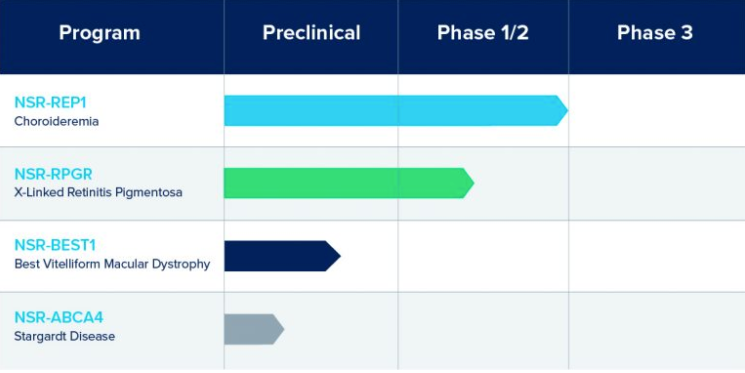
Clinical trials drive research with the goal of finding treatments or cures that need FDA approval before commercial use. Twenty-three gene-based clinical trials targeting 13 genes are underway, including an LCA4 (AIPL1) trial, according to Foundation Fighting Blindness. More than 20 retinal cell therapy trials are in progress, and another 100 genes are under investigation in the preclinical pipeline, the Foundation reported.

Chambers is supervisory medical officer in the Office of New Drugs in the FDA’s Center for Drug Evaluation and Research. The center’s mission is to assure that safe and effective drugs are available to the American people.
He was among three panelists who joined moderator Jeffrey Finman, PhD., of Jupiter Point Pharma Consulting, in exploring the development and approval of new treatments for rare diseases, including LCA. The panel was part of Sofia Sees Hope’s first-ever LCA Family Conference in Groton, CT, on Oct. 6.
Jennifer Hunt with Editas Medicine, a discovery-phase biotechnology company, and Tami Morehouse, a participant in the breakthrough LCA2 (RPE65) genetic therapy trial joined Chambers on the panel.
Not all trials are ‘real’
“Be aware of any trial where you’re charged for the drug or biologic product,” Chambers said. “If they’re charging you, watch out.”
He said every clinical trial is assigned an Investigational New Drug (IND) number. No number, no real trial.
Chambers sited the disastrous case of a 77-year-old woman who traveled to Georgia to have stem cells injected in her eyes in the hopes of a cure or at least help for her macular degeneration. The procedure entailed taking fat from the woman’s belly, separating stem cells that naturally occur in fat, and injecting them into her eyes to regenerate damaged tissue.
The procedure, not covered by insurance and not approved by the FDA, cost the woman $8,900. Within three months, her retinas – the eye’s layer of light-sensitive cells – had peeled away from the rest of her eyes. Her vision deteriorated to where she only could see hand movement before her eyes. She no longer could find her way on her own.
Risks vs. benefits
To fulfill its mission, the FDA monitors the drug development process during investigational stages, approves new drug products that are safe and efficacious, and monitors post-approval adverse events.
The FDA does not conduct clinical studies, choose which products a company will study, force companies to market products, or regulate the practice of medicine.
Approval depends on whether the benefits of a drug outweigh the risks.
“There is always a risk,” Chambers said. “If it does anything positive, it does something negative…It’s a balancing act.”
The factors weighed in this balancing act of forces and interests, clinically referred to as equipoise, consist of:
- the potential benefit from the drug product;
- the potential adverse event from drug;
- the potential safety from not taking a new drug;
- the potential loss from disease condition if not taking an effect therapy;
- and missing out on an alternative therapy.
Exploring different routes to a cure
Panelist Jennifer Hunt, vice president of clinical operations for Editas Medicine, described the process of developing a medicine that corrects mutated genes through editing. Using her company’s investigational medicine, EDIT-101, as an example, she detailed the course for finding an ocular medicine to treat patients with LCA10 (CEP290). LCA10 is one of the leading causes of blindness beginning in the first years of life.
Editas is working on developing CRISPR-based medicines (pronounced crisper, and meaning Clustered Regularly Interspaced Short Palindromic Repeats). CRISPRs are specialized stretches of DNA; the protein Cas9, meaning CRISPR-associated, is an enzyme that acts like a pair of molecular scissors, capable of cutting strands of DNA, according to LiveScience.
EDIT-101 is poised to be the first in vivo CRISPR medicine used in human trials. Before those clinical trials begin, researchers have been looking to answer key questions, such as, does editing restore protein expression in cells and what are the best clinical trials for patients?
Editas researchers also are conducting an ongoing natural history study with 40 patients, ages 3 and older. They are followed up with six times over the course of a year at seven sites – four in the United States and three in Europe – to characterize them, assess their vision changes and validate study endpoints.
Editas has stated it plans to file an Investigational New Drug (IND) application with the FDA in October. Once allowed by the FDA, Editas can begin clinical trials.
The FDA evaluates three study phases of a proposed new drug:
- Phase 1 investigation of new drugs in humans is a phase of research to describe clinical trials that focus on the safety of a drug. They are usually conducted with healthy volunteers, and the goal is to determine the drug’s most frequent and serious adverse events and, often, how the drug is broken down and excreted by the body. These trials usually involve a small number of participants.
- Phase 2 consists of research to describe clinical trials that gather preliminary data on whether the drug is effective in people who have a certain condition/disease. Participants receiving the drug may be compared to similar participants receiving a different treatment, usually an inactive substance, called a placebo, or a different drug. Safety continues to be evaluated, and short-term adverse events are studied.
- Phase 3 research is to describe trials that gather more information about a drug’s safety and effectiveness by studying different populations and different dosages and by using the drug in combination with other drugs. These studies typically involve more participants.
The human side of a drug trial
The third panelist, Tami Morehouse, spoke to the safety and effectiveness of LUXTURNA, a medication developed by Spark Therapeutics that the FDA approved last December for commercial use. Tami made medical history at age 44 when she became the oldest person to participate in the successful Phase 1 LCA-RPE65 genetic therapy clinical trial in 2009.
Dr. Jean Bennett and her husband, Dr. Albert Maguire successfully used the treatment on Lancelot, a dog born blind with a mutation in his RPE65 gene, before testing the medication on humans.
Prior to the trial, Tami could see faces, but much of the time she saw dark, gray haze. She woke up every morning when her alarm clock went off, wondering, would this be the day she would wake up with no vision.
“I had no hope whatsoever,” she said.
Her husband, Michael, added, “That’s where she’d be today were it not for that trial.”
Michael learned of Dr. Bennett and her ongoing clinical trials at Children’s Hospital of Philadelphia (CHOP) from a radio broadcast.
The trials resulted in FDA approval of LUXTURNA, a gene therapy that enabled Tami to regain some of her vision.
“It was an incredible experience that was a long time coming,” she said.
Tami said she is “walking, living proof” of the treatment’s safety and effectiveness. She told her audience to keep in mind that older people, along with children and young adults, can benefit from the treatment.
“Don’t give up hope and keep looking.”