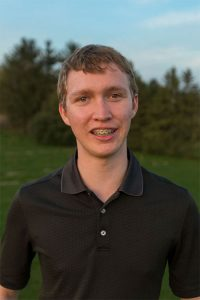
Testing the Limits: What is your Kilimanjaro?

Throughout my life, I’ve pushed my body to do some incredible things—from wrestling in high school to running a marathon to later backpacking in the wilds of British Columbia. But on October 7, 2025, I literally reached new heights as part of a group of nine legally blind individuals who successfully summited Tanzania’s Mount Kilimanjaro. Our group set a world record for the largest number of legally blind climbers to reach the mountain’s summit in a 24-hour period!

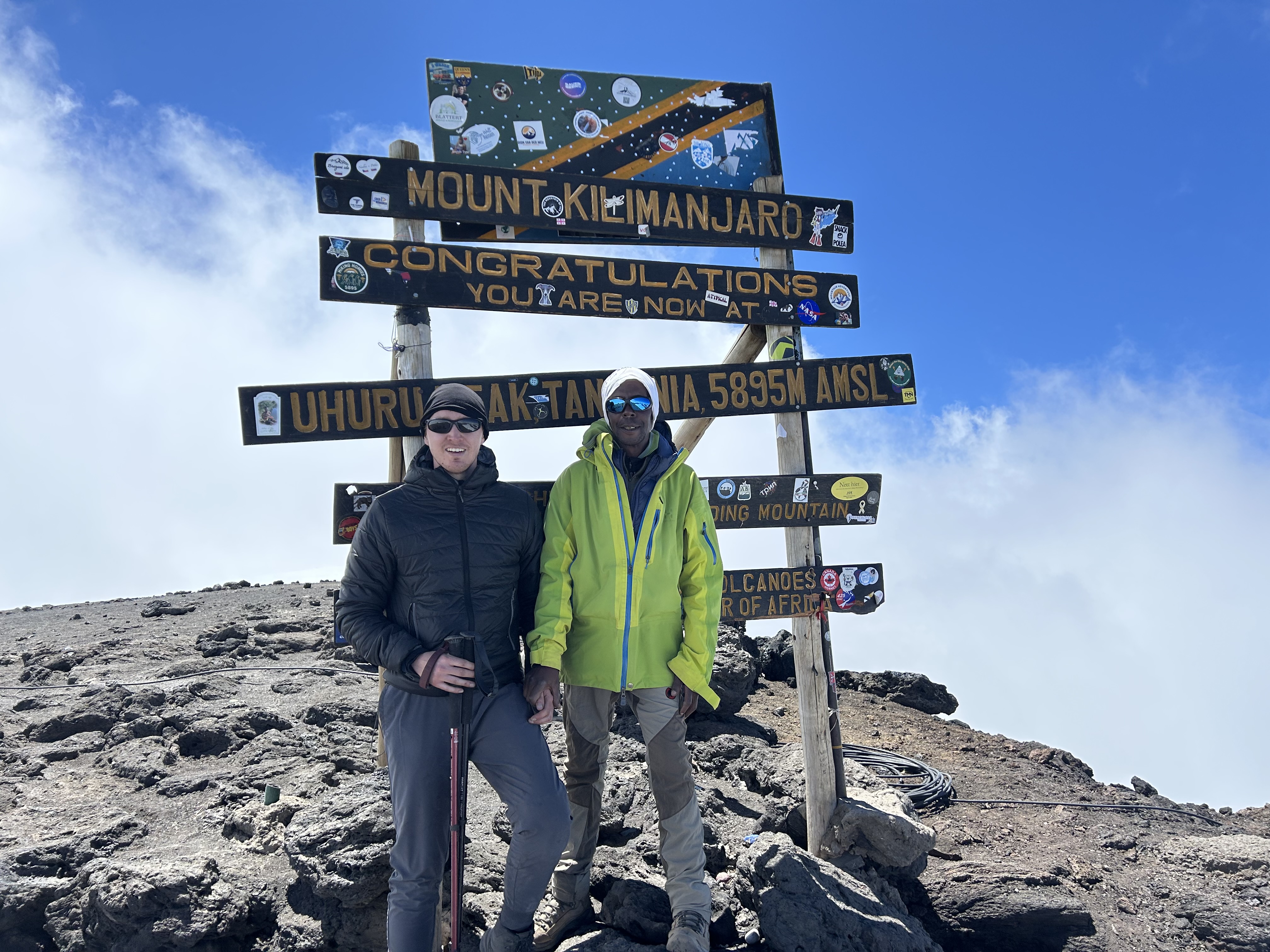
Jack standing next to his guide on top of the mountain with signs behind them.
Jack with guide on Mount Kilimanjaro

As the biggest mountain in Africa and the highest freestanding peak in the world, Kilimanjaro is challenging for everyone. It took seven days of grit, fatigue, and trust in our guides to reach the point where we began the final climb to the top. The physical strain left my body aching, and altitude sickness gave me one of the worst headaches I’ve ever had. Sleeping in a tent in freezing conditions was wearing, and I quickly missed hot showers. Within twenty minutes of starting our ascent, I lost count of the rocks I had to climb over. Being legally blind required my full concentration. I had to carefully probe the ground ahead with my hiking poles before each step and listen intently to my guide’s directions, alerting me to constant obstacles along the trail.

I also experienced many challenges. On day three, I had severe dehydration and nearly fainted trying to make it to the washroom in the night. Reaching the summit meant experiencing oxygen levels as low as 47 percent, leaving me breathless every few steps. The descent was no less demanding, for hours I slid down loose gravel, followed by two days of climbing down rocky terrain on tired legs.

Getting to the top of this famous mountain was worth it, but I’d be lying if I said I wanted to do it again. You might be thinking this sounds like a great adventure and wonder how you might do something like this. Or, maybe you’re wondering how we safely accomplished the climb.

The answer is simple—with a lot of support from local experts. We partnered with Nana Safaris, a tour company experienced in guiding legally blind climbers, which matched each member of our group with a local guide. My guide, Thomas, was certified by the Tanzanian government and had summited Kilimanjaro 370 times before our climb. Before setting out, we discussed how he could best assist me. Throughout the trek, Thomas carefully led the way, holding one of my hiking poles so I could sense the path ahead. He gave clear verbal directions and, in high-risk sections, had me hold on to a rock or showed me exactly where to step by placing my pole. Thanks to his expert guidance, I always felt safe.

Challenging adventures like this are possible with proper planning and support. If you’re considering climbing Kilimanjaro or visiting Tanzania, Nana Safaris is the most experienced company for supporting people with disabilities. We documented our journey and will be releasing a documentary about our adventure—follow us on Facebook to stay updated.

Nana Safaris: www.nanasafaris.com

Kilimanjaro Blind on Facebook: www.facebook.com/people/Kilimanjaro-Blind/61580093186046/

Seeing Home Differently: Purchasing a Home for Life with a Visual Impairment

As someone with a visual impairment, I’ve learned the importance of choosing accessible environments. I recently purchased my first home and wanted to share some lessons I learned about accessibility and the home-buying process.

One of the most important decisions anyone makes when selecting a home is picking a real estate agent who understands your needs and desires. Of course, you want someone who knows your local market and won’t pressure you to make a decision you aren’t ready for. But as someone living with a visual impairment, I also wanted an agent who had experience helping people with disabilities find a home. I started by speaking with a few agents who mentioned having this expertise on their websites, but I did not find anyone I felt comfortable working with.

The Right Agent

Thankfully, I asked a friend who is also visually impaired and who had recently moved. He had an excellent referral for an agent whom I contacted and chose to work with. Because of my real estate agent’s knowledge and experience, he was able to help me narrow my search by eliminating areas with poor public transit or limited businesses within a walkable distance. He also helped me identify features that would make my life easier as a visually impaired person, such as green space for my guide dog, nearby access to trails making it easier for me to run with a guide, easy-to-use appliances, and lots of lighting.

I looked at a lot of properties, and it was overwhelming! As I searched, I also discovered several things that would make my life better. I eliminated properties that required renovations. I’m not handy and have no interest in supervising a construction project. I also excluded properties on busy roads because it’s much easier for me to navigate quieter spaces, and I like to avoid noise as much as possible.

Adding Accessibility

I ended up purchasing a first-floor condo, which provides for trouble-free maintenance. It has a large patio, making it easy to take my guide dog outdoors, and it allows me to be outside as much as possible.

Once I moved in, there were a few things I needed to do to make my new home more accessible for me. Some rooms were not as bright as I wanted, so I purchased the brightest LED lightbulbs I could find. I was also tired of having thermostats that I could not control independently. Thankfully, there is a wide selection of thermostats that you can control with an app on your phone. I got an EcoBee thermostat and found the app fully accessible. Finally, I put Braille labels on all my appliances so I can use them independently. The Braille Superstore is a great place to get a Braille label maker and other stickers/labels to make your home more accessible.

I’m thrilled to have my own home and to live in an accessible and comfortable place. I hope my experience gives you some ideas regarding purchasing a home and how to make it more accessible for you or a loved one.

A TREATMENT JOURNEY: Jumping Hurdles, Taking Risks

“If someone told me that having access to perfect vision tomorrow meant not having impaired vision for my entire life, I would not change the past. While my visual impairment has created many challenges, it has shaped who I am and influenced me in many positive ways. I’ve become more resourceful, compassionate, creative, and resilient.” —Jack McCormick

Jack McCormick lives a story of hope, tenacity, and measured success while embracing an unknown visual future. When Jack was two, a diagnosis of cone-rod dystrophy confirmed that he had impaired vision. As a teenager, genetic testing revealed that he had Leber congenital amaurosis type 2 (LCA2), due to a mutation in the RPE65 gene and that he was losing his vision. This form of LCA interferes with the production of the RPE65 protein affecting the eyes’ ability to process Vitamin A, leading to progressive vision loss. “It was tough to accept. I was only 15 and thought my life would be a certain way. Now, it was going to be different,” Jack recalled.

Fast-forward to 2022, when Jack, now 25, was treated with LUXTURNA®, a gene therapy for RPE65, becoming the first Canadian to receive a gene therapy. But his journey to treatment involved overcoming substantial hurdles with the Canadian healthcare system, even as his sight declined.

To have a chance for treatment, Jack realized he had to advocate for LUXTURNA® to be available in Canada. “I wrote letters to Parliament and was interviewed on national television to create awareness and to help expedite the process,” he explained. “My vision was getting worse every time I visited the eye doctor, and my window as a viable patient for this treatment was quickly narrowing.”

Even after clearing the bureaucratic obstacles and identifying a hospital and qualified surgeons, there was still no clear path for funding the expensive treatment. “There was a year lag between Health Canada approving LUXTURNA® and my lining up private funding,” he said.

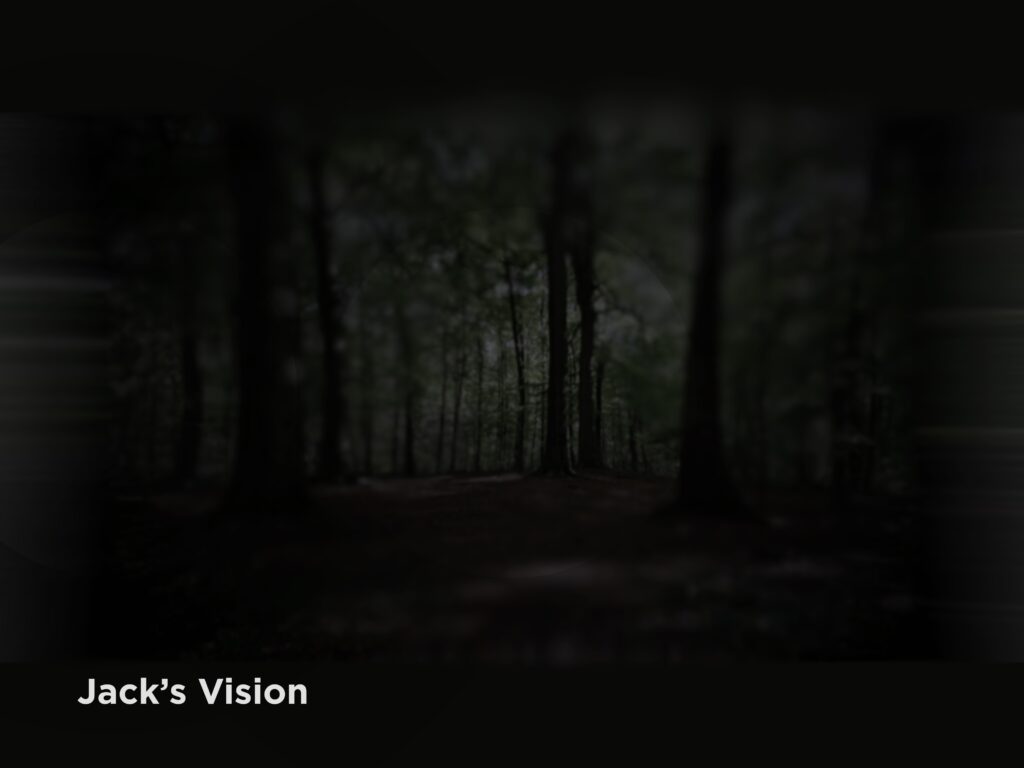
While Jack wanted the treatment, the immediate or long-term outcomes were not guaranteed. His doctors set his expectations sufficiently low, saying he might see a little better in dim lighting. “My goal was to have stable vision for longer,” he said.

Jack finally received the treatment in March 2022. But the surgery was not easy. It took a long time to recover, and the effects were not immediate. His eye with the poorest vision was treated first, and the second eye was treated two weeks later.

“It is important to be realistic about the surgery. They’re injecting an air bubble and a drug into your eye. There are incisions with microscopic stitches that rub against the eye, causing an intense headache,” Jack said. “I was on my back for the first 24 hours. Later, I had to prevent putting pressure on the eye and couldn’t bend over.”

Another huge challenge was having to quickly decide after the first surgery whether to pursue the treatment for the right eye. “With my left eye, it took a week to see what I saw before the surgery,” he explained. “A few days later, my doctors began talking about the next surgery, and I still wasn’t seeing better. It was very stressful and resulted in multiple conversations with my ophthalmologists about whether to proceed.”

After weighing the risks, Jack chose to have his right eye treated. “At that point, my goal was to see as well as I did before the surgery and, ideally, a little better,” he said. “I’m very happy I did it because the treatment made a much bigger difference for my right eye.” His doctors were also pleased when testing showed vision improvement in dim lighting and an increase in color detection.

“Before the surgery, I didn’t see much walking around the city at night. Now, I might notice someone passing me. I can also see the lines of a crosswalk,” he said. “For me, these improvements are huge!” It’s unknown how long these changes will last, but it’s a future Jack is willing to live with.

His advice for people seeking treatment is to be persistent. “My obstacles were fighting the government and finding a way to pay for the treatment privately,” Jack said. “It’s also vital to find a community. It’s one thing to be a visually impaired person saying that I need this treatment. But it is much more impactful when a group says the same thing and gets others to care about it. Allying with organizations like Hope in Focus helps unite our voices while providing much-needed support and education.”

Jack McCormick graduated in 2018 from Canada’s Wilfrid Laurier University in Waterloo, Ontario. He was diagnosed in high school with LCA2 RPE65. Jack is a Hope in Focus ambassador, helping people living with LCA and IRDs. You can read his blog at jackdamccormick.wordpress.com

Hope is Believing the Future Can Be Better

I must admit, when I learned that my vision was slowly deteriorating, I lost hope. I didn’t know what the future would bring. I knew that with worse vision came more accessibility barriers and was worried that these barriers would prevent me from achieving my dreams.

But my hope soon returned. I knew that I needed to make a choice. I could either feel bad about myself or do something to make a difference. I chose the second and began to plan. For me, hope is about believing the future can be better.

I wasn’t sure if there was anything I could do about my vision. Genetics had made up its mind. The science was close to a treatment, but I couldn’t count on it. That being said, many treatments were near enough to becoming reality that they would definitely affect many. This was my opportunity. I began raising money for sight-saving research, speaking at events and advocating for treatments. I’ve learned that snails move faster than medical research. It is frustrating and easy to lose hope. But, a snail’s pace is still progress!

For example, LUXTURNA®. The first FDA-approved gene therapy for an inherited retinal disease was approved in the US long before it was approved here in Canada. I’m pleased to say that it was finally approved by Health Canada in October 2020. I have the type of LCA that LUXTURNA treats, and if the provincial government agrees to fund it, I could receive this treatment soon.

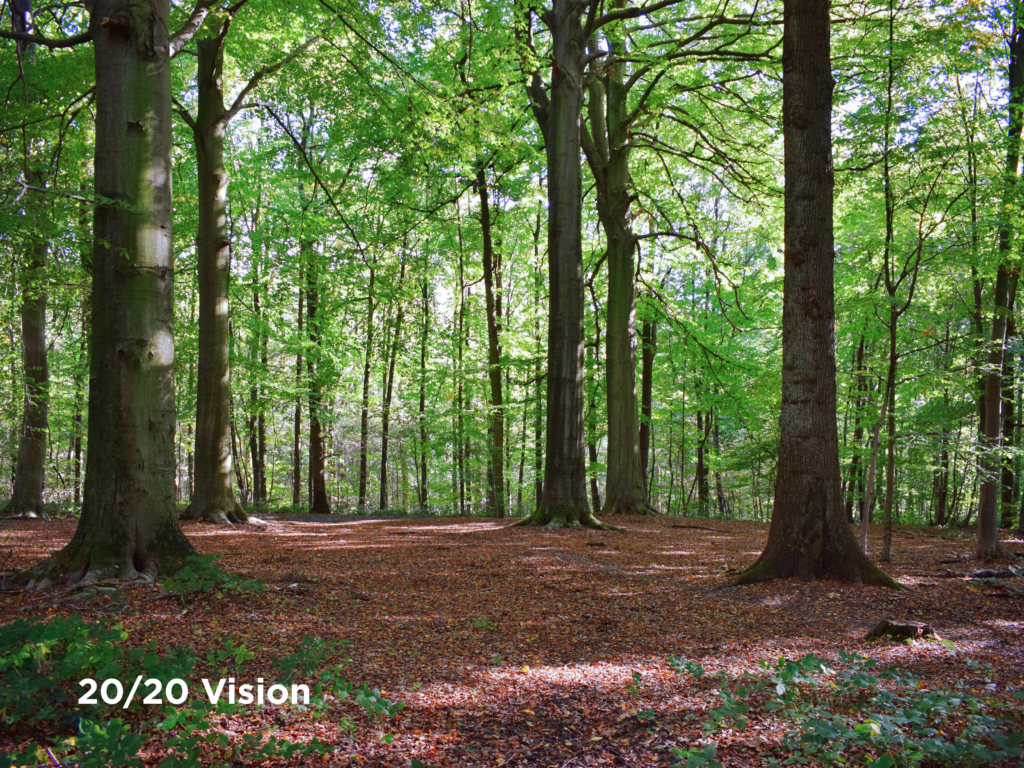
The disease that causes my vision loss is advanced. LUXTURNA® will come nowhere close to giving me perfect vision. I’ve learned that having hope for restored vision and hope for life after vision loss are equally important. The best parts of life are not lost with vision loss. I have an amazing life. I have a lot to be thankful for – a good job, an incredible family, fantastic friends and opportunities to participate in accessible activities like sailing and skiing. I hope that you continue to have hope for life after vision loss too.

Jack McCormick was diagnosed in high school with LCA2. He graduated in 2018 from Canada’s Wilfrid Laurier University in Waterloo, Ontario. He is a Hope in Focus (formally Sofia Sees Hope) ambassador, helping people living with LCAs and IRDs. You can read his blog at jackdamccormick.wordpress.com

College Connection: Making A Successful Transition To College

Starting high school or going off to college is not easy; new people, classes and sometimes even a new city makes for a stressful transition. Doing it all with a vision impairment adds some additional complexity. I am going to share with you my experience of moving to college with a vision impairment. Hopefully you can learn from my experiences and apply it to your own life.

Four years ago I knew that I wanted to attend Wilfrid Laurier University. When I received my acceptance letter I immediately started to plan, which proved to be incredibly important. I was able to connect with various people at the university: getting a larger dorm room at no additional cost to accommodate my guide dog, speaking with the Accessible Learning Center to arrange exam accommodations (I write my exams on a computer in a private room), and connecting with professors before classes started.

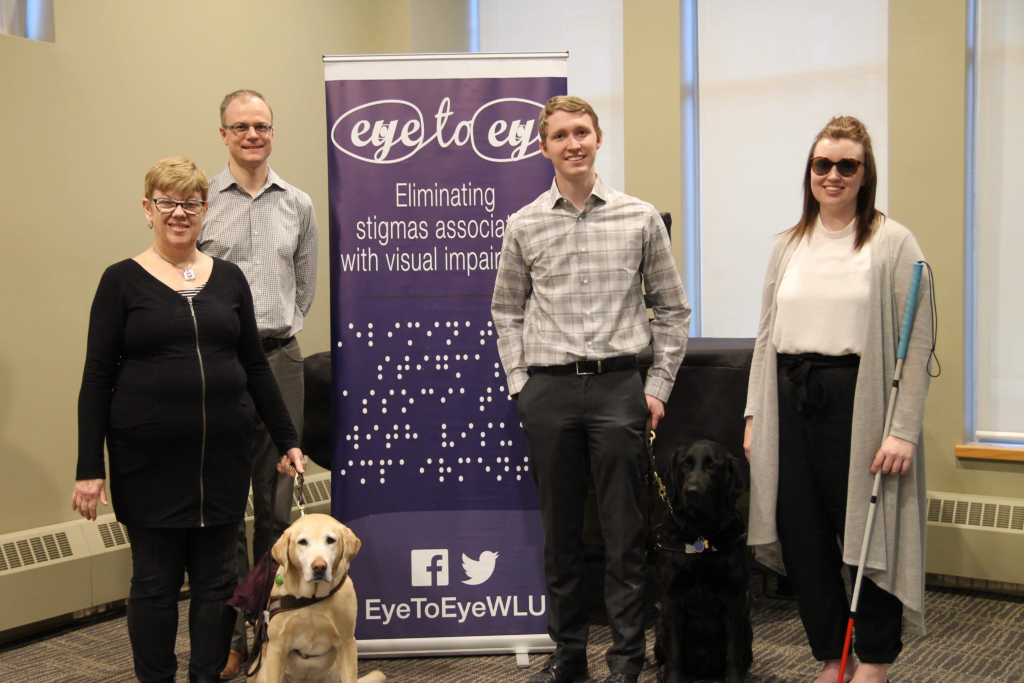
Jack McCormick and his guide dog Jake, center, at a recent “Eye To Eye” event Jack organized at his college. On the left is Dr. Penny Hartin, CEO of the World Blind Union, the guest speaker at the event.

For someone with vision loss it can be challenging to navigate a new place and college campuses are no different. It is so important to learn the layout of your college before move in day because I am telling you, you won’t have time during frosh week and you will want to know where your classes are before they start. There are a lot of benefits to knowing the layout of your campus beyond being able to find your classes and places to eat.

  1.     If you know where things are better than the people on your floor, then you can help them find their classes. It’s a good way to get to know people and show them that you don’t let your vision loss stand in your way.
  2.     Getting involved with campus organizations is a great way to have some fun and get to know like-minded people. These organizations aren’t going to meet in the same places as your classes. So you need to be able to find them or you are going to miss out on one of the best parts of college life!

“So, Jack, I’ve planned and learned the layout of campus. What about the first day? How do I make friends? I am worried that people will judge me because of my vision impairment.”

  • Remember that all people are nervous during their first days of college. You are not alone!
  • Own your vision impairment, tell people about it and be open to answering questions (you will get some dumb ones). This eliminates any awkwardness that people may have about your vision loss and soon you will find a great group of friends!

I hope this helps as you move away to college!

Jack McCormick is a 21-year-old honors business student at Canada’s Wilfrid Laurier University in Waterloo. Jack was diagnosed in high school with Leber congenital amaurosis due to mutations in the RPE65 gene. He is a Hope in Focus (formally Sofia Sees Hope) ambassador, helping people living with LCA and IRDs. Read his blog at jackdamccormick.wordpress.com

College Connection: Three Things Parents Can Do For Their Visually Impaired Child

Parents want nothing but the best for their children. This is why I am so often asked questions like, “I have a 6-year-old son who has a vision impairment. What can I do to help him become independent when he grows up?” I am lucky to have the parents I do because they have done many things that have helped me become the confident and independent person I am today. I am going to share a few examples of what they did for me in the hopes that you can help someone in your life, too.

Never Say “No”

“No” was never a word I heard growing up unless I was misbehaving (not that I ever did that). Once around the age of 8, I was talking about what I wanted to be when I grow up and my Dad, a financial planner, said “Jack, maybe you can take over my business.” My response was “I can’t do that, you drive lots for meetings and I am not allowed to drive.” Instead of agreeing with me, my parents simply replied,  “Jack, you could just have the clients come to you.”

I was never given an easy way out because I couldn’t see well. Instead I was intentionally challenged, which helped me develop many skills. In my preschool years, my parents would go for walks after dinner when it was dark. Most nights I would follow them on my tricycle. I have never been able to see in the dark. My parents didn’t always know this but when they found out, they didn’t stop me riding the tricycle in the dark. I believe that this helped me gain the excellent orientation and mobility skills that I have today.

Children who are different are often targeted by bullies. I was bullied frequently but I always knew that I could go to my parents for help. Being there also refers to being your child’s biggest advocate. Relentlessly advocate for an accessible education for your child because without that he or she will never be independent.

I hope that you can apply these examples to your own life and that you are inspired by my parent’s actions – I know that I am! As always, feel free to reach out online.

Jack McCormick is a 21-year-old honors business student at Canada’s Wilfrid Laurier University in Waterloo, Ontario, and he is a member of the National Young Leaders Program for the Foundation Fighting Blindness. Jack was diagnosed in high school with Leber congenital amaurosis due to mutations in the RPE65 gene. He is also a Hope in Focus (formally Sofia Sees Hope) Ambassador, helping people living with LCA and IRDs.

It’s April Fool’s Day, and we’ve got a great post to share with you!

“We can all make our lives much happier if we choose to laugh, live our lives more intentionally and find joy in the little things.”

Jack McCormick headshot
Jack McCormick

The quote above is from our friend, Jack McCormick’s blog. You may know seen the video, Jack’s Story, at Dinner in the Dark last year, or on Facebook or our website. Jack’s story is one of clinical misdiagnosis – something that happens all too frequently. It’s also about living with a visual impairment, the role his parents played in his life, and getting to a correct diagnosis. (Spoiler alert! Jack has LCA.) If you haven’t seen it yet, take a few minutes to watch!

If you’re raising a blind child, then we also recommend this post from Jack, Let’s Laugh: At Me! There are so many emotions and worries that keep parents up at night, and Jack’s post is a reminder that our kids are not just rare and beautiful, but sometimes just plain goofy, and a little humor and laughter can go a long way!