Diagnosis to Treatment: Pioneering LCA Patient Eases the Journey

As a global advocacy organization dedicated to helping those affected by blindness caused by rare inherited retinal disease, Hope in Focus (formally Sofia Sees Hope) connects families with Leber congenital amaurosis (LCA) and other IRDs through its Family Connections program and through events such as its second LCA Family Conference set for July 26-28 in Philadelphia.

The conference offers opportunities to engage in thoughtful and interactive exchanges of knowledge, ideas and viewpoints in sessions focusing on research, future treatments, advocacy and people sharing their stories.

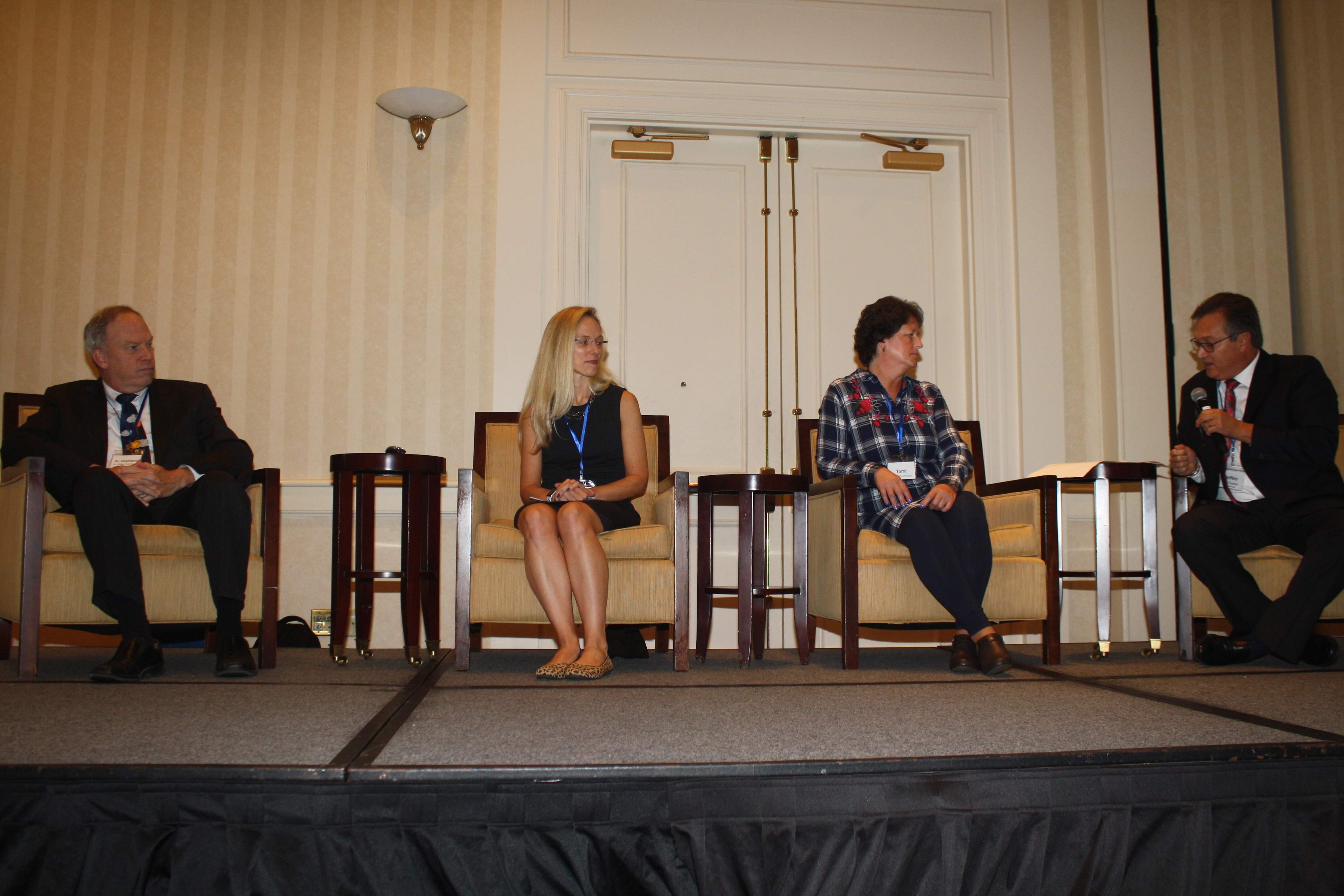
Tami Morehouse, third from left, during a panel at the 2018 LCA Family Conference in Groton, CT.

Pioneering LCA patient Tami Morehouse attended the patient advocacy session of the first LCA Family Conference last October in Groton, CT, and participated as a panelist in a session titled: “The Road to Treatment: Understanding How Therapies Are Developed.”

She made research history in the LCA world and in the nation in 2009, when at age 44 during trials for genetic therapy medication, doctors injected under her retinas a human-engineered virus that restored an essential protein for vision. Spark Therapeutics developed the drug that was marketed as LUXTURNA™ following U.S. Food & Drug Administration approval in December 2017.

Tami lives in the Cleveland area and is among the LCA patients who have shared their stories to help others navigate the obstacles that accompany the diagnosis of a rare disease and the journey in finding a treatment.

We’ll share the words she shared with two families – the mom of a boy who received the new genetic therapy treatment, and a mom, and her little boy, who asked a lot of questions about the surgery.

Making Family Connections

Tami holds a special place in the heart Sarah St. Pierre Schroeder, whose then-9-year-old son, Creed, became the youngest person to receive the new genetic therapy for LCA with a mutation in his RPE65 gene. (See our series of stories about Creed, his spring 2018 surgery and his journey.)

Because Tami is the oldest person who successfully received the experimental treatment in both eyes in a clinical drug trial a decade ago, she possesses invaluable insight into the unknowns faced by Sarah and her third grader, who live in Mount Dora, Fla.  

Sarah said she is forever grateful for Tami talking with her.

“I will never forget the emotions I felt when Tami reached out to me. Every sentence in her email brought me more comfort about what I was doing for Creed,” Sarah said.

“She was so open about her journey, I felt like we had known each other forever. I felt like she was with us in Miami (where Creed underwent surgery at Bascom Palmer Eye Institute).

“Suddenly I was able to ask someone all the questions I had and get answers. Not just ‘maybe this will happen.’ ”  

Here’s some of what Tami shared with us about talking with Sarah:

I’ve had some great conversations with those who have either been involved in the process of treatment of LCA or are hopeful they might be involved in a clinical trial in the future. I’m sure you aren’t surprised when I say that emotions usually run pretty high during these conversations.

Sarah was the first parent I talked with. I kept thinking about her and Creed in the days prior to Creed’s procedure. I remembered how I felt when I was in their shoes and couldn’t help but reach out to them on the night before Creed’s procedure. As it turned out, Sarah seemed very open and happy to talk with someone who had been there and understood a little about all that they were feeling and wondering about.

Sarah and I had lots of communication that night and the day of his procedure, which seemed like it would never get here, and in the days following.

Hearing about the improvements in Creed’s vision and how it has changed his life has been so much fun. Thinking about it is still a bit overwhelming sometimes, but wonderful. I’m so glad for him.

It’s nice to check in with Sarah from time to time to talk about the progress and adjustments they are making. I hope they enjoy our interactions as much as I do.

Here is some of what Tami had to share after talking with a mom considering gene therapy for her son. (Tami spoke to the woman and her son as a confidant and did not want to disclose their names.)

The mom asked that I talk with her little one specifically about what the procedure was like. She wanted him to talk with someone who had actually gone through it. We had a great conversation.

I talked to him about things like, the fact that my surgery wasn’t painful for me but did feel a little funny afterward; that I did have to have lots of eye drops; that my surgery didn’t even take very long; that the doctors and nurses were really nice; that my family could be with me after the surgery when I needed them; and that I was pretty comfortable through the whole thing.

I told him that the best part is that I can see a little better than I could before I had the surgery.

At the beginning of the conversation, the little guy seemed pretty quiet and uncomfortable. As the conversation went on, he appeared more relaxed and seemed to be listening pretty intently. His first question was, “WOW, you mean you had surgery already? WOW!”

He also asked if I thought he would be able to get used to all the eye drops and if it would be a long time before he could play video games after his surgery. I told him that I wasn’t sure of how long he would have to wait to play games, but that if he was patient, his reward might be some really good pizza and chocolate chip cookies, which is what I got to eat after my surgery was over. I got a big giggle out of him then. He said that he is pretty happy that he might get the surgery.

If one thing I said to this child makes his surgery easier for him, I’ll be so happy. I just hope it happens for him as they anticipate.

Mom and I talked about the reasons why she feels good about the safety of the (clinical) trial. That’s always a huge issue with just about everyone that I’ve talked to prior to receiving treatment or participating in any trial. Safety always comes first. Understanding why a procedure is determined to be safe is very important.

We also talked about the importance of being aware of what kinds of results treatment might provide for her son, as well as what she and her son are expecting or hoping for from a particular treatment. There were a couple of participants in the trial with me that seemed to have really high expectations that just weren’t possible. Luckily, it seems like this little guy and his mom are in a good place when it comes to their expectations.

Anytime I talk with people seeking any treatment for any rare inherited retinal disease, I strongly encourage them to do their best to understand as much as possible about the procedure, care and services that they are considering or receiving. This can be made easier by reading everything available about the treatment they are pursuing. Unfortunately, sometimes reading and understanding some of this printed information are two different things.

The more that is known about the treatment ahead of time, the easier it is to understand what is going on when making decisions prior to and during treatment.

Asking questions and expressing any concerns that come up is also very important when making decisions about accepting or going through treatment. Taking any available opportunity to develop relationships and open lines of communication with any medical and/or clinical staff is very important. Doing this can make it much easier for patients, as well as physicians, to openly ask questions and express concerns. This can make all the difference in the world when it comes to getting the answers and information needed.

Another thing to consider for individuals who do receive treatment and experience restored vision, is how improved vision may affect their lives.

For some, this is a wonderful thing. For others, this can be a bit of a challenge.

Thank you, Tami.

Tell Us Your Story: ‘Do Not Limit Yourself’

I am 22 years old and I have LCA.

My name is Angélica Bretón Morán, I am from Mexico, I am 22 years old and I have Leber congenital amaurosis (LCA). Two years ago I learned that the gene that affects me is the RPGRIP1.

I’ve been reading many sites on the Internet, and I have realized that there are many comments from parents concerned about the development of their children, however there are almost no comments from parents with older children or people with LCA who talk about their development.

My intention is to tell you a little about my story to bring you peace.

LCA diagnosis: Many wrong turns

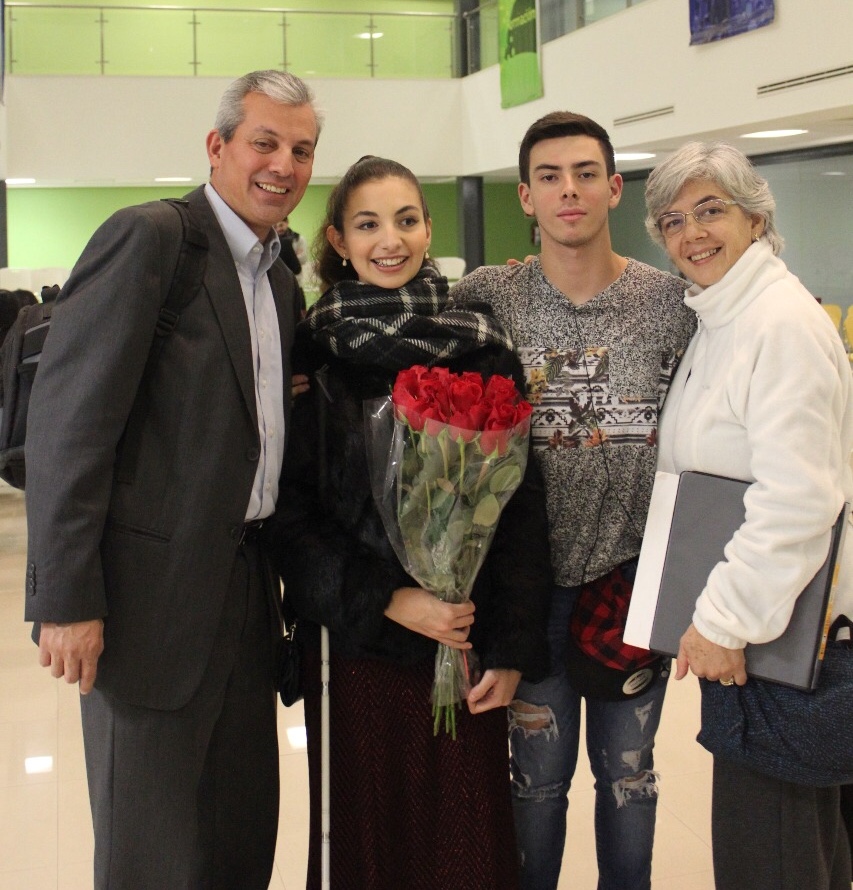
Angélica holding red roses and standing next to her parents and brother

When I was 2 months old, my mom realized that I did not follow people or toys with my eyes, and that when they did not speak, I cried as if I was alone and my eyes were standing down.

My mother is licensed in special education and specialized in hearing and language; she has many diplomas in different disabilities, including visual disability, so she realized that something was not completely normal.

The doctor told my parents that my eyes had to mature, but the months passed and nothing changed. My mom was certain that my characteristics were those of a blind person.

Finally, the doctors diagnosed that I was blind and there was a rain of bad diagnoses, syndromes that would terribly affect me, or that I would die a premature death, or that I would be like furniture, without the ability to do anything. They also said that maybe I would lose some other sense, that I could never talk, walk, eat ,among many other things Of course all this broke my parents’ hearts.

Other doctors recommended surgery but my mom never agreed and my dad supported her, he trusted in her because my dad did not have the experience with people with disabilities like my mom.

It was a painful road for my parents until a doctor told them “If they force me to give a diagnosis, I would say to you that it is LCA.” I was 2 years old.

My dad searched for information about this new diagnosis on the Internet, and what he found was not nice things, as I see that happens today. In one of the Internet searches, my parents found a writing made by a 22-year-old Italian young lady who was a musician; this for them was something hopeful.

From that moment we were in the group of research families, and for many years that was the diagnosis even though there was nothing that would formally confirm it. However, my parents did not lose details about my development; they were still worried because there was not something completely defined, since the disease was little known.

While my mom stimulated my touch with toys with different textures, placing hands in containers with different seeds, she strengthened my hands and enrolled me in mud classes. I was very afraid of the people, so she enrolled me in ballet classes where I would meet more girls and teachers. I was very little and I liked the music and the stage.

Then I went to kindergarten. It was not easy to find a school where they would admit me, but my parents never agreed that I was in a school for people with disabilities. As I had already been in the Ballet, it was easier for me to adapt to the classroom.

My parents never treated me differently, when I told my mom that when I grew up I wanted to be a pianist and opera singer, she told me that I could reach where I wanted. I liked to hear Charlotte Church and I admired Andrea Bocelli, because he was an example for me.

I have always been shy, I work hard to be sociable. This has been good, even though it has not been easy, but the reality is that we live in this world that will not be especially easy for us. This is achieved gradually and with personal life experiences, but I believe that above all with great patience and understanding of our parents and relatives, then we personally will learn to have it.

To give an example, my mother let my friends go to my house, and she let me go to their homes too. My parents did not make me see that my case was something special, because I could play with dolls, the kitchen, to be a doctor etc., like all the girls; only that when there were obvious things like playing jump on the stairs, the adults had to tell us that this was dangerous, because this is dangerous for any child, do not you think?

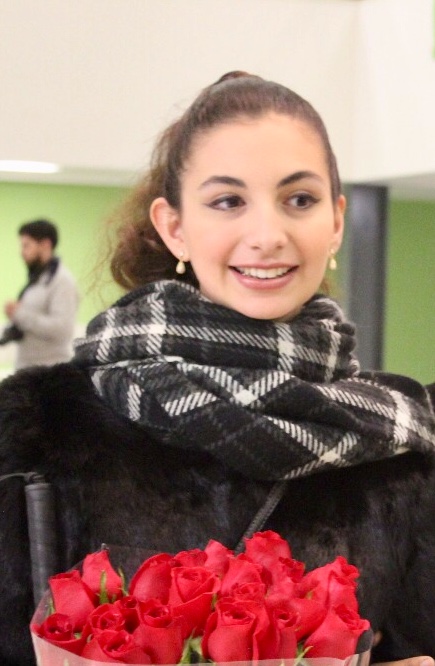
Angélica with roses and smiling

When I behaved differently from other children, my parents told me that this was not a good behavior. They explained to me how I should behave, without showing myself. When I waved my hands my mother held them and told me not to do it, she did it kindly but firmly and little by little I stopped doing it.

What made my parents angry was that I pressed my eyes with my fingers, because this was harmful to my eyes, every time they saw me doing it, they rebuked me more strongly; but now I thank them, because my eyes have no harm and in the future if the cure for my gene is found, there will be no injury that prevents me from receiving the treatment.

My parents educated me with a lot of love, but above all with discipline, an orderly and coherent discipline. I had to keep my toys like all children, learn to eat correctly like everyone else, not put my hands in food and just touch it with a finger that my mom called “guide finger”, this as a support because I cannot see the food.

I am weak visually, when I was a girl I could see better than now. Now I see lights and shadows but I cannot distinguish differences between colors as I used to, this has been so progressive that I did not realize until recently.

My disability has never been a secret, but neither has it been something for which I have to be different from others. It is true that you have to adapt some things, this is logical; however you have to look for how to achieve the objectives.

Going back to my life story, I have always studied in regular school; all my life music has been present. I graduated from music training at the Autonomous University of Nuevo Leon (UANL) while studying elementary school. I finished high school and got the second place for qualifications. I entered the technical career in music and finished it with honors while I studied online high school, all this in the UANL. I am currently studying a degree in music with an emphasis in piano at the same university and I have been studying professional singing for five years with a private teacher to become an opera singer.

I think it’s important to mention that I’m not an only child, I’m the oldest of two. My parents, like many of you, were afraid that the second child would have something worse than mine, but they have always had great faith in God and my brother was born. He does not have any disability, but he was asthmatic since he was a child and my parents have faced their situation in the same way they have faced mine … they never treated him differently, nor did they make him see that he had disadvantages. But to achieve something you had to look for how to do it. He is a high-performance swimmer, asthma attacks are becoming less frequent, and he is currently a healthy boy.

All this I tell you so that you know how important it is not to limit yourself. If you limit yourself as parents, you will limit us as children. My brother has been a great support for me in many situations, he has taught me to be the older sister. Our illnesses and the education of my parents, they taught us that neither he nor I have an obligation to take care of each other, we simply do it because we are brother and sister and we love each other

I played with my brother, we made mischief, we laughed late at night until my parents scolded us to sleep, as any pair of siblings can. My parents have never marked differences between us, everyone is accepted with their differences, we all have, but I am not more important than him, nor is he more important than me.

All this we have worked for 23 years as a family, we have been wrong many times, some other times we have felt that our effort has been in vain. We have stumbled like any family, we have asked for help when we consider that it is necessary. We have also tried to help when we think it is appropriate. But above all things, the strength of my parents and my family has been their faith in God, which they have transmitted to me and my brother and this faith has been my reason to continue in difficult times.

Speaking about people with LCA, they may have other disabilities, I have witnessed them myself, or they may not have them as is my case. However, I can tell you that when you treat a person different from the others, that person will behave differently regardless of whether they have a disability or not.

You have to be aware of the limitations, but you also have to find a way around the obstacles, or pass through them, or use them as a catapult, or see them as a feature that makes us unique and special as people, as we all are.

I hope my words help many families, since that is my intention. I invite more adults with LCA to tell their stories and how they have faced life! I think we would give a much more encouraging approach when new parents enter the Internet looking for information about the diagnosis of their children, and why not, for those who are newly diagnosed patients and research the internet on their own.

I have known fathers and mothers with LCA, young people, babies, children, even a child who was cured with genetic therapy because he has RPE65. We met him when he was blind and the second time we saw him, he saw and guided the other children who were still blind. It was amazing! We were all very excited and we could not stop the tears.

Finally I want you to know that I am in the best position to answer your questions in this post from my personal perspective. As I mentioned before, my only intention is to help because I am greatly moved to see your anguish and I feel that it is my duty to be now the 22-year-old girl who brings a hopeful message to those who enter the internet looking for information about LCA.

I would like to know, is there anyone else that has the RPGRIP1 GEN? I do not know anyone else!

God be with each one of you, blessings!

College Connection: Making A Successful Transition To College

Starting high school or going off to college is not easy; new people, classes and sometimes even a new city makes for a stressful transition. Doing it all with a vision impairment adds some additional complexity. I am going to share with you my experience of moving to college with a vision impairment. Hopefully you can learn from my experiences and apply it to your own life.

Four years ago I knew that I wanted to attend Wilfrid Laurier University. When I received my acceptance letter I immediately started to plan, which proved to be incredibly important. I was able to connect with various people at the university: getting a larger dorm room at no additional cost to accommodate my guide dog, speaking with the Accessible Learning Center to arrange exam accommodations (I write my exams on a computer in a private room), and connecting with professors before classes started.

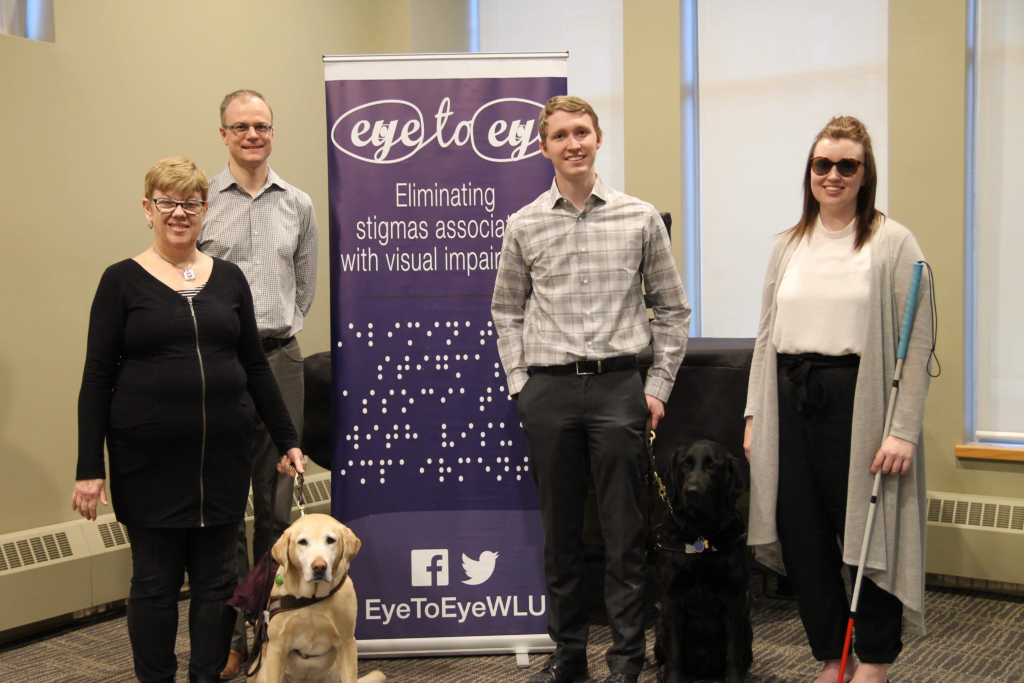
Jack McCormick and his guide dog Jake, center, at a recent “Eye To Eye” event Jack organized at his college. On the left is Dr. Penny Hartin, CEO of the World Blind Union, the guest speaker at the event.

For someone with vision loss it can be challenging to navigate a new place and college campuses are no different. It is so important to learn the layout of your college before move in day because I am telling you, you won’t have time during frosh week and you will want to know where your classes are before they start. There are a lot of benefits to knowing the layout of your campus beyond being able to find your classes and places to eat.

  1.     If you know where things are better than the people on your floor, then you can help them find their classes. It’s a good way to get to know people and show them that you don’t let your vision loss stand in your way.
  2.     Getting involved with campus organizations is a great way to have some fun and get to know like-minded people. These organizations aren’t going to meet in the same places as your classes. So you need to be able to find them or you are going to miss out on one of the best parts of college life!

“So, Jack, I’ve planned and learned the layout of campus. What about the first day? How do I make friends? I am worried that people will judge me because of my vision impairment.”

  • Remember that all people are nervous during their first days of college. You are not alone!
  • Own your vision impairment, tell people about it and be open to answering questions (you will get some dumb ones). This eliminates any awkwardness that people may have about your vision loss and soon you will find a great group of friends!

I hope this helps as you move away to college!

Jack McCormick is a 21-year-old honors business student at Canada’s Wilfrid Laurier University in Waterloo. Jack was diagnosed in high school with Leber congenital amaurosis due to mutations in the RPE65 gene. He is a Hope in Focus (formally Sofia Sees Hope) ambassador, helping people living with LCA and IRDs. Read his blog at jackdamccormick.wordpress.com

Misty Lovelace: ‘I Can See Little Things’

Told at age 12 she would be blind by 18 because of her Leber congenital amaurosis, Misty Lovelace of Kentucky participated in the gene therapy trials for LUXTURNA, to treat visual impairment caused by LCA-RPE65. At 18, the age when a doctor predicted Misty would be blind, she is ever so grateful for her sight.

Turning 18 marks a milestone for most teenagers, but for Misty Lovelace of Kentucky, turning 18 meant celebrating her ability to see vibrant colors and sparkling stars.

It wasn’t supposed to be this way.

Misty, recalling a doctor’s pronouncement six years ago, said: “One day, I’m going to wake up and I’m going to be completely blind and it’s going to happen before I’m 18.

“It’s really hard for a 12-year-old to hear that,” she said. “It was really sad, really sad.”

Misty was born in October 1999 and diagnosed at 3 months old with “some kind of blindness.”

“In 2000, genetically, things weren’t existing then.”

To understand Misty’s level of vision then, she says to imagine wearing very dark sunglasses and looking through a PVC pipe. With no peripheral vision, she had to move her head, rather than just her eyes, to see up and down.

It was 11 years after her first diagnosis that doctors determined she had Leber congenital amaurosis (LCA), a rare inherited retinal disease (IRD).

“They didn’t tell me much of anything,” she said. “They just label you and you just go on. It’s trial and error. You never know what the right problem is until you find it.”

Diagnosis: LCA-RPE65

Dr. Robert A. Sisk of Cincinnati Children’s Hospital Medical Center did find the right problem and he sent a sample of Misty’s blood off to Children’s Hospital of Philadelphia, where she was genetically diagnosed with LCA-RPE65.

Back then, Misty felt different about the idea of genetic testing. “It wasn’t tremendously important for me to get it. It’s an option we can do.”

Now, “Clearly, I would definitely recommend it and I would recommend it at a young age.”

Misty was 12 when she joined Dr. Sisk’s research project for gene-therapy treatment for LCA-RPE65.

“They sat me down and said the surgery could make it the same, make it better or make it worse. Facing a choice between waking up blind before 18 or the surgery’s going to do it, you gotta take a risk.”

As a preteen living with her grandparents, Misty consented to genetic therapy surgery as part of clinical trials for the recently approved drug called LUXTURNA™.

In December 2017, the Food and Drug Administration approved LUXTURNA™, developed by Spark Therapeutics , as a breakthrough genetic treatment in which a human-engineered virus containing copies of a normal gene is injected under the retina.  

Misty underwent the revolutionary treatment in 2013 when she was 13, and she experienced greatly improved vision in 24 hours.

“It’s amazing; I never thought that detail could be detail,” she said. “I can see hairlines, I can see little things that are so, just so nice. I see colors and bright neon colors.”

And now, at 18, the age when a doctor predicted Misty would be blind, she is ever so grateful for her sight.

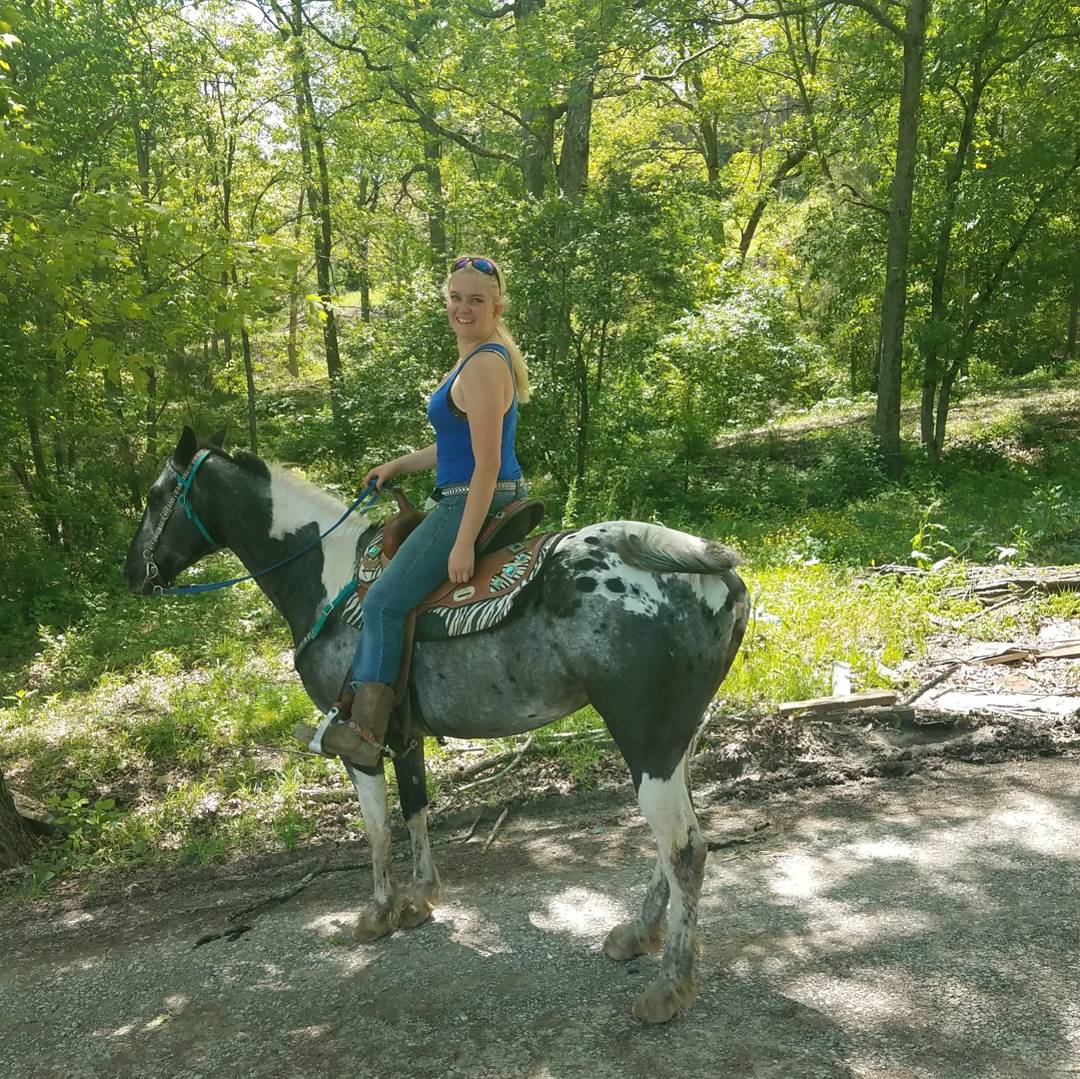
Before getting into the clinical trial and having surgery, Misty began riding horses.

Misty Lovelace on a horse

And that was a whinny and a snort I heard in the background while we talked. And she did sound like she was on top of the world. And, indeed, she was, riding atop Sassy, her paint appaloosa in a windy Kentucky field.

“I train horses, I give lessons. I love to give horses their second shot,” she said. “People see a horse one time and don’t put a lot of effort into it. They break metal fences and knock down poles, trample people.

“I like it because the only way you can learn and expand your knowledge of horses is to find the troublemakers. That’s what my horse is, definitely the troublemaker.”

Misty said she would have continued her interest in horses even if she didn’t have the LUXTURNA treatment.

“It just helped me. It helped people trust me because not everyone is going to let a visually impaired or blind person ride a stubborn, crazy horse.”

She gets along with horses well because her visual impairment gave rise to what she calls a sixth sense. She said she often can feel people’s presence before it is obvious, and horses possess similar instincts.

“Horses are very, very, very amazing creatures. They can sense your emotions. They can read you like a book. They are very smart, intelligent animals.”

Misty’s also learned about human nature along the way and the desire to fit in.

She remembered when she was in fifth grade and someone brought in a big drum, which turned out to be a celestial telescope. Everyone in the class, except her, could see the stars.

“They drew them on a piece of paper. Kids asked if I could see them and I said, ‘Yeah,’ even though I didn’t really see. Kids are mean, they always have been. As soon as I went to middle school, I started to be put down. I was called Helen Keller, kids were absolutely awful.”

She left school in the middle of seventh grade to have the surgery and returned at the beginning of eighth grade.

“When I came back, everybody thought I was so different. They didn’t know what happened. It was a complete turnaround. Everybody wanted to be my friend.”

She now is homeschooled, calling it the best thing in the world.

“I would recommend it to anyone visually impaired. I get to wake up early, do my schooling and I ride my horse the rest of the day.”

She is particularly happy about one of the moments in her journey.

Before Misty’s mom passed away, shortly after her eye surgery, mother and daughter shared a special time.

“She got to see the moment of me first-ever seeing the stars,” Misty recalled. “It was funny, too, me and my sisters, we were all swimming in our Walmart swimming pool, being careful of the chlorine. I looked up at the sky and just started screaming, and I had no idea what they were and why they were there and why did they blink. (My mom’s) freaking out and I’m freaking out.”

Running out from the house, Misty’s mom thought chlorine had gotten in her daughter’s eyes, while Misty initially felt angry, a little betrayed, that the stars in the sky didn’t look at all like the five-pointed ones she’d seen in drawings.

Then she realized the stars she saw were the real deal.

“Now I love looking up in the sky and seeing the stars. I love thinking that at one point in time, they were imaginary for me.”

Being Married to Brandon: “A Precious Exercise of Mindfulness”

When I met Brandon in September 2014, I thought that I was talking to the most interesting person I had ever met.

Not only was he the first American I had ever talked to, Brandon was also the opposite of the typical 20-something Italian: Not Catholic, vegetarian, mostly homeschooled, who preferred peanut butter over Nutella.

Besides the cultural diversities, I immediately liked his positive way of thinking, his unusual curiosity and his witty sense of humor.

Another particularity of Brandon was his blindness, which is actually the reason why we met.

I was giving a tour of my university, the University of Milano, Italy, for international students and I was asked to guide Brandon, who was there to study Italian for opera. Among a group of a hundred students, it would have been unlikely that I would have gotten to know any of them. Since Brandon was by my side, however, we had the chance to talk during the tour. And then we scheduled a date.

We were married two years later.

The last three years with Brandon have been quite a journey; we have been apart for several months, but we also managed to live in five countries and visit nine in total.

I have special memories for each of them, for example swimming in the crystal sea in Croatia for our honeymoon, walking through the Christmas markets in Vienna, visiting the Nobel Museum in Stockholm, making cheese on a Maltese farm, seeing “Matilda the Musical” in London. These are just a few of the unforgettable moments we have shared so far.

Currently, we are happily living on a houseboat on a little canal in the city of Groningen, Netherlands, where I am studying for my master’s in computational linguistics.

I consider living with a blind partner a precious exercise of mindfulness.

If I am alone, I walk in the street careful enough to be safe, but I am immersed in my thoughts, listening to music with my isolating headphones. When I am with Brandon, I acknowledge everything around me: people, buildings, colors, behaviors, my own emotions, and I feel that I am present in the moment.

At the same time, I acknowledge accessibility issues, which are a wide problem in south European countries. Sidewalks are too narrow, uneven or used for  parking by cars. Also, street lights without sound effects or unsafe driving behaviors are a cause of frustration for me. 

Previously I said that Brandon and I met because he was blind, which is not exactly the truth.

Brandon’s education, O&M (Orientation & Mobility) training, and his (now, also my,) incredible family have made him an independent, healthy and positive person, confident enough to decide to take a plane solo, cross the ocean and live abroad for one year to learn a new language.

Therefore, I am forever grateful to everyone who contributed to Brandon’s education. I am now happy to see Brandon helping his mum, Sonja, to build educational services that can have a significant impact on other young blind determined students.

Learn more about Brandon

Read Brandon’s mother’s story

Read Brandon’s father’s story

Living with LCA: Brandon Biggs

Brandon Biggs was diagnosed with vision loss — and ultimately with Leber congenital amaurosis (LCA) — as a toddler. His genetic mutation is LCA-CRB1, which can cause LCA, retinitis pigmentosa (RP) and cone-rod dystrophy. CRB1 is the second highest incidence (10%-13%) of the nearly 30 different LCA genes that cause the disease.

His mother, Sonja Biggs, described in a telephone interview from her California home that despite all her now-26-year-old son’s accomplishments, she still has her “Mom moments,” triggering grief for her son’s vision loss.

What we discovered in exploring Brandon’s story for our series “Living with LCA” is that different members of his family have differing views of their journey with this rare inherited retinal disease. And so we invited the Biggs family to each share their story revolving around Brandon — mom Sonja, dad Atom, and wife Claudia.

But first, a little about Brandon himself: In pursuing his master’s degree in Inclusive Design, Brandon is writing his thesis exploring multimodal representations of data. He is focusing on creating auditory maps for blind people showing, for instance, where the hurricane is in Texas, or where the wildfires are in California. He is also working on making auditory graphs, so blind students won’t be required to always read tactile graphs.

“As technology is developing faster and faster,” Brandon says, “it is becoming more and more difficult to make sure technology is accessible to blind users, especially in the work environment.”
As a business owner, Brandon sees how difficult it is for a blind person to work in a small business. “I evaluate systems, such as for accounting, payroll, HR, timekeeping, document storage . . . and it is scary that for many crucial systems, there are few accessible solutions and no user-friendly solutions (for the blind).

“I just evaluated around 20 accounting systems and there were only two systems that were partly accessible; all the others were completely inaccessible. This means that blind people who work at all with accounting can only successfully work at companies that use those two systems, and only about half as efficiently as their sighted counterparts. This half-efficiency is because the experience of the blind user was not taken into consideration when the system was developed.”

Despite these issues, Brandon is actively working with companies to make their systems more accessible. He performs user-experience reviews for companies and writes evaluations of their products from a blind user’s perspective. He recently evaluated Intuit’s QuickBooks Online, and Intuit invited him in to see what they are working on.

“They are very slowly making changes that I recommended, but it is very slow. There are two guys on accessibility out of the 8,000 employees at Intuit, and that is considered to be a big accessibility team.”
All the more reason that Brandon is devoting his life to making sure blind people have quality access to technology.

Read Sonja’s story

Read Atom’s story

Read Claudia’s story

RPE65 Trial Patient Tami Morehouse: “There’s So Much To See”

Tami Morehouse made research history in the Leber congenital amaurosis world, and in the nation, when at age 44 she became the oldest person in a successful LCA-RPE65 genetic therapy trial, and the first patient to receive the retinal therapy in both eyes.

It’s been a long road for Tami, now 53 and living in the Cleveland area with her husband, Mike.

With no LCA diagnosis until her 30s, Tami made her way through life doing whatever she had to do. Sink or swim, she developed good coping and resource skills.

“I did what I had to do,” she said. “I had enough vision to make it work.”

No one noticed her vision problems until she was about a year old, when nighttime came, and she couldn’t see well at all. Attention focused on the idea she had night blindness.

It is difficult to detect vision clarity in small children, but her mom and dad knew something wasn’t quite right. Doctors picked up on it when she was 5, during an exam in which she recalled she was scared to death, screaming and crying, because they were poking around her eyes.

They determined she had issues with the clarity and clearness of vision, known as visual acuity.

She just adapted

From kindergarten into her 20s, she adapted to her surroundings and to her level of vision. She had difficulty seeing the chalkboard, reading a paper or deciphering bulletin-board postings.

“All of my teachers knew I had a hard time. I needed more light than the average kid. I remember the hallways of my elementary school were very, very dim and I had a hard time making my way around.”

Something her father said a long time ago helped her along the way. Her dad, who always called her Timmer, said, “‘Timmer, we all have our troubles, and if you want me to take you anywhere or do anything, just ask me.’ They just treated me like the typical kid I was not.”

Studying social work at Edinboro University in Pennsylvania, Tami scheduled classes in familiar and comfortable places. She avoided night classes, and when she couldn’t, she’d figure out how to get there, walking in better lit areas.

She realized that all her life she was a tweener – someone poised in-between.

“I was a tweener for forever because I did most things like everyone else did and there was that part that everyone else didn’t know.”

Since she was young, some sort of eye doctor tracked her through the years, but it wasn’t until she got her first social-work job and her then-boyfriend, now-husband, Mike, said they needed to explore potential options.

Specialists diagnosed her under the retinitis-pigmentosa umbrella and told her she would lose her vision. They said it was good she already had her education and she should consider having her children now. “It was a heartbreaker day,” Tami recalled.

As she aged, so did her retina and its ability to function well. She went from reading storybooks to her three children to reading Dr. Seuss alphabet books. Some days she saw only hazy grays and browns and needed the brightest lights to see.

“It was really very scary. At that point, before the trial, I had more poor-vision days, than OK-vision days. Sometimes I was scared to death to set my alarm. What if tomorrow is the day I wake up and my vision doesn’t get better? What if I wake up and I can’t see?”

But one Sunday morning, Tami was in the house, and her husband was out in the garage. He suddenly barreled in. He had heard on the radio that a study was being done on children with LCA in Philadelphia by Dr. Jean Bennett and Dr. Albert McGuire. Mike called Bennett the next day, and the wheels turned fast. Bennett opened the study at Children’s Hospital of Philadelphia to older patients and invited Tami to take part in the Spark Therapeutics trial that would change her life.

In March 2009, doctors injected her left eye with healthy cells to help her retina perform more efficiently and regenerate healthy cells.

Several days later, she and her husband were having dinner in Philadelphia and Tami reached over and picked up her drink.

‘Do you know that you just reached over and picked that up, you didn’t feel for it?,’ Mike asked. ‘You just looked out and saw it and picked it up!’

The injection in her right eye in November 2010 brought more brightness and clarity, to the point where she could see some eye-chart letters.

In spring at a baseball practice for one of her sons, she noticed colors more than ever before.

“It was color and light and movement and the kind of stuff people take for granted every day, which may seem small if you have it. Once you lose those little things and then get them back, you realize how important they were. For me it was huge.”

Tami also got to see her daughter taunting the opposing pitcher on her softball team, as she frequently danced up and down the third-base line to almost always steal home.

‘Don’t give up’

Her only wish was that the therapy had been an option sooner, because as the years passed, her retinas kept deteriorating.

“If this was a life-threatening illness,” she quipped, “I would have died a long time ago.”

She advises anyone with LCA-RPE65 to investigate whether the therapy is an option, saying, “Time is of the essence. Don’t give up. There were a lot of us in that trial and we all seem to have different levels of benefits from procedures, whether you have a little vision or a lot of vision. I just value my vision so much, I just think everybody needs to act and respect whatever level you have and just be glad to have it. There’s so much to see. It’s an incredible gift.”

‘Walk Around With Your Blindness As a Badge of Triumph’

Doctors diagnosed Jack McCormick in high school with Leber congenital amaurosis due to mutations in the RPE65 gene. With a mix of feelings about his diagnosis, it was when he accepted his visual impairment that he began evolving into the young and innovative leader he is today.

Jack is smart, funny, creative, articulate, compassionate. The 20-year-old also has a passion for inclusion and he is an advocate for accessibility on all fronts.

He is an honors business student at Canada’s Wilfrid Laurier University in Waterloo, Ontario, and he is a member of the National Young Leaders Program for the Foundation Fighting Blindness.

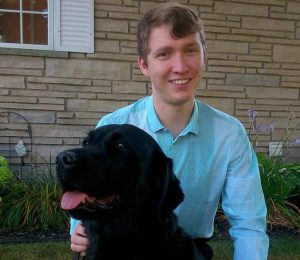
Jack McCormick in a blue shirt sitting next to his black lab, Jake
Jack McCormick and his guide dog Jake.

For a long time, Jack, like many blind or visually impaired people, worked hard at hiding his blindness; he didn’t want people to judge him because of it. But all of that changed in his senior year of high school when he got Jake, his beloved guide dog. Jake immediately made Jack feel like he was wearing a sticker that said, “Hey, I can’t see,” which meant no more hiding.

Acceptance leads to respect and opens pathways to social accessibility and, in turn, helps fuel research, Jack explained before an international audience in Toronto at the Foundation Fighting Blindness Vision Quest 2016 conference.

“I accepted it in myself and that is the most important thing you can do,” he said. “To accept it in yourself and be so confident about it that you walk around with your blindness as a badge of triumph rather than a badge of sorrow or something you’re trying to hide.

“And in doing that, people are going to be very committed to you, they’re going to respect you and respect is a very powerful thing.”

That respect continues in social situations, such as securing a job, and in fostering research, because people will know that blindness is an issue.

“It’s visible,” he said. “If the community sees it, they know it exists. If you’re hiding it, no one knows.”

Along with acceptance, Jack encourages people with blindness to tell their story. “The most powerful thing in your life is your story, so share it. Share it. Because when you do, other people will hear it and they will tell other people and then you’ll have the opportunity to share it with more people and it’s a spiral.”

You can hear more from Jack in his “College Connection” column that appears in our quarterly newsletter, “Seeing Hope,” and on his personal blog. Watch a video about Jack.