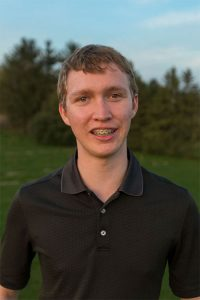
RPE65 Trial Patient Tami Morehouse: “There’s So Much To See”

Tami Morehouse made research history in the Leber congenital amaurosis world, and in the nation, when at age 44 she became the oldest person in a successful LCA-RPE65 genetic therapy trial, and the first patient to receive the retinal therapy in both eyes.

It’s been a long road for Tami, now 53 and living in the Cleveland area with her husband, Mike.

With no LCA diagnosis until her 30s, Tami made her way through life doing whatever she had to do. Sink or swim, she developed good coping and resource skills.

“I did what I had to do,” she said. “I had enough vision to make it work.”

No one noticed her vision problems until she was about a year old, when nighttime came, and she couldn’t see well at all. Attention focused on the idea she had night blindness.

It is difficult to detect vision clarity in small children, but her mom and dad knew something wasn’t quite right. Doctors picked up on it when she was 5, during an exam in which she recalled she was scared to death, screaming and crying, because they were poking around her eyes.

They determined she had issues with the clarity and clearness of vision, known as visual acuity.

She just adapted

From kindergarten into her 20s, she adapted to her surroundings and to her level of vision. She had difficulty seeing the chalkboard, reading a paper or deciphering bulletin-board postings.

“All of my teachers knew I had a hard time. I needed more light than the average kid. I remember the hallways of my elementary school were very, very dim and I had a hard time making my way around.”

Something her father said a long time ago helped her along the way. Her dad, who always called her Timmer, said, “‘Timmer, we all have our troubles, and if you want me to take you anywhere or do anything, just ask me.’ They just treated me like the typical kid I was not.”

Studying social work at Edinboro University in Pennsylvania, Tami scheduled classes in familiar and comfortable places. She avoided night classes, and when she couldn’t, she’d figure out how to get there, walking in better lit areas.

She realized that all her life she was a tweener – someone poised in-between.

“I was a tweener for forever because I did most things like everyone else did and there was that part that everyone else didn’t know.”

Since she was young, some sort of eye doctor tracked her through the years, but it wasn’t until she got her first social-work job and her then-boyfriend, now-husband, Mike, said they needed to explore potential options.

Specialists diagnosed her under the retinitis-pigmentosa umbrella and told her she would lose her vision. They said it was good she already had her education and she should consider having her children now. “It was a heartbreaker day,” Tami recalled.

As she aged, so did her retina and its ability to function well. She went from reading storybooks to her three children to reading Dr. Seuss alphabet books. Some days she saw only hazy grays and browns and needed the brightest lights to see.

“It was really very scary. At that point, before the trial, I had more poor-vision days, than OK-vision days. Sometimes I was scared to death to set my alarm. What if tomorrow is the day I wake up and my vision doesn’t get better? What if I wake up and I can’t see?”

But one Sunday morning, Tami was in the house, and her husband was out in the garage. He suddenly barreled in. He had heard on the radio that a study was being done on children with LCA in Philadelphia by Dr. Jean Bennett and Dr. Albert McGuire. Mike called Bennett the next day, and the wheels turned fast. Bennett opened the study at Children’s Hospital of Philadelphia to older patients and invited Tami to take part in the Spark Therapeutics trial that would change her life.

In March 2009, doctors injected her left eye with healthy cells to help her retina perform more efficiently and regenerate healthy cells.

Several days later, she and her husband were having dinner in Philadelphia and Tami reached over and picked up her drink.

‘Do you know that you just reached over and picked that up, you didn’t feel for it?,’ Mike asked. ‘You just looked out and saw it and picked it up!’

The injection in her right eye in November 2010 brought more brightness and clarity, to the point where she could see some eye-chart letters.

In spring at a baseball practice for one of her sons, she noticed colors more than ever before.

“It was color and light and movement and the kind of stuff people take for granted every day, which may seem small if you have it. Once you lose those little things and then get them back, you realize how important they were. For me it was huge.”

Tami also got to see her daughter taunting the opposing pitcher on her softball team, as she frequently danced up and down the third-base line to almost always steal home.

‘Don’t give up’

Her only wish was that the therapy had been an option sooner, because as the years passed, her retinas kept deteriorating.

“If this was a life-threatening illness,” she quipped, “I would have died a long time ago.”

She advises anyone with LCA-RPE65 to investigate whether the therapy is an option, saying, “Time is of the essence. Don’t give up. There were a lot of us in that trial and we all seem to have different levels of benefits from procedures, whether you have a little vision or a lot of vision. I just value my vision so much, I just think everybody needs to act and respect whatever level you have and just be glad to have it. There’s so much to see. It’s an incredible gift.”
Continuing to See Hope for IRD Treatments

At three o’clock Thursday afternoon, Beth Chiarella and I had a very public moment of tears and hugs at Baltimore–Washington International Airport as we received news that after a day of hearing testimony, the Federal Drug Administration’s Advisory Committee unanimously recommended approval of a gene therapy that could reverse or reduce vision loss due to an inherited retinal disease (IRD).

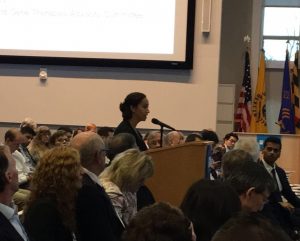
Sofia Sees Hope founder Laura Manfre testifying to Federal Drug Administration’s Advisory Committee about a gene therapy that would help those with RPE65 gene mutation form of LCA

The committee listened to Spark Therapeutics present their research and findings on LUXTURNA® (voretigene neparvovec), an investigational, potential one-time gene therapy, and heard testimonies from families whose lives have been changed dramatically by the therapy. Members then voted 16-0 without comment to endorse approval of the therapy for the treatment of patients with vision loss due to confirmed biallelic RPE65-mediated inherited retinal disease (IRD).

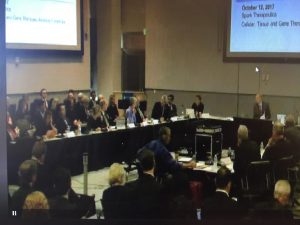
Federal Drug Administration’s Advisory Committee unanimously recommended approval of a gene therapy that could reverse or reduce vision loss due to an inherited retinal disease (IRD).

Alongside the brave individuals and their family members who were part of the clinical trials and traveled to Washington, D.C., to share their personal stories in support of this therapy, I played a small part in what is no doubt an historic moment for all LCA families. I’m grateful to Tami, the oldest participant in the RPE65 trial, who allowed me to share her experience with the panel, reinforcing that this treatment is life-changing at any age, and for any length of time. I’m also grateful to all of those who have made it possible for Sofia Sees Hope to play a role through their continued advice, support and enthusiastic cheerleading.

While this first treatment does not address the dozens of other genetic mutations that cause blindness for LCA and IRD individuals, we can hope that this endorsement will be followed by a potential FDA approval, in turn paving the way for continued research and treatment for my daughter and our entire LCA community. Thursday marked a positive step forward on the path to changing the lives for many people.

Read Laura’s full statement to the Advisory Committee here.

Presenting at FDA Hearing Thursday on RPE65 Genetic Therapy Drug

Hope in Focus (formally Sofia Sees Hope) Co-Founder Laura Manfre will help provide the LCA community’s perspective to a Food & Drug Administration panel Thursday about a proposed genetic therapy for Leber congenital amaurosis (LCA) caused by an RPE65 gene mutation.

“This is such an important event because it allows the patient population — the parents, and children and families — directly impacted by this very important decision-making process to be heard,” Manfre said. “The FDA has a critical job to do in weighing all of the potential risks and benefits with any drug approval, and they recognize that the voice and the experiences of those who are affected needs to be a part of that process.

“Part of Sofia Sees Hope’s mission is to help serve as a connection among families living with LCA,” Manfre continued. “We see this opportunity to offer testimony as another way to fulfill that mission.”  

As a presenter at the FDA’s public advisory meeting of the Cellular, Tissue and Gene Therapies Advisory Committee (CTGTAC), Manfre will be representing patients and families living with LCA and other rare inherited retinal diseases. The meeting begins at 8:30 Thursday  morning and runs to 5 p.m. at the FDA White Oak Campus in Silver Spring, MD.

The CTGTAC is meeting to make recommendations on the safety and effectiveness of biologics license application for voretigene neparvovec, submitted by Spark Therapeutics, Inc. The proposed gene therapy is to treat patients with vision loss due to confirmed biallelic RPE65 mutation-associated dystrophy.

RPE65 mutation-associated retinal dystrophy is an orphan disease, with an estimated 1,000-3,000 patients affected in the United States, according to A Shared Vision.

Manfre said research and bringing therapies to market provides hope to all LCA and IRD families.

“Though families may struggle with the day-to-day challenges, they can have hope that there just might be a light at the end of the tunnel,” she said.

“To help foster this effort,” she said, “Patients and families need to seek diagnoses,  participate in patient registries, and continue to generate awareness and make our voices heard.  Our disease is rare, which makes it more important than ever that we are working together to be advocate for our community and  to move treatment and cures for blindness forward.”

For the meeting, Spark submitted to the FDA a 149-page briefing detailing the history, background, studies and research that went into developing voretigene neparvovec, which has the proposed trade name LUXTURNA.

The FDA’s 42-page briefing details its analysis of the proposed treatment and offers discussion questions for the advisory committee that include at what age should patients receive treatment and what are the treatment’s potential risks and benefits.

Here are some links for more information about the meeting:

Webcast of the meeting: https://collaboration.fda.gov/ctgtac101217.

It’s April Fool’s Day, and we’ve got a great post to share with you!

“We can all make our lives much happier if we choose to laugh, live our lives more intentionally and find joy in the little things.”

Jack McCormick headshot
Jack McCormick

The quote above is from our friend, Jack McCormick’s blog. You may know seen the video, Jack’s Story, at Dinner in the Dark last year, or on Facebook or our website. Jack’s story is one of clinical misdiagnosis – something that happens all too frequently. It’s also about living with a visual impairment, the role his parents played in his life, and getting to a correct diagnosis. (Spoiler alert! Jack has LCA.) If you haven’t seen it yet, take a few minutes to watch!

If you’re raising a blind child, then we also recommend this post from Jack, Let’s Laugh: At Me! There are so many emotions and worries that keep parents up at night, and Jack’s post is a reminder that our kids are not just rare and beautiful, but sometimes just plain goofy, and a little humor and laughter can go a long way!