In May 2025, Johnson & Johnson (J&J) announced that though its emerging gene therapy bota-vec for X-linked retinitis pigmentosa (XLRP) improved vision for many patients in its Phase 3 clinical trial, the gene therapy didn’t meet its primary endpoint. Not meeting a primary endpoint in a clinical trial is not good news even when overall results are favorable.
So, the question became: Will J&J seek regulatory approval for bota-vec or perhaps continue clinical development for it? Many of us in the inherited retinal disease (IRD) community were not optimistic. We were afraid bota-vec development was finished and the treatment would never make it out to patients who so desperately needed it.
But today I am pleased to say that hope is alive for bota-vec. On April 16, 2026 ⎯ nearly a year later ⎯ MeiraGTx, the original developer of bota-vec, announced it is acquiring the bota-vec license from J&J. MeiraGTx plans to seek regulatory approval for the gene therapy in the US and EU. If approved ⎯ and that’s still a big if ⎯ bota-vec could be available to patients in 2027.
We applaud MeiraGTx ⎯ a Hope in Focus partner and developer of a vision-restoring gene therapy for LCA4 (AIPL1 mutations) ⎯ for giving new life to bota-vec. It was a bold move, no doubt. And, we applaud the many advocates in the IRD community ⎯ including researchers, patient groups, and families ⎯ for being strong voices in support of bota-vec advancement. Our voices were heard.
The important take-away message for all of us in the IRD and LCA communities is to stay tenacious, stay resilient, and continue to do our best in moving the research forward.
Three-year-old Luca Corso’s preschool teacher announced that everyone should quickly sit on their floor shapes for carpet time. As the other children eagerly scattered to their assigned spots, Luca wandered. He wasn’t being disruptive—he just wasn’t sure what to do. Even with glasses and a cane, he couldn’t locate a flat shape on the floor. Luca’s vigilant parents, Blair and John Corso, along with his early intervention team, got involved, and the preschool quickly provided him with a small chair for carpet time.
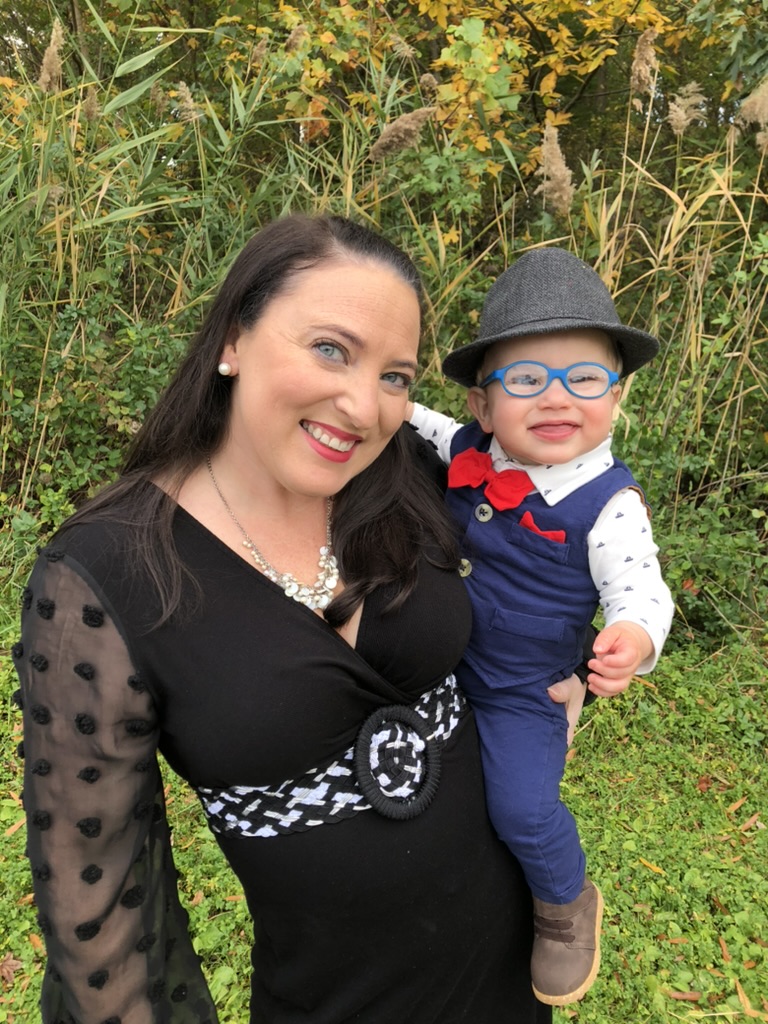
Blair and Luca
Diagnosis Shock
Luca was diagnosed with the recessive AIPL1 gene mutation that causes Leber congenital amaurosis 4 (LCA4) when he was about 14 months old. According to the Foundation Fighting Blindness, this rare but severe form of LCA affects “only a few hundred people in the US and less than 10,000 people globally.” The news was devastating to first-time parents, Blair and John, and almost unbearable when they were told that their little boy would likely lose all of his vision by age four.
A Ray of Hope
The family was given a ray of hope after hearing about a new LCA4 treatment developed by MeiraGTx that showed efficacy in a trial involving 11 children in the United Kingdom (UK). The therapy, which uses a human-engineered adeno-associated virus (AAV) to deliver copies of the therapeutic gene into remaining photoreceptors, has not yet been approved for use in the UK or the United States. If successful, the treatment could restore some of Luca’s vision.
Hoping beyond hope that the treatment becomes available before Luca turns four, the Corsos know that his window of opportunity is rapidly closing. Another potential hurdle is the cost. “Not only does the treatment require approval, but we don’t know the cost, since the trial would no longer fund it,” Blair said.
Balancing Emotions
For Blair, the news of the UK trial’s success was at once wonderful and disheartening. “I saw one of the boys who had the treatment and spoke with his mother,” she said, choking back tears. “After the treatment, he could see facial expressions. It would mean everything if Luca could experience that too. When I read stories about the children treated, it struck me that being able to see things like that could really help Luca interact with us and his peers.”
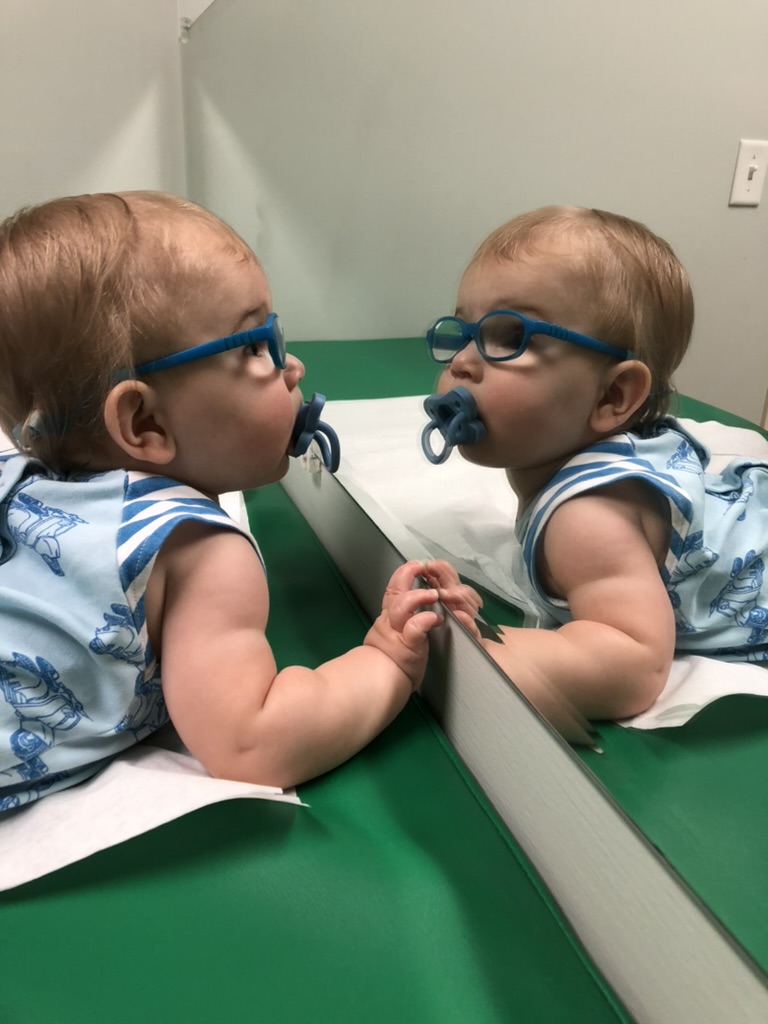
Baby Luca wearing his new glasses
The Diagnostic Journey
When Luca was born, the Corsos were living with Blair’s parents while they searched for a house. It was then that they first suspected something was wrong with Luca’s vision. “My Dad kept wondering why Luca’s eyes were going back and forth so much,” Blair said. “Was it normal?”
The pediatrician was also concerned about their four-month-old son’s eye movements (nystagmus) and quickly referred Luca to a local eye doctor. After confirming Luca’s vision loss but seeming less worried about the nystagmus, the eye doctor referred the family to Mays Al El-Dairi, MD, a pediatric ophthalmologist and neuro-ophthalmologist at Duke University Eye Center.
“Dr. El-Dairi examined Luca and mentioned the possibility of LCA and recommended genetic testing with Ramiro Maldonado, MD, a retinal specialist at Duke,” Blair said. Dr. Maldonado arranged the genetic testing and wanted to do an electroretinography (ERG), a diagnostic test that measures the electrical activity of the retina. But Luca needed to be at least a year old to have the ERG.
Test Results
“Luca was about 14 months old when the ERG was done, and it showed that he had about 50 percent of his vision. The genetic test indicated LCA4, and Dr. Maldonado said that our toddler would likely be blind by age four,” said Blair. “It was a very rough day. John was at home sick, our dog had just died, and my mother and I were in the surgery waiting area, bawling our eyes out.” Luca was Dr. Maldonado’s first case of LCA4.
Help!
Like all parents hearing an LCA diagnosis, the Corso family was desperate for more information and support. They immediately began looking on Facebook, where they discovered Hope in Focus (HIF). Through HIF, they started connecting with the LCA community, and Blair was paired with an HIF Ambassador, Ashlyn, whose young son has LCA10.
“I can pick up the phone or shoot a Facebook message to her, and I don’t have to explain things,” Blair said. “It’s wonderful to have the support, especially when you don’t know what you are doing. If I have a question, Ashlyn offers input or helps me reach out to someone else. It’s like a big family of support, and it’s so encouraging to know that other children with LCA are thriving.”
Early Intervention
Early in Luca’s diagnostic journey, the local eye doctor suggested pursuing ‘early intervention’ due to his vision loss. Unsure what ‘early intervention’ meant, the Corsos learned more about it and reached out for help, a decision that would prove crucial in Luca’s journey.
The Corso’s live in North Carolina, where early intervention is available through the state’s Children’s Developmental Services Agencies (CDSAs). “They sent some people out to talk with us about LCA, and there was an actual team involved. We had a caseworker, a vision teacher, and an orientation and mobility coach,” Blair said. “They were fantastic in guiding us about how to teach Luca and helping him keep on track with his learning.”
Blair stressed the importance of accessing early intervention and said, “Our CDSA team visited us before Luca was in preschool and worked with him at least once a week. When he began preschool, the team went there as well, helping the teacher to understand his needs, such as where to position him so he could see in the classroom.”
The team also conducted many in-home learning sessions. “They suggested different things to support Luca in school and at home. His occupational therapist recommended that we help him learn how to move to songs so he wouldn’t stand motionless while his classmates danced,” Blair said. “You know, it’s not always obvious or intuitive for parents to know what to do!”
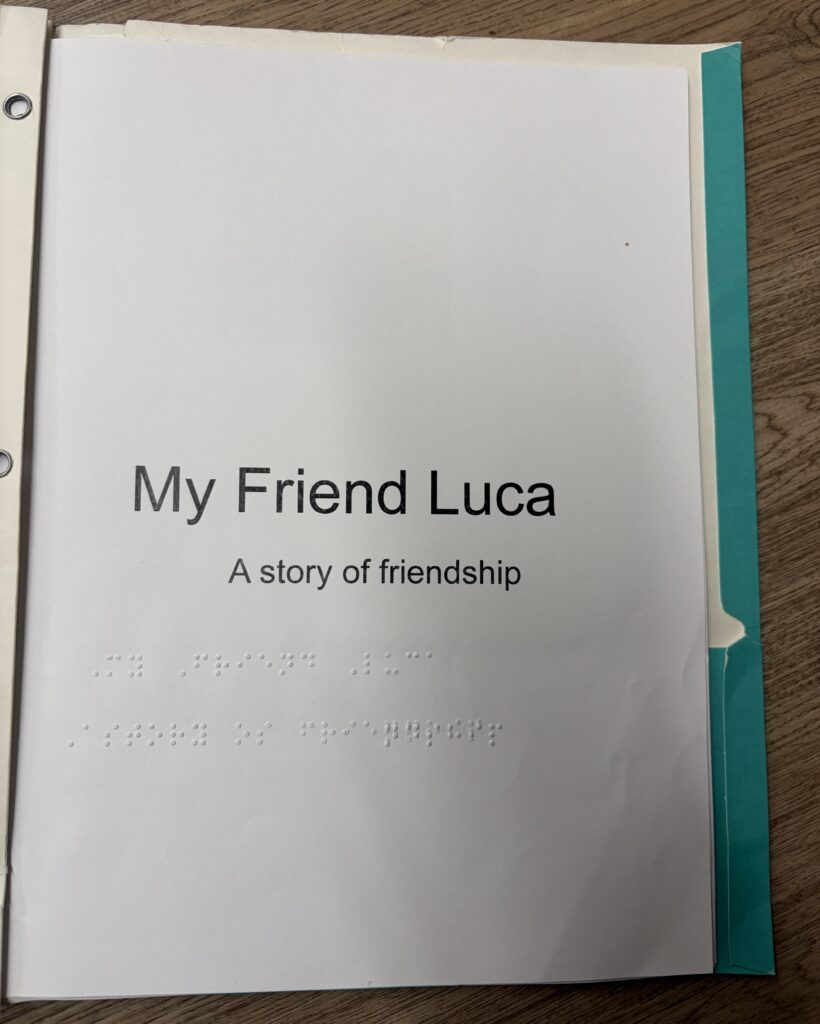
One of his vision teachers, Ms. Charli, created a book for his preschool called “My Friend Luca,” which explains that Luca’s eyes don’t work well and that he uses his hands to see the world. “It helps other children understand why Luca might want to hold their hand or reach out and touch their face,” Blair said.
There were also monthly trips into the community with his orientation and mobility coach, Ms. Annette. “We went to the strawberry patch, the grocery store, and Lowe’s,” Blair said. “We did normal things so she could observe him in public—such as how he navigated with his cane.”
Luca’s current mobility and orientation coach, Mr. Mike, is the past president of the Maryland School for the Blind and a member of the local school system that now serves Luca’s needs. “Mr. Mike is just amazing!” said Blair. “He focuses on learning through play and wants Luca to think of him as a fun grandpa. He even got Luca to sit on the swing, which he was terrified to do.”
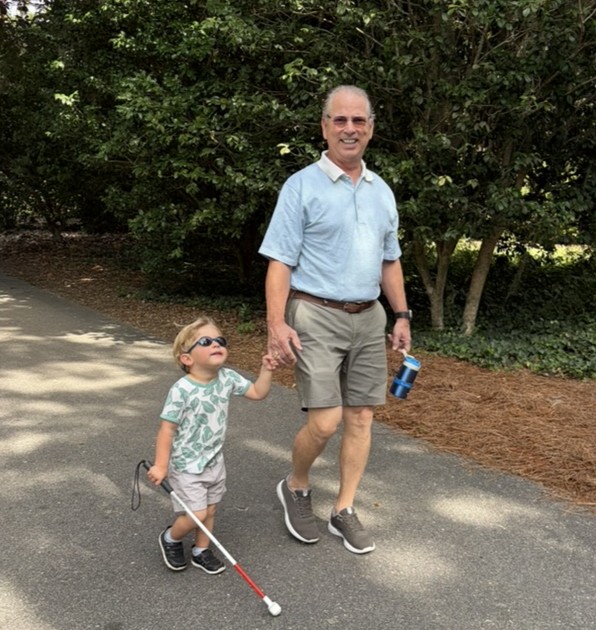
Luca holding his cane and walking next to his grandfather
Going Forward
The Corso’s attended this year’s Hope in Focus Family Conference for the first time and found the information and variety of speakers very helpful. Meeting other families with children who have LCA was supportive, especially those dealing with the same gene mutation and its consequences.
Blair and John recommend that parents seek early intervention resources for their child with LCA and be open to help. They hold out hope that the treatment in the UK might become available for Luca while continuing to prepare him for a future where he is blind.
For now, the couple finds great joy in their little boy and his “can-do” spirit, delightful personality, and bright, engaging mind. They have and will continue to ardently advocate for Luca as he walks into the future surrounded by their unending love and support.
DJ and Brendan Broadbin came to our Hope in Focus LCA Family Conference with a lot of questions about their little boy’s blindness, and they left with amazing answers leading to innovative treatment for his type of Leber congenital amaurosis (LCA).
The couple traveled from their southwestern Connecticut home to the July 2019 Philadelphia conference knowing their son Jace had LCA, but not knowing the specific form of the rare disease because their 11-month-old had yet to be tested genetically.
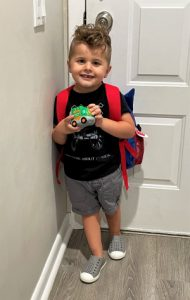
Jace ready for the day
Jace’s parents introduced themselves to retinal specialist Prof. Michel Michaelides, one of Britain’s top ophthalmologists, a founding member of MeiraGTx, where he is Head of Clinical Ophthalmology, and a conference panelist.
“At that time,” DJ said, “we hadn’t even met with a geneticist yet, but Michel gave us his contact information ‘just to have.’ We then got to hear the panel discussion at the conference regarding the clinical trials that were taking place across several of the gene variants.
“A few days before we went to Boston to hear Jace’s genetic results (in October 2019, three months after the conference), we received the Sofia Sees Hope (now Hope in Focus) newsletter in the mail, outlining the treatments that were discussed at the conference.
“We brought the newsletter with us to our appointment and almost fell out of our seats when we learned that Jace had the AIPL1 variant, and that MeiraGTx was currently working on treatment through the Compassionate Use case program in the UK – we emailed Michel that same day.”
Compassionate Use treatment
Dr. Michaelides is a Professor of Ophthalmology at University College London Institute of Ophthalmology in the Department of Genetics. He also serves as a Consultant Ophthalmologist at Moorfields Eye Hospital in the departments of Inherited Eye Disease, Medical Retina, and Paediatric Ophthalmology.
The professor has discussed the United Kingdom’s Compassionate Use program in a Hope in Focus webinar series episode called “Let’s Chat About…Gene Therapy for LCA,” describing LCA4 as an exceedingly rare and severe form of the disease in which children have profoundly reduced vision from birth.
A special unlicensed medicine is one manufactured without marketing authorization from the Medicines and Healthcare products Regulatory Agency. The agency only grants a product license once a medicinal product has been proven to be safe and effective. Prescribed products not holding a marketing authorization include those prepared on an individual basis by “special order” manufacturers, according to the National Institutes of Health.
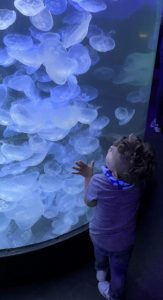
Floating jellyfish capture Jace’s attention
“There is a narrow window of opportunity (for treatment) because the retina degenerates and thins out by the age of 4 years,” Dr. Michaelides said. “Treatment needs to be before 4 years of age. MeiraGTx has manufactured a gene therapy that they are making available under a Specials license in the UK.”
After months of conversations, sharing test results, and talking with the hospital board members and surgeons, Jace received approval for the Compassionate Use treatment in one eye on March 17, 2020.
The family traveled to London, Jace underwent pre-op testing, and the surgery was cancelled: The world had just begun shutting down because of the COVID-19 pandemic.
DJ and Brendan thought the surgery would be cancelled indefinitely, but to their wonderment, they returned in September, quarantined for two weeks, and Jace received the gene therapy in his left eye, which is stronger, on Sept. 30, 2020. He had just turned 2 that August.
Jace after undergoing Compassionate Use gene therapy
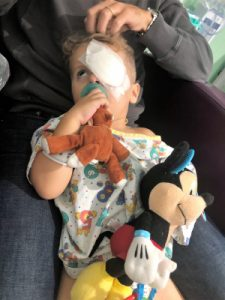
Before LCA4 (AIPL1) surgery
The couple first began to realize when Jace was about 8 weeks old that he was not looking at them or trying to track toys.
“He was smiling from touch, but never in response to one of our smiles. He wasn’t blinking when lights were shown in his eyes and wasn’t shutting his eyes or even squinting in the brightest of sunlight. His eyes never seemed to move out of that ‘newborn’ stage of being all over the place,” DJ said.
“When we brought him to the pediatrician, hoping we were just being paranoid and this was something he’d grow out of, they confirmed that something wasn’t right and within an hour we were meeting with a pediatric ophthalmologist – kicking off a year-long journey for answers.”
Before his surgery, Jace had minimal light perception and not much functional vision.
“Lights had to be very bright for him to react to, and his reaction was at least two seconds delayed. Phone screens and TV screens were not bright enough to elicit a reaction from him and outside he had to always be in sunglasses because the sun was never too strong for him to look away from.
“With his left eye, we felt like he could have some shadow perception or make out very high contrast shapes and objects,” DJ said. “He had some words at the time, and labeled toys by feel and sound, but never by sight.”
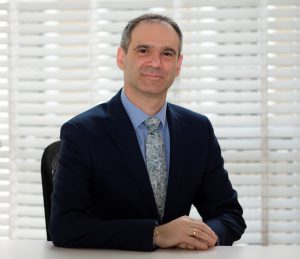
Prof. Michel Michaelides
Post surgery
About a year after Jace’s surgery, his parents – now both 33, with mom working as a market researcher and dad as a sourcing manager for a major retailer’s store design team – welcomed another son. Jace’s little brother, Gio, just turned 1 in August.
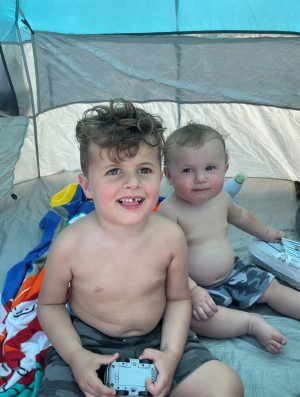
Gio is sighted and in awe of his big brother – so much so, DJ and Brendan said he always felt like a toddler to them, missing the infant stage, because he’s always trying to keep up with Jace.
He learned how to crawl so he could be closer to his brother and now runs out of bed to meet Jace every morning,” DJ said. “Jace assumed the ‘patient older brother’ role incredibly well. He’s even learned to share his most favorite toys and it’s music to our ears when the boys are both belly-laughing as they rough-house with one another and try out their wrestling moves.”
Gio loves his big brother
Since the surgery, Jace can identify most of his toys by sight when they’re held three feet or closer to him.
“He is especially good at identifying the ones that are brightly colored and his favorite cars and dinosaurs, of course,” she said.
The couple believe Jace gained valuable functional vision from his surgery.
“Our hope was always that the surgery could protect some of the light perception he did have for a bit longer, never imagining that it could lead to anything more.”
“Someone who received LUXTURNA® described vision improvement as regaining ‘pockets’ of vision in the area where the retina remained intact, and this is exactly how we believe Jace has also regained some vision in his left eye. He will turn his head in certain directions to get a better look at what is in front of him.
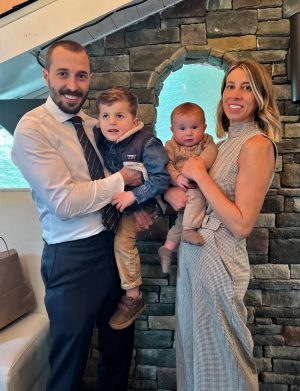
Brendan, Jace, Gio, and DJ Broadbin
“In terms of being able to better navigate, Jace now bends down to pick up small objects that might be in his way, noticing them solely based on sight, not feel.”
Jace’s teachers have commented he’ll squat down to look under things when he wants a specific toy in the classroom and stand on tippy toes to find things placed on countertops.
“This makes us laugh to hear.”
Jace, now 4 years old, smiles when he catches a glimpse of his favorite people and things.
“It is heart melting. But he also still flashes that same perfect smile when he feels the sand at beach, hears his favorite country songs, or tastes an ice cream cone – so yes, his vision has changed and it’s amazing to experience, but to us he’s always been amazing to experience.”
P.S. Hope in Focus featured the Broadbin family in its annual Dinner in the Dark video in October 2022. Please click here to view.
In the debut of Hope in Focus (formally Sofia Sees Hope) ‘Let’s Chat About …’ monthly webinar series, Ben Shaberman of the Foundation Fighting Blindness, provided his Zoom audience with a plethora of information about Leber congenital amaurosis (LCA), highlighting some of the more than 40 clinical trials underway to find treatments and cures for LCA and other rare inherited retinal diseases (IRDs) and giving updates on promising preclinical research.
The recorded webinar aired 1 p.m. Wednesday, Jan. 27, 2021, and can be seen here. Elissa Bass, our marketing and communications director, moderated the session.
Shaberman, Senior Director, Scientific Outreach & Community Engagement, stumbled across a science writing position at the Foundation Fighting Blindness 16 years ago without a clue about retinas or blindness. He called his move to the Foundation serendipitous. He knew he made the right choice after hearing retinal researcher Dean Bok, PhD, tell attendees at a 2005 Foundation conference how he was drawn to the field by the seduction of the retina’s myriad complexities and inner workings.
Shaberman, too, felt pulled by the intriguing science of the retina.
As such, so are the 27 forms of LCA that cause varying kinds of visual impairment within each gene mutation and within each affected person. An estimated 8,000 people in the United States have LCA.
The path of retinal research
Shaberman took his audience from the beginnings of identifying the RPE65 gene in 1993 and learning shortly thereafter it could lead to LCA, to using mice models and later studying Briard dogs that had the same gene mutation that caused LCA in humans. A clinical trial at Children’s Hospital of Philadelphia led to the 2017 FDA approval of the breakthrough gene therapy LUXTURNA®, developed by Spark Therapeutics. The drug successfully improved the vision of many of the LCA2-RPE65 patients who received the treatment through subretinal injections.
When children receive an LCA diagnosis, their families should find a good retinal specialist, get regular exams, and ultimately get a confirmed genetic diagnosis to be on the path to more specific information and research into that form of LCA, Shaberman said.
Families also should register with the Foundation’s My Retina Tracker®, a free and secure online registry that facilitates getting a confirmed genetic diagnosis by making registrants eligible for free genetic testing.
The registry becomes your personal retinal health record, updated by you. It employs state-of-the-art database technology to protect privacy and adheres to the highest standards of confidentiality and ethics.
It also notifies registrants of clinical trials and gives researchers access to their disease data – not their personal information – to advance research and therapy development associated with LCA and IRDs.
Reading research publications and attending events sponsored by the Foundation and by Sofia Sees Hope also provide opportunities for families to interact and learn the latest research. Shaberman and Bass encouraged people affected by LCA and their families to contact them, respectively, through the Foundation’s website and/or the Sofia Sees Hope website for specific information on clinical trials or other questions and concerns about living with LCA.
“Yes, it’s work,” Shaberman said. “You have to be your own advocate and your own child’s advocate, but more and more information is becoming available, and that’s the good news.”
More than 40 clinical trials underway
Shaberman also reviewed some of the more than 40 retinal clinical trials in the pipeline for LCA and other IRDs:
MeiraGTx offers LCA4-AIPL1 gene therapy through a compassionate use program, which means the therapy is unapproved but made available to patients with serious conditions. The company also is working on an RPE65 gene therapy in a clinical trial.
February’s “Lets Chat About …” webinar airs at 3 p.m. ET, Tuesday, Feb. 16. Our guest will be Wiley A. Chambers, MD, Supervisory Medical Officer for the Office of New Drugs, Center for Drug Evaluation and Research at the U.S. Food and Drug Administration. Register here.
The 52-year-old Canadian, newly transplanted to southeastern Florida, takes her Hebrew name literally.
“I am light, and I am vision,” she said. “I want to offer everything I have for others to realize their perfect light and vision is possible.”
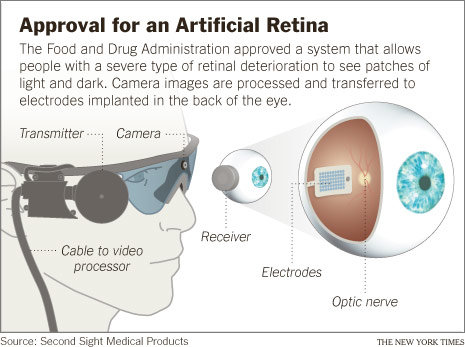
As a child she had enough vision to read large print, but in her 20s, Orly’s sight deteriorated to minimal light perception and shadows. In 2014, she was part of a clinical trial in Canada for the Argus Retinal Prosthesis System (Argus II). The Argus II, known as the bionic eye, stimulates the eye with electrodes to transmit visual information captured by a video camera to the patient’s brain. You can read about her experience in the trial here.
“Still, I have true 20/20 vision,” she said. “My blindness forces a mindful clarity through all my other senses and that enriches everything from my cooking and healing, to my service to others.”
Along her journey through the darkness of an opiate addiction, she rediscovered her mother’s traditional Moroccan fish dish, served as part of each Friday’s sabbath dinner.
Little did she know the importance this recipe would have to her survival.
From 1999, after having her third child, until 2012, she said, “My opiate addiction took a huge chunk of my life away because it
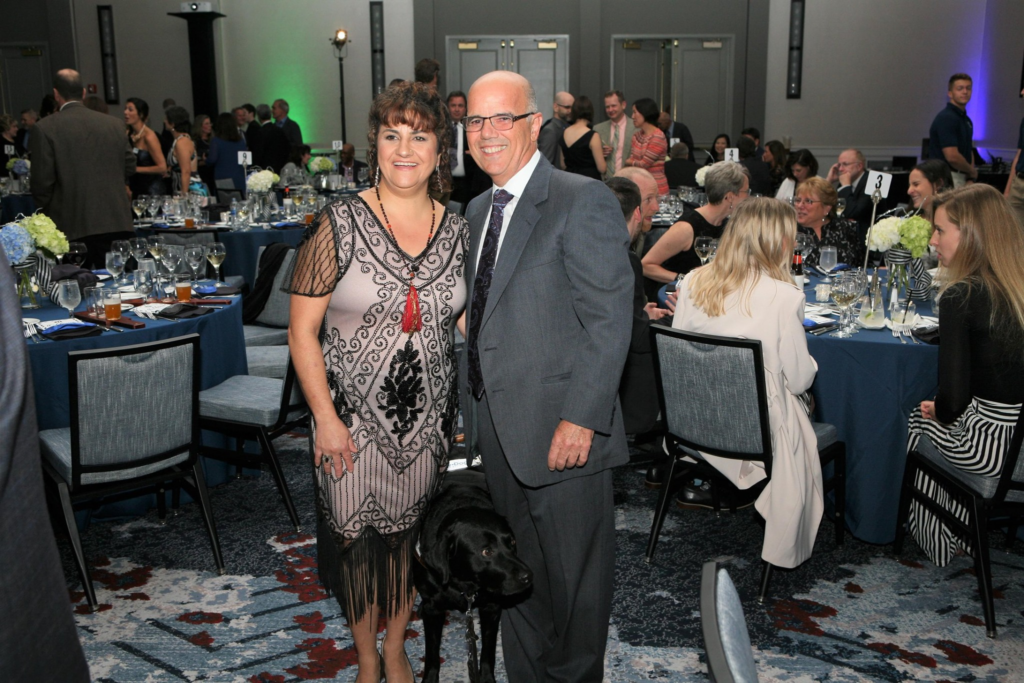
Orly Shamir and her husband Amit (and guide dog Regan at the 2019 Dinner in the Dark to benefit Hope in Focus (formally Sofia Sees Hope).
was a fight. That’s why I want to give back and give light to the darkness.”
It began with chronic pain and prescriptions for Percocet and Oxycontin that offered relief and a false sense of well-being. Domestic abuse led to living in a shelter with her children. Orly finally realized she needed to get off the pills, but she could not.
“It was the beginning of torture for several years. That’s why we have an epidemic with opiates. It takes a lot of strength and support, and I tried three times over a four-year period. It takes everything out of you to get to the other end and never look back.”
Childhood memories of simmering aromas of lemons, parsley, cilantro, peppers, tomatoes and all the spices helped get her to the other side.
She tweaked her mother’s recipe during one of her mom’s visits from Montreal to Orly’s home in Toronto. When her don’t-you-dare-mess-with-ingredients mom left the kitchen, she took the opportunity, with guilt-laced excitement, to add a few more to the pot.
“Voila, my specialty Moroccan Salmon, the champion of my life was born! At dinner my mom raved about her wonderful fish, and all I did was smile while my soul did a happy dance.”
Years later her addiction took its toll with memory loss and less ability to perform skills. She realized that improving her cognition could be accomplished several ways, including by eating healthy food, especially fish like salmon with lots of omega-3s.
It’s fatty, versatile and widely available, which is why Orly says her dish is champion food for anyone on any recovery journey, whether from illness, addiction or the blues.
“Without knowing it, this spiritually comforting food became physical healing food.”
Blind Ambition
Orly is a gifted chef, a title-holding athlete (Italian and Canadian dragon-boat racing!), a financial analyst fluent in French and a motivational speaker. She has two sons and a transgender daughter, all in their 20s living in Canada. Orly, her husband of 12 years, Amit, and her guide dog, a 6-year-old Black Lab named Regan, live in Hollywood, Fla.
She just graduated from a Florida culinary school with her sights set on developing a YouTube cooking series and a recipe app.
To help finance her project, she applied in January for the Holman Prize for Blind Ambition by making a 90-second video about her project of combining culinary and cooking expertise with her inspirational recovery story.
“Do you know blind people are 40 percent more likely to develop addictions?” she tells viewers in her video. “And did you know proper nutrition is key to recovery? … Although I’ve been legally blind my whole life, I lost my soul’s true vision through opioid addiction and poor health.”
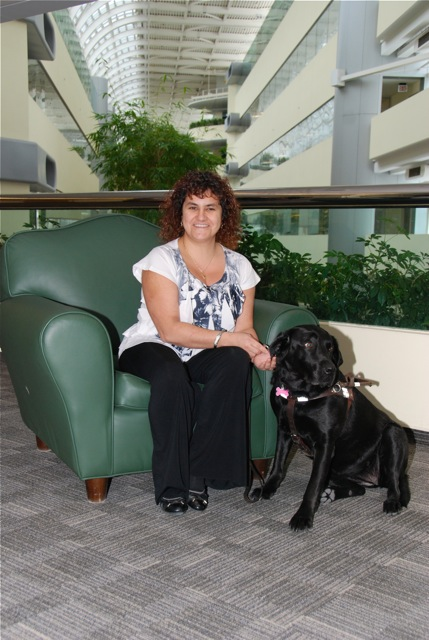
Orly Shamir with her guide dog Regan.
Orly is turning her recovery story into a series of videos demonstrating healthy, delicious culinary delights, an accessible-to-all recipe app, and input from guest experts to help heal through the art of cooking.
She fashioned her simple and nutritious recovery recipes by using pronounceable ingredients, healthy fats, nuts and seeds and the like.
“It gives us more mental and physical strength because we start to feel better. We’re not as sluggish.”
Orly learned in March that she is one of 39 semi-finalists for the Holman Prize, selected from 109 applicants worldwide. Three winners will be selected in May.
The Holman Prize for Blind Ambition is annually awarded to three blind individuals to carry out a dream project to push limits and change perceptions about blindness around the world. The prize honors James Holman, a Victorian-era adventurer and author who became the first blind person to circumnavigate the globe; he also holds the distinction of being the most prolific traveler in history, sighted or not, prior to the invention of modern transportation.
Each Holman Prize winner receives up to $25,000 to fund a project or an adventure that will make an impact. The contest is sponsored by LightHouse for the Blind and Visually Impaired in San Francisco. The organization launched the prize concept to support the emerging adventurousness and can-do spirit of blind and low-vision people worldwide.
LightHouse CEO Bryan Bashin said the Holman Prize is not meant to save the world nor to congratulate someone for leaving the house. It is meant to change perceptions about what blind people can do.
“This prize will spark unanticipated accomplishments in the blindness community. You will see blind people doing things that surprise and perhaps even confuse you.”
Previous winning projects include teaching blind people to become beekeepers in Uganda, hosting the first conference in Mexico for blind children and their families led by blind professionals, and recording a documentary series called “Planes, Trains & Canes” about navigating and accessing transportation systems in five cities around the world.
For the next step in the contest, Orly is creating an in-depth proposal due by the end of April.
“My talent for cooking, my experiences all over the world tasting a plethora of inspiring favors, and my own story of failure, addiction and abuse woven in with courage, resilience and recovery – it was all for this.”
Health Canada approved the system in 2015. It was approved in the United States in 2014 and in Europe in 2011.
Orly has a form of Leber congenital amaurosis called LCA4 caused by a mutation in her AIPL1 gene. She could read large print as a child, but her vision deteriorated to minimal light perception and shadows in her 20s. Now 52, Orly took part in the 2014 trial when she was 46.
Photoreceptors in a healthy retina convert light into electrochemical pulses sent through the optic nerve and into the brain where they are decoded into images. When photoreceptors don’t function properly, as in the case of people with LCA, the first step in the vision process is disrupted and cannot transform light into images.
The Argus II bypasses damaged photoreceptors through electrodes implanted on the retina. Following the delicate three-hour surgery, Orly wore glasses containing a tiny camera that converted video images into a series of small electrical impulses transmitted wirelessly to the electrodes. Visual information transmits to the brain’s optic nerve when the pulses stimulate the retina’s remaining cells.
The visual improvement does not equal regular sight, but it allows patients to perceive light patterns, observe whether doors and windows are open, or pick up a glass.
Orly worked with rehabilitation experts, low-vision therapists and consultants from Second Sight. Three months following the surgery, she could detect contrast and recognize the difference between white and black. Because patients receive a form of artificial vision through this bionic eye, they need to re-train their brains through rehabilitation to learn and understand messages sent by the device. It’s kind of like learning a new language.
Orly volunteered to take part in the clinical trial for a year but presently does not use the technology.
“I worked hard for two years, then decided to not use the system for personal use, as it didn’t provide any benefits as of yet.”
Orly’s participation is exactly what a clinical trial is all about. She committed to making frequent visits and underwent testing over the course of a year. She knew that the goal of a clinical trial is to see whether a potential treatment is safe and effective, and that, while a trial participant might benefit, the trial’s purpose is to determine if the therapy works.
“I was prepared in being part of advancing technology for blind/visually impaired people in the future. That’s always who I am,” she said. “I’m 100 percent ready and available to get updates and keep trying.”
Clinical trials are never done in a vacuum, or in a medieval basement where Dr. Frederick Frankenstein (pronounced Fronkensteen), his pretty lab assistant, Inga, and faithful houseboy, Igor, create a monster.
While the creature from the 1974 movie “Young Frankenstein” turns out to be somewhat civilized, (see Gene Wilder as the young doctor and Peter Boyle as the monster doing the soft-shoe in white tie and black tails to “Puttin’ on the Ritz”), a caption above that lab team in a slide shown at the Hope in Focus (formally Sofia Sees Hope) second LCA Family Conference cautions: “Regulatory Oversight is Critical!”
Humor credit goes to Ben Shaberman, Senior Director of Scientific Outreach and Community Engagement for Foundation Fighting Blindness. He moderated a four-member panel discussion in a session called “All About Clinical Trials” at the July conference in Philadelphia. Shaberman reports on retinal research for the Foundation’s print and electronic publications. He also presents scientific advancements at local and national events and enjoys working with constituents to help them understand their retinal disease and current research that may benefit them.
Dr. Chambers previously cited a disastrous case in which a 77-year-old woman traveled to an alleged clinic to have “stem cells” injected in her eyes in the hope of a cure or at least help for her macular degeneration. The procedure entailed separating “stem cells” from the woman’s belly fat and injecting them into her eyes to supposedly regenerate tissue. Not covered by insurance and not federally regulated, the procedure cost almost $9,000 and caused her vision to badly deteriorate after her retinas peeled away from her eyes.
“Just be careful when you go to a clinical trial or a physician that it is a legitimate trial,” Dr. Chambers said. “If they can’t give you an IND number, then walk away.”
The website Clinicaltrials.gov includes trials that do have an IND number and unregulated trials that do not have an IND number. Avoid them. One must specifically ask if they have been issued an IND number, signaling the federal OK to proceed with clinical studies that happen in three phases.
Dr. Chambers also noted that trials are not for the benefit of participating patients. At the heart of a clinical trial is that researchers do not know what’s going to happen. A key word here is equipoise – a balance or counterbalance – of something.
“We do the clinical trial and find out, does this have some efficacy and is it safe?”
Clinical trials tell as much information as possible, balanced with a doable study and doable patient commitment.
“It’s a balancing act,” he said. “The trials are to help inform people afterward.”
A long, expensive process
Research studies in humans are for potential therapies; they take 10 years or more to complete and can cost tens or hundreds of millions of dollars.
It took 12 years and $500 million to research and develop LUXTURNA™, an engineered virus delivered by subretinal injections of the human RPE65 gene, a gene that, when mutated, causes a form of LCA called LCA2 (RPE65-LCA).
Tami and Michael Morehouse
Panel members Tami Morehouse and her husband, Michael, experienced firsthand what it feels like to take part in a Phase 1/2 LCA/RPE65 gene therapy trial. Intervention at earlier ages can offer better results with degenerative diseases like LCA and other inherited retinal diseases (IRDs) because photoreceptors diminish with age.
The Cleveland-area couple talked about Tami’s pioneering experience as the oldest person, at 44, to take part in the LUXTURNA trial and regain some vision.
“It’s a huge, life-changing event for us,” Michael said.
Walking in Philadelphia three days after her first injection, Tami asked her husband if a building up ahead had stripes on it. Turns out, it was a parking garage with spaces between levels appearing as solid stripes. Before the injection, she could not see any part of the parking deck; her ability to discern solids and stripes meant the treatment already began improving her vision.
Tami had some vision in college and walked across the graduation stage by herself. Michael described her progressive vision loss as, “Go on, go on, big drop; go on, go on, big drop; no diagnosis.
“She was on a path to darkness and she knew it,” he said.
Taking the risk for the reward
He heard Jean Bennett, MD, PhD, on a Sunday radio show talking about her retinal research on the emerging therapy that came to fruition as LUXTURNA. He called her office early the next day, and said to the audience, “Guess who answered the phone?” (Here’s a link to a story on Dr. Bennett’s presentation at this conference.)
Seven months later they received an email from Dr. Bennett, with the subject line: “Are you ready?”
Dr. Bennett conducted the studies with her partner in research and in marriage, Dr. Albert M. Maguire.
In answer to a question about what she was thinking before beginning the trial, Tami said, “I don’t want to go totally blind.”
“In all honesty, I never thought that I’d ever have a shot at seeing … I kind of underestimated my possibilities. I became a much more functional person in day-to-day living. I would see who’s approaching. See my kids, my (softball-playing) daughter dancing off third base, taunting her catcher.
“I got way more than I anticipated.”
Tami is part of the Sofia Sees Hope Family Connections program, calming fears and sharing her experiences with many patients along the way, including very young ones.
“Even though huge strides have been made in clinical trials, they’re very frightened, they’re very nervous.
“Jean and Albert explained so much; they relieved my fears in such a way that I’ve been able to transmit that to families, to moms. It’s a lot of pressure for some moms.
“Just being able to say that it won’t hurt when Dr. Maguire inserts a needle in your eye because you’re out like a light; that is a beautiful thing because you don’t even know what’s happening to you.”
Tami advised potential surgical patients and their parents that even though undergoing surgery has the potential to do such good by improving vision, they should think about their expectations. “We are comfortable in our own zone; give us a little bit of change and it can throw us off.”
“If mom and dad or older siblings are calmer, the children are going to be more comfortable, too.”
Setting realistic expectations
Panelist Dr. Michel Michaelides, a founding member and head of clinical ophthalmology at MeiraGTx based in New York City and London, said clinical trials impact the daily lives of study participants because they’re required to undergo multiple tests, many of which, he said, are boring and tedious.
“We spend a lot of time letting people know what they’re really in for.”
Dr. Michel Michaelides, a Founding Member and Head of Clinical Ophthalmology at MeiraGTx
Dr. Michaelides is the Principal Investigator of four interventional clinical trials and has 10 ongoing ethically approved studies. He is Professor of Ophthalmology at London’s UCL Institute of Ophthalmology in the Department of Genetics and Molecular Therapy, and Consultant Ophthalmologist at Moorfields Eye Hospital in the Departments of Inherited Eye Disease, Medical Retina and Pedriatric Ophthalmology.
Moderator Shaberman asked him what he says about therapy options to people who have lost a lot of vision. In advanced cases of vision loss, Dr. Michaelides said, optogenetics might be a relevant course of action. Optogenetics is the science of making cells in the retina that do not normally detect light, become light sensitive, and thereby aim to replace the lost light-sensitive cells (rods and cones/photoreceptors).
“The idea is to make cells that are not light sensitive, (be) light sensitive.”
Another course is retinal implant technology, also known as the “Bionic Eye” or “Artificial Vision,” in which doctors insert a light-sensitive microchip into the retina to provide a way to detect light. These implants can be placed on the surface of the retina (epi-retinal implants) or underneath the retina (sub-retinal implants). He also suggested the use of internal or external cameras with these implants, saying, “I think there’s going to be greater development in that area.”
Another avenue is stem cell therapies (cell therapies), in which donor cells could be used to grow fresh retinal cells for transplantation into the eye to replace lost cells.
He also is involved in the development of therapies using stem cells to replace lost light-detecting retinal cells. He has been Principal Investigator of the first ocular stem cell therapy trial, which involved transplanting retinal pigment epithelial cells (non-light-detecting cells) in patients with advanced Stargardt Disease.
His clinical trial for a potential LCA4 (AIPL1-LCA) therapy currently is recruiting participants.
Dr. Michaelides’ ocular research comprises 300 peer-reviewed publications and 25 book chapters. One of those research papers came into focus at the LCA conference in July, where an audience member – a mother of a child with LCA2 (RPE65-LCA) – told her story.
“Even after an ERG (electroretinography),*” she said, “nobody told us it was LCA.”
She said reading one of his research publications on RPE65 put her family on the right track.
“That’s what we took to our doctor,” she said. “So, you’ve been really important to our journey.”
But the FDA’s Dr. Wiley A. Chambers II cautioned LCA families and patients at a recent LCA Family Conference hosted by Hope in Focus (formally Sofia Sees Hope) to make sure their clinical trial of interest is real and not bogus.
Clinical trials drive research with the goal of finding treatments or cures that need FDA approval before commercial use. Twenty-three gene-based clinical trials targeting 13 genes are underway, including an LCA4 (AIPL1) trial, according to Foundation Fighting Blindness. More than 20 retinal cell therapy trials are in progress, and another 100 genes are under investigation in the preclinical pipeline, the Foundation reported.
Dr. Wiley Chambers II, MD
Chambers is supervisory medical officer in the Office of New Drugs in the FDA’s Center for Drug Evaluation and Research. The center’s mission is to assure that safe and effective drugs are available to the American people.
He was among three panelists who joined moderator Jeffrey Finman, PhD., of Jupiter Point Pharma Consulting, in exploring the development and approval of new treatments for rare diseases, including LCA. The panel was part of Sofia Sees Hope’s first-ever LCA Family Conference in Groton, CT, on Oct. 6.
Jennifer Hunt with Editas Medicine, a discovery-phase biotechnology company, and Tami Morehouse, a participant in the breakthrough LCA2 (RPE65) genetic therapy trial joined Chambers on the panel.
Not all trials are ‘real’
“Be aware of any trial where you’re charged for the drug or biologic product,” Chambers said. “If they’re charging you, watch out.”
He said every clinical trial is assigned an Investigational New Drug (IND) number. No number, no real trial.
Chambers sited the disastrous case of a 77-year-old woman who traveled to Georgia to have stem cells injected in her eyes in the hopes of a cure or at least help for her macular degeneration. The procedure entailed taking fat from the woman’s belly, separating stem cells that naturally occur in fat, and injecting them into her eyes to regenerate damaged tissue.
The procedure, not covered by insurance and not approved by the FDA, cost the woman $8,900. Within three months, her retinas – the eye’s layer of light-sensitive cells – had peeled away from the rest of her eyes. Her vision deteriorated to where she only could see hand movement before her eyes. She no longer could find her way on her own.
Risks vs. benefits
To fulfill its mission, the FDA monitors the drug development process during investigational stages, approves new drug products that are safe and efficacious, and monitors post-approval adverse events.
The FDA does not conduct clinical studies, choose which products a company will study, force companies to market products, or regulate the practice of medicine.
Approval depends on whether the benefits of a drug outweigh the risks.
“There is always a risk,” Chambers said. “If it does anything positive, it does something negative…It’s a balancing act.”
The factors weighed in this balancing act of forces and interests, clinically referred to as equipoise, consist of:
the potential benefit from the drug product;
the potential adverse event from drug;
the potential safety from not taking a new drug;
the potential loss from disease condition if not taking an effect therapy;
and missing out on an alternative therapy.
Exploring different routes to a cure
Panelist Jennifer Hunt, vice president of clinical operations for Editas Medicine, described the process of developing a medicine that corrects mutated genes through editing. Using her company’s investigational medicine, EDIT-101, as an example, she detailed the course for finding an ocular medicine to treat patients with LCA10 (CEP290). LCA10 is one of the leading causes of blindness beginning in the first years of life.
Editas is working on developing CRISPR-based medicines (pronounced crisper, and meaning Clustered Regularly Interspaced Short Palindromic Repeats). CRISPRs are specialized stretches of DNA; the protein Cas9, meaning CRISPR-associated, is an enzyme that acts like a pair of molecular scissors, capable of cutting strands of DNA, according to LiveScience.
EDIT-101 is poised to be the first in vivo CRISPR medicine used in human trials. Before those clinical trials begin, researchers have been looking to answer key questions, such as, does editing restore protein expression in cells and what are the best clinical trials for patients?
Editas researchers also are conducting an ongoing natural history study with 40 patients, ages 3 and older. They are followed up with six times over the course of a year at seven sites – four in the United States and three in Europe – to characterize them, assess their vision changes and validate study endpoints.
Editas has stated it plans to file an Investigational New Drug (IND) application with the FDA in October. Once allowed by the FDA, Editas can begin clinical trials.
Phase 1 investigation of new drugs in humans is a phase of research to describe clinical trials that focus on the safety of a drug. They are usually conducted with healthy volunteers, and the goal is to determine the drug’s most frequent and serious adverse events and, often, how the drug is broken down and excreted by the body. These trials usually involve a small number of participants.
Phase 2 consists of research to describe clinical trials that gather preliminary data on whether the drug is effective in people who have a certain condition/disease. Participants receiving the drug may be compared to similar participants receiving a different treatment, usually an inactive substance, called a placebo, or a different drug. Safety continues to be evaluated, and short-term adverse events are studied.
Phase 3 research is to describe trials that gather more information about a drug’s safety and effectiveness by studying different populations and different dosages and by using the drug in combination with other drugs. These studies typically involve more participants.
Dr. Jean Bennett and her husband, Dr. Albert Maguire successfully used the treatment on Lancelot, a dog born blind with a mutation in his RPE65 gene, before testing the medication on humans.
Prior to the trial, Tami could see faces, but much of the time she saw dark, gray haze. She woke up every morning when her alarm clock went off, wondering, would this be the day she would wake up with no vision.
“I had no hope whatsoever,” she said.
Her husband, Michael, added, “That’s where she’d be today were it not for that trial.”
The trials resulted in FDA approval of LUXTURNA, a gene therapy that enabled Tami to regain some of her vision.
“It was an incredible experience that was a long time coming,” she said.
Tami said she is “walking, living proof” of the treatment’s safety and effectiveness. She told her audience to keep in mind that older people, along with children and young adults, can benefit from the treatment.
1971 – Just those numbers in white on a black page appeared on the big screen.
That’s how Brian Mansfield, PhD., began his presentation to families and patients living with Leber congenital amaurosis at Hope in Focus (formally Sofia Sees Hope) LCA Family Conference on Saturday, Oct. 6, in Groton, CT.
The year on that otherwise empty page marked the founding of Foundation Fighting Blindness – a time when patients losing vision often heard, “Go home. Learn Braille. You are going to go blind.”
Mansfield’s audience at the conference was made up of people diagnosed with a variety of rare inherited retinal diseases, including LCA, their caregivers and relatives, and representatives of various bio-tech and pharmaceutical companies working in the IRD arena. It was Sofia Sees Hope’s first such conference.
Dr. Brian Mansfield
Mansfield is the foundation’s senior vice president of research. He brought his audience up to date with information about clinical trials for inherited retinal diseases (IRDs), the rich preclinical therapeutic pipeline, how the Foundation uses money to move treatments forward and what people can do to drive change for IRD treatments and therapies.
His presentation culminated in a projected slide filled with logos of bio-technology and pharmaceutical firms, many of which are in contact with the Foundation, and represent the ever-expanding research and development field to help people with visual impairment.
$725 million in funding
In its 47 years, Foundation Fighting Blindness has raised more than $725 million toward research, development and public health education. It partners with several dozen U.S. non-profit organizations, including Sofia Sees Hope.
Mansfield traced the rapid trajectory of identifying genes causing retinal disease, from the founding of the National Eye Institute in 1968 through the Foundation’s funding of the Berman-Gund Laboratory for the Study of Retina Degenerations in 1971. It included the 1989-90 work identifying the rhodopsin gene as the genetic cause of Retina Pigmentosa (RP), and conducting the first retinal disease gene therapy trials in 2007. And of course culminated in last December’s federal approval LUXTURNA™, a gene therapy that helps restore vision in people with LCA2 (RPE65).
For people affected by LCA, more than 80 percent can now get a clear genetic diagnosis. For IRDs, more than 260 retinal disease genes have been identified, and the overall success in providing a clear genetic diagnosis is 65 percent.
Mansfield said that 23 gene-based clinical trials targeting 13 different genes are currently underway, including the LCA4 (AIPL1) gene trial by MeiraGTx.
A promising pipeline
He said the gene therapy preclinical pipeline is promising, with 100 genes under investigation. Researchers also are conducting preclinical studies of optogenetic gene therapies, in which light is used to control genetically modified retinal cells.
ProQR is planning a pivotal Phase 2/3 gene patch clinical trial for the LCA10 (CEP290) gene that involves injecting a short DNA molecule to cover up the faulty instruction the gene otherwise gives to act incorrectly. Also, Mansfield said, Editas Medicine is close to gene editing clinical trials, called “cut and paste” because an enzyme seeks out and repairs the defective gene. Another editing therapy in the pipeline, called base editing, essentially backspaces over the mutation and types the correction over it.
Also underway are more than 20 retinal cell therapy trials in which lost cells are put back to replace missing cells or used as biofactories to produce factors that help stabilize the retinal cells.
To help propel research and trials, the Foundation funds Career Development Awards to attract and retain clinician researchers dedicated to retinal disease research. The Foundation also provides awards to the brightest minds in the field, individually or as a team, to drive research.
It also gave 16 years of preclinical research support amounting to $10 million toward Spark Therapeutics’ commercial gene therapy, LUXTURNA, the first directly administered gene therapy approved in the United States that targets a disease caused by mutations in a specific gene – LCA RPE65.
Mansfield talked about how Applied Genetics Technology Corp. (AGTC) leveraged an early Foundation investment to garner $265 million to develop genetic therapies, some of which are in clinical trials.
The Foundation also supports 20 centers – the International Clinical Consortium – that have standardized assessment protocols for clinical trials.
Patient involvement is key
To continue to attract industry interest, Mansfield detailed the Foundation’s My Retina Tracker registry, with its tagline “Track your vision. Drive the research.” It’s a free, secure, online patient registry that notifies registrants of clinical trials and gives researchers access to their disease data – but not their personal information – to advance studies on any number of research and therapy development efforts associated with IRDs.
The power of My Retina Tracker is optimized by registrants getting a genetic diagnosis. Sofia Sees Hope donated $65,000 to help people receive genetic testing and counseling.
Mansfield emphasized to his audience the vital importance of their knowledge, what they carry with them, and that patient input is critical to drug development.