Editas Medicine’s EDIT-101 Clinical Trial Update Brings Mixed News on LCA10 (CEP290) Research


The trial update includes safety and efficacy data from all 14 patients treated to date in the study comprised of 12 adults and two pediatric patients. EDIT-101 was tolerated with no serious ocular adverse events or dose-limiting toxicities observed. Most adverse events were mild and expected for subretinal delivery.

Along with showing improvement in BCVA, three of the 14 people demonstrated consistent improvements in two of the following three additional endpoints: Full-field sensitivity test (FST), visual function navigation, which means navigating a mobility course to assess mobility and functional vision in people with an inherited retinal disease such as LCA10, and visual function quality of life, information derived from the patient or caregiver while participating in the study.

Of those three people, two of them each had two identical versions of the genetic marker for the CEP290 IVS26 mutation, meaning they were homozygous for that mutation.

Because LCA10 patients homozygous for CEP290 IVS26 represent an estimated 300 people in the United States, and no other baseline characteristics were identified in the study’s dataset, the Editas statement said, “[T]he company will not progress this program independently and will seek to identify a collaboration partner to continue the development of EDIT-101.

“As a result, Editas Medicine is pausing further enrollment in the BRILLIANCE trial and will continue long-term follow-up of all patients who have been treated to date.”

Stay informed, stay connected

Hope in Focus keeps the LCA community informed of various trials focused on finding cures for any one of the more than 27 forms of LCA, including people living with LCA10 and associated research into developing therapies to correct mutations in the CEP290 gene. LCA10 is the most common form of the rare disease, affecting 20 to 30 percent of all LCA patients. LCA affects about 1 in 33,000 people worldwide.

Hope in Focus Co-Founder and Board Chair Laura Manfre asks anyone interested in learning more about the Editas trial to please send us an email at info@hopeinfocus.org, and we would be happy to facilitate a conversation.

“Science, business, and people are all key to getting a treatment from the lab to the people who need it. The announcement from Editas Medicine is a win for science, most certainly. Being able to go into the back of the eye and safely edit a genetic mutation is nothing short of a historic milestone,” Manfre said.

“The announcement isn’t entirely what we hoped for, however, as Editas has paused its LCA10 trial. More needs to be learned on the science side of things, there are business and regulatory issues to address, and as always, access to the patient community is critical.

“This journey was never going to be a straight line, and setbacks, although disappointing, are just proof we’re still moving. Stay informed, stay connected, and please make sure you’re registered and up-to-date in My Retina Tracker®.”

It will be three years this July when Editas began its CRISPER/Cas9-based trial of EDIT-101, administered through a subretinal injection to reach and deliver the gene-editing machinery directly to photoreceptor cells.

Researchers designed the BRILLANCE Phase 1/2 clinical trial of EDIT-101 to assess the safety, tolerability, and efficacy of the potential treatment. Patients received a single dose of EDIT-101 under the retina in one eye. They are monitored every three months for a year after dosing and less frequently for two more years. More details about the trial can be found at here under the reference NCT#03872479.

Let’s Chat About … Atsena Therapeutics’ LCA Research with Kara Fick and Shannon Boye

Atsena Therapeutics, a clinical-stage gene therapy company focused on reversing and preventing blindness, has an ongoing Phase 1/2 clinical trial evaluating a potential therapy for Leber congenital amaurosis 1 (LCA1) caused by mutations in the GUCY2D gene.

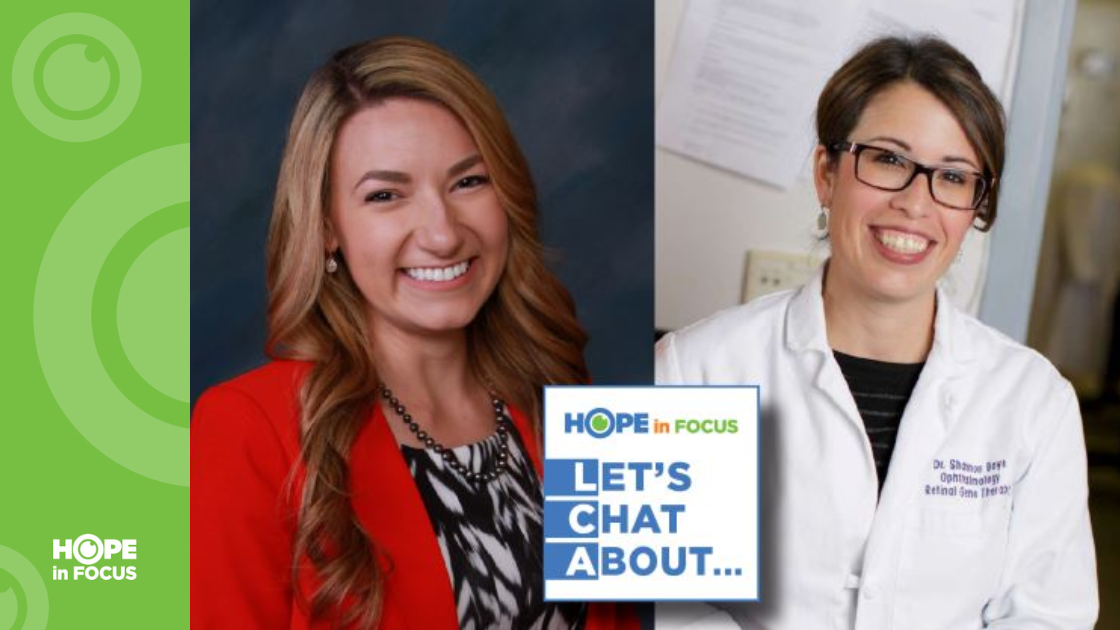
Headshot of Kara and Shannon with the Hope in Focus Let's Chat About ... webinar logo center bottom
Kara Fick (L) and Shannon Boye (R) on Hope in Focus Let’s Chat About … series

We learned about this research from Kara Fick, head of Patient Advocacy and Medical Affairs at Atsena Therapeutics, and Atsena Founder and Director Shannon E. Boye, PhD, during our Oct. 27, 2022, webinar episode titled “Let’s Chat About…Atsena Therapeutics’ work in LCA.” Courtney Coates, Hope in Focus Director of Outreach and Development, moderated the session, which can be viewed here. 

Let’s Chat About…” is our free webinar series bringing together researchers, advocates, industry leaders, and people living with Leber congenital amaurosis (LCA) or other rare inherited retinal diseases (IRDs) for conversations important to the rare retinal disease community.

How did Atsena Therapeutics come to be?

Shannon and her husband, Sanford, met in grad school.

“It was a nerd romance,” she said.

Boye’s thesis involved developing viral vectors for retinal disease treatment, specifically for LCA1 (GUCY2D), and she became known for generating gene technology. She has authored more than 60 peer-reviewed manuscripts and multiple textbook chapters. She also has been actively involved in grant and manuscript review, and she has received several major awards.

Over several years, the couple worked with large, medium, and small pharmaceutical companies, but they grew frustrated at how long it took to bring developing therapies to patients.

“It was going very slowly and that was frustrating,” Boye said. “We saw business decisions overriding sound scientific decisions.”

Eventually, she sent a big long vent to Foundation for Fighting Blindness CEO Ben Yerxa, and he helped push her and her husband into starting their own company, Atsena Therapeutics. The couple co-founded the business, with Sanford Boye serving as Chief Technology Officer.

Kara Fick, who has been working as a patient advocate for rare diseases in the biotech world for nearly a decade, is passionate about bringing the patient voice, perspective, and expertise to the table.

“It’s pretty apparent, and you know from Atsena’s founding, that really keeping patients at the center and trying to move research forward so that it can get to patients is super important,” Fick said.

At Atsena, she strives to bridge the gap between the science of innovative therapies and the daily needs of individuals living with rare diseases. She also works to understand more clearly the barriers to diagnosis, treatment, and management of rare diseases and how to better address those hurdles with patients and clinicians.

What is gene therapy?

All of us have genes. They give us blue eyes or brown eyes, for instance. But our genes also make proteins. Proteins are the building blocks of life. They can act alone or in combination with other proteins to perform essential functions in our cells.

A good example of proteins important for vision are the proteins in our photoreceptors and retinas. Those proteins all work together to convert light into an electrochemical signal that is sent to the brain and processed as vision.

Genes make proteins, and proteins perform essential functions. But sometimes, we can have a misspelling in our genes — in other words, a mutation. Because of that misspelling or mutation, in some cases, the protein that gene was supposed to make did not form. In other cases, perhaps, the protein forms, but it’s misshapen and can’t interact properly with the other proteins. When that happens, the normal biological function of the protein is disrupted, for example, in your photoreceptors. As a result, your photoreceptors are unable to transmit light into a signal processed as vision.

The concept of gene therapy involves taking a healthy copy of a gene that lacks that misspelling and delivering that healthy version of the gene to the photoreceptor cells.

How is the LCA gene therapy trial going?

Drug development and gene therapy development take a long time, and there are a lot of processes that companies have to go through to ensure that anything given to patients is safe and effective.

Work to develop this gene therapy began in earnest in 2004 in Boye’s lab at the University of Florida. After pre-clinical studies in chickens and mice, they were ready for clinical trials in humans.

Atsena is working on a combination Phase 1/2 clinical trial for LCA1 (GUCY2D). In this phase of the trial, researchers test different gene therapy doses, find the best dose, and closely monitor the safety of the therapy.

“Because we’re doing a combo Phase 1/2, we’re looking primarily at safety, but we’re also incorporating some tests into the clinical trial that can help to tell us a little bit about the efficacy of the gene therapy,” Boye said.

‘Researchers began with adults aged 18 and up but recently opened it up to ages 6 and up. Fifteen people, all with GUCY2D mutations, are taking part in the trial, ranging in age from 12 to 76 years old.

So far, the trial is going well, with no participants reporting serious side effects related to the gene therapy. They did see two cases of inflammation, but both were mild and resolved after treatment.

Besides safety monitoring, Atsena has conducted several tests, including the Full-field Stimulus Test (FST). The test quantifies visual perception through flashes of varying luminance. Researchers saw significant improvements in the results of that test from individuals who received the highest dose of the gene therapy.

Participants receiving the gene therapy also showed clear improvement in a multi-luminance mobility test (MLMT), in which they navigated a course with obstacles of varying height and under different levels of illumination.

Participants also underwent a third test, called the BCVA or Best Corrected Visual Acuity, which measures everyday vision. (Think of the poster with different letters you’re asked to read at the eye doctor’s.) That test had more mixed results, with some patients seeing improvement and others not seeing much, if any, improvement.

What happens next?

This is still just the preliminary data. Atsena needs all 15 participants in its trial to get through their first full year after being treated with gene therapy. Then, they’ll collect all of the data, analyze it, and summarize it vigorously and thoroughly before moving on to the next phase.

At that point, they’ll need to meet with the Food and Drug Administration (FDA) and other regulatory agencies to get their agreement and permission to move forward with a Phase 3 trial. That trial will focus on efficacy and seeing how well the gene therapy works. It’ll still pay attention to safety, but the primary goal of Phase 3 is to focus on efficacy and use that as supportive data that could be submitted to the FDA and other agencies to get full approval of the gene therapy.

Why genetic testing is essential for clinical trials?

As more trials are starting and more gene-specific research is being done, it’s going to become more important to know precisely which genetic mutation may be causing your LCA.

“Getting genetic testing is essential for figuring out the specific genetic mutation that may be causing your LCA,” says Boye.

If you have not been genetically tested, talk to Hope in Focus. There’s no cost to patients and family members to receive genetic testing.

Let’s Chat About…Advancing Treatments into Clinical Trials with Ben Shaberman

Innovative funding initiatives created by the Foundation Fighting Blindness are accelerating research advances to find treatments for Leber congenital amaurosis (LCA) and other rare inherited retinal diseases (IRDs).

Preclinical research involving animal models often gets stuck in early phases because no funding exists to move into clinical trials where developing treatments can be evaluated on people and advanced toward regulatory approval.

“The science is there; it’s the money that’s needed to fund the clinical trials, especially in later stages,” according to Ben Shaberman, the Foundation’s Senior Director of Scientific Outreach and Community Engagement.

Ben Shaberman headshot
Ben Shaberman

He appeared in a recent webinar episode of our Let’s Chat About online series, in which he detailed strategies driving retinal disease research.

Courtney Coates, our Director of Outreach and Development, moderated the episode, “Let’s Chat About… Advancing Treatments into Clinical Trials: Opportunities and Challenges,” featuring Shaberman, who has been with the Foundation about 17 years. You can view the session here.

Shaberman writes for the Foundation’s electronic and print publications, presents the latest scientific retinal research advancements at local and national events for patients and families, and conducts science training activities for staff and constituents.

He launched a podcast series last year called “Eye on the Cure” and enjoys collaborating with people one-on-one to help them understand their retinal disease and the research underway that could benefit them.

He also leads the company’s outreach to eye care professionals throughout the United States to help educate their patients about resources available to patients with low vision or blindness.

Shaberman earned a Master of Arts degree in writing from Johns Hopkins University, a Master of Science degree in systems management from the University of Maryland, and a Bachelor of Science degree in computer information science from Cleveland State University.

The Foundation is the world’s leading private funder of research on potential treatments and cures for inherited retinal degenerative diseases, including age-related macular degeneration. The nonprofit has raised more than $850 million to find cures for retinal diseases, identify more than 300 genes linked to them, and launch more than 40 clinical trials for potential treatments.

Foundation Funding Programs

Preclinical research or laboratory research done in academic research centers globally is expensive.

“But, when you are moving those emerging therapies from the labs, the cost goes up dramatically and that’s a big barrier for researchers,” Shaberman said. “It costs millions of dollars just to get in that clinical stage.”

That stage brings humans into the research, pulls in the U.S. Food and Drug Administration as a regulator and overseer, and requires submitting to the FDA required applications explaining the research and demonstrating the developing treatment’s safety and efficacy.

“That’s a really intensive process,” he said. “They (these early-stage therapies) may never see the light of day in a clinical trial because of all these issues.”

The Foundation created two programs to help drive projects to clinical stages.

The first, its Translational Research Acceleration Program (TRAP), helps scientists refine preclinical studies and accelerate research toward clinical trials to provide a robust pipeline of potential therapies to fight IRDs.

“TRAP helps researchers do some of that later stage work that will hopefully help them get to the clinical-trial doorstep,” Shaberman explained.

TRAP is funding a study at the Casey Eye Institute focusing on neuro-protective treatments to help reduce inflammation and other symptoms common to retinal diseases. Funding also supports Usher Syndrome Type 3a later-stage lab work.

The second program is the Foundation’s Retinal Degeneration Fund (RD Fund) and marks a step forward from TRAP because it invests in start-up companies. Like a venture capitalist, the investment is looking for a return, which instead of going into investors’ pockets, goes to the RD Fund to help projects in or advancing toward early-stage clinical trials.

Hope in Focus Let's Chat About ... logo

“The ultimate goal is once you move something into a clinical trial and help those companies do that, if you can get some early encouraging signals, you can attract tens or hundreds of millions to fund that process.”

The RD Fund led the $19 million in seed financing to create Opus Genetics, the first spin-out company internally conceived and launched by the Fund to further the Foundation’s mission.

The new gene therapy company plans to target two forms of LCA: LCA13 (RDH12), which affects one in 288,000 people, and LCA5, which encodes the lebercilin protein and affects about one in 1.7 million people.

The RD Fund also helped advance ocular gene therapy research by Shannon Boye, PhD, and Sanford Boye, founders of Atsena Therapeutics.

Another initiative supported by the RD Fund, Hope in Focus, and two dozen more groups is a proposed Congressional Act designed to help researchers launch clinical trials for emerging treatments and gives hope for getting more treatments across the finish line for people living with a broad range of medical conditions, including rare retinal diseases.

This BioBonds legislation establishes loans up to $25 million to a researcher or company as an innovative way to finance early-stage clinical trials. The program would provide $10 billion annually for three years, and researchers would be required to repay the low-interest, government-backed loans.

Shaberman encouraged his webinar audience to go to the BioBonds website for more information and email him about supporting the proposal.

He said he has always been inspired by the courage of patients and families and their success in coping with challenging conditions. They often motivate friends to help with fundraising and get more people involved with advancing research. The stories coming out of the Foundation and Hope in Focus create connections between families and foster positivity and success.

He cited Hope in Focus for its support of the Foundation’s free genetic testing program to get a confirmed genetic diagnosis, a vital step in the journey toward understanding a person’s specific retinal disease caused by a gene mutation.

Fifteen years ago, a handful of trials were underway. Researchers now are working on more than 40 clinical trials.

“A lot has happened. It can never happen quickly enough, but we’re doing everything we can to accelerate the science, and, in the end, science takes time.”

ProQR Announces Updates and Priorities After Illuminate Trial Analyses

ProQR Therapeutics completed an in-depth strategic review to prioritize its objectives toward advancing RNA therapies, following news that its Illuminate Phase 2/3 clinical trial of sepofarsen in LCA10 CEP290 did not meets its primary endpoint of improving visual acuity.

The Dutch-based biotechnology company delivered an update on its sepofarsen program after a comprehensive analysis of data from the Illuminate trial and it announced a corporate restructure and workforce reduction. 

Based on information from the review, ProQR will prioritize two strategic objectives dealing with genetic eye disease and RNA editing technology.

The company plans to explore a development path for selected genetic eye disease programs subject to regulatory feedback from the European Medicines Agency (EMA) and the U.S. Food and Drug Administration (FDA).

Regarding RNA editing technology, ProQR will accelerate development of the Axiomer® RNA editing technology platform and pipeline activities expanding into areas beyond the eye, including initially the liver and central nervous system. The technology aims to correct disease-causing genetic mutations and reverse the underlying course of currently untreatable diseases.

Daniel A. de Boer, Founder and CEO of ProQR Therapeutics, said in a statement: “We are focusing our strategy on accelerating our Axiomer® RNA-base editing platform technology and a select pipeline of RNA therapies for inherited retinal diseases  (IRDs) as we remain committed to developing RNA therapies for patients with high unmet need.” 

Corporate Reconstruction and Priorities

ProQR also plans to reduce expenses by making program priorities, changing its corporate structure, and reducing its workforce by a third. 

The company will focus its ultevursen QR-421a program for USH2A-mediated Usher syndrome and retinitis pigmentosa (RP) on a single Phase 2/3 Sirius trial, with the potential of an interim/futility analysis next year. 

ProQR is suspending all other research for IRDs, including its QR-1123 program for autosomal dominant RP and its QR-504a program for Fuchs endothelial corneal dystrophy.

The business also will reduce its workforce by about 30 percent, including the departure of its Chief Scientific Officer Naveed Shams, MD, PhD.

 Co-Founder and Supervisory Board Chair Dinko Valerio said in a statement: 

“We believe deeply in the promise of RNA therapies, the Company’s pioneering efforts in this field, and ProQR employees. These are the right steps to take to offer the best opportunity to create long-term value for all of our stakeholders, including our shareholders whom we thank for their support, and the communities we aim to serve.” 

De Boer thanked the people leaving the company for their significant contributions toward the company’s mission. He characterized the changes as extremely difficult decisions necessary to drive long-term growth and value. 

“I also want to acknowledge the disappointment that many in the eye disease community may feel today, particularly individuals and families living with autosomal dominant retinitis pigmentosa and Fuchs endothelial corneal dystrophy as we wind down our programs for these indications.”

Sepofarsen Update 

Following the top-line data announcement in February that Illuminate, ProQR’s pivotal Phase 2/3 trial of sepofarsen in LCA10, did not meet the primary endpoint of Best Corrected Visual Acuity (BCVA) at month 12, compared to a sham procedure control group, comprehensive analyses revealed no technical errors in the trial conduct, data handling, or the medicine product used. 

The overall safety profile of sepofarsen was consistent with earlier trials. When the effect in the sepofarsen treated eye was compared to the untreated eye in the same patient, at month 12, a benefit in vision was observed. This effect was not observed in the control group that received a sham treatment.

Overall, the post-hoc analyses showed that the efficacy seen with sepofarsen when comparing the active treatment and sham eyes to their corresponding untreated contralateral eyes across BCVA, Full Field Stimulus Test (FST), and other endpoints is more consistent with the results seen in earlier trials, where the untreated contralateral eye was used as the control.

Based on these results, ProQR will focus on core activities related to sepofarsen. The company plans to meet with the EMA and FDA to discuss these data from the Illuminate trial and share an update later this year.

ProQR currently plans to continue Illuminate, which is a two-year study, the Brighten pediatric study, and the Insight open-label extension study, until further regulatory guidance.

Aniz Girach, MD, Chief Medical Officer of ProQR Therapeutics, said in a statement: 

“While we were disappointed by the outcome of the primary analysis, we believe that these post-hoc analyses and the observation that approximately a third of the patients benefited across multiple concordant endpoints in this trial, in combination with the high unmet need in LCA10, warrants a discussion with the regulators.”

Data from the Illuminate trial will be presented at the annual Retinal Cell and Gene Therapy Innovation Summit on April 29, 2022, and at the Association for Research in Vision and Ophthalmology (ARVO) Annual Meeting from May 1-4, 2022. 

LCA10 CEP290 Illuminate Clinical Trial Produces No Observed Benefit

ProQR Therapeutics’ clinical trials of sepofarsen to treat a form of Leber congenital amaurosis (LCA) caused by a mutation in the CEP290 gene did not meet its primary endpoint of improving visual acuity.

Illuminate, the name of the clinical study, aimed to explore whether the investigational medicine sepofarsen was effective and safe for people with LCA10 caused by the CEP290 mutation.

The Phase 2/3 clinical trial produced no observed benefit in visual acuity for participants receiving the treatment versus those in the study not receiving the treatment. Visual acuity is a measure of the ability of the eye to distinguish shapes and details of objects at a given distance.

ProQR Founder and Chief Executive Officer Daniel A. de Boer delivered the news recently and characterized the results as disappointing.

“Given the results observed in earlier studies of sepofarsen, the Illuminate trial results are unexpected and disappointing, especially for people living with LCA10,” de Boer said.

“ProQR was founded with the goal of developing RNA therapies  (ribonucleic acid)  for patients with high unmet medical need, and we will continue to advance our robust pipeline of therapies for genetic eye disease. We are deeply grateful to all of the participants, their supporters, and investigators who participated in the Illuminate study.

“Since the results in February, ProQR has been conducting additional analyses of Illuminate and will present these findings at a future scientific conference.”

ProQR works on developing RNA therapies to treat LCA and other inherited rare diseases (IRDs). With DNA being the library of our genes and RNA being a blueprint of that collection, RNA therapies help carry out DNA instructions to create certain proteins critical to a healthy cell.

Analyzing Results for More Answers

Hope in Focus Co-Founder and Board Chair Laura Manfre said we will share updates with the LCA community as we learn more from ProQR.

“The results are not what we had hoped for from ProQR on the LCA10 Phase 2/3 trial, but we are resolved to keep hope in focus, knowing that the brilliant minds that got us this far are not giving up.

“It’s important to remember when there are setbacks that only 10 years ago, all we had was hope. Most of the community couldn’t even get a genetic diagnosis, let alone hope for treatment,” she said. “We’ve come a long way in a short period of time, and we’re going to keep advancing.”

Ben Yerxa, PhD, Chief Executive Officer of the Foundation Fighting Blindness, said his organization will work with ProQR to learn more about the data.

“This was not the outcome we had hoped for, and we share in the disappointment many are feeling in the community,” Yerxa said.

“We will continue to work alongside ProQR to learn more from the ongoing analyses and as they work to advance RNA therapies to potentially help children, adults, and families who are affected by rare genetic eye diseases.”

In delivering the results, the biotechnology company gave background about LCA, the most common genetic cause of childhood blindness, affecting about 15,000 people in the Western world. One federally approved gene therapy treatment, LUXTURNA®, exists for people with LCA2 (RPE65), one of the more than 27 forms of LCA.

The rare retinal disease usually appears in the first year of life and is characterized by progressive loss of vision. Other symptoms can include rapid eye movement, known as nystagmus, eye-poking, night blindness, and sensitivity to light, known as photophobia. Depending on the mutation, complete loss of vision can occur during early childhood.

Specifics of the LCA10 CEP290 Trial

Illuminate enrolled 36 participants, aged 8 years or older with genetically confirmed LCA10 due to the c.2991+1655A>G (p.Cys998X) mutation in the CEP290 gene.

The study was a randomized, sham-controlled clinical trial that took place in three randomized groups at 14 sites in nine countries.

The first group received a target dose of sepofarsen by intravitreal injection (IVT), the second received a low dose via IVT, and the third underwent a sham procedure that mimicked an injection with no medicine or injection given.

Bart P. Leroy, MD, PhD, one of the study’s key investigators and Director of the Ophthalmic Genetics and Retinal Degenerations clinics in the Division of Ophthalmology and Center for Cellular and Molecular Therapeutics at The Children’s Hospital of Philadelphia (CHOP), said work will continue toward finding therapies.

“LCA10 is devastating, and with no approved therapies, very difficult to treat retinal disease resulting in blindness,” said Dr. Leroy, who also is head of the Ophthalmology Department at Ghent University Hospital and Professor of Ophthalmology and Ophthalmic Genetics at Ghent University in Belgium.

“We will continue to work with ProQR to understand the data as they work for advance therapies for individuals with inherited retinal diseases.”

Andy Bolan, ProQR Director of Medical Affairs, said the team extends its thanks to the study participants, their supporters, the investigators, and their staff for support in developing the trial. He said the biotech remains committed to making a significant and positive impact on the lives of those affected by genetic conditions.

For quarterly news and future study participation opportunities, you can sign up for the ProQR Eye Connect Newsletter or follow them on social media.

People also can contact ProQR with any questions at patientinfo@proqr.com.

BioBonds: Innovative legislation would help fund clinical trials, including those for LCA

A proposed Congressional Act designed to help researchers launch clinical trials for emerging treatments gives hope for getting more treatments across the finish line for people living with a broad range of medical conditions, including rare retinal diseases, such as Leber congenital amaurosis (LCA). 

The BioBonds legislation establishes loans up to $25 million to a researcher or company as an innovative way to finance early-stage clinical trials. The program would provide $10 billion annually for three years.

Researchers would be required to repay the low-interest, government-backed loans. 

Hope in Focus, along with Foundation Fighting Blindness (FFB) , and more than two dozen other entities, have signed on in support of the legislation.

“Funding for research for all diseases, including rare conditions such as LCA and other rare inherited retinal diseases (IRDs), is always a challenge and was made even more so when COVID hit and so much of biomedicine research was held up,” according to Laura Manfre, President and Co-Founder of Hope in Focus (formerly known as Sofia Sees Hope).

“While we are ever grateful to our funders and grantors, we are excited that the loans provided through this legislation have the capacity to increase momentum and accelerate the development of treatments and cures for blindness and an array of other diseases.”

Biomedical Research Act hopes to bridge chasm between promising research and clinical trials for treatments for LCA and a range of medical conditions

Officially known as the Long-Term Opportunities for Advancing New Studies (LOANS) Biomedical Research Act – H.R. 3437 – the proposed legislation creates a unique way of mobilizing capital of long-term investors to give loans to companies developing treatments and cures for a wide range of disease and disability.

U.S. Representatives Bobby L. Rush (D-IL) and Brian Fitzpatrick (R-PA) introduced the LOANS for Biomedical Research Act to help bridge the financial “valley of death” that separates promising research from clinical trials necessary to delivering federally approved treatments and cures.

Most pharmaceutical and biotechnology companies do not fund early-stage clinical research. By funding early-stage human studies, H.R. 3437 can help move research to the point where it could attract investment from industry for late-stage clinical trials, which often cost hundreds of millions of dollars.

Hope in Focus and FFB, along with other organizations, sent a letter to the representatives in support of this initiative to leverage billions of dollars in private-sector investment to advance early-stage clinical biomedical research.

The letter in part states: “Without H.R. 3437, vital medical research in blindness, cancer, Alzheimer’s, pediatric rare diseases, conditions disproportionately affecting minority communities, and other diseases will take many more years to complete, no matter how promising the progress just a year ago…

“H.R. 3437 would unleash billions of long-term capital for medical cures at little cost to taxpayers – we can think of few national objectives that matter as much as preventing disease, treating disability, and reducing pain and suffering.”

FFB plays a key role as a partner in outreach and awareness. Foundation Board Director Karen Petrou and her late husband, Basil, were visionaries for the legislation.

FFB CEO Ben Yerxa, PhD, applauded the introduction of the Act. 

As head of the world’s leading organization committed to find treatments and cures for blinding retinal diseases, Yerxa said, “As the remarkable speed of the COVID-19 vaccines development and approval processes have demonstrated, financial capacity – not scientific knowledge – is our biggest hurdle to advancing medical research and delivering the life-saving treatments and cures millions of Americans so desperately await.

“From blindness to cancer to juvenile diabetes, the private sector dollars that this bill will infuse into biomedical research will jumpstart clinical trials stalled by the pandemic,” he said. “These trials are designed to convert basic science into treatments and cures for these diseases and so many more, which is why it’s supported by a growing number of patient advocacy organizations.”

Doctors diagnosed Karen Petrou in her teens with retinitis pigmentosa (RP) and she went blind in her 40s. 

New York Times article describes Petrou’s challenges over four years in developing a new funding model for curing blindness. 

Also, Petrou authored an in-depth paper describing the funding model – Generating Billions in Private-Sector Investment Speeding Treatment and Cure

Please see the Biobonds website for more information about the legislation, including signing on as a supporter, seeing the current sponsor list, reading the legislation, and getting assistance with contacting your U.S. House Representative.

Let’s Chat About … CRISPR and Gene Editing

For the first time, early research data shows that a gene editing technique called CRISPR improved vision in people living with a form of Leber congenital amaurosis (LCA), according to Dr. Edmond Chen of Editas Medicine.

“It’s the first time anyone has demonstrated the potential of editing in human eyes,” Dr. Chen said. “We kind of dreamed about this since 2014.”

Researchers administered EDIT-101, an experimental CRISPR gene editing medicine, through a subretinal injection to reach and deliver the gene-editing machinery directly to the retina’s photoreceptor cells.

The research targets LCA10 caused by a mutation in the CEP290 gene, the most common of the more than 27 forms of LCA. 

Dr. Edmond Chen headshot
Dr. Edmond Chen

Dr. Chen is the Vice President of Clinical Development at Editas Medicine, a gene editing company based in Cambridge, Mass. The company focuses on developing CRISPR-based treatments. 

CRISPR (pronounced “crisper”) is an acronym for Clustered, Regularly Interspaced, Short Palindromic Repeats. It refers to a recently developed gene editing technology that can revise, remove, and replace DNA in a highly targeted manner.

As part of our Hope in Focus webinar series, Dr. Chen described the early, but exciting, data from the ongoing Phase 1/2 Brilliance clinical trial of EDIT-101 in our October episode: “Let’s Chat About…CRISPR and gene-editing technology.”  Our Director of Marketing and Communications Elissa Bass moderated the session, which you can view here.

Dr. Chen oversees a portfolio spanning the therapeutic areas of hematology, oncology, ophthalmology, and neuroscience. As a physician executive with more than 20 years of combined clinical and industry experience, he has a track record of success at companies, including Merck and Bayer. 

His therapeutic area and drug development expertise is deep and diverse, from rare disease and indications such as bronchiectasis, vasculitis, and pulmonary hypertension, to large cardiovascular areas including congestive heart failure, thrombosis, and therapeutics for primary and secondary cardiovascular prevention. 

He earned his medical degree at the University of California, San Francisco School of Medicine, where he trained and practiced in internal medicine and cardiology. He holds a Bachelor of Arts with Honors in Molecular and Cell Biology, Neurobiology, from the University of California, Berkeley. 

Exciting early results for CRISPR 

Dr. Chen described his passion for innovation and his interest in developing life-saving treatments, including a new aspirin.

Then he thought to himself, “We probably don’t need another aspirin,” and pivoted this passion for innovation to life-altering research, including working with the CRISPR gene-editing treatment.

He has been with Editas since 2020; the company’s work on LCA10 began in 2014. 

Dr. Chen said he is excited about the first results of the clinical trial and added that the research is part of an ongoing, current investigation of which “we’re not making any claims.”

Editas recently released early results of the first six patients in the EDIT-101 Brilliance trial at the International Symposium on Retinal Degeneration. Efficacy results were limited to the first five patients treated with the low- to mid-doses and followed for at least three months. 

Two of the three patients treated with the mid-dose and followed for up to six months showed improved vision, results that suggest successful editing with EDIT-101. Patients will need to be treated and followed over time to ensure the safety and efficacy of the drug. EDIT-101 is now being assessed at a higher dose and in pediatric patients.

Editas currently is recruiting for children, ages 3 to 17. For recruitment information, contact Editas Medicine’s Clinical Trial Team at 617-401-9007 or patients@editasmed.com. For more information, go to clinicaltrials.gov NCT03872479.

Explaining the gene-editing process, Dr. Chen shared some biology basics on DNARNA, and proteins, and described the potential of CRISPR gene-editing to restore cellular function. 

He described DNA as the building blocks of life, serving as a blueprint, or instructions, for all the proteins in our bodies. When the body reads the DNA, it makes RNA, which then acts like a messenger taking the instructions all over the body to make proteins. Proteins are the tools our cells need to function.

Sometimes, an abnormal change in DNA’s sequence (a mutation) causes disease. These changes can be spontaneous or can be inherited from parents. This is where CRISPR-based medicines come in. Gene editing technology may be able to treat some genetic diseases by intervening at the DNA level.

To demonstrate this process, Dr. Chen, using simple colored Lego® pieces to represent DNA and RNA, explained how CRISPR gene editing medicines contain a nuclease, or a protein that edits DNA, and a guide RNA that can go in and find a specific portion of the gene and make an edit to correct the gene abnormality. 

People living with LCA10 have a disease-causing mutation in the CEP290 gene. For EDIT-101, scientists created a specific guide RNA to find the CEP290 gene in the photoreceptor cells and remove the incorrect instructions contained in the patient’s DNA.

The drug is injected one time in one eye under the retina, creating a blister-like pocket of the drug called a bleb for EDIT-101 to treat the target area that allows retina function. Dr. Chen characterized the treatment as an effective and precise process.

“The DNA is actually edited with the genetic defect corrected,” he said. “It’s a very elegant use of science for which the Nobel Prize was given, so this is a big deal.”

Jennifer Doudna, PhD, and Emmanuelle Charpentier, PhD, won the 2020 Nobel Prize in chemistry for their 2012 discovery of CRISPR.

Still a few years to market

One of our webinar viewers asked why the process can’t be used to treat all other forms of LCA.

“It’s a long road,” Dr. Chen said. “For good reasons, the regulatory path is a long one.”

The process can take 15 to 20 years, from molecular research to studying treatment effects in animals and then humans, to undergoing the rigors of earning approval by the U.S. Food and Drug Administration.

In 2017, the FDA approved LUXTURNA,® the first, and so far, only, gene therapy for a form of LCA. Gene therapy is different than gene editing. Gene therapy entails inserting a “healthy” version of the gene to offset the effect of the mutation, while gene editing revises, removes, or replaces a mutated gene at the DNA level.

This study of EDIT-101 centers on one form of LCA and it is in its initial stages, he said.

“Each of the defects, you could add it up and it’s a long, expensive and laborious exercise. It’s a commitment on our part. None of this is easy.”

He estimated that getting the CRISPR treatment to market is still a few years away.

In answer to a question about what keeps him going amid the arduous trial-and-error process that comes with clinical research, he said, some days are very frustrating, but he feels blessed to make a difference in someone’s life.

“It’s all about the patient,” Dr. Chen said. “That makes a world of difference and makes it all worthwhile.”

Natural History Study of Usher Syndrome Type 1F Launches

A new Foundation Fighting Blindness initiative just getting underway is a Natural History study of Usher Syndrome Type 1F (USH1F) caused by a mutation in the PCDH15 gene. The objective of the study is to understand the progression of the inherited condition.

The rare disease causes hearing loss, balance problems, difficulty with gaze stabilization, and progressive vision loss. In childhood or by early adolescence, individuals with USH1F will develop retinitis pigmentosa (RP), an eye disease that causes night blindness and a gradual loss of peripheral vision.

“The main purpose of a study like this is to help design clinical trials in the hopes of accelerating the research process, making sure the design is well-targeted, not too onerous and not too burdensome,” said Todd Durham, Foundation Vice President of Clinical & Outcomes Research. He described the study during a recent Sofia Sees Hope webinar about the Foundation’s My Retina Tracker® patient registry.

“If we can develop a way to measure the progress of the disease in the absence of a treatment, we can decide whether the follow-up period after administration of that treatment should be two years, would one year suffice, and what tools do we ultimately judge the efficacy of that new treatment.”

Encouraging News for CRB1 Gene Therapy Treatments 

Early research into a form of Leber congenital amaurosis (LCA) caused by mutations in the CRB1 gene – including the discovery of a new version of a protein expressed by the gene – shows encouraging possibilities toward developing gene therapy treatment.

Amy Laster, PhD, Vice President of Science and Awards programs for the Foundation Fighting Blindness, shared the research news as part of a recent LCA Research Update webinar, summarizing results of an earlier CRB1-associated retinal disease Scientific Advancement Workshop.

“There’s certainly momentum that the research is actively happening, and that the community wants to address outstanding issues,” Laster said.

Laura ManfreSofia Sees Hope Co-Founder and President, said more than 40 leading experts in ophthalmology and gene research gathered in one room for more than five hours to share research and patient perspectives on LCA8 (CRB1) and identify the next steps to advance treatment for the patient community. 

Sofia Sees Hope and the Foundation Fighting Blindness created the Scientific Advancement Workshop with the objectives of widening the circle of research awareness into CRB1, building a framework or platform for sharing knowledge, fostering collaboration among stakeholders, identifying gaps, and setting priorities for action.

The route to approved LCA treatments consists of multiple, winding paths rather than one direct straightaway: No quick, easy solutions.

“For CRB1, in particular, the biology here is very, very complex,” said Manfre, who is also a member of the Foundation’s Board of Directors.

Referencing results of the workshop, Manfre displayed what she called a “celebration photo” of a smiling young girl hitting a piñata bursting forth with sprays of candy.

“What I want to communicate here is just how much of a celebration it is that we had this workshop. There are no simple, straightforward answers, but the really good news, or the celebration, is that this was one more step ahead in bringing the right people and all the very smart people together,” Manfre said.

CRB1 Preclinical Research

Laster described the gene therapy development path from research to treatment or cure. The path begins with basic knowledge of the gene and its functions and understanding the biology of the disease, which includes designing non-human research models and conducting Natural History studies. 

Preclinical CRB1 research currently centers on understanding the biology of the mutation and working toward conducting a Natural History study. 

Natural History study researchers observe clinical features in the absence of any treatment, gaining an understanding of myriad features, including the retina’s architecture and the patient’s visual function, sensitivity to light, and peripheral vision. The data provide knowledge and an independent understanding of the disease, while establishing an essential foundation for building drug development programs.

Later stages on the way to treatments and cures include designing clinical trials, selecting patients, predicting outcomes, setting measures for endpoints and outcomes, and conducting Phase I, II and III human clinical trials. The goal is U.S. Food and Drug Administration approval of a safe and effective treatment. 

Laster shared news from the workshop that Jeremy Kay, PhD, found a new version, or isoform, of CRB1 called CRB1b.

Kay, Associate Professor of Neurobiology and of Ophthalmology at Duke University, found that the CRB1b protein is more abundant in human and mouse retinas than the first identified version, CRB1a.

“Unlike CRB1a,” Laster said, “the removal of the CRB1b causes a retinal degeneration in mice and this has not been shown before with the first identified isoform.”

The research gives rise to new questions as to whether CRB1a or CRB1b protein expression or both should be the target for a gene therapy, she said.

Duke University research news characterized Kay’s findings published in Natural Communications as “a game-changer in light of the critical progress, over the past few years, in the treatment of inherited retinal diseases …”

Laster referenced CRB1 research models and gene augmentation therapy studies by Jan Wijnholds, PhD, Principal Investigator in the Department of Ophthalmology at Leiden University Medical Center, Leiden, Netherlands. The findings by him and his team can be found here in Frontiers in Neuroscience

She also discussed the work of Dr. Jacque Duncan, Professor of Clinical Ophthalmology at the University of California, San Francisco. Dr. Duncan is in talks with the Foundation about her interest in understanding the relationship between CRB1’s genotype and phenotype, or its genetic characteristics and physical characteristics. 

“On the clinical side, in terms of actually conducting a Natural History study, there was a lot of enthusiasm about that,” she said. “The Foundation is in touch with Dr. Jacque Duncan about potentially moving forward with that.”

The Foundation, the largest private funder of research for treatments and cures of blinding retinal diseases, has raised nearly $800 million since its inception and funds more than 80 research projects globally. Laster oversees the organization’s preclinical research portfolio consisting of research awards in funding programs that support career development, laboratory-based science research, translational research, and multi-investigator program projects.

Todd Durham, PhD, also an organizer of the Scientific Advancement Workshop, said sharing CRB1 patient perspectives through survey answers marked one of the highlights of the workshop because it gave researchers insight to help focus their studies for treatments or cures.

In the survey developed by the Foundation Fighting Blindness and Sofia Sees Hope, 85 percent of the respondents have a profile on My Retina Tracker® registry, a free online registry that enables people with inherited retinal degenerative diseases, their doctors, and researchers to actively collaborate in the research process. 

Durham, the Foundation’s Vice President of Clinical and Outcomes Research, said the CRB1 survey also showed patients received a clinical diagnosis at an average age of 13, while 24 was the average age for getting genetically diagnosed, showing a significant gap between the diagnoses.

The most reported worries were progression to blindness and concerns about employment. Most of the survey takers said they would participate in clinical trials, while many were concerned about the safety of the trials, the risks to remaining vision, and the potential for benefit.

People also were asked to describe their motivation for taking part in a clinical trial. A common thread to the responses, Durham said, was to help themselves see better and help others through research. 

In a sampling of comments, one person wrote: “1. Cure the disease. 2. Have a more comfortable life. 3. Not feel different from the rest because of your visual impairment.” 

Under the section “Anything Else to Share with Researchers,” a respondent wrote: “I feel the mental health impacts of a disability are overlooked a lot of the time.”

An Engaged CRB1 Community

In the question-and-answer session, an audience member asked where to go for information about CRB1, noting that his doctor had no idea about it. He said he felt lucky to live near a teaching hospital and could reach out for help but thought others may not be as fortunate.

Ben Shaberman, the Foundation’s Senior Director of Scientific Outreach and Community Engagement, said he understands that difficulty and he is part of a team educating eye-care professionals around the country. He encouraged people to email the Foundation at info@fightingblindness.org for contacts in the academic and medical world of retinal specialists and researchers.

Manfre said the CRB1 community is highly active and suggested that people join the new CRB1 Network on Facebook and check out the Resources page on the Sofia Sees Hope website that has a link to a CRB1 group called Curing Retinal Blindness Foundation. She said people can also find a strong Spanish-speaking community at Grupo CRB1 España y Latinoamérica

She advised people to update their profiles on My Retina Tracker to help advance research and to follow the Foundation and Sofia Sees Hope websites for information and research news. You can email questions or concerns to Sofia Sees Hope at info@sofiaseeshope.org

Advocating for treatment and cures for rare diseases such as CRB1 takes a grassroots effort, Manfre said, requiring people to inform, support, and educate one another, and to continue sharing stories and reaching out on social media.

Gathering in groups such as this webinar, she said, also helps connect people and generate awareness that, in turn, advances research. 

“All of this makes a huge difference.”

‘Give Us Hope’: Bringing Together Leber Congenital Amaurosis Researchers and Patients

Promising gene therapy research – characterized as having a good potential to restore vision – is underway to help visual impairment caused by a form of Leber congenital amaurosis (LCA) attributable to a mutation in the IQCB1 gene.

Amy Laster, PhD, Vice President of Science and Awards Programs for the Foundation Fighting Blindness, shared the research news as part of a recent LCA Research Update webinar summarizing results of an IQCB1/NPHP5-associated retinal disease Scientific Advancement Workshop conducted a week earlier.

Laura Manfre, Sofia Sees Hope Co-Founder and President, said more than 40 leading experts in ophthalmology and gene research gathered for the virtual workshop to share research and patient perspectives and identify the next steps to advance treatment for the patient community. Hope in Focus ( formally Sofia Sees Hope) and the Foundation Fighting Blindness hosted these Scientific Advancement Workshop to widen the circle of research awareness, build a framework or platform for sharing knowledge, foster collaboration among stakeholders, identify gaps, and set priorities for action. The format was based on a similar program run earlier for the RDH12 gene.

“Our objective today is to engage you and our IQCB1/NPHP5 community to seek to advance treatment for ourselves and our loved ones…” Manfre said in her introduction. 

“There are no easy answers and there are no quick or fast solutions; just wanted to set that expectation up front even as we are very excited to share the news that we have for you.”

Early-stage translational research

The reported results are from early-stage translational research, which involves moving discoveries from basic science and animal models to applying them in human clinical trials.

The news comes after a successful proof of concept or feasibility study by Dr. Gustavo D. Aguirre, VMD, PhD. He is Professor of Medical Genetics and Ophthalmology at the School of Veterinary Medicine, University of Pennsylvania, and he identifies dogs with inherited eye and retinal degeneration. 

Dr. Aguirre will be presenting results of his proof of concept gene therapy study on LCA-NPHP5 dogs in a paper soon to be published in a peer-reviewed journal. The research is detailed in bioRxiv (pronounced bio-archive), a repository for preprinting papers prior to publication. 

Laster said the study showed that photoreceptors in treated areas had structural improvements and the dogs had improved visual function. 

Researchers sent dogs through an obstacle course under dim light and under bright light. Navigating with their treated eye, the dogs had faster travel times and fewer collisions than when they navigated using their untreated eye.

She called the findings very promising, saying, “We’re excited about these results.”

Laster also cited ongoing clinical studies suggesting that the structure of the central retina or macula is preserved for many years despite having significant loss of vision.

“This, if you will, dissociation between the structure and function suggests that a gene therapy targeted at the central retina not only could work but has a good potential to restore lost vision,” she said. “So we build on this proof of concept and clinical knowledge toward translating these laboratory-based research concepts into clinical trials for patients.”

The next steps include designing clinical trials and identifying relevant endpoints and outcomes to measure the safety and effectiveness of the gene therapy.

Webinar speaker Todd Durham, PhD, Vice President of Clinical and Outcomes Research at the Foundation, said the dog model studies began about four years ago. He said it is unknown when clinical trials would begin because more work needs to be done prior to launching them. Durham emphasized the importance of the research results, saying, “They’ve very much ticked off a major milestone in this proof of concept canine model.” 

Scientific workshop participants also learned that Dr. Aguirre and his colleague, Dr. William A. Beltran, DVM, PhD, co-founded a Philadelphia-based biotechnology company called LuxFiat Therapeutics

Laster said this would position the scientists to advance the gene therapy into clinical trials and said that the Foundation will continue to do all that it can to accelerate any clinical development.

The Foundation, the largest private funder of research for treatments and cures of blinding retinal diseases, has raised nearly $800 million since its inception and currently funds more than 80 research projects globally. Dr. Laster oversees the Foundation’s preclinical research portfolio consisting of research awards in funding programs that support career development, laboratory-based science research, translational research, and multi-investigator program projects.

In the question-and-answer session, Durham discussed a query from the audience as to whether it was unusual to receive an incorrect diagnosis of retinitis pigmentosa (RP) before later getting a confirmed genetic diagnosis of Leber congenital amaurosis from Spark Therapeutics

Durham said it was not unusual and that it was great the audience member got a genetic diagnosis.

“The clinical manifestations of what many ophthalmologists observe when they do an exam can overlap quite a bit from various conditions,” he said. “Ultimately, at the end of the day, the fact that you got a genetic diagnosis is most informative for you, and that’s our hope that there will be more access to genetic testing. Just to reassure you, I don’t think your story is very unusual at all, unfortunately, but hopefully access to genetic testing going forward is going to make that a less frequent story.”

Manfre, responding to a question about help specifically for those with the IQCB1/NPHP5 mutation, said Sofia Sees Hope supports the entire Leber congenital amaurosis community and suggested looking at the website’s Resources page and joining a highly active IQCB1/NPHP5 Facebook group that she joined because her daughter Sofia has the same genetic variant.

Durham also devoted the beginning of the webinar delivering preliminary information from an ongoing patient survey on perspectives of people affected by LCA or RP and their caregivers.  

He said the survey results will be available to the community after final analysis of the data. 

Here are the topics addressed in the survey developed by Sofia Sees Hope and the Foundation:

  • Diagnostic Journey
  • Current Best Corrected Visual Acuity
  • Visual Symptoms
  • Other Related Conditions
  • Worries
  • Impact on Your Family Overall
  • Participating in Clinical Trials
  • Motivations for Participating in a Clinical Trial
  • Anything Else to Share with Researchers.

Under the last topic, a participant responded: “Time is vision. Please hurry for IQCB1. Give us hope.”