IRD Milestones: Reasons to Be Excited

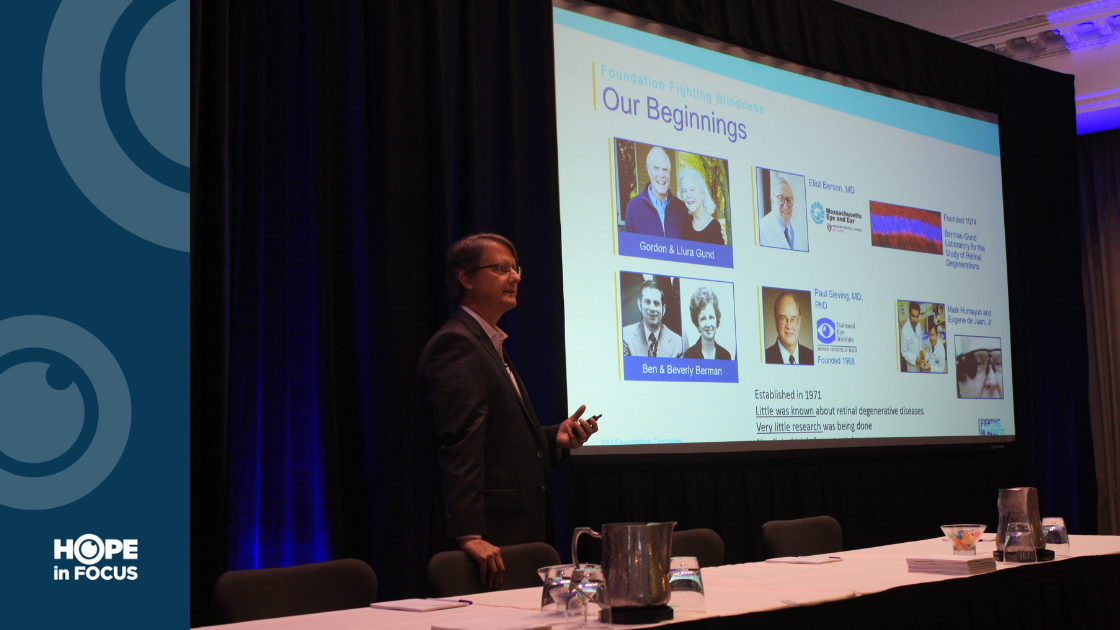
1971 – Just those numbers in white on a black page appeared on the big screen.

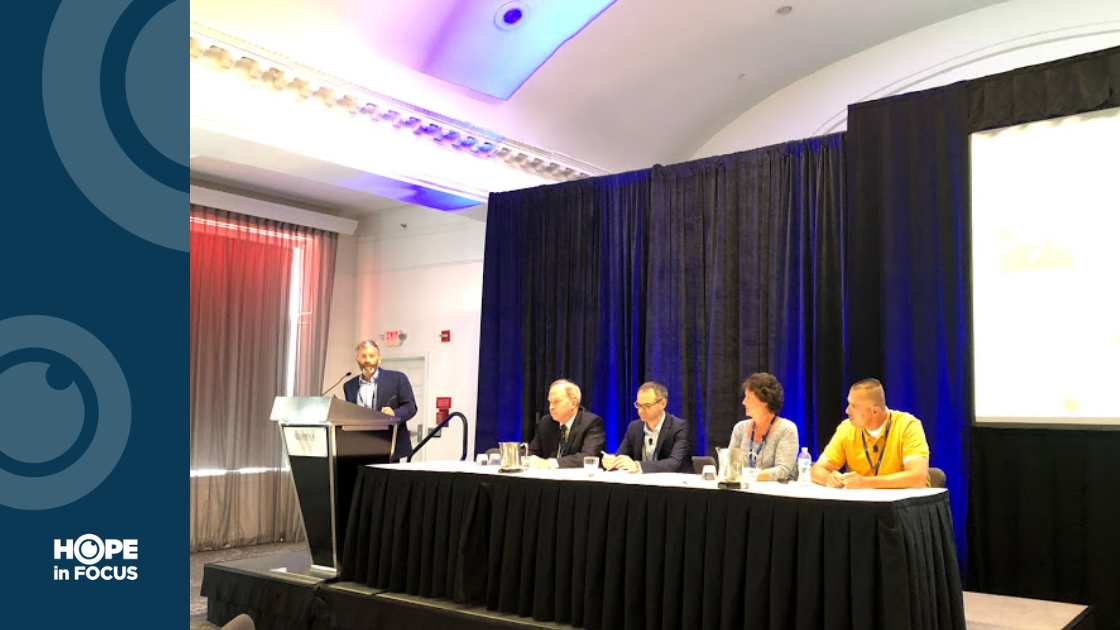
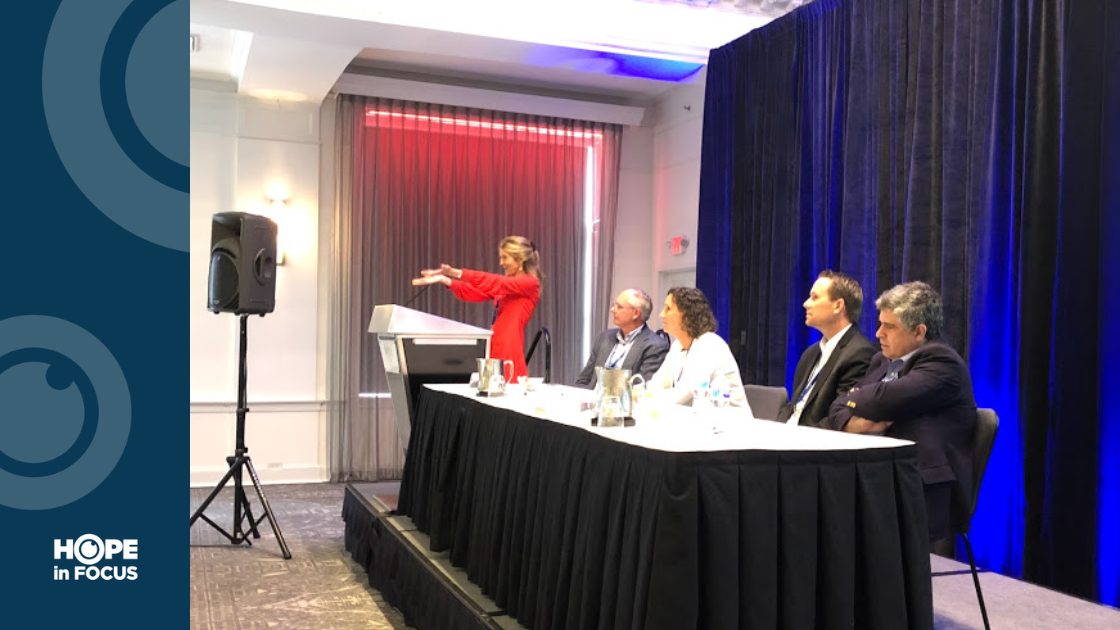
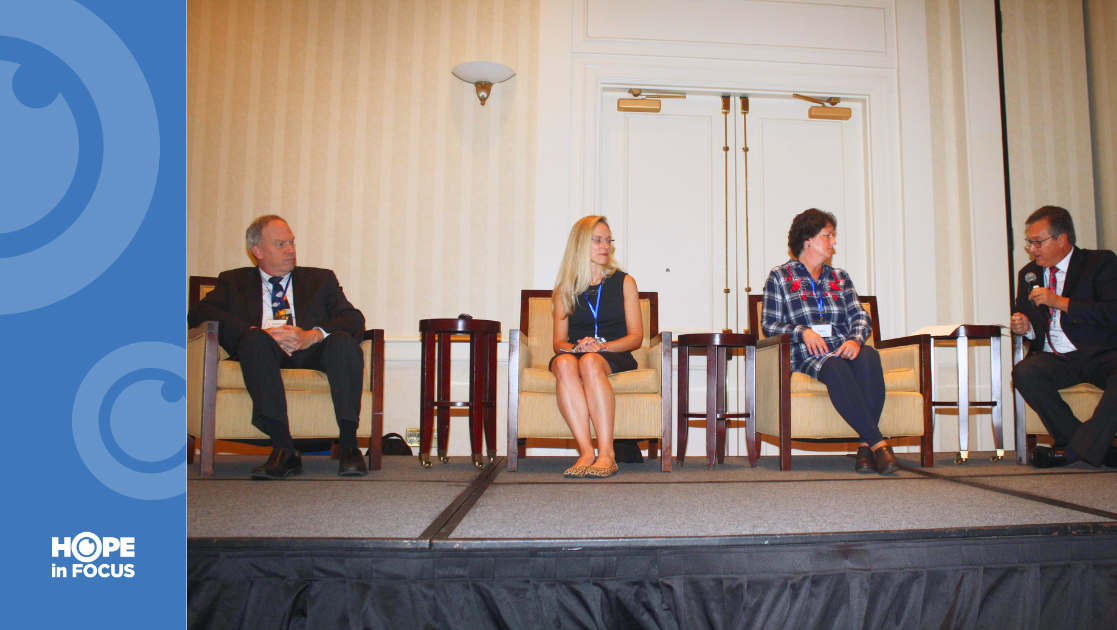
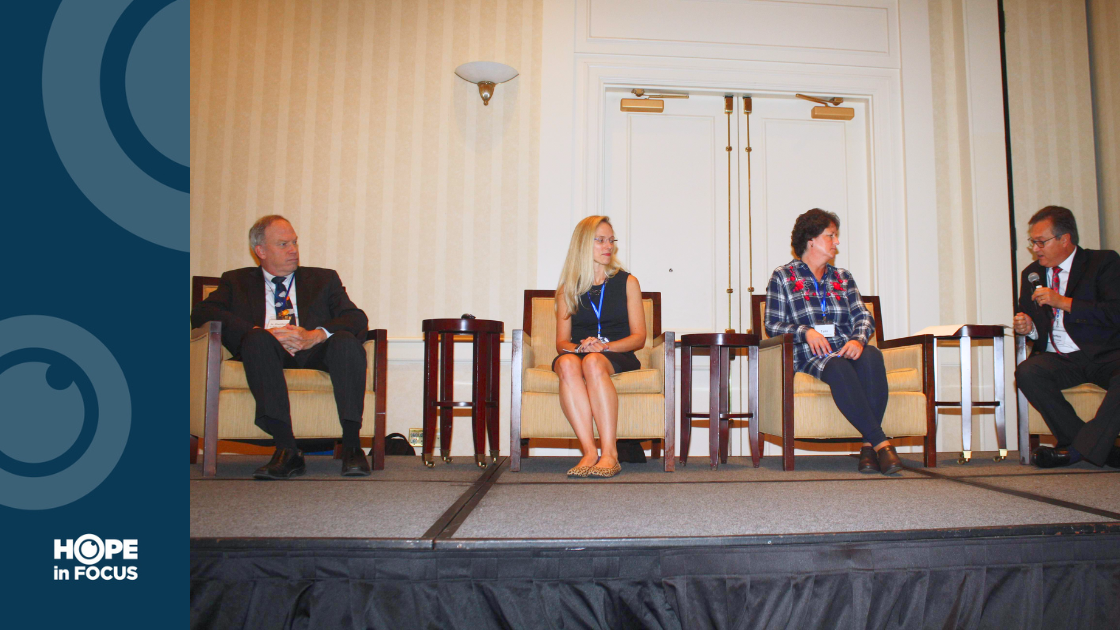
That’s how Brian Mansfield, PhD., began his presentation to families and patients living with Leber congenital amaurosis at Hope in Focus (formally Sofia Sees Hope) LCA Family Conference on Saturday, Oct. 6, in Groton, CT.

The year on that otherwise empty page marked the founding of Foundation Fighting Blindness – a time when patients losing vision often heard, “Go home. Learn Braille. You are going to go blind.”

Mansfield’s audience at the conference was made up of people diagnosed with a variety of rare inherited retinal diseases, including LCA, their caregivers and relatives, and representatives of various bio-tech and pharmaceutical companies working in the IRD arena. It was Sofia Sees Hope’s first such conference.

Dr. Brian Mansfield headshot
Dr. Brian Mansfield

Mansfield is the foundation’s senior vice president of research. He brought his audience up to date with information about clinical trials for inherited retinal diseases (IRDs), the rich preclinical therapeutic pipeline, how the Foundation uses money to move treatments forward and what people can do to drive change for IRD treatments and therapies.

His presentation culminated in a projected slide filled with logos of bio-technology and pharmaceutical firms, many of which are in contact with the Foundation, and represent the ever-expanding research and development field to help people with visual impairment.

$725 million in funding

In its 47 years, Foundation Fighting Blindness has raised more than $725 million toward research, development and public health education. It partners with several dozen U.S. non-profit organizations, including Sofia Sees Hope.

Mansfield traced the rapid trajectory of identifying genes causing retinal disease, from the founding of the National Eye Institute in 1968 through the Foundation’s funding of the Berman-Gund Laboratory for the Study of Retina Degenerations in 1971. It included the 1989-90 work identifying the rhodopsin gene as the genetic cause of Retina Pigmentosa (RP), and conducting the first retinal disease gene therapy trials in 2007. And of course culminated in last December’s federal approval LUXTURNA™, a gene therapy that helps restore vision in people with LCA2 (RPE65).

For people affected by LCA, more than 80 percent can now get a clear genetic diagnosis. For IRDs, more than 260 retinal disease genes have been identified, and the overall success in providing a clear genetic diagnosis is 65 percent.

Mansfield said that 23 gene-based clinical trials targeting 13 different genes are currently underway, including the LCA4 (AIPL1) gene trial by MeiraGTx.

He said the gene therapy preclinical pipeline is promising, with 100 genes under investigation. Researchers also are conducting preclinical studies of optogenetic gene therapies, in which light is used to control genetically modified retinal cells.

ProQR is planning a pivotal Phase 2/3 gene patch clinical trial for the LCA10 (CEP290) gene that involves injecting a short DNA molecule to cover up the faulty instruction the gene otherwise gives to act incorrectly. Also, Mansfield said, Editas Medicine is close to gene editing clinical trials, called “cut and paste” because an enzyme seeks out and repairs the defective gene. Another editing therapy in the pipeline, called base editing, essentially backspaces over the mutation and types the correction over it.

Also underway are more than 20 retinal cell therapy trials in which lost cells are put back to replace missing cells or used as biofactories to produce factors that help stabilize the retinal cells.

To help propel research and trials, the Foundation funds Career Development Awards to attract and retain clinician researchers dedicated to retinal disease research. The Foundation also provides awards to the brightest minds in the field, individually or as a team, to drive research.

It also gave 16 years of preclinical research support amounting to $10 million toward Spark Therapeutics’ commercial gene therapy, LUXTURNA, the first directly administered gene therapy approved in the United States that targets a disease caused by mutations in a specific gene – LCA RPE65.

Mansfield talked about how Applied Genetics Technology Corp. (AGTC) leveraged an early Foundation investment to garner $265 million to develop genetic therapies, some of which are in clinical trials.

The Foundation also supports 20 centers – the International Clinical Consortium – that have standardized assessment protocols for clinical trials.

To continue to attract industry interest, Mansfield detailed the Foundation’s My Retina Tracker registry, with its tagline “Track your vision. Drive the research.” It’s a free, secure, online patient registry that notifies registrants of clinical trials and gives researchers access to their disease data – but not their personal information – to advance studies on any number of research and therapy development efforts associated with IRDs.

The power of My Retina Tracker is optimized by registrants getting a genetic diagnosis. Sofia Sees Hope donated $65,000 to help people receive genetic testing and counseling.

Mansfield emphasized to his audience the vital importance of their knowledge, what they carry with them, and that patient input is critical to drug development.

New Patient Services Program Helps People Navigate Their Road To A Cure

Now that LUXTURNA™ has come to market as a revolutionary vision-restoring genetic treatment, how does it get to patients?

The answer to that question and many others can be found within a new patient services program developed by LUXTURNA™ creator Spark Therapeutics. The newly approved injectable drug treats people with the RPE65 gene mutation that causes Leber congenital amaurosis (LCA)  and retinitis pigmentosa (RP), both of which are inherited retinal diseases (IRDs).

The program is called Spark Therapeutics Generation Patient Services and it is being used by RPE65 patients who underwent surgery with LUXTURNA™ and those who are preparing for treatment. Spark launched the breakthrough drug commercially in March, three months after it received approval from the U.S. Food and Drug Administration.

Spark Therapeutics Generation Patient Services provides each patient with a two-person team to help

navigate insurance coverage and connect them to financial assistance resources as they are needed, said Patient Services Lead Sarah Derewitz.

“We partner with them to help set their expectations along the way because it’s a long and potentially confusing journey,” she said.

Patient Services is dedicated to communicating with patients in the best way for everyone, which means via Language Line interpreters if their primary language is not English, via mail if they don’t use a computer, in person, by text, by email or by telephone.

“Whatever works,” she said.

Sarah St. Pierre Pettit, whose 9-year-old son Creed underwent surgery on both eyes with LUXTURNA™ last month, said she has talked with and emailed questions to the Patient Services people at Spark since January.

Sarah, from Mount Dora, Fla., said her Spark team answered a full range of questions, including those that stemmed from her simply being a nervous mom, worried about her son. No matter what the topic, Sarah noted, Spark always responded quickly.

Amy Reif, whose 7-year-old Hannah is on track for LUXTURNA™ treatment this summer, also started talking with Spark in January. Amy, from Maple Glen, Penn., said Spark hooked her up with a team to help with insurance coverage, available financial assistance and treatment centers.

Derewitz characterized the Patient Services team as “logistical, supportive, proactive and expectation-setting.”

Patient Services is committed to answering any non-medical questions that come their way. She said patients with medical questions are referred to their doctors for answers.

One member of the team is a Patient Access Specialist, the patient’s first point of contact who works in Spark Therapeutic offices and stays in touch by phone or by email.

Spark Therapeutics Patient Access Liaison Lee Liberator

The other team member is a Patient Access Liaison, and as liaison Lee Liberator said of the title’s acronym, PAL, “We try to be a resource.”

“Our driving interest and desire is to have patients reach out to us when they have questions,” she said. “And because of how rare this disease is, we just want to make sure they have access to the tools and information available.”

Liberator is inspired by patients’ life stories and works to alleviate any stress or confusion patients might encounter. She works as a source of in-person support when you need it.

You’ll find more information about her and other liaisons and specialists on the Spark Therapeutics Generation Patient Services website www.mysparkgeneration.com.

As the website says, the goal of Spark’s Patient Services is to be your partner and to help you through your experience. It is voluntary and participating or not taking part in the program does not affect your eligibility for treatment or the nature of your treatment or care.

Genetic diagnosis required

While enrolling in the program is not required to receive LUXTURNA™ treatment, Spark encourages patients to take advantage of the free service.

What is required for program enrollment is a confirmed genetic diagnosis of a mutation in both copies of the RPE65 gene. Humans have two copies of every gene, one from each parent, so each person has two copies of the RPE65 gene.

To learn more about getting genetically tested, go to https://luxturna.com/about-luxturna/#who-luxturna-is-for.

If you already have been genetically diagnosed, fill out an enrollment form available on the www.mysparkgeneration.com website. This allows Spark to enroll you in the program, investigate insurance and schedule a treatment center consultation.

If you already are connected with a treatment center, you will need to have a treatment center specialist fill out a Statement of Medical Necessity (SMN) for you. An SMN confirms eligibility to receive treatment and begins the investigation into insurance benefits.

If you are not connected with a treatment center, this is where your team comes into play to discuss options and insurance requirements to schedule a consultation at treatment center to confirm your eligibility. If eligible, the center specialist will fill out an SMN confirming eligibility and start looking into insurance benefits.

People interested in Spark’s patient services program also can call toll free 1-833-SPARK-PS (1-833-772-7577) between 8:30 a.m.-6:30 p.m. ET, Monday through Friday. Services are confidential and free.

You also can send an email to: mysparkgeneration@sparktx.com

Making Connections: Nightstar Therapeutics

I was so happy to recently speak with Samantha Vieira, Senior Director of Program Management of Nightstar Therapeutics. Nightstar is a leading clinical-stage gene therapy company focused on developing and commercializing novel, one-time treatments for patients suffering from rare inherited retinal diseases that would otherwise progress to blindness.

Based in London, they also have a small office in Lexington, Mass., and have several projects focused on retinal disease in their pipeline.   

Their mission is to maintain and restore sight in patients with inherited retinal diseases and they shared information about four projects currently in their pipeline to treat these inherited retinal diseases: Choroideremia, X-linked Retinitis Pigmentosa (XLRP), Best Vitelliform Macular Dystrophy (MD) and Stargardt disease.  

Choroideremia a degenerative, X-linked genetic retinal disorder primarily affecting males is expected to enter stage 3 clinical trials in early 2018.  Very exciting news!  

Table showing preclinical to phase 3 for Choroideremia, X-linked Retinitis Pigmentosa (XLRP), Best Vitelliform Macular Dystrophy (MD) and Stargardt disease

Their website includes helpful overviews of the four diseases for which they have projects, and some great videos as well.  If you are interested in learning more about their research or upcoming clinical trials, there is also a sign up form for patients and families here.  

As always, I’m encouraged to meet a company that is dedicated to finding treatments for rare inherited retinal diseases, and I look forward to hearing more about their work in 2018!

Continuing to See Hope for IRD Treatments

At three o’clock Thursday afternoon, Beth Chiarella and I had a very public moment of tears and hugs at Baltimore–Washington International Airport as we received news that after a day of hearing testimony, the Federal Drug Administration’s Advisory Committee unanimously recommended approval of a gene therapy that could reverse or reduce vision loss due to an inherited retinal disease (IRD).

Sofia Sees Hope founder Laura Manfre testifying to Federal Drug Administration’s Advisory Committee about a gene therapy that would help those with RPE65 gene mutation form of LCA

The committee listened to Spark Therapeutics present their research and findings on LUXTURNA® (voretigene neparvovec), an investigational, potential one-time gene therapy, and heard testimonies from families whose lives have been changed dramatically by the therapy. Members then voted 16-0 without comment to endorse approval of the therapy for the treatment of patients with vision loss due to confirmed biallelic RPE65-mediated inherited retinal disease (IRD).

Federal Drug Administration’s Advisory Committee unanimously recommended approval of a gene therapy that could reverse or reduce vision loss due to an inherited retinal disease (IRD).

Alongside the brave individuals and their family members who were part of the clinical trials and traveled to Washington, D.C., to share their personal stories in support of this therapy, I played a small part in what is no doubt an historic moment for all LCA families. I’m grateful to Tami, the oldest participant in the RPE65 trial, who allowed me to share her experience with the panel, reinforcing that this treatment is life-changing at any age, and for any length of time. I’m also grateful to all of those who have made it possible for Sofia Sees Hope to play a role through their continued advice, support and enthusiastic cheerleading.

While this first treatment does not address the dozens of other genetic mutations that cause blindness for LCA and IRD individuals, we can hope that this endorsement will be followed by a potential FDA approval, in turn paving the way for continued research and treatment for my daughter and our entire LCA community. Thursday marked a positive step forward on the path to changing the lives for many people.

Read Laura’s full statement to the Advisory Committee here.