She Made Canadian Medical History When She Received a ‘Bionic Eye’

Orly Shamir made Canadian medical history when she became the first person in the country to receive a bionic eye. 

In a clinical trial six years ago, Dr. Robert Devenyi and his surgical team at a Toronto hospital implanted an Argus Retinal Prosthesis System (Argus II) onto the surface of Orly’s retina.

The Argus II, known as the bionic eye, stimulates the eye with electrodes to transmit visual information captured by a video camera to the patient’s brain. Toronto Western Hospital-University Health Network and Foundation Fighting Blindness provided support as collaborators on the 2014 clinical trial. California-based Second Sight developed the device.

Health Canada approved the system in 2015. It was approved in the United States in 2014 and in Europe in 2011. 

Orly has a form of Leber congenital amaurosis called LCA4 caused by a mutation in her AIPL1 gene. She could read large print as a child, but her vision deteriorated to minimal light perception and shadows in her 20s. Now 52, Orly took part in the 2014 trial when she was 46.

Photoreceptors in a healthy retina convert light into electrochemical pulses sent through the optic nerve and into the brain where they are decoded into images. When photoreceptors don’t function properly, as in the case of people with LCA, the first step in the vision process is disrupted and cannot transform light into images.

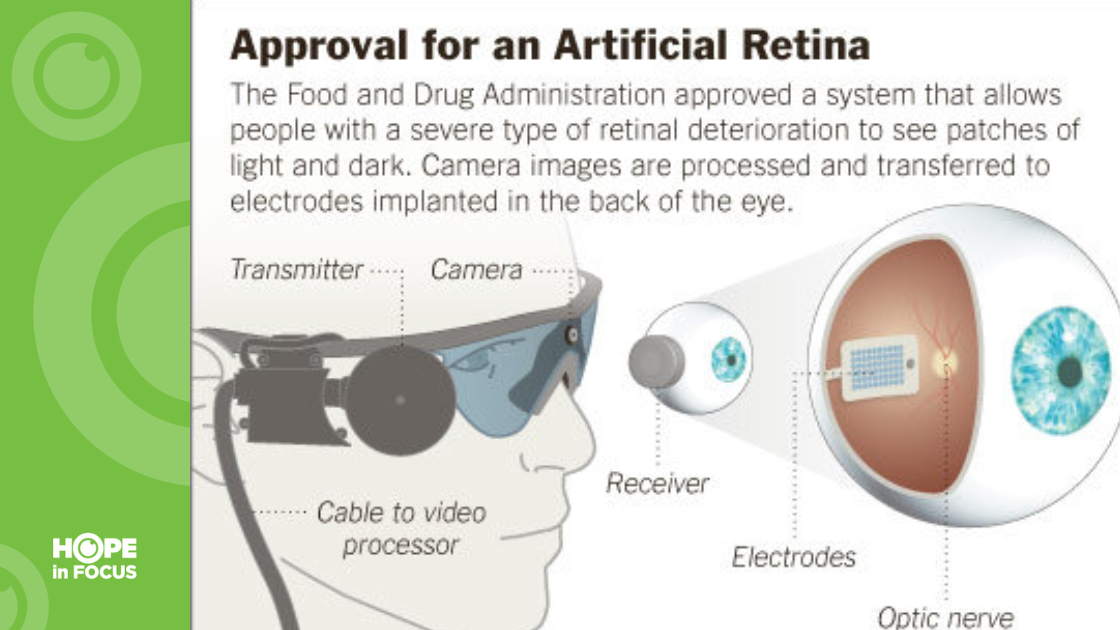
Approval for an Artificial Retina graphic

The Argus II bypasses damaged photoreceptors through electrodes implanted on the retina. Following the delicate three-hour surgery, Orly wore glasses containing a tiny camera that converted video images into a series of small electrical impulses transmitted wirelessly to the electrodes. Visual information transmits to the brain’s optic nerve when the pulses stimulate the retina’s remaining cells.

The visual improvement does not equal regular sight, but it allows patients to perceive light patterns, observe whether doors and windows are open, or pick up a glass.

Orly worked with rehabilitation experts, low-vision therapists and consultants from Second Sight. Three months following the surgery, she could detect contrast and recognize the difference between white and black. Because patients receive a form of artificial vision through this bionic eye, they need to re-train their brains through rehabilitation to learn and understand messages sent by the device. It’s kind of like learning a new language.

Orly volunteered to take part in the clinical trial for a year but presently does not use the technology. 

“I worked hard for two years, then decided to not use the system for personal use, as it didn’t provide any benefits as of yet.” 

Orly’s participation is exactly what a clinical trial is all about. She committed to making frequent visits and underwent testing over the course of a year. She knew that the goal of a clinical trial is to see whether a potential treatment is safe and effective, and that, while a trial participant might benefit, the trial’s purpose is to determine if the therapy works. 

“I was prepared in being part of advancing technology for blind/visually impaired people in the future. That’s always who I am,” she said. “I’m 100 percent ready and available to get updates and keep trying.”

Human Genome Project: Critical to Modern Gene Therapy Success

The long and sometimes uncompromising road to completing the Human Genome Project (HGP) paved the way for today’s surge in genetic therapy, Dr. Katherine A. High said in her presentation at the second Hope in Focus (formally Sofia See’s Hope) LCA Family Conference.

“It was a tremendous achievement,” Dr. High said, “And it forms an important bedrock for everything we are trying to do in gene therapy.”

The HGP began in 1990 with an international, collaborative quest to map and understand all the genes of human beings and their roles in health and disease. The project, completed in 2003, revealed that there are probably about 20,500 human genes, referred to collectively as our genome, according to the National Human Genome Research Institute (NHGRI).

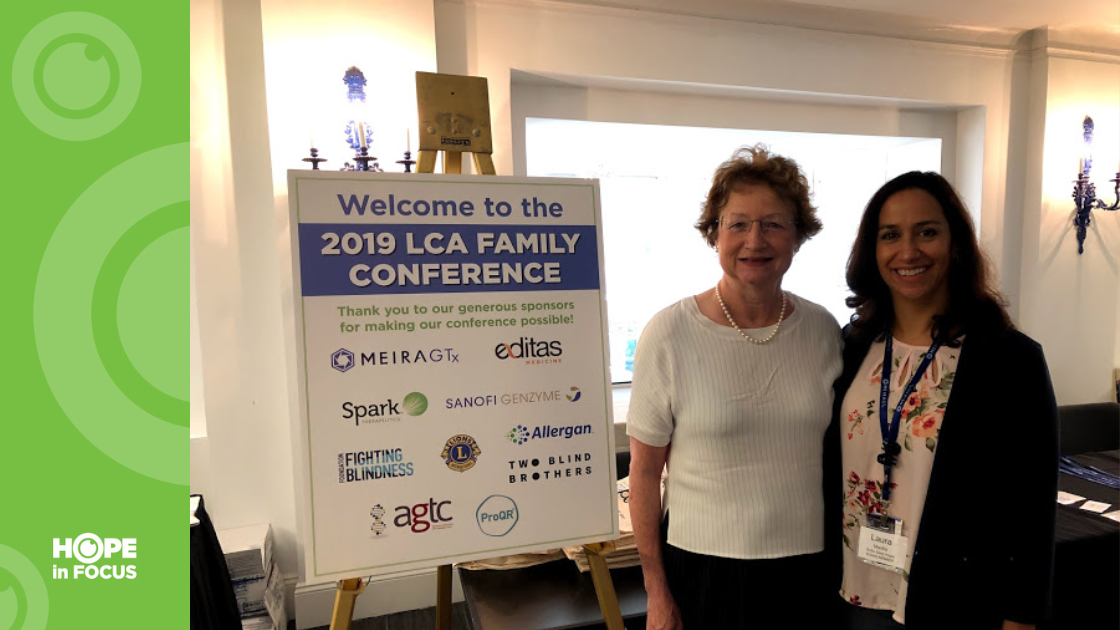
Dr. Katherine High and Laura Manfre next to a Welcome poster
Dr. Katherine High and Sofia Sees Hope co-co-founder Laura Manfre at the LCA Family Conference in July.

Dr. High, keynote speaker and accomplished hematologist with a longstanding interest in gene therapy for genetic disease, kicked off the July 27 conference in Philadelphia.

More than 80 patients, family members, advocates, doctors, researchers and biotech industry leaders from 15 states and Mexico gathered for exchanges of knowledge and ideas about Leber congenital amaurosisinherited retinal diseases (IRD) and other rare diseases. The conference grew out of the Sofia Sees Hope Family Connections program that brings together families living with LCA and other IRDs in a supportive community to help alleviate feelings of isolation that often come with a rare-disease diagnosis. 

Dr. High and her team at Children’s Hospital of Philadelphia (CHOP), including Dr. Jean Bennett and Dr. Albert Maguire, developed – from clinical trials to regulatory approval – the first gene therapy for any inherited genetic disease in the United States; it also is the first genetic therapy targeting a retinal disease worldwide. The treatment focused on LCA caused by mutations in the gene RPE65, one of the more than 25 different genes, that, when mutated, can lead to LCA.

‘The Long & Winding Road’

Spark Therapeutics, a company that spun off the team’s research at CHOP, developed the therapy called LUXTURNA™ after 12 years of research and more than $500 million in investment. The U.S. Food and Drug Administration (FDA) approved the human-engineered, injectable drug in December 2017. Beginning in 2018, patients with low vision caused by LCA-RPE65 underwent surgery to help improve their eyesight. 

LUXTURNA and the dozens of clinical trials now underway for retinal disease would not be possible if not for the HGP. Dr. High, Spark’s president and head of research and development, elaborated on the genome project in her presentation, “The Long and Winding Road: How the Human Genome Project and Gene Therapy Research Led to the First Gene Therapies for Genetic Disease.”

The ultimate product of the HGP – detailed information about the structure, organization and function of the complete set of human genes – can be thought of as the basic set of inheritable instructions for the development and function of a human being, according to NHGRI information.

Dr. High said the burden of genetic disease falls heavily on children’s hospitals, with 25 million Americans having a rare genetic disease. 

A 4-year-old made genetic history after receiving the first genetic transfer in the United States in 1990, leading eventually to licensing of a product for the same disease in Europe in 2016. But that span of time did not represent an unbroken chain of successes, Dr. High said. “Instead, it was punctuated by a number of adverse events and failed results.”

A teenager died in a 1999 genetic trial in Philadelphia, and in 2003, children in a Parisian clinical trial developed leukemia. 

A Wall Street Journal article about Spark Therapeutics

“Gene therapy was just not ready for prime time and there was a decline in trials and participation.”

Headlines such as “Gene Therapy Still Lacks Breakthrough” and “Gene Therapy: cursed or inching toward credibility” mirrored waning interest from pharmaceutical companies and investors.

Instead, the American and European Societies of Gene and Cell Therapy, the National Institutes of Health (NIH), of which the National Human Genome Research Institute is part, and academic medical centers, like CHOP and its Center for Cellular & Molecular Therapeutics, sustained genetic therapy research through rough times, allowing investigators to develop therapeutics based on best science, not commercial considerations, Dr. High said.

Investing in the RPE65 blindness clinical trials during this time ultimately led to the development and FDA approval of LUXTURNA.

“The ability to work through those adverse events brought us to where we are now,” she said.

In the United States, the clinical development phase of a drug begins when a sponsor files an Investigational New Drug application (IND) with the FDA. IND submissions with gene therapy products went from zero in 1963, to three in 1990, to more than 100 in 2017. Following LUXTURNA’s market entrance in 2018, sponsors submitted more than 200 INDs.

“The level of activity in the last few years is truly extraordinary. It’s a very compelling statement of how people are investing time and energy into gene therapy,” which High said is probably the most complicated treatment researchers have tried to develop.

“It’s a complex therapeutic. The outside is a protein. The inside is a piece of DNA and those things have to be assembled in the exact proportions or it’s not going to work right.”

Dr. High also described the increased progression of identifying genes involved with vision – from zero in 1980 to more than 300 by January 2019. 

“It’s daunting to think about the number of development programs that might need to be initiated and taken all the way through. But a journey of a thousand miles begins with a single step.”

Diagnosis to Treatment: Pioneering LCA Patient Eases the Journey

As a global advocacy organization dedicated to helping those affected by blindness caused by rare inherited retinal disease, Hope in Focus (formally Sofia Sees Hope) connects families with Leber congenital amaurosis (LCA) and other IRDs through its Family Connections program and through events such as its second LCA Family Conference set for July 26-28 in Philadelphia.

The conference offers opportunities to engage in thoughtful and interactive exchanges of knowledge, ideas and viewpoints in sessions focusing on research, future treatments, advocacy and people sharing their stories.

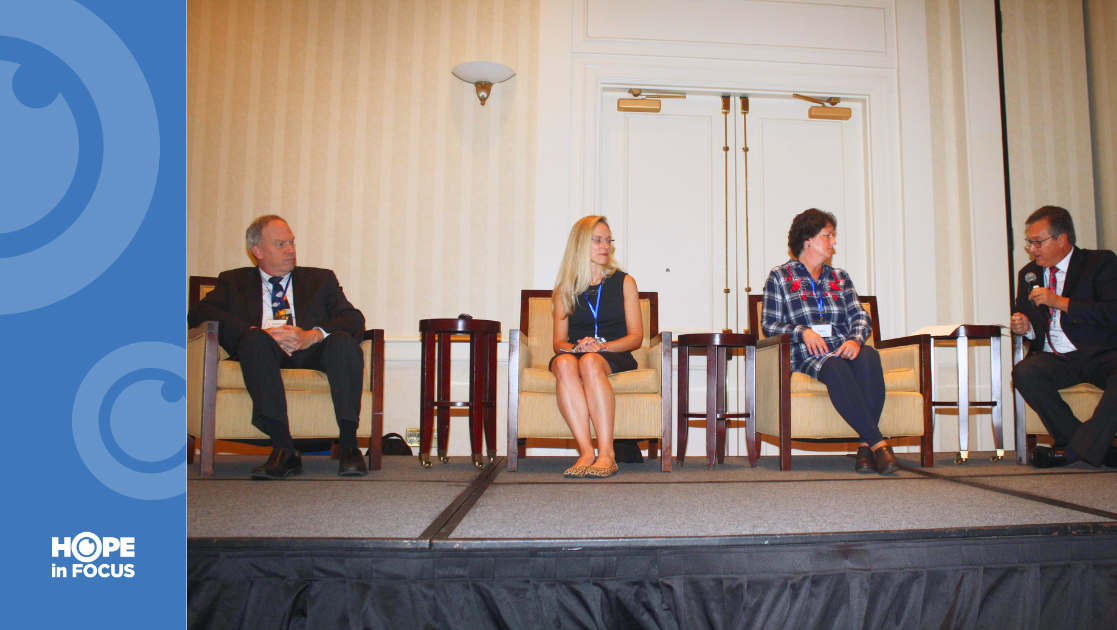
Tami Morehouse, third from left, during a panel at the 2018 LCA Family Conference in Groton, CT.

Pioneering LCA patient Tami Morehouse attended the patient advocacy session of the first LCA Family Conference last October in Groton, CT, and participated as a panelist in a session titled: “The Road to Treatment: Understanding How Therapies Are Developed.”

She made research history in the LCA world and in the nation in 2009, when at age 44 during trials for genetic therapy medication, doctors injected under her retinas a human-engineered virus that restored an essential protein for vision. Spark Therapeutics developed the drug that was marketed as LUXTURNA™ following U.S. Food & Drug Administration approval in December 2017.

Tami lives in the Cleveland area and is among the LCA patients who have shared their stories to help others navigate the obstacles that accompany the diagnosis of a rare disease and the journey in finding a treatment.

We’ll share the words she shared with two families – the mom of a boy who received the new genetic therapy treatment, and a mom, and her little boy, who asked a lot of questions about the surgery.

Making Family Connections

Tami holds a special place in the heart Sarah St. Pierre Schroeder, whose then-9-year-old son, Creed, became the youngest person to receive the new genetic therapy for LCA with a mutation in his RPE65 gene. (See our series of stories about Creed, his spring 2018 surgery and his journey.)

Because Tami is the oldest person who successfully received the experimental treatment in both eyes in a clinical drug trial a decade ago, she possesses invaluable insight into the unknowns faced by Sarah and her third grader, who live in Mount Dora, Fla.  

Sarah said she is forever grateful for Tami talking with her.

“I will never forget the emotions I felt when Tami reached out to me. Every sentence in her email brought me more comfort about what I was doing for Creed,” Sarah said.

“She was so open about her journey, I felt like we had known each other forever. I felt like she was with us in Miami (where Creed underwent surgery at Bascom Palmer Eye Institute).

“Suddenly I was able to ask someone all the questions I had and get answers. Not just ‘maybe this will happen.’ ”  

Here’s some of what Tami shared with us about talking with Sarah:

I’ve had some great conversations with those who have either been involved in the process of treatment of LCA or are hopeful they might be involved in a clinical trial in the future. I’m sure you aren’t surprised when I say that emotions usually run pretty high during these conversations.

Sarah was the first parent I talked with. I kept thinking about her and Creed in the days prior to Creed’s procedure. I remembered how I felt when I was in their shoes and couldn’t help but reach out to them on the night before Creed’s procedure. As it turned out, Sarah seemed very open and happy to talk with someone who had been there and understood a little about all that they were feeling and wondering about.

Sarah and I had lots of communication that night and the day of his procedure, which seemed like it would never get here, and in the days following.

Hearing about the improvements in Creed’s vision and how it has changed his life has been so much fun. Thinking about it is still a bit overwhelming sometimes, but wonderful. I’m so glad for him.

It’s nice to check in with Sarah from time to time to talk about the progress and adjustments they are making. I hope they enjoy our interactions as much as I do.

Here is some of what Tami had to share after talking with a mom considering gene therapy for her son. (Tami spoke to the woman and her son as a confidant and did not want to disclose their names.)

The mom asked that I talk with her little one specifically about what the procedure was like. She wanted him to talk with someone who had actually gone through it. We had a great conversation.

I talked to him about things like, the fact that my surgery wasn’t painful for me but did feel a little funny afterward; that I did have to have lots of eye drops; that my surgery didn’t even take very long; that the doctors and nurses were really nice; that my family could be with me after the surgery when I needed them; and that I was pretty comfortable through the whole thing.

I told him that the best part is that I can see a little better than I could before I had the surgery.

At the beginning of the conversation, the little guy seemed pretty quiet and uncomfortable. As the conversation went on, he appeared more relaxed and seemed to be listening pretty intently. His first question was, “WOW, you mean you had surgery already? WOW!”

He also asked if I thought he would be able to get used to all the eye drops and if it would be a long time before he could play video games after his surgery. I told him that I wasn’t sure of how long he would have to wait to play games, but that if he was patient, his reward might be some really good pizza and chocolate chip cookies, which is what I got to eat after my surgery was over. I got a big giggle out of him then. He said that he is pretty happy that he might get the surgery.

If one thing I said to this child makes his surgery easier for him, I’ll be so happy. I just hope it happens for him as they anticipate.

Mom and I talked about the reasons why she feels good about the safety of the (clinical) trial. That’s always a huge issue with just about everyone that I’ve talked to prior to receiving treatment or participating in any trial. Safety always comes first. Understanding why a procedure is determined to be safe is very important.

We also talked about the importance of being aware of what kinds of results treatment might provide for her son, as well as what she and her son are expecting or hoping for from a particular treatment. There were a couple of participants in the trial with me that seemed to have really high expectations that just weren’t possible. Luckily, it seems like this little guy and his mom are in a good place when it comes to their expectations.

Anytime I talk with people seeking any treatment for any rare inherited retinal disease, I strongly encourage them to do their best to understand as much as possible about the procedure, care and services that they are considering or receiving. This can be made easier by reading everything available about the treatment they are pursuing. Unfortunately, sometimes reading and understanding some of this printed information are two different things.

The more that is known about the treatment ahead of time, the easier it is to understand what is going on when making decisions prior to and during treatment.

Asking questions and expressing any concerns that come up is also very important when making decisions about accepting or going through treatment. Taking any available opportunity to develop relationships and open lines of communication with any medical and/or clinical staff is very important. Doing this can make it much easier for patients, as well as physicians, to openly ask questions and express concerns. This can make all the difference in the world when it comes to getting the answers and information needed.

Another thing to consider for individuals who do receive treatment and experience restored vision, is how improved vision may affect their lives.

For some, this is a wonderful thing. For others, this can be a bit of a challenge.

Thank you, Tami.

Natural History Studies Vital to Finding Treatments for Rare Diseases

The lack of information on rare diseases can create difficulty in developing drugs to treat them. To help, it is important to study the natural history of rare diseases.

Compared with common diseases, researchers know little about rare disease signs and symptoms, how the disease changes over time, and ways in which the disease affects the lives of patients and their families.

Natural History studies track the course of a patient’s disease over time. They identify demographic, genetic, environmental, and other variables that shape the drug development process

Dr. Eric Pierce headshot in a lab
Dr. Eric Pierce, Massachusetts Eye and Ear

“In general, Natural History studies can be helpful precursors to clinical trials of potential treatments for inherited retinal degenerations for multiple reasons,” said Eric A. Pierce, MD, Ph.D., with Massachusetts Eye and Ear. “For example, they can help identify the tests or measurements which would be most appropriate to use as endpoints in therapeutic studies.”

Another way to view such studies is to “Begin with the end in mind,” as suggested by Anne R. Pariser, MD, in her work on Natural History studies for the U.S. Food and Drug Administration

Natural History data provide knowledge and an independent understanding of a disease, while establishing an essential foundation for building drug development programs. These studies have been characterized as the “pillar of epidemiologic research on rare conditions,” and, along with assisting in developing drugs, they help with patient care, best practices, research priorities, and clinical trial readiness, according to Dr. Pariser, director of the Office of Rare Diseases Research at the National Center for Advancing Translational Sciences.

The studies give scientists and researchers a better estimate of the prevalence of the disease, help identify potential biomarkers, affect clinical outcome assessments, and determine the feasibility of established assessments for clinical trials.

A rare disease is a disease or a condition that affects fewer than 200,000 Americans. With a relatively small number of people affected by the 7,000 diseases considered rare, scientists sometimes face daunting odds in finding enough people meeting study requirements.

In the Leber congenital amaurosis (LCA) community, scientists are looking for people to take part in different stages of drug development.

Editas Medicine, a genome-editing company based in Cambridge, Mass., is sponsoring a Natural History study of LCA10, known by its gene name CEP290, to inform the design of potential future treatment studies involving genome editing in LCA10. The purpose of the study is to understand and better describe the clinical course of LCA10-related retinal degeneration that is associated with a particular genetic change in the CEP290 gene called c.2991+1655A<G.

The study will be used to characterize the range of visual function in patients, evaluate which visual tests may be most useful, and determine the rate of change in visual function over a one-year period.

Dr. Pierce, director of the Ocular Genomics Institute and the William F. Chatlos Professor of Ophthalmology at Massachusetts Eye and Ear (MEE) and Harvard Medical School, is the principal investigator at one of the seven sites in the United States and Europe actively recruiting patients for this Natural History study. For more information, call MEE at 617-573-6060 or visit www.enlightenLCA10study.com/. Study details also can be found at ClinicalTrials.gov Identifier: NCT03396042.

The two groups of conditions below describe the parameters for taking part in the study. Taken together, they illustrate the potential difficulty in finding the 40 participants needed for the study of this rare disease.

Patients must meet six conditions, known as inclusion criteria:

  • 3 years of age or older;
  • Abnormally decreased vision, with examination and test results consistent with inherited retinal degeneration due to mutations in the CEP290 gene;
  • Able to cooperate with assessments relative to the patient’s age;
  • Clear ocular media and adequate pupil dilation in at least one eye to permit good-quality examination of the interior surface of the eye opposite the lens and optical coherence tomography (OCT) imaging;
  • Able to successfully navigate a mobility maze at a level of difficulty below the maximum performance level.

Patients cannot participant if one or more of the five following conditions, called exclusion criteria, exist:

  • Visual acuity of no light perception in both eyes;
  • History or current evidence of a range of medical conditions that may preclude attending scheduled study visits, safe participation in the study, or affect the study results;
  • History or current evidence of ocular disease in either eye that may confound assessment of this inherited retinal disease;
  • Currently receiving gene therapy and/or has received gene therapy;
  • Currently enrolled in an investigational or interventional drug or device study and /or has participated in such a study within 30 days of screening.

If you or your loved one is interested in taking part in a Natural History study, please register with the www.MyRetinaTracker.org, a free, secure, online registry managed by the Foundation Fighting Blindness for patients who have been diagnosed with an inherited retinal disease (IRD).

Participants currently are being recruited for a Foundation-funded Natural History study of disease progression in patients with USH2A-related retinal degeneration associated with congenital hearing loss (Usher syndrome type2a) or non-syndromic retinitis pigmentosa (RP39).

In LCA: Naming Versus Numbering

Gene mutations in the rare inherited retinal disease of Leber congenital amaurosis (LCA) commonly are referred to by their gene name, such as GUCY2DRPE65 and CEP290. But sometimes, as LCA patients and families have discovered, they are referenced numerically as LCA1LCA2 and LCA10, respectively.

Why the difference? It’s confusing.

LCA1 through LCA18 exist in a continually updated online catalog of human genes and genetic disorders called Online Mendelian Inheritance in Man. Mendelian inheritance is based on the ideas of Gregor Johann Mendel, a 19th-century Moravian monk known as the father of modern genetics.

One source of confusion for LCA families is that there are 27 genes that can cause LCA, but only LCA1 through LCA18 are cataloged. For most genes, OMIM includes only selected mutations based on criteria such as the first mutation discovered, high-population frequency, distinctive phenotype and more. LCA families with genes not included in the database are left to wonder why they’ve been left out.

OMIM focuses on the molecular relationship between genetic variation and phenotypic expression and is considered a phenotypic companion to the Human Genome Project, which funds the database. The HGP international research effort from 1990 to 2003 culminated in a blueprint for building a person by completing an entire sequence of the human genome.

OMIM is a continuation of Dr. Victor A. McKusick’s Mendelian Inheritance in Man published through 1998. Created in 1985 through a collaboration between the National Library of Medicine and the William H. Welch Medical Library  at Johns Hopkins University School of Medicine, OMIM went online in 1987.

For example, OMIM refers to GUCY2D as LCA1, #204000 (phenotype MIM number), located at 17p13.1 with a gene/locus MIM number of 600179.

Translated:

“A number sign (#) is used with this entry because of evidence that Leber congenital amaurosis-1 (LCA1) is caused by a homozygous mutation in the gene encoding retinal guanylate cyclase (GUCY2D: 600179) on chromosome 17p13.”

There’s more, but that can be left to physicians, genetics’ professionals, researchers and students studying advanced science and medicine.

“For a patient with LCA or their family, what’s important is not the LCA## symbol, but, rather, a) the underlying affected gene; b) whether inheritance is dominant or recessive (dominant is rare); and c) the specific mutation or mutations,” according to Stephen P. Daiger, PhD, Professor in Environmental and Genetic Sciences at the University of Texas Health Science Center and director of the Laboratory for Molecular Diagnosis of Inherited Eye Diseases.

“This is the information which decides, for example, whether someone is eligible for a clinical trail focused on a specific gene, e.g., LUXTURNA™ for RPE65,” he said. “It is very important to know and remember this information.”

‘We know how important it is to know your gene. We’ve lived it.’

It took more than seven years to get a genetic diagnosis for our daughter. During that time, doctors were pretty sure she had LCA, although we also heard that maybe she had cone-rod dystrophy or perhaps Stargardt’s Syndrome. We argued with insurance over genetic testing, paid out-of-pocket, took time off work and school for trips out of state and sent blood work all over. Still, no one could give us a genetic diagnosis. Some labs never even bothered to return phone calls to tell us if they had any results.  

And then things changed. More genes had been identified and there were new and better ways of genetically diagnosing IRDs. Finally, in 2013, I we received a confirmed diagnosis for Sofia.

Flash forward another five years to today and there are even more changes. While many aspects of obtaining a genetic diagnosis are still challenging, thanks to continued research, increased awareness, and accessible testing programs, it’s no longer a seven-year ordeal. Patients can get tested today without incurring travel expense and are much more likely to receive a confirmed genetic diagnosis.  

Thanks to donations to our organization, we have been able to support accessible genetic testing for families. Thanks to our donors and supporters, we are also able to provide outreach and education to families, driving awareness and access for genetic testing and encouraging participation in natural history studies and patient registries.  

Our awareness campaign this year is Know Your Gene: Get Tested, Get Connected.  Knowledge is power and we are helping more families get tested so they can receive their genetic diagnosis and then connect in ways that will accelerate research for treatments and cures for IRDs. We want to stress the importance of connecting to a patient registry or a genetic counselor. We want to help families and individuals find each other for support and sharing of information. And we are driving those programs and communications that will continue to advance cures for blindness.

We know how important it is to know your gene. We’ve lived it.

First, Diagnosis. Then, Genetic Testing. It’s Important.

My Retina Tracker® is a free and secure online registry launched by the Foundation Fighting Blindness that helps connect families dealing with rare inherited retinal diseases to feel less alone, and to find help.

Parents feel shock and isolation when they are told their babies have no vision or limited vision caused by a rare inherited retinal disease. They do adapt and pursue resources, but that feeling of isolation often persists because of the disease’s rarity. It’s unlikely you will bump into someone in the grocery store whose child also has retinitis pigmentosa.

My Retina Tracker® is a free and secure online registry launched by the Foundation Fighting Blindness (FFB) that helps alleviate those feelings of isolation. An individual goes from being one with an inherited retinal disease to becoming part of a growing community of people (currently 6,500) sharing similar concerns and hopes.

The goal of My Retina Tracker® is to drive the research toward prevention, treatments and cures for people living with retinitis pigmentosa (RP), Stargardt disease, Usher syndrome and the whole spectrum of inherited retinal degenerative diseases, including Leber congenital amaurosis (LCA).

The global registry includes rare inherited retinal disease patient disease information from Europe, North, South and Central America, Asia and the Pacific.

Dr. Brian Mansfield, FFB’s deputy research officer who managed the registry’s launch three years ago, said people registering take an active role in advancing research to find treatments and cures for specific rare inherited retinal diseases, affording the opportunity to join others and “stand up and be counted.”

“Whether you’re in the middle of New York City or in a small town in West Virginia,” Dr. Mansfield said, “you’re equal to everyone else in that registry. It removes isolation. You’re literally standing up.”

My Retina Tracker® notifies registrants of clinical trials and gives researchers access to their disease data – but not their personal information – to advance research and therapy development associated with IRDs.

To optimize the power of My Retina Tracker®, registrants should seek a genetic diagnosis. The registry facilitates that by making registrants eligible for free genetic testing. In today’s world, it is helpful to be genetically diagnosed if you want to participate in research.

Details of My Retina Tracker® can come none too soon for some. Dr. Mansfield said after LUXTURNA® recently came to market as the first genetic therapy for LCA patients with an RPE65 gene mutation, he came across information about a person who set up a crowd-funding site asking for $5,000 to travel to Texas because he needed a genetic test.

“You don’t have to raise $5,000 to get a genetic test,” Dr. Mansfield said. “You don’t have to travel to Texas to get a genetic test.”

Helping families get tested

Hope in Focus (formally Sofia Sees Hope) well understands the importance of genetic testing for those with rare inherited retinal disease. Part of its mission is to educate individuals and families about the importance of becoming part of patient registries and getting genetically tested. SSH also makes genetic testing accessible to those who cannot afford it.

“Last year, we supported FFB’s (genetic testing) program as a small test grant,” said SSH founder Laura Manfre. “This year, with the success of the test and thanks to the tremendous support of our donors, we are happy that we were able to more than quadruple our contribution, enabling many more individuals to receive free testing and genetic counseling.”

Dr. Mansfield thanked Sofia Sees Hope for for its $65,000 donation to FFB, earmarked for genetic testing.

“The help was truly appreciated,” he said. “I’m very proud of the relationship we have with Sofia Sees Hope.”

How My Retina Tracker® works

Go to myretinatracker.org, click on Register Now and follow the prompts to establish a username and password and to answer questions to build your personalized retinal health profile. You are then guided through a series of questionnaires developed by retinal clinicians, geneticists, genetic counselors and rare inherited retinal disease researchers.

If you have any questions, call the My Retina Tracker® coordinator at 800-683-5555 or email to Coordinator@MyRetinaTracker.org.

Once you’ve registered, send a request to Coordinator@MyRetinaTracker.org asking to be genetically tested and you’ll receive information and guidance on how to order the test.

The registry becomes your personal retinal health record, updated by you and your doctors. Your history and testing results create a critical resource in tracking the progress of your disease and becoming part of a comprehensive database.

The registry employs state-of-the-art database technology to protect privacy and adheres to the highest standards of confidentiality and ethics, following policy and protocol set by the National Institutes of Health’s Institutional Review Board.

Your disease information is accessible only to you,  FFB registry staff, and researchers who meet a rigorous scientific review application process to use the data for studies and to reach individuals to participate in clinical trials, natural history studies or focus groups. Your personal information is never shared with researchers.

Large commercial biotech companies use this pool of data to find people for clinical trials, a common research challenge. Rather than calling clinicians one by one, the data is accessible in one place and often updated.

Clinical trials are out there

The data helps inform researchers about the therapies patients want, the risks they are willing to take for different levels of vision improvement and when and how their vision loss progresses.

Personal updates, such as when someone had to stop driving because of increased vision loss, help track the progress of the patient’s disease.

“Then you have a clinical longitudinal timeline as to how vision is changing for the patient,” Dr. Mansfield said.

Before My Retina Tracker®, the foundation used a paper list of about 12,000 names accumulated over FFB’s 40 years. The names transferred to the new registry to total about 17,500, but many are outdated.

There are about 6,500 people actively engaging in the online portal profile, with about 150 new registrations a month.

Dr. Mansfield wants to reach a minimum goal of 20,000 registrants in the next four years, although 50,000 would be preferable, as it would make for an extremely effective base of data for phase 2 and phase 3 studies that create demand for more trial enrollees.

He also made the distinction that private labs hold onto their data tightly, whereas FFB’s goal is the opposite.

“We want to share it, we want to move the whole field forward,” Dr. Mansfield said. “After all, our goal is to ensure the treatment and cures of all retinal diseases.”

To Test or Not To Test: 5 Reasons We Think You Can And Should Get a Genetic Diagnosis For Your IRD

Hey LCA or IRD family, does any of this sound familiar?

You or your child has received a clinical diagnosis of LCA (leber congenital amaurosis), RP (retinitis pigmentosa), cone-rod dystrophy, or another crazily-named inherited retinal disease AND…

  • Your doctor wants to help, but isn’t sure where to direct you or what to do next.
  • Your doctor doesn’t even think you should bother. (There aren’t any cures or treatments available so why waste your time and energy?)
  • You’ve been genetically tested at least once (and maybe five times before). No one gets back to you and if they do, the results are negative.
  • Your insurance company doesn’t want to cover the cost.
  • OMG, you’re frustrated! No one seems to be able to give you clear direction and you’re not getting any answers.

On one hand, we wish we could say this experience is rare and unique! But the truth is that you’re in good company. There is still so much confusion around getting to a genetic diagnosis for your inherited retinal disease. The good news is, we are not confused on one item: YOU NEED TO GET TESTED! And here are five reasons why.

  • Misdiagnosis is still more common than we wish. Until you have a genetic diagnosis, you just can’t be sure you really have LCA, or RP, or another IRD.
  • It’s not just about blindness. This is the somewhat scary part that you might not be aware of, but several of the genetic defects that come with these rare IRDs, also impact other organs. For example, some LCA genes are reno-retinal genes, meaning that they may also impact kidney function. We’re not sharing this information to scare you into getting tested, but to highlight just how important it is to make sure you have a clear, genetic diagnosis so you can be prepared and provide the best care possible for any other possible conditions.

Treatments and cures are coming! That tired story of don’t bother because there’s nothing you can do is bogus. There is already a proven treatment for one form of LCA (RPE65) and there will be others. If you don’t have a diagnosis, you can’t participate in clinical trials or take advantage of treatments as they become available. That is a real bummer.

  • We know where you can get tested. We are so close to cures and treatments today that there are FREE programs like Spark Therapeutics’ ID Your IRD and programs through the Foundation FIghting blindness that you may be able to take advantage of. Check out our website resources for information, or contact us and let us help!
  • Knowledge is power. ‘Nuff said.