Diagnosis to Treatment: Pioneering LCA Patient Eases the Journey

As a global advocacy organization dedicated to helping those affected by blindness caused by rare inherited retinal disease, Hope in Focus (formally Sofia Sees Hope) connects families with Leber congenital amaurosis (LCA) and other IRDs through its Family Connections program and through events such as its second LCA Family Conference set for July 26-28 in Philadelphia.

The conference offers opportunities to engage in thoughtful and interactive exchanges of knowledge, ideas and viewpoints in sessions focusing on research, future treatments, advocacy and people sharing their stories.

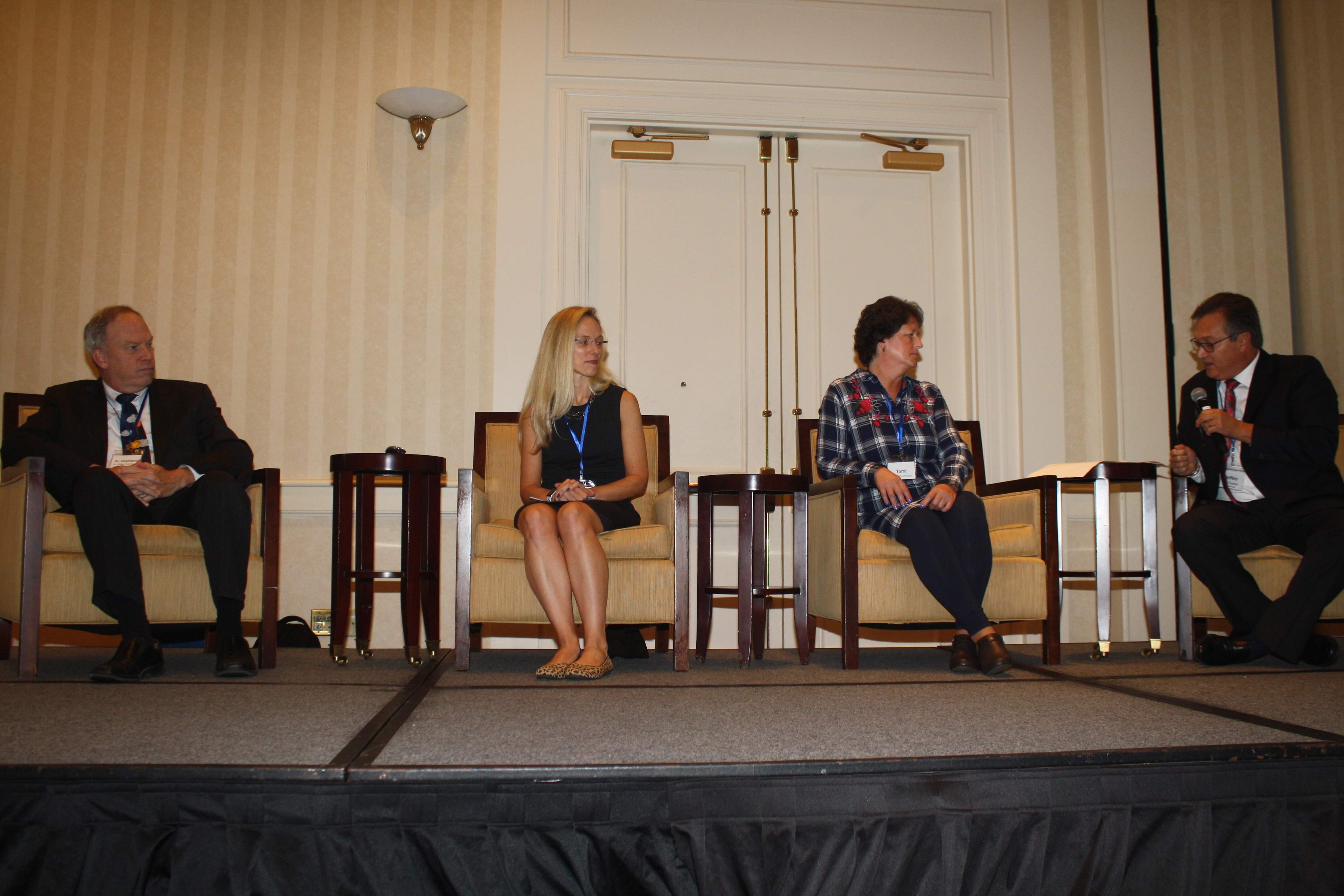
Tami Morehouse, third from left, during a panel at the 2018 LCA Family Conference in Groton, CT.

Pioneering LCA patient Tami Morehouse attended the patient advocacy session of the first LCA Family Conference last October in Groton, CT, and participated as a panelist in a session titled: “The Road to Treatment: Understanding How Therapies Are Developed.”

She made research history in the LCA world and in the nation in 2009, when at age 44 during trials for genetic therapy medication, doctors injected under her retinas a human-engineered virus that restored an essential protein for vision. Spark Therapeutics developed the drug that was marketed as LUXTURNA™ following U.S. Food & Drug Administration approval in December 2017.

Tami lives in the Cleveland area and is among the LCA patients who have shared their stories to help others navigate the obstacles that accompany the diagnosis of a rare disease and the journey in finding a treatment.

We’ll share the words she shared with two families – the mom of a boy who received the new genetic therapy treatment, and a mom, and her little boy, who asked a lot of questions about the surgery.

Making Family Connections

Tami holds a special place in the heart Sarah St. Pierre Schroeder, whose then-9-year-old son, Creed, became the youngest person to receive the new genetic therapy for LCA with a mutation in his RPE65 gene. (See our series of stories about Creed, his spring 2018 surgery and his journey.)

Because Tami is the oldest person who successfully received the experimental treatment in both eyes in a clinical drug trial a decade ago, she possesses invaluable insight into the unknowns faced by Sarah and her third grader, who live in Mount Dora, Fla.  

Sarah said she is forever grateful for Tami talking with her.

“I will never forget the emotions I felt when Tami reached out to me. Every sentence in her email brought me more comfort about what I was doing for Creed,” Sarah said.

“She was so open about her journey, I felt like we had known each other forever. I felt like she was with us in Miami (where Creed underwent surgery at Bascom Palmer Eye Institute).

“Suddenly I was able to ask someone all the questions I had and get answers. Not just ‘maybe this will happen.’ ”  

Here’s some of what Tami shared with us about talking with Sarah:

I’ve had some great conversations with those who have either been involved in the process of treatment of LCA or are hopeful they might be involved in a clinical trial in the future. I’m sure you aren’t surprised when I say that emotions usually run pretty high during these conversations.

Sarah was the first parent I talked with. I kept thinking about her and Creed in the days prior to Creed’s procedure. I remembered how I felt when I was in their shoes and couldn’t help but reach out to them on the night before Creed’s procedure. As it turned out, Sarah seemed very open and happy to talk with someone who had been there and understood a little about all that they were feeling and wondering about.

Sarah and I had lots of communication that night and the day of his procedure, which seemed like it would never get here, and in the days following.

Hearing about the improvements in Creed’s vision and how it has changed his life has been so much fun. Thinking about it is still a bit overwhelming sometimes, but wonderful. I’m so glad for him.

It’s nice to check in with Sarah from time to time to talk about the progress and adjustments they are making. I hope they enjoy our interactions as much as I do.

Here is some of what Tami had to share after talking with a mom considering gene therapy for her son. (Tami spoke to the woman and her son as a confidant and did not want to disclose their names.)

The mom asked that I talk with her little one specifically about what the procedure was like. She wanted him to talk with someone who had actually gone through it. We had a great conversation.

I talked to him about things like, the fact that my surgery wasn’t painful for me but did feel a little funny afterward; that I did have to have lots of eye drops; that my surgery didn’t even take very long; that the doctors and nurses were really nice; that my family could be with me after the surgery when I needed them; and that I was pretty comfortable through the whole thing.

I told him that the best part is that I can see a little better than I could before I had the surgery.

At the beginning of the conversation, the little guy seemed pretty quiet and uncomfortable. As the conversation went on, he appeared more relaxed and seemed to be listening pretty intently. His first question was, “WOW, you mean you had surgery already? WOW!”

He also asked if I thought he would be able to get used to all the eye drops and if it would be a long time before he could play video games after his surgery. I told him that I wasn’t sure of how long he would have to wait to play games, but that if he was patient, his reward might be some really good pizza and chocolate chip cookies, which is what I got to eat after my surgery was over. I got a big giggle out of him then. He said that he is pretty happy that he might get the surgery.

If one thing I said to this child makes his surgery easier for him, I’ll be so happy. I just hope it happens for him as they anticipate.

Mom and I talked about the reasons why she feels good about the safety of the (clinical) trial. That’s always a huge issue with just about everyone that I’ve talked to prior to receiving treatment or participating in any trial. Safety always comes first. Understanding why a procedure is determined to be safe is very important.

We also talked about the importance of being aware of what kinds of results treatment might provide for her son, as well as what she and her son are expecting or hoping for from a particular treatment. There were a couple of participants in the trial with me that seemed to have really high expectations that just weren’t possible. Luckily, it seems like this little guy and his mom are in a good place when it comes to their expectations.

Anytime I talk with people seeking any treatment for any rare inherited retinal disease, I strongly encourage them to do their best to understand as much as possible about the procedure, care and services that they are considering or receiving. This can be made easier by reading everything available about the treatment they are pursuing. Unfortunately, sometimes reading and understanding some of this printed information are two different things.

The more that is known about the treatment ahead of time, the easier it is to understand what is going on when making decisions prior to and during treatment.

Asking questions and expressing any concerns that come up is also very important when making decisions about accepting or going through treatment. Taking any available opportunity to develop relationships and open lines of communication with any medical and/or clinical staff is very important. Doing this can make it much easier for patients, as well as physicians, to openly ask questions and express concerns. This can make all the difference in the world when it comes to getting the answers and information needed.

Another thing to consider for individuals who do receive treatment and experience restored vision, is how improved vision may affect their lives.

For some, this is a wonderful thing. For others, this can be a bit of a challenge.

Thank you, Tami.

The Patient Voice: A Critical Piece of the Rare Disease Advocacy Puzzle

Two people deeply involved in patient advocacy and public policy recently urged members of the rare disease community to use their personal experiences as a means of advocating for research and treatment of rare disease.

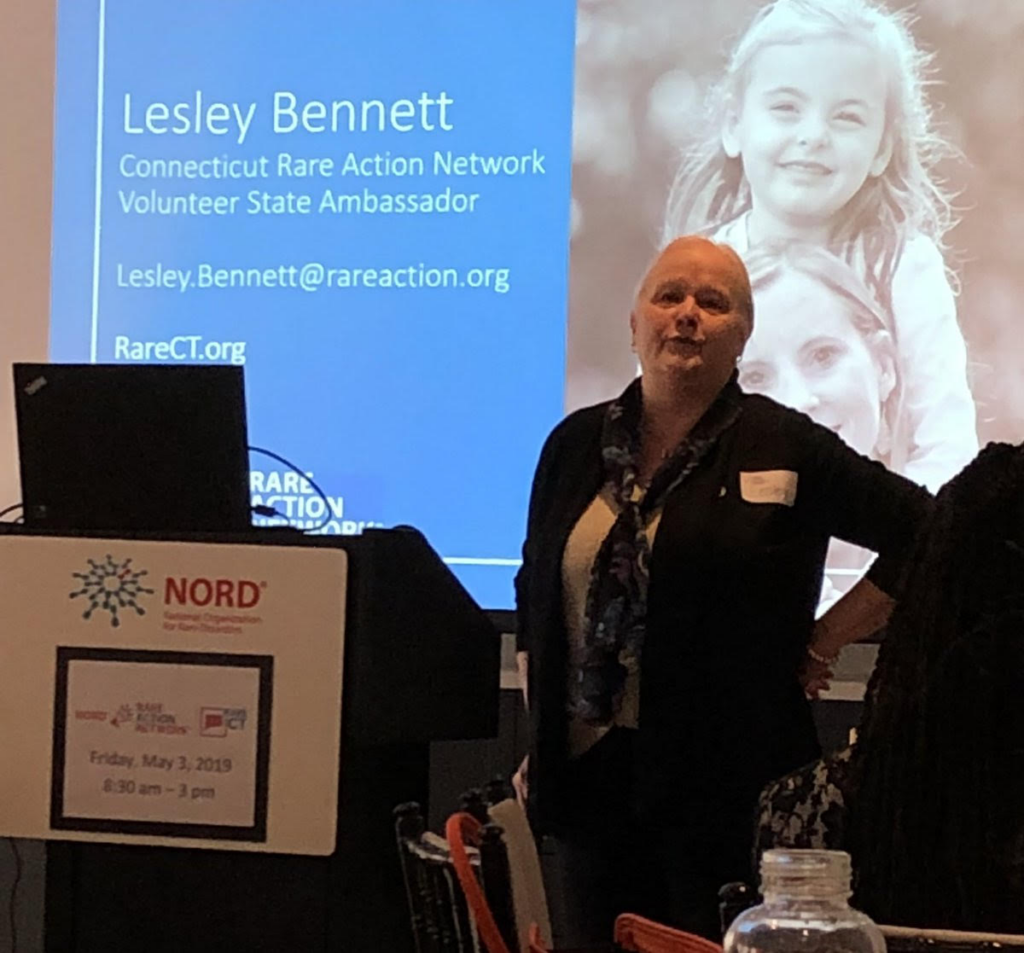
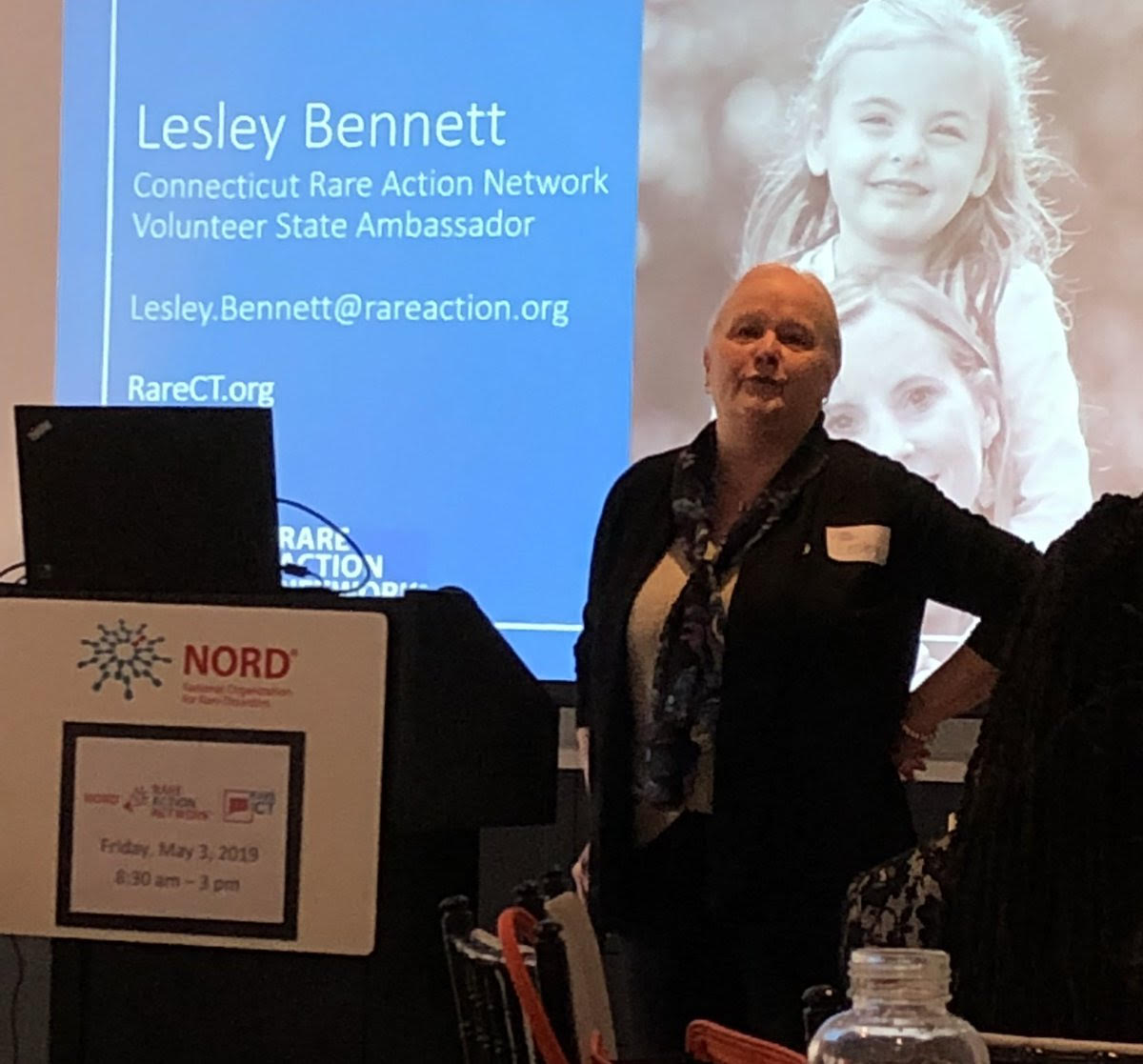
Lesley Bennet presenting on a podium
Lesley Bennett, Connecticut’s Rare Action Network volunteer state ambassador

Kristen Angell, Associate Director of Advocacy for the National Organization for Rare Disorders (NORD)  and Tim Boyd, NORD’s Director of State Public Policy, urged rare disease patients and their families to use their voices to let people know about their conditions at a recent rare disease advocacy workshop held in conjunction with the Connecticut Rare Action Network (RAN).

The importance of the patient voice is also a key focus of Hope in Focus (formally Sofia Sees Hope)‘s upcoming LCA Family Conference, July 26-28 in Philadelphia. Panels and speakers at the conference will deal with how an active patient community can support and accelerate treatment, among many other topics. 

Much like Sofia Sees Hope encourages people living with Leber congenital amaurosis (LCA) and other rare inherited retinal diseases (IRDs) to tell their stories, Angell and Boyd told an audience of about 20 rare disease patients, caregivers and advocates that sharing their stories will help alleviate feelings of isolation and educate policy makers to work on their behalf by getting care-giving help, fostering research and finding new treatments.

Boyd and Angell helped workshop participants frame and rehearse the stories they would tell legislators to get their attention. People need to say who they are and where they live. They need to tell them about their connections to the rare disease community and ask for their support of legislation, such as the Orphan Drug Act of 1983 (ODA), and their help with caregiving, financial relief or other needs.

“Legislators do, in fact, want to help the people they serve, and they cannot do that without hearing from you,” Boyd said.

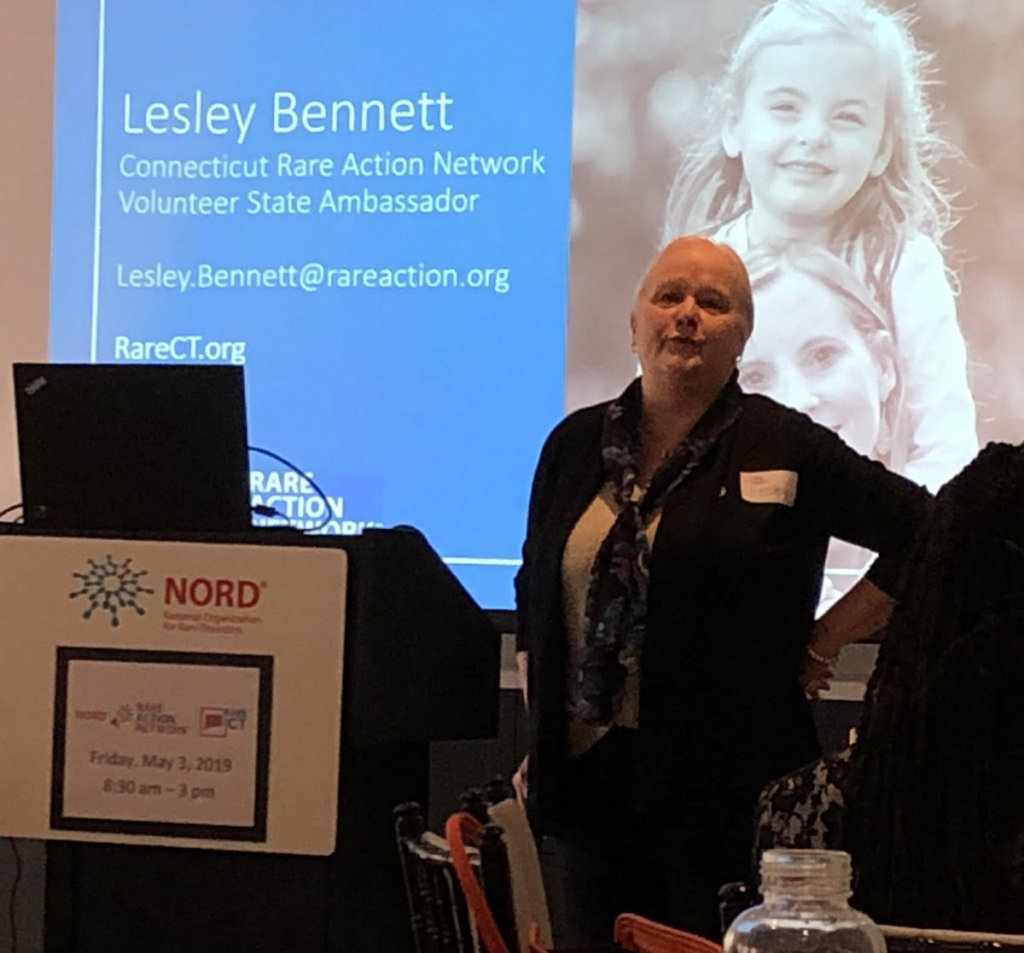
Lesley Bennett, Connecticut’s RAN volunteer state ambassador, urged the audience to be part of legislative committees to get the word out about the needs of the rare disease population. NORD established RAN to unite, develop and mobilize grassroots advocacy in all 50 states on state and federal policy

About one in 10 people have a rare disease. In Connecticut that means about 300,000; in the United States that’s about 25 million to 30 million people.

Angell said patients, caregivers and patient organization leaders created the ODA to unite the voices of rare disease patients, caregivers and advocates.

Since ODA’s passage, the Food and Drug Administration approved more than 450 orphan therapies, compared with 10 therapies approved in the decade before the 1983 legislation. A grant program within the ODA has funded $15 million in grants annually, which included, among other projects, 700 studies. The program also contributed to more than 60 drugs on the market.

Rare Disease Advocacy: ‘Everything’s connected to everything’

Long before Grey’s Anatomy captured television audiences, the 1980s medical drama, Quincy, M.E., helped propel passage of Congressional legislation that fostered the development of more drugs for rare diseases.

In a 1981 episode, the show’s tenacious medical examiner played by Jack Klugman addressed rare disease challenges faced by a patient with Tourette Syndrome, a disorder causing tics such as repetitive movements or unwanted sounds. A 1982 episode focused on myoclonus, a symptom of a rare movement disorder. It was no accident, since Klugman’s brother, the show’s associate producer, suffered from a rare cancer.

That 1982 show, described as the most politically significant episode of the seven-year series, portrays the actor’s quest for passage of federal legislation. Klugman’s real-life testimony gave momentum to that already gathered from powerful politicians and the public’s support to pass what ultimately became the Orphan Drug Act (ODA) of 1983.

Thirty-six years later, the ODA is in danger of losing critical incentives that help drug developers target orphan therapies, and that is why the National Organization for Rare Disorders (NORD) and its Rare Action Network (RAN) hosted an Advocacy Workshop in May at the Goodwin Hotel in Hartford, Conn.

Most rare diseases have no treatment

Orphan drugs are medications intended for the safe and effective treatment, diagnosis or prevention of rare diseases/disorders that affect fewer than 200,000 people in the United States, or that affect more than 200,000 people but are not expected to recover the costs of developing and marketing a treatment drug, according to the Food and Drug Administration.

The hurdles of conquering rare disease are high: 90 percent of the approximately 7,000 rare diseases don’t have an FDA-approved treatment. Getting a diagnosis takes an average of five to seven years, and patients face extensive, lifelong medical needs, high costs for care, and social isolation.

Until a few years ago, the ODA allowed a 50 percent tax credit to rare disease researchers; that tax credit now is 25 percent and in danger of being further reduced.

Lesley Bennett on podium sharing a presentation
Lesley Bennett, Connecticut’s Rare Action Network volunteer state ambassador

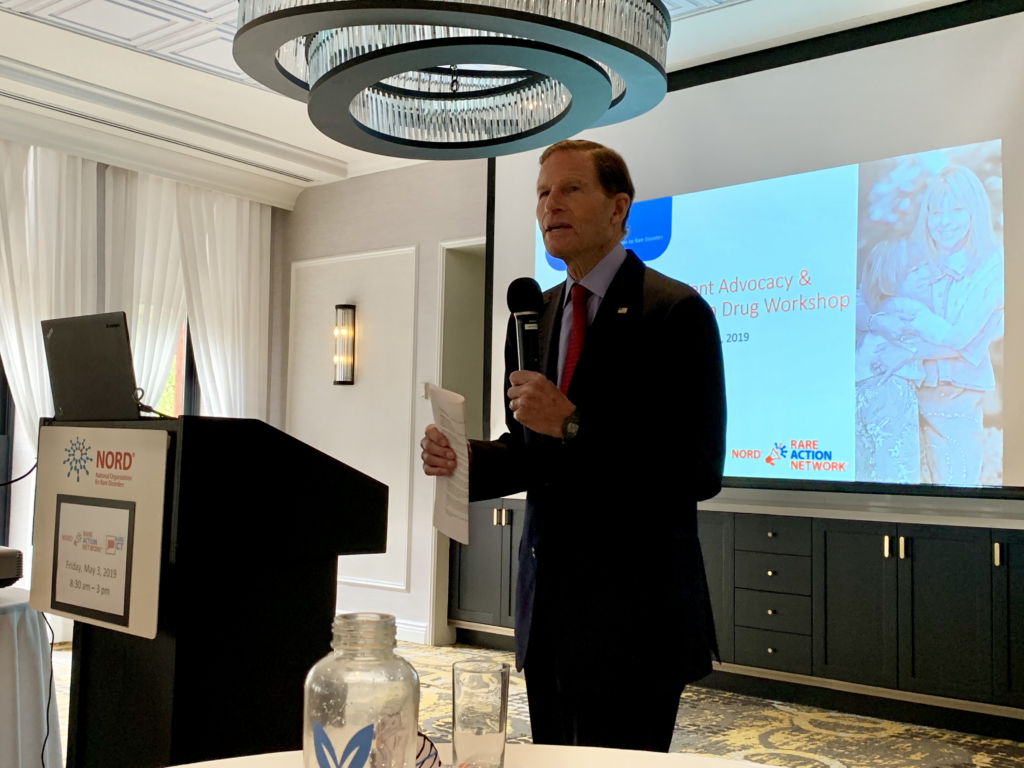
U.S. Sen. Richard Blumenthal and aides for U.S. Reps. Jahana HayesRosa DeLauroJoe Courtney and John B. Larson joined more than 20 rare disease patients, caregivers and advocates at the workshop, offering their support to the rare disease community.

Blumenthal talked about the importance of research into rare diseases, saying when it comes to finding treatments, “everything’s connected to everything.”

“It opens new perspectives and avenues for research for other diseases,” the senator said.

A representative of Hope in Focus (formally Sofia Sees Hope) told the Congressman that the organization’s founder in 2017 testified at a federal FDA hearing as to the critical need for bringing to market LUXTURNA™, developed by Spark Therapeutics. It was ultimately FDA approved as a gene therapy that targets one of the more than 25 gene mutations in the rare disease of Leber congenital amaurosis (LCA) and is also the first genetic therapy in the United States for any inherited disease.

Sofia Sees Hope asked Blumenthal for his support for rare-disease research funding and development and for his continued protection of the ODA and its endangered incentives.

He told the audience that bringing down the costs of prescription drugs and making healthcare universal rank high among his political passions.

U.S. Sen. Richard Blumenthal of Connecticut

“Healthcare should be regarded as a right,” said Blumenthal, who supports and co-sponsors legislation addressing Medicare for all.

He praised the audience members and thanked them for being there.

“I’m proud to be here today,” he said. “I’m grateful for your advocacy.”

On behalf of Congressman Courtney, who represents the eastern half of Connecticut, Karen Weseliza said she would bring the concerns of NORD, Sofia Sees Hope, patients, caregivers and advocates back to her boss.  

“A lot of what we hear goes directly to him,” she said.

Rare disease patients and caregivers told their stories about living with an array of rare diseases with mainly unfamiliar names, such as Hereditary Angioedema that causes recurrent severe swelling; Sporadic Inclusion Body Myositis, a muscle-wasting disease; Stage III Melanoma successfully treated 11 years ago; Scoliosis or severe curvature of the spine; and Wolfram Syndrome, which causes diabetes and optic atrophy.  

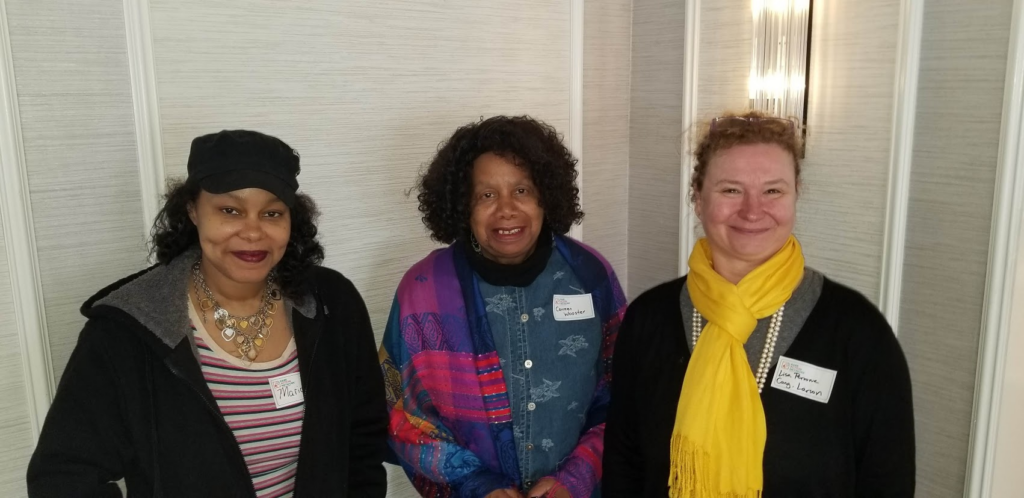
Maria, Carmen, and Lisa smiling and standing together
Maria Carter, Carmen Wooster and Lisa Perrone

The Rev. Carmen Wooster of Hartford detailed her exhaustive eight-year journey to find a diagnosis for her daughter.

“It’s very emotionally draining. Eight years of misdiagnoses, eight different things, eight different drug and treatment modalities.”

She is the sole caregiver for her 39-year-old daughter, Maria Carter, who was diagnosed just last month with Stiff Person Syndrome (SPS), a rare syndrome affecting the brain and the spinal cord. Maria experiences tremors and muscle spasms that can be set off by the slightest noise.

According to the National Institutes of Health, people with SPS often have a heightened sensitivity to noise, sudden movements and emotional distress that can set off muscle spasms generating enough force to fracture a bone.

“The hard part of this is being young with this disease,” Carmen said. “It’s progressive.”

She tries to keep emotionally balanced and empathetic in the face of no current treatment or cure.

“I think we learn some life lessons. Life and death lessons.”

Under state Medicaid, she said her daughter is subject to random appointment cancellations, inaccessibility to top doctors and unkind treatment.

“When doctors don’t have an answer, they have a tendency to beat you up,” she said.

Mother and daughter witnessed advocacy in action when a Congressional aide yelled over to her, “We’re going to talk!”

Lisa Perrone, senior district aide to Congressman Larson, said, “This is what we do. I’m going to be reaching out on her behalf because that’s my job.”

The aide later talked with the woman, took her personal information and told her she would be connecting with the Department of Social Services and any other appropriate agency and get back with her.

Carmen said she could not get through these trying times without the healing and calming effects of meditation.

“Keep the faith,” she said. “It’s a day-by-day journey. Try not to think of the future too much because that will trip you up; mentally it will bog you down.

“You have to have hope to go through this and celebrate any breakthrough.”

CT Rare Action Network Advocacy Workshop May 3

Learn more about rare disease patient advocacy and connect with the National Organization for Rare Disorders (NORD) about current legislative action on Friday, May 3, at the Connecticut Rare Action Network (RAN) Advocacy Workshop.

The event runs from 8:30 a.m. to 3 p.m. at The Goodwin Hotel, One Haynes St., Hartford, CT. It is hosted at no cost to participants; breakfast and lunch will be provided.

The workshop features an opportunity to speak directly with members of Congress from Connecticut about the Orphan Drug Act (ODA) of 1983. Orphan drugs are medications intended for the safe and effective treatment, diagnosis or prevention of rare diseases/disorders that affect fewer than 200,000 people in the United States, or that affect more than 200,000 people but are not expected to recover the costs of development and marketing a treatment drug, according to the Food and Drug Administration.

Online registration closes at noon, Tuesday, April 30.

Register Here

The ODA encouraged increased development of drugs for rare diseases. More than 450 orphan therapies have been developed by private industry since its enactment, compared with 10 therapies, 10 years before the 1983 legislation. Thirty years later, in 2013, orphan therapies comprised one-third of all drugs approved by the FDA, according to NORD.

NORD founders helped spearhead the Orphan Drug Tax Credit, characterized as one of the most important incentives for orphan drug development, and enacted as part of the ODA. The provision allows a 25 percent tax credit for sponsors on certain research and development costs for orphan drugs. NORD said that coupled with other incentives in the ODA, the tax credit has proven its efficacy, and it is in danger of repeal.

For information on RAN events nationally, check your state RAN and sign up to receive notice of upcoming activities.

If you have any questions, please contact NORD’s Associate Director of Advocacy Kristen Angell at 203-304-7251 or kangell@rarediseases.org

A Rare Opportunity: A Glimpse Into Life with Visual Impairment

“Look like you can see!” Dante Priebe implores to his panicked, visually impaired sister Sofia as she struggles behind the wheel to make a three-point turn in her driveway.

“I do this horrible, 18-point turn and a cop car drives by in those three minutes,” Sofia says.

She ends up in the street and Dante yells at her to pull into the neighbor’s driveway and “act like she can see.”  

The car ends up on their lawn, with Sofia shouting at her brother, “I don’t want to do this anymore!!!”

The audience laughed, and so did Sofia, as she recounted her story during a discussion at “A Rare Opportunity,”  a gathering of more than 100 people to hear stories from people with Leber congenital amaurosis (LCA) and other rare inherited retinal diseases (IRDs).

Sofia is the daughter of Laura Manfre and Chuck Priebe, co-founders of Hope in Focus (formally Sofia Sees Hope), dedicated to helping people affected by LCA and other IRDs. Sofia’s parents founded the organization after her 2013 genetic diagnosis, giving hope that genetic research could produce sight-saving treatment.

Awareness is appreciated

The March 30 event, A Rare Opportunity, at Lake of Isles, North Stonington, CT, featured Nicole Kear, author of “Now I See You,” (see accompanying story) detailing her reckoning as her world blurs due to Retinitis Pigmentosa (RP), a rare disease causing slow and progressive retinal degeneration.

Nicole, of Brooklyn, NY, joined a panel discussion with Sofia, Christian Guardino and Diana Owen for an exchange about what it’s like to live with visual impairment.

In the panel moderated by Nicole’s friend, author and professor Dr. Amy Bass, the participants said they wished people would be more aware of others with disabilities.

Nineteen-year-old Christian of Patchogue, NY, said he wishes he could take part in a common teenage rite of passage.

“I think one of the biggest things is I see all of my friends driving and getting their licenses, and it makes me want to do it even more.

“But I feel like I’m saving a lot of money.”

In 2017, Christian stepped onto the America’s Got Talent audition stage and blew away the judges with his rendition of the Jackson 5’s “Who’s Lovin’ You.”

He recently released his first original song, “Waiting,” executive produced by country singing star Hunter Hayes.

Christian lived with degenerative vision due to LCA2, known as LCA-RPE65, since he was a toddler, but all that changed when he underwent experimental surgery five years ago in a clinical trial for a revolutionary genetic treatment. His vision improved dramatically with the treatment called LUXTURNA™. Spark Therapeutics developed the drug that the Food and Drug Administration approved at the end of 2017.

Diana Owen, Head of School at Pine Point School in Stonington, CT, was diagnosed in her 40s with a macular hole, a condition resulting in vision changes over time.

She lives with a constant, sometimes frustrating, sense of having to work around situations to accommodate her vision.

“When my issue developed what I didn’t understand was about acuity,” she said.

Her visual acuity manifested as darkened spots, haze and distortion.

A macular hole is a small break in the macula, in the center of the eye’s light-sensitive tissue called the retina. The macula provides the sharp, central vision needed for reading, driving and seeing fine detail. It can cause blurred and distorted central vision.

Nicole said she never wanted to use a cane: “When you open the cane, this is the cane and I’ve disappeared.”

Sofia is a high school sophomore who savors independence. She has LCA with a mutation of her IQCB1/NPHP5 gene, one of the more than 25 gene mutations known to cause the disease.

“I’m very stubborn,” she said. “I’d like to do things on my own. Being blind doesn’t mean full no-vision. (People) try to help me with things and, I’m like, I got it!”

And she does! In academics, dancing and rowing. Sofia’s a spokesperson for “Remote Coxswain” technology, invented by her rowing coach, so she can row solo. The tool features a remote-controlled rudder than can be operated by a coxswain up to 500 feet away.

Transitioning to dinner, the panel and the audience heard Christian’s new song fill the grand room. Listen for yourself.

Nicole Kear: When Losing Vision, Carpe Diem?

Nicole Kear faked it for a long time.

On a romantic getaway, as her boyfriend gazed at the starlit sky, she gazed at the vast darkness. Same with the twinkling lights at the tip of New York’s Staten Island.

“I was 19 years old when I discovered I couldn’t see stars.”

That’s when the actress and future author received her diagnosis of Retinitis Pigmentosa (RP), a rare, debilitating retinal disease. Her photo receptors were dying; no treatment, no cure.

Author of the memoir “Now I See You,” Kear told her story at “A Rare Opportunity” presented by Hope in Focus (formally Sofia Sees Hope), a global advocacy organization for the Leber congenital amaurosis (LCA) patient community and for those with other rare inherited retinal diseases (IRDs), such as RP.

Hearing she’d lose her vision by age 30 came as “absolute blindsiding news.”

Kear shared her story with more than 100 people gathered at Lake of Isles in North Stonington, CT, on March 30. Sofia Sees Hope Co-Founder Laura Manfre characterized the event – which also included a panel discussion – as “a chance to hear from incredible people who have faced head-on an almost unimaginable challenge and chosen hope over defeat.”

Kear felt incredulous at her diagnosis.

She’d always chalked up any stumbles in life to being accident prone, or “I thought I was some airhead who didn’t pay attention.”

She had plans: She was going to be a star of the stage, fall in love, get married, have children.

“Nowhere in these plans was room for losing my vision by 30.”

A River Called Denial

Upon her diagnosis, Kear did what a lot of people might not have expected: “I decided not to think about it.”

Plus, she thought, by the time she turned 30, “I would be ancient by then.”

She learned to drive, kind of. Kear didn’t need a car in New York, but when she temporarily moved to Los Angeles for acting, only three days passed before she realized she’d made a colossal mistake. She drove anyway, with her idiosyncratic driving posture, prompting her sister to tell her maybe she should lean back a little, an exchange recounted in her book:

“What are you talking about?” I snapped, concentrating on my left turn.

“You don’t notice how close your face is to the windshield?”

It was true. My nose was almost touching the glass, my chest nearly pressing the wheel …

“There’s no law about sitting too close to the windshield,” I shot back. “Just sit back and enjoy the ride.”

I couldn’t see my sister’s face, but I bet she looked like she was enjoying the ride about as much as a turn on the Tilt-A-Whirl with a stomach full of corn dogs …

My uncool driving notwithstanding, I did a decent job of getting from point A to point B without dying or killing anyone. In general.

Kear fared better in restaurants than on the road. She learned to order the Caesar salad because it’s usually on the menu she couldn’t see, and she’d ditto her dining partner’s choice for the main course.

She traveled to Paris and London. She enrolled in the San Francisco School of Circus Arts where she learned to be a contortionist and earned a red nose.

“Following every rainbow, climbing every mountain,” Kear told her audience, until she finally gave up the ruse.

“I had realized that my vision had an expiration date … I could carpe diem as much as I wanted, but I had to reckon with my vision loss.”

At 33, after falling in love, marrying and having two of her three children, she faced her diagnosis and reached out to New York’s services for the blind.

The gravity of support and resources empowered her, connecting her to visually impaired people around the world.

“I know now that anything is possible.”

Kear ended her presentation by reading one of the tips that accompany each chapter of her book.  

Tip #18: On glass doors. Walk into a glass door once, shame on the door. Walk into it twice, shame on you. Walk into it three times, get yourself a (*%&#*) game plan.

Connecticut Rare Disease Day at the Capitol

Sixth-grader Daniela Delgado told Connecticut lawmakers on Rare Disease Day that she lives with rare disease just like 30 million other people in the United States – and just like them – she matters.

“We are not a burden. We are human beings just like everybody else,” Daniela told about 130 people gathered at the Capitol in Hartford for Rare Disease Day. The day is celebrated nationally and globally on the last day of February each year. (Click here for state-by-state information.)

Daniela was diagnosed with not one, but two, rare diseases: von Willebrand Disease, a rare, lifelong bleeding disorder; and Ehlers Danlos Syndrome, a group of disorders affecting connective tissue supporting the skin, bones, blood vessels and many other organs and tissues.

She needs expensive drugs to treat her disease and ease her symptoms; without them, the cost would be exponentially more for hospitalizations.

“These are real treatments, and they keep us alive,” she said. “We need this medication to live.”

Daniela is a patient advocate from Sandy Hook, CT, who at age 4, with the help of her parents, created Daniela’s Little Wish, bringing joy to kids facing serious illnesses by baking and delivering one-of-a-kind birthday cakes.

She joined about two dozen speakers at a legislative informational session that included legislators, patients, doctors, researchers, nurses, caregivers, advocates, business people and a representative of Sofia Sees Hope.

7,000 Rare Diseases in the US

Rare disease is more common than most people realize.

Leber congenital amaurosis (LCA) and other inherited retinal diseases (IRDs) are among the approximately 7,000 rare diseases. These include more than 500 types of rare cancers and all pediatric cancers.

rare disease is defined as any disease, disorder, illness or condition affecting fewer than 200,000 people in the United States. An estimated 25-30 million Americans, almost 1 in 10, have rare diseases. In Connecticut, an estimated 300,000 people have rare diseases.

Connecticut may be the Insurance Capital of the World, but the Nutmeg State gets an F when it comes to individual insurance protections, according to Connecticut’s rare disease report card prepared by the National Organization for Rare Disorders and NORD’s Rare Action Network (RAN), the hosts of Connecticut’s Rare Disease Day.

The state requires some insurers to offer guaranteed plans to a limited number of people. It does not have an individual mandate and has not enacted a reinsurance waiver to keep insurance affordable for people with pre-existing conditions. Connecticut had minimal limits on issuing short-term, limited-duration health plans or association health plans.

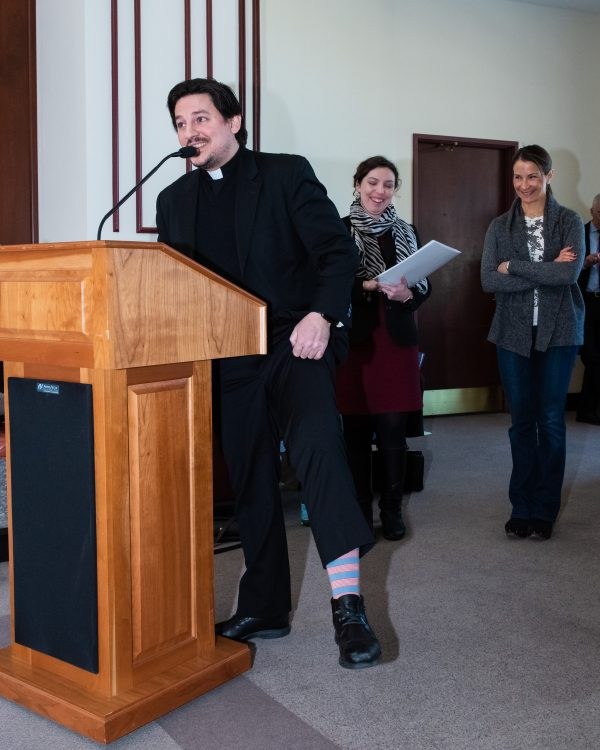
Father Nikolas Karloutsos at the podium
Father Nikolas Karloutsos

State Rep. Joe Aresimowicz, Democratic House Speaker, and State Sen. Len Fasano, Republican Senate Minority Leader, have introduced several pieces of legislation addressing medical education in screening for rare cancers and assistance for patients and families with developmental disabilities. Fasano also helped the state become one of the first to add Adrenoleukodystrophy (ALD) to Connecticut’s Newborn Screening (NBS) panel.

Aresimowicz said the focus of the event was not on politics or political parties.

“We are here because we want to make Connecticut a better place.”

Fasano told the gathering: “This is a civil rights issue to get the proper medications and research to go forward.”

Greta Stifel, who has two rare diseases on top of cancer, detailed her  grueling journey of misdiagnoses and many surgeries. In 2016, she established the Stifle Cancer Foundation to bring awareness to a type of cancer comprised of Neuroendocrine Tumors (NETS).

“We are the ‘Rare Rebels’,” she said. “We are the ‘Rare Revolution’.”

She is a constituent of Aresimowicz, and the proposal behind the pending legislation of House Bill 6522 comes from her. The bill’s title is: An act concerning continuing medical education in screening for inflammatory breast cancer and gastrointestinal cancers.

State Rep. Joe Aresimowicz, Greta Stifel and state Sen. Len Fasano

Stifle said the legislation is a step in the right direction, but the state needs to do much more with rare disease awareness, education, funding and research. “

Connecticut actually should be the Silicon Valley of Rare Disease,” she said.

State Rep. Jonathan Steinberg, chairman of the General Assembly’s Public Health Committee, said having one day to recognize rare diseases is not enough.

“It needs to be Rare Disease Day every day in the state of Connecticut.”

Steinberg, along with RAN’s Volunteer State Ambassador Lesley Bennett, said the legislature needs to form a Rare Disease Advisory Council to find treatments, fund research and advocate for Connecticut’s constituency living with rare disease.

“A lot of our patients have problems getting access to services because people don’t understand the disorders,” Bennett said.

The advisory council would be comprised of patients, patient advocates, doctors, researchers, business leaders and community members to address the emerging public health priority of rare diseases, including LCA and other IRDs.

Erica Mumm, a Clinical Assistant Professor at the Quinnipiac School of Nursing and mother of a son with a rare genetic disorder, said the system needs to change. She also supports the creation of a rare disease advisory council.

“We are rare, so we don’t fit into a one-size-fits-all system,” Mumm said.

Her son, who turns 3 this month, has a rare genetic disorder called KCNQ2 encephalopathy, a type of epilepsy that becomes apparent in the first three months of life and is characterized by frequent and difficult-to-treat body seizures.

Mumm advocated for care coordination and described the drain and debilitation she feels as a caregiver. She also advocated for a palliative care network to improve emotional support for caregivers. She has exhausted her savings and said as her voice cracked through tears that her home needs extensive renovations to accommodate her son.

She also implored lawmakers to do away with resetting the clocks twice a year with Daylight Savings Time.

“For us, it’s a change of medication routine,” she said. To keep her son on track with his medications, three weeks before changing the clocks, she must begin making incremental changes in dosages.

A family panel of four caregivers told the group Connecticut needs to support businesses researching and developing treatments for rare diseases.

Alissa at the podium mid speech
Alissa Dejonge

“The sky’s the limit because of research,” Alissa DeJonge said. She is Vice President of Research for the Connecticut Economic Resource Center, Inc., and the mother of a 2½-year-old son with severe hemophilia.

Heather Knapp, a panelist and mother of three, described the benefits of the state-mandated NBS program that in 1964 began statewide blood-spot screening for Phenylketonuria (PKU), the same rare disease doctors identified in her son at birth. Early detection and treatments can mean the difference between lifelong impairment and healthy development. Knapp praised NORD for helping her with resources, saying she finally found peace of mind when she connected with the organization.

Panelist Father Nikolas Karloutsos, a Greek Orthodox priest, detailed the difficulties in getting a diagnosis for his daughter, who has a BRAF mutation RASopathy, which probably is Cardiofaciocutaneous (CFC) Syndrome. The very rare disorder particularly affects the heart (cardio-), facial features (facio-) and the skin and hair (cutaneous); it causes moderate to severe delayed development and intellectual disability.

For Jennifer Ianuzzi, it took 20 months until doctors diagnosed her daughter with Smith-Magenis Syndrome, a developmental disorder caused by chromosome 17 microdeletions. She appealed to the group for support for respite from 24/7 caregiving.

Researchers, scientists and professors also presented updates in their fields.

Ching Lau, MD, Ph.D., the Division Head of Connecticut Children’s Medical Center’s (CCMC) Center for Cancer & Blood Disorders and Professor of Genomic Medicine at JAX Laboratory, said that developing and strengthening international genetic research collaborations will help people around the globe access rare disease information through genetic registries. Dr. Lau specializes in finding treatments for children with rare blood, bone and brain cancers.

“We will conquer these diseases at the end,” he said.

Dr. Charles Whitaker, a neuromuscular neurologist at the Hospital for Special Care (HFSC), specializes in adult neuromuscular disorders, such as Amyotrophic Lateral Sclerosis (ALS) and muscular dystrophy. Dr. Whitaker said patients, physicians and experts need to work together to evaluate changes at a policy level that address the special needs of the rare disease population, which, along with having pre-existing conditions, in many instances are highly debilitated. As a clinical researcher working on treatments and cures, he said: “We would love to be part of that cure.”

Gyula Acsadi, MD, Ph.D., said interventions never possible in rare diseases are changing the lives of young children because researchers are focused on discovering genetics and the biology of disease.

“This last five, six years were amazing with how research succeeded,” he said.

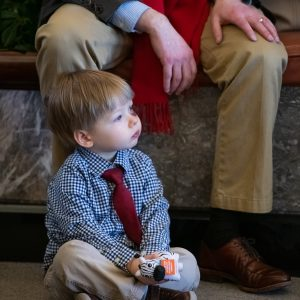
A little boy sitting cross legged in a blue plaid shirt and red tie, holding a NORD zebra stress toy.
Alissa Dejonge’s son listens as she speaks at the podium.

Dr. Acsadi, Division Head of Neurology at CCMC and Professor of Pediatrics and Neurology at UConn School of Medicine, works with children living with Spinal Muscular Atrophy (SMA), the leading cause of death of infants and toddlers of any genetic disorder. SMA robs children of physical strength.

Newly approved NBS for SMA and new treatments administered early in children show remarkable results, he said. Even so, ongoing fights continue with insurance companies unwilling, for example, to pay $15,000 for a treatment that will save $2 million in care. One young patient spent more than 300 days in the hospital before receiving treatment, followed by zero days in the hospital.

“It’s an easy win in terms financially,” Dr. Acsadi said.

Dr. Saquib Lakhani, Clinical Director of Yale Medicine’s Pediatric Genomics Discovery Program, said 30 percent of children in the Intensive Care Unit have rare diseases and very complex needs.

“It’s a collective mistake to ignore rare diseases,” he said. “They have to be addressed.”

Dr. Lakhani specializes in caring for newborns and infants with undiagnosed birth disorders. Using DNA sequencing allows for many more diagnoses, he said.

“It’s been a remarkable change.”

He described a whole exome sequencing test that relies on new technology and allows rapid sequencing of large amounts of DNA with the potential to discover hundreds and hundreds of diseases.

While patients could benefit from this amazing vehicle to find the source of a disorder, they have difficulty getting insurance coverage.

“We don’t know what we’re looking for. (The DNA sequencing) can actually give you the diagnosis that you didn’t have before.”

Moving forward with research and developing treatments for rare disease requires that critical diagnosis.

As Daniela – our young cake-baker extraordinaire living with two rare diseases – summed up in her address to the legislative group:

“We are 30 million and counting. We are alive and we deserve better.”

Connecticut Rare Disease Day February 28

Members of Connecticut’s General Assembly (CGA) will hear from myriad people and organizations, including Sofia Sees Hope, about patient advocacy and access to treatment during a legislative informational session Thursday in Hartford, in celebration of Rare Disease Day 2019.

This year’s theme is Show Your Stripes, with a call to action for people to literally and figuratively “show their stripes” in support of rare diseases, according to the National Organization for Rare Disorders (NORD), the leading independent nonprofit organization representing the 25 million to 30 million Americans living with rare diseases.

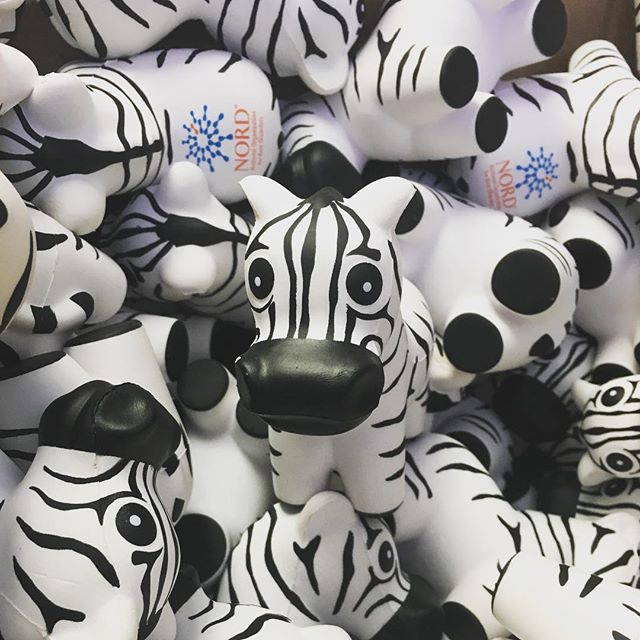
Zebra Stress toys from NORD

The zebra, the official symbol of rare diseases in the United States, is noted for its black and white stripes that are central to its uniqueness. Everyone has his or her owns stripes, characteristics that make individuals distinct. While each of the more than 7,000 rare diseases are unique, many commonalities unite the rare disease community.

This event is held nationally and in more than 85 countries. It serves as an opportunity to hear from the many voices of those dealing with rare diseases and the daily challenges facing Connecticut patients and their families.

The public is invited to attend the event from 8:30 a.m. to 11 a.m. in the 2nd Floor Atrium of the Legislative Office Building, 300 Capitol Ave., Hartford.

Rare Disease Day in Connecticut is hosted by NORD and NORD’s Connecticut Rare Action Network (RAN). For more information, please visit their website and click on the “Register Here” link.

Lesley Bennett, part of NORD’s Rare Action Network and Connecticut’s Volunteer State Ambassador, organized the Hartford event. For more information, please email her at Lesley.bennett@rareaction.org.

Rare Disease Day – held annually on the last day of February – is a time to bring together doctors, researchers, advocates, patients, caregivers, industry representatives, and legislators in Connecticut and around the world to focus on the critical role patients play in understanding rare diseases and in developing innovative treatments and cures.

About 300,000 people in Connecticut have a rare disease. A disease or disorder is defined as rare in the United States when it affects fewer than 200,000 Americans at any given time, according to NORD.

Of the more than 7,000 rare diseases, NORD also says that 80 percent of rare diseases have genetic origins, while others are from infections (bacterial or viral), allergies, and environmental causes, or are degenerative and proliferative. Fifty-percent of rare diseases affect children.

Legislators and attendees will hear from Hope in Focus (formally Sofia Sees Hope) about patient access to treatment during the “Patient Issues” portion of the program.

The moderator for Connecticut’s event is Dominic Cotton, a Milford resident with 25 years of experience in behavioral healthcare management. He is a parent and an active advocate for rare diseases and brain injuries.

Rose Avellino, NORD’s Grassroots Advocacy Manager, will open the event. Avellino helps with the nationwide Rare Action Network and state policy issues.

Here is Thursday’s agenda, followed by a list of scheduled speakers:

8:30 a.m.: Opening Remarks

8:40 a.m.: Connecticut General Assembly Welcome

9 a.m.: Rare Disease Programs and Research

9:40 a.m.: Rare Disease Business in Connecticut

9:50 a.m.: Impact of Rare Diseases on Connecticut Families

10:15 a.m.: Legislative Issues

10:25 a.m.: Patient Issues

10:40 a.m.: Closing Remarks

Speakers (in the order in which they will be speaking):

Representative Joe Aresimowicz, CGA House Speaker, recently introduced legislation concerning continuing medical education in screening for rare cancers. He is one of the Rare Action Network’s Champions.

Greta Stifle, Neuroendocrine tumor (NETs) patient and advocate, is the founder and president of STIFLE Cancer Foundation, Inc. She is a Neuroendocrine Tumor & Mast cell patient actively advocating for patients with rare cancers through campaigns, such as the Zebra Project and the Neuroendocrine Tumor Awareness Campaign.

Senator Len Fasano, CGA Senate Minority Leader, recently introduced two bills to assist patients and families with developmental disabilities and helped make Connecticut become one of the first states to add Adrenoleukodystrophy (ALD) to the Newborn Screening Panel. He is also a Rare Action Network Champion.

Hunter Pageau, a patient and advocate, is a Rare Action Network Youth Champion. He was born with an ultra-rare motor neuron disease – Spinal Muscular Atrophy with Respiratory Distress (SMARD). Despite his own medical challenges, Hunter actively raises his voice to advocate for others who have rare, life-limiting illnesses.

Ching Lau, MD, Ph.D., is the Division Head of Connecticut Children’s Medical Center’s (CCMC) Center for Cancer & Blood Disorders and professor of Genomic Medicine at the Jackson Laboratory (JAX Labs). He specializes in finding new treatments for children with rare blood, bone, and brain cancers.

Charles Whitaker, MD, is a neurologist who sees patients at the Hospital for Special Care (HSC) outpatient clinic. He specializes in researching and treating adult neuromuscular disorders

Cristian Ionita, MD, is Co-Director of the Yale/MDA Pediatric Neuromuscular Clinic and Assistant Professor of Pediatrics (Neurology). His research focuses on pediatric neuromuscular disorders.

Saquib Lakhani, MD, is Clinical Director of Yale Medicine’s Pediatric Genomics Discovery Program (PGDP). He specializes in caring for newborns and infants with undiagnosed birth disorders.

Paul Pescatello is President and CEO of the New England Biotech Association and chairs the Connecticut Business & Industry Association’s (CBIA) Bioscience Growth Council.
Dan Donovan is Co-Founder & CEO of rareLife solutions. His passion for improving life for those with rare diseases is based on personal and professional experience.

Erica Mumm, DNP, MSN, RN, is a Clinical Assistant Professor in the Quinnipiac School of Nursing, and the mother of a child with a rare genetic disorder called KCNQ2 encephalopathy.

Alissa DeJonge is a caregiver, Vice President of Research, Connecticut Economic Resource Center, Inc., and the mother of a 2-year-old with severe hemophilia.

Heather Knapp is a caregiver and mother of four; her youngest child, a 2-year-old boy, was identified at birth in the state’s newborn screening program with Phenylketonuria (PKU).

Father Nikolas Karloutsos is a caregiver for his daughter who has a BRAF mutation Rasopathy – probably Cardiofaciocutaneous (CFC) Syndrome, which causes marked behavioral health/cognitive issues.

Jennifer Ianuzzi is the caregiver for her child with Smith-Magnis Syndrome, a developmental disorder caused by chromosome 17 microdeletions. Besides congenital abnormalities, this syndrome causes behavioral health and cognitive issues. 

Guyla Acsadi, MD, Ph.D., is the Division Head of Neurology at Connecticut Children’s Medical Center (CCMC) and Professor of Pediatrics and Neurology at the University of Connecticut School of Medicine. He has a Ph.D. in Molecular Genetics and expertise in neuromuscular medicine.

Colleen Brunetti of West Hartford has pulmonary arterial hypertension (PAH) and actively advocates for patients. She is a board member of the Pulmonary Hypertension Association.

Representative Jillian Gilchrest is a House Representative from West Hartford. She introduced bills addressing co-insurance assistance programs needed to help patients afford prescription medications.

Rosanne Smyle is a staff member of the Sofia Sees Hope patient advocacy organization – a global non-profit dedicated to improving the lives of those affected by rare inherited retinal disorders that cause blindness.

Donna Sciacca is Community Outreach and Education Manager for the Connecticut division of the American Liver Foundation. She is responsible for patient education programs and raising public awareness of liver diseases. She also serves on the Board of Donate Life CT, an organ donation and transplant coalition.

Jecy Belmont of Hamden is a patient and an advocate with the rare bile duct disease, Recurring Primary Sclerosing Cholangitis, and had to have a liver transplant. Despite his own health issues, Jecy works tirelessly to educate the public on liver-related health issues.

Representative Fred Camillo is a House Representative from Greenwich who advocates for rare pediatric blood cancers. For the last two years he has held Donna Marie Camillo’s Paws For A Cause Walk to Cure Childhood Leukemia to honor his sister who died of a pediatric blood cancer.

Danielle Delgado, a patient and advocate, is a Rare Action Network Youth Champion. She has been diagnosed with two rare diseases (von Willebrand and Ehlers Danlos) and works to bring joy to other children who are ill.

The Role of the Patient Voice in Rare Disease Advocacy

It’s you. It’s all about you.

The journey from identifying a rare disease, to conducting studies, to approving a treatment, is long – but it always starts with the patient, and the information patients share among the medical, biotechnological and advocacy communities, as well as within the patient community.

At a fall gathering of families living with Leber congenital amaurosis (LCA) and other rare inherited retinal diseases (IRDs), Lisa Bernier found help and support for her visually impaired daughter for the first time in seven years. Bernier and her 25-year-old daughter, Aimee, traveled to the first-ever Hope in Focus (formally Sofia Sees Hope) LCA Family Conference at the insistence of Aimee’s optometrist.

“Advocacy ends after school ends,” Bernier says.

Lisa and Aimee Bernier

Aimee has Bardet-Biedl Syndrome (BBS), a complex disorder affecting many parts of the body, including the retina. She and others with BBS have retinal degeneration similar to retinitis pigmentosa (RP). Aimee had good experiences at the Perkins School for the Blind and graduated in 2011. Then it became difficult for her mother to find support.

“We’re basically on our own, to advocate for ourselves,” Bernier says. Her 30-year-old son also has BBS with many, but not all, of the same characteristics, and his vision loss is five years’ advanced.

(Editor’s note: Laws vary from state to state, but typically, public education is required to provide services to students in need until age 21, even after high school graduation. Children with learning disabilities who receive services under the Individuals with Disabilities Education Act (IDEA) or the Rehabilitation Act of 1973 (RA) in public elementary and secondary school may continue to have legal rights under federal laws in college programs and in employment. When students graduate from high school or reach age 21, their rights under the IDEA come to an end. As resources can vary greatly from state to state, finding support and resources for a child may fall on the family post-graduation.)

During the early years, Bernier searched for any information on BBS and RP through reading the New England Journal of Medicine, which described those with BBS as having low cognitive skills and dying from kidney failure. Even when Aimee was born, the doctors didn’t understand BBS. Bernier and her husband were grateful to be introduced to the doctors and genetic staff at Shriners Hospitals for Children in Springfield, Mass., where they helped with the health care needs of Aimee and her brother until they were 18.

Bernier said she was thrilled to be at the conference in a roomful of retinal experts, patient advocates, and families attending the Oct. 6 gathering.

Active Patient Community Is Key

During multiple sessions, attendees heard updates on research, learned about the roles played by organizations developing treatments, and gained insight into how an active patient community can support and accelerate treatment.

Spark Therapeutics,  Applied Genetic Technologies Corporation (AGTC), National Organization for Rare Disorders (NORD),  Foundation Fighting Blindness (FFB), and Sofia Sees Hope are among the many partners working to collaborate with and learn from the patient community to propel research momentum.

More than 50 people from New England, across the country and Mexico attended the conference, including the session titled “The Role of the Patient Voice in Developing Treatments for Rare Disease.” Sofia Sees Hope Executive Director Annette Tonti moderated a three-member panel comprised of:

• Jamie Ring, Head of Patient Advocacy at Spark Therapeutics, which developed the gene therapy called LUXTURNA™ that helps restore vision to people with RPE65 genetic mutations;

Jill Dolgin headshot
Jill Dolgin

• Jill Dolgin, PharmD, Head of Patient Advocacy at AGTC, a clinical stage biotechnology company focusing on rare IRDs and developing therapies that replace “broken” genes with normal, functional genes;

• Kristen Angell, Associate Director of Advocacy at NORD, a voice for the 30 million Americans with rare diseases and the official U.S. sponsor of Rare Disease Day, which takes place annually on the last day of February.

Personal experiences of family and/or friends dealing with rare diseases motivated all three women to become advocates for patients. As Angell paradoxically put it: “Rare disease has always been common in my family.”

Ring, Dolgin and Angell are a critical part of a relatively new profession – patient advocacy – to help people find support and learn how to become engaged in the process of drug development and research to find treatments for rare diseases.

Kristen Angell headshot
Kristen Angell

Ring from Spark Therapeutics said she has a passion for helping amplify the voices of the patients and their families and making sure those voices are understood and considered.

“People feel their story doesn’t matter,” she said. “The thing in rare disease is that YOU ARE the expert,” and patient information is critical to doctors and biotechnology companies alike. “At Spark, we want to make sure that patient voice has a seat at the table.”

“There’s no one-size-fits-all,” Ring said. “Simply connecting with other people is probably the most important thing you can do … and having the clarity of your diagnosis allows you to do that most effectively.”

For IRDs, it is essential to know your gene and it’s a good idea to register with My Retina Tracker, a confidential, online, patient registry managed by the Foundation Fighting Blindness. Patient data tracked through registries and collected by researchers helps scientists and biotechnology companies develop clinical drug trials.

AGTC’s Dolgin told the audience that 7,000 rare diseases exist, but fewer than 15 percent have advocacy groups that can assist patients with resources, advocate for clinical research, and find access to vital therapies.

Dolgin, a trained pharmacist, emphasized: “As patient advocates in the pharmaceutical industry, we’re representing the patient at the corporate table.” A priority for the company is to find and educate people with IRDs and encourage them to get genetically tested.

Patients need to be identified, encouraged to enroll in natural history studies, and followed systematically through natural history studies long before beginning the clinical drug trials necessary to seek approval for commercial use from the U.S. Food and Drug Administration. Natural history studies are critical components to clinical research, providing an understanding of the rate of disease progression without treatment to the rate of disease progression after treatment.

Angell said NORD developed 20 patient registries for 20 different diseases in the last few years. She oversees the Rare Action Network, with 5,000 members nationally and ambassadors in 32 states, including Connecticut. The network empowers patients and families to directly reach out to lawmakers to encourage and support the rare disease community.

Angell also encouraged using social media and suggested setting up programs with local chambers of commerce to make people aware of patients in their own community.

“Awareness goes hand in hand with advocacy.”

The role of the patient voice continues even more so after development of a treatment. Ask the people with families living with LCA. Sofia Sees Hope has been working to connect these families who have similar concerns and many of them have supported one another and become friends.

Tami Morehouse attended the patient advocacy session and served as panelist in a conference session earlier in the day called “The Road to Treatment: Understanding How Therapies Are Developed.” She is a pioneering LCA patient, in that at age 44 in 2009, Morehouse became the oldest person at the time to take part in the successful Phase 1 RPE65 gene therapy trial, a precursor to the FDA’s December 2017 approval of LUXTURNA.

She’s had many conversations with people involved in the process of LCA treatment or are hopeful they might be involved in a future clinical trial. The first person she talked with was Sarah St. Pierre Schroeder, the mother of now 10-year-old Creed Pettit. They communicated last April on the eve of the boy’s surgery in which doctors at Miami’s Bascom Palmer Eye Institute would inject under his retina a human-engineered virus that gives instructions on how to produce an essential protein for vision.

“I kept thinking about her and Creed in the days prior to Creed’s procedure,” Morehouse said. “I remembered how I felt when I was in their shoes and couldn’t help but reach out to them on the night before Creed’s procedure. As it turned out, Sarah seemed very open and happy to talk with someone who had been there and understood a little about all that they were feeling and wondering about.”

Creed’s mom felt enormous relief in talking with Morehouse.

“I will never forget the emotions I felt when Tami reached out to me,” St. Pierre Schroeder said. “Every sentence in her email brought me more comfort about what I was doing for Creed. She was so open about her journey, I felt like we had known each other forever.”

LUXTURNA took decades of research, many millions of dollars and countless advocacy connections to come to fruition. It is a long journey that begins with the patient and comes full circle.

Tell Us Your Story: ‘Do Not Limit Yourself’

I am 22 years old and I have LCA.

My name is Angélica Bretón Morán, I am from Mexico, I am 22 years old and I have Leber congenital amaurosis (LCA). Two years ago I learned that the gene that affects me is the RPGRIP1.

I’ve been reading many sites on the Internet, and I have realized that there are many comments from parents concerned about the development of their children, however there are almost no comments from parents with older children or people with LCA who talk about their development.

My intention is to tell you a little about my story to bring you peace.

LCA diagnosis: Many wrong turns

Angélica holding red roses and standing next to her parents and brother

When I was 2 months old, my mom realized that I did not follow people or toys with my eyes, and that when they did not speak, I cried as if I was alone and my eyes were standing down.

My mother is licensed in special education and specialized in hearing and language; she has many diplomas in different disabilities, including visual disability, so she realized that something was not completely normal.

The doctor told my parents that my eyes had to mature, but the months passed and nothing changed. My mom was certain that my characteristics were those of a blind person.

Finally, the doctors diagnosed that I was blind and there was a rain of bad diagnoses, syndromes that would terribly affect me, or that I would die a premature death, or that I would be like furniture, without the ability to do anything. They also said that maybe I would lose some other sense, that I could never talk, walk, eat ,among many other things Of course all this broke my parents’ hearts.

Other doctors recommended surgery but my mom never agreed and my dad supported her, he trusted in her because my dad did not have the experience with people with disabilities like my mom.

It was a painful road for my parents until a doctor told them “If they force me to give a diagnosis, I would say to you that it is LCA.” I was 2 years old.

My dad searched for information about this new diagnosis on the Internet, and what he found was not nice things, as I see that happens today. In one of the Internet searches, my parents found a writing made by a 22-year-old Italian young lady who was a musician; this for them was something hopeful.

From that moment we were in the group of research families, and for many years that was the diagnosis even though there was nothing that would formally confirm it. However, my parents did not lose details about my development; they were still worried because there was not something completely defined, since the disease was little known.

While my mom stimulated my touch with toys with different textures, placing hands in containers with different seeds, she strengthened my hands and enrolled me in mud classes. I was very afraid of the people, so she enrolled me in ballet classes where I would meet more girls and teachers. I was very little and I liked the music and the stage.

Then I went to kindergarten. It was not easy to find a school where they would admit me, but my parents never agreed that I was in a school for people with disabilities. As I had already been in the Ballet, it was easier for me to adapt to the classroom.

My parents never treated me differently, when I told my mom that when I grew up I wanted to be a pianist and opera singer, she told me that I could reach where I wanted. I liked to hear Charlotte Church and I admired Andrea Bocelli, because he was an example for me.

I have always been shy, I work hard to be sociable. This has been good, even though it has not been easy, but the reality is that we live in this world that will not be especially easy for us. This is achieved gradually and with personal life experiences, but I believe that above all with great patience and understanding of our parents and relatives, then we personally will learn to have it.

To give an example, my mother let my friends go to my house, and she let me go to their homes too. My parents did not make me see that my case was something special, because I could play with dolls, the kitchen, to be a doctor etc., like all the girls; only that when there were obvious things like playing jump on the stairs, the adults had to tell us that this was dangerous, because this is dangerous for any child, do not you think?

Angélica with roses and smiling

When I behaved differently from other children, my parents told me that this was not a good behavior. They explained to me how I should behave, without showing myself. When I waved my hands my mother held them and told me not to do it, she did it kindly but firmly and little by little I stopped doing it.

What made my parents angry was that I pressed my eyes with my fingers, because this was harmful to my eyes, every time they saw me doing it, they rebuked me more strongly; but now I thank them, because my eyes have no harm and in the future if the cure for my gene is found, there will be no injury that prevents me from receiving the treatment.

My parents educated me with a lot of love, but above all with discipline, an orderly and coherent discipline. I had to keep my toys like all children, learn to eat correctly like everyone else, not put my hands in food and just touch it with a finger that my mom called “guide finger”, this as a support because I cannot see the food.

I am weak visually, when I was a girl I could see better than now. Now I see lights and shadows but I cannot distinguish differences between colors as I used to, this has been so progressive that I did not realize until recently.

My disability has never been a secret, but neither has it been something for which I have to be different from others. It is true that you have to adapt some things, this is logical; however you have to look for how to achieve the objectives.

Going back to my life story, I have always studied in regular school; all my life music has been present. I graduated from music training at the Autonomous University of Nuevo Leon (UANL) while studying elementary school. I finished high school and got the second place for qualifications. I entered the technical career in music and finished it with honors while I studied online high school, all this in the UANL. I am currently studying a degree in music with an emphasis in piano at the same university and I have been studying professional singing for five years with a private teacher to become an opera singer.

I think it’s important to mention that I’m not an only child, I’m the oldest of two. My parents, like many of you, were afraid that the second child would have something worse than mine, but they have always had great faith in God and my brother was born. He does not have any disability, but he was asthmatic since he was a child and my parents have faced their situation in the same way they have faced mine … they never treated him differently, nor did they make him see that he had disadvantages. But to achieve something you had to look for how to do it. He is a high-performance swimmer, asthma attacks are becoming less frequent, and he is currently a healthy boy.

All this I tell you so that you know how important it is not to limit yourself. If you limit yourself as parents, you will limit us as children. My brother has been a great support for me in many situations, he has taught me to be the older sister. Our illnesses and the education of my parents, they taught us that neither he nor I have an obligation to take care of each other, we simply do it because we are brother and sister and we love each other

I played with my brother, we made mischief, we laughed late at night until my parents scolded us to sleep, as any pair of siblings can. My parents have never marked differences between us, everyone is accepted with their differences, we all have, but I am not more important than him, nor is he more important than me.

All this we have worked for 23 years as a family, we have been wrong many times, some other times we have felt that our effort has been in vain. We have stumbled like any family, we have asked for help when we consider that it is necessary. We have also tried to help when we think it is appropriate. But above all things, the strength of my parents and my family has been their faith in God, which they have transmitted to me and my brother and this faith has been my reason to continue in difficult times.

Speaking about people with LCA, they may have other disabilities, I have witnessed them myself, or they may not have them as is my case. However, I can tell you that when you treat a person different from the others, that person will behave differently regardless of whether they have a disability or not.

You have to be aware of the limitations, but you also have to find a way around the obstacles, or pass through them, or use them as a catapult, or see them as a feature that makes us unique and special as people, as we all are.

I hope my words help many families, since that is my intention. I invite more adults with LCA to tell their stories and how they have faced life! I think we would give a much more encouraging approach when new parents enter the Internet looking for information about the diagnosis of their children, and why not, for those who are newly diagnosed patients and research the internet on their own.

I have known fathers and mothers with LCA, young people, babies, children, even a child who was cured with genetic therapy because he has RPE65. We met him when he was blind and the second time we saw him, he saw and guided the other children who were still blind. It was amazing! We were all very excited and we could not stop the tears.

Finally I want you to know that I am in the best position to answer your questions in this post from my personal perspective. As I mentioned before, my only intention is to help because I am greatly moved to see your anguish and I feel that it is my duty to be now the 22-year-old girl who brings a hopeful message to those who enter the internet looking for information about LCA.

I would like to know, is there anyone else that has the RPGRIP1 GEN? I do not know anyone else!

God be with each one of you, blessings!