On Rare Disease Day, Shining A Light

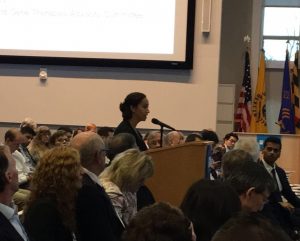
Lisa Kurec never heard of the National Organization for Rare Disorders (NORD) until Wednesday, but after many years of finding no answers for her son’s rare disease, she decided to attend NORD’s Rare Disease Day event in Hartford at the Legislative Office Building.  She joined patients, families, caregivers, medical professionals, industry representatives and legislators, all gathered on Rare Disease Day to help shine a light on these conditions.

Over the years Kurec, of Middletown, took her son to 25 doctors, all unable to determine why he suffered from painful ulcers throughout his body. Some symptoms were even attributed to age-appropriate conditions, such as acne.

She finally took him to a dentist, who sent him to the emergency room, where he was referred to an infectious disease doctor. By 2014, her now 26-year-old son was diagnosed with Behcet’s disease (pronounced beh-CHETS), a rare disorder that causes blood vessel inflammation throughout the body. Signs and symptoms seem unrelated at first, and include mouth sores, eye inflammation, skin rashes and lesions, and genital sores.

At Wednesday’s event, hosted by NORD, the official sponsor of Rare Disease Day in the United States, and NORD’s Connecticut Rare Action Network, Kurec immediately learned about NORD’s Patient Assistance programs and much more to help her find support for her son.

NORD President Peter Saltonstall told the gathering of about 120 people that there are about 7,000 rare diseases, with fewer than 500 having FDA-approved therapies; that leaves 95 percent of patients with no available treatment.

“There’s still a lot of work to be done,” he said, adding, “NORD is the voice for the rare disease patient.” Thirty million Americans have rare diseases, including 300,000 in Connecticut.

He noted that NORD receives more than a million hits monthly on its website from people looking for help and said Rare Disease Day is the one day people come together globally to close the gap between the number of rare diseases and the number of available treatments.

NORD has more than 260 member organizations, including Hope in Focus (formally Sofia Sees Hope), which unite to promote patient and caregiver advocacy, and research for treatment and cures for those with rare diseases.

Speakers at Wednesday’s event promoted Connecticut as a good place for investment in research and development in creating new treatments, and for job opportunities and economic growth. They reached out to legislators, asking them to keep in mind tax incentives and other ways of encouraging the business of research in the state.

Legislators attending included Republican State Sen. Len Fasano, who said, “In this building, people care. Republicans and Democrats care. This is not a Republican or Democrat issue.”

He introduced Hunter Pageau, an articulate 7th grader who is one of 80 people in the world with Spinal Muscular Atrophy with Respiratory Distress or SMARD.

Hunter said he founded a new group called Youth Empowerment Society or YES, and he told the gathering, “While a disease may be rare, hope never should be.”

Democratic State Rep. Joe Aresimowicz, Speaker of the House, said rare disease advocacy and research needs “money and legislation to fully understand what is going on.”

“We genuinely care,” he said. “We want to be helpful.”

The Speaker introduced Greta Stifel, who has a rare cancer called neuroendocrine tumor carcinoid cancer (NET).

She told the group, “We have a set of struggles that other patients don’t have.”

She directed people to #RareLivesMatter and said, “We do matter. We need more funding, more visibility.”

Dr. Mridu Gulati, a pulmonary disorder specialist at Yale School of Medicine and chair of the Connecticut General Assembly’s Task Force to Study Rare Diseases , thanked the many, many legislators, medical experts and rare disease advocates that she and task force members have met with since February 2016.

She said the group plans to hold more meetings examining rare disease research, diagnoses, treatment and education, and the task force will make recommendations for creating a permanent group of experts to advise Connecticut’s Department of Public Health on rare diseases.

CT Rare Disease Day: Patients Must Be Advocates

On Rare Disease Day – Wednesday, February 28 – doctors, researchers, advocates, patients, caregivers, industry representatives and legislators will come together in Connecticut and around the globe to focus on the critical role patients play in understanding rare diseases and in developing innovative treatments and cures.

Research is the 2018 theme for Rare Disease Day, and this year’s slogan is “Patients are not only subjects but proactive actors in research.” Nearly 7,000 diseases are considered rare in the United States and about 300,000 people in Connecticut have a rare disease.

Hosted by the National Organization for Rare Disorders (NORD) and the NORD’s Connecticut Rare Action Network, Rare Disease Day will be celebrated on the last day of February from 8:30 to 10:30 a.m. in the 2nd Floor Atrium of the Legislative Office Building, 300 Capitol Ave., Hartford.

The event, held nationally and in more than 85 countries, serves as an opportunity to hear from the many voices of those dealing with rare diseases and the daily challenges patients and their families face in Connecticut.

NORD President Pete Saltonstall and a bi-partisan team of Connecticut General Assembly (CGA) members will open the event. The governor is expected to honor the day with an official proclamation.

Dr. Mridu Gulati, a pulmonary disorder specialist at Yale School of Medicine and chair of the CGA’s Task Force to Study Rare Diseases, will report on the group’s findings. The task force, created in 2015 under Public Act 15-242, comprises legislators, medical experts and rare disease advocates. It is charged with examining rare disease research, diagnoses, treatment and education. The group also makes recommendations for creating a permanent group of experts to advise Connecticut’s Department of Public Health on rare diseases.

Also, within the legislative session, Jean Kelley, whose son has X-linked Adrenoleukodystrophy, will give an update on ALD and newborn screening.

Speaking on behalf of research will be: Dr. Emily Germain-Lee of Connecticut Children’s Medical Center and University of Connecticut, Albright Syndrome; Stormy Chamberlain, Ph.D., of University of Connecticut, Angelman’s Syndrome and Prader Willi; and Dr. Thomas Carpenter of Yale, X-linked Hypophosphatemia.

Event organizer Lesley Bennett said discussion is open to other rare diseases, such as Leber congenital amaurosis and other rare inherited retinal diseases. Advocates could add their concerns in the patient-issues portion of the event, which includes legislators and rare disease patients.

A five-member business panel will help inform the CGA about patient organizations in our state, patient participation in clinical trials and helping to fund research to develop therapies for rare disorders.

Bennett is part of NORD’s Rare Action Network and she is Connecticut’s Volunteer State Ambassador. For more information, please email her at Lesley.bennett@rareaction.org

RPE65 Trial Patient Tami Morehouse: “There’s So Much To See”

Tami Morehouse made research history in the Leber congenital amaurosis world, and in the nation, when at age 44 she became the oldest person in a successful LCA-RPE65 genetic therapy trial, and the first patient to receive the retinal therapy in both eyes.

It’s been a long road for Tami, now 53 and living in the Cleveland area with her husband, Mike.

With no LCA diagnosis until her 30s, Tami made her way through life doing whatever she had to do. Sink or swim, she developed good coping and resource skills.

“I did what I had to do,” she said. “I had enough vision to make it work.”

No one noticed her vision problems until she was about a year old, when nighttime came, and she couldn’t see well at all. Attention focused on the idea she had night blindness.

It is difficult to detect vision clarity in small children, but her mom and dad knew something wasn’t quite right. Doctors picked up on it when she was 5, during an exam in which she recalled she was scared to death, screaming and crying, because they were poking around her eyes.

They determined she had issues with the clarity and clearness of vision, known as visual acuity.

She just adapted

From kindergarten into her 20s, she adapted to her surroundings and to her level of vision. She had difficulty seeing the chalkboard, reading a paper or deciphering bulletin-board postings.

“All of my teachers knew I had a hard time. I needed more light than the average kid. I remember the hallways of my elementary school were very, very dim and I had a hard time making my way around.”

Something her father said a long time ago helped her along the way. Her dad, who always called her Timmer, said, “‘Timmer, we all have our troubles, and if you want me to take you anywhere or do anything, just ask me.’ They just treated me like the typical kid I was not.”

Studying social work at Edinboro University in Pennsylvania, Tami scheduled classes in familiar and comfortable places. She avoided night classes, and when she couldn’t, she’d figure out how to get there, walking in better lit areas.

She realized that all her life she was a tweener – someone poised in-between.

“I was a tweener for forever because I did most things like everyone else did and there was that part that everyone else didn’t know.”

Since she was young, some sort of eye doctor tracked her through the years, but it wasn’t until she got her first social-work job and her then-boyfriend, now-husband, Mike, said they needed to explore potential options.

Specialists diagnosed her under the retinitis-pigmentosa umbrella and told her she would lose her vision. They said it was good she already had her education and she should consider having her children now. “It was a heartbreaker day,” Tami recalled.

As she aged, so did her retina and its ability to function well. She went from reading storybooks to her three children to reading Dr. Seuss alphabet books. Some days she saw only hazy grays and browns and needed the brightest lights to see.

“It was really very scary. At that point, before the trial, I had more poor-vision days, than OK-vision days. Sometimes I was scared to death to set my alarm. What if tomorrow is the day I wake up and my vision doesn’t get better? What if I wake up and I can’t see?”

But one Sunday morning, Tami was in the house, and her husband was out in the garage. He suddenly barreled in. He had heard on the radio that a study was being done on children with LCA in Philadelphia by Dr. Jean Bennett and Dr. Albert McGuire. Mike called Bennett the next day, and the wheels turned fast. Bennett opened the study at Children’s Hospital of Philadelphia to older patients and invited Tami to take part in the Spark Therapeutics trial that would change her life.

In March 2009, doctors injected her left eye with healthy cells to help her retina perform more efficiently and regenerate healthy cells.

Several days later, she and her husband were having dinner in Philadelphia and Tami reached over and picked up her drink.

‘Do you know that you just reached over and picked that up, you didn’t feel for it?,’ Mike asked. ‘You just looked out and saw it and picked it up!’

The injection in her right eye in November 2010 brought more brightness and clarity, to the point where she could see some eye-chart letters.

In spring at a baseball practice for one of her sons, she noticed colors more than ever before.

“It was color and light and movement and the kind of stuff people take for granted every day, which may seem small if you have it. Once you lose those little things and then get them back, you realize how important they were. For me it was huge.”

Tami also got to see her daughter taunting the opposing pitcher on her softball team, as she frequently danced up and down the third-base line to almost always steal home.

‘Don’t give up’

Her only wish was that the therapy had been an option sooner, because as the years passed, her retinas kept deteriorating.

“If this was a life-threatening illness,” she quipped, “I would have died a long time ago.”

She advises anyone with LCA-RPE65 to investigate whether the therapy is an option, saying, “Time is of the essence. Don’t give up. There were a lot of us in that trial and we all seem to have different levels of benefits from procedures, whether you have a little vision or a lot of vision. I just value my vision so much, I just think everybody needs to act and respect whatever level you have and just be glad to have it. There’s so much to see. It’s an incredible gift.”

Successful Strategies for Patient Organizations

Your voice counts! Lawmakers on the state level need to hear from people living with Leber congenital amaurosis (LCA) and other rare diseases to help secure funding for research, patients’ needs, costs associated with living with a rare disease and accessibility on all fronts.

Your voices and those of organizations representing the rare disease community need to be heard by your state senators and representatives now to prevent elimination or reduction in funding, especially in these times of tight budgets.

This advice came during a conference workshop – Successful Strategies for Patient Organizations – at the recent 2017 Rare Disease & Orphan Products Breakthrough Summit presented by the National Organization for Rare Disorders (NORD).

Rare diseases number more than 7,000. You can make a difference because of the power in numbers. Start making contacts now as we approach Rare Disease Day on Feb. 28, 2018. Plan to combine efforts with other rare disease organizations in your state and rally for cures, regardless of the disease/gene that you represent.

Rare disease community members represent 10 percent of legislators’ constituents. Know that number before you meet. For instance, if 20,000 people live in your district, 2,000 live with rare diseases.

The legislators in any state’s capital, work for you. Don’t be intimidated; realize the impact you can have by reaching out and/or meeting with your representative or senator. Research them in advance online, find out on which committees they serve, when and where they are in session, and contact their offices regularly.

For instance, in Connecticut, the Human Services Committee  has jurisdiction over all matters relating to the Department of Social Services and would include services for the rare disease community.

Meeting with legislators or their staff does not have to happen at their offices. Build a relationship by inviting them to key events and meeting them at theirs. Always say hello so you stand out from the crowd. Keep calling and keep emailing.

Tell them your personal rare disease stories. Talking from the heart has impact. Even if they oppose your proposals for legislation, they’ve heard your story and you’ve offered them a worthwhile perspective that in the end may help change their minds.

Brings notes to keep on-point. Avoid making your pitch sound too complex and don’t share irrelevant information. Leave behind business cards and notepads or pens imprinted with your organization’s logo. Follow up the meeting with a thank-you card and a phone call.

Also, your best friends in the world of lawmakers are their staff members. Staffers keep track of legislators’ calendars and decide when meetings take place. If you do secure a meeting with staff and not the legislator, don’t be insulted as this often is the first step in meeting with a lawmaker in person. Staffers will relay your key points.

Remember, legislators want to do a good job representing the people in their district. They do that by receiving pertinent information from you and your organizations so they can make a difference by developing, sponsoring and enacting legislation beneficial to our rare disease community.

2017 Rare Disease & Orphan Products Breakthrough Summit

A two-day conference in Washington, D.C., earlier this month offered the opportunity for organizations such as Hope in Focus (formally Sofia Sees Hope) to discover the latest in the rare disease community, meet the nation’s top rare-disease professionals, and gather resources and ideas to help with the Leber congenital amaurosis (LCA) community.

More than 670 people attended the first day of the 2017 Rare Disease & Orphan Products Breakthrough Summit on Monday, Oct. 16.

The summit, presented by the National Organization for Rare Diseases (NORD) , included a range of topics, from the challenges of healthcare costs, to the ethical guidelines for patient organizations and themes of collaboration, urgency and transparency.

The summit’s second day featured presentations by the Food & Drug Administration’s leading Division Directors and discussions of improving the lives of patients with rare diseases.

Peter L. Saltonstall headshot
Peter L. Saltonstall, President and CEO of NORD

The conference kicked off with a welcome by Peter L. Saltonstall, President and CEO of NORD, and Marshall L. Summar, M.D., Director of Children’s National Rare Disease Institute, Chief of Genetics and Metabolism at Children’s National Medical Center , and Chairman of NORD’s Board of Directors.

Key presentations included ensuring patient access, sustaining orphan drug development and availability, and reviewing achievements in rare disease drug, biologic and device development.

Mike Porath, founder and CEO of The Mighty and a parent of a child with a rare disease, gave a motivating, multi-faceted presentation in his keynote community address. His advice to families living with a rare disease included asking for help, embracing the moments and dreaming big to open doors for people with rare diseases.

Scott Gottlieb, M.D., Commissioner of the FDA, delivered the administration’s keynote address, talking about the group’s rare disease priorities, the rapid changes in rare disease product development and the basis of the Orphan Drug Act

Continuing to See Hope for IRD Treatments

At three o’clock Thursday afternoon, Beth Chiarella and I had a very public moment of tears and hugs at Baltimore–Washington International Airport as we received news that after a day of hearing testimony, the Federal Drug Administration’s Advisory Committee unanimously recommended approval of a gene therapy that could reverse or reduce vision loss due to an inherited retinal disease (IRD).

Sofia Sees Hope founder Laura Manfre testifying to Federal Drug Administration’s Advisory Committee about a gene therapy that would help those with RPE65 gene mutation form of LCA

The committee listened to Spark Therapeutics present their research and findings on LUXTURNA® (voretigene neparvovec), an investigational, potential one-time gene therapy, and heard testimonies from families whose lives have been changed dramatically by the therapy. Members then voted 16-0 without comment to endorse approval of the therapy for the treatment of patients with vision loss due to confirmed biallelic RPE65-mediated inherited retinal disease (IRD).

Federal Drug Administration’s Advisory Committee unanimously recommended approval of a gene therapy that could reverse or reduce vision loss due to an inherited retinal disease (IRD).

Alongside the brave individuals and their family members who were part of the clinical trials and traveled to Washington, D.C., to share their personal stories in support of this therapy, I played a small part in what is no doubt an historic moment for all LCA families. I’m grateful to Tami, the oldest participant in the RPE65 trial, who allowed me to share her experience with the panel, reinforcing that this treatment is life-changing at any age, and for any length of time. I’m also grateful to all of those who have made it possible for Sofia Sees Hope to play a role through their continued advice, support and enthusiastic cheerleading.

While this first treatment does not address the dozens of other genetic mutations that cause blindness for LCA and IRD individuals, we can hope that this endorsement will be followed by a potential FDA approval, in turn paving the way for continued research and treatment for my daughter and our entire LCA community. Thursday marked a positive step forward on the path to changing the lives for many people.

Read Laura’s full statement to the Advisory Committee here.

Presenting at FDA Hearing Thursday on RPE65 Genetic Therapy Drug

Hope in Focus (formally Sofia Sees Hope) Co-Founder Laura Manfre will help provide the LCA community’s perspective to a Food & Drug Administration panel Thursday about a proposed genetic therapy for Leber congenital amaurosis (LCA) caused by an RPE65 gene mutation.

“This is such an important event because it allows the patient population — the parents, and children and families — directly impacted by this very important decision-making process to be heard,” Manfre said. “The FDA has a critical job to do in weighing all of the potential risks and benefits with any drug approval, and they recognize that the voice and the experiences of those who are affected needs to be a part of that process.

“Part of Sofia Sees Hope’s mission is to help serve as a connection among families living with LCA,” Manfre continued. “We see this opportunity to offer testimony as another way to fulfill that mission.”  

As a presenter at the FDA’s public advisory meeting of the Cellular, Tissue and Gene Therapies Advisory Committee (CTGTAC), Manfre will be representing patients and families living with LCA and other rare inherited retinal diseases. The meeting begins at 8:30 Thursday  morning and runs to 5 p.m. at the FDA White Oak Campus in Silver Spring, MD.

The CTGTAC is meeting to make recommendations on the safety and effectiveness of biologics license application for voretigene neparvovec, submitted by Spark Therapeutics, Inc. The proposed gene therapy is to treat patients with vision loss due to confirmed biallelic RPE65 mutation-associated dystrophy.

RPE65 mutation-associated retinal dystrophy is an orphan disease, with an estimated 1,000-3,000 patients affected in the United States, according to A Shared Vision.

Manfre said research and bringing therapies to market provides hope to all LCA and IRD families.

“Though families may struggle with the day-to-day challenges, they can have hope that there just might be a light at the end of the tunnel,” she said.

“To help foster this effort,” she said, “Patients and families need to seek diagnoses,  participate in patient registries, and continue to generate awareness and make our voices heard.  Our disease is rare, which makes it more important than ever that we are working together to be advocate for our community and  to move treatment and cures for blindness forward.”

For the meeting, Spark submitted to the FDA a 149-page briefing detailing the history, background, studies and research that went into developing voretigene neparvovec, which has the proposed trade name LUXTURNA.

The FDA’s 42-page briefing details its analysis of the proposed treatment and offers discussion questions for the advisory committee that include at what age should patients receive treatment and what are the treatment’s potential risks and benefits.

Here are some links for more information about the meeting:

Webcast of the meeting: https://collaboration.fda.gov/ctgtac101217.