Kristen Steele: You’ve Gotta Fight for Your Right …

Kristen Steele knows a thing or two about telling her story and getting what she needs to be her best.

The 22-year-old from Council Bluffs, Iowa, is a licensed massage therapist in Iowa and Nebraska. She travels throughout rural Nebraska, giving massages to the elderly and the ill as an independent contractor specializing in geriatric care.

But she had to fight to take her massage therapy exam in Braille. Never had anyone taken the Massage and Bodywork Licensing Examination, known as the MBLEx, in Braille.

Kristen told her story to people living with Leber congenital amaurosis and other inherited retinal diseases (IRDs) at the Hope in Focus (formally Sofia Sees Hope) second LCA Family Conference in Philadelphia in July. The gathering brought together patients, advocates, doctors, researchers and biotechnology leaders – more than 80 people from across the nation and Mexico. She spoke from the audience following the conference’s session on patient advocacy called “Your Voice Matters!”

Doctors diagnosed Kristen with LCA as an infant, while her clinical diagnosis of LCA10 (CEP290) came years later in middle school. She learned Braille at age 3.

Kristen planned to be an English teacher but decided her passions aligned more with the medical field. She enrolled in Midwest School of Massage near Omaha after rejecting another school because of difficulty accessing its curricula. At Midwest, she found an instructor with a background in exercise physiology and physical therapy. She said the teacher cared and put in extra time to make sure she fully understood the techniques.

After completing the 1,000-hour massage therapy course on anatomy, physiology and pathology, plus 200 practice massages, with a 4.0 average, Kristen learned she couldn’t take the exam in Braille. Instead, volunteer readers administered the test to people with visual impairment. Readers could be unfamiliar with and prone to mispronouncing complex anatomical and medical terms, putting Kristen at risk of failing the exam. Plus, she didn’t want to pay the $195 exam fee twice. 

She found a blind lawyer in Iowa and they sued the Federation of State Massage Therapy Boards. She reached a settlement agreement and took the exam, passing on her first try. Kristen also insisted on having a professional reader, an occupational therapist familiar with terminology used in the test questions – just in case she needed clarification.

Kristen polished her resumé with the help of visual interpreter services, highlighting her certificates in advanced dementia processes and other therapies.

“It placed my disability on the back burner, and it gave me the upper hand when you have sighted massage therapists and they’re interviewing without any of these advanced certificates,” she said.

A company interviewed Kristen by phone last year and hired her the day after her in-person interview. She continues to thrive there as a massage therapist specializing in geriatric care. She also devised her own transportation system to get to and from clients in the Nebraska countryside. 

Kristen paved the way for others, including perhaps another conference attendee, Danielle Senick from Norwich, Conn. Danielle is studying to be a massage therapist, and Kristen said she will be there to help her succeed in changing the rules to take the exam in Braille in Connecticut.

Dr. Jean Bennett: ‘Seeing the Light with Retinal Gene Therapy’

Known as a pioneer in gene therapyJean Bennett, MD, PhD, surveyed her audience of patients and families living with Leber congenital amaurosis and declared: “YOU are all the pioneers!”

Dr. Bennett, addressing more than 80 people from 15 states and Mexico at the Hope in Focus (formally Sofia Sees Hope) second LCA Family Conference, characterized the meeting as a great place to reach out to patients to participate in clinical trials. Researchers normally recruit study patients through advertising.

Along with families living with LCA and other inherited retinal diseases (IRDs), people attending the summer conference in Philadelphia included patient advocates, doctors, researchers and biotechnology industry leaders.

Dr. Bennett is Professor of Ophthalmology at the Center for Advanced Retinal and Ocular Therapeutics and the F.M. Kirby Center for Molecular Ophthalmology at the Perelman School of Medicine, University of Pennsylvania. She gave her presentation as part of a conference session called “One Disease, Many Approaches.”

Viral Vectors Key 

Dr. Bennett was one of the first investigators to use viral vectors, in which a virus is used as a vector or carrier that is genetically engineered to deliver the gene to specific cells in the retina.

Lancelot, a golden colored dog standing on the steps with the U.S. Capital behind him
Lancelot on steps of the U.S. Capitol.

She emphasized that LUXTURNA™, the breakthrough genetic treatment she and her colleagues developed at Children’s Hospital of Philadelphia (CHOP) and Spark Therapeutics, began with the successful treatment of a special being: Lancelot, the first in a line of Briard herding dogs, who helped drive research to bring to market gene therapy that improved vision by focusing on a particular mutated gene.

Dr. Bennett and her colleagues studied Lancelot and the other dogs after learning that a veterinary ophthalmologist had identified the gene which, when mutated, led to blindness in Swedish Briard dogs. 

The research dogs received an engineered virus delivering the human RPE65 gene, a gene that, when mutated, causes LCA RPE65, also known as LCA2, one of the more than 25 forms of LCA. Doctors delivered the drug by subretinal injection through a needle the size of an eyelash. The treatment works by encoding an enzyme that converts light into electrical signals interpreted by the brain.

Dr. Bennett’s presentation, “Seeing the Light with Retinal Gene Therapy: From Fantasy to Reality,” features a photograph of Lancelot wearing glasses and perusing his article in Nature Genetics magazine. 

Lancelot accompanied her on her frequent Congressional visits to lobby for more research funding. Dr. Bennett said Lancelot’s distant cousin, Venus, and later her pups, Mercury and Saturn, also successfully received the treatment. 

According to an article in the Philadelphia Inquirer, “Before the treatment, Venus preferred to crouch in a corner for fear of bumping into objects. But after the treatment, it was clear that Venus and the other dogs were able to see. They could easily navigate obstacle courses set up by researchers. Venus was a new dog, eager to walk around and explore grass, birds, and squirrels for the first time.”

Dr. Bennett, noting Venus’ recent passing, said, “She died of old age. Still seeing.” The headline on Venus’ July 16 obituary in the Philadelphia Inquirer read: “Main Line dog, used to help cure blindness in humans, dies at 12.”

The trials on dogs led to successful treatment in people beginning in 2007 after Dr. Bennett and her husband, Dr. Albert Maguire, teamed up with Dr. Katherine High to run human clinical trials. Christian Guardino, an America’s Got Talent Golden Buzzer award winner from Long Island, received treatment at age 13 during the trials, as well as others, including Cleveland-area resident Tami Morehouse, who at age 44 at the time, was the oldest participant in the trial. 

LUXTURNA, approved by the U.S. Food and Drug Administration in December 2017, is the first and only approved gene therapy for inherited disease in the United States and Europe. The breakthrough medicine unlocked the potential of the Human Genome Project to provide options for people when there were none.

The treatment fostered pioneering changes in medical practices, motivating ophthalmologists and insurers to do genetic testing, and it created a path for genetic treatments to blindness.

Dr. Bennett said she is thankful for the clinical trial participants, team members, regulatory bodies, advisors and the dogs who helped along the way.

Genetic research still faces a host of challenges, including the rapid degeneration of cells needed for gene therapy to work and too long a span of time to get results for diseases that progress very slowly.

More patients have been treated with LUXTURNA post-FDA approval than the 29 who received treatment during the trials. In the first few months after approval, more than a dozen people underwent treatment at CHOP, one of the 10 approved treatment centers in the United States. Also, the first patient in Paris received the gene therapy in January.

'Retinal Gene Therapy is Alive and Well' slide

Before LUXTURNA, no path existed for pediatric drug development in ophthalmology. In a slide titled “Retinal Gene Therapy is Alive & Well,” Dr. Bennett said more than 700 people are enrolled in clinical trials at more than 30 sites. 

“We obtained approval and paved the way for all future pediatric gene therapy trials,” she said. 

As this genetic superhero said at the beginning of her presentation – that the audience members are the pioneers – Dr. Bennett looked out at the gathering as she ended her talk and declared: “It is the families who are really the heroes.”

Explosive Growth Seen in Field of Rare Inherited Retinal Disease Research

Advances in genetic sequencing boosted research into rare inherited retinal diseases (IRDs), making a tremendous impact on the number of clinical trials underway for genetic treatments.

“There are 37 trials in IRDs; 10 years ago, you could count them on your fingers,” said Foundation Fighting Blindness Chief Executive Officer Benjamin Yerxa, Ph.D

Also, genetic testing zoomed from zero-possibility to an individual being able to receive a full genetic sequence within a few weeks for a couple of thousand dollars.

Dr. Ben Yerxa presenting
Dr. Ben Yerxa at the LCA Family Conference in July.

Dr. Yerxa opened the Hope in Focus (formally Sofia Sees Hope) second LCA Family Conference on July 27 in Philadelphia before an audience of more than 80 people from 15 states and Mexico. They represented patients and families living with Leber congenital amaurosis (LCA), other rare diseases (retinal and otherwise), and advocates, doctors, researchers and biotech leaders. 

He delivered updates on the Foundation’s work in his presentation, “Accelerating Translation of New Treatments for IRDs – A Foundation’s Perspective.” The Foundation, the world’s largest private funding source for research into treatments and cures for IRDs, has raised more than $750 million toward its mission since its founding in 1971. Sofia Sees Hope partners with the Foundation by helping provide families with free access to genetic testing, and funding research.

Advances in genetic sequencing

Dr. Yerxa credited the Human Genome Project (HGP) – costing an inflation-adjusted $5 billion – with netting continued advances in genetic sequencing and making great gains in the IRD field.

Researchers have identified the mutated genes in 65 percent of people with retinal disease who get genetically tested, and in 2017, the U.S. Food and Drug Administration approved LUXTURNA™, the first approved gene therapy for the eye or an inherited condition. LUXTURNA is for people with mutations in the RPE65 gene, one of the more than 25 genes that, when mutated, can lead to LCA.

Dr. Yerxa said that approximately 200,000 people in the United States have an IRD, with each condition meeting the definition of an orphan disease

'LCA By The Numbers' slide from 2019 LCA Family Conference

He also delineated the LCA trials in progress in an “LCA by the Numbers” presentation. He discussed an emerging treatment for CEP290 (LCA10) by ProQR, which is in a Phase 2/3 clinical trial, and research also on CEP290 by Editas Medicine and Allergan, who are recruiting patients in a landmark clinical trial to test a gene-editing technique called CRISPR/Cas9.

“We all know it takes a village,” Dr. Yerxa said. “There are tons of people involved in these programs.”

'Innovation in Venture Philanthropy: RD Fund' slide

He also detailed the Foundation’s new “Innovation in Venture Philanthropy: RD Fund,” a first-of-a-kind retinal degeneration fund focused on IRDs. It is an internal venture philanthropy investment account overseen by an independent board of directors. Donor dollars go to biotechnology companies as investments, with financial returns reinvested to support the Foundation’s mission. 

Among its contributions to research, the Foundation gave $10 million toward the development of LUXTURNA and $6 million to the Natural History of the Progression of Atrophy Secondary to Stargardt Disease or ProgStar studies that produced new knowledge and potential outcome measures. 

Dr. Yerxa also reported impressive gains in membership to My Retina Tracker® (MRT), the free and secure online international patient registry managed by the Foundation.

“I call it the LUXTURNA effect. Thanks to LUXTURNA, registration went up like a hockey stick.”

With membership at more than 23,000 and growing, the registry’s goal is to drive research toward prevention, treatments and cures for people living with Retinitis Pigmentosa (RP), Stargardt diseaseUsher syndrome and the whole spectrum of inherited retinal degenerative diseases, including LCA.

50 logos showing the involvement of biotechs in vision research

In a slide titled “Our Space is Very Active” showing a collage of more than 50 logos of biotech companies involved with vision research, Dr. Yerxa said, “More and more people are jumping into this space. 

“This is good news. Ocular is hot.”

Human Genome Project: Critical to Modern Gene Therapy Success

The long and sometimes uncompromising road to completing the Human Genome Project (HGP) paved the way for today’s surge in genetic therapy, Dr. Katherine A. High said in her presentation at the second Hope in Focus (formally Sofia See’s Hope) LCA Family Conference.

“It was a tremendous achievement,” Dr. High said, “And it forms an important bedrock for everything we are trying to do in gene therapy.”

The HGP began in 1990 with an international, collaborative quest to map and understand all the genes of human beings and their roles in health and disease. The project, completed in 2003, revealed that there are probably about 20,500 human genes, referred to collectively as our genome, according to the National Human Genome Research Institute (NHGRI).

Dr. Katherine High and Laura Manfre next to a Welcome poster
Dr. Katherine High and Sofia Sees Hope co-co-founder Laura Manfre at the LCA Family Conference in July.

Dr. High, keynote speaker and accomplished hematologist with a longstanding interest in gene therapy for genetic disease, kicked off the July 27 conference in Philadelphia.

More than 80 patients, family members, advocates, doctors, researchers and biotech industry leaders from 15 states and Mexico gathered for exchanges of knowledge and ideas about Leber congenital amaurosisinherited retinal diseases (IRD) and other rare diseases. The conference grew out of the Sofia Sees Hope Family Connections program that brings together families living with LCA and other IRDs in a supportive community to help alleviate feelings of isolation that often come with a rare-disease diagnosis. 

Dr. High and her team at Children’s Hospital of Philadelphia (CHOP), including Dr. Jean Bennett and Dr. Albert Maguire, developed – from clinical trials to regulatory approval – the first gene therapy for any inherited genetic disease in the United States; it also is the first genetic therapy targeting a retinal disease worldwide. The treatment focused on LCA caused by mutations in the gene RPE65, one of the more than 25 different genes, that, when mutated, can lead to LCA.

‘The Long & Winding Road’

Spark Therapeutics, a company that spun off the team’s research at CHOP, developed the therapy called LUXTURNA™ after 12 years of research and more than $500 million in investment. The U.S. Food and Drug Administration (FDA) approved the human-engineered, injectable drug in December 2017. Beginning in 2018, patients with low vision caused by LCA-RPE65 underwent surgery to help improve their eyesight. 

LUXTURNA and the dozens of clinical trials now underway for retinal disease would not be possible if not for the HGP. Dr. High, Spark’s president and head of research and development, elaborated on the genome project in her presentation, “The Long and Winding Road: How the Human Genome Project and Gene Therapy Research Led to the First Gene Therapies for Genetic Disease.”

The ultimate product of the HGP – detailed information about the structure, organization and function of the complete set of human genes – can be thought of as the basic set of inheritable instructions for the development and function of a human being, according to NHGRI information.

Dr. High said the burden of genetic disease falls heavily on children’s hospitals, with 25 million Americans having a rare genetic disease. 

A 4-year-old made genetic history after receiving the first genetic transfer in the United States in 1990, leading eventually to licensing of a product for the same disease in Europe in 2016. But that span of time did not represent an unbroken chain of successes, Dr. High said. “Instead, it was punctuated by a number of adverse events and failed results.”

A teenager died in a 1999 genetic trial in Philadelphia, and in 2003, children in a Parisian clinical trial developed leukemia. 

A Wall Street Journal article about Spark Therapeutics

“Gene therapy was just not ready for prime time and there was a decline in trials and participation.”

Headlines such as “Gene Therapy Still Lacks Breakthrough” and “Gene Therapy: cursed or inching toward credibility” mirrored waning interest from pharmaceutical companies and investors.

Instead, the American and European Societies of Gene and Cell Therapy, the National Institutes of Health (NIH), of which the National Human Genome Research Institute is part, and academic medical centers, like CHOP and its Center for Cellular & Molecular Therapeutics, sustained genetic therapy research through rough times, allowing investigators to develop therapeutics based on best science, not commercial considerations, Dr. High said.

Investing in the RPE65 blindness clinical trials during this time ultimately led to the development and FDA approval of LUXTURNA.

“The ability to work through those adverse events brought us to where we are now,” she said.

In the United States, the clinical development phase of a drug begins when a sponsor files an Investigational New Drug application (IND) with the FDA. IND submissions with gene therapy products went from zero in 1963, to three in 1990, to more than 100 in 2017. Following LUXTURNA’s market entrance in 2018, sponsors submitted more than 200 INDs.

“The level of activity in the last few years is truly extraordinary. It’s a very compelling statement of how people are investing time and energy into gene therapy,” which High said is probably the most complicated treatment researchers have tried to develop.

“It’s a complex therapeutic. The outside is a protein. The inside is a piece of DNA and those things have to be assembled in the exact proportions or it’s not going to work right.”

Dr. High also described the increased progression of identifying genes involved with vision – from zero in 1980 to more than 300 by January 2019. 

“It’s daunting to think about the number of development programs that might need to be initiated and taken all the way through. But a journey of a thousand miles begins with a single step.”

LCA Family Conference 2019: A Lot to Unpack!

The news is out from our 2019 LCA Family Conference  and it’s terrific!

Families living with Leber congenital amaurosis (LCA) and other rare inherited retinal diseases (IRDs) learned at Hope in Focus (formally Sofia Sees Hope)’s July 27 conference in Philadelphia that they are living in a time of the most dramatic growth ever in genetic research. 

And – as with most good things – there is a caveat: Patience.

While researchers report a record number of genetic studies in various stages, they face long and arduous journeys in developing federally approved treatments.

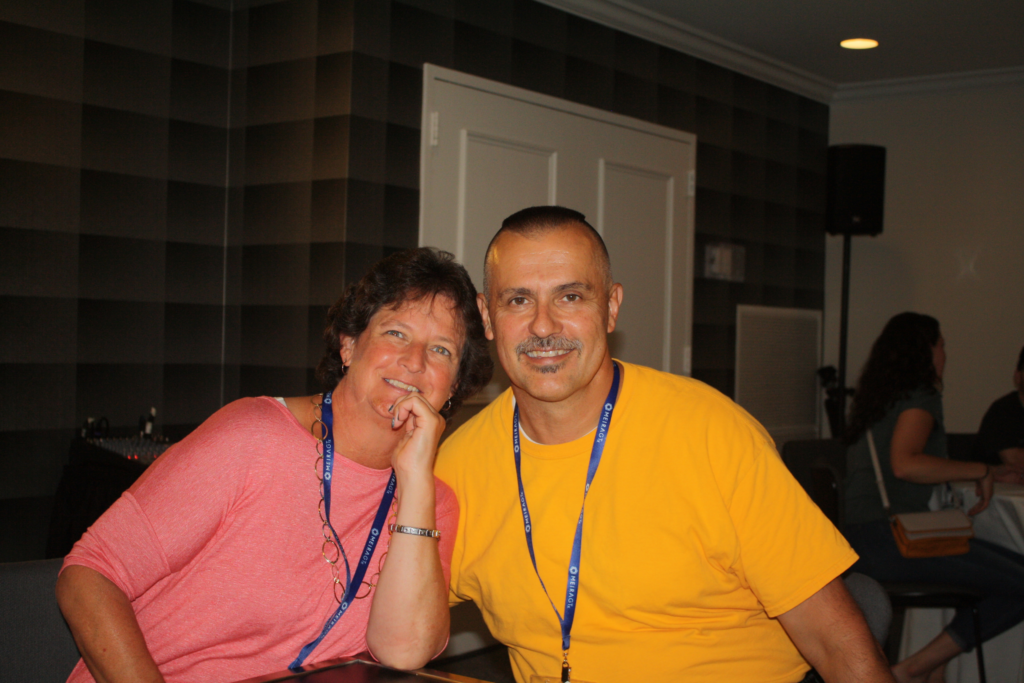
Two attendees next to the welcome poster at the 2019 LCA Family Conference

In her keynote address, Dr. Katherine High, Co-founder, President and Chief Scientific Officer of Spark Therapeutics, said initiation of a clinical trial to licensing of a product easily can take 7 to 10 years.

“My take-home message is patience is a requirement in drug development.”

Dr. High and a team from Children’s Hospital of Philadelphia (CHOP) led by Dr. Jean Bennett and Dr. Albert Maguire from Spark Therapeutics developed LUXTURNA™, the first genetic therapy for any inherited rare disease in the United States and the first genetic therapy for RPE65, one of the more than 25 gene mutations caused by LCA. 

The drug received federal approval in December 2017, creating the opportunity for visually impaired patients to undergo surgery and experience improved eyesight. Federal Food and Drug Administration (FDA) approval also signaled increased scientific and public optimism for expanding genetic research into treatments and cures for inherited diseases.

View our Photo Gallery from the 2019 LCA Family Conference!

Connecting patients to patients

Speakers sitting during a panel

More than 80 people – patients, family members, advocates, doctors, researchers and biotech industry leaders – gathered at the conference from July 26-28 at the Warwick Hotel Rittenhouse Square.

The conference was sponsored by MeiraGTxEditas Medicine, Spark TherapeuticsSanofi GenzymeFoundation Fighting BlindnessAllerganProQRTwo Blind BrothersApplied Genetic Technology Corp. (AGTC) and Lions Clubs International

Family members and advocates from throughout the country and Mexico said they appreciated the depth and quality of information presented at the conference that included information from other rare disease groups, the Young Adult Sickle Cell Alliance and the Barth Syndrome Foundation, on how they approach patient advocacy and patient life.

Laura Manfre, co-founder of Sofia Sees Hope and president of its Board of Directors, said the nonprofit’s second conference ever was designed to bring information to patients and families as well as connect those patients to researchers and industry.

“A huge part of our mission is to make sure that members of the rare disease community do not feel alone,” Manfre said. “And not only do we hear from patients all the time that they want to connect with other patients, but we hear from researchers and pharma that they not only want to talk to patients, but they need to do so, because it gives them context and perspective on their work. Our LCA Family Conference accomplished that 10-fold this year.”

Three generations of at least two families attended, with one family connecting directly with Spark for possible treatment of their 4-year-old daughter/granddaughter, Jordynn, who has LCA-RPE65, also known as LCA2. 

A family at the 2019 LCA Family Conference

Jordynn’s mom, Joy Goodwine of upstate New York, said it was great to meet families with kids who have gone through the same experiences. 

“Learning about the treatment and getting the education about all of it really gave me something to think about as my daughter’s journey continues as she lives with this visual impairment,” she said. “Knowing that my daughter can thrive and live a happy life with some occasional bumps in the road was a wonderful feeling.”

Ben Yerxa, Ph.D., CEO of Foundation Fighting Blindness, told the group that awareness in genetics helped increase the number of people enrolled in My Retina Tracker®, a free and secure online registry with a goal to drive research toward prevention, treatments and cures for people living with a spectrum of inherited retinal degenerative diseases, including LCA.

Ben Yerxa presenting at the 2019 LCA Family Conference

“I call it the LUXTURNA effect. It went up like a hockey stick,” he said of the more than 23,000 people now in the registry.

Dr. Yerxa reviewed LCA research progress, detailing 18 forms of the disease and highlighting study stages, including a current recruiting request by Editas Medicine and Allergan for patients for Phase 2 research on LCA-CEP290 (LCA10), and citing more than 35 select trials traveling through the clinical trial pipeline.

“We know it takes a village,” he said. “There are tons of people involved in these programs.”

In a session titled “Your Voice Matters,” patient advocates urged people to tell their stories. Terri Booker, Co-Founder of the Young Adult Sickle Cell Alliance, said she talks about her disease every chance she gets. She founded the youth alliance to empower young patients with advocacy tools to help them live longer.

Also included in the panel were Jamie Ring, Head of Patient Advocacy for Spark, Jill Dolgin, Head of Patient Advocacy for AGTC, and Emily Milligan, Executive Director of the Barth Syndrome Foundation.

Brian Mansfield, Ph.D., Executive Vice President of Research and interim Chief Scientific Officer at the Foundation Fighting Blindness, moderated a panel called “One Disease, Many Approaches.”

The audience heard from Dr. Bennett about injection treatment, from Pam Stetkiewicz, Vice President of Program Management for Editas Medicine, about gene-editing treatment, and from Dr. Tomas Aleman on ways to measure the impact of therapies. Dr. Aleman is Director of the Center for Hereditary Retinal Degeneration at Perelman Center for Advanced Medicine and Director of Retinal Degeneration Service at the Center for Advanced Retinal Ocular Therapeutics (CAROT). 

A panel from the 2019 LCA Family Conference

Also, Michael Schwartz, Global Project Leader for Sepofarsen at ProQR, spoke about repairing the underlying defect in a nucleic acid and the potential to stop progression or reverse some effects of LCA10 or CEP-290.

Ben Shaberman, Senior Director of Scientific Outreach and Community Engagement at Foundation Fighting Blindness, moderated a third session: “All About Clinical Trials.” Dr. Wiley Chambers, the FDA’s Supervisory Medical Officer in the Office of New Drugs, cautioned those gathered about bogus trials, encouraging them to make sure their trial of interest received an FDA Investigational New Drug (IND) application number.

Dr. Michel Michaelides, Head of Clinical Ophthalmology at MeiraGTx, described other relevant treatments, such as optogenetics, a technique that uses light to control cells in living tissue, and retinal implant technology.

Tami Morehouse, who received the genetic therapy treatment for RPE65 during its trials, and her husband, Michael, rounded out the panel.

“She was on a pathway to darkness and she knew it,” Michael said. “It’s a huge life-changing event for us.”

Tami and Michael

Tami became a global pioneer in the LCA world by being the oldest person at age 44 to receive the treatment during its clinical trials.

“In all honesty, I never thought that I’d ever have a shot at seeing,” she said. “I got way more than I anticipated.”

When Self-Advocacy Creates Change That Benefits Everyone

Kristen Steele is a trailblazer.

The 21-year-old paved a smoother road for those without vision by changing massage-therapy exam protocol, writing policies and procedures, and proving herself as a competent, independent contractor who makes house calls to the elderly and the ill in rural Nebraska.

Kristen, who lives in Council Bluffs, Iowa, near the Nebraska line, forges through life with passionate determination. She finds the support she needs to be her best and passes her knowledge along so others can be their best.

Kristen holding up her certificate next to a mantle
Kristen Steele proudly shows off her massage therapy certificate.

She has helped those without vision to pursue massage therapy careers, including Connecticut resident Danielle Senick. They connected through a Facebook page for people with Leber congenital amaurosis (LCA) and soon will connect in person at the second LCA Family Conference presented by Hope in Focus (formally Sofia Sees Hope) in Philadelphia this weekend, Friday, July 26, to Sunday, July 28.

Kristen, Danielle and those living with LCA or other rare inherited retinal diseases (IRDs) will gather at the conference, which offers myriad opportunities to engage in thoughtful and interactive exchanges of knowledge, ideas and viewpoints on research, future treatments, advocacy, and people sharing their stories.

Diagnosis: LCA10

Doctors diagnosed Kristen with LCA as an infant, although her clinical diagnosis of LCA-CEP290, also known as LCA10, came years later in middle school.

She began reading Braille at age 3, and since first grade, has used a BrailleNote, a mini tablet-sized personal digital assistant with input through a Braille keyboard. 

Struggling in school and having trouble with teachers adapting to a blind student, Kristen’s mother quit her job in the accounts receivable department at a medical supply company.

Her mom would pull up her assignments on the computer and tell her what she was missing and what she needed to go forward with the work.

“I had straight As but it was hard to find someone competent enough and willing to adapt,” Kristen said. “My mom, still to this day, is in LCA groups with parents of blind children. She still tries to help out other families and reconnect and advocate.”

A friend of her pharmacist-dad helped her with geometry and algebra by making 3-D shapes with rubber bands, detail that enabled her to visualize and understand the problems.

“That worked. It was just the extra time and energy,” Kristen said. “I didn’t let anything stop me. Sometimes I’d be up ’til midnight doing papers. I spent countless hours. I had to do it because I couldn’t let myself fall behind because of someone’s ill-preparedness.”

Kristen graduated ahead of her class in December 2014, with plans to become a high school English teacher. That changed during a semester at the University of Nebraska at Omaha, where a public-speaking assignment to interview a person in her chosen field led to a blind English teacher in Indiana. 

“She did a really great interview, but she told me to think twice about it.”

Working from 6 a.m. to midnight, it took double time to grade papers. The teacher, then 48 and named Teacher of the Year, said she’d never married or had children because her job took over her life.

“She also mentioned she has a lot of students texting in class, throwing spitballs. They threw a backpack at the window, broke the window, and they were laughing, thinking they played a cool prank on her.”

Kristen decided her passions aligned more with the medical field, given her parents’ work, and her interest in the healing arts. Also, her grandmother, who had dementia, had recently died, and she thought more about geriatrics and helping the elderly.

She reached out to a blind friend who is a licensed massage therapist and researched massage therapy schools, finding and rejecting one because of the difficulty in accessing its curricula. She ultimately enrolled at Midwest School of Massage near Omaha. The school turned out to be a perfect fit, pairing Kristen with an instructor named Les Lundberg, who had a background in exercise physiology and physical therapy. 

“He cared. He wanted to put in the extra time to make sure I had a quality experience.”

Using a skeleton as tall as Kristen, her teacher went over each of the body systems and muscles, reviewing each individually on the skeleton, on herself and then on the instructor to make sure she understood the techniques.

“It was a really nice blend of anatomy and physiology.”

After completing the 1,000-hour course in February 2017 on anatomy, physiology and pathology, plus 200 practice massages, with a 4.0 grade point average, she studied for the Massage and Bodywork Licensing Examination, known as the MBLEx.

Before taking the exam, Kristen took on the Federation of State Massage Therapy Boards because it would not administer the test in Braille. She would have to take the four-hour test with a hundred multiple-choice questions using a human reader, a volunteer likely unfamiliar with medical terms. 

“The exam cost $195 and I didn’t want to pay the price more than once and I didn’t want to fail.”

Through the National Federation for the Blind, Kristen found a blind lawyer in Iowa and they sued the Federation of State Massage Therapy Boards. 

Eight months later, they reached a settlement agreement, making Kristen the first to advocate for and pass the MBLEx in Braille. 

“I took the exam and passed on the first try, but I was debating over this whole time, was it worth it? I could have been licensed and working.”

In the end, she knew it was worth it.

“I wanted to create this advocacy for anyone else pursuing massage therapy and let the boards know it should be in Braille.” 

Kristen now works with others, including Danielle, who was diagnosed with LCA-CRB1, also known as LCA8, and who is finishing massage therapy school and getting ready for the MBLEx.

First steps down a career path

Massage therapists often work as independent contractors and Kristen’s first contracted job led her to a brand-new company.

“They were accepting and very welcoming at first,” she said. 

She honed her massage therapy technique on a hospice patient with dementia. The patient essentially was non-verbal, meaning Kristen learned the woman’s massage therapy needs from her client’s physical responses. The woman also could not hear well and indicated her soreness by holding out her arthritic hands and feet.

“If they can’t form words, I need to pay attention to what they are doing and how they’re reacting.”

Her next client did not have dementia and could tell Kristen where she had pain on her shoulders and back from bedrest.

“She helped me with the verbal side of crafting my technique.”

Kristen also wrote the company’s new policies and procedures for its massage therapy program. 

Her employer, while pleased with her job performance, tried to have her sign a written contract that she couldn’t read because it wasn’t in Braille. Her mother came with her to read the new contract, but the company initially did not produce it.

“They finally spilled it. ‘We need to lower your rates.’ ”

She brought the case to the Nebraska Department of Labor and told officials she never looked over the contract because she can’t see.

“That went south quick. We won.”

She applied for a job at another company.

“The interview went OK. They just didn’t believe in me, that I would be able to find transportation, find the patients. They didn’t have the confidence that the blind could do it.”

She took a job at a physical therapy clinic in Council Bluffs but left because of few hours and low pay.

Kristen also began accumulating Continuing Education Unit (CEU) hours to help her stand out as a job candidate in a field of sighted massage therapists.

She lighted on a program called “Comfort Touch: Massage for the Elderly and the Ill.”

Comfort Touch™ instructor and licensed massage therapist Mary Kathleen Rose never had a Braille reader, so her course materials were not available to read by Braille.  

Kristen ordered a print copy through Bookshare.org, an online library for people with visual disabilities. Bookshare scanned the book on a Monday and uploaded it by Friday, and she began the class. 

“I was the first one to put these materials into Braille that are sold on Amazon and everywhere throughout the country. … That was the first ever CEU class that I took, and it was really cool because Mary Rose did a video of me reading in Braille the Comfort Touch™ textbook. I had adapted these course materials and paved the way, and for my turn (on the video) she wanted me to read ‘Adapting to Change,’” which deals with loss, aging and change. 

In a 2017 North America/Caribbean Region Onkyo Braille Essay Contest, in which Kristen placed second, she detailed her advocacy for Braille in a piece called “Shining Through Darkness.” She recalled in the essay her Comfort Touch™ teacher saying after hearing her read: “Your reading . . . it’s just like everyone else.”

She also wrote in the essay: “Remaining literate despite being blind is not difficult; consistent practice can equal or surpass the fluency of print readers with eloquence and grace.” 

Expanding her personal and professional horizons

Kristen also earned certificates in hot-and-cold stone therapy, aromatherapy, Reflexology, advanced dementia processes, and she is a licensed massage therapist in Iowa and Nebraska.

She familiarized herself with Aira and Seeing IA, visual interpreter services. She sent her resumé to Aira and worked with a trained professional who formatted and polished her draft into what Kristen called the perfect resumé.

“It placed my disability on the back burner, and it gave me the upper hand when you have sighted massage therapists and they’re interviewing without any of these advanced certificates.” 

Between her resumé and an initial phone interview, Kristen felt she would be judged equally as a sighted person before showing up for an in-person interview.

After seeing a familiar job posting in May 2018, she sent her resumé to the company where representatives a year earlier did not believe she could do the job. She received a call back in an hour and did a phone interview.

During her in-person interview, Kristen demonstrated Aira – using a phone and wearing glasses connected via Bluetooth to a hotspot – and called an agent, displaying her ability to navigate a client in-take process and get around the office. Or, as she said, “I took Aira for a spin. I walked around the office, read people’s name tags, saw suite numbers.”

The company hired her the next day and she’s currently thriving there as a massage therapist specializing in geriatric care.

As an independent contractor, Kristen travels to clients and returns using a door-to-door shuttle service. Initially her mom helped, then she used Lyft and Uber, but that became expensive, prompting her to develop her own transportation service, which she jokingly calls Kristen’s Transportation Fleet. She contracts with drivers who get her to clients based on a negotiated fee. 

So, what does this 22-year-old do when she’s not busy working and enhancing her skills? 

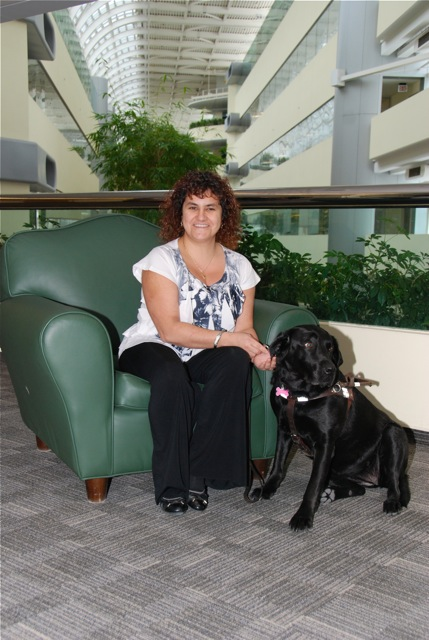
She loves working and playing with her beautiful guide dog, a golden retriever named Corvette.

She loves to shop at a gigantic mall billed as the largest shopping area in Iowa.

“I like reading. I’d like to write a non-fiction book, kind of a memoir someday about my life and my work with comfort care.”

And she drives.

“I like to drive. My mom sits in the passenger’s seat. We go on the back roads. It’s so freeing.”

As Kristen said, quoting Helen Keller in her reading for the “Adapting to Change” video: 

“What we have once enjoyed, we can never lose. All we love deeply becomes a part of us.”

LCA Families Finding Strength with Each Other

Heather Le’s anxiety accompanying her daughter’s diagnosis of Leber congenital amaurosis melted into relief when she connected with a mom whose daughter was also born with LCA. And this mom – Christina Reichardt – came with the bonus of being Doctor Mom. Christina Reichardt, the mother of LCA patient Ashlyn, is a doctor of optometry in Tucson, Ariz.

The two connected when Heather, of San Diego, Calif., learned from Christina that her daughter underwent a procedure at Children’s Hospital of Los Angeles (CHLA) to correct an LCA gene mutation. Heather’s daughter, Monroe, and Christina’s daughter, Ashlyn, have LCA with a mutation in their RPE65 gene.

Dr. Aaron Nigel administered the ground-breaking genetic therapy called LUXTURNA™ to Ashlyn last May and June when she was 10 years old. Two months later, 6-year-old Monroe had the same surgery, in which a human-engineered virus containing a healthy version of the gene is injected under each retina, a week apart.

Dr. Nigel asked Christina if she would connect with other families living with LCA-RPE65, a request she considered an honor.

“It’s has been the biggest blessing to connect,” Christina said. “I truly consider these moms as friends and know we will always have the special LUXTURNA connection.”

She said she talks to at least one RPE65 mom a week: “It’s a highlight, sharing experiences and stories and life. Checking in the days of surgery and the days thereafter.

“It’s good for both of us,” she said. “We need to heal, too, as parents.”

Group of doctors with Christina and her family

Driving home from Ashlyn’s surgery, Christina talked with Heather, who was thrilled to get answers from the “mommy and doctor side.”

“She walked me through everything. I don’t know what I would do without that woman,” Heather said. “I mean she has been absolutely amazing. Since I had Christina to reach out to, I was more at ease because she was there for me to ask any mother questions I had.”

Christina enjoyed sharing her experiences.

“We still keep up with one another. We share videos and photos. I shared pre-op and post-op experiences, how Ashlyn felt, medicine talk of how she felt and the best way I found to get her drops and ointment in her eyes.”

Heather and Christina are among the many people who have connected and helped each other in their journeys with LCA or other inherited retinal diseases (IRDs). Sharing stories, LCA families shed feelings of isolation that often accompany diagnoses of rare diseases, and they become part of an understanding and resourceful community.

Hope in Focus (formally Sofia Sees Hope) encourages and helps make these kinds of connections through its Family Connections program, its  Facebook page and events, including its upcoming second LCA Family Conference in Philadelphia from July 26-28.

Genetic diagnosis is key

To get a clinical diagnosis, Christina and Heather knew they would have to have their daughters genetically tested.

Even though Heather felt scared, she knew she needed that diagnosis to get more answers. Shortly after Monroe turned 4, she received her RPE65 genetic diagnosis. (See Monroe’s Jan. 1, 2019, story on our website.)

Christina knew three hours after giving birth that something was not quite right with her daughter. Ashlyn was misdiagnosed with night blindness and, being a mom with a medical specialty in vision, she knew she had to start figuring out exactly what was affecting her daughter’s vision.

“I insisted on genetic testing.* She was tested genetically prior to this for other things. Since she was an infant, I said, ‘let’s just genetically test for everything.’ In my heart I felt there’s something more. If we don’t have a diagnosis that’s correct, we won’t have the information to help her.”

Christina, who practices optometry with her dad, said she had heard of LCA, but didn’t know much about it.

“This journey with Ashlyn has made me a better doctor.”

Ashlyn with pink glasses holding her doll with pink glasses

She felt happy to have a diagnosis, shocked because it’s not a common disease and upbeat, saying: “Hey, this is something we can do something about. This is it; this is what we’re going to do. We never looked back.”

The RPE65 diagnosis marked the first of many firsts.

“A feeling of peace and fear, but with that fear a calmness, once I was able to connect to others in the same situation,” Christina said. “Diagnosis was huge. Ashlyn was diagnosed much older than many.

“I believe many kids are still not diagnosed. Getting the word out is going to be very important. That (genetic) test is what we all should consider … It was incredible timing because it was like, boom, we got the diagnosis in May of 2017, LUXTURNA was approved in December and she had her surgery in May 2018. The whole thing went from not moving at all to warp speed.”

Along the road to surgery, Christina received answers to her many questions from Beth Guardino of Patchogue, New York, mother of Christian, who underwent the same surgery during LUXTURNA’s 2013 clinical trials. (See Christian’s March 25, 2018, story on our website.)*

“I reached out to her,” Christina said after finding Beth’s story on Facebook. “She was to me who I was to Heather. I had a bazillion questions, so we were on the phone all the time. It’s so awesome … I just feel that all parents need that connection. It’s a scary thing to go through. There’s a lot of unknowns, and getting it from another mom is invaluable, the mom questions.

“From Beth talking to us before Ashlyn received LUXTURNA, to my conversations with several moms as their kids embarked on the same journey – it has been comforting to talk to another mom who has ‘been there, done that,’ to hear her son’s perspective, how she as a mom dealt, how much time and medicine was needed and just to talk about fear and feelings. She was a true blessing and made me more confident walking into such a big unknown.”

Four days after surgery, Christina’s family took a paddle boat ride. Ashlyn looked up at the sky and said, “Mom, what’s that?”

“It’s the sky, honey. That’s a cloud.”

“That’s a cloud?”

“Before she had no visual acuity to see fish or color in the tank,” Christina said. “She ran over to the tank. ‘I see the fish; I see a yellow fish and a pink fish.’ Things like that, that you don’t think about are huge for her.

“She didn’t realize that the toilet (water) swirls when you flush it. ‘Whoa. I thought it just made noise. It’s a swirl,’ her daughter realized.

“Now she walks so easily and runs. Now everything’s novel and exciting.”

Diagnosis to Treatment: Pioneering LCA Patient Eases the Journey

As a global advocacy organization dedicated to helping those affected by blindness caused by rare inherited retinal disease, Hope in Focus (formally Sofia Sees Hope) connects families with Leber congenital amaurosis (LCA) and other IRDs through its Family Connections program and through events such as its second LCA Family Conference set for July 26-28 in Philadelphia.

The conference offers opportunities to engage in thoughtful and interactive exchanges of knowledge, ideas and viewpoints in sessions focusing on research, future treatments, advocacy and people sharing their stories.

Tami Morehouse, third from left, during a panel at the 2018 LCA Family Conference in Groton, CT.

Pioneering LCA patient Tami Morehouse attended the patient advocacy session of the first LCA Family Conference last October in Groton, CT, and participated as a panelist in a session titled: “The Road to Treatment: Understanding How Therapies Are Developed.”

She made research history in the LCA world and in the nation in 2009, when at age 44 during trials for genetic therapy medication, doctors injected under her retinas a human-engineered virus that restored an essential protein for vision. Spark Therapeutics developed the drug that was marketed as LUXTURNA™ following U.S. Food & Drug Administration approval in December 2017.

Tami lives in the Cleveland area and is among the LCA patients who have shared their stories to help others navigate the obstacles that accompany the diagnosis of a rare disease and the journey in finding a treatment.

We’ll share the words she shared with two families – the mom of a boy who received the new genetic therapy treatment, and a mom, and her little boy, who asked a lot of questions about the surgery.

Making Family Connections

Tami holds a special place in the heart Sarah St. Pierre Schroeder, whose then-9-year-old son, Creed, became the youngest person to receive the new genetic therapy for LCA with a mutation in his RPE65 gene. (See our series of stories about Creed, his spring 2018 surgery and his journey.)

Because Tami is the oldest person who successfully received the experimental treatment in both eyes in a clinical drug trial a decade ago, she possesses invaluable insight into the unknowns faced by Sarah and her third grader, who live in Mount Dora, Fla.  

Sarah said she is forever grateful for Tami talking with her.

“I will never forget the emotions I felt when Tami reached out to me. Every sentence in her email brought me more comfort about what I was doing for Creed,” Sarah said.

“She was so open about her journey, I felt like we had known each other forever. I felt like she was with us in Miami (where Creed underwent surgery at Bascom Palmer Eye Institute).

“Suddenly I was able to ask someone all the questions I had and get answers. Not just ‘maybe this will happen.’ ”  

Here’s some of what Tami shared with us about talking with Sarah:

I’ve had some great conversations with those who have either been involved in the process of treatment of LCA or are hopeful they might be involved in a clinical trial in the future. I’m sure you aren’t surprised when I say that emotions usually run pretty high during these conversations.

Sarah was the first parent I talked with. I kept thinking about her and Creed in the days prior to Creed’s procedure. I remembered how I felt when I was in their shoes and couldn’t help but reach out to them on the night before Creed’s procedure. As it turned out, Sarah seemed very open and happy to talk with someone who had been there and understood a little about all that they were feeling and wondering about.

Sarah and I had lots of communication that night and the day of his procedure, which seemed like it would never get here, and in the days following.

Hearing about the improvements in Creed’s vision and how it has changed his life has been so much fun. Thinking about it is still a bit overwhelming sometimes, but wonderful. I’m so glad for him.

It’s nice to check in with Sarah from time to time to talk about the progress and adjustments they are making. I hope they enjoy our interactions as much as I do.

Here is some of what Tami had to share after talking with a mom considering gene therapy for her son. (Tami spoke to the woman and her son as a confidant and did not want to disclose their names.)

The mom asked that I talk with her little one specifically about what the procedure was like. She wanted him to talk with someone who had actually gone through it. We had a great conversation.

I talked to him about things like, the fact that my surgery wasn’t painful for me but did feel a little funny afterward; that I did have to have lots of eye drops; that my surgery didn’t even take very long; that the doctors and nurses were really nice; that my family could be with me after the surgery when I needed them; and that I was pretty comfortable through the whole thing.

I told him that the best part is that I can see a little better than I could before I had the surgery.

At the beginning of the conversation, the little guy seemed pretty quiet and uncomfortable. As the conversation went on, he appeared more relaxed and seemed to be listening pretty intently. His first question was, “WOW, you mean you had surgery already? WOW!”

He also asked if I thought he would be able to get used to all the eye drops and if it would be a long time before he could play video games after his surgery. I told him that I wasn’t sure of how long he would have to wait to play games, but that if he was patient, his reward might be some really good pizza and chocolate chip cookies, which is what I got to eat after my surgery was over. I got a big giggle out of him then. He said that he is pretty happy that he might get the surgery.

If one thing I said to this child makes his surgery easier for him, I’ll be so happy. I just hope it happens for him as they anticipate.

Mom and I talked about the reasons why she feels good about the safety of the (clinical) trial. That’s always a huge issue with just about everyone that I’ve talked to prior to receiving treatment or participating in any trial. Safety always comes first. Understanding why a procedure is determined to be safe is very important.

We also talked about the importance of being aware of what kinds of results treatment might provide for her son, as well as what she and her son are expecting or hoping for from a particular treatment. There were a couple of participants in the trial with me that seemed to have really high expectations that just weren’t possible. Luckily, it seems like this little guy and his mom are in a good place when it comes to their expectations.

Anytime I talk with people seeking any treatment for any rare inherited retinal disease, I strongly encourage them to do their best to understand as much as possible about the procedure, care and services that they are considering or receiving. This can be made easier by reading everything available about the treatment they are pursuing. Unfortunately, sometimes reading and understanding some of this printed information are two different things.

The more that is known about the treatment ahead of time, the easier it is to understand what is going on when making decisions prior to and during treatment.

Asking questions and expressing any concerns that come up is also very important when making decisions about accepting or going through treatment. Taking any available opportunity to develop relationships and open lines of communication with any medical and/or clinical staff is very important. Doing this can make it much easier for patients, as well as physicians, to openly ask questions and express concerns. This can make all the difference in the world when it comes to getting the answers and information needed.

Another thing to consider for individuals who do receive treatment and experience restored vision, is how improved vision may affect their lives.

For some, this is a wonderful thing. For others, this can be a bit of a challenge.

Thank you, Tami.

The Patient Voice: A Critical Piece of the Rare Disease Advocacy Puzzle

Two people deeply involved in patient advocacy and public policy recently urged members of the rare disease community to use their personal experiences as a means of advocating for research and treatment of rare disease.

Lesley Bennet presenting on a podium
Lesley Bennett, Connecticut’s Rare Action Network volunteer state ambassador

Kristen Angell, Associate Director of Advocacy for the National Organization for Rare Disorders (NORD)  and Tim Boyd, NORD’s Director of State Public Policy, urged rare disease patients and their families to use their voices to let people know about their conditions at a recent rare disease advocacy workshop held in conjunction with the Connecticut Rare Action Network (RAN).

The importance of the patient voice is also a key focus of Hope in Focus (formally Sofia Sees Hope)‘s upcoming LCA Family Conference, July 26-28 in Philadelphia. Panels and speakers at the conference will deal with how an active patient community can support and accelerate treatment, among many other topics. 

Much like Sofia Sees Hope encourages people living with Leber congenital amaurosis (LCA) and other rare inherited retinal diseases (IRDs) to tell their stories, Angell and Boyd told an audience of about 20 rare disease patients, caregivers and advocates that sharing their stories will help alleviate feelings of isolation and educate policy makers to work on their behalf by getting care-giving help, fostering research and finding new treatments.

Boyd and Angell helped workshop participants frame and rehearse the stories they would tell legislators to get their attention. People need to say who they are and where they live. They need to tell them about their connections to the rare disease community and ask for their support of legislation, such as the Orphan Drug Act of 1983 (ODA), and their help with caregiving, financial relief or other needs.

“Legislators do, in fact, want to help the people they serve, and they cannot do that without hearing from you,” Boyd said.

Lesley Bennett, Connecticut’s RAN volunteer state ambassador, urged the audience to be part of legislative committees to get the word out about the needs of the rare disease population. NORD established RAN to unite, develop and mobilize grassroots advocacy in all 50 states on state and federal policy

About one in 10 people have a rare disease. In Connecticut that means about 300,000; in the United States that’s about 25 million to 30 million people.

Angell said patients, caregivers and patient organization leaders created the ODA to unite the voices of rare disease patients, caregivers and advocates.

Since ODA’s passage, the Food and Drug Administration approved more than 450 orphan therapies, compared with 10 therapies approved in the decade before the 1983 legislation. A grant program within the ODA has funded $15 million in grants annually, which included, among other projects, 700 studies. The program also contributed to more than 60 drugs on the market.

Rare Disease Advocacy: ‘Everything’s connected to everything’

Long before Grey’s Anatomy captured television audiences, the 1980s medical drama, Quincy, M.E., helped propel passage of Congressional legislation that fostered the development of more drugs for rare diseases.

In a 1981 episode, the show’s tenacious medical examiner played by Jack Klugman addressed rare disease challenges faced by a patient with Tourette Syndrome, a disorder causing tics such as repetitive movements or unwanted sounds. A 1982 episode focused on myoclonus, a symptom of a rare movement disorder. It was no accident, since Klugman’s brother, the show’s associate producer, suffered from a rare cancer.

That 1982 show, described as the most politically significant episode of the seven-year series, portrays the actor’s quest for passage of federal legislation. Klugman’s real-life testimony gave momentum to that already gathered from powerful politicians and the public’s support to pass what ultimately became the Orphan Drug Act (ODA) of 1983.

Thirty-six years later, the ODA is in danger of losing critical incentives that help drug developers target orphan therapies, and that is why the National Organization for Rare Disorders (NORD) and its Rare Action Network (RAN) hosted an Advocacy Workshop in May at the Goodwin Hotel in Hartford, Conn.

Most rare diseases have no treatment

Orphan drugs are medications intended for the safe and effective treatment, diagnosis or prevention of rare diseases/disorders that affect fewer than 200,000 people in the United States, or that affect more than 200,000 people but are not expected to recover the costs of developing and marketing a treatment drug, according to the Food and Drug Administration.

The hurdles of conquering rare disease are high: 90 percent of the approximately 7,000 rare diseases don’t have an FDA-approved treatment. Getting a diagnosis takes an average of five to seven years, and patients face extensive, lifelong medical needs, high costs for care, and social isolation.

Until a few years ago, the ODA allowed a 50 percent tax credit to rare disease researchers; that tax credit now is 25 percent and in danger of being further reduced.

Lesley Bennett on podium sharing a presentation
Lesley Bennett, Connecticut’s Rare Action Network volunteer state ambassador

U.S. Sen. Richard Blumenthal and aides for U.S. Reps. Jahana HayesRosa DeLauroJoe Courtney and John B. Larson joined more than 20 rare disease patients, caregivers and advocates at the workshop, offering their support to the rare disease community.

Blumenthal talked about the importance of research into rare diseases, saying when it comes to finding treatments, “everything’s connected to everything.”

“It opens new perspectives and avenues for research for other diseases,” the senator said.

A representative of Hope in Focus (formally Sofia Sees Hope) told the Congressman that the organization’s founder in 2017 testified at a federal FDA hearing as to the critical need for bringing to market LUXTURNA™, developed by Spark Therapeutics. It was ultimately FDA approved as a gene therapy that targets one of the more than 25 gene mutations in the rare disease of Leber congenital amaurosis (LCA) and is also the first genetic therapy in the United States for any inherited disease.

Sofia Sees Hope asked Blumenthal for his support for rare-disease research funding and development and for his continued protection of the ODA and its endangered incentives.

He told the audience that bringing down the costs of prescription drugs and making healthcare universal rank high among his political passions.

U.S. Sen. Richard Blumenthal of Connecticut

“Healthcare should be regarded as a right,” said Blumenthal, who supports and co-sponsors legislation addressing Medicare for all.

He praised the audience members and thanked them for being there.

“I’m proud to be here today,” he said. “I’m grateful for your advocacy.”

On behalf of Congressman Courtney, who represents the eastern half of Connecticut, Karen Weseliza said she would bring the concerns of NORD, Sofia Sees Hope, patients, caregivers and advocates back to her boss.  

“A lot of what we hear goes directly to him,” she said.

Rare disease patients and caregivers told their stories about living with an array of rare diseases with mainly unfamiliar names, such as Hereditary Angioedema that causes recurrent severe swelling; Sporadic Inclusion Body Myositis, a muscle-wasting disease; Stage III Melanoma successfully treated 11 years ago; Scoliosis or severe curvature of the spine; and Wolfram Syndrome, which causes diabetes and optic atrophy.  

Maria, Carmen, and Lisa smiling and standing together
Maria Carter, Carmen Wooster and Lisa Perrone

The Rev. Carmen Wooster of Hartford detailed her exhaustive eight-year journey to find a diagnosis for her daughter.

“It’s very emotionally draining. Eight years of misdiagnoses, eight different things, eight different drug and treatment modalities.”

She is the sole caregiver for her 39-year-old daughter, Maria Carter, who was diagnosed just last month with Stiff Person Syndrome (SPS), a rare syndrome affecting the brain and the spinal cord. Maria experiences tremors and muscle spasms that can be set off by the slightest noise.

According to the National Institutes of Health, people with SPS often have a heightened sensitivity to noise, sudden movements and emotional distress that can set off muscle spasms generating enough force to fracture a bone.

“The hard part of this is being young with this disease,” Carmen said. “It’s progressive.”

She tries to keep emotionally balanced and empathetic in the face of no current treatment or cure.

“I think we learn some life lessons. Life and death lessons.”

Under state Medicaid, she said her daughter is subject to random appointment cancellations, inaccessibility to top doctors and unkind treatment.

“When doctors don’t have an answer, they have a tendency to beat you up,” she said.

Mother and daughter witnessed advocacy in action when a Congressional aide yelled over to her, “We’re going to talk!”

Lisa Perrone, senior district aide to Congressman Larson, said, “This is what we do. I’m going to be reaching out on her behalf because that’s my job.”

The aide later talked with the woman, took her personal information and told her she would be connecting with the Department of Social Services and any other appropriate agency and get back with her.

Carmen said she could not get through these trying times without the healing and calming effects of meditation.

“Keep the faith,” she said. “It’s a day-by-day journey. Try not to think of the future too much because that will trip you up; mentally it will bog you down.

“You have to have hope to go through this and celebrate any breakthrough.”