When I joined the Foundation Fighting Blindness as a science writer in 2004, I really didn’t know what I was getting into. I knew nothing about the retina, let alone the complex and diverse world of rare inherited retinal diseases (IRDs) that includes Leber congenital amaurosis (LCA). But the research for treatments was cutting-edge and compelling, so I was excited to dive in and learn.
My early assignments were writing about laboratory studies coming out of academic labs. There were virtually no companies in the IRD space and only one or two clinical trials underway for emerging therapies. But there were a lot of studies of genetically engineered mice and rat models of IRDs for gaining a better understanding of disease pathways and testing potential treatments.
Truth be told, I often wondered if and when rodent-tested therapies were really going to make it into human studies and out to the people losing vision. But the scientists conducting the research were mind-blowingly smart and innovative, so I figured they knew what the heck they were doing. With a master’s degree in poetry, who was I to judge?
Fast forward about four years: I was in my hotel room in Fort Lauderdale – there for the annual Association for Research in Vision and Ophthalmology conference – when my manager called and told me three research groups just reported vision improvements in young adults treated with RPE65 gene therapies in Phase 1/2 clinical trials. That was the breakthrough we’d all been waiting for.
People, rather than animals, with severe vision loss were now seeing significantly better. It was the first time an IRD treatment had worked in humans. I will never forget the headline for the article I immediately wrote: “Now They See.” (Note: One of those RPE65 gene therapies later became LUXTURNA®, the first FDA-approved treatment for the eye or an inherited condition.)
After many years of painstaking work, our hope for treatments and cures had finally begun evolving into promise.
There have been several other aha! moments in the ensuing years, but I distinctly recall cathartic encounters at the 2019 American Society of Retinal Specialists in Chicago. As I perused the snack table during breaks (the accomplished snacking professional that I am), several representatives from biotechs developing IRD therapies – companies I’d never even heard of – came up to introduce themselves to me and tell me about their emerging IRD treatments. They didn’t know me or my role, nor had I previously known them; they were just eager to connect with someone from the Foundation Fighting Blindness to get on our radar screen.
I realized then I couldn’t keep track of all the companies (dozens) focused on IRDs and clinical trials (40-plus) underway for potential IRD treatments. But being overwhelmed felt incredibly good, and it meant more good news likely was on the horizon for saving and restoring vision.
While mouse studies are as critical as ever, I can’t remember the last time I wrote an article about one. That’s because most of my writing is now dedicated to reporting on advances, including encouraging vision improvements, being made in human studies.
Make no mistake: Much more work needs to be done before we eradicate the myriad IRDs affecting millions of people across the globe. And, of course, we cannot get more therapies across the finish line fast enough. But when I look at how incredibly far we’ve come since those early days of mice and rats, I have no doubt we are well on our way to breaking many more ribbons soon.
I must admit, when I learned that my vision was slowly deteriorating, I lost hope. I didn’t know what the future would bring. I knew that with worse vision came more accessibility barriers and was worried that these barriers would prevent me from achieving my dreams.
But my hope soon returned. I knew that I needed to make a choice. I could either feel bad about myself or do something to make a difference. I chose the second and began to plan. For me, hope is about believing the future can be better.
I wasn’t sure if there was anything I could do about my vision. Genetics had made up its mind. The science was close to a treatment, but I couldn’t count on it. That being said, many treatments were near enough to becoming reality that they would definitely affect many. This was my opportunity. I began raising money for sight-saving research, speaking at events and advocating for treatments. I’ve learned that snails move faster than medical research. It is frustrating and easy to lose hope. But, a snail’s pace is still progress!
For example, LUXTURNA®. The first FDA-approved gene therapy for an inherited retinal disease was approved in the US long before it was approved here in Canada. I’m pleased to say that it was finally approved by Health Canada in October 2020. I have the type of LCA that LUXTURNA treats, and if the provincial government agrees to fund it, I could receive this treatment soon.
The disease that causes my vision loss is advanced. LUXTURNA® will come nowhere close to giving me perfect vision. I’ve learned that having hope for restored vision and hope for life after vision loss are equally important. The best parts of life are not lost with vision loss. I have an amazing life. I have a lot to be thankful for – a good job, an incredible family, fantastic friends and opportunities to participate in accessible activities like sailing and skiing. I hope that you continue to have hope for life after vision loss too.
Jack McCormick was diagnosed in high school with LCA2. He graduated in 2018 from Canada’s Wilfrid Laurier University in Waterloo, Ontario. He is a Hope in Focus (formally Sofia Sees Hope) ambassador, helping people living with LCAs and IRDs. You can read his blog at jackdamccormick.wordpress.com
Danielle Senick of Norwich, Conn., reached out to Hope in Focus (formally Sofia Sees Hope) more than three years ago when she needed answers about her deteriorating vision.
Doctors diagnosed Danielle at age 6 months with Leber congenital amaurosis (LCA), and her parents learned that this rare inherited retinal disease (IRD) would cause retinal degeneration to the point of having little or no vision.
She could see light and shadows, but she noticed a pronounced deterioration in her vision in her early 20s. We asked Danielle to talk about her experiences since she connected with us. Here is her story.
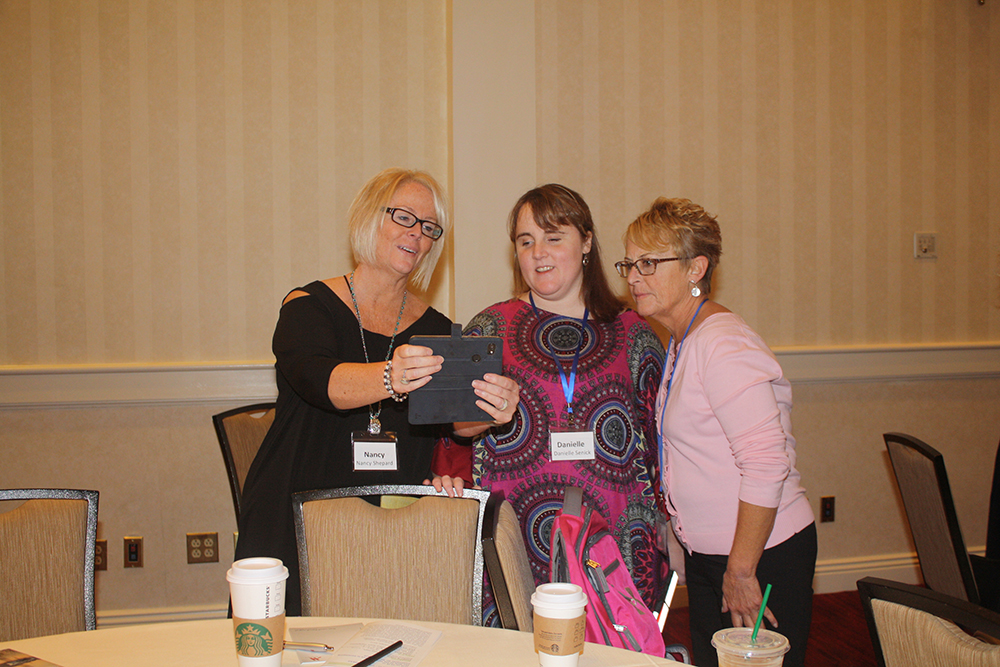
Danielle Senick, center, with her aunt Nancy (left) and mother Patty at the 2018 LCA Family Conference in Mystic, CT
“Though the (vision) changes were subtle, they caused me to realize how little I knew about my condition and I wanted to learn more. I did a little research and stumbled across Sofia Sees Hope. I was intrigued to hear about Sofia’s story, and I wanted to learn more, so I contacted the organization. I heard back, almost immediately, from Danielle Chiaraluce, who worked for the organization at the time.
“We had a lengthy conversation and she told me that she and Laura (Manfre, Co-Founder and Board Chair of Sofia Sees Hope) were interested to learn more about me, and they invited myself and a guest to Dinner in the Dark. I was honored to be invited, and it was a very fun, yet emotional, experience. It was wonderful to have my aunt learn a little bit about what my life is like to have no vision.
“At this event I met Laura, Sofia, Danielle, David Brint, his wife, Betsy, and his son, who also has LCA, and several other influential individuals. I was so honored during the auction to see how many people were willing to contribute their hard-earned money to the cause (including my aunt who bid on a trip to Bali).
Undergoing genetic testing
“Later I spoke with David and he helped me to get in touch with Spark Therapeutics, where I underwent free genetic testing. I had not seen a specialist or done anything about trying to learn about my diagnosis in several years because I often stumbled across roadblocks and it seems that the doctors that I previously had seen were not as educated about LCA. However, this experience was much different.
“I gave a blood sample and sent it to the lab and once my results came in, I spoke with Dr. Jill Harris in great detail about my results. She made me aware that my gene mutation is LCA-CRB1 (LCA8). Unlike LCA-RPE65 (LCA2), (for which there is a federally approved treatment), information about this mutation is still in the works. There is no cure, so I knew all along not to expect a cure and that with genetic testing you must be patient. I joined My Retina Tracker® (a Foundation Fighting Blindness free, secure online registry that helps connect families and enables researchers and doctors to track progress, prevalence and other variables of IRDs to move research forward) and receive emails about any new information on the condition and still remain hopeful.
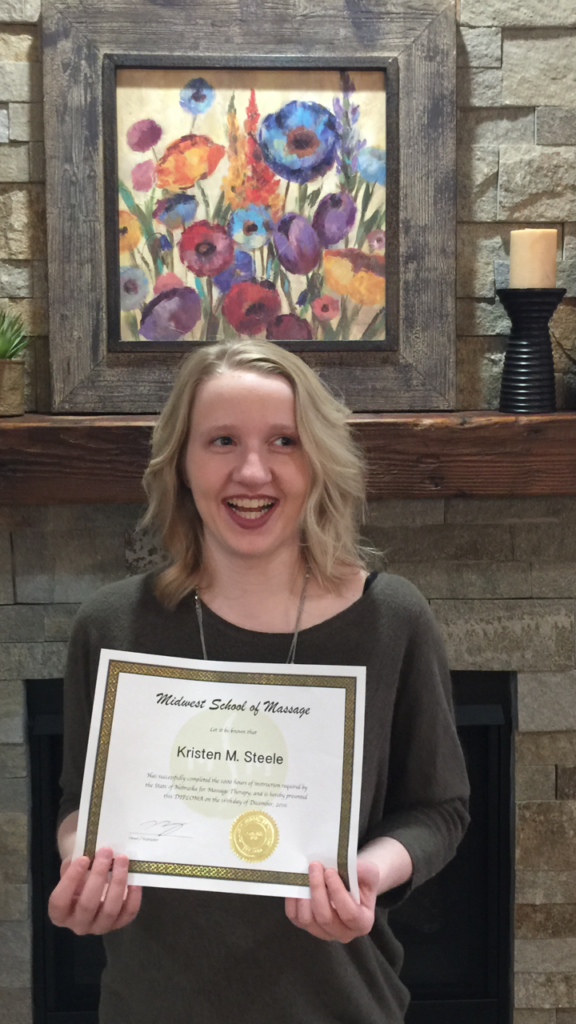
“About a year later, through social media, I became connected with Kristen Steele of Iowa. (Kristen has LCA10 caused by a
Kristen Steele
mutation in her CEP290 gene.) She is a remarkable young woman who is extremely confident, well-spoken, and independent, and like me, a very passionate licensed massage therapist.
“When I spoke with her, I was in the process of attaining my license and still in school. I was having a little trouble getting the results from my license test in braille and she told me that was unacceptable and filled me in about her journey and how hard she had to fight to pave the way to get her testing accommodations. When I set up my accommodations with the testing center all I had to do was mention her name and request my accommodations and the center provided me with everything I needed.
“For that I am very thankful. I am now a licensed massage therapist myself and although we are both busy and haven’t talked in a while, Kristen is always available if I ever have any questions about my journey. I was fortunate enough to meet Kristen by attending the LCA Family Conference in 2019 (in Philadelphia). I also attended the family conference with my aunt and mother in 2018 in Mystic (Connecticut) and was quite intrigued by all the speakers.
LCA community welcomes Danielle
“At this conference I also met two individuals that are about my age who both have children with LCA. It was wonderful to meet with them and answer some of the questions that they had about what it was like growing up with LCA and any suggestions they had about being a parent of a child with LCA. As I have received so much guidance and help along the way, it’s wonderful to give back by helping others and giving them advice.
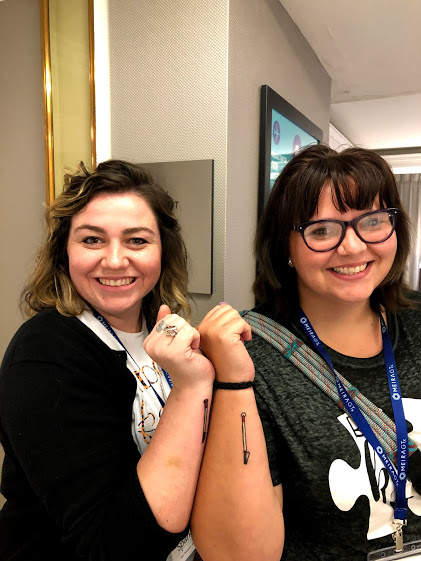
Deanna Carroll and Ashlyn Lincoln with their matching white cane tattoos.
“I have stayed in contact through social media and text messaging with these two individuals, Deanna Carroll and Ashlyn Lincoln, and have potential plans to go down to North Carolina and meet their children! I was able to meet up with them again in 2019 for the Philadelphia family conference. I brought my brother with me as a guest and he was also intrigued to learn so much about my condition.
“There was a plethora of informative speakers from all over the country, and it was amazing to see how far research had come even since 2018 at the last conference. I was especially intrigued to hear Tami’s story (Tami Morehouse, from Ohio, underwent RPE65 gene therapy as part of the LUXTURNA® treatment clinical trials) and how much it changed her life.
“I became quite emotional when she described all the little things that had come from it and changed her life, such as being able to go to her children’s socc
er games and cheer them on, actually being able to see them score goals, where before she had to rely on others to describe what was going on.
“The main takeaway from this process has been to continue to remain hopeful and stay involved. It is quite a process and the research is quite extensive and costly, so we would not have been able to come as far as we have without the generosity of others involved with Sofia Sees Hope.
“It’s amazing to see what a little bit of poking around on the Internet has led to and how much it has changed my life. My curiosity and doing a little bit of research to learn about LCA led to my becoming involved with Sofia Sees Hope, receiving genetic testing, attending wonderful events and conferences, and meeting truly amazing individuals, both sight-impaired and sighted.”
Building on her son’s love of music, singing, moving, and reading, Laura Steinbusch created a multilingual children’s songbook called Lux+Louiseto help youngsters learn music by braille.
With songs in Dutch, English, French and German, the songbook’s characters, Lux the lizard and Louise the mouse, help expose children with blindness or visual impairment to learning other languages from an early age and allow them to independently explore the world.
Laura came up with the idea because her son, Enzo, now 6, easily learned new words early on through songs in French or English, especially when he already knew them in Dutch.
Enzo was born in 2014 in Lausanne, Switzerland, and genetically diagnosed at 18 months with LCA10-CEP290, a form of Leber congenital amaurosis causing severe retinal dystrophy because of mutations in the CEP290 gene. Enzo lives in The Netherlands with his mom and his dad, Merlijn, and his new little sister, Maud.
He started to learn braille when he was 5 and he enjoys it a lot, his mom said.
“His favorite story is ‘the story of the little mole who knew it was none of his business,’ which we had to buy in the four
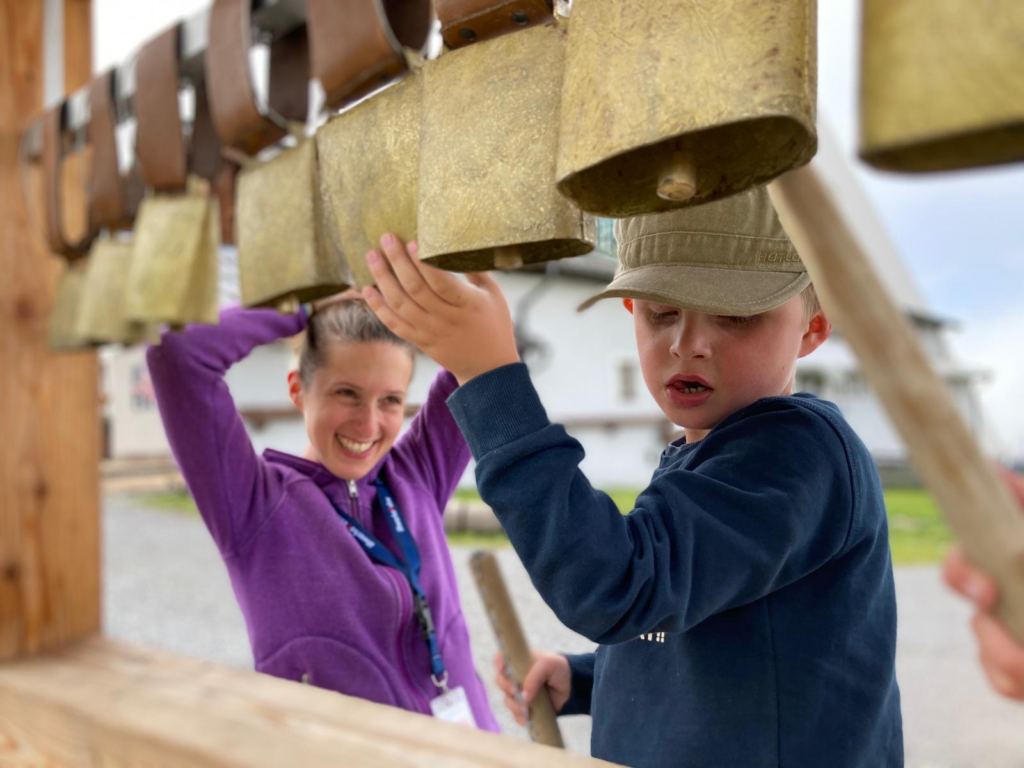
Enzo and his mom Laura at an Austrian playground listening to sounds from a cowbell glockenspiel.
languages of my songbook because he wants to know the whole story in those four languages.”
Lux+Louise contains five popular children’s songs with printing in black and in braille and six visual and tactile illustrations with explanations and questions. Along with singing about a bus and a spider, the book helps with learning body parts and movement.
“This makes it easier for blind children to connect the song texts to the tactile illustrations and the real world,” Laura said. The songs can also be played on the piano or flute.
“Most children adore singing; some children even sing before they speak,” she said. “Blind or visually impaired children use their hearing all the time and mostly enjoy music and making noise … Independence is also important for learning music. It would be best if blind children could learn reading braille music as soon as they have learned to read braille text.”
The songs are: “A Ram Sam Sam,” “Head Shoulders Knees and Toes,” “Are You Sleeping (Brother John)?” “The Wheels on the Bus,” and “Itsy Bitsy Spider.”
“I hope people enjoy learning another language through music and learn to read music braille,” Laura said. “In the end, I hope it helps blind kids explore the technical world on their own.”
I first heard about coronavirus on my way back from a weekend of skiing in mid-January. It seemed to be the only thing the radio station we were listening to was talking about. At the time, COVID-19 was only reported in China and I didn’t think it would ever impact my life. I’ve never been so wrong.
On March 13 I was scheduled to fly to Australia for a dream vacation with my childhood friend. I was subscribed to travel advisories issued by both the Canadian and Australian governments. I woke to an email from the Australian government advising against all travel. I phoned my friend. We needed to cancel the trip. I don’t think he appreciated the 5 AM call. We made the right decision. By noon Canada had issued its own travel advisory. I have never spent so much time on hold and hope to never again. Eventually I received refunds for the flight and hotels. This was only the beginning.
I work in the human resources department of a hospital. I spent the time I had planned to be on vacation working non-stop. We had to keep our patients and staff safe. Government guidelines seemed to change every day. We didn’t have enough staff. Everyone in our department was working three jobs.
Jack and his guide dog Jake
I had no food. I had eaten everything – not wanting to return from Australia to rotten food. As someone with a visual impairment I get assistance from a store employee when I do my groceries. Getting this assistance meant being physically close to someone who wasn’t part of my regular interactions – something I didn’t feel comfortable doing given the pandemic. The alternative was delivery and it was near impossible to book a time. When I finally did, the shopper couldn’t find most of the things I had requested because people were buying up everything. I soon ran out of food again. Someone from work offered to help me do my groceries. The shelves were empty. It felt like something out of a movie.
We fell into a new rhythm at work. I lost count of the number of people I hired. To limit the number of people in the hospital, those who could work from home did. This included me most days. I hardly left my apartment.
Even now, there isn’t much to do outside work. We are all struggling. We don’t know when it will be over.
Throughout this experience my vision loss has created a host of challenges. It has also helped me live in the pandemic. With decreasing vision, I have learned to adapt to change – something we have all had to do in 2020. My vision loss has made me stronger. Living through the pandemic will do the same for you.
For me, I’ve learned more about pain, struggles and the power of connection. I’ve learned to acknowledge the challenges I experience and connect with the people who are important to me (even if it is virtually) to support each other because we are better together even when we are far away.
Jack McCormick was diagnosed in high school with LCA2. He graduated in 2018 from Canada’s Wilfrid Laurier Universty in Waterloo, Ontario. He is a Hope in Focus (formally Sofia Sees Hope) ambassador, helping people living with LCAs and IRDs. You can read his blog at jackdamccormick.wordpress.com
Since its launch in March 2018, breakthrough gene therapy LUXTURNA®™ continues to be successful in helping improve vision in people with inherited retinal disease due to mutations in both copies of the RPE65 gene and viable retinal cells as determined by a healthcare professional. The therapy treats LCA2, known as LCA/RPE65, one of more than 25 forms of Leber congenital amaurosis.
The drug – developed by Spark Therapeutics and a team of retinal research superstars that included Dr. Katherine A. High and Dr. Jean Bennett – came to fruition after 12 years of research and millions of dollars in investment.
Spark Therapeutics could not comment on the number of people who have received the gene therapy, but spokesman Kevin Giordano recently said the company has shipped well over 200 vials of the therapy since the U.S. Food & Drug Administration approval in December 2017. One vial of the drug treats one eye.
Trained retinal surgeons at one of the 10 eligible treatment centers in the United States deliver the gene therapy to the back of the eye by subretinal injection using a needle the size of an eyelash; about a week or so later, the patient undergoes the procedure in the other eye.
“Spark Therapeutics is thrilled patients continue to benefit from LUXTURNA (voretigene neparvovec-ryzl),” Giordano, Spark’s External and Product Communications Lead, said. “A gene therapy is a major milestone, not only for those of us at Spark, but also for the patient community and broader gene therapy field.”
The cost of the drug – $425,000 for each eye – initially caused anxiety among patient families, but Giordano had good news about insurance coverage.
“Payer coverage has exceeded expectations, and to our knowledge no treatment-eligible patient has been denied treatment due to their insurance coverage,” he said.
LUXTURNA also is being used beyond this country through license and supply agreements with Novartis, which has the rights to commercialize the drug in Europe and all other markets outside the United States. Spark manufactures and supplies the gene therapy to Novartis, according to Giordano.
Also, results from ongoing studies continue to support the drug’s safety profile and efficacy.
“In 2019, Spark presented four-year durability data from the LUXTURNA Phase 3 clinical trial,” Giordano said.
“We closely watched the clinical trials and the FDA approval process for seven years, starting when Hannah was diagnosed with LCA/RPE65 at just a few months of age,” Amy said. “Seven years of hope.
“Two years out from Hannah’s surgery, I can say we feel grateful and fortunate that she was treated with LUXTURNA. No regrets. LUXTURNA was hope realized. It delivered what it promised.”
She said what that has meant for Hannah has been nothing short of life changing.
“It has given her more independence, which has been wonderful for her self-confidence. It has given her the ability to see what she couldn’t before.”
Since the surgery, Hannah’s vision in dim lighting and her visual acuity improved. She is now 9 and just finished third grade.
Sometimes, her mom said, it’s the little things that are the most amazing.
“A year after the surgery, she was about to eat hot oatmeal and said, ‘Hey, I see steam. Hey, I can see that,’ ” Amy said.
“There are still things that pop up that she’s seen for the first time, like when she said, ‘Mom, did you know there’s a pattern on this toy?’ It’s fun to see her discovering.”
Amy said she and her family will be forever grateful to Dr. Bennett.
“There has been a lot of talk about heroes recently and Dr. Bennett is our hero. We are grateful for this groundbreaking treatment that she developed, that has been life-changing, not only for our daughter, but also for the sons and daughters and loved ones of so many others as well.”
His mom, Sarah St. Pierre Schroeder, told us that her now-11-year-old is doing amazing and only occasionally has issues with dim lights, “but nothing like before.”
Their days in Mount Dora, Fla., have changed in a major way.
“He still starts his day with his trusty smoothie and waffle, but after that, Creed wants to create new pranks (today was putting ice in the tub). He said it was nice and warm so I could soak my feet.”
Creed Pettit
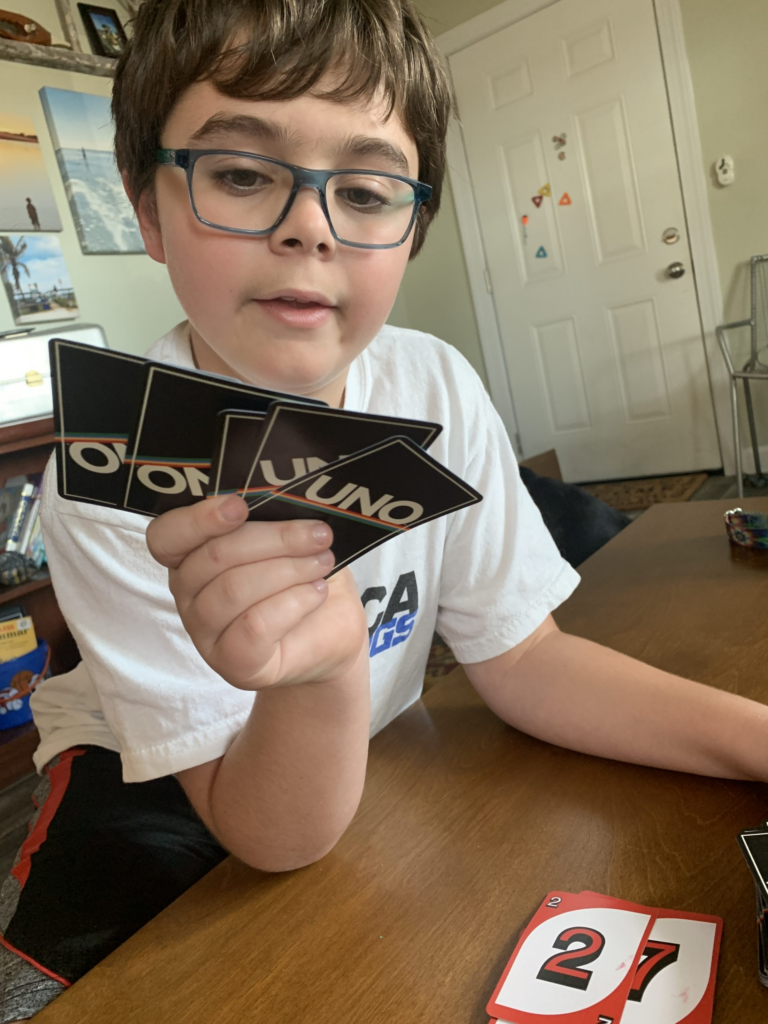
Creed now loves to play board games – Trouble, Sorry, Battleship and Uno.
“His vision has changed everything. He can manipulate small objects, he is using pointer fingers, and loves trying to roll his eyes in the mirror.”
Creed still likes to draw, and he loves riding and popping wheelies on his bike named Carlitos. He also likes to talk.
“Talking more is an understatement! Sunup to sundown, he is talking. He has also learned how fun it is to use his imagination, something he never did before. He creates awesome stories during this time. He is so much more independent; I have to remind myself of that often.”
At first, she and her husband, Chad, could see that Creed’s vision improved some, but once he became confident about his gene replacement, they noticed him finding toys and games.
“He was suddenly enjoying things he didn’t before. He now expresses when he can’t see. Yesterday it rained all day, I kept waiting for him to tell me it was too dark inside, but he was fine. He just started doing staring contests. I love looking at his eyes during the contest.”
Sarah said she is incredibly grateful.
“Creed’s surgery is something we still thank God, St. Raphael, St. Lucy and Sister Miriam Teresa, for every night.”
Like many kids across the country, Creed finished school at home because of the coronavirus pandemic. He graduated from fifth grade and thought because he finished school at home, he wouldn’t have to wear the graduation cap.
“But I was not going to let that slide,” his mom said. “I made one and took pictures.”
Anxiety, and a Friend to Call On
Throughout his journey, though, Creed felt anxious, something Sarah had learned that might happen when, before Creed’s surgery, she talked with Tami Morehouse, a LUXTURNA clinical trial participant at age 44.
Tami, a Sofia Sees Hope Ambassador, tries to calm fears and advises potential gene therapy patients and their parents that even though undergoing the surgery has the potential to do such good by improving vision, they should think about their expectations, especially with children.
“We are comfortable in our own zone; give us a little bit of change and it can throw us off,” Tami said.
Sarah understands.
“He started to have a lot of anxiety. He had a hard time sleeping. I feel everything changed so fast that he was overwhelmed, but we have worked hard on getting past that.”
Sarah and her family are in a great place now. But after they were home from the hospital in Miami and settled into their routine, she said she became very emotional.
“All the tears I had held in for nine years started to come out. I felt I no longer had a purpose; I was so used to staying busy. I did not know who I was supposed to be.”
She got some help and realized she still was needed because people need her help learning about and understanding this groundbreaking gene therapy.
“I still find myself shocked over how this has changed Creed’s life and so many other lives.”
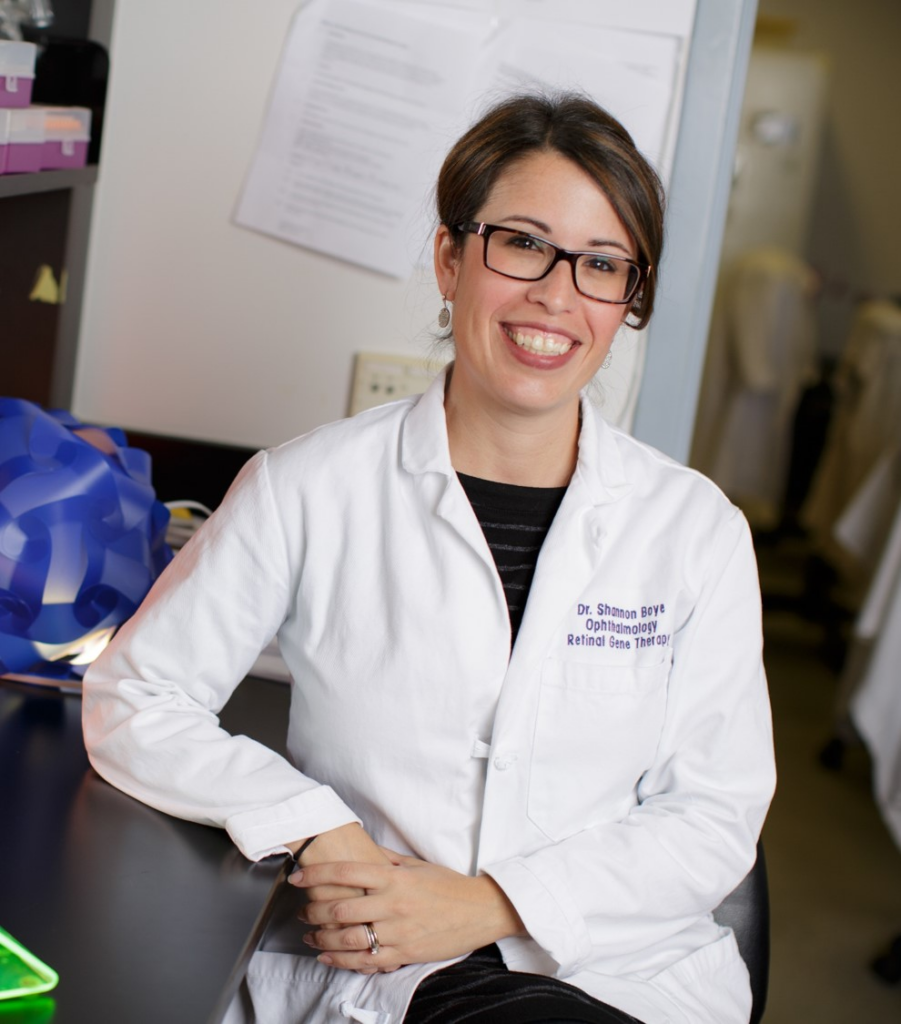
Forty clinical trials and a lot of pre-clinical research into LCA treatments show promising pathways to discovering the next LUXTURNA®, according to Shannon Boye, PhD, the opening speaker for the Virtual VISIONS 2020 conference, presented earlier this summer by the Foundation Fighting Blindness.
The breakthrough drug developed by Spark Therapeutics marked a milestone in the history of genetic research as the first gene therapy in the United States for any inherited disease and as the first to treat one of the more than 25 forms of Leber congenital amaurosis (LCA).
Shannon Boye, PhD
Boye, along with Foundation Chairman of the Board David Brint and Foundation Chief Executive Officer Benjamin Yerxa PhD, kicked off the three-day, first-time virtual conference, the Foundation’s major annual gathering. Rather than convening in person, the event’s speakers, exhibitors and more than 1,600 attendees participated through an online app, due to concerns surrounding the coronavirus pandemic.
Brint said that the 40 clinical trials and more emerging treatments for various IRDs span the disease profile.
“No matter what your disease is, these hopefully will be able to restore vision,” Brint said. “In the next 10 years, we have an opportunity to bring many more vision-saving treatments into and through the pipeline and across the finish line.”
Yerxa said the topic of genetic therapies would be good to lead off with because of the sheer variety of innovative programs and approaches to each therapeutic challenge.
“There’s essentially a revolution happening right now in personalized medicine and genetic therapies in general,” Yerxa said.
Boye, an assistant professor in the Department of Ophthalmology at the University of Florida, addressed the audience in the beginning session called: “Mission Possible! What’s Next?”
Boye set up an analogy to better understand the complexities of these strategies, saying we all have little letters in our bodies called DNA. Subunits of those letters – that DNA – are genes. RNA carry the instructions from DNA for making proteins, the building blocks of life.
“They act alone or in concert with a bunch of other proteins to perform essential functions.”
Continuing her letters analogy, Boye said, imagine a friend texts you: ‘Please take out the dog.’ You get that message and perform that function because letters combined correctly to tell you to take the dog out.
If only the word ‘Please’ appears on your phone screen, you don’t take the dog out.
Or, if the ‘d’ is pushed and an ‘l’ comes out, sending the message, ‘Please take the log out,’ “you then have a mess to clean up,” she quipped.
In the first strategy of gene supplementation or gene replacement, the right protein needs to be expressed in the patient’s retina.
The letters need to be correctly sequenced to generate a coherent message, in this case, telling a protein to perform an important function. Any break in that cascade of events can cause visual impairment.
The gene replacement therapy LUXTURNA is a human-engineered virus containing copies of the corrective gene that doctors deliver through a subretinal injection so the cells can make the originally missing protein.
“You deliver the right letters that make the right message and the right protein,” she said. “That’s a pretty simple concept. That’s LUXTURNA.”
Developed to improve vision in people with LCA2* caused by a mutation in the RPE65 gene, LUXTURNA received Food and Drug Administration approval for use in humans in December 2017.
One area of Boye’s research as Associate Division Chief of Cellular and Molecular Therapeutics is entering into a Phase 1/2 clinical trial, applying the same premise for mutations in the GUCY2D gene that causes LCA1.
“It’s early,” she said. “But this is an example of another perhaps next LUXTURNA being right around the corner.”
The second strategy is a form of RNA therapeutics that uses antisense oligonucleotides (AONs) – short, single-stranded DNA molecules that interact with messenger RNA to correct translation of a targeted gene. Think of an AON as an autocorrect feature that binds to the ‘l’ in log and changes to a ‘d’ for dog.
Promising pre-clinical work now in Phase 2/3 for CEP290 or LCA10 also is coming out of Rob Collin’s research group in The Netherlands, Boye said.
Another AON program underway addresses a form of Usher Syndrome.
The third strategy – the newest and most exciting – is gene editing. A guide RNA is used to drag a special enzyme to a region in the DNA that contains the mutation, and the enzyme cuts the DNA, like molecular scissors.
Researchers are exploring a host of gene editing variations, including cutting out a specific area of DNA and replacing it with the right letters to make a coherent message. The lab work has created paths to address a range of IRDs, including CEP290, Usher Syndrome, RP, Stargardt Disease and Choroidermia.
“There’s an absolute exponential increase in the therapies that are being developed,” she said.
These strategies are not limited to the disease conditions under discussion and can be more widely applied to a number of genes and conditions.
Addressing those who do not have RPE65 or LCA2 for which a treatment exists, Boye said, with all of this research in progress, “that one day, there’s going to be a LUXTURNA for your inherited retinal disease, too.”
Drew’s Beacon for Blindness was founded by the parents of Drew Picinich, a now 4-year-old preschooler who was diagnosed in 2016 with LCA-CRX, also called LCA7.
To attend the informational webinar, please send your email contact information to Drew’s mom, Monica Picinich, at mpicinich@drewsbeacon.org. A follow-up email with the Zoom access link will be sent to you.
Interested parties also can contact Monica by email with any questions or concerns.
Even the Covid-19 cloud has a silver lining, and living proof is Andrew Picinich, a 4-year-old preschooler with LCA-CRX, an exceedingly rare form of Leber congenital amaurosis (LCA) caused by a mutation in his CRX gene.
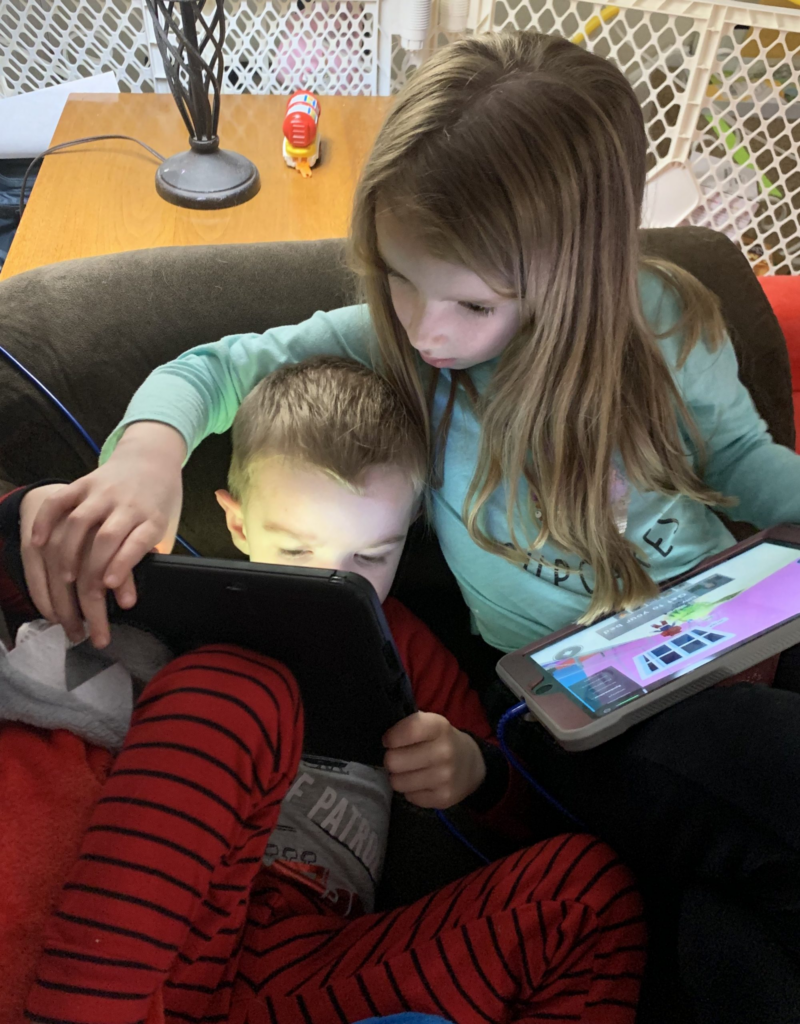
Drew’ s sister Anna helping him with his computer
Other than saying a few words, Andrew, who goes by Drew, usually does not speak. Coaxing him to be more open and social poses one of the biggest challenges for his parents.
Turns out being stuck at home in northeast Philadelphia to temper the spread of the coronavirus, opened up Drew’s personality, thanks to being with his family – all day, every day. He is interacting and engaging with them more than ever.
Drew also receives vision teletherapy and virtual preschool assignments through Philadelphia’s Overbrook School for the Blind. Virtual learning, a challenge for many, has its built-in difficulties for a 4-year-old who, as his mother said, has the attention span of, a 4-year-old.
As with many families staying home during the pandemic, the Picinich household is extraordinarily busy. Drew’s mom, 39-year-old Monica, works full time now from home as a teacher of the visually impaired, and Drew’s dad, 41-year-old Cian, works full time downtown for the Philadelphia Corporation for the Aging, which helps with elder care.
Monica, a former middle school science teacher, decided rather than focus on Drew’s pre-Braille and computer skills for now, she would concentrate on teaching him – literally and figuratively – how to navigate everyday life, including helping him learn to play with the same games and toys as his 7-year-old sister, Anna, and 2-year-old brother, Sean. Anna also plays sort of a teaching-assistant role with her outgoing personality. But being so social while not being in a classroom also means she terribly misses her school, and her first-grade friends and her teacher.
CRX: Rare among the rare
At 4 months old, Drew moved his eyes from side to side as if reading a teleprompter, his mom said, and a pediatric
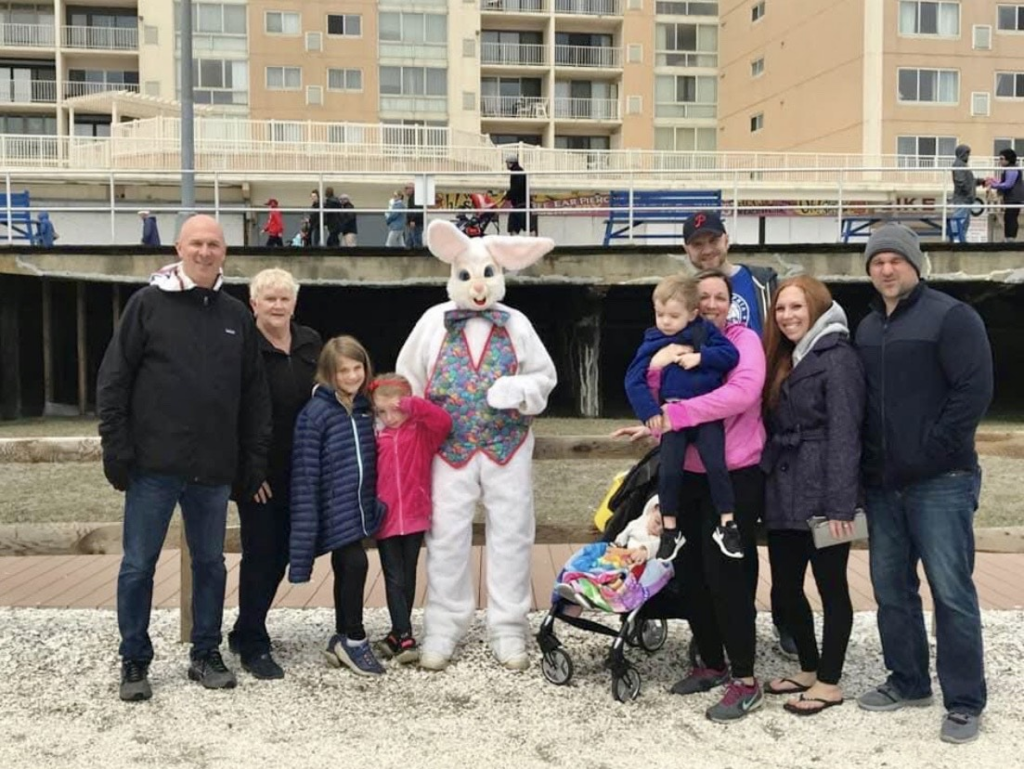
Drew’s Uncle Joe, Grandmom Barbara, cousin Sienna, sister Anna, brother Sean, Drew, Mom Monica, Dad Cian, Aunt Alysha and Uncle Greg, posing with the Easter bunny.
Drew’s confirmed genetic diagnosis later found he had a mutation in his CRX gene, resulting in LCA-CRX, also known as LCA7, a rarer version of the already rare forms of LCA.
The CRX mutation also distinguishes itself as an autosomal-dominant gene rather than LCA’s usual autosomal-recessive, meaning a gene mutation caused Drew’s condition, rather than him inheriting it from his parents. This also means Drew has a 50/50 chance of passing it on to his children.
Developing therapies for treating CRX also presents bigger challenges. The CRX dominant gene first needs to be turned off before inserting a good gene. A federally approved therapy for LCA2 (LCA-RPE65) works by inserting a new gene to overtake the bad, while a developing technology of gene editing works like molecular scissors to cut out the mutation.
As part of their search for more CRX information, the family attended the LCA Family Conference hosted by Hope in Focus (formally Sofia Sees Hope)last summer in Philadelphia. Patients, family members, advocates, doctors, researchers, and biotech industry leaders gathered at the two-day conference.
“I came away with knowledge and connections,” Monica said. “Being able to listen to and converse with doctors, FFB (Foundation Fighting Blindness) representatives, people from Sofia Sees Hope, and other families, was both informative and empowering. Even more impressive was the amount of dedication and love displayed by everyone that attended the conference.”
Drew’s Beacon for Blindness
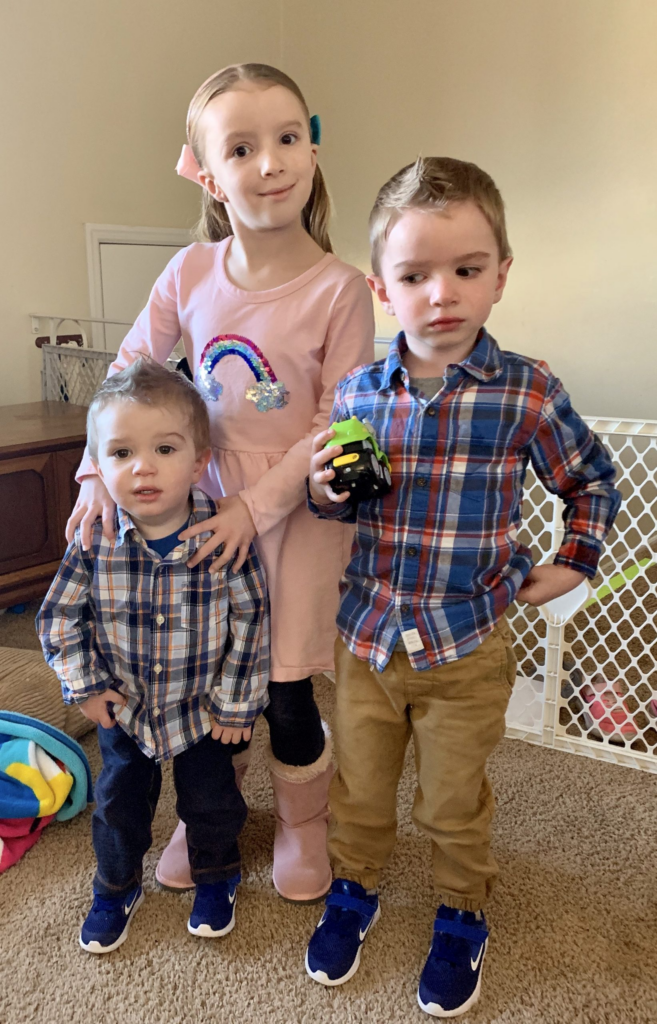
Four year old Drew (right) with Anna, his 7-year-old-sister, and Sean, his 2-year-old-brother.
Soon after their son’s diagnosis, Monica and Cian (pronounced key-in) realized CRX families needed a patient organization to reach other families affected by LCA-CRX and to raise money for research.
Four summers ago, their extended family gathered around the dining room table at Monica’s parents’ beach house. They brainstormed and created Drew’s Beacon for Blindness. Monica and her brother, Joseph Cardullo, run the group.
The nonprofit supports the blind in Pennsylvania, New Jersey, and Delaware, and has two objectives: Finding a treatment/cure for CRX blindness and supporting schools and other organizations that provide educational technology for students living with blindness.
The group secured grant funding to give schools a 3-D printer and a K-NFB Reader (Kurzweil-National Federation of the Blind Reader), a mobile app that converts text to speech or text to Braille.
While researchers work toward developing a treatment for CRX blindness, Monica said, “Our main goal right now is to find other families with the same gene that want to unite to support CRX research.
“Aside from the research, it’s great getting to know people who have similar experiences as you. It helps make your rare experience feel more normal.”
Still in the early planning stages, Drew’s supporters in partnership with the Foundation Fighting Blindness are working on an educational webinar for CRX families. Sofia Sees Hope will help spread the word when the webinar plan comes to fruition.
With more input from researchers and families, Drew’s Beacon for Blindness hopes to discern promising avenues of CRX research and help fund studies to find a cure.
“Hopefully,” Monica said, “We can start to help move the research forward. It would be fantastic if everyone with LCA, no matter the gene, had an option for treatment.”
Blink and you just might miss toddler Jordynn rocket past you. A force to be reckoned with when it comes to music and movement, Jordynn is 4 years old and lives with Leber congenital amaurosis (LCA) caused by a mutation in her RPE65 gene.
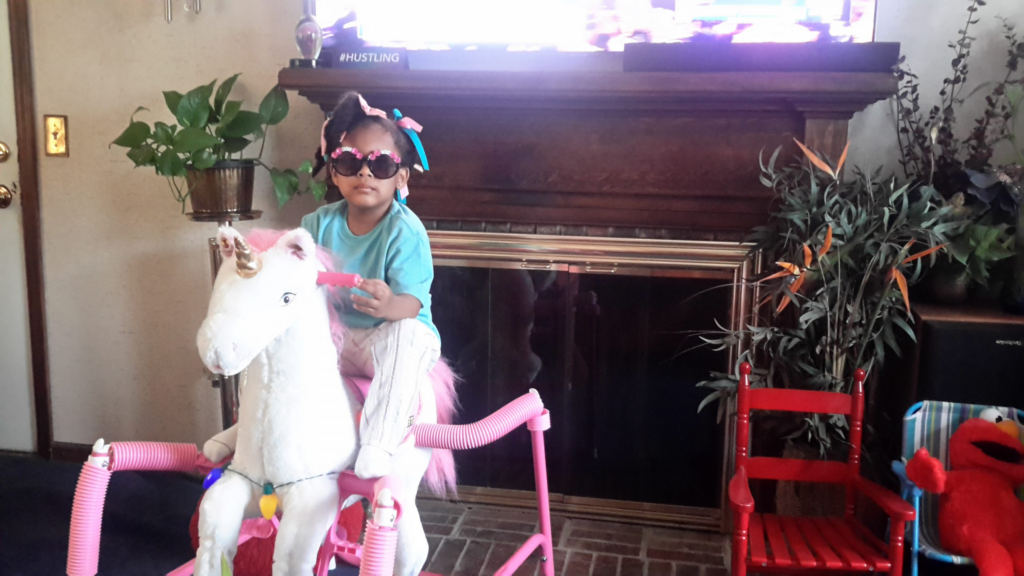
Jordynn on her rocking unicorn.
“Jordynn is obsessed with movement,” said her mother, Joy. “So, before COVID happened, I would take her to Sky Zone (Trampoline Park),” now closed as part of a national shutdown to help contain the pandemic of coronavirus, known as COVID-19.
“Anything that moves, Jordynn is willing to try. We have a hard time getting her off the swings. At school, they use it as a reward for what she accomplished.”
Jordynn and her mother, who live in upstate New York near Rochester, received their genetic diagnoses in 2017, just several months before the U.S. Food and Drug Administration approved LUXTURNA™, a genetic therapy for patients with the RPE65 gene mutation, known as LCA2.
Jordynn was on a waiting list to take part in an RPE65 gene therapy study by Dr. Mina Chung of the University of Rochester Medical Center (URMC) Strong Flaum Eye Institute when Dr. Chung died in February after a fall while skiing in Italy.
Jordynn’s family is still reeling from Chung’s sudden death. She was a 51-year-old renowned researcher and retinal surgeon.
“She was the best,” Joy said. “We had just seen her a week before she went on her vacation and we’d see her when she came back.”
Joy is waiting to hear when Jordynn can join the study and was told by Dr. Benjamin Hammond, a colleague of Dr. Chung’s and an ophthalmologist working with Jordynn, that everything is on hold until another surgeon comes on board.
Turning 4 in the middle of a pandemic
Jordynn just celebrated her 4th birthday Wednesday, May 6, when her very arts-and-crafty mom gave her daughter a
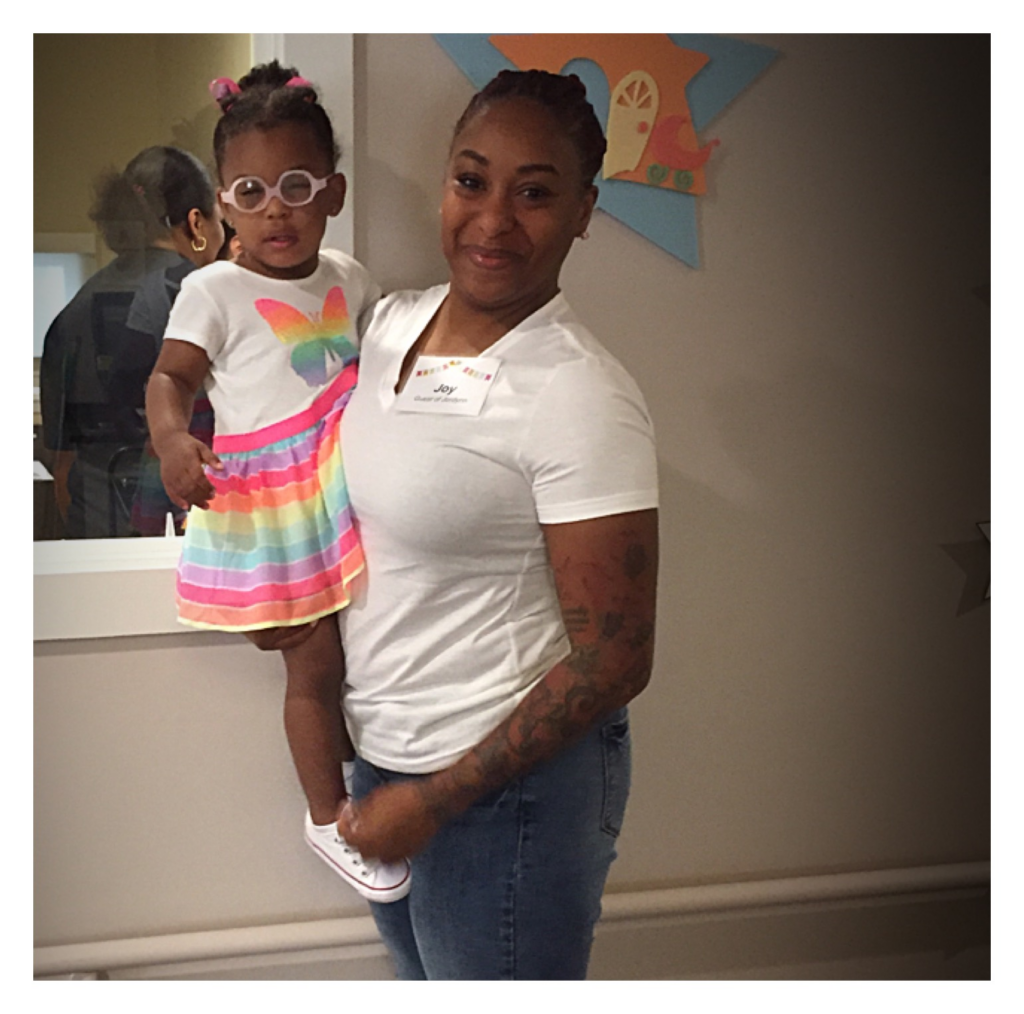
Joy and her daughter Jordynn
quarantine birthday party, planned far in advance with a rainbows-and-cupcakes theme. Family members sang “Happy Birthday,” took photographs, and five minutes later left for their respective homes to help curb the spread of the virus.
With her prekindergarten class closed because of the pandemic, Jordynn gets her schoolwork sent home and through a YouTube channel. She has music therapy incorporated with orientation and mobility training because she is so drawn to playing the piano and the drums and loves to follow the beat and sing.
She also is learning Braille on a Brailler, and everything throughout her mom’s apartment and her grandmother’s nearby home is labeled in Braille for her to identify.
“Before it was all about Sesame Street,” Joy said of her daughter’s learning. “Right now, it’s ABCs and 123s and colors and all the things on YouTube that she can dance to and learn her numbers while she’s singing.”
Praise for New York’s VI Resources
Jordynn’s vision allows her to follow light and see three-dimensional shapes, but she cannot see them on paper.
Her mother first noticed something might be awry with her vision when she wouldn’t pay attention to people looking at her and smiling. Doctors diagnosed Jordynn with nystagmus, a vision condition wherein the eyes make repetitive, uncontrolled movements.
With a later diagnosis of LCA, Joy was stunned: “I just sat there, and then I said, is this my fault? Is there something I could have done when I carried her? OK, it’s something genetic.
Through it all, though, Joy is most grateful for an incredibly supportive family. Jordynn’s family support extends to her dad in North Carolina, aunts, uncles and four grandparents, including Grandma Gwen, Joy’s mom, who sees her almost every day.
“It’s just family support; that’s how we get through this,” Joy said. “Family support and lots of toys.”
On the move
Jordynn is among Gwen Goodwine’s dozen grandchildren and gets to see her grandma almost daily because they live near each other and because Gwen takes care of her while her mom, Joy, cares for the elderly and those with dementia.
Gwen Goodwine
There is no disguising the abundant love and hope that Gwen exudes for her youngest grandchild. For Jordynn, Gwen set up rugs like oversized dominoes throughout her house, blue and white rugs, from the family room, to the living room, to the kitchen, to the bedroom.
“That’s how she learned how to navigate,” Gwen said. “She runs through here like she’s got 20/20 vision.
“She likes to climb up on things. Anything she can reach. She takes the stool everywhere she wants to get. She loves to take the stool to my dresser. She plays with my perfume and plays with the jewelry. She’s fascinated. She looks in the mirror. She can’t see herself, but she’s seen me do it so many times that she does it.”
Jordynn moves a lot at grandma’s.
“She’d jump off this house if she could. I bought her a rocking horse. She’ll get on that horse and say, ‘I’m going to Tennessee, I’m going to Georgia, I’m going to California.’ She tore it up. Got another one. How she used it! They sent us another one free.
“She can be stubborn, too, oh my God. It’s her way or no way. She has a mind of her own. She knows what she wants, and she gets it.”
Gwen, now 80 with still a lot of energy, wants more than anything to see Jordynn see.
“I say, Lord, please. I don’t want to leave this earth ’til she look at me and see my white hair, take both of her hands on my jaws and kiss me.”
Conference connections
After Jordynn’s genetic diagnosis, Joy and Gwen found out about Spark Therapeutics, the research company that developed LUXTURNA™. The drug is an engineered virus that delivers the human RPE65 gene by subretinal injections.
Joy, her sister Jackie, Gwen, and Jordynn traveled last summer to the Philadelphia conference, a two-day event attended by more than 80 people – patients, family members, advocates, doctors, researchers, and biotech industry leaders – from across the country and Mexico.
Joy said it was great to meet families with kids who have gone through the same experiences.
“Learning about the treatment and getting the education about all of it really gave me something to think about as my daughter’s journey continues as she lives with this visual impairment,” she said. “Knowing that my daughter can thrive and live a happy life with some occasional bumps in the road was a wonderful feeling.”
She’s learned along the way the importance of perseverance and patience, offering this advice to parents beginning this journey:
“Don’t get discouraged. Take your time. Learn the process. Get to know your options. Find the resources available in your state. It’s a process but it takes time and sometimes it can be frustrating.”
Joy’s other message? “Please treat Jordynn like a normal toddler, because this is her normal and she is just like any other toddler.”