The Dutch-based biotechnology company delivered an update on its sepofarsen program after a comprehensive analysis of data from the Illuminate trial and it announced a corporate restructure and workforce reduction.
Based on information from the review, ProQR will prioritize two strategic objectives dealing with genetic eye disease and RNA editing technology.
Regarding RNA editing technology, ProQR will accelerate development of the Axiomer® RNA editing technology platform and pipeline activities expanding into areas beyond the eye, including initially the liver and central nervous system. The technology aims to correct disease-causing genetic mutations and reverse the underlying course of currently untreatable diseases.
Daniel A. de Boer, Founder and CEO of ProQR Therapeutics, said in a statement: “We are focusing our strategy on accelerating our Axiomer® RNA-base editing platform technology and a select pipeline of RNA therapies for inherited retinal diseases (IRDs) as we remain committed to developing RNA therapies for patients with high unmet need.”
Corporate Reconstruction and Priorities
ProQR also plans to reduce expenses by making program priorities, changing its corporate structure, and reducing its workforce by a third.
The business also will reduce its workforce by about 30 percent, including the departure of its Chief Scientific Officer Naveed Shams, MD, PhD.
Co-Founder and Supervisory Board Chair Dinko Valerio said in a statement:
“We believe deeply in the promise of RNA therapies, the Company’s pioneering efforts in this field, and ProQR employees. These are the right steps to take to offer the best opportunity to create long-term value for all of our stakeholders, including our shareholders whom we thank for their support, and the communities we aim to serve.”
De Boer thanked the people leaving the company for their significant contributions toward the company’s mission. He characterized the changes as extremely difficult decisions necessary to drive long-term growth and value.
“I also want to acknowledge the disappointment that many in the eye disease community may feel today, particularly individuals and families living with autosomal dominant retinitis pigmentosa and Fuchs endothelial corneal dystrophy as we wind down our programs for these indications.”
Sepofarsen Update
Following the top-line data announcement in February that Illuminate, ProQR’s pivotal Phase 2/3 trial of sepofarsen in LCA10, did not meet the primary endpoint of Best Corrected Visual Acuity (BCVA) at month 12, compared to a sham procedure control group, comprehensive analyses revealed no technical errors in the trial conduct, data handling, or the medicine product used.
The overall safety profile of sepofarsen was consistent with earlier trials. When the effect in the sepofarsen treated eye was compared to the untreated eye in the same patient, at month 12, a benefit in vision was observed. This effect was not observed in the control group that received a sham treatment.
Overall, the post-hoc analyses showed that the efficacy seen with sepofarsen when comparing the active treatment and sham eyes to their corresponding untreated contralateral eyes across BCVA, Full Field Stimulus Test (FST), and other endpoints is more consistent with the results seen in earlier trials, where the untreated contralateral eye was used as the control.
Based on these results, ProQR will focus on core activities related to sepofarsen. The company plans to meet with the EMA and FDA to discuss these data from the Illuminate trial and share an update later this year.
ProQR currently plans to continue Illuminate, which is a two-year study, the Brighten pediatric study, and the Insight open-label extension study, until further regulatory guidance.
Aniz Girach, MD, Chief Medical Officer of ProQR Therapeutics, said in a statement:
“While we were disappointed by the outcome of the primary analysis, we believe that these post-hoc analyses and the observation that approximately a third of the patients benefited across multiple concordant endpoints in this trial, in combination with the high unmet need in LCA10, warrants a discussion with the regulators.”
Working with preclinical data from multiple Leber congenital amaurosis (LCA) studies at the same time, Opus Genetics hopes to advance research into gene therapy for several forms of LCA at a faster pace.
Yerxa discussed biotechnology company’s aspirations as part of the Hope in Focus “Let’s Chat About …” webinar series. Our March episode, moderated by Courtney Coates, Director of Outreach and Development featured Yerxa, acting CEO of Opus based in Raleigh, N.C. Click here to view the webinar.
The Foundation’s RD Fund led the $19 million in seed financing for the company founded last fall, with participation from the Manning Family Foundation and Bio Partners.
The Magic of a One-of-a-Kind Model
Opus is the first spin-out company internally conceived and launched by the RD Fund to further the Foundation’s mission. The RD Fund is investing in projects that are in, or advancing toward, early-stage clinical trials.
“Opus is a first-of-its-kind model for patient-focused therapeutic development,” Yerxa said. “As the first company launched by the Foundation’s venture arm, RD Fund, Opus is uniquely positioned to bring experts, resources, and patients together to efficiently advance ocular gene therapies for small groups of patients that to date have been neglected.”
The company decided to take on the development of multiple gene therapies, regardless of the small treatment population for rare retinal diseases.
“Opus was really born out of necessity,” Yerxa said. “Many gene therapies in preclinical development were just not being developed further.”
The company would even work on programs where only 100 patients have a particular retinal disease, or where the patient population is smaller or larger than the 1,000 to 2,000 people in the United States with LCA2 RPE65, a form of LCA treated with LUXTURNA®. The gene therapy, developed by Spark Therapeutics, is the only federally approved treatment for an inherited gene mutation.
“It evens out as a blend,” he said. “That’s kind of where the magic is.”
The biotech’s lead program, OPGx-001, addresses mutations in the LCA5 gene that encodes the lebercilin protein. LCA5 is one of the most severe forms of LCA and affects about one in 1.7 million people in the United States.
Its second program, OPGx-002, focuses on restoring protein expression and halting functional deterioration in people with retinal dystrophy caused by mutations in the retinal dehydrogenase gene, knowns as RDH12 or LCA13. The disease affects one in 288,000 people in the U.S.
Its third program, OPGx-003, targets LCA9 caused by NMNAT1 mutations and affects about one in 432,000 people in the U.S.
Yerxa said Opus is hoping to raise $70 million or more in the next six to nine months to bring it through 2024-25.
He advised people interested in the research to keep in communication with their physicians because as clinical trials get ready to begin, Opus will be looking for individuals to take part in them.
LCA5 Clinical Trials Planned Later This Year
Opus is looking at filing for an Investigational New Drug (IND) application with the U.S. Food and Drug Administration by the middle of this year before enrolling people for clinical trials by summers’ end at the University of Pennsylvania for LCA5. By filing for an IND, a company is asking for permission to start human clinical trials and to ship an experimental drug across state lines before approving a marketing application for the drug.
“We’re looking forward to getting that started so we’ll be a clinical-stage company.”
Their work also will center on what Yerxa called a tried-and-true approach to delivering the medicine through Adeno-associated virus (AVV) vectors, the leading platform for gene delivery for the treatment of a variety of human diseases.
In today’s world of retinal gene therapy development, AVVs are most often used to deliver therapeutic genes to cells in the retina, according to the Foundation. Gene therapy is administered by injecting a tiny drop of liquid underneath or near the retina. AAVs are safe and able to penetrate cells with their genetic cargo. They naturally occur in humans and don’t cause any known illness. For regulators like the FDA, that excellent safety profile is highly desirable.
Having available multiple inventories for developing therapies and working with the university to license the technology can speed up the pace of research and manufacturing, reducing the average two-year timeline for clinical work.
“I think we can shave off many months of the timeline,” Yerxa said.
In the question-and-answer session following the webinar, one viewer asked about taking on research into a form of LCA caused by a mutation in the IQCB1 gene, and Yerxa replied, “We are aware of that work and interested in this asset.”
He suggested people keep connected with Opus and receive company emails for updates on projects. https://opusgtx.com/contact/
Children living with visual impairment become more independent and empowered when parents set high expectations for their kids and challenge them every day.
Just ask Beth Borysewicz. In her role with Connecticut’s Bureau of Education Services for the Blind, she makes a living helping children with visual disabilities realize their potential as strong, self-determined adults. And she’s the first one to say, often with tears in her eyes, that her job is to work herself out of a job.
Beth Borysewicz
She described her work in helping children from birth to 22 years old with visual impairment or blindness become more independent as adults as part of the Hope in Focus “Let’s Chat About …” webinar series. Our March episode, moderated by Courtney Coates, Director of Outreach and Development, featured Borysewicz, an Education Consultant for the Department of Aging and Disabilities, Bureau of Education Services for the Blind.
We developed the series with those living with Leber congenital amaurosis (LCA) and other rare inherited retinal diseases (IRDs) in mind, but we invite all members of our community, including those in research, industry, and the regulatory communities to join any of the sessions, as we look ahead to a common goal of advancing treatments for rare retinal disease. Click here to view this episode.
Borysewicz found her passion working with the blind and low-vision community unexpectedly 16 years ago, when she had a 3-year-old student named Sofia, who was diagnosed with LCA. Yes, that would be the same Sofia as in Sofia Sees Hope, our organization’s original name until a recent rebranding to Hope in Focus. Borysewicz also is Vice Chair of our Board of Directors.
She said parents need to be the biggest advocates for their children.
“If you think your child is not getting what they need, you can ask for it.”
She also encouraged connections with people who have been on this journey before, bringing to mind the Hope in Focus Family Connections program that helps ease feelings of isolation that can arise when a family member is diagnosed with a rare disease.
“It’s the people that have already gone through it who will help you the most, including Hope in Focus. That’s why I’m on the board. What Hope in Focus does for families is immeasurable.”
E.C.C. comes from the perspective of teaching students with blindness or low-vision and encompasses nine areas: Compensatory Skills, Orientation and Mobility, Social Interaction, Independent Living, Recreation and Leisure, Sensory Efficiency, Assistive Technology, Career Education, and Self-Determination.
The curriculum is more than a checklist or lesson plans for learners with a visual impairment, according to The E.C.C. and Me website. It’s all the little things we do every day, done with intention so children with visual impairments can learn skills they need for a fulfilling life.
“I wish everyone would do what I do,” Borysewicz told her webinar audience. “There is a shortage worldwide of TVIs.”
She advised parents to set expectations high for their children, challenge them every day, and give them a safe place to learn.
“Children can do anything they set their minds to. Do anything you can do to empower them,” she said. “Celebrate everything. Celebrate every little thing.”
She talked about self-determination, saying it’s her favorite part of the curriculum and the most important.
“It’s teaching a child to believe in themselves and just take that leap,” she said. “It’s taking that step off the curb to cross the street with a cane or initiating a conversation at a lunch table that builds self-confidence.”
Making Learning Fun and Exciting
Her work with people from birth to age 22 encompasses figuring out resources for newly diagnosed children, for school-aged students, and for young adults transitioning to the workforce or college.
“I switch hats from appointment to appointment every day,” she said. “As you can tell, I love my job.”
“It’s so important for the student to say, ‘This is what I need and why I need it,’ and just building those skills will make them successful as adults.”
And a lot of it is fun, especially with Borysewicz who excels in the Recreation and Leisure department. It goes back to when she was growing up and her dad always told her she was good at playing with people and should get a degree in play.
She implements that play degree often by creating board games to make math more fun or putting together programs to help students from prekindergarten through grade 3 explore the nine E.C.C. areas in their daily lives.
In an Expedition to Explore, students in the Young Passport Program worked on accumulating life skills at home over the summer. Each student has a passport consisting of pages designated for each of the nine E.C.C. areas, with a slant toward adventure. For example, “Career Education Caves” focuses on conversational skills, encouraging children to stay connected with their friends over the summer, known in the business world as networking, and holding mock interviews with their siblings or stuffed animals.
In “Self-Determination Safari,” a goal is to get the child to ask for help. A parent asks a child to do an unfamiliar chore, such as taking out the trash or putting toys away but doesn’t give guidance on how to do it or where to put the trash or toys, prompting or encouraging the child to ask for assistance or directions.
“Social Skills Glaciers” encourages children to spread kindness to neighbors and the community and recommends an online guide called “100 Acts of Kindness for Kids.” Activities include listening, following directions, taking turns, ignoring distractions, cooperating, and showing empathy. (Sounds great for adults, too!)
Resources for People with Blindness or Low Vision
Borysewicz talked about her work from the perspective of Connecticut and said services may differ from state to state.
She authors a blog dedicated to professionals, families, and students called I Love Brl (Braille) and she provided webinar viewers this list of resources:
After crazy months of looking for answers to questions about her infant’s vision, Melissa Matias learned her baby girl, Dylan, had a form of Leber congenital amaurosis known as LCA6 caused by mutations in her RPGRIP1 gene, a protein needed for healthy photoreceptors.
“I put my big-girl pants on and said, ‘This is the card she and I have been handed.’ ” The Georgetown, Texas, mom added: “There’s a reason for this.”
When Dylan received her confirmed genetic diagnosis in May 2020 at age 5 months, her mother did not assume someone else had the time or resources to search for a treatment or cure for her daughter’s form of blindness. Melissa organized people, advocates, and information. She created the RPGRIP1.com website and began collaborating with the nonprofit biotech Odylia Therapeutics on a $4 million fundraising effort to advance therapy for the RPGRIP1 LCA6 program.
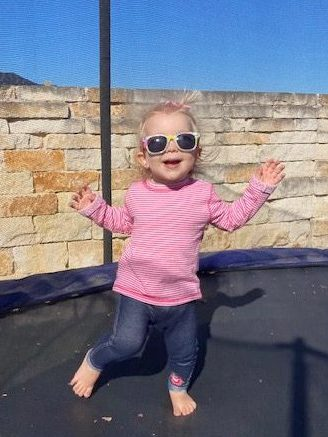
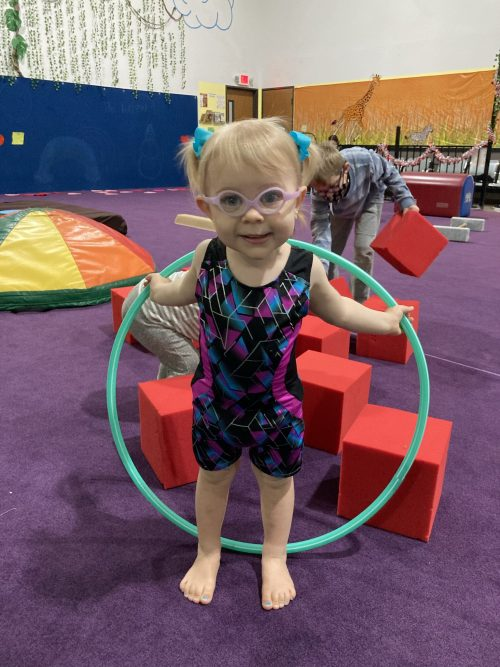
The Atlanta-based biotechnology company is in late-stage preclinical trials, with the goal to be in clinical trials in about two years. Melissa is hoping Dylan – a gregarious trampoline-jumping gymnast – will benefit from this developing gene therapy.
Dylan on her trampoline
“We aren’t trying to fix or change Dylan. There’s nothing wrong with her. But if there’s a chance for gene therapy to enhance her life, you would want to do that,” she said. “Blindness doesn’t mean darkness. It means ‘I can do this; I just might need to do it in a different way.’ ”
Dylan’s doctor told the Matias family that the possibility of sight-saving therapy coming to fruition was not a matter of if, but when.
“This therapy, if it’s in reach, let’s get going,” Melissa said. “Let’s get the word out and open the door to gene therapy, not just for RPGRIP1, but for other genetic visual impairments and rare diseases.”
Financing poses the major obstacle. Melissa enlisted the help of patient families and organizations, such as Hope in Focus, to help spread the word and secure necessary funding to bring the treatment to market. About $115,000 has been raised, including donations from Dylan’s brothers, 8-year-old Colton and 12-year-old Brayden.
Funded by Massachusetts Eye and Ear and the Usher 2020 Foundation, Odylia Therapeutics started in 2017 with the goal of facilitating treatments for low-prevalence retinal disease with proof-of-concept science to Phase I/II/III clinical trials.
LCA6/RPGRIP1 Gene Therapy – Following LUXTURNA® Path
The gene therapy uses vector technology developed by Odylia Co-founder Luk Vandenberghe, PhD, Director of the Grousbeck Gene Therapy Center at Mass Eye and Ear, and Assistant Professor of Ophthalmology at Harvard Medical School. The research builds on proof-of-concept data generated at Mass Eye in the labs of Vandenberghe and Eric Pierce, MD, PhD, a physician and surgeon at Mass Eye and the William F. Chatlos Professor of Ophthalmology at Harvard Medical School.
LUXTURNA® currently is the only gene therapy on the market. Developed by Spark Therapeutics and federally approved in 2017, the drug treats a form of LCA known as LCA2(RPE65), and it is the only gene therapy approved in the United States for any inherited disease.
Odylia hopes to follow in LUXTURNA’s path with its research. Delivered by injection under the retina in each eye, LUXTURNA® has helped improve vision in patients for the last four years.
“The success of LUXTURNA has proven to be life changing for many patients,” Odylia said in a news release. “It’s very exciting that with the efforts of Odylia, those affected with RPGRIP1 mutation could possibly have the same opportunity in the near future.”
Developing treatments and administering them to young patients is paramount to stall vision deterioration, as LCA6, along with the more than 27 forms of LCA, is degenerative.
Odylia says its goal is to bring proven therapeutics to patients, regardless of the number of people with the disease or the opportunity for a company to make money.
By identifying promising treatments, the company said it can partner with patient groups, community experts, and financial sponsors to develop strategic, scientific, and clinical plans. Through collaboration with industry and foundations, the organization said it can move treatments from concept through development and to patients with rare diseases.
These partnerships are needed for the estimated $3.9 to $4.3 million in development costs to advance the research through toxicology studies and fund clinical manufacturing costs. Odylia says it will work to lower costs and reduce overall expenses.
Partnerships and funding also will help with Odylia submitting an Investigative New Drug (IND) application to the U.S. Food and Drug Administration. Federal law requires that a drug be the subject of an approved marketing application before it is transported or distributed across state lines. Because a sponsor will probably want to ship the investigational drug to clinical investigators in many states, it must seek an exemption from that legal requirement. The IND is the means through which the sponsor technically obtains this exemption from the FDA.
“Receiving orphan drug and rare pediatric disease designations represents an important milestone for Odylia and recognizes the potential of this gene therapy to deliver life-changing results to LCA6 patients and RPGRIP1 associated retinal dystrophies,” according to Ashley Winslow, PhD, Odylia’s Chief Scientific Officer.
Between 400 and 600 people are affected with LCA6 in the U.S., with about 20,000 globally.
Orphan drug designation is granted to therapeutics intended for treatment, diagnosis, or prevention of diseases affecting fewer than 200,000 people in the United States. Rare pediatric disease designation is granted to serious or life-threatening rare diseases that primarily affect individuals under age 18. Orphan drug and rare pediatric designations provide companies like Odylia with benefits, including access to research grants to support clinical studies, waiver of regulatory fees, seven-year marketing exclusivity, and eligibility for a priority review voucher.
At the gym
Struggle to Find Confirmed RPGRIP1 Diagnosis
Melissa’s persistence pushed her through incredibly trying times, having six back-to-back miscarriages during 2016 and 2017 after having her two sons. Two years later, she and her husband, James, got the news she was pregnant with Dylan.
“She was so meant to be,” Melissa said. “It was unreal when it came time to deliver. Everyone in that room was crying.
“They had all seen on my chart that I had 10 pregnancies. They were all just like…” she said trailing off. “It was such an emotional time.”
Two months later, though, Melissa and James realized something didn’t seem right with Dylan’s vision; her eyes jerked from side to side from a condition known as nystagmus. It was February 2020 with the tentacles of COVID spreading over the globe, creating an overworked, overwhelmed medical world focusing on patients infected with this strange new virus.
Finding an initial diagnosis for Dylan proved extremely difficult, especially when one doctor said nothing was wrong, probably just delayed maturation of vision, and another mentioned LCA but brushed it off. So, Melissa did what we all do now when we don’t get answers: She Googled the disease.
“The more I learned about LCA, I knew in my heart right away what we were looking at. But I’d also think, it’s so rare, what are the chances?”
She also learned the next step to move forward with treatment or care for 2-month-old Dylan depended on a confirmed genetic diagnosis determined through genetic testing.
No genetic testing, not now, she was told. Not until COVID is over. Melissa wasn’t waiting for the end of the pandemic, now into its third year. She knew she needed a doctor’s order but hadn’t yet connected with a retinal specialist; she sought out the help of Dylan’s pediatrician, a doctor she characterized as amazing, who ordered the test.
Waiting for the results, Dylan’s parents scheduled an appointment for May 28with a Houston retinal specialist; the confirmed diagnosis of LCA6/RPGRIP1 came through May 27, paving the way to finding resources in orientation, mobility, and education for Dylan.
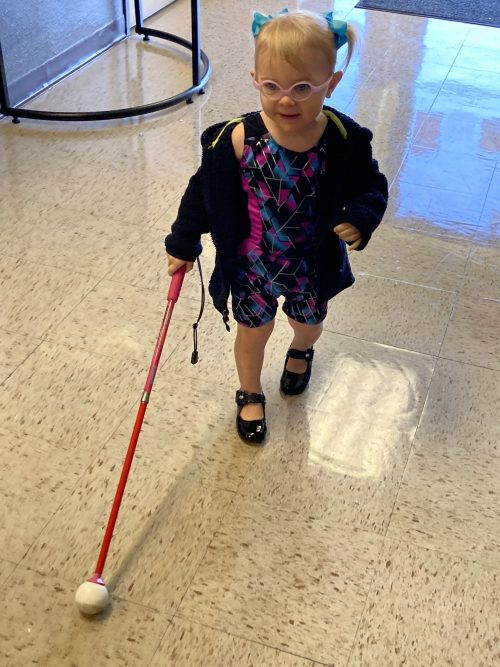
Dylan using her cane
Living with LCA6/RPGRIP1 / Like Mother, Like Daughter: Stubborn and Persistent
Dylan is now 2 years old. Her parents believe she has tunnel vision and does best seeing objects 10 or 15 feet away. She’s better now at keeping her glasses on, rather than ripping them off all the time like she used to.
On her first day of Orientation and Mobility training, she picked up a cane and used it just the right way, a milestone the instructor said he had never seen in a child her age.
“Indoors, she’s just amazing,” Melissa said. “She loves picture flashcards, playing in her toy kitchen, always wants someone to read her books, and she loves her new mini trampoline she got for Christmas. And music – she loves to sing and dance.”
Dylan takes her time in new environments and is a little more cautious than other toddlers because of her visual limitations. With photophobia being one of the symptoms of LCA, Melissa said her daughter finds bright outdoor sunlight to be the most challenging and where she relies more on her cane skills.
The little girl also is very vocal and visual.
“Her vocabulary is comparable to a child much older than 2,” Dylan’s mom said. “We know she is very visual, something we feel blessed with, since LCA can present with a wide range of visual capabilities. We’ve actually had to teach her to bend down and feel for objects she drops, because her instinct is always to look for something first.”
She’s also persistent.
“She has a very strong desire for mastery, having to do things over and over again. She likes a challenge.
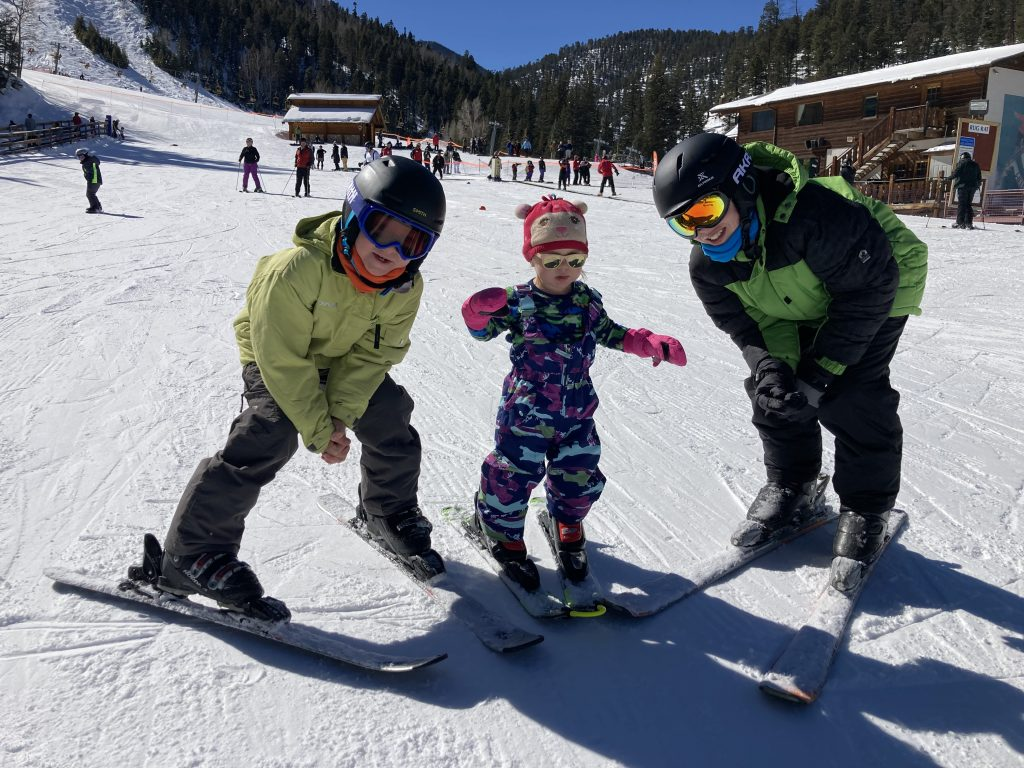
“I have no doubt this girl is going to change the world. No matter what happens if gene therapy comes about for her or not. She’s going to be on skis this winter. I’m not going to give her an excuse not to do something or at least to not try.
“She can and will do anything she wants, just in her own ways. Stubborn and persistent, exactly what she needs.”
Illuminate, the name of the clinical study, aimed to explore whether the investigational medicine sepofarsen was effective and safe for people with LCA10 caused by the CEP290 mutation.
The Phase 2/3 clinical trial produced no observed benefit in visual acuity for participants receiving the treatment versus those in the study not receiving the treatment. Visual acuity is a measure of the ability of the eye to distinguish shapes and details of objects at a given distance.
ProQR Founder and Chief Executive Officer Daniel A. de Boer delivered the news recently and characterized the results as disappointing.
“Given the results observed in earlier studies of sepofarsen, the Illuminate trial results are unexpected and disappointing, especially for people living with LCA10,” de Boer said.
“ProQR was founded with the goal of developing RNA therapies (ribonucleic acid) for patients with high unmet medical need, and we will continue to advance our robust pipeline of therapies for genetic eye disease. We are deeply grateful to all of the participants, their supporters, and investigators who participated in the Illuminate study.
“Since the results in February, ProQR has been conducting additional analyses of Illuminate and will present these findings at a future scientific conference.”
ProQR works on developing RNA therapies to treat LCA and other inherited rare diseases (IRDs). With DNA being the library of our genes and RNA being a blueprint of that collection, RNA therapies help carry out DNA instructions to create certain proteins critical to a healthy cell.
Analyzing Results for More Answers
Hope in Focus Co-Founder and Board Chair Laura Manfre said we will share updates with the LCA community as we learn more from ProQR.
“The results are not what we had hoped for from ProQR on the LCA10 Phase 2/3 trial, but we are resolved to keep hope in focus, knowing that the brilliant minds that got us this far are not giving up.
“It’s important to remember when there are setbacks that only 10 years ago, all we had was hope. Most of the community couldn’t even get a genetic diagnosis, let alone hope for treatment,” she said. “We’ve come a long way in a short period of time, and we’re going to keep advancing.”
“This was not the outcome we had hoped for, and we share in the disappointment many are feeling in the community,” Yerxa said.
“We will continue to work alongside ProQR to learn more from the ongoing analyses and as they work to advance RNA therapies to potentially help children, adults, and families who are affected by rare genetic eye diseases.”
In delivering the results, the biotechnology company gave background about LCA, the most common genetic cause of childhood blindness, affecting about 15,000 people in the Western world. One federally approved gene therapy treatment, LUXTURNA®, exists for people with LCA2 (RPE65), one of the more than 27 forms of LCA.
The rare retinal disease usually appears in the first year of life and is characterized by progressive loss of vision. Other symptoms can include rapid eye movement, known as nystagmus, eye-poking, night blindness, and sensitivity to light, known as photophobia. Depending on the mutation, complete loss of vision can occur during early childhood.
Specifics of the LCA10 CEP290 Trial
Illuminate enrolled 36 participants, aged 8 years or older with genetically confirmed LCA10 due to the c.2991+1655A>G (p.Cys998X) mutation in the CEP290 gene.
The study was a randomized, sham-controlled clinical trial that took place in three randomized groups at 14 sites in nine countries.
The first group received a target dose of sepofarsen by intravitreal injection (IVT), the second received a low dose via IVT, and the third underwent a sham procedure that mimicked an injection with no medicine or injection given.
Bart P. Leroy, MD, PhD, one of the study’s key investigators and Director of the Ophthalmic Genetics and Retinal Degenerations clinics in the Division of Ophthalmology and Center for Cellular and Molecular Therapeutics at The Children’s Hospital of Philadelphia (CHOP), said work will continue toward finding therapies.
“LCA10 is devastating, and with no approved therapies, very difficult to treat retinal disease resulting in blindness,” said Dr. Leroy, who also is head of the Ophthalmology Department at Ghent University Hospital and Professor of Ophthalmology and Ophthalmic Genetics at Ghent University in Belgium.
“We will continue to work with ProQR to understand the data as they work for advance therapies for individuals with inherited retinal diseases.”
Andy Bolan, ProQR Director of Medical Affairs, said the team extends its thanks to the study participants, their supporters, the investigators, and their staff for support in developing the trial. He said the biotech remains committed to making a significant and positive impact on the lives of those affected by genetic conditions.
For quarterly news and future study participation opportunities, you can sign up for the ProQR Eye Connect Newsletter or follow them on social media.
People also can contact ProQR with any questions at patientinfo@proqr.com.
Rare Disease Day 2022 kicked off today as people gathered across the country, including us here at Hope in Focus, to raise awareness and generate research for treatments and cures for rare diseases, including Leber congenital amaurosis and other rare inherited retinal diseases.
Hope in Focus joined more than 30 advocates gathered for a virtual celebration of Connecticut’s Rare Disease Day. The day, officially acknowledged annually on the last day of February, is celebrated nationally and globally as a concerted effort to raise awareness, to grant access to medications, therapies, and state services, and to encourage research on the more than 7,000 rare diseases.
The Rare Action Network (RAN) of the National Organization for Rare Disorders (NORD) organized Connecticut’s Rare Disease Day activities, the highlight of which was to inform the state legislature of the vital importance of establishing a Connecticut Rare Disease Advisory Committee (RDAC).
Courtney Assad, Hope in Focus Director of Outreach and Development, presented a statement from our organization in support of and RDAC, telling the group that research and investment paid off immeasurably with the development by Spark Therapeutics of LUXTURNA®.
“LCA patients treated with LUXTURNA® experienced dramatic changes in their lives with greatly improved or restored vision,” she said in the statement. “Five, 6, 7-year-old children treated with LUXTURNA® view life in a new light in big and little ways. They can now see rainbows arcing in the sky and stars shining at night.”
One in 33,000 people are affected by LCA, which represents 5 percent of all retinal dystrophies.
More than 20 states have established such councils and RAN is working toward creating a group for each state. This year, Connecticut’s attempt to establish an RDAC has move farther along than any of the efforts that began in 2015. A task force met a dozen times between 2017 and 2019, but a paper reporting the group’s recommendations never made it to the Public Health Committee of the Connecticut General Assembly.
RAN and NORD drafted legislation referred to as House Bill 5260 and called “An Act Establishing a Rare Disease Council.” We received great news that that the legislation was formally introduced and has been referred to the Joint Committee on Public Health. A public hearing is expected to be scheduled to hear testimony supporting the proposed legislation.
The council would advise and make recommendations to the Department of Public Health and other state agencies, regarding the needs of people in the state living with a rare disease and their caregivers.
It would consult with rare disease experts, develop policy recommendations for improving access to quality medical care, affordable and comprehensive insurance coverage, medications, medically necessary diagnostics, timely treatment, and other necessary services and therapies.
The RDAC also would perform a host of other functions in support of the 250,000 to 300,000 people living with rare disease in Connecticut. You can view the text of the legislation here.*
Rare disease affects more than 25 million Americans. This equates to 1 in 10 Americans, or one on every elevator and four on every bus, according to the National Institutes of Health (NIH). More than 300 million people worldwide live with a rare disease.
Thirteen members would make up the group that includes the commissioners of public health, social services and insurance or their respective designees
A hospital representative and a physician licensed in medical genetics would be appointed by the governor.
Other members would represent patient advocacy groups, family members or caregivers of a pediatric patient living with a rare disease, a caregiver of a child or adult living with a rare disease, an adult living with a rare disease, a rare disease scientist, a rare diseases physician, and a member of the biopharmaceutical industry.
Kristen Angell, NORD Associate Director of Advocacy, and Lesley Bennett, Volunteer State Ambassador for Connecticut’s RAN, organized the event.
Connecticut’s Lt. Gov. Susan Bysiewicz opened the session saying never doubt the power of advocacy and passionate volunteers that have extensively lobbied her and many others in the statehouse to create a RDAC.
“I have a lot of hope. I know my colleagues in the legislature are people of great compassion who will be working for you.”
U.S. Sen. Richard Blumenthal also offered a statement on the event: “This Rare Disease Day, I’m proud to join the National Organization for Rare Disorders as we renew our commitment to supporting patients, families, and essential caregivers. With robust federal investment, we can and will spur innovation of research, treatments, and cures for those living with rare diseases – saving countless lives in Connecticut and across the country.”
More than a dozen people – advocates, caregivers, patients, doctors, and businesspeople – shared their stories. Many of them are parents of children living with rare diseases, such as rare muscle disorders, rare pediatric cancers, rare genetic disorders, and other diseases that often are described as pediatric Alzheimer’s and juvenile ALS (amyotrophic lateral sclerosis, known as Lou Gehrig’s disease.
Connecticut State Rep. Mitch Bolinsky, one of the legislators in on the meeting, said, “WOW! What an incredible group of advocates. You got us to the finish line and now we just have to get ourselves over it.”
A proposed Congressional Act designed to help researchers launch clinical trials for emerging treatments gives hope for getting more treatments across the finish line for people living with a broad range of medical conditions, including rare retinal diseases, such as Leber congenital amaurosis (LCA).
The BioBonds legislation establishes loans up to $25 million to a researcher or company as an innovative way to finance early-stage clinical trials. The program would provide $10 billion annually for three years.
Researchers would be required to repay the low-interest, government-backed loans.
“While we are ever grateful to our funders and grantors, we are excited that the loans provided through this legislation have the capacity to increase momentum and accelerate the development of treatments and cures for blindness and an array of other diseases.”
Biomedical Research Act hopes to bridge chasm between promising research and clinical trials for treatments for LCA and a range of medical conditions
U.S. Representatives Bobby L. Rush (D-IL) and Brian Fitzpatrick (R-PA) introduced the LOANS for Biomedical Research Act to help bridge the financial “valley of death” that separates promising research from clinical trials necessary to delivering federally approved treatments and cures.
Most pharmaceutical and biotechnology companies do not fund early-stage clinical research. By funding early-stage human studies, H.R. 3437 can help move research to the point where it could attract investment from industry for late-stage clinical trials, which often cost hundreds of millions of dollars.
Hope in Focus and FFB, along with other organizations, sent a letter to the representatives in support of this initiative to leverage billions of dollars in private-sector investment to advance early-stage clinical biomedical research.
The letter in part states: “Without H.R. 3437, vital medical research in blindness, cancer, Alzheimer’s, pediatric rare diseases, conditions disproportionately affecting minority communities, and other diseases will take many more years to complete, no matter how promising the progress just a year ago…
“H.R. 3437 would unleash billions of long-term capital for medical cures at little cost to taxpayers – we can think of few national objectives that matter as much as preventing disease, treating disability, and reducing pain and suffering.”
Retinitis Pigmentosa patient and her husband played key role in developing the legislation
As head of the world’s leading organization committed to find treatments and cures for blinding retinal diseases, Yerxa said, “As the remarkable speed of the COVID-19 vaccines development and approval processes have demonstrated, financial capacity – not scientific knowledge – is our biggest hurdle to advancing medical research and delivering the life-saving treatments and cures millions of Americans so desperately await.
“From blindness to cancer to juvenile diabetes, the private sector dollars that this bill will infuse into biomedical research will jumpstart clinical trials stalled by the pandemic,” he said. “These trials are designed to convert basic science into treatments and cures for these diseases and so many more, which is why it’s supported by a growing number of patient advocacy organizations.”
Doctors diagnosed Karen Petrou in her teens with retinitis pigmentosa (RP) and she went blind in her 40s.
A New York Times article describes Petrou’s challenges over four years in developing a new funding model for curing blindness.
Please see the Biobonds website for more information about the legislation, including signing on as a supporter, seeing the current sponsor list, reading the legislation, and getting assistance with contacting your U.S. House Representative.
Daniel de Boer told a Hope in Focus webinar audience that his company’s mission is to help patients by creating RNA (ribonucleic acid) therapies that aim to stop vision loss or even reverse some of the symptoms caused by IRDs.
Daniel de Boer
“We see that there’s a large unmet medical need, as there are more than 5 million people in the world who have a form of an inherited retinal disease and just very few of them have treatments available for them and at ProQR our plan it to change that,” de Boer said in our January session, which can be viewed here.
In the episode called “Let’s Chat About…ProQR’s work in treatments for inherited retinal disease,” he described the company’s projects involving sepofarsen, explained RNA therapy versus DNA therapy, and discussed the method of administering the treatment to patients. The session is part of our free monthly series developed with those living with LCA and IRDs in mind but open to anyone interested in what’s happening in our communities.
After one of de Boer’s children was diagnosed with a rare disease, he started the Dutch biotechnology company to develop RNA therapies for rare diseases. Under his leadership, ProQR developed a platform that yielded a diversified pipeline of potential treatments for rare diseases and raised more than $400 million in funding. Before starting ProQR, he founded several technology companies.
De Boer also is co-founder and strategic advisor to Amylon Therapeutics and Wings Therapeutics, strategic advisor at Frame Therapeutics, Meatable, Algramo, and a member of the advisory board at the Termeer Foundation. He was named “Emerging Entrepreneur of the Year” in 2018 by EY, the multinational professional services network Ernst & Young, and in 2019 was selected for the Young Global Leader program at the World Economic Forum.
Sepofarsen and multiple studies on LCA10 and other IRDs
De Boer said ProQR expects results in the coming months from its Phase 2/3 Illuminate clinical trial of sepofarsen in LCA10 caused by a mutation in the CEP290 gene.
Sepofarsen is an investigational RNA therapy that aims to restore vision in people living with LCA10 due to the p.Cys998X mutation in the CEP290 gene.
Researchers initiated the trial based on data from a Phase 1/2 study that indicated patients treated 12 months with sepofarsen showed improvement in visual acuity measured by best-corrected visual acuity (BCVA).
Earlier this month marked the end of the Phase 2/3 trial, when de Boer said, “The last patient having completed their 12-month visit is an important milestone toward the top-line results from the Phase 2/3 Illuminate trial of our lead program for sepofarsen for LCA10.”
Other major projects underway at ProQR include:
Brighten, a clinical study for children under age 8 living with LCA10;
Aurora, a clinical trial of QR-1123 in Phase 1/2 for RP, due to the P23H mutation, also known as c.68C>A, in the rhodopsin (RHO) gene;
QR-504a, an investigational RNA therapy that aims to slow down degeneration of the cornea and thereby vision loss in people with Fuchs endothelial corneal dystrophy due to the most common mutation.
You can learn more about ProQR’s studies by visiting the company’s website and/or emailing Andy Bolan, Associate Director of Patient and Community Engagement at patientinfo@proQR.com
RNA therapies repair DNA without changing DNA
De Boer explained in the webinar: “RNA therapy is innovative technology that treats genetic eye conditions such as LCA10 or Usher Syndrome and it is important because the RNA help to carry out the instructions that are in the DNA to make proteins.
“We’re all familiar with genes and DNA that we have in our cells and the RNA is essentially helping to carry out the instructions that are described in the DNA, which is to make certain proteins and these proteins are critical to the healthy functioning of a cell.”
In LCA10 the gene mutation gets copied into the RNA and causes a loss of protein so that the protein is not functioning or missing altogether, leading to a cell unable to work well or even die over time, he said.
ProQR is developing RNA therapies for a range of diseases, including their lead sepofarsen therapy.
“RNA therapies can repair the DNA without altering or changing the DNA, so we don’t have to touch the DNA. We don’t have to change any of the genes, we can leave all of that untouched and we can alter the RNA in between so that cell can make its own functional and healthy proteins.”
Explaining the difference between RNA therapies and DNA therapies, de Boer began with the billions of cells, our DNA, the library of our genes.
“The DNA is copied into the RNA and the RNA is essentially a blueprint that then makes proteins and proteins are expressing in your cells through all kinds of different tasks and essentially that is what makes our bodies function.
“Now, with RNA therapy, what we can do is we can repair the blueprint so we give it an RNA therapy that repairs the blueprint and from this repaired blueprint, the cell can now make its own new functional protein.”
On the other hand, DNA therapy, or gene therapy, replaces the gene into the DNA, which then expresses RNA that makes protein.
Different delivery mechanisms in RNA and gene therapies
De Boer also made the distinction between the delivery systems of RNA therapy and gene therapy and described the advantages of the RNA route.
Gene therapies often require a viral vector, meaning that the therapy is packaged in a virus made in a way that it is no longer harmful to humans. The treatment is delivered through subretinal injection.
“It is used as a delivery system, so this virus is then loaded with the new gene and injected into the back of the eye where it then is entering the cells and expressing the protein.”
RNA therapy is delivered through intravitreal injection (IVT), which entails an injection in the side part of the eye – the wide part of the eye – in a 15-minute procedure.
“Through that route of administration, we have a big advantage that we can treat the entire retina, so only with a small injection in the side of the eye, the RNA therapy will distribute itself throughout the entire eye and will go to all different parts of the retina. That means that we can treat the central retina, as well as the peripheral, which allows us, for example, also to treat early-stage disease, which generally started in the outer part, in the peripheral part of the retina.”
RNA therapies generally need to be administered twice a year in each eye for a sustained benefit over lengthy periods of time.
Lab-grown retinas enhance research process
ProQR is among those biotechnology companies finding new ways to improve efficiency in research, thereby accelerating the process in bringing retinal disease treatments and cures to market.
The company’s researchers grow organoids from skin samples to produce a human retina in the lab.
“From this retina we can then test the activity of our therapeutics so we can administer drugs on these retinal organoids, which then tell us in the lab already if they’re going to be functional, if the drug is going to work once we give it to a person.
“All of this is obviously in a testing phase still, so we can’t have 100 percent certainty that the preclinical model will always be predictive, but so far we have seen that in both sepofarsen and in Usher, the model was spot-on in predicting the activity and also the active dose level that we had to give once we started clinical trials.
“If you think about that I think there is really potential to find more synergies and speed up the development from preclinical to approval once we generate some more data across more of these programs that can help us to validate the correlation with the preclinical models to potentially really accelerate the development timelines.”
ProQR’s beginnings
Daniel de Boer started ProQR about 10 years ago after his son was born with cystic fibrosis (CF). He focused on CF until another company developed a good therapy for the rare disease.
Headquartered in Leiden, Netherlands, with offices in Cambridge, Mass., ProQR reinvented itself over time as a global ophthalmology company.
De Boer developed a partnership with Professor Rob Collin, PhD, from Radboud University in the Netherlands. The molecular geneticist had discovered an LCA10 RNA therapy that evolved into sepofarsen, and clinical trials began in 2017.
By the next year, an interim analysis showed examples of transformational improvements in vision, de Boer said.
One participant began by only being able to perceive light – day or night, no shape, motion, form, or color.
“After a single dose of sepofarsen, this participant then improved his vision such that he could now read, he could recognize people’s faces, and he could essentially navigate the world independently for the first time in decades.
“We saw the hypothesis confirmed that RNA therapy in the eye could potentially make a really meaningful impact. So fast forward to today, we completed our Illuminate Phase 2/3 pivotal trial for sepofarsen recently and are now awaiting the results.”
John Mills says he would crawl over broken glass if it led to a cure for his daughter’s visual impairment caused by one of the rarest of rare inherited retinal diseases.
Fourteen-year-old Naomi Mills of Virginia lives with one of the rarest forms of Leber congenital amaurosis – LCA5, which encodes the protein lebercilin. Lebercilin is responsible for moving proteins up and down, between the inner and outer segments of the photoreceptor cell so it can operate properly and stay healthy.
While most parents of children diagnosed with a rare inherited retinal disease can identify with John’s feelings toward finding a cure, a new genetics company just might save his hands and knees from harm, as the business plans to prioritize research into this severe form of LCA that affects about one in 1.7 million people.
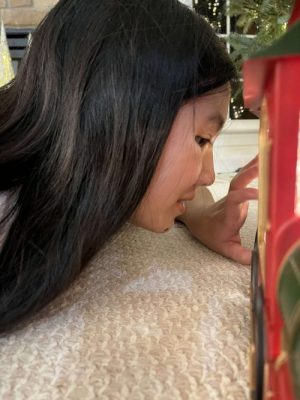
Naomi Mills, who lives with a rare form of LCA knowns as LCA5-Lebercilin, loves this Christmas train ornament because it moves and it’s colorful and sparkly.
A pharmaceutical company obtains FDA permission to start human clinical trials and to ship an experimental drug across state lines through an IND application before approving a marketing application for the new drug.
“Kathie (John’s wife) and I pray every day that there’ll be a pathway to improve her vision, that she’ll be able to drive someday.”
The Retinal Degeneration Fund (RD Fund), the venture arm of the Foundation Fighting Blindness led the $19 million in seed financing. The funding will allow Opus to advance the preclinical work of its three scientific founders: Jean Bennett, MD, PhD, the F.M. Kirby Emeritus Professor of Ophthalmology at the Perelman School of Medicine at the University of Pennsylvania; Junwei Sun, Chief Administrator for Penn’s Center for Advanced Retinal Ocular Treatments; and Eric Pierce, MD, PhD, the William F. Chatlos Professor of Ophthalmology at Harvard Medical School and Massachusetts Eye and Ear.
“We’re very excited,” John said. “We know there’s a lot of moving parts here – doctors, advocacy groups, medical research, the FDA. Trying to get all of those aligned for the moon shot is quite an orchestration.”
High Aspirations for Teen with LCA5
Low vision aside, her father said Naomi wants the freedom of mobility in owning a car.
“Naomi was given a suggestion by her wonderful teacher that a best practice is to buy a car, even if you’re blind, so you can ask someone to ‘Please drive me in my own car,’” John said. “She also hopes that she can drive her own car someday.”
The couple’s daughter also loves music, plays piano, and wants to be a filmmaker.
How can a person with visual difficulty make a film? Naomi did on a recent Sunday afternoon, John said, documenting the finishing of the family basement, recording clips of action, inserting music, and editing everything into a film.
“It’s beautiful,” he said. “She’s very good at whipping films together.”
He also said Naomi is her own person.
“She wants to grow up and move out as fast as she can and get her own place and live on her own. That’s a good thing,” John said. “She just loves the thought of being independent. That’s a good thing. We encourage that.”
Naomi and her family vacationed in Germany in 2018 and visited the Dialogue in the Dark exhibition at Frankfurt’s DIALOGMUSEUM, where blind guides lead visitors through settings in absolute darkness. John characterized the experience as a wonderful way to better understand the world of people with visual challenges. He said the Mills family would like to establish a similar exhibit in the United States.
With 20/500-600 vision, Naomi needs bright light, and, while colorblind, she can see contrasts and large black letters on white paper.
“My understanding and interpretation is that Naomi has tunnels of goodness that she can see out of. It’s like looking out of a wiffle ball, tunnels she can see through but not consistently,” he said. “She can read large print and she can write fairly well. She’s also proficient at reading and writing braille.”
Confirmed LCA5-Lebercilin Diagnosis
The couple adopted Naomi in 2010 at age 2 from China, knowing doctors diagnosed her with Retinitis Pigmentosa, and said, “We’re taking her on faith. It doesn’t matter.”
Their son, Michael, now 31, accompanied his parents to China when they adopted their first daughter, Sarah, from an orphanage in 2001. Sarah, now 21, went to China with John and Kathie when they brought Naomi home from foster parents nine years later. Back in the United States, the couple followed up any leads to help Naomi with her vision.
“It was very murky and confusing, trying to connect with resources and groups,” he said.
In the past several years, Naomi made the national finals in the Braille Challenge, the only academic competition of its kind in North America for students who are blind or visually impaired.
“She is so sharp, so smart, and such a blessing,” Naomi’s mom said.
Allison Galloway feels cautiously excited about a new genetics company prioritizing research into her children’s form of Leber congenital amaurosis known as LCA13 (RDH12).
“I would say I’m excited, but I don’t put all my eggs in one basket,” the Colorado mother said of the news to bring a treatment closer to market. Her children, Logan and Zoe, both live with LCA13.
“Many times, we think we made progress and then we had some studies done and invested money, and the researcher never progressed with the research.”
Zoe and Logan Galloway both have LCA13
Now, a new gene therapy company called Opus Genetics plans to target two forms of LCA. The company’s research into LCA13 will focus on restoring protein expression and halting functional deterioration in patients with retinal dystrophy caused by mutations in the retinal dehydrogenase gene RDH12. LCA13 affects one in 288,000 people. Opus also will concentrate on research into LCA5, which encodes the lebercilin protein and affects about one in 1.7 million people.
The Retinal Degeneration Fund (RD Fund) of the Foundation Fighting Blindness led the $19 million in seed financing for Opus, based in Raleigh, N.C.
Motivated Parents
Opus comes amid efforts by the Galloways and a network of motivated parents to raise money, invest in research, and advocate for genetic testing to help drive studies forward to find a treatment for LCA13.
Allison, a nurse practitioner and founder of a women’s health practice, and her husband, Michael, a VP of Finance, are part of a non-profit that parents of LCA13 patients founded more than 11 years ago called RDH12 Fund for Sight.
“We work with scientists around the world to fund research. We support each other even if we live in the U.S., Italy, Australia, or Saudi Arabia. We try to advocate the importance of all children diagnosed with a rare disease to get genetic testing. Without it, we would have never known what our children had, let alone how to cure it.”
A mutation in the RDH12 gene means an inability for the body to create a simple enzyme called retinal dehydrogenase, which helps in the cleaning and health of the eyes. LCA13 is an autosomal recessive gene defect that appears when each parent has a mutation on the same gene in the same place.
Doctors genetically diagnosed Logan at age 3. Now 10, he is a fifth grader who loves everything technology. Logan loves to ski and is fluent in braille. While his vision is fairly stable, he lost some of his field of vision over the years and his night blindness is severe, his mom said.
When Logan was 5 and Zoe was 3, one day at dinner, Allison noticed her daughter’s eye started to
Michael and Allison Galloway with their kids, Zoe and Logan. Both children have low vision due to LCA13, involving the RDH12 gene.
bounce from side to side.
“I immediately knew what it meant,” she said. “A nystagmus means that the eye is weak and sick. I didn’t need the gene results to know that not only did my son have LCA, but my beautiful little girl did too. A 6 percent chance.”
Doctors genetically diagnosed Zoe also at age 3. Now 8, she is a third grader who loves painting, clay modeling, reading, writing, and riding horses. Her vision is much better than Logan’s, and while it has also been fairly stable, she has lost some over the years.
RDH12 Natural History Study
The children took part in an RDH12 Natural History study by Drs. Tomas S. Aleman, Katherine E. Uyhazi, and Jean Bennett, among a host of other researchers, at the Perelman Center for Advanced Medicine at the University of Pennsylvania.
Logan and Zoe were among 21 patients, ages 2 to 17 years old, from 14 families, who underwent exams, imaging, and numerous studies to track details about the gene’s structure and function, and the progression of the disease across a range of patients with the RDH12 mutation. Natural History studies often serve as a critical part in designing clinical trials eventually involving testing on humans.
Allison and Michael attended Hope in Focus’ 2019 LCA Family Conference in Philadelphia, where panels of researchers, including Drs. Aleman and Bennett, shared their study results among an audience of patients, care givers, advocates, scientists, and leaders in biotechnology and the regulatory process.
The Galloways and others in the RDH12 group have been disappointed in the past. In one instance, a biotechnology company announced they were moving forward with RDH12 trials.
“Nothing happened. We’re emotionally battered, so we tend to have a little reluctance until it’s actually occurring.”
Regarding Opus’s plans to drive LCA13 research forward to a viable treatment, Allison said, “While we’re excited, we can’t get all our hopes up. As a board member of the RDH12 Fund for Sight, we have other coals in the fire to keep the research going if this doesn’t progress. But we are hopeful that this is our time, and this study is an answer to our hopes and dreams.
“We’re trying to be part of this study financially because we owe it to our kids and affected members to not be left behind like we have in the past,” she said.
“We have fought too hard and for too long to keep watching them lose their sight.”