Rare Disease Day 2022: Hope in Focus Promotes Rare Disease Advisory Council

Rare Disease Day 2022 kicked off today as people gathered across the country, including us here at Hope in Focus, to raise awareness and generate research for treatments and cures for rare diseases, including Leber congenital amaurosis and other rare inherited retinal diseases.

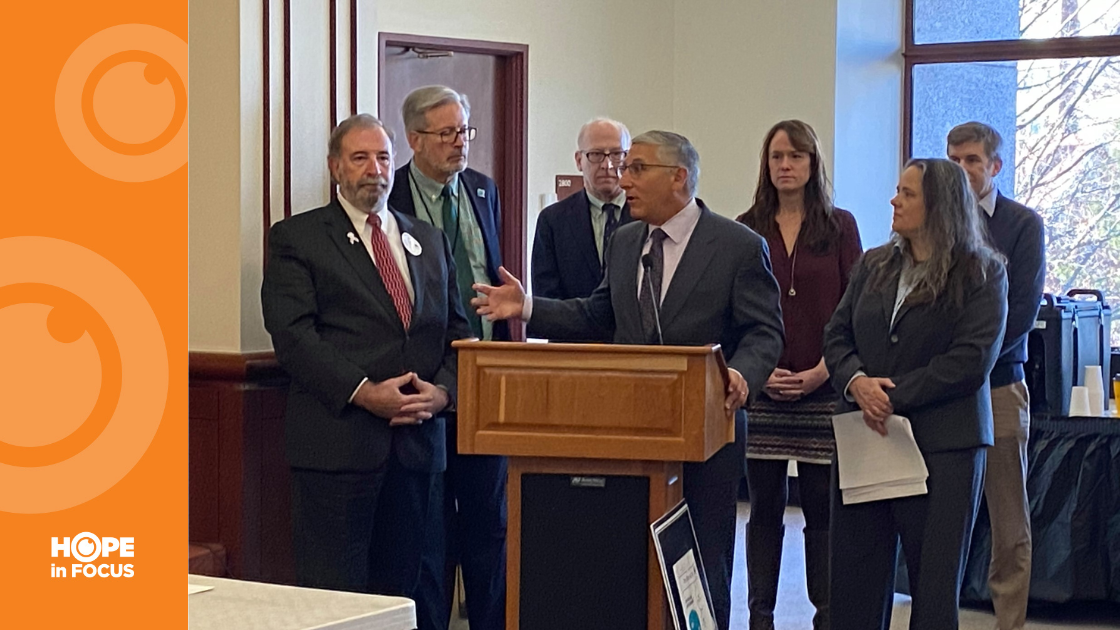
Hope in Focus joined more than 30 advocates gathered for a virtual celebration of Connecticut’s Rare Disease Day. The day, officially acknowledged annually on the last day of February, is celebrated nationally and globally as a concerted effort to raise awareness, to grant access to medications, therapies, and state services, and to encourage research on the more than 7,000 rare diseases.

The Rare Action Network (RAN) of the National Organization for Rare Disorders (NORD) organized Connecticut’s Rare Disease Day activities, the highlight of which was to inform the state legislature of the vital importance of establishing a Connecticut Rare Disease Advisory Committee (RDAC).

Courtney Assad, Hope in Focus Director of Outreach and Development, presented a statement from our organization in support of and RDAC, telling the group that research and investment paid off immeasurably with the development by Spark Therapeutics of LUXTURNA®.

“LCA patients treated with LUXTURNA® experienced dramatic changes in their lives with greatly improved or restored vision,” she said in the statement. “Five, 6, 7-year-old children treated with LUXTURNA® view life in a new light in big and little ways. They can now see rainbows arcing in the sky and stars shining at night.”

One in 33,000 people are affected by LCA, which represents 5 percent of all retinal dystrophies.

More than 20 states have established such councils and RAN is working toward creating a group for each state. This year, Connecticut’s attempt to establish an RDAC has move farther along than any of the efforts that began in 2015. A task force met a dozen times between 2017 and 2019, but a paper reporting the group’s recommendations never made it to the Public Health Committee of the Connecticut General Assembly.

RAN and NORD drafted legislation referred to as House Bill 5260 and called “An Act Establishing a Rare Disease Council.” We received great news that that the legislation was formally introduced and has been referred to the Joint Committee on Public Health. A public hearing is expected to be scheduled to hear testimony supporting the proposed legislation.

The council would advise and make recommendations to the Department of Public Health and other state agencies, regarding the needs of people in the state living with a rare disease and their caregivers.

It would consult with rare disease experts, develop policy recommendations for improving access to quality medical care, affordable and comprehensive insurance coverage, medications, medically necessary diagnostics, timely treatment, and other necessary services and therapies.

The RDAC also would perform a host of other functions in support of the 250,000 to 300,000 people living with rare disease in Connecticut. You can view the text of the legislation here.*

Rare disease affects more than 25 million Americans. This equates to 1 in 10 Americans, or one on every elevator and four on every bus, according to the National Institutes of Health (NIH). More than 300 million people worldwide live with a rare disease.

Thirteen members would make up the group that includes the commissioners of public health, social services and insurance or their respective designees

A hospital representative and a physician licensed in medical genetics would be appointed by the governor.

Other members would represent patient advocacy groups, family members or caregivers of a pediatric patient living with a rare disease, a caregiver of a child or adult living with a rare disease, an adult living with a rare disease, a rare disease scientist, a rare diseases physician, and a member of the biopharmaceutical industry.

Kristen Angell, NORD Associate Director of Advocacy, and Lesley Bennett, Volunteer State Ambassador for Connecticut’s RAN, organized the event.

Connecticut’s Lt. Gov. Susan Bysiewicz opened the session saying never doubt the power of advocacy and passionate volunteers that have extensively lobbied her and many others in the statehouse to create a RDAC.

“I have a lot of hope. I know my colleagues in the legislature are people of great compassion who will be working for you.”

U.S. Sen. Richard Blumenthal also offered a statement on the event: “This Rare Disease Day, I’m proud to join the National Organization for Rare Disorders as we renew our commitment to supporting patients, families, and essential caregivers. With robust federal investment, we can and will spur innovation of research, treatments, and cures for those living with rare diseases – saving countless lives in Connecticut and across the country.”

More than a dozen people – advocates, caregivers, patients, doctors, and businesspeople – shared their stories. Many of them are parents of children  living with rare diseases, such as rare muscle disorders, rare pediatric cancers, rare genetic disorders, and other diseases that often are described as pediatric Alzheimer’s and juvenile ALS (amyotrophic lateral sclerosis, known as Lou Gehrig’s disease.

Connecticut State Rep. Mitch Bolinsky, one of the legislators in on the meeting, said, “WOW! What an incredible group of advocates. You got us to the finish line and now we just have to get ourselves over it.”

Our New Name – FAQs

Why did we change our name?

It’s simple: we’ve grown and matured as an organization. And we’re looking ahead to how we can best position this organization for the future. We were never about one individual – we’ve always been for all of the Sofias – all the individuals, all the families, and all the genetic variants associated with LCA. The new name has simply evolved to reflect that. 

The pandemic gave us an unintentional break from normal operations, kind of like many of us since early 2020. Unable to plan and go forward with public events, such as our Dinner in the Dark gala fundraiser and our LCA Family Conference, we had time to work on a new name.

Who decided to change the name?

Our President and Co-Founder Laura Manfre has been thinking about changing the name for a long time. Researchers asked her and her family to fundraise when she learned of Sofia’s genetic LCA diagnosis in 2012. She and others founded Sofia Sees Hope in 2014 to advocate and raise funds for all in the LCA and IRD communities, and Sofia came to represent all Sofias. The organization was founded to be inclusive, and we are now updating the name to reflect that inclusivity. 

Has anything else about the organization changed?

Nope. Our mission is the same; only our name has changed, and we hope this will better position us to grow and extend the reach of our work and focus. 

Why did we work with a branding firm?

We’ve come to know a lot about rare inherited retinal diseases, genetic testing, clinical trials, federal drug approval, 27 different forms of LCA, and tons more about rare inherited retinal diseases, but we needed professional help in the branding department.

We found that help through an old friend, Bonnie Southcott, who has been with us since the beginning and knows our people and our mission. She also is Director of Patient Engagement at Toolhouse, a digital marketing firm in the life sciences sector. 

She describes the essence of rebranding or renaming as carefully identifying a brand’s DNA and then capturing it in the new words, look, and feel of the name, the logo, and the tagline. The three-month process involved our founders, board members, staff, donors, and the people we connect with in the LCA and IRD communities. We think she did a great job and hope you do, too!

How was the rebranding funded? 

We are very fortunate to have generous supporters who donated their significant talent, and their time to our rebranding initiative. For the expenses we did incur, these were covered with grant funding designated for administrative expenses and capacity building as we position our organization for the future. 

It is important to us that contributions received from individual donors are used solely for the benefit of research and genetic testing. Meanwhile, our education, outreach, and advocacy programs, as well as our capacity-building activities and administrative expenses are supported by grants and restricted contributions designated for those activities. 

What does Sofia think about the name change? 

She is excited for the update! She has always known that the organization’s mission was to serve the broader community, and she looks forward to continuing her involvement, which has included everything from leading a book club for middle schoolers to supporting fundraising to representing the organization at partner events. 

Will Dinner in the Dark return?

YES! And here is the date to save: Saturday, October 8, 2022, at the Mystic Marriott in Groton, Connecticut.  We cannot wait to gather safely again, for this, and for other in-person events like our LCA Family Conference, A Rare Opportunity, and more. 

Sofia Sees Hope Rebrands with an Eye to the Future

Sofia Sees Hope this month unveiled a new name and logo — Hope in Focus — as the organization sets its course for the next decade of work to benefit the Leber congenital amaurosis (LCA) community.

Embracing and encompassing, Hope in Focus is our new name: Embracing because research advancements fuel hope and ease feelings of isolation that often accompany a rare-disease diagnosis, and encompassing because our global advocacy reaches all of those living with LCA and other rare inherited retinal diseases (IRDs).

Our organizational namesake, Sofia, was a little girl with LCA in 2014. She has now come of age, and so have we. Throughout the last seven years, Sofia Sees Hope has transformed from a small NPO into a robust, international organization, and that’s why we’ve taken the exciting step of evolving our name while keeping hope as its centerpiece.

“Hope is built on the bedrock of yearning; not an unrequited yearning, but the yearning for what we know can be,” President and Co-Founder Laura Manfre said. “Hope is fuel, driving us to action. It binds us together and soothes our souls when darkness falls. Hope is our Polaris; the brightest star in the IRD constellation.”

Hope also is empowering and a strong motivator. It is the role of Hope in Focus to make sure we hear those voices of the patients, families, and community, and we help craft compassionate, forward-thinking policy.

“Without hope there is not a chance you’re going to advance treatment,” Manfre said. “We cannot sit back and wait for it like manna from heaven because that’s just not going to work.”

Why The Name Change?

As Sofia Sees Hope grew from its beginnings, so did its reach geographically and genetically with those living with LCA and IRDs. The development and 2017 federal approval of LUXTURNA®, a vision-restoring gene therapy, marked an incredible milestone in the rare retinal disease world. Several factors powered the name change.

Sofia Sees Hope established steady grant funding and strong corporate partnerships over the years to support advocacy programs, such as our LCA Family Conferences, quarterly newsletter, and monthly webinars.

“We are grateful to our grantors and corporate partners, and, for the most part, that funding has remained steady and that’s what we use for outreach and for continuing to build a sustainable organization,” Manfre said.

Our advocacy group forged vital relationships with global organizations like Foundation Fighting Blindness and Retina International and with pharmaceutical and biotechnology companies, resulting in remarkable research advancements. These include improved access to genetic testing and the development of more than 30 clinical trials into retinal disease research.

“We’ve reached this level of organizational maturity where we’re well-known enough that we can manage a name change and continue to provide even better service to the community,” Manfre said. “We are well-positioned for the future and believe this name change will only help us to be more successful.”

Unintentional Opportunity of Time

Manfre said she didn’t necessarily want her daughter’s name attached to the organization because from the beginning it was about so much more than her. After Sofia received her confirmed genetic diagnosis of the gene causing her vision loss — IQCB1 — her family was asked to fundraise.

“Every year I would step back and question it. Is it time to change our name? It was never about Sofia specifically,” she said. “Since our incorporation, we provided funding to support a variety of research initiatives, including My Retina Tracker® Program.”

But then the COVID-19 pandemic set in, giving an unintentional opportunity to press the pause button for time to re-evaluate.

“COVID gave us time, although that’s not how we would have wanted to do it.” The name Sofia Sees Hope served our organization well once we established we were reaching out to people like Manfre’s daughter, Sofia, and people living with any one of the 27 known forms of LCA and a host of IRDs.

Now in the eighth year since our founding, research has advanced exponentially, and we wanted to be clear that we are there for the whole LCA and IRD community” she said.

“We are not changing who we are or what we do. We’re just changing the name.” Manfre said the name change also relieves the pressure on Sofia that comes with having her name be part of the organization. Sofia has supported at fundraisers, educational events, and most recently by leading a book club for middle schoolers with LCA and other visual impairments.

The Process Behind Our New Name

We had amazing help with finding the right name. Bonnie Southcott led the three-month project. Southcott is former Director of Patient Engagement at Toolhouse, a digital marketing firm in the life sciences sector, based in Washington state. Under her guidance, we developed a new name, Hope in Focus, a new tagline, “Seeing a cure for blindness,” and a new logo.

“I think it’s important to know that the organization itself hasn’t changed. The (new) name is more reflective of the greatest audience that they serve and of their vision for the future,” she said. “The other piece of it is that it takes away one of the questions, and that question was ‘Who’s Sofia?’ ”

Sofia represented people with LCA, but some might not get that and think twice before reaching out to our organization, thinking, ‘I don’t know who Sofia is, the organization might not be right for me.’

“That only has to happen once to have an impact,” Southcott said. “To take away that question was key.”

She describes the essence of rebranding or renaming as carefully identifying a brand’s DNA and then capturing it in the new words, look, and  feel of the name, the logo, and the tagline. By involving representatives from each  stakeholder group and planning a careful rollout, she said, the organization’s supporters, constituents, and staff become champions of the reimagined brand.

“Hope: That was almost like a life raft that people jumped into. You have to focus on hope. It is too central for what this organization stands for.”

The name also reflects the human connection the organization makes with the LCA and IRD communities: “The warm embrace that Hope in Focus stands for.” The name also differentiated our group nicely from others in the field and that’s important for messaging, important for fundraising, and important for growth, she said.

“Some do offer that sense of hope, but you don’t get that from the name. The new name really had to convey that, and it had to underscore that the purpose is not only Sofia, but all the Sofias. “The hope component — that sets us apart.”

Science and research comprised the other piece folding into the mix, thinking about microscopes and getting a clearer focus on treatments and cures, especially with one gene therapy on the market and more developing research in clinical trials.

Southcott and her colleague Chance Martenson began with 40 possibilities for names and narrowed them to 12 after conversations with our founders, board members, staff, donors, and the people we connect with in the LCA and IRD communities. From there, they recommended three for consideration.

The name change or rebrand of our organization stood out among other projects she has done. “It was more an evolution of what existed, as opposed to a revolution or the creation of something brand new, where nothing existed before.”

Finding the right name also meant not disenfranchising people involved with our advocacy group. “There is this real sense of dedication to the organization and a yearning to protect it from anything else, Southcott said. At the end of the day, it had to serve the people that support it and use it.”

Our Future

We at Hope in Focus will expand the reach in our advocacy efforts and continue to grow as a small team doing big things, Manfre said. The vision for Hope in Focus is far reaching, and we are developing exciting ways to engage our community members and bring them together as we support them, and they support one another.

“We’ve been powered by a small team of part-time consultants and volunteers, and we’ve just recently
brought on board a full-time development and outreach director,” Manfre said. “To be able to continue to expand to meet the needs and the demands of the LCA and IRD communities, we need to keep growing. I view this as the first step in that growth.

“We’re checking all the boxes, working to fill unmet needs. This is much bigger than me and much bigger than Sofia. We only began something that is going to continue to grow, and we’re very excited about where it will go.”

Sofia Sees Hope Scavenger Hunt

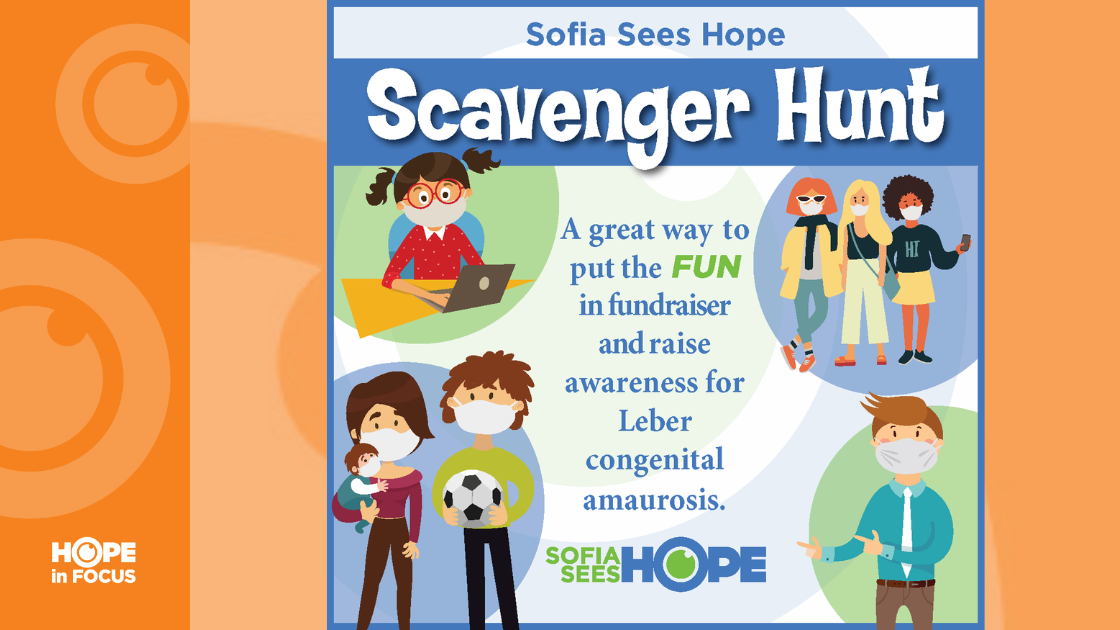
Welcome to the Sofia Sees Hope Scavenger Hunt! We are glad to meet you.

We are doing this to continue to raise awareness for rare inherited retinal disease and Leber congenital amaurosis, which is challenging during a global viral pandemic. We launched it last year because of the coronavirus crisis, when in-person fundraising went dark and we were unable to be with our family and friends in person. It was so fun that we are bringing it back this year, even as COVID restrictions are being lifted in many places. As always, we ask that you adhere to your local requirements, and practice social distancing and mask wearing where required or prudent.

Your entry fee will benefit Sofia Sees Hope, and the education, outreach and advocacy work we are engaged in. We will also make a donation from the entry fees to a 501(c)3 nonprofit of the winner’s choosing (up to $250)! This way you can help a charity in your community that is also doing important work.

Questions? Email us at info@sofiaseeshope.org

How it works

The Scavenger Hunt is open to anyone around the world! The maximum number you can have on your team is 5 (five) but they don’t all have to live in the same house! This could be a fun way to stay in touch with friends or family.

The only equipment you’ll need is a smart phone that can take photos/videos and a Facebook account.

To be officially entered, you must fill out this Google form. Once we receive your entry, you will be emailed confirmation and a link to make your suggested minimum team donation of $100. (Here’s the official rules, etc. you need to know.)

Sofia Sees Hope Scavenger Hunt poster info

The Scavenger Hunt runs from Friday, May 21 through Monday, May 31. On opening day, you will receive an email with the list of challenges. You must complete 10 (ten) of the challenges by 11:59 p.m. EST Monday, May 31 to be entered into the pool to win.

There will be 2 additional requirements in the game:

  1. To begin, at least ONE member of each team must complete a quiz about rare disease. You will receive a link to the quiz in the confirmation email.
  2. On the last day, Wednesday, May 20, at least ONE member of each team must share 3 facts about Leber congenital amaurosis or rare disease on their Facebook, Instagram or Twitter and tag Sofia Sees Hope (@sofiaseeshope on all platforms). It can be 3 facts included in 1 post, or 3 separate posts.

You will post all your photos and/or videos in this Facebook group as you complete challenges. Once you are confirmed as entered in the hunt, you will be invited to join the Facebook group. The group is private, meaning that no one outside it can see who is a member, or any of the posts.

Every team that completes 10 challenges by the hunt’s end will be entered into a random drawing for the winner.

The winner will be able to designate a 501(c)3 nonprofit of his/her choosing to receive a donation from Sofia Sees Hope!

The winner will be announced Friday, June 4 in the Facebook group, on our public social media platforms, and notified by email.

Raising Awareness by Sharing Rare Disease Stories

Had he received a more definitive rare disease diagnosis in 2003, Alan Gunzburg said he might not have lost so much vision and still might be able to drive.

In 2016 – 13 years after his initial diagnosis – the Greenwich, Conn., man learned his vision and hearing loss was caused by Adult Refsum Disease (ARD), a genetic metabolic disorder with symptoms that perhaps he could have staved off years ago through dietary restrictions. 

Doctors initially diagnosed Gunzburg with retinitis pigmentosa (RP) – a rare inherited retinal disease (IRD) causing progressive loss of peripheral and night vision. Those are also symptoms of Refsum disease, which, if undiagnosed, can be life-threatening. 

The disorder results in a buildup in the nerves and liver of phytanic acid, a type of fat found in certain foods. Other symptoms are loss of smell and hearing, numbness, unsteadiness, itchy skin, and shortened fingers and toes.

Gunzburg joined more than two dozen speakers who shared their stories during a Feb. 26 virtual Connecticut Rare Disease Day celebration sponsored by the National Organization for Rare Disorders (NORD) and the Connecticut Rare Action Network (RAN)

Read Hope in Focus (formally Sofia Sees Hope) 2021 Rare Disease Day letter to our elected representatives

His story reflects the plight of many people living with a rare disease because the more than 7,000 rare diseases in the United States are just that – rare. 

It’s difficult to correctly diagnose rare diseases when little information exists about them.

Some families living with rare disease find they must create their own advocacy avenues to educate the public and the medical community about diseases they’ve never heard of.

Gunzburg created the Global DARE Foundation with the mission of Defeating Adult Refsum Everywhere. His website gets the word out about the disease and gives information on symptoms, treatments, and research. 

Laura Manfre, co-founder and board president of Hope in Focus (formally Sofia Sees Hope), took that same route in 2014 after doctors genetically diagnosed her daughter with a form of Leber congenital amaurosis (LCA). As a global patient advocacy organization, Sofia Sees Hope helps transform the lives of those affected by blindness caused by LCA and IRDs by generating awareness, supporting affected families, and raising funds to advance research for diagnosis, treatments, and cures.

Creating Rare Disease Advisory Councils

The global phenomenon of Rare Disease Day exists to create awareness of rare disease, characterized in the United States as affecting fewer than 200,000 people. With more than 7,000 rare diseases, 25 million to 30 million Americans are affected by rare disease. That means one in 10 Americans suffer from rare diseases, and more than half of them are children. The European Organization for Rare Disorders (EURODIS) organizes the international campaign.

Nationally, Rare Disease Day brings together each state’s RAN ambassador – in Connecticut’s case, Volunteer State Ambassador Lesley Bennett – along with patients, caregivers, doctors, advocates, legislators, academics, and business and biotech leaders to generate awareness, increase patient and caregiver support, and drive research for treatment and cures.

This year’s event focused on creating Rare Disease Advisory Councils (RDACs) in all 50 states through NORD’s Project RDAC. Councils are made up of various stakeholders, including patients, caregivers, doctors, insurers, biotechnology companies, researchers, and state officials.

Project RDAC’s goals are to optimize existing councils and increase the number of groups nationally by opening collaborative opportunities among councils, creating educational resources to guide them, and helping more states pass legislation that establishes high-functioning councils.

More than a dozen states have RDACs, 12 are pursuing RDAC legislation, and another 23 states do not have an RDAC.

Connecticut is working toward creating a permanent RDAC task force, after a temporary group disbanded in 2019. Check out this map to see if your state has an RDAC or if NORD is working on legislation to create one. To start an effort in a state, click here

NORD’s Kristen Angell moderated the virtual celebration that featured more than two dozen people, sharing stories about the struggles and successes in the world of rare disease. A recording of the celebration will be available soon.

Suzanne Candela literally told an uplifting story as outreach and mission coordinator for Patient Airlift Services (PALS) with the motto: “Going Above and Beyond to Lift People Up.”

Volunteer pilots help eliminate logistical barriers to treatments by using their own aircraft, fuel, and time to fly patients to appointments. Over the course of 10 years, the company helped 2,900 families in 23,000 flights, covering more than 5.4 million miles. Candela told of a girl flown from northern Maine to Boston for repeated cancer treatments. The patient has flown on PALS flights about 60 times and counting.

The service could eliminate transportation barriers for participants in out-of-state clinical trials. The company also has flown 900 flights bringing combat-wounded veterans to appointments.

Connecticut State Sen. Cathy Osten described the story behind proposed legislation that she and State Rep. Christine Conley introduced this session to help a local family struggling to pay for special food for their two children diagnosed with phenylketonuria (PKU). The family’s share of the cost is about $36,000 per child per year. Osten said insurance companies hesitate to pay but the expense is well worth it when it comes to the quality of life for people with PKU.

David Leeds of Avon has the rare disease Hereditary Angioedema with normal C1 Inhibitor (HAE-nC1Inh), a new form of hereditary angioedema (recurring episodes of swelling) identified in 2000.

If he goes to the hospital in this time of the COVID pandemic and no one knows about his rare condition and no one can speak on his behalf, Leeds said, “We just have to hope that my rare disease doesn’t kill me before they send me home.

“I have to know everything about my disease because my doctors don’t.”

John Hopper, one of the emcees of the virtual celebration, heads the Greenwich-based Fibrolamellar Cancer Foundation that advocates for people living with fibrolamellar carcinoma, a rare liver cancer that usually occurs in adolescents and young adults with no history of liver disease.

Hopper, who also co-chairs NORD’s Rare Cancer Coalition, said his strategy is to be what he calls “the mouse that roared.” 

“That means we know we’re small, but we know we have to be loud,” Hopper explains on his foundation’s website. “Most people don’t know about rare diseases. Unfortunately, a lot of people don’t care about them. Our strategy is to be that loud voice – that leader – to make sure that every stakeholder from government to academia to pharmaceutical pays attention to this cancer and understands that working on this small cancer may lead to bigger things too for the rest of them.”

Hopper encouraged all the participants in the virtual rare disease day event to be that mouse that roars.

Making Connections in the LCA Community Provides a Path Forward

Danielle Senick of Norwich, Conn., reached out to Hope in Focus (formally Sofia Sees Hope) more than three years ago when she needed answers about her deteriorating vision.

Doctors diagnosed Danielle at age 6 months with Leber congenital amaurosis (LCA), and her parents learned that this rare inherited retinal disease (IRD) would cause retinal degeneration to the point of having little or no vision.

She could see light and shadows, but she noticed a pronounced deterioration in her vision in her early 20s. We asked Danielle to talk about her experiences since she connected with us. Here is her story.

Nancy, Danielle, and Patty with landyards on and looking at a phone that Nancy is holding
Danielle Senick, center, with her aunt Nancy (left) and mother Patty at the 2018 LCA Family Conference in Mystic, CT

“Though the (vision) changes were subtle, they caused me to realize how little I knew about my condition and I wanted to learn more. I did a little research and stumbled across Sofia Sees Hope. I was intrigued to hear about Sofia’s story, and I wanted to learn more, so I contacted the organization. I heard back, almost immediately, from Danielle Chiaraluce, who worked for the organization at the time.

“We had a lengthy conversation and she told me that she and Laura (Manfre, Co-Founder and Board Chair of Sofia Sees Hope) were interested to learn more about me, and they invited myself and a guest to Dinner in the Dark. I was honored to be invited, and it was a very fun, yet emotional, experience. It was wonderful to have my aunt learn a little bit about what my life is like to have no vision.

“At this event I met Laura, Sofia, Danielle, David Brint, his wife, Betsy, and his son, who also has LCA, and several other influential individuals. I was so honored during the auction to see how many people were willing to contribute their hard-earned money to the cause (including my aunt who bid on a trip to Bali).

Undergoing genetic testing

“Later I spoke with David and he helped me to get in touch with Spark Therapeutics, where I underwent free genetic testing. I had not seen a specialist or done anything about trying to learn about my diagnosis in several years because I often stumbled across roadblocks and it seems that the doctors that I previously had seen were not as educated about LCA. However, this experience was much different. 

“I gave a blood sample and sent it to the lab and once my results came in, I spoke with Dr. Jill Harris  in great detail about my results. She made me aware that my gene mutation is LCA-CRB1 (LCA8). Unlike LCA-RPE65 (LCA2), (for which there is a federally approved treatment), information about this mutation is still in the works. There is no cure, so I knew all along not to expect a cure and that with genetic testing you must be patient. I joined My Retina Tracker® (a Foundation Fighting Blindness free, secure online registry that helps connect families and enables researchers and doctors to track progress, prevalence and other variables of IRDs to move research forward) and receive emails about any new information on the condition and still remain hopeful. 

“About a year later, through social media, I became connected with Kristen Steele of Iowa. (Kristen has LCA10 caused by a

Kristen holding up her diploma
Kristen Steele

mutation in her CEP290 gene.) She is a remarkable young woman who is extremely confident, well-spoken, and independent, and like me, a very passionate licensed massage therapist. 

“When I spoke with her, I was in the process of attaining my license and still in school. I was having a little trouble getting the results from my license test in braille and she told me that was unacceptable and filled me in about her journey and how hard she had to fight to pave the way to get her testing accommodations. When I set up my accommodations with the testing center all I had to do was mention her name and request my accommodations and the center provided me with everything I needed.

“For that I am very thankful. I am now a licensed massage therapist myself and although we are both busy and haven’t talked in a while, Kristen is always available if I ever have any questions about my journey. I was fortunate enough to meet Kristen by attending the LCA Family Conference in 2019 (in Philadelphia). I also attended the family conference with my aunt and mother in 2018 in Mystic (Connecticut) and was quite intrigued by all the speakers. 

“At this conference I also met two individuals that are about my age who both have children with LCA. It was wonderful to meet with them and answer some of the questions that they had about what it was like growing up with LCA and any suggestions they had about being a parent of a child with LCA. As I have received so much guidance and help along the way, it’s wonderful to give back by helping others and giving them advice.

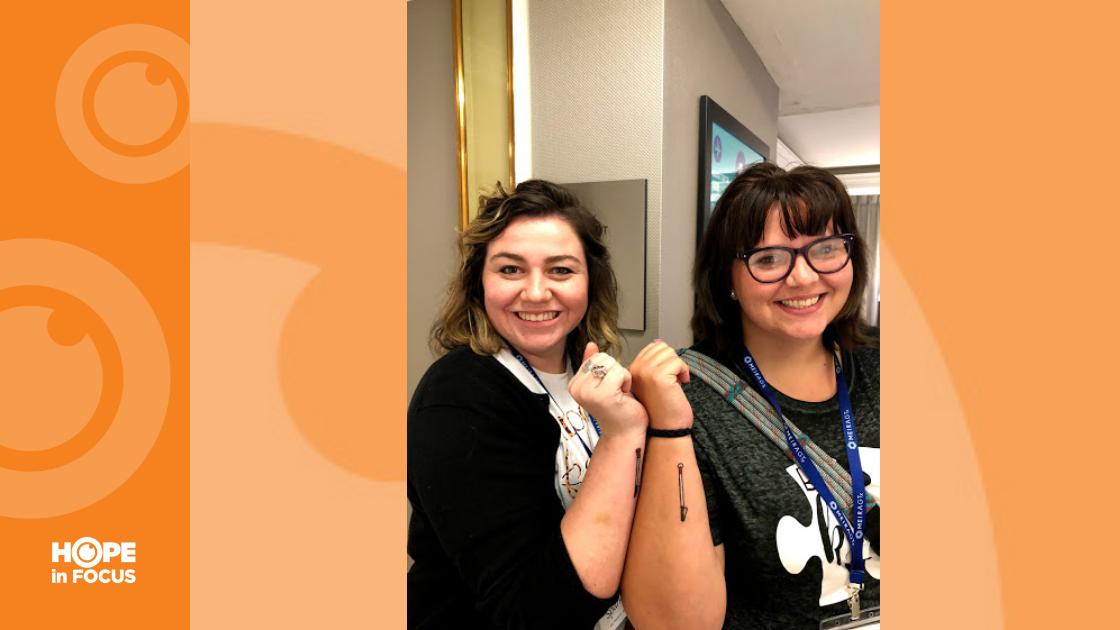
Deanna and Ashlyn show off their matching white cane tattoos on their arm
Deanna Carroll and Ashlyn Lincoln with their matching white cane tattoos.

“I have stayed in contact through social media and text messaging with these two individuals, Deanna Carroll and Ashlyn Lincoln, and have potential plans to go down to North Carolina and meet their children! I was able to meet up with them again in 2019 for the Philadelphia family conference. I brought my brother with me as a guest and he was also intrigued to learn so much about my condition. 

“There was a plethora of informative speakers from all over the country, and it was amazing to see how far research had come even since 2018 at the last conference. I was especially intrigued to hear Tami’s story (Tami Morehouse, from Ohio, underwent RPE65 gene therapy as part of the LUXTURNA® treatment clinical trials) and how much it changed her life. 

“I became quite emotional when she described all the little things that had come from it and changed her life, such as being able to go to her children’s socc

er games and cheer them on, actually being able to see them score goals, where before she had to rely on others to describe what was going on. 

“The main takeaway from this process has been to continue to remain hopeful and stay involved. It is quite a process and the research is quite extensive and costly, so we would not have been able to come as far as we have without the generosity of others involved with Sofia Sees Hope.

“It’s amazing to see what a little bit of poking around on the Internet has led to and how much it has changed my life. My curiosity and doing a little bit of research to learn about LCA led to my becoming involved with Sofia Sees Hope, receiving genetic testing, attending wonderful events and conferences, and meeting truly amazing individuals, both sight-impaired and sighted.”

Living with LCA: Finding Her ‘Light’ In the Kitchen

A recipe for addiction recovery transformed Orly Shamir’s life, and now it’s about to change her future.

Orly, who’s name in Hebrew means “My Light,” lives with LCA4, a form of Leber congenital amaurosis caused by a mutation in her AIPL1 gene. 

The 52-year-old Canadian, newly transplanted to southeastern Florida, takes her Hebrew name literally.

“I am light, and I am vision,” she said. “I want to offer everything I have for others to realize their perfect light and vision is possible.”

As a child she had enough vision to read large print, but in her 20s, Orly’s sight deteriorated to minimal light perception and shadows. In 2014, she was part of a clinical trial in Canada for the Argus Retinal Prosthesis System (Argus II). The Argus II, known as the bionic eye, stimulates the eye with electrodes to transmit visual information captured by a video camera to the patient’s brain. You can read about her experience in the trial here.

“Still, I have true 20/20 vision,” she said. “My blindness forces a mindful clarity through all my other senses and that enriches everything from my cooking and healing, to my service to others.”

Along her journey through the darkness of an opiate addiction, she rediscovered her mother’s traditional Moroccan fish dish, served as part of each Friday’s sabbath dinner. 

Little did she know the importance this recipe would have to her survival.

From 1999, after having her third child, until 2012, she said, “My opiate addiction took a huge chunk of my life away because it

Orly and Amit nicely dressed at Dinner in the Dark 2019
Orly Shamir and her husband Amit (and guide dog Regan at the 2019 Dinner in the Dark to benefit Hope in Focus (formally Sofia Sees Hope).

was a fight. That’s why I want to give back and give light to the darkness.”

It began with chronic pain and prescriptions for Percocet and Oxycontin that offered relief and a false sense of well-being. Domestic abuse led to living in a shelter with her children. Orly finally realized she needed to get off the pills, but she could not.

“It was the beginning of torture for several years. That’s why we have an epidemic with opiates. It takes a lot of strength and support, and I tried three times over a four-year period. It takes everything out of you to get to the other end and never look back.”

Childhood memories of simmering aromas of lemons, parsley, cilantro, peppers, tomatoes and all the spices helped get her to the other side.

She tweaked her mother’s recipe during one of her mom’s visits from Montreal to Orly’s home in Toronto. When her don’t-you-dare-mess-with-ingredients mom left the kitchen, she took the opportunity, with guilt-laced excitement, to add a few more to the pot. 

“Voila, my specialty Moroccan Salmon, the champion of my life was born! At dinner my mom raved about her wonderful fish, and all I did was smile while my soul did a happy dance.”

Years later her addiction took its toll with memory loss and less ability to perform skills. She realized that improving her cognition could be accomplished several ways, including by eating healthy food, especially fish like salmon with lots of omega-3s.

It’s fatty, versatile and widely available, which is why Orly says her dish is champion food for anyone on any recovery journey, whether from illness, addiction or the blues.

“Without knowing it, this spiritually comforting food became physical healing food.”

Blind Ambition

Orly is a gifted chef, a title-holding athlete (Italian and Canadian dragon-boat racing!), a financial analyst fluent in French and a motivational speaker. She has two sons and a transgender daughter, all in their 20s living in Canada. Orly, her husband of 12 years, Amit, and her guide dog, a 6-year-old Black Lab named Regan, live in Hollywood, Fla.

She just graduated from a Florida culinary school with her sights set on developing a YouTube cooking series and a recipe app.

To help finance her project, she applied in January for the Holman Prize for Blind Ambition by making a 90-second video about her project of combining culinary and cooking expertise with her inspirational recovery story.

“Do you know blind people are 40 percent more likely to develop addictions?” she tells viewers in her video. “And did you know proper nutrition is key to recovery? … Although I’ve been legally blind my whole life, I lost my soul’s true vision through opioid addiction and poor health.”

Orly sitting next to her black lab
Orly Shamir with her guide dog Regan.

Orly is turning her recovery story into a series of videos demonstrating healthy, delicious culinary delights, an accessible-to-all recipe app, and input from guest experts to help heal through the art of cooking.

She fashioned her simple and nutritious recovery recipes by using pronounceable ingredients, healthy fats, nuts and seeds and the like.

“It gives us more mental and physical strength because we start to feel better. We’re not as sluggish.”

Orly learned in March that she is one of 39 semi-finalists for the Holman Prize, selected from 109 applicants worldwide. Three winners will be selected in May.

The Holman Prize for Blind Ambition is annually awarded to three blind individuals to carry out a dream project to push limits and change perceptions about blindness around the world. The prize honors James Holman, a Victorian-era adventurer and author who became the first blind person to circumnavigate the globe; he also holds the distinction of being the most prolific traveler in history, sighted or not, prior to the invention of modern transportation.

Each Holman Prize winner receives up to $25,000 to fund a project or an adventure that will make an impact. The contest is sponsored by LightHouse for the Blind and Visually Impaired in San Francisco. The organization launched the prize concept to support the emerging adventurousness and can-do spirit of blind and low-vision people worldwide.

LightHouse CEO Bryan Bashin said the Holman Prize is not meant to save the world nor to congratulate someone for leaving the house. It is meant to change perceptions about what blind people can do.

“This prize will spark unanticipated accomplishments in the blindness community. You will see blind people doing things that surprise and perhaps even confuse you.” 

Previous winning projects include teaching blind people to become beekeepers in Uganda, hosting the first conference in Mexico for blind children and their families led by blind professionals, and recording a documentary series called “Planes, Trains & Canes” about navigating and accessing transportation systems in five cities around the world.

For the next step in the contest, Orly is creating an in-depth proposal due by the end of April. 

“My talent for cooking, my experiences all over the world tasting a plethora of inspiring favors, and my own story of failure, addiction and abuse woven in with courage, resilience and recovery – it was all for this.”

Rare Disease Day 2020: Lawmakers Hear From Advocates

Rare disease patients, caregivers, advocates, researchers, doctors, healthcare providers and lawmakers gathered at Connecticut’s capitol in Hartford on Friday, Feb. 28, to celebrate Rare Disease Day 2020 and raise awareness because rare medical conditions often are overlooked by health-policy decision makers and the medical community. 

CT Rare Disease Day at the state Capitol in Hartford. Photo courtesy NORD.

The National Organization for Rare Disorders (NORD) and its Rare Action Network (RAN) organized the event for Rare Disease Day, celebrated nationally and in more than 85 countries. Click here for information on your state’s events, RAN and Rare Disease Day.

A disease is defined as rare in the United States if it affects fewer than 200,000 Americans. As many as 7,000 rare diseases exist nationally, affecting 1 in 10 people. Between 25 million and 30 million Americans live with a rare disease, including about 300,000 in Connecticut alone. 

Sofia Sees Hope, based in Ledyard, Conn., gave information to legislators on the Connecticut General Assembly’s Public Health Committee, letting them know that rare disease advocates and those living with a rare disease, such as Leber congenital amaurosis (LCA) and other rare inherited retinal diseases (IRDs), need state and federal support in crafting legislation to help the rare disease community. 

Awareness helps research

We wanted to impress upon the committee that dedicated, grassroots attention and awareness to specific rare diseases generate incredible results in finding cures and treatments. Children living with visual impairment now can regain their vision through a ground-breaking retinal medicine called LUXTURNA

The legislators learned that for six years Sofia Sees Hope has been generating awareness, supporting affected families and raising funds to advance research for diagnosis, treatments and cures for blindness caused by LCA and other IRDs, such as retinitis pigmentosa (RP). 

Here’s our legislative statement in its entirety: 

LCA is characterized by severe vision loss at birth. While some children are born with little or no vision, others may have significant vision loss in the first few years of life, stable vision for a period, and then eventually complete vision loss as the retina deteriorates into total blindness.

The optimal window for reversing vision loss is during the early phase of the disease. Creating avenues to affordable treatments and accessibility to resources is imperative and often can be inhibited by insurance regulations and other rules limiting access to help and support patients.

More than 25 genes are associated with LCA and a mutation in just one of these can result in blindness. The rare disease occurs in 1 in 33,000 to 1 in 88,000 people and makes up 5 percent of all retinal dystrophies. Twenty percent of children with visual impairment and attending special schools have LCA; it is the second most common inherited retinal dystrophy after retinitis pigmentosa.

A patient needs a confirmed genetic diagnosis to proceed with appropriate treatment avenues. Sofia Sees Hope has given more than $100,000 to provide families, including those in Connecticut, free access to genetic testing and has directed $275,000 to genetic retinal research. Patients also need support from their lawmakers to ensure they receive the quality of life to which they are deserving.

After decades of research and dedicated investment in studies, scientists created a breakthrough genetic therapy that helps restore vision in patients with one of the genetic mutations causing LCA. The U.S. Food and Drug Administration in 2017 approved this treatment – developed by Spark Therapeutics and called LUXTURNA – which also is the first genetic therapy ever in the United States to treat ANY rare inherited disease.

LCA patients treated with LUXTURNA experienced dramatic changes in their lives with greatly improved or restored vision. Children who are 5, 6, 7 years old and have been treated with LUXTURNA view life in a new light in big and little ways. They now can see rainbows in the sky and stars shining at night.

Our lawmakers need to know that we fully support the principle that all FDA-approved treatments should be made available to all those who will benefit from such treatment, and to reject any proposed requirements restricting access to medications.

Sofia Sees Hope also encourages the Connecticut General Assembly to establish a Rare Disease Advisory Council comprised of patients, patient advocates, doctors, researchers and community members to address the emerging public health priority of rare diseases, including LCA.

More than 20 people – legislators, patient advocates, patients, caregivers, researchers, doctors and businesspeople – spoke during the morning event to a crowd gathered in the second-floor atrium of Connecticut’s Legislative Office Building. 

Jean Kelly, co-founder of Brian’s Hope, spoke on behalf of her son, Brian, and others with Adrenoleukodystrophy (ALD), an x-linked metabolic disorder that destroys myelin, the protective sheath that surrounds the brain’s neurons – the nerve cells that allow us to think and to control our muscles. She and her husband are 24/7 caregivers of Brian who was diagnosed at age 6 and is now 31. Their son can hear but he cannot speak, see or walk. She advocated for more help for parents who must devote their lives to caring for their children. She and her husband advocated for mandatory ALD newborn screening in Connecticut, which was passed into law in 2013.  

Laura Morris from the state’s Office of Health Strategy thanked legislators for the passage 10 years ago of a law requiring health insurance coverage for wound care for people like her daughter, who lived with Epidermolysis Bullosa (EB), a group of rare genetic conditions that result in easy blistering of the skin and mucous membranes. 

A host of other speakers talked about dealing with enormous monthly bills, tangles over insurance coverage and the overwhelming stress on rare disease patients and caregivers.

NORD Director of State Policy Heidi Ross, in a statement from the organization’s President and CEO Peter L. Saltonstall, told the group:

“The purpose of Rare Disease Day is to bring patients and advocates together to articulate with one voice the shared message that millions of people around the world are suffering with unmet medical needs and need help. Our patients need earlier diagnosis; safe, effective treatments; and assured access to medical care and other services …

“There are events like ours today taking place in state capitol buildings across the nation, where elected officials are meeting with patient advocates to better understand what life is like with a rare disease, and how health care decisions they make at the state level – on issues such as newborn screening, medical insurance, cost-sharing and (specially formulated) medical foods – have a major impact” on those living with a rare disease.

Saltonstall’s statement ended with NORD’s credo:

Yes, we are.

Connecticut Rare Disease Day 2020

Rare Disease Day banner with zebra stripes. "Make an Impact on Rare Disease Day! Show Your Stripes."

The end of February signals the time to focus awareness on rare conditions by celebrating Rare Disease Day, a global event addressing the thousands of rare diseases that affect one in every 10 Americans.

Rare medical conditions affect 300,000 people in Connecticut, the home state of Sofia Sees Hope, and 30 million nationwide.

Yes, those are astounding figures that call for astounding action to bring attention to the needs of people living with rare diseases, such as Leber congenital amaurosis (LCA), one of the more than 7,000 rare diseases. The day – and its events that happen nationally and in more than 85 countries – fosters awareness needed to drive research for cures and treatments for rare diseases often overlooked by health-policy decision makers and the medical community.

In Connecticut, people living with rare disorders and their families, along with lawmakers, caregivers, advocates, advocacy organizations, healthcare providers, industry leaders and researchers will gather at the Capitol in Hartford to celebrate Rare Disease Day 2020 by highlighting their concerns and seeking help for solutions from state lawmakers.

Sofia Sees Hope plans to relay rare disease advocacy information, including the importance of genetic testing, to legislators on behalf of people living with LCA and other rare inherited retinal diseases (IRDs).

The public is invited to attend this legislative forum and breakfast at the Legislative Office Building, 100 Capitol Ave., Hartford, from 8 a.m. to 11 a.m., Friday, Feb. 28, the last business day before 2020’s official Rare Disease Day, Saturday, Feb. 29. The event takes place in the building’s second-floor atrium that looks out to the gold-domed Capitol building.

The National Organization for Rare Disorders (NORD) is the U.S. sponsor for Rare Disease Day 2020. The Hartford gathering, as with many others across the nation, is organized by NORD and its Rare Action Network (RAN). The focus for this year’s Rare Disease Day is the impact that rare diseases have on patients, families, caregivers, healthcare providers and local communities.   

For more information about this free event, please contact Lesley Bennett, RAN’s Connecticut Volunteer State Ambassador at Lesley.bennett@rareaction.org or 203-829-7650. Also, here is a link to information on all states regarding RAN and Rare Disease Day: https://rareaction.org/resources-for-advocates/state-profiles/

Here’s a look at the prospective speakers 

Dominic Cotton, a father and advocate for those with rare diseases and brain injuries, will emcee the event that begins after the 8 a.m. sign-in and breakfast.

Heidi Ross, NORD’s Director of State Policy, will offer opening remarks, followed by the legislative welcome by state Rep. Jonathan Steinberg, Co-Chair of the General Assembly’s* Public Health Committee; Rep. Michelle Cook,* member of the Public Health Committee; Sen. Len Fasano, Senate Majority Leader; and Jean Kelly of Brian’s Hope, a non-profit she and her husband, Jack, founded in 2012 for their son, Brian, diagnosed at age 6 with Adrenoleukodystrophy (ALD), an x-linked metabolic disorder. The couple advocated for mandatory ALD newborn screening in Connecticut, which was passed as law in June 2013. 

Dr. Karen Rubin, a pediatric endocrinologist at Connecticut Children’s Medical Center (CCMC), and Adrienne ManningConnecticut’s Newborn Screening (CT NBS) Program Division Director in the Department of Public Health Laboratory, will address diagnoses and treatments in newborns. State law requires all newborns to be screened for certain genetic and metabolic disorders. The program’s efforts help prevent disability and premature death by ensuring newborns receive the screening and, when needed, evaluation and treatment.

Dr. Rubin and Manning are part of a new partnership between the NBS Program and CCMC called the Connecticut Newborn Diagnosis and Treatment Network.

Silvia Vilarinho, MD, PhD, and Donna Sciacca of the American Liver Foundation are  scheduled to talk about rare liver disorders. Dr. Vilarinho, Assistant Professor of Medicine (Digestive Diseases) and of Pathology at Yale University, is a physician-scientist who uses genetics, genomics and human samples to investigate the molecular basis of various liver diseases of unknown causes. Sciacca is the Community Outreach and Education Manager for the foundation’s Connecticut division.

Dr. Joanna Gell of Jackson Laboratories and CCMC will address germ cell tumors, which can be cancerous or noncancerous growths that form from reproductive cells. Dr. Gell is Assistant Professor in the Department of Pediatrics at the UConn School of Medicine.

Dr. Charles Whitaker, a neurologist who sees patients at the Hospital for Special Care (HSC), will talk about adult neuromuscular disorders.

Laura Morris, mother of a patient with epidermolysis bullosa (EB), a group of rare genetic conditions that result in easy blistering of the skin and mucous membranes, will appear with Rep. Russ Morin, who authored legislation that helped EB patients. Morris is Outreach Coordinator for the state’s Office of Health Strategy.

Dan Donovan, Co-Founder and CEO of rareLife solutions, will address the scarcity of literature on rare diseases.

Father Nikolas Karloutsos will moderate a pediatric panel about the impact of pediatric rare diseases on families. He is a caregiver for his daughter who has a BRAF mutation Rasopathy – probably Cardiofaciocutaneous (CFC) Syndrome – which causes issues with behavioral health and cognition. 

Taking part in the panel will be: 

  • Heather Knapp, caregiver and mother of four, whose youngest was identified at birth through the NBS Program with Phenylketonuria (PKU), an inherited disorder that increases the levels of a substance called phenylalanine in the blood. If untreated, phenylalanine can build up to harmful levels in the body, causing intellectual disability and other serious health problems.
  • Jim Kubicza, who has a son with Angelman syndrome, a complex genetic disorder that primarily affects the nervous system.
  • Information that will be shared on behalf of Marissa B., mother of a child with CDKL5, a neurodevelopmental and epileptic encephalopathy disease characterized by difficult-to-control seizures that begin in infancy, followed by significant delays in many aspects of development. She and her husband provide 24/7 care for their child, who is among those on a years’ long waiting list for a special children’s waiver for Medicaid coverage.  

A panel on the impact on adults with rare diseases will follow, and includes:

  • Carmen Wooster, mother of a daughter with Stiff Person Syndrome (SPS), a rare, progressive syndrome that affects the nervous system, specifically the brain and spinal cord.
  • Beverly St. Onge on Common Variable Immune Deficiency (CVID), one of the most frequently diagnosed primary immunodeficiencies, especially in adults, characterized by low levels of serum immunoglobulins and antibodies, which cause an increased susceptibility to infection.
  • Input on DiGeorge syndrome, a chromosomal disorder that results in poor development of several body systems.
  • The Leeds family regarding hereditary angioedema, a disorder characterized by recurrent episodes of severe swelling.

Paul Pescatello is also set to speak. Pescatello is President and CEO of the New England Biotech Association and chairs Connecticut Business & Industry’s Bioscience Growth Council.

Giving Tuesday: Help Provide Access to Free Genetic Testing

When our daughter Sofia was 2, we knew something was wrong with her vision. By the time she was 5, doctors told us she perhaps had Leber congenital amaurosis (LCA), and the prognosis was grim: total blindness by adulthood. They did say that if we could confirm her condition genetically, there might be a chance for treatment. So for more than seven years, we underwent genetic testing in the hopes of determining which genetic variation was causing her vision loss.

That was more than five years ago. Since then, so much has happened, ranging from our decision in 2013 to create Hope in Focus (formally Sofia Sees Hope) to fund research into treatments, to the fact that in 2019, a child can be diagnosed with a specific type of LCA and receive treatment to restore vision within the same year.

In the time since we learned of Sofia’s diagnosis, 27 different genetic variations have been identified as causing LCA. One – RPE65 – has an FDA-approved treatment that has been performed on dozens of patients with great results. More good news: there are more than 30 clinical trials currently underway for inherited retinal disease, including several promising LCA treatments. But our work is not done. There are 26 LCA genetic variations still awaiting an approved and effective treatment. In the last week alone, we’ve heard from two individuals who have been turned down by insurance for genetic testing to
diagnose their retinal disease.

On this Giving Tuesday (December 3), we are asking for your help in making sure that every single person whose doctor tells them they have an inherited retinal disease has the ability to access a genetic test, easily and at no cost. To date, we have donated $105,000 to make it possible for families to access free genetic testing. That’s more than 100 patients we’ve helped open the door to the next steps in their journey. But there are many more still facing a closed door. We want to open it.

Between now and December 31, every dollar you donate to Sofia Sees Hope will go toward supporting free genetic testing. We thank you in advance for your support.