Moving emerging therapies through clinical trials and across the finish line is often challenging—and in some cases, harrowing. Many treatments never make it.
In early 2022, the future looked bleak for ProQR Therapeutics’ two RNA therapies in clinical trials. The biotech company reported that sepofarsen, its RNA therapy for LCA10 (IVS26 mutation in CEP290), did not meet its primary endpoint of improvement of at least three lines in best-corrected visual acuity or BCVA. (Improvement in BCVA was only on average two lines in the Phase 2/3 trial.) That news came despite vision improvements, some significant, for many patients. But missing the primary endpoint led ProQR to stop development of its ophthalmology assets—sepofarsen and ultevursen (exon 13 mutations in USH2A)—and attempt to find a company to acquire them.
Mike Schwartz, who was then vice president, global project leader, at ProQR, said, “That was devastating for me, the doctors, and the patients.” He noted that one patient with LCA10 in the trial with only light perception gained enough vision after receiving sepofarsen to see letters on an eye chart. Another LCA10 patient in the study returned to his work as a carpenter after treatment.
Fortunately, a year and a half later, the large European eye care company Théa acquired sepofarsen and ultevursen and formed the Sepul Bio business unit to move the therapies back into clinical trials. Many former ProQR staff went to Sepul Bio, including Mr. Schwartz, who is now their chief operating officer.
The global HYPERION Phase 3 clinical trial for sepofarsen and the LUNA Phase 2 trial for ultevursen are now underway. Using what was learned from the ProQR trials, the Sepul Bio team made significant changes to the designs (protocols) for the clinical trials, changes they believe will greatly improve chances for success. Mr. Schwartz thanked the Hope in Focus team for providing input from patients for the sepofarsen clinical development program.
One major change in the new sepofarsen clinical trial protocol has to do with the placebo. In most clinical trials with regulatory authorization, the treatment group is compared to a placebo or control group to ensure that efficacy is indeed a result of the treatment. In the original sepofarsen trial, treated eyes of LCA10 patients were compared to the eyes of untreated LCA10 patients (i.e., the control group). Comparing treated patients to untreated patients was less than ideal because of significant variations in vision loss among LCA10 patients. So, in the new trial, each LCA10 patient will have one eye injected with sepofarsen and the other will get a saline placebo injection. The patient won’t know which eye is getting the treatment. Sepul Bio believes comparing untreated and treated eyes for the same patient will lead to less variation and a stronger efficacy signal.
Keep in mind that sepofarsen injections are made into the vitreous, the soft gel in the middle of the eye. These intravitreal injections are performed routinely (e.g., monthly) and safely in doctors’ offices for treating age-related macular degeneration. In the sepofarsen clinical trial, patients will receive injections every six months.
Sepul Bio’s RNA therapies, known as antisense oligonucleotides (ASOs), are tiny pieces of genetic material that fix mutations in RNA—the genetic messages that cells read to make proteins critical to the cells’ health and function.
Stay tuned. We will report on updates from the trials as soon as we receive them.
For more information on the sepofarsen or ultevursen trials, send an email to: contact@sepulbio.com.
Hope in Focus Director of Outreach and Development Courtney Coates attended the Retinal Therapeutics Innovation Summit on May 2, 2025, hosted by the Foundation Fighting Blindness. This annual summit showcases over 25 presentations on advancing therapies, lessons learned, and progress on natural history studies and clinical trial endpoints.
Eric Hartman, Choroideremia Research Foundation with Courtney Coates
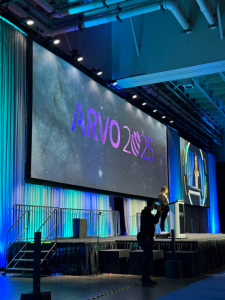
ARVO 2025
Highlights for the LCA community included: Twelve-month clinical trial data for LCA5 showing a clear safety profile, clinically meaningful improvement in vision, and durability. Lessons learned from the Editas gene editing trial for CEP290 The Road Ahead for SepulBio’s Antisense Oligonucleotide Therapy for LCA10 CEP290
Additionally, several presentations provided updates on programs for IRDs in various treatment modalities. Clinical trial endpoints continue to be an important topic of discussion as the field works to develop outcomes that are easy to measure, reflect a clinically meaningful improvement in vision, and can be validated for regulators.
The summit was followed by the ARVO Annual Meeting, an essential resource for research updates, early pre-clinical research posters, and networking with the entire ecosystem of ophthalmic drug development. We continue to monitor early research for ultra-rare gene mutations, consistently engage with industry to incorporate the patient voice into clinical trials, and promote policy positions that will benefit the rare disease and LCA community.
For additional questions, please feel free to reach out to Courtney at courtney@hopeinfocus.org.
In December 2023, ProQR sold its sepofarsen (LCA10) and ultevursen (USH2A) programs to Théa, a large European biotechnology company focused on ophthalmology. Théa, through its new dedicated business unit, Sepul Bio, will continue developing sepofarsen and ultevursen. I asked representatives at Sepul Bio a few questions about their emerging therapies, plans, and efforts. Here are their answers.
What are sepofarsen and ultevursen? Who developed these therapies, and how did they perform in clinical trials?
Sepofarsen is an experimental mRNA therapy designed to improve visual function for patients with Leber congenital amaurosis 10 (LCA10). Sepofarsen targets a specific genetic mutation (c.2991+1655A>G) in the CEP290 gene. This mutation stops the cell from producing an essential protein needed for the cells in the retina to function. By addressing this mutation with a piece of genetic material called an antisense oligonucleotide (AON), sepofarsen aims to restore cell function in the retina. The AON is delivered by an intravitreal injection. Sepofarsen is entering Phase 3 clinical development.
Ultevursen is an experimental mRNA therapy designed to stabilize visual function for patients with Usher syndrome type 2A or non-syndromic retinitis pigmentosa caused by mutations in exon 13 of the USH2A gene. These mutations stop the cell from producing usherin, an essential protein needed for the cells in the retina to function. By addressing this mutation with an AON, ultevursen aims to restore cell function in the retina. The AON is delivered by an intravitreal injection. Ultevursen is entering Phase 2 clinical development.
Both sepofarsen and ultevursen were first clinically developed at the biotechnology company ProQR Therapeutics, based in the Netherlands. Both emerging therapies improved vision in some patients participating in ProQR’s previous clinical trials.
What is Sepul Bio? What is its mission?
Sepul Bio is a dedicated business unit of Théa. The team is at the forefront of advancing transformative RNA therapies for inherited retinal diseases, particularly emphasizing the further development of sepofarsen and ultevursen.
Sepul Bio’s projects are driven by the vision of a future where patients with inherited eye diseases have treatment options for their eye condition. Through ongoing research and rigorous development, Sepul Bio hopes to bring new therapies to patients. Learn more at www.sepulbio.com.
As part of the divestment from ProQR, the dedicated team at Sepul Bio includes former members of the previous clinical development teams. This structure maintains consistency and brings previous experience with the programs to the new clinical development steps. The new business unit underlines Théa’s firm commitment to advancing therapeutic products for eye disorders, particularly where medical needs are unmet.
What are the lessons learned from the ProQR trials? What will Sepul Bio do differently to improve the two therapies’ chances of success?
The Sepul Bio team previously worked on the sepofarsen and ultevursen programs at ProQR. This experience has enabled the team to learn from previous regulatory and clinical interactions in formulating new plans for the programs.
All the previous learnings from the years of clinical development have been incorporated into the new designs, with further validation from key physicians and inherited retinal disease specialists. A key area of focus has been new tests and novel study designs that are more suited for developing therapies for rare retinal diseases.
Luxturna®, the only approved treatment for one of 27 identified forms of Leber congenital amaurosis (LCA), cost $500 million to develop and took more than 12 years to come to market.
With such an enormous investment in time and money, it would make sense to use that same platform for developing new treatments to improve vision or halt progression of blindness.
Every individual clinical study must complete a set of rigorous requirements – which cost time and money – to receive regulatory approval from the Food and Drug Administration (FDA).
Chad R. Jackson
The Foundation’s translational research program steps up the pace of preclinical studies toward clinical studies involving humans through proactive management and industry-level advice to drive research leading to prevention, treatment, and vision restoration for degenerative retinal diseases.
A Hope in Focus partner, the Foundation has raised nearly $900 million since its founding in 1971 and funds more than 90 programs worldwide, including no-cost genetic testing and the My Retina Tracker® patient registry. The Foundation also launched a Retinal Degeneration Fund (RD Fund) to help accelerate life-changing outcomes for people with retinal degenerations through direct mission-related investments in therapeutic companies.
Chad and other presenters shared information about drug development, gene therapies, and non-gene therapies during two sessions of the Hope in Focus 2023 LCA Family Conference* in Indianapolis this summer.
More than 100 people attended the forum to hear the latest in LCA research and to network with families living with LCA and other rare inherited retinal diseases (IRDs).
Bringing a drug from inception to market takes 10 to 15 years, Chad said, and costs tens and tens of millions of dollars. He said bringing a developing drug from preclinical studies to the FDA requires three steps:
Identify your target to know what you’re seeking to do; conduct invitro studies by expressing patient cells in a lab or as it’s referred to, retinas in a dish; and perform animal-model studies, which save time and money to determine whether emerging therapies are safe and perhaps ready to move toward clinical trials using humans.
Gene-Agnostic Therapies
Chad moderated a panel discussion about research moving beyond single-gene correction to gene-independent therapies to help delay progression of blindness or restore levels of vision.
Eric Daniels
Kiora Pharmaceuticals’ Chief Development Officer Eric J. Daniels, MD, MBA, discussed the company’s first-in-human study for a non-gene therapy treatment for retinitis pigmentosa (RP), a group of inherited eye diseases that cause progressive vision loss. It is characterized by the gradual death of light-sensitive photoreceptor cells in the retina, known as rods and cones, responsible for converting light into neutral signals sent to the brain.
Dr. Daniels said his company’s technology shifts retinal ganglion cells from their off state, in which they respond to decreases in light. Kiora has discovered a way to shift these cells into their on state in the presence of light through channeled photoswitch molecules.
According to Kiora, the mutation-agnostic treatment has the potential for use in any of the various genetic forms of RP, as well as other retinal degenerative diseases; its intravitreal injection allows for more consistent and tolerable administration, and the small molecule can be manufactured and provided to patients at a much lower expense than the $450,000 per eye cost of Luxturna.
Huma Qamar, MD, MPH, CMI, the head of Clinical Development and Medical Affairs for Ocugen, discussed the biotech’s work on treatments for LCA10 (CEP290), RP, and other IRDs. One of their clinical trials involves a novel gene therapy, OCU400, consisting of a functional copy of a nuclear hormone receptor gene delivered to target retinal cells using an adeno-associated viral (AAV) vector. Expression of this receptor within the retina may potentially help stabilize cells and rescue photoreceptor degeneration, Dr. Qamar said.
Huma Qamar
Ocugen demonstrated the potential of a novel modifier gene therapy to elicit broad-spectrum benefits in early and intermediate stages of RP and LCA, based on animal studies, showing the potential for a mutation-agnostic treatment.
Since the conference, Ocugen reported an update on its Phase 1/2 clinical trial for OCU400 for 12 patients who had follow-ups from six to 12 months after a subretinal injection in one eye. The developing drug had a favorable safety profile in this trial phase. Also eight of the 12 patients showed stabilization or improvement in the visual function measures of best corrected visual acuity, low-luminance visual activity, and navigating a multi-luminance mobility test.
The trial is currently enrolling patients, including pediatric patients with LCA10.
Gene Therapies
In the conference’s final session, moderated by Foundation Vice President of Science Communications Ben Shaberman, four panelists discussed their work on LCA gene therapies.
Shannon E. Boye
Shannon Boye, PhD, Co-Founder, Director, and Acting Chief Science Officer of Atsena Therapeutics, said the road to drug development is long and bumpy. She helped design early studies on LCA1 (GUCY2D) in 2001.
With the process going so slowly, Shannon reached out to then-Foundation CEO Ben Yerxa, who helped push her and her husband into starting their own company.
In 2019 doctors dosed the first patient. Earlier this year, in a Phase 1/2 clinical trial, their LCA1 gene therapy, known as ATSN-101, showed clinically meaningful improvements in vision at the highest dose with no drug-related serious adverse events at six months after treatment.
Ash JayagopalBen Yerxa
At Opus Genetics, Chief Scientific Officer Ash Jayagopal, PhD, discussed the biotech’s progress for various programs in, or advancing toward, early-stage clinical trials.
Opus, headed by CEO Ben Yerxa, PhD, is the first spin-out company internally conceived and launched by the Foundation’s RD Fund. The Fund’s purpose is to accelerate advancing research into gene therapy for several forms of LCA and other retinal degenerative diseases.
Opus’ most advanced program for LCA5 (lebercilin), OPGx-LCA5, is dosing patients, while two other LCA programs involving LCA13 (RDH12) and LCA9 (NMNAT1) are in preclinical development.
Thomas Mendel, MD, PhD, talked about his research at The Ohio State University, where he is Assistant Professor of Ophthalmology and Vitreoretinal Surgery at the university’s Havener Eye Institute, Department of Ophthalmology & Visual Sciences. He is building a research program to develop and implement gene therapies for Professor of Ophthalmology and Vitreoretinal patients with inherited retinal disease.
Bikash R. Pattnaik
Thomas Mendel
The goal is to build a translational lab with a team and accelerate development and clinical trials with gene-based treatments.
Bikash R. Pattnaik, PhD, told the audience about his work at the University of Wisconsin-Madison (UWM), where he is a professor and Clinical Director for Electrophysiology in the departments of Pediatrics, Ophthalmology, and Visual Sciences.
This summer, the National Institutes of Health awarded UWM a $29 million grant to develop gene-editing therapies for two inherited retinal conditions: LCA16 (KCNJ13) and Best disease. Bikash said the LCA16 treatment in development could be in clinical trials next year.
*Please go to our Hope in Focus website to see our previous three stories detailing sessions from our 2023 LCA Family Conference. Click here to see a video about the conference.
The trial update includes safety and efficacy data from all 14 patients treated to date in the study comprised of 12 adults and two pediatric patients. EDIT-101 was tolerated with no serious ocular adverse events or dose-limiting toxicities observed. Most adverse events were mild and expected for subretinal delivery.
Along with showing improvement in BCVA, three of the 14 people demonstrated consistent improvements in two of the following three additional endpoints: Full-field sensitivity test (FST), visual function navigation, which means navigating a mobility course to assess mobility and functional vision in people with an inherited retinal disease such as LCA10, and visual function quality of life, information derived from the patient or caregiver while participating in the study.
Of those three people, two of them each had two identical versions of the genetic marker for the CEP290 IVS26 mutation, meaning they were homozygous for that mutation.
Because LCA10 patients homozygous for CEP290 IVS26 represent an estimated 300 people in the United States, and no other baseline characteristics were identified in the study’s dataset, the Editas statement said, “[T]he company will not progress this program independently and will seek to identify a collaboration partner to continue the development of EDIT-101.
“As a result, Editas Medicine is pausing further enrollment in the BRILLIANCE trial and will continue long-term follow-up of all patients who have been treated to date.”
Stay informed, stay connected
Hope in Focus keeps the LCA community informed of various trials focused on finding cures for any one of the more than 27 forms of LCA, including people living with LCA10 and associated research into developing therapies to correct mutations in the CEP290 gene. LCA10 is the most common form of the rare disease, affecting 20 to 30 percent of all LCA patients. LCA affects about 1 in 33,000 people worldwide.
Hope in Focus Co-Founder and Board Chair Laura Manfre asks anyone interested in learning more about the Editas trial to please send us an email at info@hopeinfocus.org, and we would be happy to facilitate a conversation.
“Science, business, and people are all key to getting a treatment from the lab to the people who need it. The announcement from Editas Medicine is a win for science, most certainly. Being able to go into the back of the eye and safely edit a genetic mutation is nothing short of a historic milestone,” Manfre said.
“The announcement isn’t entirely what we hoped for, however, as Editas has paused its LCA10 trial. More needs to be learned on the science side of things, there are business and regulatory issues to address, and as always, access to the patient community is critical.
“This journey was never going to be a straight line, and setbacks, although disappointing, are just proof we’re still moving. Stay informed, stay connected, and please make sure you’re registered and up-to-date in My Retina Tracker®.”
It will be three years this July when Editas began its CRISPER/Cas9-based trial of EDIT-101, administered through a subretinal injection to reach and deliver the gene-editing machinery directly to photoreceptor cells.
Researchers designed the BRILLANCE Phase 1/2 clinical trial of EDIT-101 to assess the safety, tolerability, and efficacy of the potential treatment. Patients received a single dose of EDIT-101 under the retina in one eye. They are monitored every three months for a year after dosing and less frequently for two more years. More details about the trial can be found at here under the reference NCT#03872479.
Three people who received diagnoses of Leber congenital amaurosis (LCA) in recent years – but lived most of their lives thinking they had retinitis pigmentosa (RP) – gave us the opportunity to hear their stories at a special session of the VISIONS 2022 conference this summer.
An RP diagnosis is currently given to patients with photoreceptor degeneration but good central vision within the first decade of life; an LCA diagnosis is given to patients who are born blind or who lose vision within a few months after birth.
Ultimately, though, that difficulty did not hold back these individuals from creating happy and productive lives because they did not allow their blindness to define them.
Linda Joy Wirth, Russ Davis, and Emily Townsend Cobb
Linda Joy Wirth
Blind since birth, Linda Joy Wirth, now 75 and living in Lakewood, Colo., was diagnosed with RP in the 1960s. Because she was told from an early age that nothing could be done for her blindness, she stopped thinking about her diagnosis and focused on her education, marriage, and children.
Then she thought: “You can never cure something if you can’t diagnose it.”
In the 1990s, she sought out a highly recommended doctor who treated her with a strong dose of cruel words.
“ ‘You’re blind. What do you want me to tell you?’ ” she recalled the doctor saying. “I was so distraught by the visit; I did not go back to the doctor for years and years and years.”
About 10 years ago, though, she went to a Foundation conference, where she received a referral to a Denver retinal specialist by the name of Dr. Alan Kimura, who changed her life.
“When I finally saw Dr. Kimura, I said I don’t even know why I’m here. I walked out two hours later, and I was walking on cloud nine. It’s so important to have the right retinal doctor.”
Dr. Kimura told her she had LCA. Genetic testing gave her a confirmed genetic diagnosis of LCA10, caused by mutations in the CEP290 gene.
Linda encourages people to get genetically tested to pinpoint the diagnosis, and then, like her, to be aware of the possibility of participating in a clinical trial to advance research into treatments and cures.
People told Linda along the way that because of her blindness, she shouldn’t marry or have children or follow her passion for acting. And, of course, she heard those stinging words from that earlier doctor: “ ‘You’re blind. There’s nothing we can do.’ ”
Linda is a retired clinical social worker in geriatric long-term care, an actor in a theater company, a Foundation volunteer, a mother of four, a grandmother of seven, a motivational speaker, and the author of “Just Because I Am Blind Does Not Mean I Can’t See!”
Russ Davis
Russ Davis, 60, of Jacksonville, Fla., still gets confusing information about the cause of his rare inherited retinal disease.
“One minute I hear it’s probably LCA, or no, that it’s classic RP. I got that at the conference.”
Some retinal experts do consider LCA to be a severe form of RP.
In 2019, Russ received a genetic diagnosis of LCA2, caused by a mutation in the RPE65gene. Dr. Stephen Russell at the University of Iowa told Russ he could have RP or LCA.
“ ‘It could be either one,’ ” he recalled the doctor saying. “ ‘But at your age with so few retinal cells, we’re not going to know.’ ”
Russ said he’s a little frustrated with the lack of a certain label for the disease, but it’s not going to change his life.
“The blindness part, that’s fine. I am who I am. It doesn’t control my life. But I’d like to have answers.”
These days, Russ is going with LCA.
His vision loss occurred at birth. Growing up he could read a book with a bright light, ride a bike, and he enjoyed long-distance running.
“I could see most everything, except at night when everything disappeared. When the sun went down, I was toast,” he said. “There was nothing there. There was darkness and light bulbs.”
His vision worsened early in his career in his mid-20s working for the State of Florida, looking for people who owed child support and wanted to stay missing. The job was fun for 30 years but about 10 years ago, with his vision getting worse and work getting harder, he retired.
Russ and his partner, Denise Valkema, were like a comedy team at the LCA session, riffing off each other’s words and making the Mix & Mingle group erupt in rounds of laughter.
Denise, who lives with optic nerve hypoplasia, which is an underdevelopment of the optic nerve, met Russ through the National Federation of the Blind. Denise served as NFB’s Florida Affiliate President for seven years.
They both serve on the organization’s board. Their priorities include working with Congress on myriad pieces of legislation to bring about better accessibility to medical care, computer technology, banking, voting, and more.
“The blind community is still not able to participate fully in society because we don’t have access to all the aspects of living that the sighted community has,” Russ said. “Try finding a talking blood pressure cuff.”
Russ advocates for people with diminishing eyesight, reassuring them that that life will go on.
“It’s all about your attitude. I try to tell them, no, that it’s not going to be easy. Lots of times, it’s going to be difficult. There are a lot of things to adjust to. You simply find new ways to do the things you were doing before.
“You can’t let your loss of eyesight define who you are or control you. You have to own it and not let it control you.”
And he lives his words.
“There’s so many times in life, you have the option to laugh or to cry, and I’m going to pick laughter. It would be very easy to pick the other one.”
Emily Townsend Cobb
With a 2½-year-old daughter, another one on the way, and a pediatric physical therapy career, we were lucky we had the chance to talk with Emily Townsend Cobb at the LCA session.
Doctors diagnosed Emily with RP at age 3. Now, 33, she received a confirmed genetic diagnosis in 2019 of LCA13, caused by a mutation in the RDH12 gene.
Emily is in that age group of people misdiagnosed for years before the advent of genetic testing.
“Thirty and over, that’s how it went,” she said.
Getting the confirmed diagnosis didn’t really change her life, especially because LCA13 research is in preliminary stages.
“Now I sit and wait for my number to be called,” Emily said, referring to the possibility of a treatment or cure for her form of LCA. “While we wait for all these things to happen, we have to live life.”
Emily’s husband, and her mom and dad accompanied her at the conference. Her father, Clay, introduced himself, saying, “Oh, I’m the proud father of two girls with RDH12 and I’d do anything to help them.”
As he broke into tears, his wife, Sue, leaned into him, saying, “He’s a crier.”
Without having to say much more, it became clear why Emily credits her family for their loving support and positive approach toward life.
She said she receives 150 percent support from her family.
“That support is so important for anybody, but especially if you have a disability.”
Doctors also diagnosed her 31-year-old sister, Ashley, with RP, and she later received a genetic diagnosis of LCA13 (RDH12).
Emily remembers reading newsprint as a pre-teen and playing soccer, but her vision profoundly worsened as a teen-ager, a tough time for any kid, but especially for her as she was losing her sight.
About the same time, she learned she had LCA but didn’t undergo genetic testing because genetic data was still being mapped out.
We talked with Emily after the session when she returned to her home in Jacksonville, Fla., where early on, she said, her mom set her up with a therapist who had RP, which helped build her confidence as a teen-ager.
She put off using a cane until college and in her sophomore year got her guide dog, a black lab named Fergie, now retired to pet life after 11 years of service.
“She’s currently snuggled up to me on the couch while I fold laundry,” Emily said as her little girl, Elora, napped.
Her second daughter is due in October. And, oh, did we mention she runs half-marathons and is a triathlete?
Emily takes part in triathlons with her husband, Ryan; they are tethered during the running and swimming races and ride a tandem bike for the cycling portion.
“If you ever want to test the strength of a marriage, blindfold one of you and tether to the other,” Emily quipped.
She and Ryan talked about the chances of their children being born with LCA. She recalled her husband saying, “ ‘Emily, if they’re going to end up as awesome as you, I want to.’ ”
They knew their children could be born with LCA, but they also knew the rarity of the disease. Emily said the chances of having a child with LCA are about one in 400.
“I’ll take those odds,” she said. “I’m pretty happy that I’m here.”
The Dutch-based biotechnology company delivered an update on its sepofarsen program after a comprehensive analysis of data from the Illuminate trial and it announced a corporate restructure and workforce reduction.
Based on information from the review, ProQR will prioritize two strategic objectives dealing with genetic eye disease and RNA editing technology.
Regarding RNA editing technology, ProQR will accelerate development of the Axiomer® RNA editing technology platform and pipeline activities expanding into areas beyond the eye, including initially the liver and central nervous system. The technology aims to correct disease-causing genetic mutations and reverse the underlying course of currently untreatable diseases.
Daniel A. de Boer, Founder and CEO of ProQR Therapeutics, said in a statement: “We are focusing our strategy on accelerating our Axiomer® RNA-base editing platform technology and a select pipeline of RNA therapies for inherited retinal diseases (IRDs) as we remain committed to developing RNA therapies for patients with high unmet need.”
Corporate Reconstruction and Priorities
ProQR also plans to reduce expenses by making program priorities, changing its corporate structure, and reducing its workforce by a third.
The business also will reduce its workforce by about 30 percent, including the departure of its Chief Scientific Officer Naveed Shams, MD, PhD.
Co-Founder and Supervisory Board Chair Dinko Valerio said in a statement:
“We believe deeply in the promise of RNA therapies, the Company’s pioneering efforts in this field, and ProQR employees. These are the right steps to take to offer the best opportunity to create long-term value for all of our stakeholders, including our shareholders whom we thank for their support, and the communities we aim to serve.”
De Boer thanked the people leaving the company for their significant contributions toward the company’s mission. He characterized the changes as extremely difficult decisions necessary to drive long-term growth and value.
“I also want to acknowledge the disappointment that many in the eye disease community may feel today, particularly individuals and families living with autosomal dominant retinitis pigmentosa and Fuchs endothelial corneal dystrophy as we wind down our programs for these indications.”
Sepofarsen Update
Following the top-line data announcement in February that Illuminate, ProQR’s pivotal Phase 2/3 trial of sepofarsen in LCA10, did not meet the primary endpoint of Best Corrected Visual Acuity (BCVA) at month 12, compared to a sham procedure control group, comprehensive analyses revealed no technical errors in the trial conduct, data handling, or the medicine product used.
The overall safety profile of sepofarsen was consistent with earlier trials. When the effect in the sepofarsen treated eye was compared to the untreated eye in the same patient, at month 12, a benefit in vision was observed. This effect was not observed in the control group that received a sham treatment.
Overall, the post-hoc analyses showed that the efficacy seen with sepofarsen when comparing the active treatment and sham eyes to their corresponding untreated contralateral eyes across BCVA, Full Field Stimulus Test (FST), and other endpoints is more consistent with the results seen in earlier trials, where the untreated contralateral eye was used as the control.
Based on these results, ProQR will focus on core activities related to sepofarsen. The company plans to meet with the EMA and FDA to discuss these data from the Illuminate trial and share an update later this year.
ProQR currently plans to continue Illuminate, which is a two-year study, the Brighten pediatric study, and the Insight open-label extension study, until further regulatory guidance.
Aniz Girach, MD, Chief Medical Officer of ProQR Therapeutics, said in a statement:
“While we were disappointed by the outcome of the primary analysis, we believe that these post-hoc analyses and the observation that approximately a third of the patients benefited across multiple concordant endpoints in this trial, in combination with the high unmet need in LCA10, warrants a discussion with the regulators.”
Illuminate, the name of the clinical study, aimed to explore whether the investigational medicine sepofarsen was effective and safe for people with LCA10 caused by the CEP290 mutation.
The Phase 2/3 clinical trial produced no observed benefit in visual acuity for participants receiving the treatment versus those in the study not receiving the treatment. Visual acuity is a measure of the ability of the eye to distinguish shapes and details of objects at a given distance.
ProQR Founder and Chief Executive Officer Daniel A. de Boer delivered the news recently and characterized the results as disappointing.
“Given the results observed in earlier studies of sepofarsen, the Illuminate trial results are unexpected and disappointing, especially for people living with LCA10,” de Boer said.
“ProQR was founded with the goal of developing RNA therapies (ribonucleic acid) for patients with high unmet medical need, and we will continue to advance our robust pipeline of therapies for genetic eye disease. We are deeply grateful to all of the participants, their supporters, and investigators who participated in the Illuminate study.
“Since the results in February, ProQR has been conducting additional analyses of Illuminate and will present these findings at a future scientific conference.”
ProQR works on developing RNA therapies to treat LCA and other inherited rare diseases (IRDs). With DNA being the library of our genes and RNA being a blueprint of that collection, RNA therapies help carry out DNA instructions to create certain proteins critical to a healthy cell.
Analyzing Results for More Answers
Hope in Focus Co-Founder and Board Chair Laura Manfre said we will share updates with the LCA community as we learn more from ProQR.
“The results are not what we had hoped for from ProQR on the LCA10 Phase 2/3 trial, but we are resolved to keep hope in focus, knowing that the brilliant minds that got us this far are not giving up.
“It’s important to remember when there are setbacks that only 10 years ago, all we had was hope. Most of the community couldn’t even get a genetic diagnosis, let alone hope for treatment,” she said. “We’ve come a long way in a short period of time, and we’re going to keep advancing.”
“This was not the outcome we had hoped for, and we share in the disappointment many are feeling in the community,” Yerxa said.
“We will continue to work alongside ProQR to learn more from the ongoing analyses and as they work to advance RNA therapies to potentially help children, adults, and families who are affected by rare genetic eye diseases.”
In delivering the results, the biotechnology company gave background about LCA, the most common genetic cause of childhood blindness, affecting about 15,000 people in the Western world. One federally approved gene therapy treatment, LUXTURNA®, exists for people with LCA2 (RPE65), one of the more than 27 forms of LCA.
The rare retinal disease usually appears in the first year of life and is characterized by progressive loss of vision. Other symptoms can include rapid eye movement, known as nystagmus, eye-poking, night blindness, and sensitivity to light, known as photophobia. Depending on the mutation, complete loss of vision can occur during early childhood.
Specifics of the LCA10 CEP290 Trial
Illuminate enrolled 36 participants, aged 8 years or older with genetically confirmed LCA10 due to the c.2991+1655A>G (p.Cys998X) mutation in the CEP290 gene.
The study was a randomized, sham-controlled clinical trial that took place in three randomized groups at 14 sites in nine countries.
The first group received a target dose of sepofarsen by intravitreal injection (IVT), the second received a low dose via IVT, and the third underwent a sham procedure that mimicked an injection with no medicine or injection given.
Bart P. Leroy, MD, PhD, one of the study’s key investigators and Director of the Ophthalmic Genetics and Retinal Degenerations clinics in the Division of Ophthalmology and Center for Cellular and Molecular Therapeutics at The Children’s Hospital of Philadelphia (CHOP), said work will continue toward finding therapies.
“LCA10 is devastating, and with no approved therapies, very difficult to treat retinal disease resulting in blindness,” said Dr. Leroy, who also is head of the Ophthalmology Department at Ghent University Hospital and Professor of Ophthalmology and Ophthalmic Genetics at Ghent University in Belgium.
“We will continue to work with ProQR to understand the data as they work for advance therapies for individuals with inherited retinal diseases.”
Andy Bolan, ProQR Director of Medical Affairs, said the team extends its thanks to the study participants, their supporters, the investigators, and their staff for support in developing the trial. He said the biotech remains committed to making a significant and positive impact on the lives of those affected by genetic conditions.
For quarterly news and future study participation opportunities, you can sign up for the ProQR Eye Connect Newsletter or follow them on social media.
People also can contact ProQR with any questions at patientinfo@proqr.com.
Daniel de Boer told a Hope in Focus webinar audience that his company’s mission is to help patients by creating RNA (ribonucleic acid) therapies that aim to stop vision loss or even reverse some of the symptoms caused by IRDs.
Daniel de Boer
“We see that there’s a large unmet medical need, as there are more than 5 million people in the world who have a form of an inherited retinal disease and just very few of them have treatments available for them and at ProQR our plan it to change that,” de Boer said in our January session, which can be viewed here.
In the episode called “Let’s Chat About…ProQR’s work in treatments for inherited retinal disease,” he described the company’s projects involving sepofarsen, explained RNA therapy versus DNA therapy, and discussed the method of administering the treatment to patients. The session is part of our free monthly series developed with those living with LCA and IRDs in mind but open to anyone interested in what’s happening in our communities.
After one of de Boer’s children was diagnosed with a rare disease, he started the Dutch biotechnology company to develop RNA therapies for rare diseases. Under his leadership, ProQR developed a platform that yielded a diversified pipeline of potential treatments for rare diseases and raised more than $400 million in funding. Before starting ProQR, he founded several technology companies.
De Boer also is co-founder and strategic advisor to Amylon Therapeutics and Wings Therapeutics, strategic advisor at Frame Therapeutics, Meatable, Algramo, and a member of the advisory board at the Termeer Foundation. He was named “Emerging Entrepreneur of the Year” in 2018 by EY, the multinational professional services network Ernst & Young, and in 2019 was selected for the Young Global Leader program at the World Economic Forum.
Sepofarsen and multiple studies on LCA10 and other IRDs
De Boer said ProQR expects results in the coming months from its Phase 2/3 Illuminate clinical trial of sepofarsen in LCA10 caused by a mutation in the CEP290 gene.
Sepofarsen is an investigational RNA therapy that aims to restore vision in people living with LCA10 due to the p.Cys998X mutation in the CEP290 gene.
Researchers initiated the trial based on data from a Phase 1/2 study that indicated patients treated 12 months with sepofarsen showed improvement in visual acuity measured by best-corrected visual acuity (BCVA).
Earlier this month marked the end of the Phase 2/3 trial, when de Boer said, “The last patient having completed their 12-month visit is an important milestone toward the top-line results from the Phase 2/3 Illuminate trial of our lead program for sepofarsen for LCA10.”
Other major projects underway at ProQR include:
Brighten, a clinical study for children under age 8 living with LCA10;
Aurora, a clinical trial of QR-1123 in Phase 1/2 for RP, due to the P23H mutation, also known as c.68C>A, in the rhodopsin (RHO) gene;
QR-504a, an investigational RNA therapy that aims to slow down degeneration of the cornea and thereby vision loss in people with Fuchs endothelial corneal dystrophy due to the most common mutation.
You can learn more about ProQR’s studies by visiting the company’s website and/or emailing Andy Bolan, Associate Director of Patient and Community Engagement at patientinfo@proQR.com
RNA therapies repair DNA without changing DNA
De Boer explained in the webinar: “RNA therapy is innovative technology that treats genetic eye conditions such as LCA10 or Usher Syndrome and it is important because the RNA help to carry out the instructions that are in the DNA to make proteins.
“We’re all familiar with genes and DNA that we have in our cells and the RNA is essentially helping to carry out the instructions that are described in the DNA, which is to make certain proteins and these proteins are critical to the healthy functioning of a cell.”
In LCA10 the gene mutation gets copied into the RNA and causes a loss of protein so that the protein is not functioning or missing altogether, leading to a cell unable to work well or even die over time, he said.
ProQR is developing RNA therapies for a range of diseases, including their lead sepofarsen therapy.
“RNA therapies can repair the DNA without altering or changing the DNA, so we don’t have to touch the DNA. We don’t have to change any of the genes, we can leave all of that untouched and we can alter the RNA in between so that cell can make its own functional and healthy proteins.”
Explaining the difference between RNA therapies and DNA therapies, de Boer began with the billions of cells, our DNA, the library of our genes.
“The DNA is copied into the RNA and the RNA is essentially a blueprint that then makes proteins and proteins are expressing in your cells through all kinds of different tasks and essentially that is what makes our bodies function.
“Now, with RNA therapy, what we can do is we can repair the blueprint so we give it an RNA therapy that repairs the blueprint and from this repaired blueprint, the cell can now make its own new functional protein.”
On the other hand, DNA therapy, or gene therapy, replaces the gene into the DNA, which then expresses RNA that makes protein.
Different delivery mechanisms in RNA and gene therapies
De Boer also made the distinction between the delivery systems of RNA therapy and gene therapy and described the advantages of the RNA route.
Gene therapies often require a viral vector, meaning that the therapy is packaged in a virus made in a way that it is no longer harmful to humans. The treatment is delivered through subretinal injection.
“It is used as a delivery system, so this virus is then loaded with the new gene and injected into the back of the eye where it then is entering the cells and expressing the protein.”
RNA therapy is delivered through intravitreal injection (IVT), which entails an injection in the side part of the eye – the wide part of the eye – in a 15-minute procedure.
“Through that route of administration, we have a big advantage that we can treat the entire retina, so only with a small injection in the side of the eye, the RNA therapy will distribute itself throughout the entire eye and will go to all different parts of the retina. That means that we can treat the central retina, as well as the peripheral, which allows us, for example, also to treat early-stage disease, which generally started in the outer part, in the peripheral part of the retina.”
RNA therapies generally need to be administered twice a year in each eye for a sustained benefit over lengthy periods of time.
Lab-grown retinas enhance research process
ProQR is among those biotechnology companies finding new ways to improve efficiency in research, thereby accelerating the process in bringing retinal disease treatments and cures to market.
The company’s researchers grow organoids from skin samples to produce a human retina in the lab.
“From this retina we can then test the activity of our therapeutics so we can administer drugs on these retinal organoids, which then tell us in the lab already if they’re going to be functional, if the drug is going to work once we give it to a person.
“All of this is obviously in a testing phase still, so we can’t have 100 percent certainty that the preclinical model will always be predictive, but so far we have seen that in both sepofarsen and in Usher, the model was spot-on in predicting the activity and also the active dose level that we had to give once we started clinical trials.
“If you think about that I think there is really potential to find more synergies and speed up the development from preclinical to approval once we generate some more data across more of these programs that can help us to validate the correlation with the preclinical models to potentially really accelerate the development timelines.”
ProQR’s beginnings
Daniel de Boer started ProQR about 10 years ago after his son was born with cystic fibrosis (CF). He focused on CF until another company developed a good therapy for the rare disease.
Headquartered in Leiden, Netherlands, with offices in Cambridge, Mass., ProQR reinvented itself over time as a global ophthalmology company.
De Boer developed a partnership with Professor Rob Collin, PhD, from Radboud University in the Netherlands. The molecular geneticist had discovered an LCA10 RNA therapy that evolved into sepofarsen, and clinical trials began in 2017.
By the next year, an interim analysis showed examples of transformational improvements in vision, de Boer said.
One participant began by only being able to perceive light – day or night, no shape, motion, form, or color.
“After a single dose of sepofarsen, this participant then improved his vision such that he could now read, he could recognize people’s faces, and he could essentially navigate the world independently for the first time in decades.
“We saw the hypothesis confirmed that RNA therapy in the eye could potentially make a really meaningful impact. So fast forward to today, we completed our Illuminate Phase 2/3 pivotal trial for sepofarsen recently and are now awaiting the results.”
“It’s the first time anyone has demonstrated the potential of editing in human eyes,” Dr. Chen said. “We kind of dreamed about this since 2014.”
Researchers administered EDIT-101, an experimental CRISPR gene editing medicine, through a subretinal injection to reach and deliver the gene-editing machinery directly to the retina’s photoreceptor cells.
Dr. Chen is the Vice President of Clinical Development at Editas Medicine, a gene editing company based in Cambridge, Mass. The company focuses on developing CRISPR-based treatments.
CRISPR (pronounced “crisper”) is an acronym for Clustered, Regularly Interspaced, Short Palindromic Repeats. It refers to a recently developed gene editing technology that can revise, remove, and replace DNA in a highly targeted manner.
As part of our Hope in Focus webinar series, Dr. Chen described the early, but exciting, data from the ongoing Phase 1/2 Brilliance clinical trial of EDIT-101 in our October episode: “Let’s Chat About…CRISPR and gene-editing technology.” Our Director of Marketing and Communications Elissa Bass moderated the session, which you can view here.
Dr. Chen oversees a portfolio spanning the therapeutic areas of hematology, oncology, ophthalmology, and neuroscience. As a physician executive with more than 20 years of combined clinical and industry experience, he has a track record of success at companies, including Merck and Bayer.
His therapeutic area and drug development expertise is deep and diverse, from rare disease and indications such as bronchiectasis, vasculitis, and pulmonary hypertension, to large cardiovascular areas including congestive heart failure, thrombosis, and therapeutics for primary and secondary cardiovascular prevention.
He earned his medical degree at the University of California, San Francisco School of Medicine, where he trained and practiced in internal medicine and cardiology. He holds a Bachelor of Arts with Honors in Molecular and Cell Biology, Neurobiology, from the University of California, Berkeley.
Exciting early results for CRISPR
Dr. Chen described his passion for innovation and his interest in developing life-saving treatments, including a new aspirin.
Then he thought to himself, “We probably don’t need another aspirin,” and pivoted this passion for innovation to life-altering research, including working with the CRISPR gene-editing treatment.
He has been with Editas since 2020; the company’s work on LCA10 began in 2014.
Dr. Chen said he is excited about the first results of the clinical trial and added that the research is part of an ongoing, current investigation of which “we’re not making any claims.”
Editas recently released early results of the first six patients in the EDIT-101 Brilliance trial at the International Symposium on Retinal Degeneration. Efficacy results were limited to the first five patients treated with the low- to mid-doses and followed for at least three months.
Two of the three patients treated with the mid-dose and followed for up to six months showed improved vision, results that suggest successful editing with EDIT-101. Patients will need to be treated and followed over time to ensure the safety and efficacy of the drug. EDIT-101 is now being assessed at a higher dose and in pediatric patients.
Editas currently is recruiting for children, ages 3 to 17. For recruitment information, contact Editas Medicine’s Clinical Trial Team at 617-401-9007 or patients@editasmed.com. For more information, go to clinicaltrials.gov NCT03872479.
CRISPR is a one-time treatment
Explaining the gene-editing process, Dr. Chen shared some biology basics on DNA, RNA, and proteins, and described the potential of CRISPR gene-editing to restore cellular function.
He described DNA as the building blocks of life, serving as a blueprint, or instructions, for all the proteins in our bodies. When the body reads the DNA, it makes RNA, which then acts like a messenger taking the instructions all over the body to make proteins. Proteins are the tools our cells need to function.
Sometimes, an abnormal change in DNA’s sequence (a mutation) causes disease. These changes can be spontaneous or can be inherited from parents. This is where CRISPR-based medicines come in. Gene editing technology may be able to treat some genetic diseases by intervening at the DNA level.
To demonstrate this process, Dr. Chen, using simple colored Lego® pieces to represent DNA and RNA, explained how CRISPR gene editing medicines contain a nuclease, or a protein that edits DNA, and a guide RNA that can go in and find a specific portion of the gene and make an edit to correct the gene abnormality.
People living with LCA10 have a disease-causing mutation in the CEP290 gene. For EDIT-101, scientists created a specific guide RNA to find the CEP290 gene in the photoreceptor cells and remove the incorrect instructions contained in the patient’s DNA.
The drug is injected one time in one eye under the retina, creating a blister-like pocket of the drug called a bleb for EDIT-101 to treat the target area that allows retina function. Dr. Chen characterized the treatment as an effective and precise process.
“The DNA is actually edited with the genetic defect corrected,” he said. “It’s a very elegant use of science for which the Nobel Prize was given, so this is a big deal.”
One of our webinar viewers asked why the process can’t be used to treat all other forms of LCA.
“It’s a long road,” Dr. Chen said. “For good reasons, the regulatory path is a long one.”
The process can take 15 to 20 years, from molecular research to studying treatment effects in animals and then humans, to undergoing the rigors of earning approval by the U.S. Food and Drug Administration.
In 2017, the FDA approved LUXTURNA,® the first, and so far, only, gene therapy for a form of LCA. Gene therapy is different than gene editing. Gene therapy entails inserting a “healthy” version of the gene to offset the effect of the mutation, while gene editing revises, removes, or replaces a mutated gene at the DNA level.
This study of EDIT-101 centers on one form of LCA and it is in its initial stages, he said.
“Each of the defects, you could add it up and it’s a long, expensive and laborious exercise. It’s a commitment on our part. None of this is easy.”
He estimated that getting the CRISPR treatment to market is still a few years away.
In answer to a question about what keeps him going amid the arduous trial-and-error process that comes with clinical research, he said, some days are very frustrating, but he feels blessed to make a difference in someone’s life.
“It’s all about the patient,” Dr. Chen said. “That makes a world of difference and makes it all worthwhile.”