Opus Genetics in Alignment with FDA for Phase 3 LCA5 Gene Therapy Clinical Trial

Opus Genetics has reached alignment with the US Food and Drug Administration (FDA) on the Phase 3 clinical trial design for OPGx-LCA5, the company’s emerging LCA5 gene therapy. If OPGx-LCA5 is safe and meets its primary outcome measure in the trial at six months, Opus will likely seek FDA approval by submitting a Biologics License Application or BLA. Treatment durability data at 12 months will also be considered by the FDA during its review.

Leber congenital amaurosis 5 (LCA5) is one of the rarest and most severe forms of LCA affecting approximately 5,000 globally.

The Phase 3 trial investigators plan to treat both eyes in eight patients. The trial includes a pre-treatment run-in period in which the natural history (i.e., the natural disease course) for each planned participant will be evaluated. Seven of the eight patients are currently enrolled in the run-in study. Investigators plan to begin dosing patients in the fourth quarter of 2026.

Investigators will use microperimetry, which measures retinal sensitivity at different loci (points) in the retina, as the primary outcome measure in the Phase 3 clinical trial. A mean improvement of at least seven decibels (dB) in retinal sensitivity across the central 16 test loci is considered clinically meaningful.

Opus Genetics previously reported meaningful vision improvements in three adult and three pediatric patients (aged 16-17) in its Phase 1/2 LCA5 gene therapy clinical trial at the University of Pennsylvania. Some patients saw objects for the first time after treatment. Others had meaningful improvements in visual acuity.

OPGx-LCA5 is administered by an injection underneath the retina. The gene therapy uses an engineered adeno-associated virus (AAV) to deliver health copies of the LCA5 gene into retinal cells. Researchers believe that retinal gene therapies can work for many years, perhaps the lifetime of the patient.

Opus Genetics is a Hope in Focus partner.

LCA5 Gene Therapy Development Could be Accelerated Thanks to New FDA Rare Disease Review Process

Opus Genetics’ emerging LCA5 gene therapy, OPGx-LCA5, has been accepted into the US Food & Drug Administration’s (FDA) new Rare Diseases Evidence Principles (RDEP) process for providing greater speed and predictability for the review of therapies intended for diseases with a significant unmet need affecting fewer than 1,000 people.

LCA5 is a rare inherited retinal disease causing blindness or severe vision loss in childhood.

The RDEP process can allow potential FDA approval based on one adequate and well-controlled study plus additional robust confirmatory evidence, which may include: strong mechanistic or biomarker evidence; evidence from relevant non-clinical models; clinical pharmacodynamic data; and case reports, expanded access data, or natural history studies.

OPGx-LCA5 is currently being evaluated in a Phase 1/2 clinical trial at the University of Pennsylvania. Vision gains and positive safety results for the treatment for adult and pediatric trial participants have been reported. Enrollment for an adaptive Phase 3 clinical trial is ongoing. OPGx-LCA5 has also received Rare Pediatric Disease, Orphan Drug, Regenerative Medicine Advanced Therapy (RMAT) designations from the FDA.

Opus Genetics is a Hope in Focus partner.

Light at the End of the Tunnel: LCA6 Gene Therapy Advances Toward Clinical Trial

I am excited to report on impressive progress in the development of Odylia Therapeutics’ emerging gene therapy for retinal degeneration caused by RPGRIP1 mutations, which is most often diagnosed as LCA6. Like the journey for so many inherited retinal disease treatments and the companies that develop them, there’s a long story here ⎯ a story of commitment, resourcefulness, and persistence. I’ll touch on that in a moment, but I encourage you to learn much more from an enlightening Hope in Focus podcast interview I conducted with Ashley Winslow, PhD, chief executive officer at Odylia, on March 3rd. It’s an excellent episode, if I do say so myself.

Background on RPGRIP1-associated disease

The RPGRIP1 protein is critical for the structural development of photoreceptors (rods and cones) and the trafficking of important proteins. Remember, photoreceptor cells are long, thin, light-sensing cells in the retina that enable us to see, and many different proteins need to move up the length of the cells for them to work properly and survive long term. That movement is called trafficking. 

Also, remember that genes are like recipes for proteins. Cells read genetic messages to make proteins, and ultimately, it’s the proteins that are critical to our cells’ function and survival. In the LCA6 case, if there are spelling mistakes (i.e., mutations) in the RPGRIP1 gene, there isn’t sufficient RPGRIP1 protein produced, and photoreceptors suffer.

Mutations in the RPGRIP1 gene cause LCA6 but can also be associated with milder forms of retinal disease, such as cone-rod dystrophy (CORD), retinitis pigmentosa, or achromatopsia. Though LCA6 usually causes significant vision impairment at birth, photoreceptors can potentially survive into young adulthood, thereby providing a wide treatment window for patients.

Initial development of Odylia’s gene therapy began at Mass Eye and Ear (Harvard) more than 15 years ago. Researchers there demonstrated efficacy for gene therapy in mouse models. With sustained funding from Odylia, the RPGRIP1 gene therapy has moved into a safety and toxicology study, a critical step before moving into a clinical trial. The study will also help researchers determine the optimal dosing range for the trial. Also important, Odylia has clinical manufacturing in place and received positive feedback from the FDA on the trial design. However, additional funding is needed to launch the trial.

Odylia also has gene therapy programs underway for vision loss due to mutations in the USH1C and NPHP1 genes, which are in preclinical development.

The Odylia story

Odylia was formed in 2017 as a nonprofit collaboration between Scott Dorfman, a father of two children with Usher syndrome 1C, and gene-therapy pioneer Luk Vandenberghe, PhD, of Mass Eye and Ear. Their goal: Provide the commitment and resources needed to advance rare disease treatments into early-stage clinical trials. In the podcast, Ashley Winslow, PhD, Odylia’s chief executive officer, said that as a nonprofit, Odylia has a stronger commitment to rare disease therapy development than a typical for-profit biotech or pharmaceutical company that’s focused on minimizing financial risk and maximizing revenue. By de-risking therapies through early-stage development, Odylia aims to attract investment partners (i.e., for-profits) to its programs.

Dr. Winslow explained that the key to Odylia’s success is its collaboration with patient groups, academic researchers, manufacturers, and clinical research organizations to find a way forward both in fundraising and therapy development. “In the rare disease space, you have to think about the science and the fundraising hand in hand because financial resources are often limited,” she said. 

If you’re interested in learning more about Odylia and its emerging therapies, you can reach out to Dr. Winslow at awinslow@odylia.org.

And make sure you check out the Odylia episode on the Hope in Focus podcast, available on all streaming platforms.

A Vision-Restoring XLRP Gene Therapy Gets New Life: MeiraGTx to Seek FDA Approval

In May 2025, Johnson & Johnson (J&J) announced that though its emerging gene therapy bota-vec for X-linked retinitis pigmentosa (XLRP) improved vision for many patients in its Phase 3 clinical trial, the gene therapy didn’t meet its primary endpoint. Not meeting a primary endpoint in a clinical trial is not good news even when overall results are favorable.

So, the question became: Will J&J seek regulatory approval for bota-vec or perhaps continue clinical development for it? Many of us in the inherited retinal disease (IRD) community were not optimistic. We were afraid bota-vec development was finished and the treatment would never make it out to patients who so desperately needed it.

But today I am pleased to say that hope is alive for bota-vec. On April 16, 2026 ⎯ nearly a year later ⎯ MeiraGTx, the original developer of bota-vec, announced it is acquiring the bota-vec license from J&J. MeiraGTx plans to seek regulatory approval for the gene therapy in the US and EU. If approved ⎯ and that’s still a big if ⎯ bota-vec could be available to patients in 2027.

We applaud MeiraGTx ⎯ a Hope in Focus partner and developer of a vision-restoring gene therapy for LCA4 (AIPL1 mutations) ⎯ for giving new life to bota-vec. It was a bold move, no doubt. And, we applaud the many advocates in the IRD community ⎯ including researchers, patient groups, and families ⎯ for being strong voices in support of bota-vec advancement. Our voices were heard.

The important take-away message for all of us in the IRD and LCA communities is to stay tenacious, stay resilient, and continue to do our best in moving the research forward.

And never forget that hope is our superpower.

Moving Forward: Understanding More about Clinical Trials

The second panel session of the 2025 LCA Family Conference, “Participating in a Clinical Trial,” examined clinical trial development and participation from the researcher and patient perspectives. This session supports a goal of Hope in Focus to educate the Leber congenital amaurosis (LCA) community so members are ready to participate in clinical trials when opportunities occur. For researchers, informed and prepared LCA patient groups are critical to moving a new drug or therapy through the testing pipeline.

Ben Shaberman, vice president of Science Communications at the Foundation Fighting Blindness, was the moderator. The panelists were Tomas Aleman, MD, a researcher with over 30 years of experience in researching genetic therapies related to inherited retinal diseases (IRDs), and Sarah McCabe, a mother and teacher from Iowa, and an LCA individual with the RPE65 gene mutation. Sarah participated in a gene therapy study in 2007, and 14 years later was treated with LUXTURNA®.

Overview of the Research Process

Ben began with an overview of the drug development process, highlighting that it is complex, demanding, and lengthy—often taking 10–15 years, and costing tens of millions of dollars. For retinal diseases like LCA, the development of a drug or therapy begins with identifying and understanding the mutated gene causing the degeneration. Researchers study these genes and their effects on the retina, then create disease models—traditionally in mice, but now also using “mini-retinas” grown in dishes.

Conference attendees listening to the “Participating in a Clinical Trial” panel session.

Transitioning from animal or lab models to human trials is a significant hurdle, requiring higher-quality manufacturing standards, regulatory compliance (e.g., FDA), considerable funding, and specialized expertise. “This phase, called translational research, is often referred to as the ‘valley of death,’ Ben said. “Because many therapies fail to progress to clinical trials.”

For LCA, gene therapies can take 5–8 years to develop. Researchers must determine the right therapy, dosage, and method of administration before progressing to clinical trials, which can last 6–8 years, are extremely expensive, and often pose challenges for researchers and patients. While the process is rigorous and time-consuming, it is critical for developing effective therapies.

LCA Gene Research

Tomas Aleman, MD, co-directs the Center for Hereditary Retinal Degenerations (CHRD) at the Scheie Eye Institute at the Perelman School of Medicine, University of Pennsylvania. Dr. Aleman’s groundbreaking work has transformed the treatment of LCA, becoming the first disease where gene editing techniques were applied and gene therapy successfully restored vision. “Unlike what many people believe, most LCA patients are not completely blind, and their retinas often remain structurally intact,” Dr. Aleman said. “This makes the condition an ideal candidate for experimental therapies.”

Early research focused on RPE65-related LCA and started with animal models, including a dog, that helped pave the way for clinical applications, eventually leading to the first successful human treatments. After a decade of preclinical research, Dr. Aleman’s team moved into human trials, with LCA patients like Sarah McCabe playing a vital role. Dr. Aleman stressed the essential role of patients in clinical trials, saying that “Patient feedback is often critical to recognizing early signs of success.”

Clinical trials present both opportunities and challenges. They require long-term patient commitment and rely heavily on funding from smaller biotech companies. Patient selection for trials is also strategic—those chosen typically have structurally preserved retinas with poor function, maximizing the likelihood of measurable improvement. Dr. Aleman emphasized that exclusion from a trial does not mean the therapy won’t eventually be available for an individual; rather, it reflects the strict criteria needed to answer key safety and efficacy questions.

Looking ahead, Dr. Aleman said the goal is to expand the proportion of treatable LCA forms from roughly 25 percent to 50 percent. The progress made so far demonstrates the transformative potential of gene therapy in restoring vision for patients with inherited retinal diseases.

Doing Gene Therapy

Dr. Aleman gave an in-depth explanation of the gene therapy process for treating inherited retinal diseases, particularly focusing on subretinal delivery techniques. Gene therapy in this context is a meticulous process where the therapy is delivered directly beneath the retina via a subretinal injection.

Performed under general anesthesia, the injection only takes 5–10 minutes. It is done by entering the eye through three small incisions, removing the gel-like vitreous, and using a hair-thin needle to deliver the gene therapy. According to Dr. Aleman, the surgery resembles retinal detachment repair—a well-established procedure.

While there is an alternative delivery method known as intravitreal injection that is less invasive, it has not proven to be as effective or safe for all retinal indications. In particular, immune detection can reduce the efficacy of intravitreal injections, whereas subretinal injections can bypass these mechanisms.

Following surgery, a rigorous monitoring process begins to assess the treatment’s safety and effectiveness. This process includes frequent follow-up visits in the early stages—often at one, three, and six months and a year—during which visual function is tested and retinal imaging is conducted.

Participation in gene therapy trials is entirely voluntary, and patients can choose to withdraw at any time. However, once the gene therapy is delivered, it cannot be undone. The therapeutic genes remain in the eye’s cells indefinitely, making informed consent and long-term commitment critical components of the clinical trial process.

Patients are typically monitored for at least two years, and in many cases, much longer. For example, in the case of one early trial (the RPE65 trial), patients have been followed for over 16 or 17 years. Dr. Aleman emphasized that there is a lifelong partnership between patient and physician, stating that monitoring continues for as long as possible, regardless of whether the formal trial period has ended.

Dr. Aleman hopes to move toward treating very young children, ideally before age two, since the brain’s ability to learn to see develops rapidly in infancy and early childhood. Early treatment is believed to yield better visual and developmental outcomes, supported by early rehabilitation and educational interventions. A grant received two years ago is helping to support research and clinical work toward this goal.

“While gene therapy offers transformative potential, it also requires thoughtful implementation, long-term follow-up, and a commitment to tailoring support beyond the surgical intervention,” said Dr. Aleman. “The mission is not only to restore vision but to improve the quality of life and long-term outcomes for patients, especially children, by intervening as early as possible.”

Sarah’s Story & Clinical Trial Experience

When Sarah was about 10 days old, her mother, an ICU nurse, noticed that she wasn’t following the developmental patterns she’d observed with her son. Concerned, they visited a pediatrician who suspected something was wrong with Sarah’s vision. Further evaluation by a neurologist ruled out any neurological issues, and her parents were assured that Sarah would hit developmental goals right on time.

Regular eye exams ensued, with her parents keeping detailed records of each visit. Eventually, Sarah was referred to the University of Iowa, where tests suggested LCA, but at that time, genetic testing wasn’t available. A definitive LCA genetic diagnosis (RPE65) was finally made when she was in eighth grade.

At age 19, she was recruited for a clinical trial after struggling with vision during college. After going through the initial interviews and assessments, she was approved as a clinical trial participant. Sarah said the doctors clearly explained all the details and risks of the trial and that it was an experimental procedure primarily aimed at testing safety. The decision whether to move forward was left to Sarah and her family. “There wasn’t a whole lot of talking with my parents about it,” she said. “We knew things weren’t going to get any better if I didn’t participate, and I could be a part of helping [research advance].

To facilitate Sarah’s participation in the clinical trial, logistics were carefully arranged around her college schedule. It was toward the end of her senior year that her family drove her from Iowa to the University of Florida, where she underwent her first gene therapy surgery at age 23, describing it as terrifying but perfect.

The pre-operative steps included bloodwork and other standard preparations. During the surgery, Sarah was awake—a protocol that has since changed, with patients now put under general anesthesia. Post-surgery, she had a significant moment when she was able to read a giant letter “A” on a card, confirming that the surgery hadn’t worsened her vision. Over time, she noticed a new visible area in her field of vision, referred to as a “headlight,” which was a significant improvement.

Sarah’s recovery involved staying in Florida for a month with her family, with frequent follow-up visits stretching out from monthly to annually. Her clinical trial team remained in contact with her years after the trial formally ended. Fourteen years later, after LUXTURNA® was FDA-approved, she received the gene therapy at the University of Iowa, which improved her vision. Now in her 40s, Sarah’s primary goal is to maintain the stability of her vision. She summarized her clinical trial and gene therapy experiences, saying, “It was a long time ago now, but it was a very cool experience. All of it!”

Théa Forms Sepul Bio to Advance RNA Therapies for LCA10 and USH2A into Clinical Trials

In December 2023, ProQR sold its sepofarsen (LCA10) and ultevursen (USH2A) programs to Théa, a large European biotechnology company focused on ophthalmology. Théa, through its new dedicated business unit, Sepul Bio, will continue developing sepofarsen and ultevursen. I asked representatives at Sepul Bio a few questions about their emerging therapies, plans, and efforts. Here are their answers.

What are sepofarsen and ultevursen? Who developed these therapies, and how did they perform in clinical trials?

Sepofarsen is an experimental mRNA therapy designed to improve visual function for patients with Leber congenital amaurosis 10 (LCA10). Sepofarsen targets a specific genetic mutation (c.2991+1655A>G) in the CEP290 gene. This mutation stops the cell from producing an essential protein needed for the cells in the retina to function. By addressing this mutation with a piece of genetic material called an antisense oligonucleotide (AON), sepofarsen aims to restore cell function in the retina. The AON is delivered by an intravitreal injection. Sepofarsen is entering Phase 3 clinical development.

Ultevursen is an experimental mRNA therapy designed to stabilize visual function for patients with Usher syndrome type 2A or non-syndromic retinitis pigmentosa caused by mutations in exon 13 of the USH2A gene. These mutations stop the cell from producing usherin, an essential protein needed for the cells in the retina to function. By addressing this mutation with an AON, ultevursen aims to restore cell function in the retina. The AON is delivered by an intravitreal injection. Ultevursen is entering Phase 2 clinical development.

Both sepofarsen and ultevursen were first clinically developed at the biotechnology company ProQR Therapeutics, based in the Netherlands. Both emerging therapies improved vision in some patients participating in ProQR’s previous clinical trials.

What is Sepul Bio? What is its mission?

Sepul Bio is a dedicated business unit of Théa. The team is at the forefront of advancing transformative RNA therapies for inherited retinal diseases, particularly emphasizing the further development of sepofarsen and ultevursen.

Sepul Bio’s projects are driven by the vision of a future where patients with inherited eye diseases have treatment options for their eye condition. Through ongoing research and rigorous development, Sepul Bio hopes to bring new therapies to patients. Learn more at www.sepulbio.com.

As part of the divestment from ProQR, the dedicated team at Sepul Bio includes former members of the previous clinical development teams. This structure maintains consistency and brings previous experience with the programs to the new clinical development steps. The new business unit underlines Théa’s firm commitment to advancing therapeutic products for eye disorders, particularly where medical needs are unmet.

What are the lessons learned from the ProQR trials? What will Sepul Bio do differently to improve the two therapies’ chances of success?

The Sepul Bio team previously worked on the sepofarsen and ultevursen programs at ProQR. This experience has enabled the team to learn from previous regulatory and clinical interactions in formulating new plans for the programs.

All the previous learnings from the years of clinical development have been incorporated into the new designs, with further validation from key physicians and inherited retinal disease specialists. A key area of focus has been new tests and novel study designs that are more suited for developing therapies for rare retinal diseases.

Editas Medicine’s EDIT-101 Clinical Trial Update Brings Mixed News on LCA10 (CEP290) Research


The trial update includes safety and efficacy data from all 14 patients treated to date in the study comprised of 12 adults and two pediatric patients. EDIT-101 was tolerated with no serious ocular adverse events or dose-limiting toxicities observed. Most adverse events were mild and expected for subretinal delivery.

Along with showing improvement in BCVA, three of the 14 people demonstrated consistent improvements in two of the following three additional endpoints: Full-field sensitivity test (FST), visual function navigation, which means navigating a mobility course to assess mobility and functional vision in people with an inherited retinal disease such as LCA10, and visual function quality of life, information derived from the patient or caregiver while participating in the study.

Of those three people, two of them each had two identical versions of the genetic marker for the CEP290 IVS26 mutation, meaning they were homozygous for that mutation.

Because LCA10 patients homozygous for CEP290 IVS26 represent an estimated 300 people in the United States, and no other baseline characteristics were identified in the study’s dataset, the Editas statement said, “[T]he company will not progress this program independently and will seek to identify a collaboration partner to continue the development of EDIT-101.

“As a result, Editas Medicine is pausing further enrollment in the BRILLIANCE trial and will continue long-term follow-up of all patients who have been treated to date.”

Stay informed, stay connected

Hope in Focus keeps the LCA community informed of various trials focused on finding cures for any one of the more than 27 forms of LCA, including people living with LCA10 and associated research into developing therapies to correct mutations in the CEP290 gene. LCA10 is the most common form of the rare disease, affecting 20 to 30 percent of all LCA patients. LCA affects about 1 in 33,000 people worldwide.

Hope in Focus Co-Founder and Board Chair Laura Manfre asks anyone interested in learning more about the Editas trial to please send us an email at info@hopeinfocus.org, and we would be happy to facilitate a conversation.

“Science, business, and people are all key to getting a treatment from the lab to the people who need it. The announcement from Editas Medicine is a win for science, most certainly. Being able to go into the back of the eye and safely edit a genetic mutation is nothing short of a historic milestone,” Manfre said.

“The announcement isn’t entirely what we hoped for, however, as Editas has paused its LCA10 trial. More needs to be learned on the science side of things, there are business and regulatory issues to address, and as always, access to the patient community is critical.

“This journey was never going to be a straight line, and setbacks, although disappointing, are just proof we’re still moving. Stay informed, stay connected, and please make sure you’re registered and up-to-date in My Retina Tracker®.”

It will be three years this July when Editas began its CRISPER/Cas9-based trial of EDIT-101, administered through a subretinal injection to reach and deliver the gene-editing machinery directly to photoreceptor cells.

Researchers designed the BRILLANCE Phase 1/2 clinical trial of EDIT-101 to assess the safety, tolerability, and efficacy of the potential treatment. Patients received a single dose of EDIT-101 under the retina in one eye. They are monitored every three months for a year after dosing and less frequently for two more years. More details about the trial can be found at here under the reference NCT#03872479.

Let’s Chat About … Atsena Therapeutics’ LCA Research with Kara Fick and Shannon Boye

Atsena Therapeutics, a clinical-stage gene therapy company focused on reversing and preventing blindness, has an ongoing Phase 1/2 clinical trial evaluating a potential therapy for Leber congenital amaurosis 1 (LCA1) caused by mutations in the GUCY2D gene.

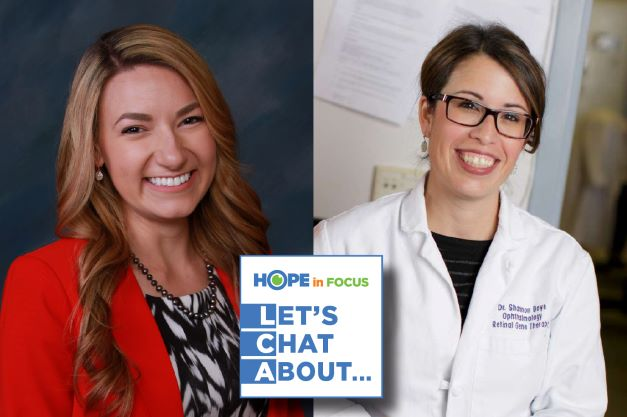
Headshot of Kara and Shannon with the Hope in Focus Let's Chat About ... webinar logo center bottom
Kara Fick (L) and Shannon Boye (R) on Hope in Focus Let’s Chat About … series

We learned about this research from Kara Fick, head of Patient Advocacy and Medical Affairs at Atsena Therapeutics, and Atsena Founder and Director Shannon E. Boye, PhD, during our Oct. 27, 2022, webinar episode titled “Let’s Chat About…Atsena Therapeutics’ work in LCA.” Courtney Coates, Hope in Focus Director of Outreach and Development, moderated the session, which can be viewed here. 

Let’s Chat About…” is our free webinar series bringing together researchers, advocates, industry leaders, and people living with Leber congenital amaurosis (LCA) or other rare inherited retinal diseases (IRDs) for conversations important to the rare retinal disease community.

How did Atsena Therapeutics come to be?

Shannon and her husband, Sanford, met in grad school.

“It was a nerd romance,” she said.

Boye’s thesis involved developing viral vectors for retinal disease treatment, specifically for LCA1 (GUCY2D), and she became known for generating gene technology. She has authored more than 60 peer-reviewed manuscripts and multiple textbook chapters. She also has been actively involved in grant and manuscript review, and she has received several major awards.

Over several years, the couple worked with large, medium, and small pharmaceutical companies, but they grew frustrated at how long it took to bring developing therapies to patients.

“It was going very slowly and that was frustrating,” Boye said. “We saw business decisions overriding sound scientific decisions.”

Eventually, she sent a big long vent to Foundation for Fighting Blindness CEO Ben Yerxa, and he helped push her and her husband into starting their own company, Atsena Therapeutics. The couple co-founded the business, with Sanford Boye serving as Chief Technology Officer.

Kara Fick, who has been working as a patient advocate for rare diseases in the biotech world for nearly a decade, is passionate about bringing the patient voice, perspective, and expertise to the table.

“It’s pretty apparent, and you know from Atsena’s founding, that really keeping patients at the center and trying to move research forward so that it can get to patients is super important,” Fick said.

At Atsena, she strives to bridge the gap between the science of innovative therapies and the daily needs of individuals living with rare diseases. She also works to understand more clearly the barriers to diagnosis, treatment, and management of rare diseases and how to better address those hurdles with patients and clinicians.

What is gene therapy?

All of us have genes. They give us blue eyes or brown eyes, for instance. But our genes also make proteins. Proteins are the building blocks of life. They can act alone or in combination with other proteins to perform essential functions in our cells.

A good example of proteins important for vision are the proteins in our photoreceptors and retinas. Those proteins all work together to convert light into an electrochemical signal that is sent to the brain and processed as vision.

Genes make proteins, and proteins perform essential functions. But sometimes, we can have a misspelling in our genes — in other words, a mutation. Because of that misspelling or mutation, in some cases, the protein that gene was supposed to make did not form. In other cases, perhaps, the protein forms, but it’s misshapen and can’t interact properly with the other proteins. When that happens, the normal biological function of the protein is disrupted, for example, in your photoreceptors. As a result, your photoreceptors are unable to transmit light into a signal processed as vision.

The concept of gene therapy involves taking a healthy copy of a gene that lacks that misspelling and delivering that healthy version of the gene to the photoreceptor cells.

How is the LCA gene therapy trial going?

Drug development and gene therapy development take a long time, and there are a lot of processes that companies have to go through to ensure that anything given to patients is safe and effective.

Work to develop this gene therapy began in earnest in 2004 in Boye’s lab at the University of Florida. After pre-clinical studies in chickens and mice, they were ready for clinical trials in humans.

Atsena is working on a combination Phase 1/2 clinical trial for LCA1 (GUCY2D). In this phase of the trial, researchers test different gene therapy doses, find the best dose, and closely monitor the safety of the therapy.

“Because we’re doing a combo Phase 1/2, we’re looking primarily at safety, but we’re also incorporating some tests into the clinical trial that can help to tell us a little bit about the efficacy of the gene therapy,” Boye said.

‘Researchers began with adults aged 18 and up but recently opened it up to ages 6 and up. Fifteen people, all with GUCY2D mutations, are taking part in the trial, ranging in age from 12 to 76 years old.

So far, the trial is going well, with no participants reporting serious side effects related to the gene therapy. They did see two cases of inflammation, but both were mild and resolved after treatment.

Besides safety monitoring, Atsena has conducted several tests, including the Full-field Stimulus Test (FST). The test quantifies visual perception through flashes of varying luminance. Researchers saw significant improvements in the results of that test from individuals who received the highest dose of the gene therapy.

Participants receiving the gene therapy also showed clear improvement in a multi-luminance mobility test (MLMT), in which they navigated a course with obstacles of varying height and under different levels of illumination.

Participants also underwent a third test, called the BCVA or Best Corrected Visual Acuity, which measures everyday vision. (Think of the poster with different letters you’re asked to read at the eye doctor’s.) That test had more mixed results, with some patients seeing improvement and others not seeing much, if any, improvement.

What happens next?

This is still just the preliminary data. Atsena needs all 15 participants in its trial to get through their first full year after being treated with gene therapy. Then, they’ll collect all of the data, analyze it, and summarize it vigorously and thoroughly before moving on to the next phase.

At that point, they’ll need to meet with the Food and Drug Administration (FDA) and other regulatory agencies to get their agreement and permission to move forward with a Phase 3 trial. That trial will focus on efficacy and seeing how well the gene therapy works. It’ll still pay attention to safety, but the primary goal of Phase 3 is to focus on efficacy and use that as supportive data that could be submitted to the FDA and other agencies to get full approval of the gene therapy.

Why genetic testing is essential for clinical trials?

As more trials are starting and more gene-specific research is being done, it’s going to become more important to know precisely which genetic mutation may be causing your LCA.

“Getting genetic testing is essential for figuring out the specific genetic mutation that may be causing your LCA,” says Boye.

If you have not been genetically tested, talk to Hope in Focus. There’s no cost to patients and family members to receive genetic testing.

ProQR Announces Updates and Priorities After Illuminate Trial Analyses

ProQR Therapeutics completed an in-depth strategic review to prioritize its objectives toward advancing RNA therapies, following news that its Illuminate Phase 2/3 clinical trial of sepofarsen in LCA10 CEP290 did not meets its primary endpoint of improving visual acuity.

The Dutch-based biotechnology company delivered an update on its sepofarsen program after a comprehensive analysis of data from the Illuminate trial and it announced a corporate restructure and workforce reduction. 

Based on information from the review, ProQR will prioritize two strategic objectives dealing with genetic eye disease and RNA editing technology.

The company plans to explore a development path for selected genetic eye disease programs subject to regulatory feedback from the European Medicines Agency (EMA) and the U.S. Food and Drug Administration (FDA).

Regarding RNA editing technology, ProQR will accelerate development of the Axiomer® RNA editing technology platform and pipeline activities expanding into areas beyond the eye, including initially the liver and central nervous system. The technology aims to correct disease-causing genetic mutations and reverse the underlying course of currently untreatable diseases.

Daniel A. de Boer, Founder and CEO of ProQR Therapeutics, said in a statement: “We are focusing our strategy on accelerating our Axiomer® RNA-base editing platform technology and a select pipeline of RNA therapies for inherited retinal diseases  (IRDs) as we remain committed to developing RNA therapies for patients with high unmet need.” 

Corporate Reconstruction and Priorities

ProQR also plans to reduce expenses by making program priorities, changing its corporate structure, and reducing its workforce by a third. 

The company will focus its ultevursen QR-421a program for USH2A-mediated Usher syndrome and retinitis pigmentosa (RP) on a single Phase 2/3 Sirius trial, with the potential of an interim/futility analysis next year. 

ProQR is suspending all other research for IRDs, including its QR-1123 program for autosomal dominant RP and its QR-504a program for Fuchs endothelial corneal dystrophy.

The business also will reduce its workforce by about 30 percent, including the departure of its Chief Scientific Officer Naveed Shams, MD, PhD.

 Co-Founder and Supervisory Board Chair Dinko Valerio said in a statement: 

“We believe deeply in the promise of RNA therapies, the Company’s pioneering efforts in this field, and ProQR employees. These are the right steps to take to offer the best opportunity to create long-term value for all of our stakeholders, including our shareholders whom we thank for their support, and the communities we aim to serve.” 

De Boer thanked the people leaving the company for their significant contributions toward the company’s mission. He characterized the changes as extremely difficult decisions necessary to drive long-term growth and value. 

“I also want to acknowledge the disappointment that many in the eye disease community may feel today, particularly individuals and families living with autosomal dominant retinitis pigmentosa and Fuchs endothelial corneal dystrophy as we wind down our programs for these indications.”

Sepofarsen Update 

Following the top-line data announcement in February that Illuminate, ProQR’s pivotal Phase 2/3 trial of sepofarsen in LCA10, did not meet the primary endpoint of Best Corrected Visual Acuity (BCVA) at month 12, compared to a sham procedure control group, comprehensive analyses revealed no technical errors in the trial conduct, data handling, or the medicine product used. 

The overall safety profile of sepofarsen was consistent with earlier trials. When the effect in the sepofarsen treated eye was compared to the untreated eye in the same patient, at month 12, a benefit in vision was observed. This effect was not observed in the control group that received a sham treatment.

Overall, the post-hoc analyses showed that the efficacy seen with sepofarsen when comparing the active treatment and sham eyes to their corresponding untreated contralateral eyes across BCVA, Full Field Stimulus Test (FST), and other endpoints is more consistent with the results seen in earlier trials, where the untreated contralateral eye was used as the control.

Based on these results, ProQR will focus on core activities related to sepofarsen. The company plans to meet with the EMA and FDA to discuss these data from the Illuminate trial and share an update later this year.

ProQR currently plans to continue Illuminate, which is a two-year study, the Brighten pediatric study, and the Insight open-label extension study, until further regulatory guidance.

Aniz Girach, MD, Chief Medical Officer of ProQR Therapeutics, said in a statement: 

“While we were disappointed by the outcome of the primary analysis, we believe that these post-hoc analyses and the observation that approximately a third of the patients benefited across multiple concordant endpoints in this trial, in combination with the high unmet need in LCA10, warrants a discussion with the regulators.”

Data from the Illuminate trial will be presented at the annual Retinal Cell and Gene Therapy Innovation Summit on April 29, 2022, and at the Association for Research in Vision and Ophthalmology (ARVO) Annual Meeting from May 1-4, 2022. 

Let’s Chat About … Opus Genetics with Ben Yerxa

Working with preclinical data from multiple Leber congenital amaurosis (LCA) studies at the same time, Opus Genetics hopes to advance research into gene therapy for several forms of LCA at a faster pace.

Ben Yerxa, PhD, and acting Chief Executive Officer of Opus, told a Hope in Focus webinar audience that good preclinical data from Opus Co-Founders Jean Bennett, MD, and Eric Pierce, MD, became the foundation for the company’s first two projects researching LCA5 (Lebercilin) and LCA13 (RDH12).

Yerxa, who also is CEO of the Foundation Fighting Blindness and its Retinal Degeneration Fund (RD fund), explained that while Dr. Bennett researched what came to be the LCA2 (RPE65) gene therapy LUXTURNA®, other projects awaited advancement to preclinical stages. Dr. Pierce’s preclinical work also became part of Opus’ advancing work.

Ben Yerxa headshot
Ben Yerxa

Yerxa discussed biotechnology company’s aspirations as part of the Hope in Focus “Let’s Chat About …” webinar series. Our March episode, moderated by Courtney Coates, Director of Outreach and Development featured Yerxa, acting CEO of Opus based in Raleigh, N.C. Click here to view the webinar.

The Foundation’s RD Fund led the $19 million in seed financing for the company founded last fall, with participation from the Manning Family Foundation and Bio Partners.

The Magic of a One-of-a-Kind Model

Opus is the first spin-out company internally conceived and launched by the RD Fund to further the Foundation’s mission. The RD Fund is investing in projects that are in, or advancing toward, early-stage clinical trials.

“Opus is a first-of-its-kind model for patient-focused therapeutic development,” Yerxa said. “As the first company launched by the Foundation’s venture arm, RD Fund, Opus is uniquely positioned to bring experts, resources, and patients together to efficiently advance ocular gene therapies for small groups of patients that to date have been neglected.”

The company decided to take on the development of multiple gene therapies, regardless of the small treatment population for rare retinal diseases.

“Opus was really born out of necessity,” Yerxa said. “Many gene therapies in preclinical development were just not being developed further.”

The company would even work on programs where only 100 patients have a particular retinal disease, or where the patient population is smaller or larger than the 1,000 to 2,000 people in the United States with LCA2 RPE65, a form of LCA treated with LUXTURNA®. The gene therapy, developed by Spark Therapeutics, is the only federally approved treatment for an inherited gene mutation.

“It evens out as a blend,” he said. “That’s kind of where the magic is.”

The biotech’s lead program, OPGx-001, addresses mutations in the LCA5 gene that encodes the lebercilin protein. LCA5 is one of the most severe forms of LCA and affects about one in 1.7 million people in the United States.

Its second program, OPGx-002, focuses on restoring protein expression and halting functional deterioration in people with retinal dystrophy caused by mutations in the retinal dehydrogenase gene, knowns as RDH12 or LCA13. The disease affects one in 288,000 people in the U.S.

Its third program, OPGx-003, targets LCA9 caused by NMNAT1 mutations and affects about one in 432,000 people in the U.S.

Yerxa said Opus is hoping to raise $70 million or more in the next six to nine months to bring it through 2024-25.

He advised people interested in the research to keep in communication with their physicians because as clinical trials get ready to begin, Opus will be looking for individuals to take part in them.

LCA5 Clinical Trials Planned Later This Year

Opus is looking at filing for an Investigational New Drug (IND) application with the U.S. Food and Drug Administration by the middle of this year before enrolling people for clinical trials by summers’ end at the University of Pennsylvania for LCA5. By filing for an IND, a company is asking for permission to start human clinical trials and to ship an experimental drug across state lines before approving a marketing application for the drug.

“We’re looking forward to getting that started so we’ll be a clinical-stage company.”

Their work also will center on what Yerxa called a tried-and-true approach to delivering the medicine through Adeno-associated virus (AVV) vectors, the leading platform for gene delivery for the treatment of a variety of human diseases.

In today’s world of retinal gene therapy development, AVVs are most often used to deliver therapeutic genes to cells in the retina, according to the Foundation. Gene therapy is administered by injecting a tiny drop of liquid underneath or near the retina. AAVs are safe and able to penetrate cells with their genetic cargo. They naturally occur in humans and don’t cause any known illness. For regulators like the FDA, that excellent safety profile is highly desirable.

Having available multiple inventories for developing therapies and working with the university to license the technology can speed up the pace of research and manufacturing, reducing the average two-year timeline for clinical work.

“I think we can shave off many months of the timeline,” Yerxa said.

In the question-and-answer session following the webinar, one viewer asked about taking on research into a form of LCA caused by a mutation in the IQCB1 gene, and Yerxa replied, “We are aware of that work and interested in this asset.”

He suggested people keep connected with Opus and receive company emails for updates on projects. https://opusgtx.com/contact/